
Nocturne Review
PC
A rhythm-driven afterlife RPG that finds the strongest footing in its story, music, and unusually flexible combat.
Reviewed by Maisie Scott on Sep 28, 2026
From the moment you step into Nocturne, the idea pulls you in: a JRPG built around rhythm-game combat, with note lanes doing the work a more traditional RPG would normally leave to swords, spells, and commands. Pracy Studios, a small Canadian developer, spent years building that idea into a full game, and the result is a roughly ten-hour adventure set in a digital afterlife.
The Prelude sets up the basic idea, and the full game builds everything around its rhythm mechanics, but in the end, what really pulls you forward is the story. The world is Maya, a digital afterlife where human consciousness can continue after death.
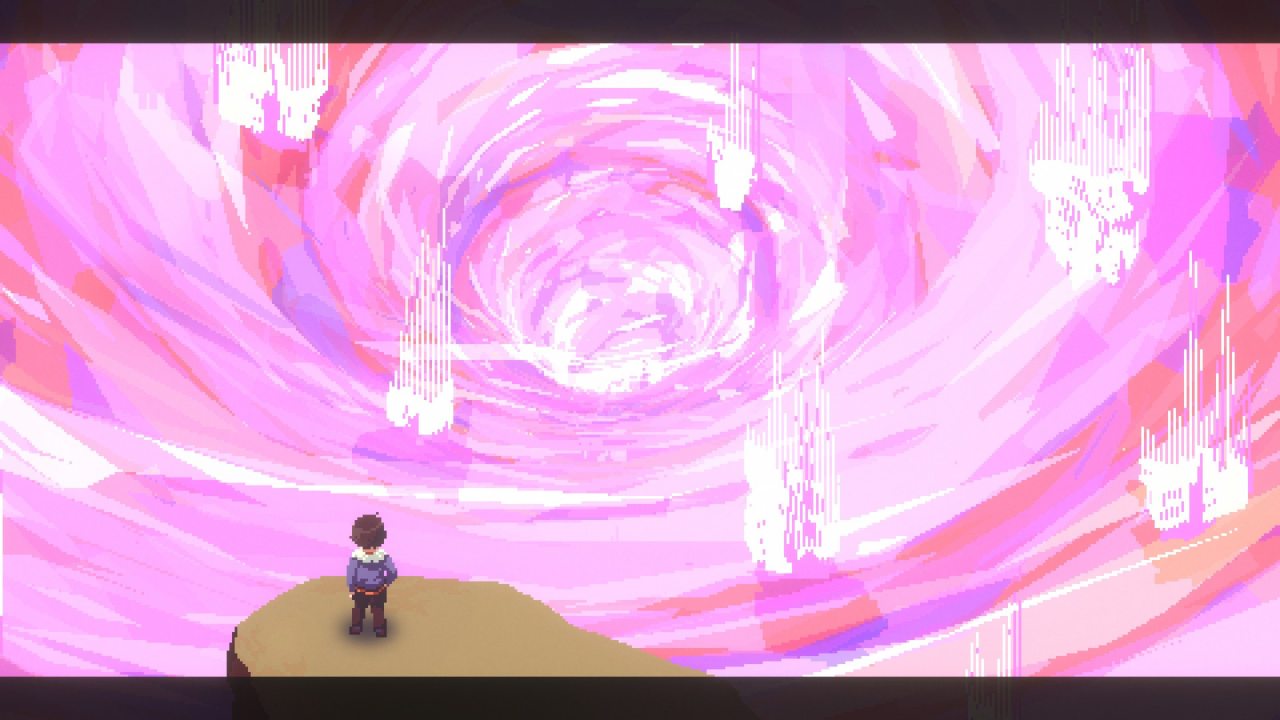
The setup sounds almost peaceful until you arrive and see how badly things have gone wrong.
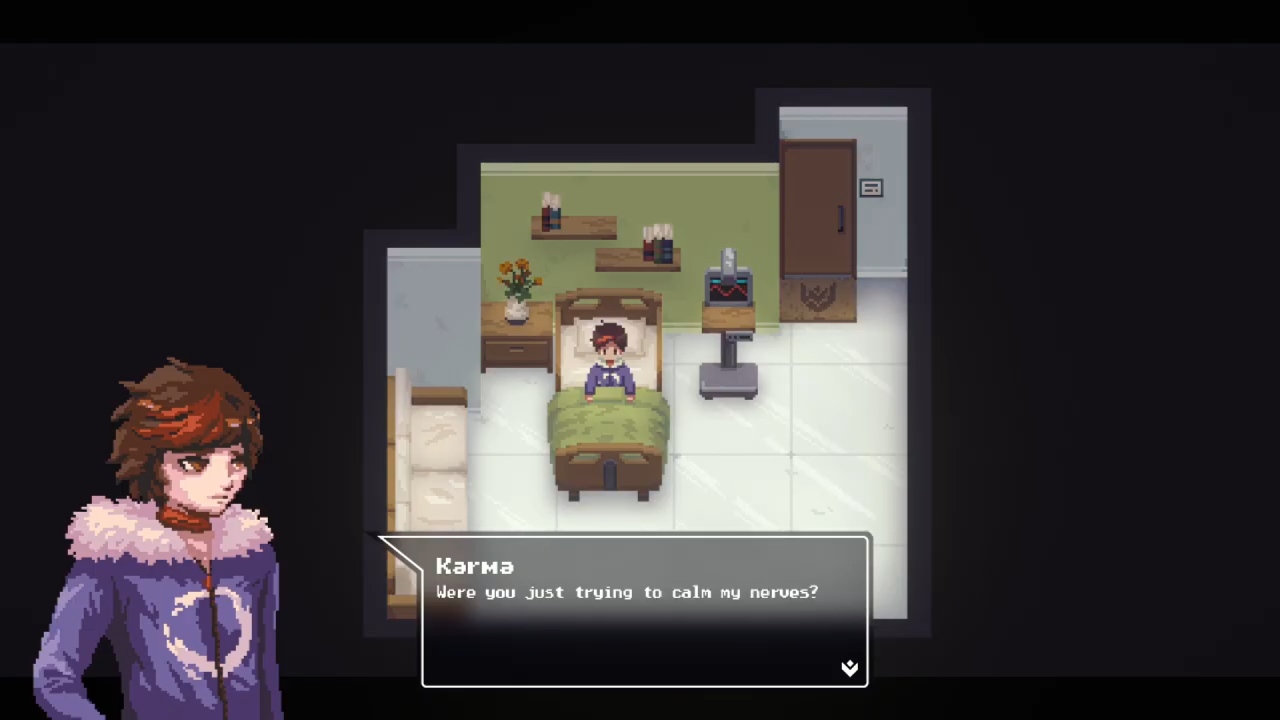
Maya has been cut off from the physical world for a thousand years after a mysterious blackout, and the system has struggled with corruption and decay ever since. The protagonist, Karma, arrives as the first new person uploaded since that blackout.
Karma has only just died and expects to find their brother Spencer, who arrived in Maya years earlier, but Spencer is nowhere to be found. That missing brother gives you a personal reason to move through a much larger mystery. Maya is deteriorating, Crawlers are spreading corruption, and parts of the world and its residents are being affected.
As you travel, you learn more about how Maya was created, how its hierarchy developed, and how its administrators disagree on what to do. Three of the four system administrators are caught in different conflicts over Maya's future, while the fourth is missing.
Karma also discovers an unusual ability to cleanse corrupted areas, which becomes important as the journey develops. Kimothy quickly becomes Karma's main companion, and their relationship lends much of the story its warmth.
Kimothy is adventurous, gets into trouble, and wants to see more of Maya.
Along the way, the supporting cast adds more pieces to the world, including Satoru, an elderly fish dressed as a monk whose personal history connects him to the darker side of Maya's administration. The story gradually introduces betrayal, coercion, revelations, and questions about what to preserve and what to sacrifice.
You can follow the central search for Spencer while also watching Karma's understanding of Maya change as events unfold around them. The eight-chapter structure keeps the main narrative fairly compact. The core story takes around ten hours, with individual chapters generally running between forty-five and seventy-five minutes.
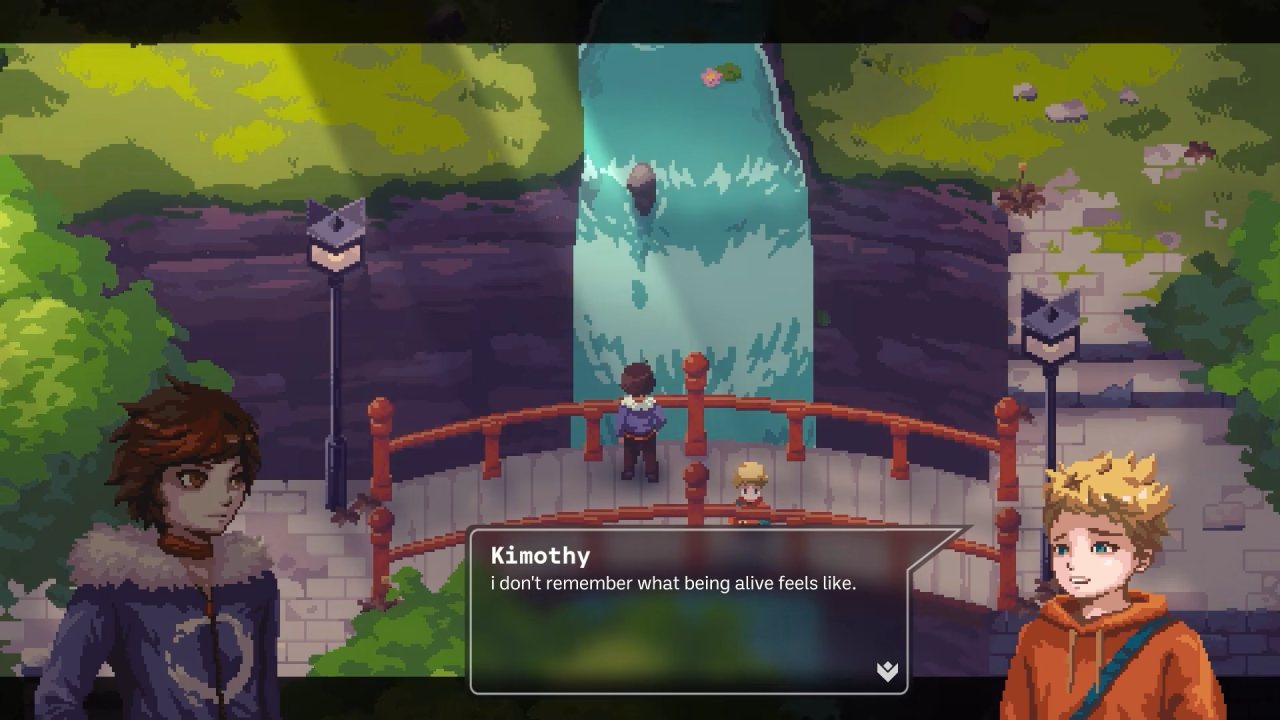
The later chapters become increasingly story-focused, especially after Chapter 6, and the final two chapters work particularly well when played together. The ending itself moves quickly, leaving relatively little time to explore what remains after the main story. The ending also leaves room for the story to continue, though nothing confirms it.
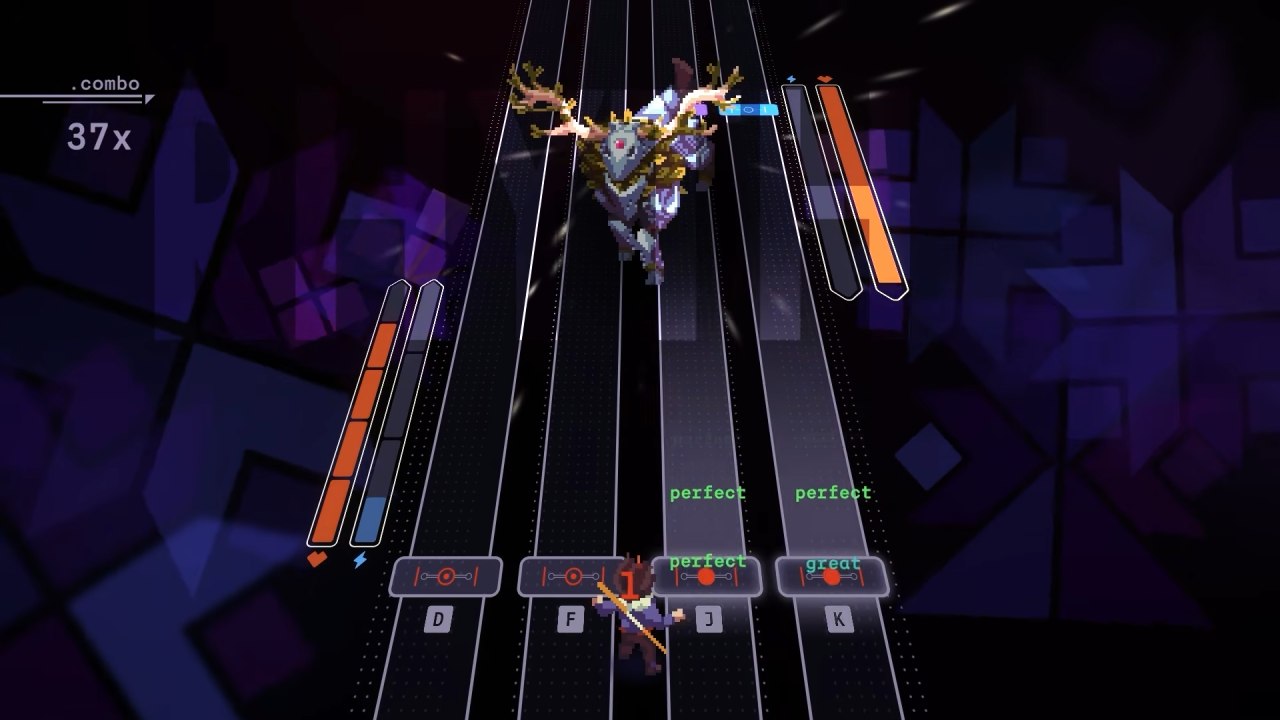
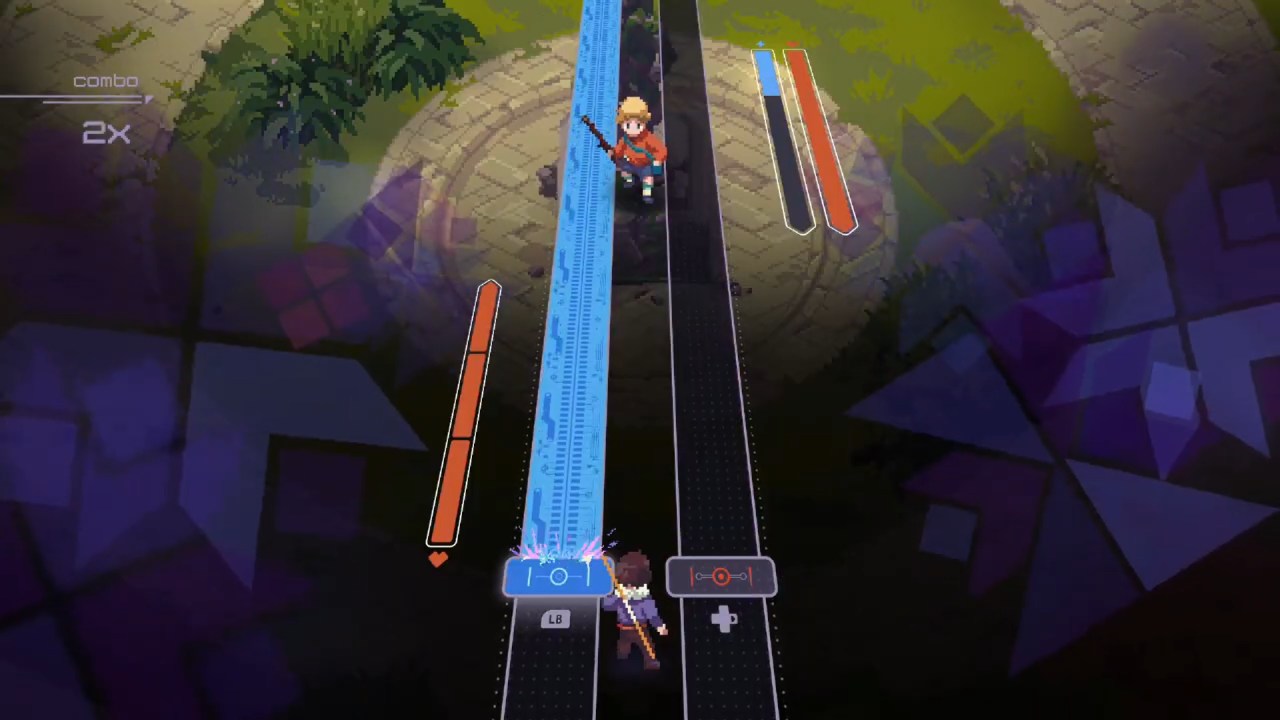
Once you get into the actual gameplay, the rhythm system becomes the center of almost every encounter. Battles use four scrolling note lanes, with each lane assigned to a button. You can rebind the buttons however you like. When notes hit the target, you press or hold the matching button, dodge the red ones that hurt you, and still keep an eye on what the enemy is doing.
Successful notes build Karma's energy, which you can store in three segments.
Spending that energy lets you attack, while the enemy has its own meter that fills as the song continues. When the enemy is preparing an attack, the lanes change to signal the opening, giving you a chance to land a critical hit. Reducing an enemy's health to zero doesn't end the encounter immediately.
Instead, the enemy becomes staggered, giving you a short opportunity to build more energy and recover some health before the fight continues. That structure makes the rhythm part more important than the RPG combat layer. You can get through much of Nocturne by concentrating on the notes and maintaining strong grades, and the conventional combat decisions sometimes feel secondary.
The system still works because the songs and enemy gimmicks keep changing, but the rhythm performance often does most of the actual work. Enemy design helps prevent every battle from becoming identical. Some enemies interfere with the lanes by shortening them, hiding sections, clogging them, or otherwise altering what you can see.
Other enemies introduce corruption effects or alter Karma's available health. Boss encounters push these ideas further, using unusual lane arrangements and attacks that require more precise responses. One major sequence even shifts to five lanes, while the non-combat rhythm challenges can bend, rotate, move, disappear, or wander away from their usual positions.
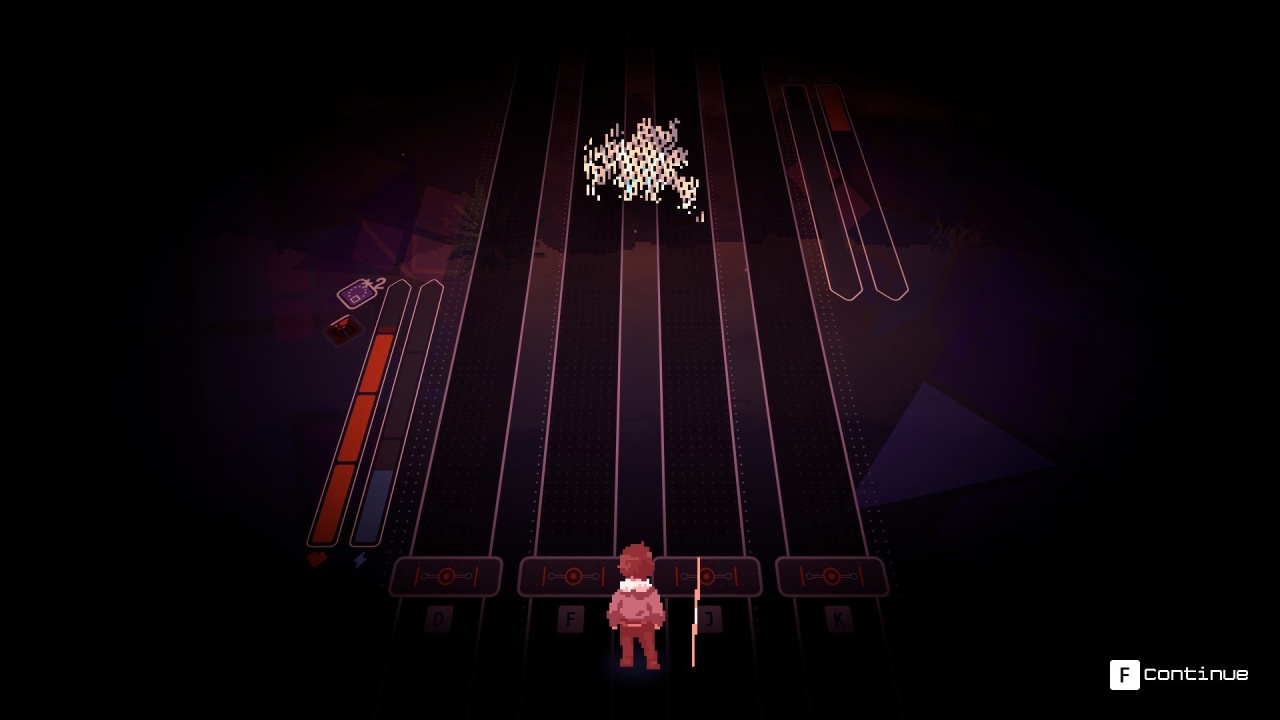
The corruption-cleansing sections are among the most useful smaller challenges.
When Karma encounters corrupted areas, Nocturne moves into a rhythm sequence that uses the familiar note system in stranger ways. The lanes can twist and move while you are trying to keep the timing correct, and later challenges demand much more accuracy. They give the rhythm mechanics something to do beyond ordinary battles without stretching encounters too long.
Difficulty is one of the system's most useful features because you can change it at save points rather than committing to a single setting. There are six difficulty levels, with higher settings increasing the number, speed, and patterns of notes.
Starting too high can quickly feel overwhelming, while Expert provides enough pressure to stay focused without making every fight feel impossible. The gap between lower and higher settings can feel steep, though, especially when moving from Adept to Expert.
Nocturne also includes accessibility options that let you automate individual tracks, reducing the number of inputs you have to manage. That makes the rhythm system more approachable, which helps even if rhythm games aren't a genre you normally spend much time with.
Controller bindings can also be changed, and the default layout works well.
The biggest problem with the combat is not that it fails to work, but that the surrounding RPG systems are sometimes underexplained. Enemy abilities are shown during encounters, yet there is no reliable way to return to the explanations after the initial tutorials.
Mechanics involving armor and blocking can remain unclear. Certain equipment refers to blocking, and one useful staff allows a timed riposte that can negate an incoming attack, but Nocturne does little to explain how these systems fit together.
Equipment itself is fairly straightforward. You can find gear in chests and from enemies that changes damage, regeneration, stagger duration, and other statistics. Some pieces are more distinctive, including riposte-related equipment, but much of the gear follows the familiar pattern of replacing an older item with a stronger version.
There is no elaborate leveling system to grind through, and progression is more about finding equipment and earning health increases after bosses. Each defeated boss adds another segment to Karma's health. That simplicity keeps the focus on the rhythm gameplay, but it also means the RPG side rarely becomes a major reason to experiment.
Consumable items can be used during fights, though they are rarely needed.
Shops are concentrated in the hub town, so you can't easily buy or adjust equipment while exploring other areas. The hub also has an arcade where you can replay previously unlocked battles and songs. That option gives you somewhere to practice without repeating the story.
The arcade is especially useful because the music is one of Nocturne's strongest elements. Each enemy has its own track, and many non-boss enemies have additional variations that unlock through higher performance grades.
Across Nocturne, the soundtrack spans a wide range of styles, from retro-inspired chiptune pieces to grand orchestral boss themes. The boss music stands out the most, with live performances by the Slovak National Symphony Orchestra giving those encounters a much greater sense of scale.
The songs also make repeated fights easier to tolerate, although the lack of enemy variety can still become noticeable. Passing through previously visited areas can bring the same enemies back and slow the pace. Since you cannot simply escape once a battle begins, an encounter could turn into a full song even when you already know exactly what you are facing.
Beyond the repeated fights, getting around Maya is frustrating, though its pixel art impresses.
It would make more sense for an enemy whose health has already reached zero to remain defeated, rather than entering another stagger phase and prolonging the encounter. Exploration is where it creates the most consistent frustration. There is no map, minimap, quest log, waypoint system, or fast travel.
The old-school intention behind that design is understandable, but remembering a location after several chapters or hours can become difficult. Karma also moves slowly, even while running, which made backtracking feel longer than it needed to be.
The save posts scattered around Maya's path make the missing fast travel feel even worse. You can interact with them, but they won't take you anywhere, which is a shame. The Next Objective option can also leave you stuck, since its hints aren't always useful when you're trying to figure out where to go.
Exploring or returning to older areas isn't a problem in itself, but the combination of slow movement, no map, and unavoidable encounters made those sections harder to enjoy. Visually, Nocturne makes strong use of pixel art without leaving the environments feeling static.
Maya can look soft and inviting in one area before shifting toward darker, harsher colors as corruption takes over.
The scenery draws on influences that align with Nocturne's Japanese- and Chinese-inspired visual direction, while the world shifts among natural environments, the hub, and increasingly corrupted spaces. The forest in Chapter 3 stands out, and the island in Chapter 7 deserves more exploration.
The art works especially well when Nocturne is outside in nature, which makes the time spent indoors or in the void feel more noticeable. Character and enemy designs are varied enough to give the world personality, though some running animations feel less polished, particularly Karma's.
Sound is ultimately where Nocturne's concept feels most complete. The music is not simply placed beneath a traditional RPG; it is tied directly to how you fight. Every enemy encounter has its own musical identity, and major moments get tracks that feel distinct from those of ordinary battles.
The boss songs in particular give the later encounters much more emotional weight. The music can pull attention away from the notes at exactly the moments when concentration matters most, which is not a bad problem for this kind of game.
By the end, the story becomes the part of Nocturne that carries the most weight, while the rhythm system keeps each new encounter distinct.
The RPG mechanics support that structure, but they rarely become the main attraction. The strongest stretches are the ones where the narrative, music, visuals, and rhythm gameplay all line up at once. There are clear rough edges. The lack of a map and fast travel makes exploration unnecessarily slow.
The repeated battles can be tedious; some equipment mechanics are poorly explained, and the variety of enemies could have been wider. Spending too much time in the void also makes some sections less interesting than the larger outdoor areas.
The ending could have used more room to show what happens after the main story, especially after investing in the characters for the full eight chapters.
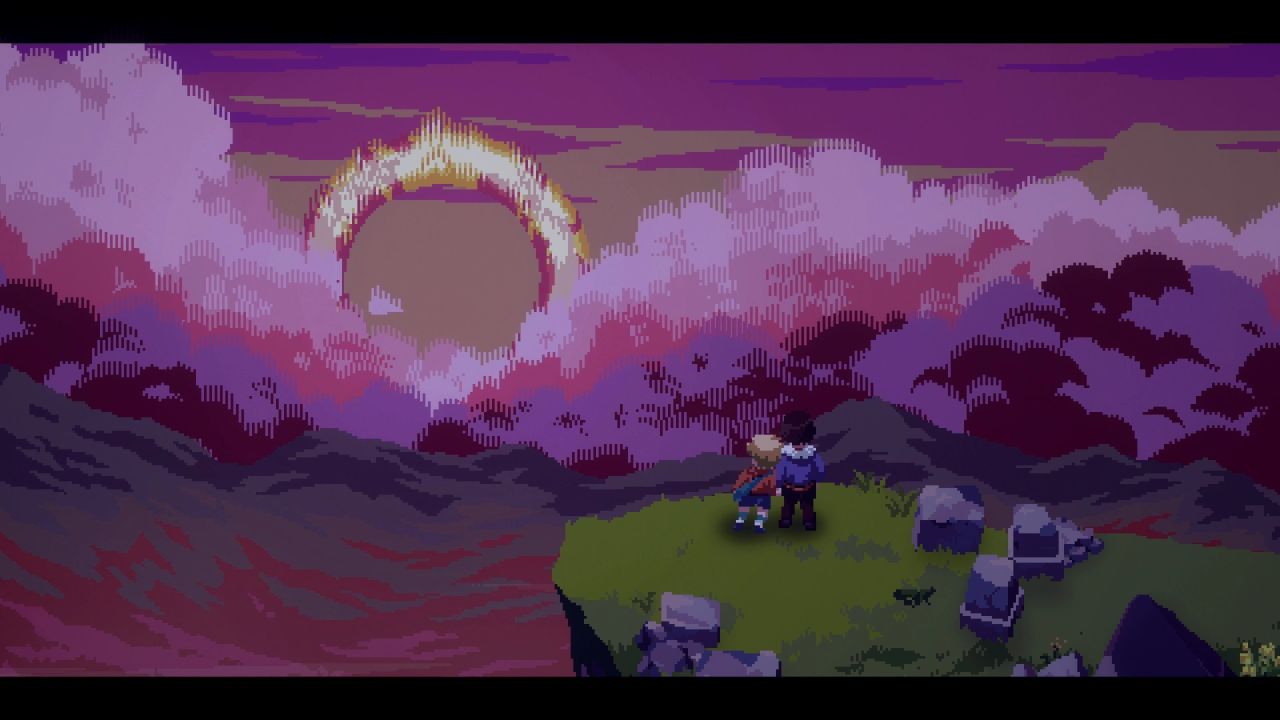
Even with those issues, Nocturne has a clear identity. The digital-afterlife setting gives the story room to explore loss, family, corruption, and the choices people make as a system falls apart. Karma's search for Spencer provides the personal thread, while Kimothy and the rest of the cast give the journey enough character to make the world feel inhabited.
The most memorable part is how naturally the music becomes part of the journey rather than something experienced separately from it. Nocturne's odd rhythm-based take on the JRPG pulled me in, and the characters, Maya especially, gave me a reason to stay until the end. It isn't perfect, and the weaker parts are obvious, but the main idea is strong enough to carry it.
Nocturne is a short RPG that shines most when you let the story and music lead the way. The combat is flexible enough for players of any skill level, and every big fight has its own personality. Exploration and the RPG systems could use more polish, but at around ten hours, the game ends before those problems wear you down.
Editor, NoobFeed
Verdict
Nocturne is a memorable rhythm RPG with a great story, excellent music, and flexible combat, held back by thin exploration, repetitive fights, and unexplained RPG mechanics.
70
Related News
No Data.