
Rhythm Heaven Groove Review
Nintendo Switch
Ten years is a long time to wait for a sequel, but Nintendo's strangest, most lovable music series proves it never lost the beat.
Reviewed by Adeela Tas on Jul 02, 2026
We have all waited more than a decade for this moment. Rhythm Heaven Groove is the first brand-new mainline entry since Rhythm Heaven Megamix closed things out on 3DS back in 2016, and once you know the history behind it, that gap makes a lot more sense. The whole franchise traces back to one person: Mitsuo Terada, better known as Tsunku.
Long before any of this existed, Tsunku was one of the most influential producers in J-pop, the creative force behind Morning Musume and other major groups. In the early 2000s, he grew frustrated with music games that simply told you when to press a button without teaching you anything real about rhythm.
His belief was that nobody actually has a bad rhythm; they just never learned how it works, and he wanted to build something that taught through play rather than punishing wrong guesses. He brought the idea to Nintendo, and together they built Rhythm Tengoku for the Game Boy Advance, which was released in Japan in 2006.
Two years later, the series crossed over to the West as Rhythm Heaven on the Nintendo DS, sold over 3 million copies, and became a cult favorite. It also played a real role in Satoru Iwata's push to bring the DS and Wii to people who'd never considered themselves gamers, sitting alongside Nintendogs and Animal Crossing as one of those unexpected gateway titles.
Wii players got Rhythm Heaven Fever in 2011, adding fifty new minigames and, for the first time, proper co-op. Then in 2016, 3DS closed out the era with Megamix, a greatest-hits collection of over a hundred minigames from every prior entry plus a smaller batch of new ones.
After that, the series went quiet for what felt like forever. It's worth knowing what Tsunku has been through since then. In 2014, he was diagnosed with laryngeal cancer, and the surgery took his vocal cords entirely, no more singing, no more speaking.
For a musician whose whole career was built on his voice, that's a devastating loss. But he never walked away from music, staying active and upbeat in interviews, and now returns as a driving creative force behind Rhythm Heaven Groove, composing much of its soundtrack.
Once you know the history, this stops feeling like a nostalgia throwback and starts feeling like something earned.
There isn't much of a traditional plot holding Rhythm Heaven Groove together. That has never been the point of this series. It works as a collection of tiny, unconnected vignettes rather than one continuous story. Each one drops you into a new scenario with no warm-up and no explanation.
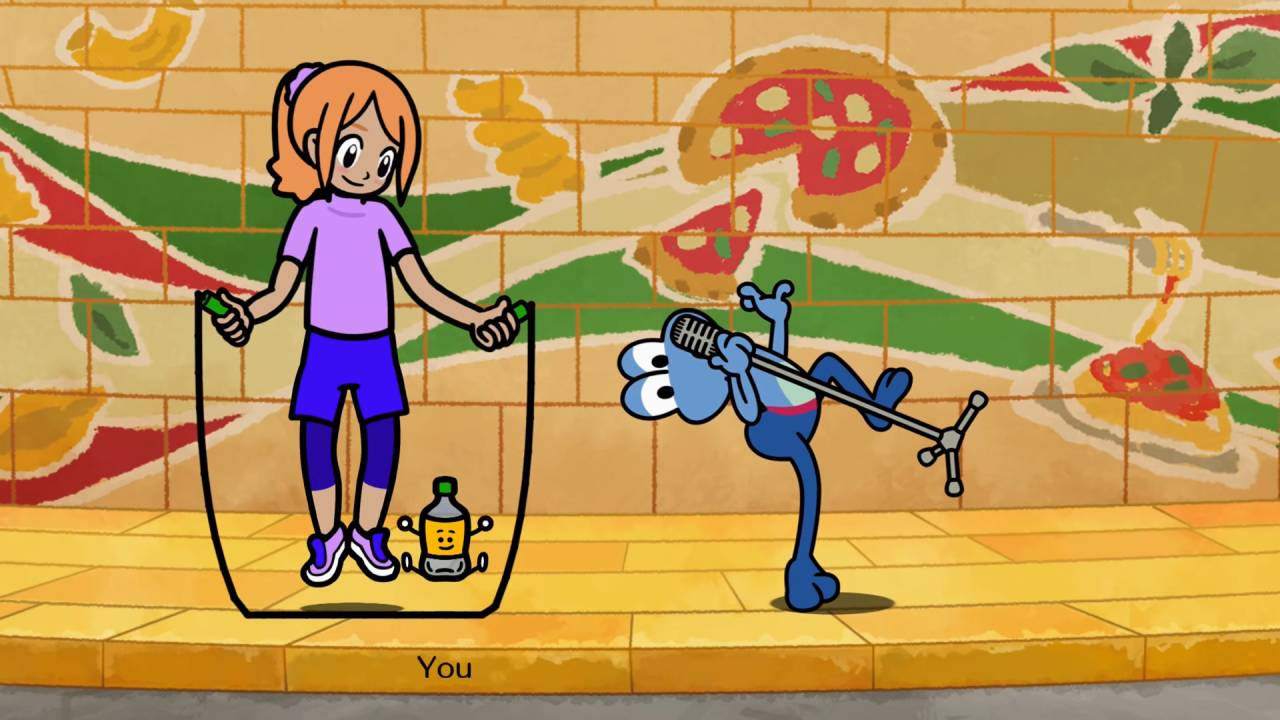
One minute you're filming a car commercial by revving the engine in time to a beat, the next you're having a call-and-response conversation with an alien, and after that you might be helping sentient umbrellas dance in sync. None of it connects.
A few minigames still manage to tell a tiny, complete story on their own. One particular example has you playing as a bunny character in a platforming level that was apparently programmed by a little girl as part of her school assignment.
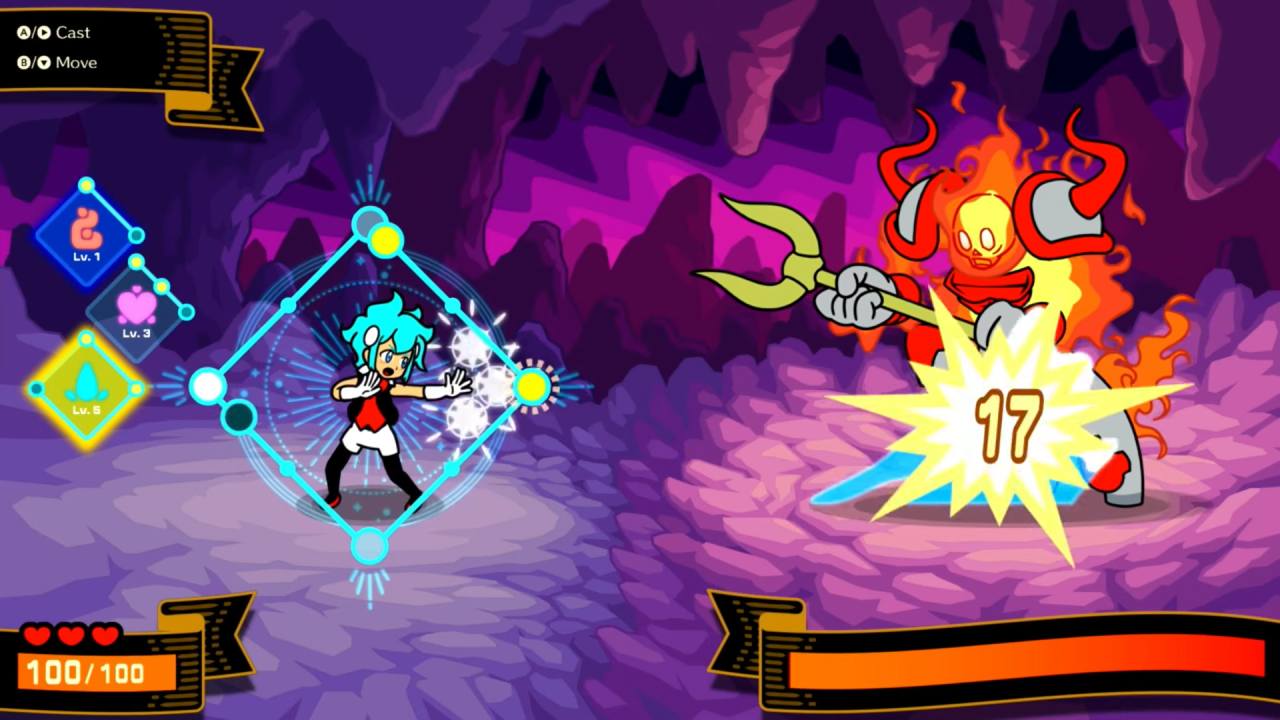
At some point halfway through the game, everything starts moving at an incredibly fast pace, making it both hilarious and exciting. The closest thing to an ongoing narrative is the new standalone mode, Beatspell. This is where you play a young magician working through a four-chapter fantasy story.
Each chapter ends in a boss fight against one of the Four Fears.
Hex, who insists he's the weakest despite his erratic movements. Vee, who distracts you with friendly chatter before turning aggressive, is the armored fire monster Pyro. And finally Dra, leader of the group, whose dragon servant overwhelms you with monologues and abrupt rhythm shifts before you can restore peace to the kingdom.
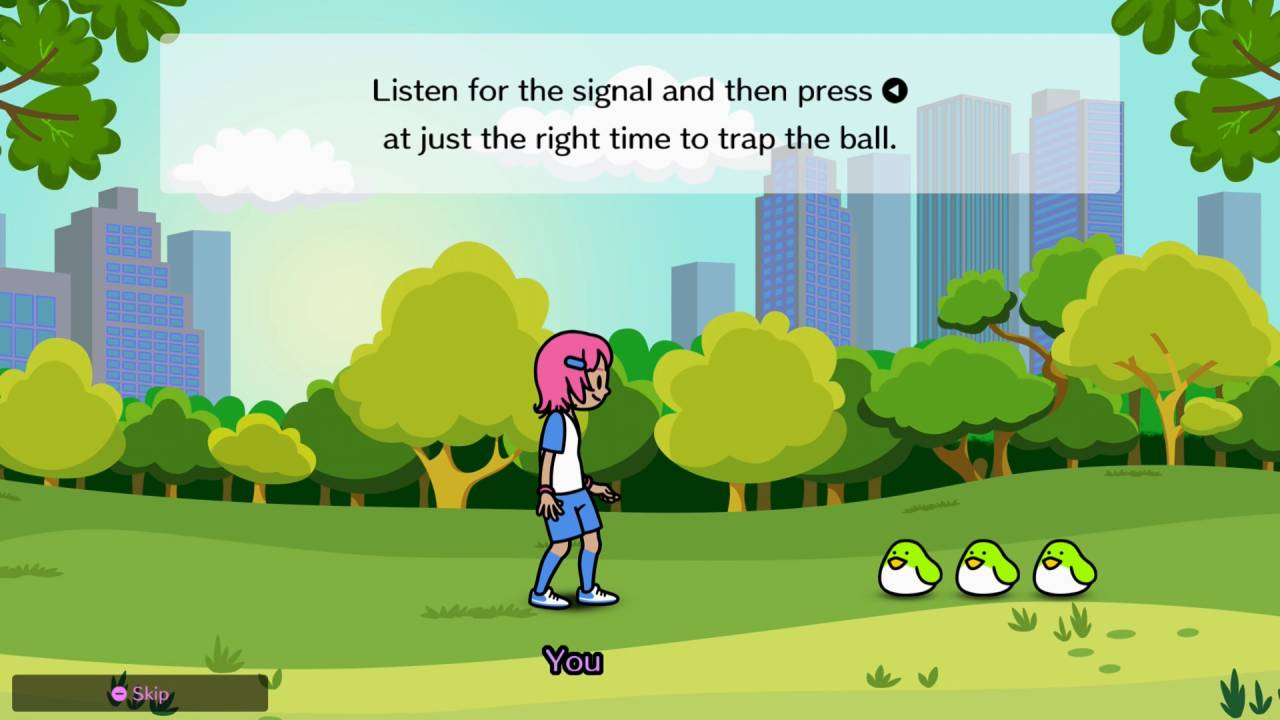
Mechanically, Rhythm Heaven Groove sticks close to the formula the series has run since 2006. There's no note highway, no on-screen countdown, you're reading visual and audio cues, and audio matters most. Every level starts with a brief tutorial focusing on isolating the required new ability.
The real song that plays afterward is never the same, and you will have to adapt to the change of pace mid-level. Input remains simple: tap and hold A, or a direction key when needed, all timed to the changing music. Stages come in blocks of four.
Clearing a block unlocks a remix, stitching everything from that section into one run, usually the series's best moments. Clear enough blocks and you unlock bonus content: the Rhythm Toy Box hub of novelty games, a jukebox, hidden lore entries called memoirs, and a few comics.
Scenarios run wide in Rhythm Heaven Groove.
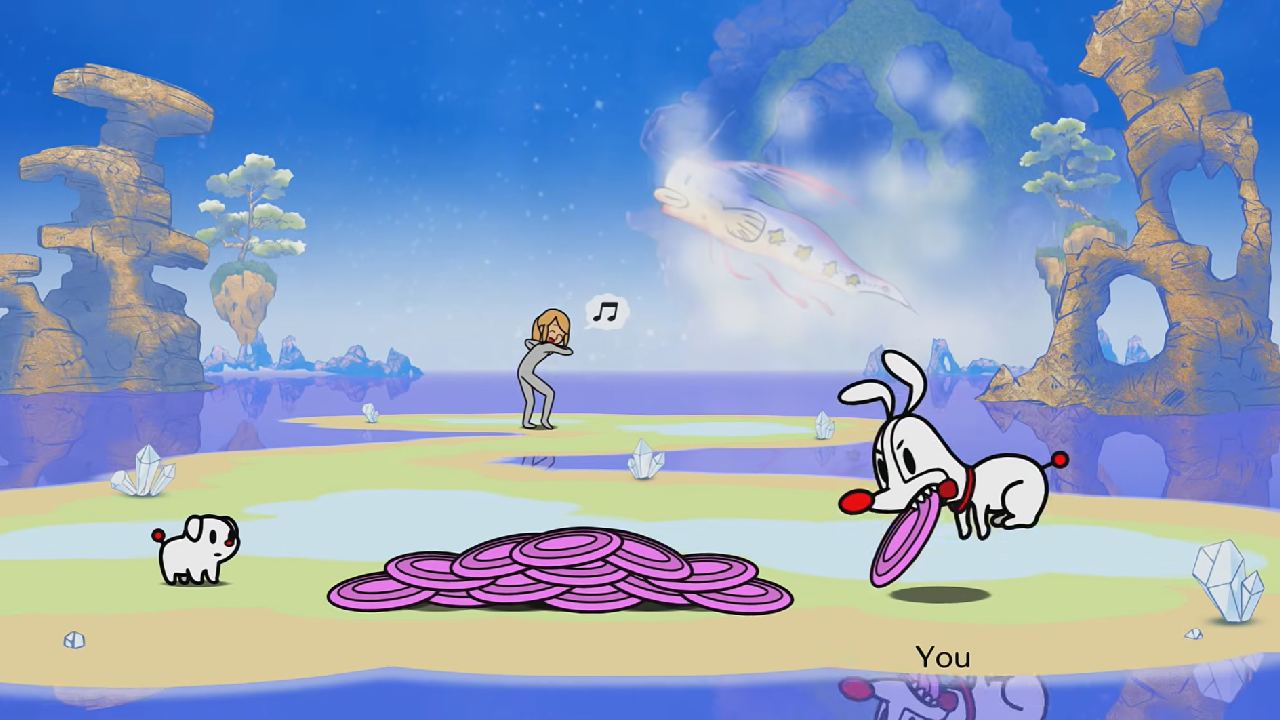
Catching frisbees with a dog while the camera zooms in on the owner, forcing you to rely on your ears; launching frogs while a creature blocks your view as tempo ramps up. Spelling drink words while stock photos flash by; dodging wiper blades as aliens; volleying soccer balls; catching salad ingredients; crushing cans.
Reception varies by stage; some disliked the opening hoop-jumping level or found the pudding game frustrating, while others called the umbrella or salad-chopping stages standouts. That split is normal here, since enjoyment often comes down to whether a song's groove clicks with your own sense of rhythm.
Beatspell is the one place in Rhythm Heaven Groove that attempts anything resembling combat. Instead of a single beat-matched action, you're casting spells, each with its own short string of timed inputs. Flame, the first spell, has you pressing B to move and A to cast on the beat.
Cure comes later and asks for B, then down, then A, at double tempo, essential once monsters start chipping away at your health in longer fights. Wave introduces a skip-beat technique, keeping the same B-and-A rhythm but deliberately skipping the third beat, the only reliable way to crack through the armored monster Pyro.
Landing any input with frame-perfect precision triggers a critical hit with a satisfying cymbal crash.
That's the entire combat loop: learn the spell, listen for the percussion, land as many criticals as possible before a fight drags on. Whether that combat system actually works is genuinely a mixed bag, depending on who is playing it.
You might find real satisfaction in Beatspell once the spell list is expanded and the pattern recognition starts to click into place, describing the later chapters as cleverly built and engaging once everything comes together. Because tougher fights can run long, the game has to loop the same short musical phrase over and over to sustain them.
The repetition strips away the constant genre-hopping surprise that makes the rest of Rhythm Heaven Groove so addictive in the first place. Hearing the same loop enough times tends to breed careless mistakes, too, since your brain naturally starts tuning out a pattern it has already memorized.

In short, Beatspell asks you to bring the patience of a traditional turn-based RPG to a series that has always thrived on musical unpredictability. Its progression is based on the RPG leveling-up system. Each cleared chapter gives you new spells, items, and passives.
It allows you to survive additional battles rather than being overwhelmed by faster, wilder monster behavior.
Beyond Beatspell, all other tracks from the Rhythm Heaven Groove use medals for progression instead of experience points. Clear a stage with a high enough rating and you earn medals, unlocking more content in the Rhythm Toy Box along with hidden character backstories in the memoirs menu.
Multiplayer runs on a separate currency of rings, unlocking its own pool of bonus games once you and your friends clear the base roster together. None of this runs particularly deep by real RPG standards. It does give you a concrete reason to chase a better rating rather than clearing a stage once and moving on.
Visually, Rhythm Heaven Groove keeps the series' signature look fully intact, and that consistency is a big part of the charm. Everything is built from flat colors, thick outlines, and a deliberately scrappy, hand-drawn quality that looks like it wandered out of an early-2000s Flash game, rough-around-the-edges by design, not by accident.
Character designer Ko Takeuchi, who also worked on WarioWare, is responsible for that aesthetic. Takeuchi's work is visible in the constant parade of odd little characters you control. Whether that's a round guy hopping through hoops, an umbrella-wielding character, or a stomping little dinosaur chomping hearts off flowers.
Those animations are charming on their own, but they also double as a gameplay mechanic.
The game regularly zooms the camera in tight, obscuring parts of the screen. A creature drops into your line of sight specifically to strip away your visual crutch and force you to rely on your ears instead. Sound is doing an enormous amount of heavy lifting across every stage of Rhythm Heaven Groove.
Tsunku returns as the driving creative force behind the soundtrack, working alongside other credited and uncredited composers, and the genre range is wide, shredding guitar riffs, ambient synth, pure percussion, depending on the stage.
These songs tend to get stuck in your head for days. You will most probably want to replay stages just to hear the music again, rather than chase a better score. Audio cues function as actual gameplay information rather than background flavor.
That’s why sound quality and latency matter more in Rhythm Heaven Groove than in most games, which becomes a real issue in docked mode. Running the game through a TV and external speakers introduces enough combined input and audio lag to throw off your timing.
Even with Game Mode enabled and the calibration tool run correctly beforehand, that lag persists.
You might find yourself needing to redo that calibration days into their playthrough after a previously mastered stage suddenly felt off. Switching to handheld or tabletop mode, or playing on Switch 2 hardware, mostly resolves the issue.
The game even nudges you toward handheld play for modes like Beatspell, where precise timing matters most. It’s in multiplayer that you see the absolute best that Rhythm Heaven Groove can offer. The game gives you about ten games in a grid format.
These games can be played cooperatively or competitively, with three different difficulties unlocked one after another. In the game “Cake Wait,” players count silently towards a certain time and swipe the plate when the clock hits three.
Tennis Quest has players taking turns knocking a served ball at targets in their own lane, working toward a shared boss, while whiffed shots let enemies swap lanes. There's a tug-of-war hair-plucking game with a patient onion, cooperative volleyball, and a bomb-passing game where whoever holds it on the final beat wins.
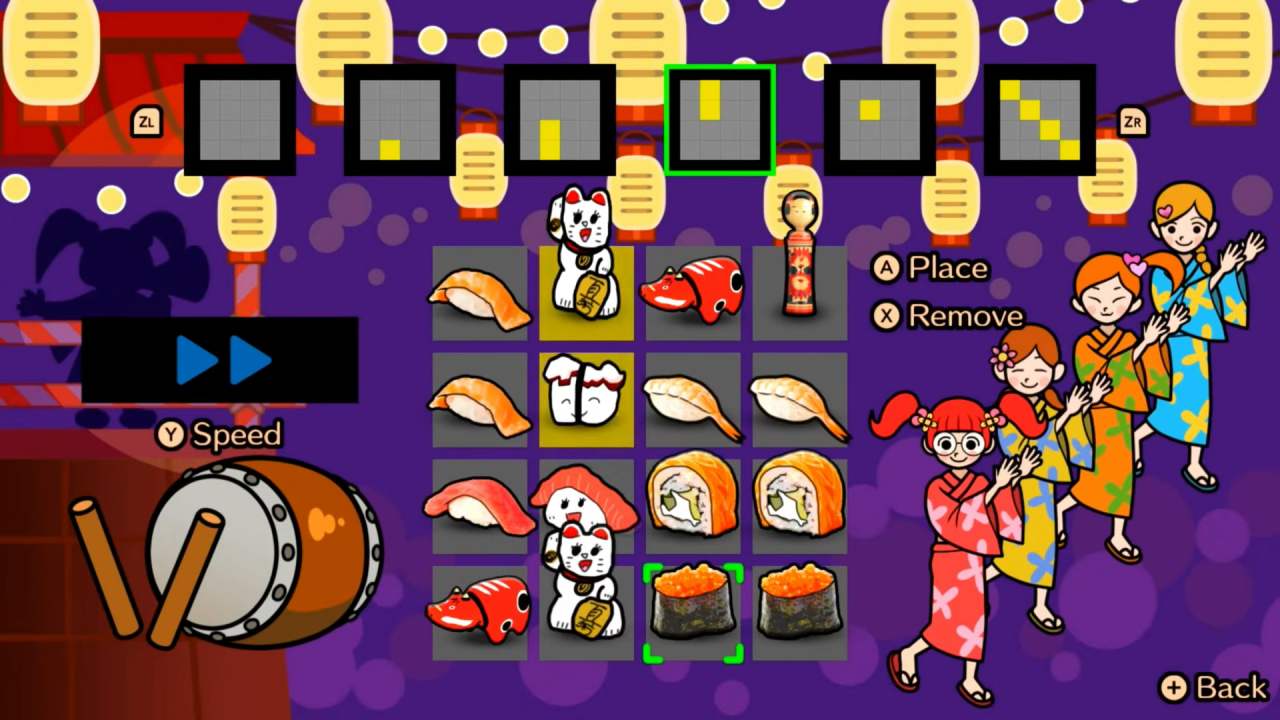
Competitive stages generate the loudest reactions around a couch.
The text-to-speech system calling out each player's custom name, filters and all, adds a genuinely funny layer of chaos. The solo campaign is where Rhythm Heaven Groove earns its keep.
Across more than eighty stages, you get real forward momentum, especially once a remix stage folds everything you practiced into one continuous song. Difficulties increase steadily throughout the approximately eight hours of the campaign without ever being unreasonable.
But the variety is what makes it possible to bounce a frisbee from the bodybuilder's biceps or to time the frisbee to catch for a nervous dog. There are some games that take longer or are less obvious, which people actually dislike according to preference.
That sounds more like a natural result of the format rather than a problem. Beatspell continues to be the most obvious weak point of the collection, decently done but underbaked all the same.
Beatspell’s looping combat music undercuts what makes the rest of the game compelling.
Multiplayer, by contrast, punches above its weight for a bonus mode, and the Rhythm Toy Box, jukebox, Score Attack mode, and unlockable comics give you plenty of reasons to keep poking around after the credits roll.
If you've never played a Rhythm Heaven game before, this is still a welcoming entry point. Tutorials are thorough enough to teach every mechanic from scratch, controls stay simple to learn even when hard to master, and a demo is available if you want to test your own sense of timing before buying.
Another thoughtful consideration for accessibility is that the player can choose to play single-stage missions with the full soundtrack, with dialogue and on-screen description, or without any sounds at all.
In the original coin-collecting tutorial of the series, decades ago, all the player had to do was collect ten coins in succession when the clock went away. It does not matter if you can see the rhythm in the visuals; what matters is that you can feel it.
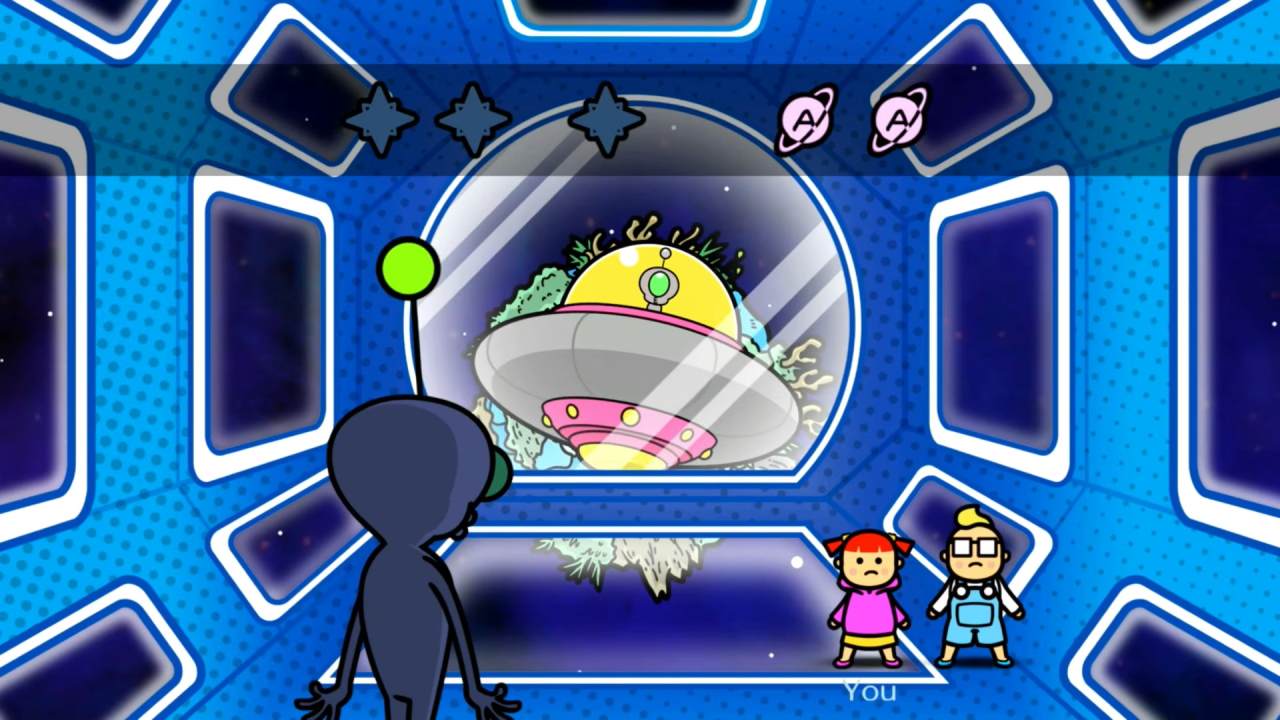
If you're a longtime fan who's been waiting since Megamix, Rhythm Heaven Groove is close to exactly the comeback you'd have hoped for.
Familiar in all the right ways, a little cautious with its one new idea in Beatspell, and never short on the charm and musical hooks that made you fall for this series in the first place. Just expect to spend most of your time in handheld or tabletop mode rather than docked.
Rhythm games and TV audio latency have never mixed well, and this is no exception. Players who have played the game agreed in a similar range, scores hovering around eight out of ten and four out of five, reflecting a game that nails its core identity while stumbling somewhat on its one big experiment.
Editor, NoobFeed
Verdict
Rhythm Heaven Groove is a fun, unpredictable comeback packed with catchy music, inventive minigames, and a solid multiplayer lineup that makes it easy to keep coming back for more.
84
Related News
No Data.