
Shards of Order Review
PC
Shards of Order looks like another roguelike deck-builder at first, but its permanent progression, dark fantasy story, and time-based combat give it a personality of its own.
Reviewed by Mahi Araf on Aug 08, 2026
Shards of Order is one of those games that can easily fool you at first glance. You see the cards, the dark fantasy setting, the map filled with nodes, and a combat system that looks like something you have already seen in several deck-building RPGs, and your first thought might be, "Okay, here we go again." But once you actually get into it, Shards of Order starts doing things differently.
It is a card-based RPG published by Awaken Realms, the studio you might know from Tainted Grail: The Fall of Avalon and Tainted Grail: Conquest. That connection is worth mentioning because Conquest was also a card-based RPG and was well received, so the publisher has a clear history of interest in this type of game.
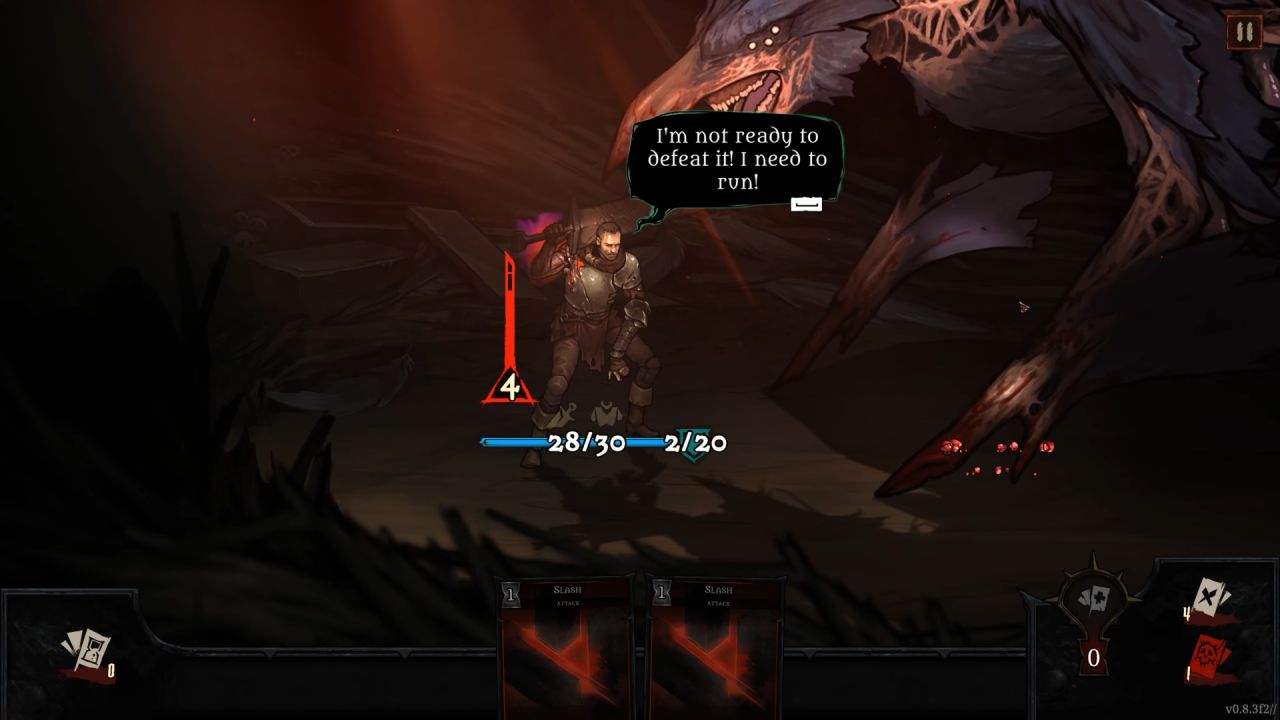
What makes Shards of Order interesting is that it borrows the familiar language of games like Slay the Spire without actually being a roguelike. You have cards, character builds, equipment, status effects, a branching map, and plenty of strategic decisions, but there are no random runs where everything disappears when you lose.
Your progression is permanent, and the game is structured more like a traditional RPG. You're playing through a whole story, building a party, unlocking abilities, finding gear, and making choices that can affect what happens down the line.
The story takes place in a world where the laws that used to keep reality going have started to break down.
Life, death, time, and the fundamental laws of life are no longer working as they should, and the world is in decay and chaos. You start as a survivor waking up in a bleak alien environment filled with monsters and odd NPCs, and from there you find other survivors and travel through various regions to restore the lost laws of reality.
Finally, the main group consists of three characters: a soldier, a scholar, and an exile. They all have their own personalities, mechanics, equipment, abilities, and progression options, but they are also tied together through the same combat system." Your ultimate aim is to recover the shards of order and use them to restore the broken laws, hopefully bringing some stability to a world that is slowly falling apart.
A mysterious god also watches over everything. Every time you restore one of these lost laws, the god supposedly takes more interest in your party. The interesting part is that this isn't simply a helpful deity or a straightforward villain. It is more of a trickster figure that can help you, but that assistance may come at a strange cost. That mechanic does not appear to be fully represented in the available demo, so there is clearly more to the full game than what you initially get to see.
Your decisions also matter outside of combat.
As you travel through the world, you will encounter NPCs, quests, side quests, and different situations where you have to decide how you want to proceed. You might help someone, take a powerful item for yourself, or make another choice that seems useful in the moment, only for that decision to come back later. Characters can remember what you have done, giving the story a bit more weight than simply moving from one fight to the next.
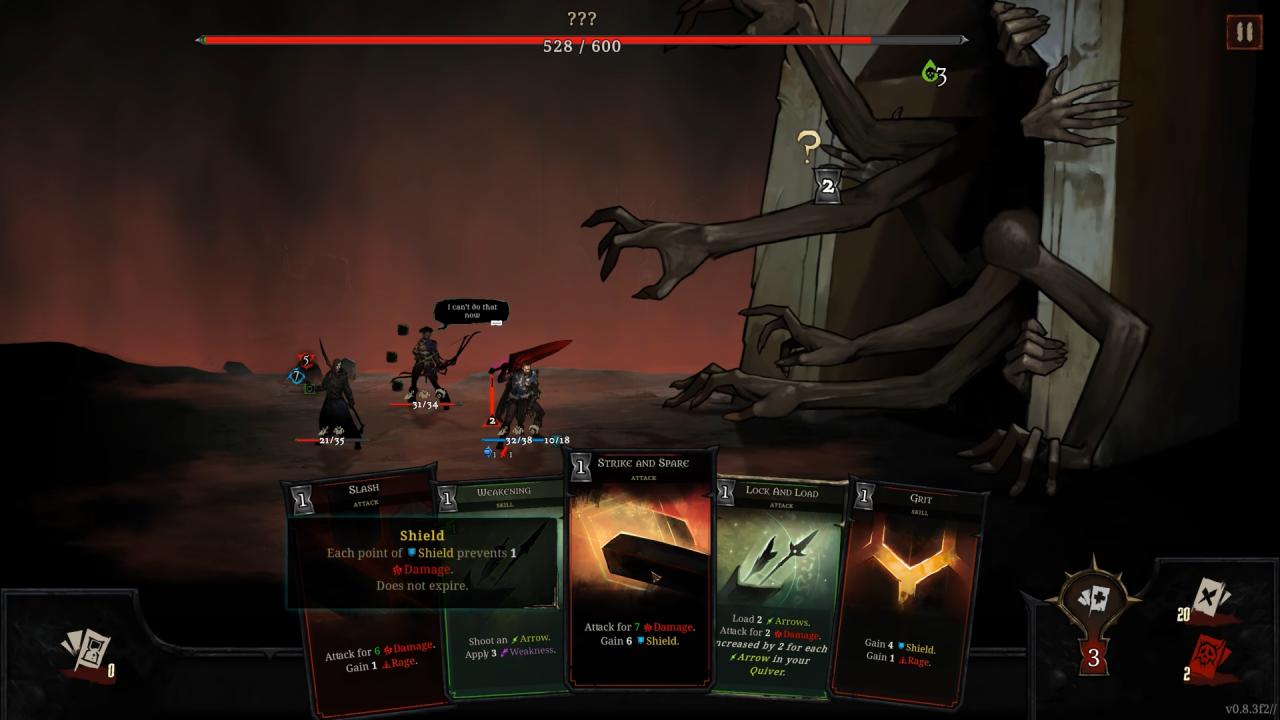
The game uses a set map with different nodes and encounters rather than constantly generating a completely new route. That makes Shards of Order feel closer to a traditional RPG than a roguelike. You can explore, return to areas, discover new options, and encounter situations where your character abilities or cards can influence the choices available to you. Some cards can even provide options during text encounters, meaning your character's development can affect more than just combat.
That RPG structure is probably one of the biggest things you need to understand before jumping in. If you're expecting an endless cycle of starting a new run, finding a ridiculous combination of cards, becoming completely overpowered, and then losing everything, that isn't what you're getting here. Instead, you gradually build your party and keep what you earn. Your experience, equipment, abilities, and upgrades remain with you, giving the whole adventure a sense of forward movement.
The three characters are also designed to complement each other, not just be different versions of the same role.
The soldier is the straightforward frontline fighter. He builds up rage during combat, becoming more dangerous as a battle continues. You can focus his development around damage and rage, or turn him into a defensive tank who uses shields and protects the rest of the party. His cards can also benefit from enemies being affected by certain status effects, which creates reasons to combine his abilities with those of the other characters.
The scholar works differently. He is focused more on debuffs, support, and healing, but his biggest trick is his mana system. As you use cards belonging to the other characters, the scholar gains different types of mana.
That means his effectiveness is tied directly to what the rest of your party is doing. He isn't simply a character you can throw into the fight and expect to carry everything himself. You need to think about how the soldier and exile are generating the resources he needs.
The exile is your ranged specialist and has an arrow-based system. Her attacks can be cheap and effective, but they consume arrows from her quiver. Once the quiver is empty, some of her cards change their purpose and can help reload it. You can build her around powerful arrows, card manipulation, or other effects depending on how you want your party to function.
This is where the game's progression becomes especially interesting.
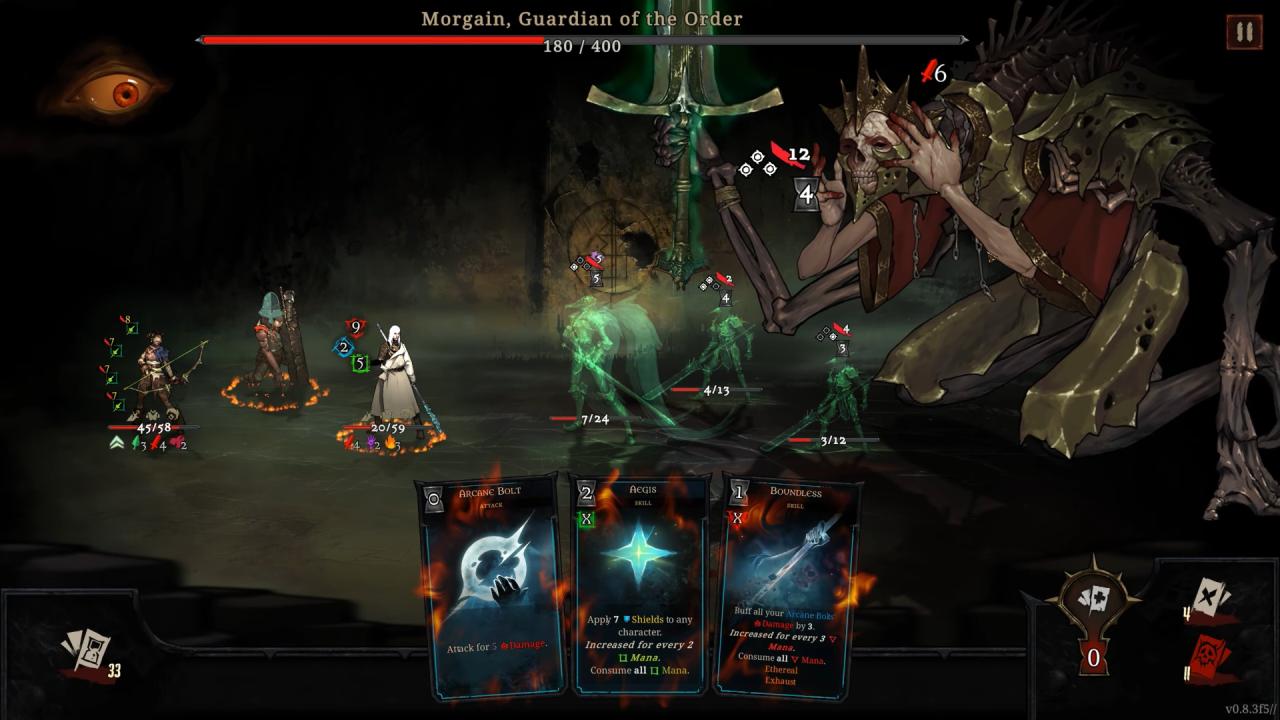
Each character has a massive skill tree that grows as you level and progress through the story. You can acquire new abilities, improve existing ones, and eventually mold your characters around different roles. Leveling up is more than simply increasing a number. You choose which cards you bring into your deck and how your whole party works.
The equipment works the same. Weapons, armor, and accessories are not just there to increase your character's attack or defense number. Equipment can introduce new cards or strengthen specific mechanics, which means choosing an item is also a deck-building decision. You might equip something that makes your soldier significantly stronger, but the cards it adds could also make it harder for you to draw something your scholar needs at the right moment.
That shared relationship between equipment, skills, and cards gives the progression system more weight. Every new card affects the chances of finding other cards in your hand. You can concentrate on building around one character or spread your power across the entire party. Either way, you are constantly thinking about how your latest upgrade changes the deck as a whole.
Then there is the combat, which is easily the strongest part of Shards of Order. Calling it turn-based doesn't really explain how it works, because the game cares more about time than traditional turns, action points, or mana. Every enemy has a visible timer showing how long it will take before it performs its next action. That action might be an attack, a buff, a debuff, or something else entirely.
Your cards also have time costs.
When you play a card, you aren't simply spending an energy point and waiting for your turn to come around again. You're moving the clock forward. A cheap card might let you perform several actions before an enemy's timer reaches zero. In contrast, a powerful card with a high time cost can push several enemies closer to attacking.
This creates some genuinely difficult decisions. You might have the perfect attack in your hand, but playing it could advance the timers of several enemies enough for them all to attack you immediately afterward. Alternatively, you might play several smaller cards, deal less damage, and keep the enemies from reaching their attack windows. You are constantly weighing damage, defense, setup, and time.
That system gives combat a rhythm that feels different from most deck-builders. You aren't simply waiting for the end of a turn. Every card changes the state of the battlefield. If you want to set up a powerful combo, you have to consider whether you can survive the amount of time it takes to put that combo together.
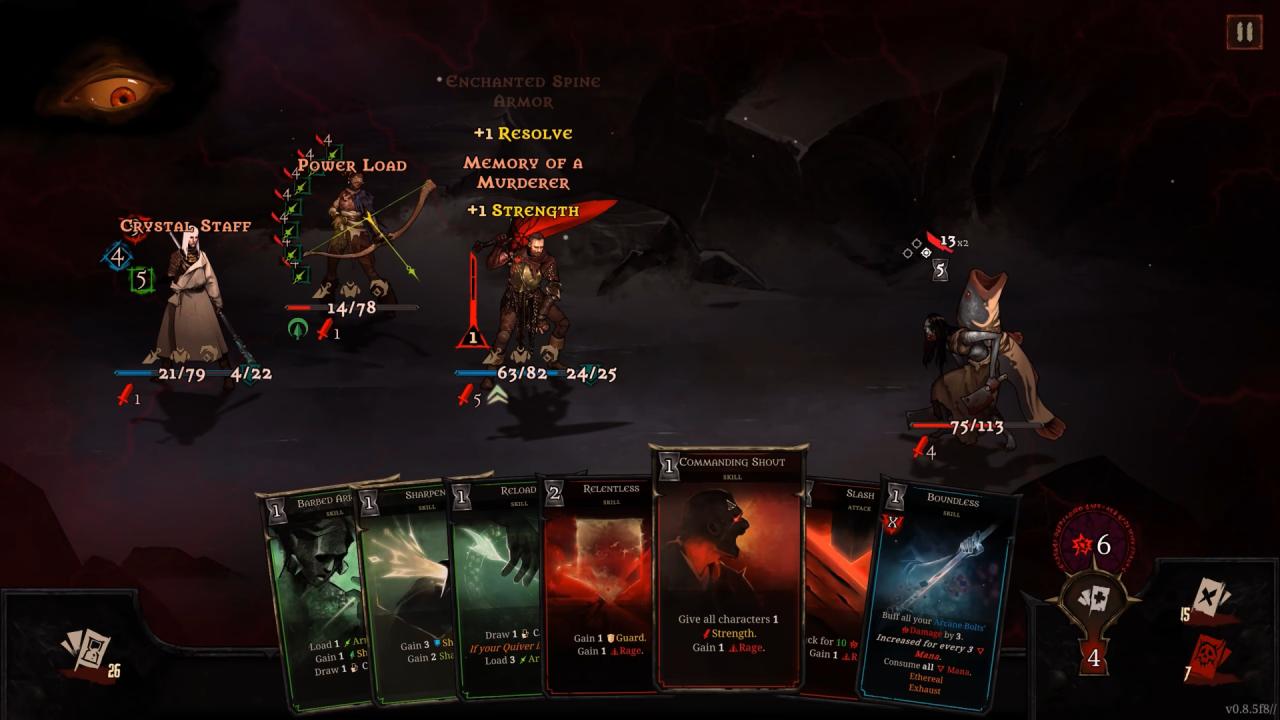
Positioning also matters because enemies can target different areas of the battlefield. You have to think about where attacks are coming from, who needs protection, and which enemy to deal with first. On top of that, there are familiar effects such as bleeding, poison, weakness, vulnerability, guarding, and healing.
The combat is also deliberately difficult.
At times, Shards of Order can feel like a Dark Souls version of a card game. You can reach a fight that completely shuts you down and leaves you wondering what you are doing wrong. Instead of simply blaming bad luck, you have to look at your deck, your equipment, your party composition, and the mechanics of the encounter to figure out how you can approach it differently.
Some encounters also add their own objectives to keep fights from becoming simple damage races. You may have to protect an NPC who is buffing the enemies, and you have to decide whether to keep that character alive or let them die so the battle will be easier. Other battles may have environmental objects that buff enemies and must be destroyed. These mechanics give you more control over how an encounter plays out.
The best part is that your deck dictates how you handle these situations. If you've built around defensive cards, you can protect your party and survive longer. If you've focused on status effects, you can weaken enemies before using your soldier's abilities. If you've developed the exile around arrows and card manipulation, you can play more reactively and take advantage of specific openings.
This approach has some downsides, though. The game is difficult enough that you can sometimes spend more time trying to survive than experimenting with the deeper mechanics. Some of the more elaborate abilities also need time to set up, and shorter encounters can end before you really get to use them. That becomes less of a problem during bosses and longer battles, where your carefully prepared mechanics have more room to shine.
The lack of roguelike randomness is another thing that will divide players.
You don't get those completely broken builds where everything suddenly comes together, and you destroy an entire boss in one ridiculous turn. You also don't get the opposite situation where a bad run ends because you simply never found the cards you needed. Shards of Order is more controlled and balanced. With the right build and understanding, you can usually find a way through a fight.
Your hand still has an element of randomness, naturally, because this is a card game. You can redraw your cards, but doing so normally costs time. Once you've played enough cards from your hand, however, the redraw cost can drop to zero. Some items and cards interact with the redraw system, such as effects that add time to enemy timers when you have no cards left.
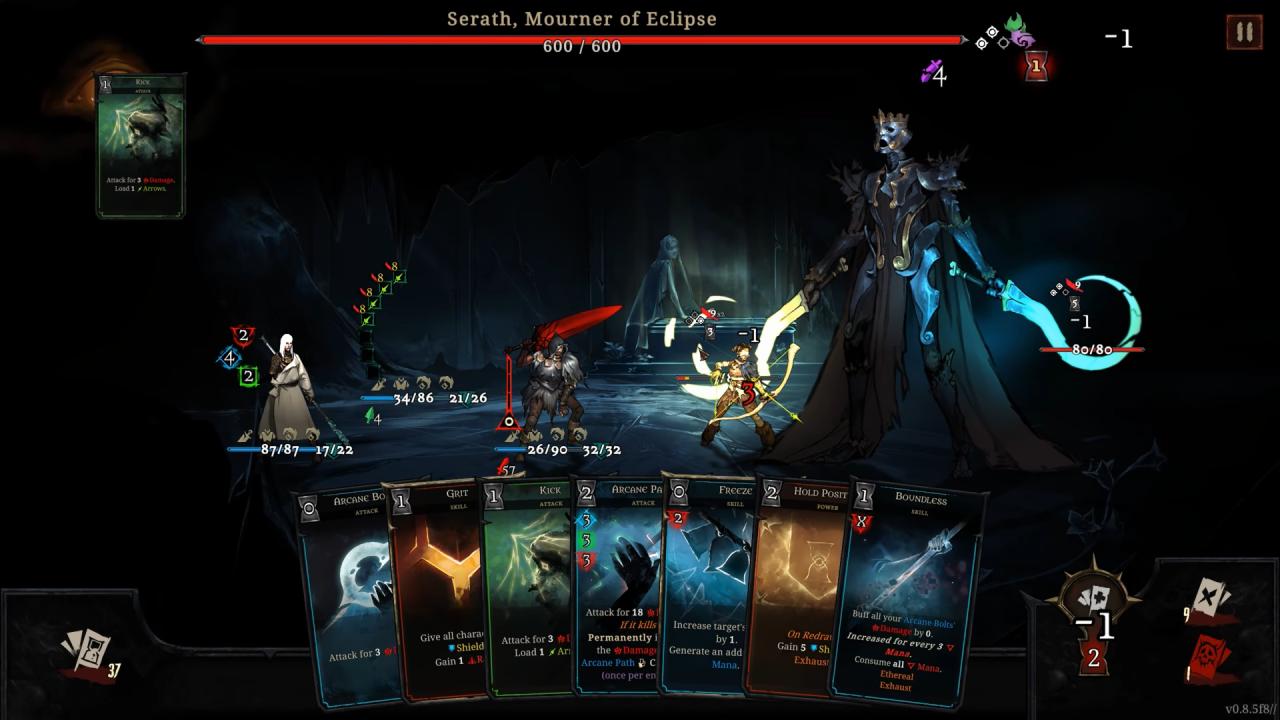
Cards can also have special effects, depending on when you play them. Some get stronger if they are the last card in your hand, and the discard mechanics and status effects add more layers to the decision-making. The upshot is that even something as simple as redrawing your hand can be part of an overall strategy.
The character progression also feeds directly into this combat loop. You gain experience after battles, level up, and get to unlock or improve skills. They are skills that can add cards to your character's deck, so leveling up effectively changes the probability of drawing certain cards later. So you want to think about whether a strong new ability is worth adding to your deck, or if it will interfere with the consistency of your current strategy.
The game also has a unique method of handling character defeat.
Instead of just dying and leaving the fight when a character's health runs out, they are left crippled on the battlefield. Their cards are effectively replaced by revival options, and you need to spend time bringing them back into the fight. Repeated knockdowns make revival more expensive, so mistakes can build on one another rather than resetting after every encounter.
That system makes healing and potions important. You don't have an unlimited supply of recovery options, so using them in every minor fight isn't necessarily a good idea. Saving them for tough encounters and bosses can make a big difference, especially when the revival system gets expensive.
Visually, Shards of Order is very much a dark fantasy game. The world is broken, decayed, and full of strange creatures, and the character designs and environments add to the feeling that reality itself is coming apart at the seams. The aesthetic should feel familiar if you've spent time with FromSoftware games or Berserk, although Shards of Order isn't a Soulslike mechanically. It simply shares that darker visual and atmospheric language.
The presentation also helps the combat feel more readable.
Character states can also change visually; for example, the soldier becomes visibly more enraged as his rage builds. Equipment can affect how characters look, giving progression a presence outside numbers and menus. The animations, effects, and general visual feedback help to make the battles easier to follow, despite the amount of information being presented.
Sound and music also support the experience. The darker atmosphere is supported by its audio design, while combat effects give actions enough impact to keep the constant movement of the timers from feeling too abstract.
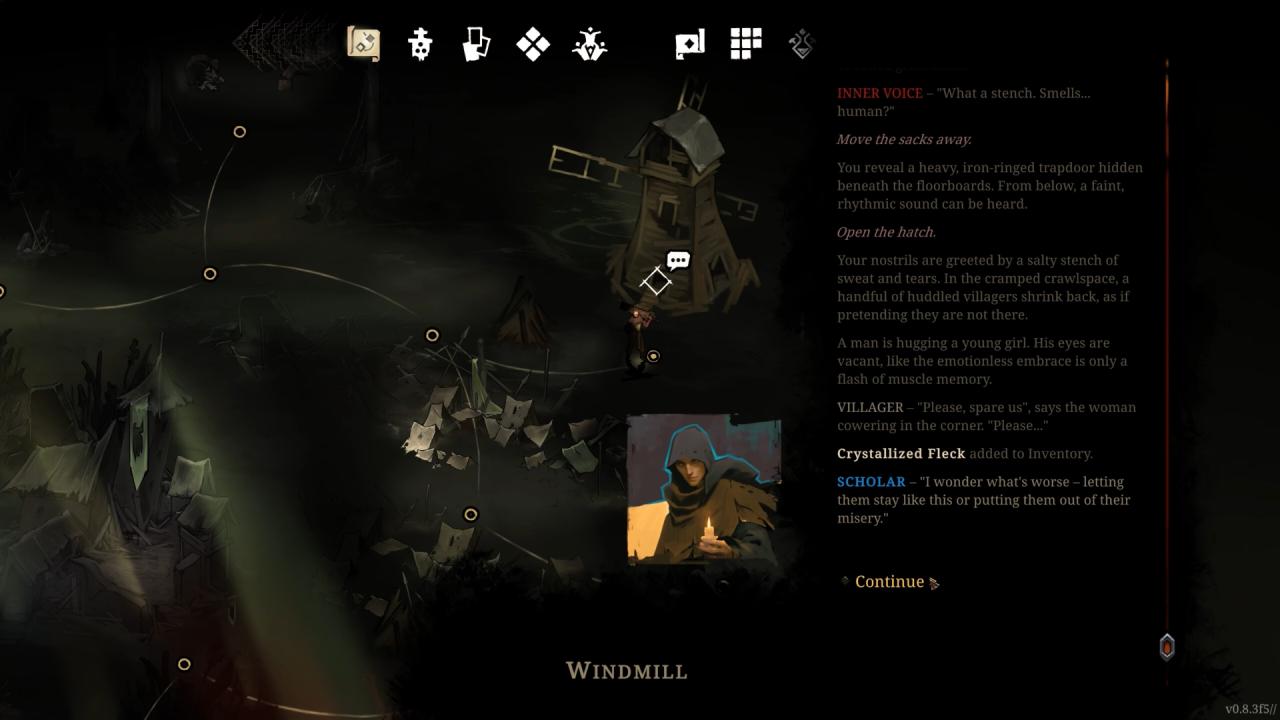
There are voice-acted scenes and cutscenes, although a lot of the lore and side content is presented through text that you can read at your own pace. That isn't necessarily a problem, but it is worth knowing if you are expecting every major story moment to be fully voiced.
At the end of the day, Shards of Order works because it understands what it wants to be. It isn't trying to replace Slay the Spire, and it isn't trying to deliver a massive open-world RPG like Elden Ring. Instead, it takes the deck-building structure you already understand and puts it inside a more traditional RPG framework, then builds its combat around a time system that forces you to constantly reconsider your next move.
If you love roguelikes mainly because of their endless replayability, random maps, and wildly different runs, you might find Shards of Order restrictive. The map is much more linear, the number of items and equipment options is more controlled, and there isn't the same level of procedural chaos. If you want hundreds of different items and endless customization, this probably won't satisfy you either.
But if you're looking for a dark fantasy RPG where your decisions actually matter in combat, there's a lot to like here. You have three characters to develop, different skill trees to explore, equipment that changes your deck, cards that interact with each other, and a combat system where time itself becomes the resource you have to manage.
Most importantly, you don't need to completely understand the game before you can start enjoying it.
You can experiment with the soldier, scholar, and exile, figure out how their systems interact, and gradually become better at reading the battlefield. The learning curve can be steep, but overcoming a difficult encounter because you finally understood what the game was asking you to do feels rewarding.
Shards of Order isn't a revolution for the deck-builder genre, but it doesn't need to be. Its biggest strength is that its different systems actually connect with one another. Your progression affects your cards, your equipment affects your deck, your deck affects your combat strategy, and your combat decisions are constantly measured against the enemy's timers.
That makes it much more than a card game with an RPG skin. You are building a party rather than just building a deck, and every decision you make can influence how that party functions. The permanent progression also gives the adventure a sense of momentum that you simply don't get from a traditional roguelike run.
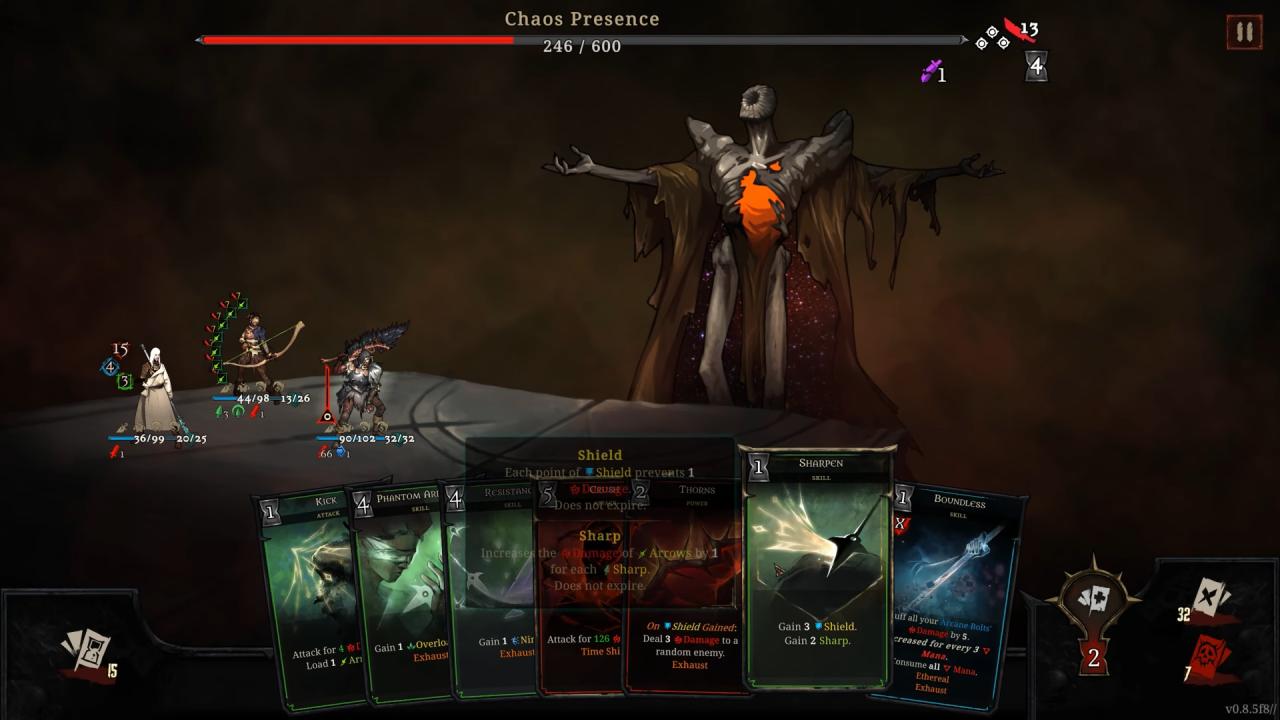
For you, the biggest question is probably whether the time-based combat clicks. If it does, Shards of Order has enough depth to keep you thinking about your next move, your next upgrade, and the next way you can improve your party. If it doesn't, the difficulty and linear structure may make the experience feel more restrictive than rewarding.
Fortunately, a free demo is available, making it easy to see which side you fall on. After spending time with the game, though, Shards of Order makes a strong case for itself. It has a clear identity, an interesting combat system, a dark setting, and enough character progression to make each battle feel connected to the larger journey.
It may not have the chaotic freedom of a roguelike, but you get something more considered in return: an RPG where your progress carries over and your failures teach you how to play better.
Senior Editor, NoobFeed
Verdict
Shards of Order is no Slay the Spire clone. It provides a challenging experience that's worth a shot if you're into strategy, with its time-based combat, shared deck, permanent progression, and dark RPG setting.
77
Related News
No Data.