
Tiny Eden Review
PC
A tiny balcony garden tucked inside a cold, glassy skyline, and a reminder that plants don't care how busy your city is.
Reviewed by Maisie Scott on Sep 08, 2026
You boot up Tiny Eden not really knowing what to expect beyond "cozy gardening game," and that's mostly what you get, though there's more going on under the surface than the pitch lets on. Bajka Games developed the game, and Digital Vortex Entertainment published it. In the run-up to launch, the developers reportedly doubled their wishlist count from fifty thousand to a hundred thousand in about three weeks, which suggests people were curious, even if that number doesn't say much about how many actually bought in once the game came out.
On the technical side, Tiny Eden isn't as light as its calm exterior suggests, and you'll want something in the ballpark of sixteen gigabytes of memory along with a GTX 1050 Ti to run it comfortably, since the lighting work behind that garden-versus-city contrast turns out to be more demanding than you'd guess going in.
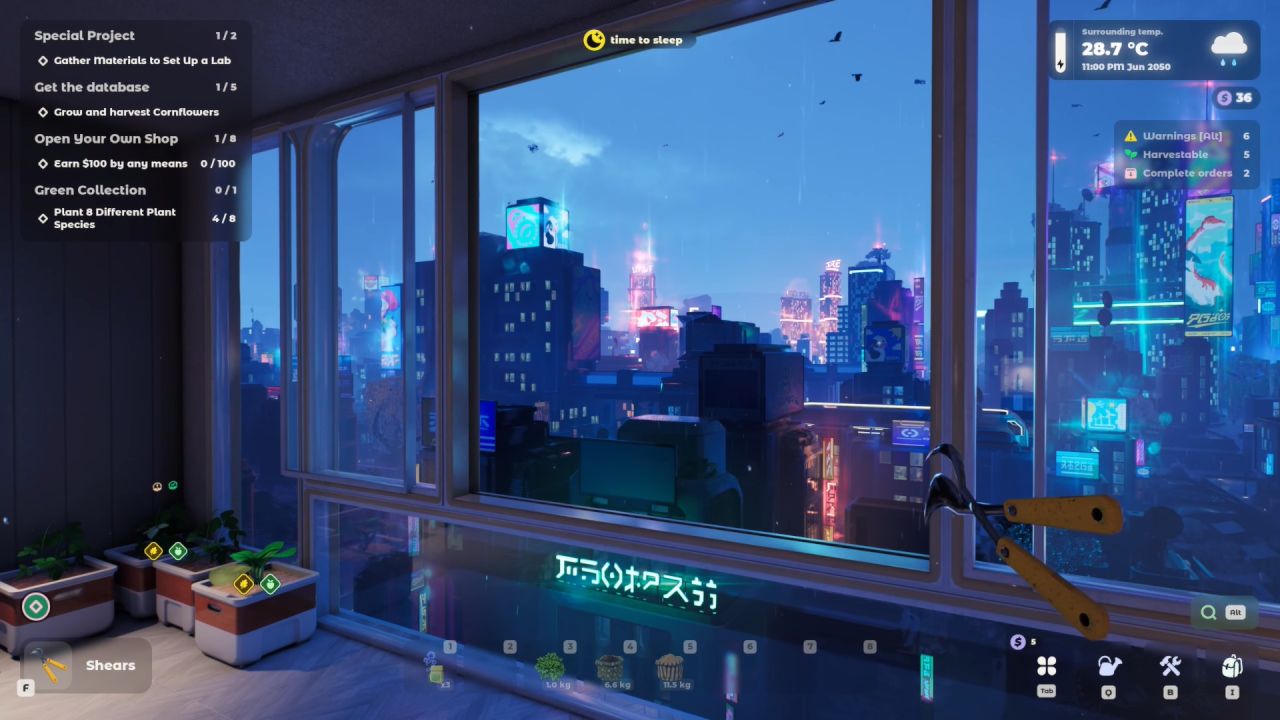
You're playing a familiar farming-sim formula.
Except instead of a sprawling field, you're working with a single apartment balcony, and that change in scale ends up shaping almost everything else about how Tiny Eden plays. Each in-game day stretches across roughly sixteen real-world minutes and represents a full month rather than a single day, so seasons roll by quickly enough that you're constantly adjusting for them.
Cold months mean pulling plants off an exposed balcony or bringing in a heater, while warmer stretches bring their own risks if a plant that prefers shade ends up sitting in direct light for too long. You take on the role of Joy, a botanist whose research funding got yanked by someone named Morrison, right around the time the game's world lost its bees entirely.
With nowhere else to go, you move into the apartment of your friend Holly, who's currently off in a jungle somewhere with no phone signal, checking in with you through the occasional email instead. The setting is Garden Tower, a high-rise in a near-future city that leans into an East Asian aesthetic, right down to the semi-Hangul lettering scattered around the interface and signage.
You're not entirely on your own in there, either. A small drone called EN-G1 sticks around to walk you through tasks and crack the occasional joke, and early on you head up to the rooftop to rescue a stray cat that's been living up there because none of the other tenants would take it in.
Beyond that, Tiny Eden doesn't really go for a big plot. There's no twist waiting for you, no threat hanging over your head. The story mostly lives in the small stuff: emails from Holly, a growing relationship with your drone, and vague mentions of a home lab you're slowly rebuilding.
Once you're settled in, the loop becomes pretty clear.
You clean up the mess left in the apartment, get familiar with your tablet, and start working through your balcony. You sow seeds, water your plants, pull weeds, and eventually harvest whatever's grown. From there, you either sell your produce raw or cook it into dishes using recipes you unlock over time, and you deliver both to neighbors and to local clubs who place orders through your tablet.
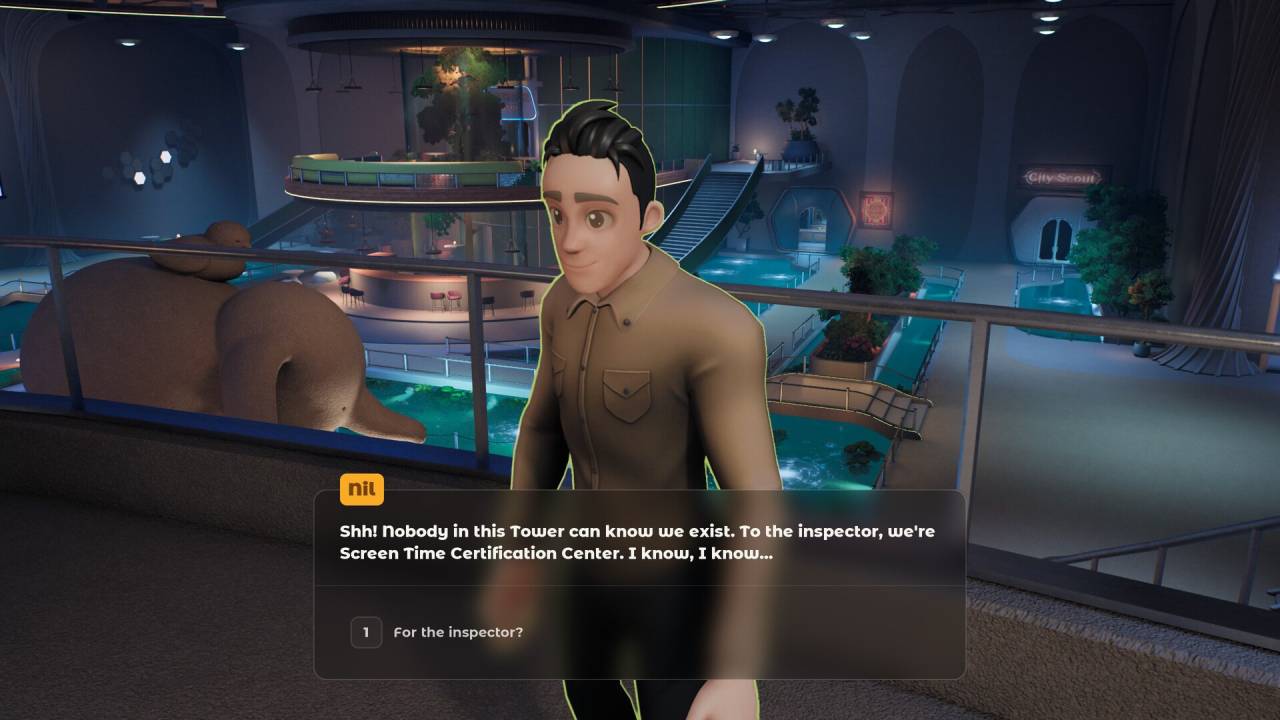
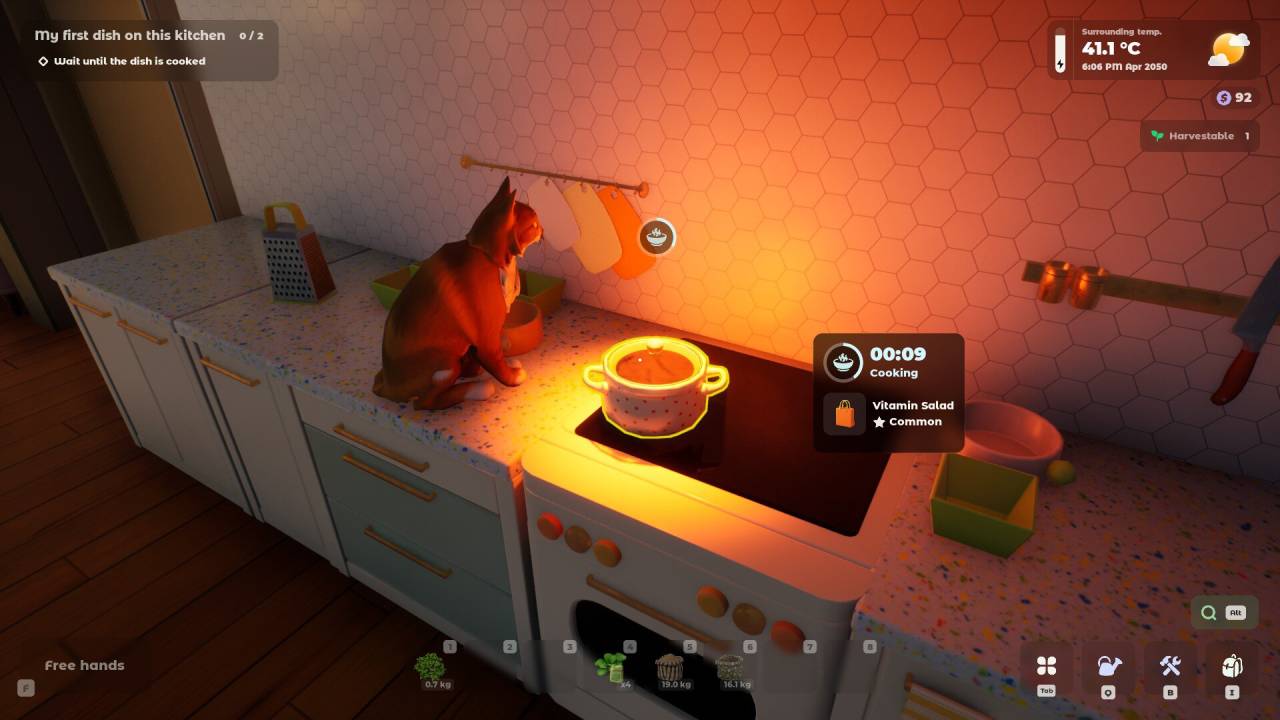
Cooking means picking a recipe from a growing cookbook, tossing in whatever ingredients the dish calls for, and letting the stove handle the rest. At the same time, you go do something else on the balcony, which fits the unhurried pace Tiny Eden is going for.
The money you bring in from all of that goes toward buying tools, unlocking new rooms in the apartment with keys, furnishing the place, taking care of your cat, and eventually expanding into new balconies and a rooftop greenhouse. If you're short on cash at any point, you can take out a loan from the in-game bank or barter through a trading hub instead of just waiting around.
Every purchase you make through the tablet shows up shortly after in a parcel locker outside your door, so you never have to leave the building to get what you need. Later on, you're able to put together extra drones alongside your original companion, and those additional units start handling some of the daily upkeep on their own, which takes a bit of pressure off once your garden has grown past a single balcony's worth of pots.
Tiny Eden puts most of its effort into plant care, and it's more involved than you might expect from the genre.
Every plant you grow has its own set of needs, and meeting them starts with the soil rather than the seed. You choose a planter, then mix your own soil blend out of compost, sand, clay, and other materials, aiming for whatever ratio a given plant wants.
Get it wrong, and the plant struggles no matter how well you water it afterward. Light and temperature matter just as much. Some plants want full sun and can't handle wind; others need shade and steady warmth, and because you're playing this in first person rather than from an overhead camera, you notice these things yourself instead of just reading a warning icon.
You'll catch a corner of your balcony sitting in shade all day and physically move a pot because of it, which feels different from clicking a menu option. Watering works as a small timing exercise: you fill a can and try to land in a specific range on a meter instead of holding a button until the plant is "watered."
Weeds show up over time and need to be pulled with a garden fork; damaged leaves need to be trimmed away with a knife you have to buy first; and pests and other issues get flagged through a status check you can pull up on demand. Certain plants even benefit from being placed near others, similar to how basil is said to help keep pests off nearby tomatoes, so you start thinking about layout instead of just cramming pots wherever there's room.
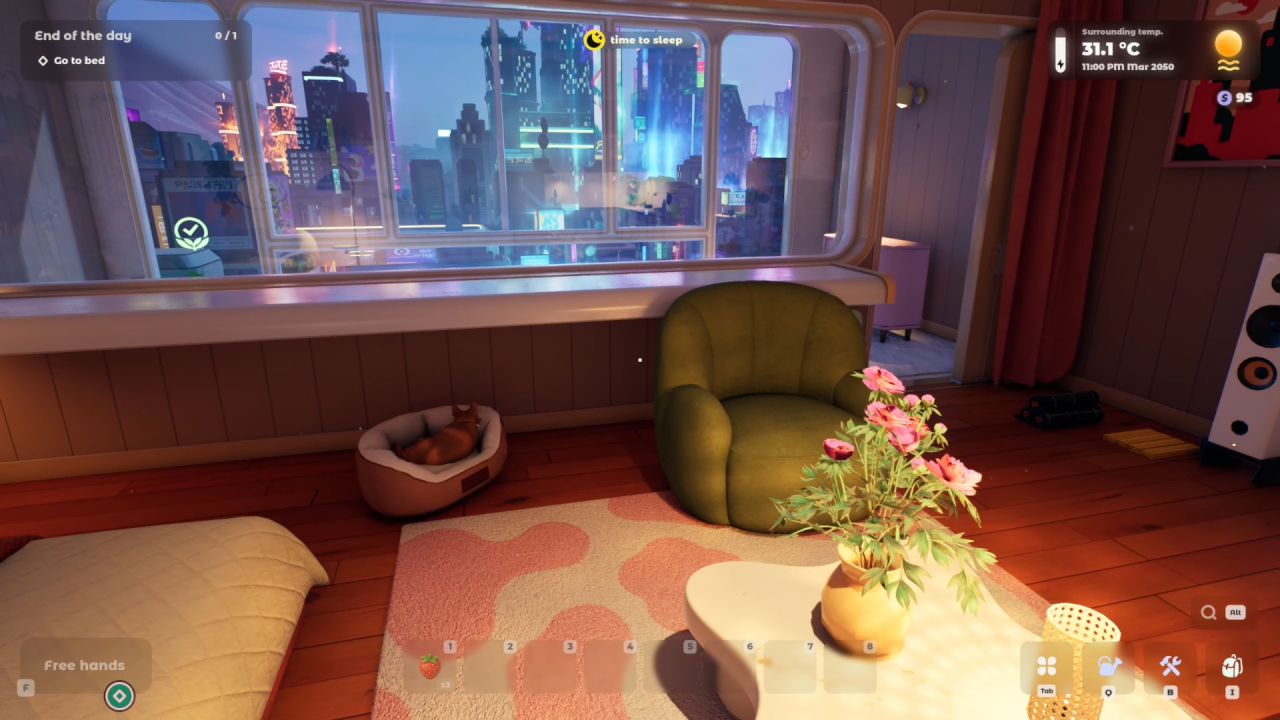
Once something's ready, you harvest it carefully with shears so you don't damage the yield.
There's a lot to like about how hands-on all of this feels. The soil system in particular gives the plant care actual weight, since a plant that isn't growing the way it should usually traces back to a choice you made several steps earlier, whether that's a bad soil mix or a pot left in the wrong spot.
It rewards attention rather than checklist memorization. The downside is that Tiny Eden runs into a fair number of technical rough edges that undercut that sense of care. The tablet interface tends to stutter and lag when you open it, which is annoying given how often you're in and out of it for shopping and orders.
You may run into weeds that refuse to disappear even after you've pulled them, planters that clip straight through the floor, and soil that spills out of its container and vanishes instead of actually filling anything. Frame drops show up periodically, especially when the tablet is open, and every so often parts of the screen render completely black for a moment before clearing up.
None of this crashes the game outright, but it does chip away at the calm the game is clearly going for. Status icons for plant problems can also be vague, leaving you to guess at what's actually wrong until you dig through a guide, and progression can get unlocked out of order in ways that feel more confusing than exciting, like gaining access to helper drones before you've even opened the second in-game shop.
Tiny Eden tracks your standing through reputation with individual clubs, starting with the DIY Club where you place your earliest orders.
Fulfilling their requests, whether with raw produce or cooked meals, builds your reputation with them. That reputation is what unlocks new inventory in their shop: additional seeds, crafting blueprints, and recipes you couldn't buy before. Separately, you also build up skills tied to cultivation, cooking, and harvesting just by doing those things repeatedly.
The catch is that this reputation grind moves slowly. Reaching the point where a second shop opens up requires hitting a fairly high reputation tier with the first club, and depending on how efficiently you play, that can take somewhere in the neighborhood of ten hours of real time.
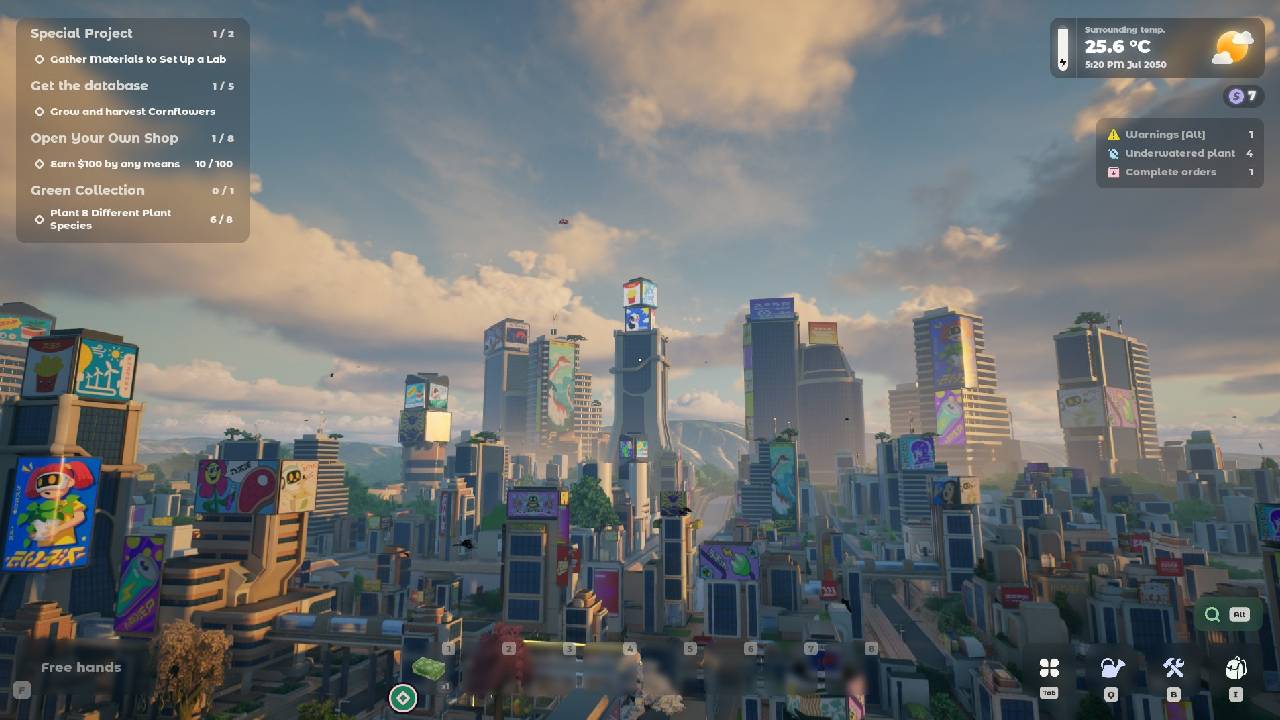
It's not a bad idea on paper, since it keeps early-game plants and recipes feeling meaningful for longer, but in practice it means a big stretch of the game is spent circling the same small set of tasks before new systems open up. Visually, Tiny Eden leans hard into the contrast between your garden and the city surrounding it.
The world outside your window is all muted grays and sleek, synthetic architecture, cold and clinical without tipping into anything post-apocalyptic. Against that backdrop, your balcony full of soil, leaves, and berries stands out immediately, and that contrast does a lot of the game's emotional heavy lifting even without much of a plot pushing things forward.
The presentation doesn't always hold up technically, with occasional black-screen glitches and frame-rate dips whenever the tablet or heavier menus are on screen. Worth noting too, if you're someone who usually struggles with first-person games, Tiny Eden is unusually easy on that front.
There's little to no motion sickness here even without adjusting any settings, which isn't something you can say about most first-person titles.
The soundtrack fits the mood the game is going for, made up mostly of quiet, low-key lo-fi tracks that sit comfortably in the background rather than demanding attention. The game shows you the name of whatever's playing along with who made it, which is a nice touch if a track catches your ear.
The pool of songs isn't huge, though, so if you spend a long stretch of time on your balcony you'll likely start recognizing repeats. It doesn't ruin anything, since the music is clearly meant as ambiance rather than a centerpiece, but it's noticeable if you're paying close attention.
Outside of your own apartment, Tiny Eden doesn't have a lot going on. You can't leave the building, so all your shopping and deliveries route through the tablet and the parcel locker by your door. The neighbors you interact with only really show up when there's a task tied to them, and the rest of the building feels pretty lifeless as a result, with generic-looking residents standing around without much personality to speak of.
That emptiness stands out more than it probably should, mostly because the apartment itself is so clearly the product of a lot of care and detail. Underneath all the watering and weeding, there's a quieter idea running through Tiny Eden about slowing down inside a world that never really stops moving.
Plants don't grow any faster because you're in a hurry, and the game leans on that fact rather than fighting it, even while orders pile up and your tablet fills with tasks.
It ends up landing somewhere close to a "leave it on in the background" kind of experience, the sort of thing you check in on between other chores rather than sit down and binge in one sitting, which works in its favor more often than not.
Between the plant systems, the soil mechanics, the reputation grind, and the decorating options, there's a genuinely relaxing loop here once you settle into it, even with the bugs and the slower stretches of progression working against it. You may find yourself, like the plants on your balcony, needing a bit of patience with Tiny Eden itself before it clicks.
Once it does, though, it's easy to keep coming back to for a short session here and there, and there's a decent chance it leaves you looking at your own windowsill wondering if you could grow something there too. That's not a bad note for Tiny Eden to end on, considering the whole point was getting you to care about a garden in the first place.
Editor, NoobFeed
Verdict
Tiny Eden is a cozy, hands-on apartment garden sim with genuine depth in its soil and plant systems, but technical hiccups and a slow reputation grind hold it back. Worth a patient try.
75
Related News
No Data.