

Intel ARC B50 Pro Outperforms NVIDIA RTX A1000 in Benchmarks and AI Task
Intel’s ARC B50 Pro emerges as a serious contender, reshaping expectations in GPU performance and efficiency across multiple workloads.
Hardware by Nakiro on Oct 28, 2025
There is finally something thrilling for tech fans in a world full of bad news. Intel is now giving Nvidia, which has long been seen as the best in the business when it comes to GPU performance, some real competition.
The company's newest graphics card is changing the game. It beats Nvidia's cards in numerous important categories, which is a big development in the GPU industry.

Intel Steps Into the Ring
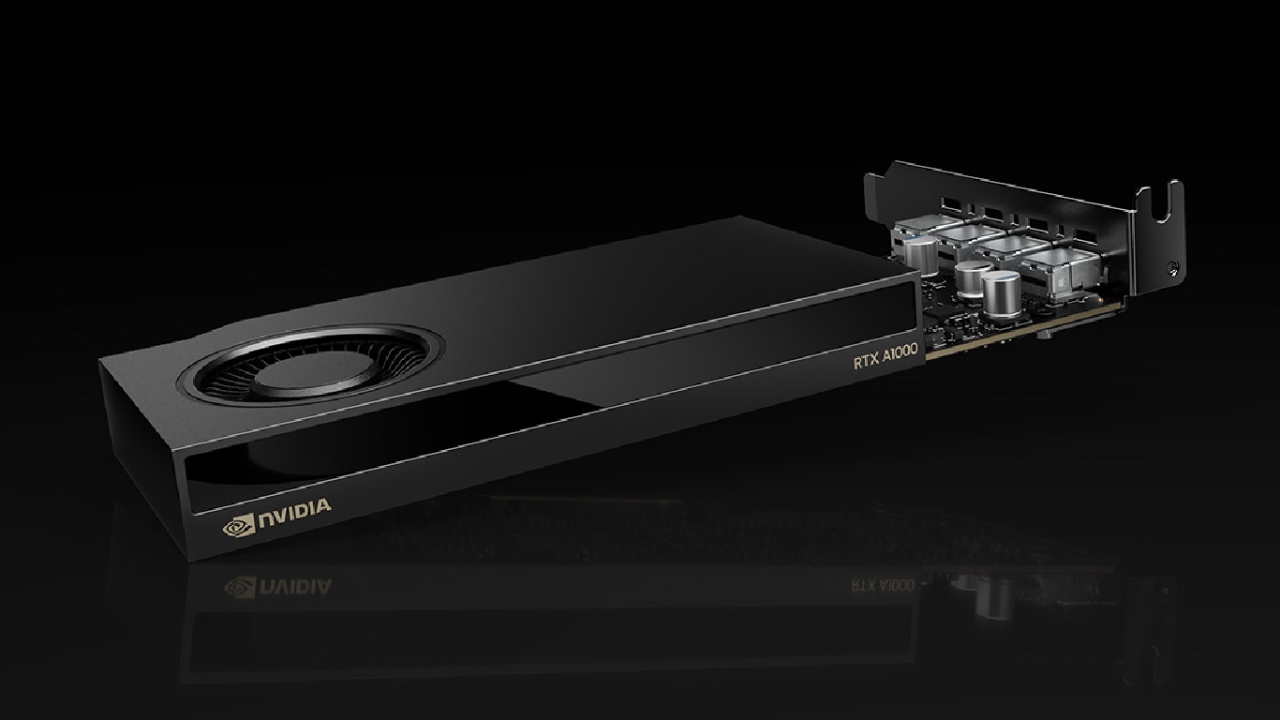
Intel is stepping up to the challenge with its ARC Pro B50, directly competing against Nvidia’s RTX A1000. The company is so confident in its new GPU that it even provided Nvidia’s own card for comparison.
According to Linus, this could be the most important GPU of 2025—and after extensive testing, that claim holds weight. Beneath the surface, there’s far more to this battle than expected, and it’s clear that Nvidia might not want these results getting out.
The test bench setup included an Intel 12900K processor, Asus Z690D4 motherboard, 64GB DDR4 3600MHz RAM, Arctic Liquid Freezer II 360mm cooler, Samsung 980 Pro SSD, and a Be Quiet Pure Power 1200W power supply.
Benchmark Performance
The Intel ARC B50 Pro beat the Nvidia RTX A1000 by a wide margin in the Geekbench 6 GPU benchmark. The ARC B50 Pro did roughly 33% better in OpenCL and 61% better in Vulkan. These results show that Intel is getting better and better at GPU compute performance.
AI Workload Dominance
One of the most important parts of GPU performance is how well it can process AI. In the Geekbench 6 AI tests, the ARC B50 Pro was 55–67% faster than the RTX A1000 across the board. However, the biggest factor contributing to this performance lead is VRAM capacity.
The ARC B50 Pro features 16GB of VRAM, double Nvidia’s 8GB. This allows larger AI models to fully load into memory, leading to significantly faster performance. During testing with a GPT OSS model containing 20 billion parameters (12.1GB in size), the Intel card handled it easily, while Nvidia struggled.
As a result, the ARC B50 Pro achieved 41% faster token generation and a drastically shorter time-to-first-token—less than 1 second compared to Nvidia’s 18.5 seconds.
Creative Application Results
The ARC B50 Pro is still great when it comes to creative software. It got the highest result of all the GPUs tested in PugetBench Photoshop tests, beating the RTX A1000 by 7.6%.
and figure may not seem like much, but it's a big step forward for pros who deal with big canvases and need more VRAM.
In Lightroom Classic, performance differences were minimal, but in Premiere Pro, the results were striking. The ARC B50 Pro was 21% faster in standard overall scores and 20% faster in extended tests.
For H.264 and H.265 codec playback, it delivered 26% faster standard and 24% faster extended results. GPU effects were 36.7% faster in extended testing—an impressive leap in performance for video editors.
.jpg)
After Effects and 3D Rendering
In Adobe After Effects, Intel’s GPU was slightly slower—0.9% lower in standard scores and 2% lower in extended ones. Interestingly, 2D tracking performance was faster on Intel’s card, showcasing efficiency in certain workflows.
The ARC B50 Pro wins an unexpected victory when it comes to 3D workloads. Intel's GPU outperformed Nvidia's for the first time in Blender benchmarks. It was 6.2% quicker in the Monster scene and 14.5% faster in the Classroom scenario, but it was a little slower in the Junkshop test. This is a big deal because Nvidia's CUDA and RTX technologies have been the best at 3D rendering for a long time.
However, there’s a catch. Applications like OctaneBench, Redshift, and V-Ray are still unsupported by Intel GPUs, while Nvidia fully supports them. For professionals relying on those tools, Nvidia remains the go-to choice.
Power Efficiency and Design
In terms of power consumption, Intel’s ARC B50 Pro draws slightly more power—70W compared to Nvidia’s 50W. Both cards work without any external PCIe connectors; they only need electricity from the motherboard. Even with the greater draw, the B50 Pro is still small and efficient.
Both GPUs are low-profile cards, which makes them great for compact PCs or projects with small cases. Intel's idea of making a smaller, more flexible card that can fit in small systems is both smart and practical.
Price Advantage and Market Impact
Now for the best part: pricing. Despite outperforming Nvidia in most areas, Intel’s ARC B50 Pro is significantly cheaper. It’s not just better—it’s more affordable, making it a serious contender for mainstream users and professionals alike.
The strategy is clear: domination through accessibility. Instead of chasing the ultra-premium segment, Intel is targeting the larger market that values performance at a reasonable price. If most users adopt Intel’s GPUs, Nvidia’s long-standing dominance could finally face a real challenge.
Future of Intel GPUs
For those seeking even more power, Intel has the ARC B60—a bigger, faster version of the B50 with additional VRAM. It shows that Intel is becoming more sure of itself in the GPU market and is ready to go even deeper into high-performance graphics.
Finally, there is real competition in the GPU market, which we've been waiting for for a long time. Intel's ARC Pro B50 not only competes with Nvidia's dominance, but it does so with great value, performance, and efficiency. The world of GPUs has officially changed, and we can't wait to see what happens next. The GPU landscape has officially changed, and we can’t wait to see what comes next.
Also, check our other articles below:
- PS5 Pro vs. PS5 Slim: Frame‑Rate, Graphics & Performance
- PS5 Pro vs. Radeon RX 9060 XT vs RTX 5060 Ti: Ultimate $700 Gaming Showdown
- ASUS ROG Ally PS5 Remote Play | How to do Remote play on PS5 Using Sony's Official Remote Play App
- Stream PS5 Games on Steam Deck OLED: Step-by-Step Installation and Configuration
- PS5 Pro vs. PS5 Slim vs. PS5 — Design, Storage, Specs, and Gaming
- PS5 Pro vs. Xbox Series X: Specs, Price, Storage, Customization, and Gaming
- PS5 Pro vs. PC Gaming: Comparison of Graphics, Frame Rates, and Price
Editor, NoobFeed
Latest Articles
No Data.