
Old Flagship vs. New Entry GPU: RTX 2080 Ti and RTX 5050 Compared
A direct comparison between an aging flagship GPU and a modern entry-level card reveals shifting performance priorities
Hardware by Tasnim Yoshi on Dec 24, 2025
RTX 2080 Ti used to cost $1,000. Today, it is in direct competition with Nvidia's RTX 5050, which is the company's cheapest entry-level GPU. You can now get a secondhand GPU that used to be considered god-tier for a low price.
The question is whether an old flagship card is still a good choice compared to a brand-new entry-level card. To find out, we ran benchmarks on both GPUs side by side to evaluate their performance in real-world gaming scenarios.
Why RTX 2080 Ti Is Still Interesting
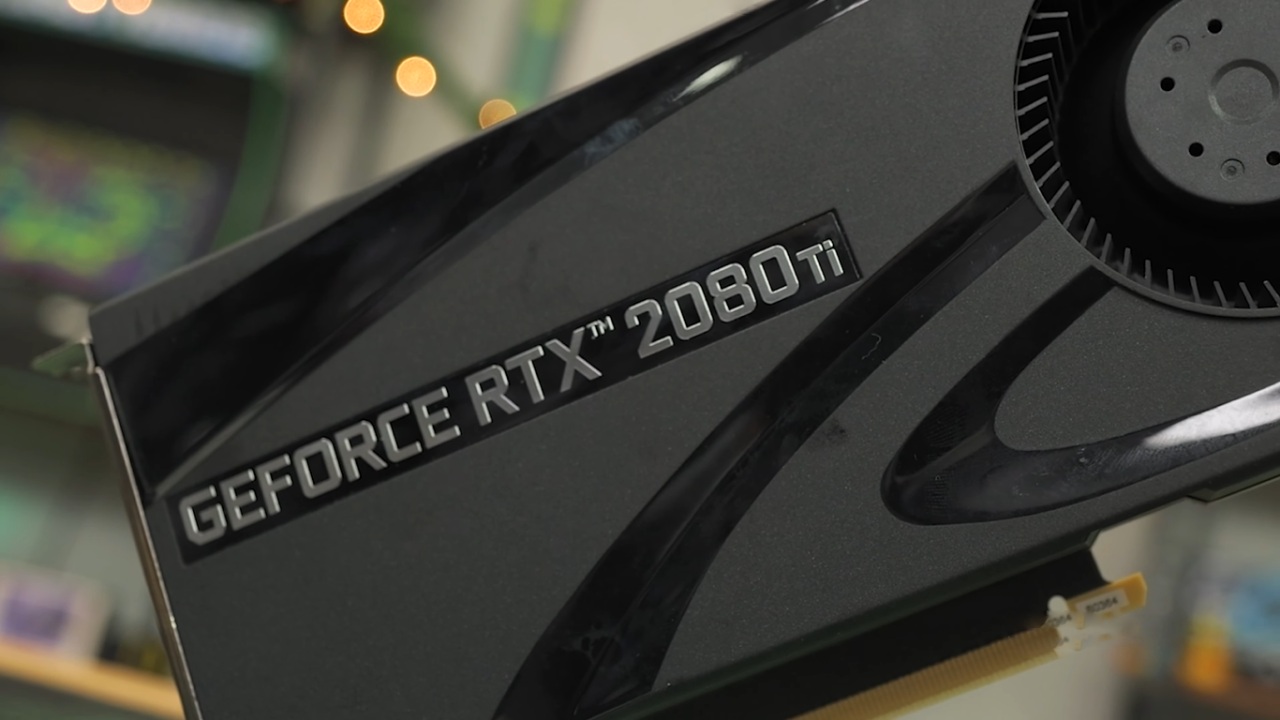
RTX 2080 Ti came out in September 2018 and cost $999. It was one of the first consumer GPUs to cost less than $1,000. It came with 11GB of GDDR6 VRAM, which made the GTX 1080 Ti so popular before it. You can find these cards on the used market for about $200 to $220. The exact PNY blower-style model utilized in testing cost about $209.
The most important features are PCIe Gen 3 support, 11GB of GDDR6 VRAM, and a TDP of 250W. The card has several display outputs, including three DisplayPorts, one HDMI port, and a USB-C port that can also be used as a DisplayPort output.
RTX 5050 as Nvidia's New Budget Option
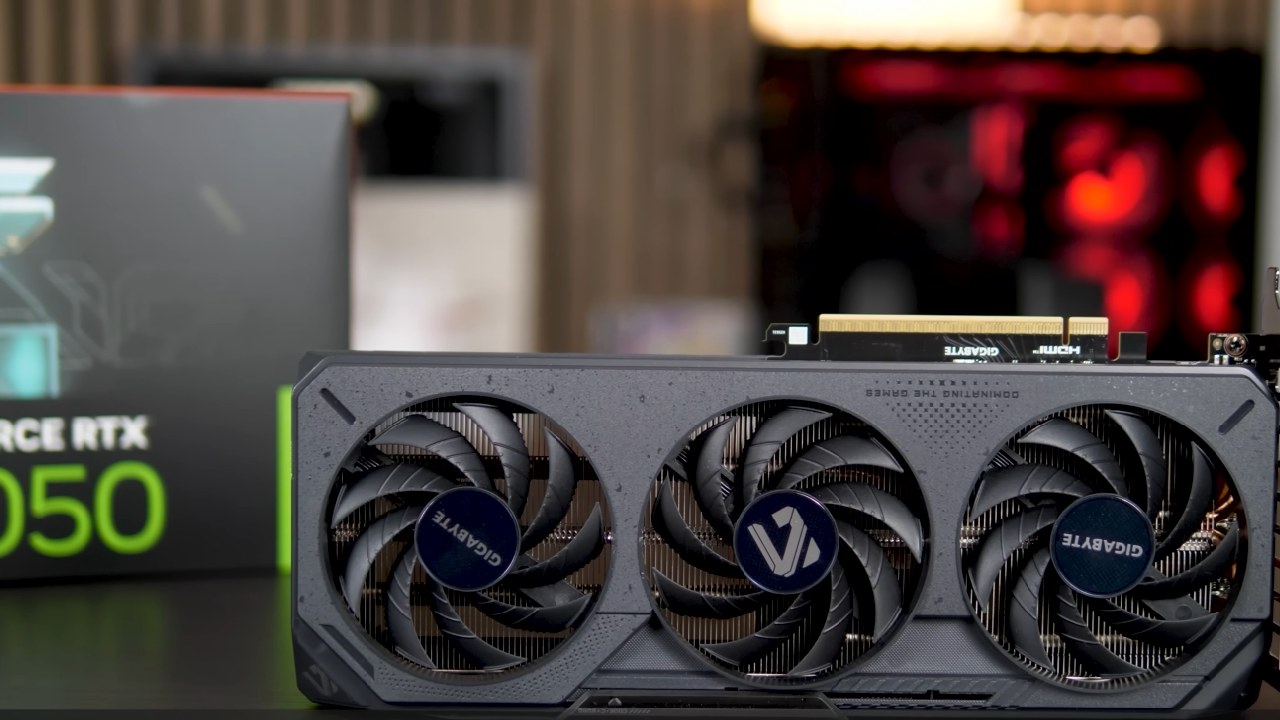
RTX 5050 is Nvidia's newest entry-level product. It launched on July 1, 2025, and cost $249.99. It is currently selling close to that price. It has a PCIe Gen 5 x8 interface, 8GB of GDDR6 VRAM, and a substantially reduced TDP of 130W. Most versions just need one 8-pin power connector.
The card that was used for testing had a triple-fan cooler and four display outputs, usually two DisplayPort and two HDMI. This makes it very adaptable for multi-monitor setups, even if it's a cheap GPU.
Test Bench and Methodology
They were evaluated in a realistic mid-range setup because both GPUs cost between $200 and $250. The test bench has a Ryzen 9600X processor, 32GB of DDR5 memory, a B850 motherboard, and a 2TB Gen 4 SSD. It was all set up on an open-air test bench.
The goal was to find out whether a $1,000 GPU from the past still works in a modern mid-range machine, or whether the newer, more efficient RTX 5050 is a better buy.
Battlefield 6 Performance at 1080p
We tested both GPUs in Battlefield 6 at 1080p with high settings and no upscaling to see how well they worked. We got an average of 97 fps on RTX 2080 Ti, with a low of 68 fps. This revealed that the card still works well in newer games, even though it is old.
When I switched to an RTX 5050 under the same settings, performance dropped slightly. We saw an average of 94 fps, with a low of 67 fps. The difference was minor, about 7 to 10 fps, but the power usage told a entirely different picture. RTX 2080 Ti used about 240–250W, while RTX 5050 used about half that much.

This showed a major trade-off: power against efficiency.
Ray Tracing and Modern Features in Arc Raiders
We tried Arc Raiders at 1080p with high settings and medium ray tracing turned on. DLSS was set to DLAA to ensure all GPUs worked the same, with a focus on image quality rather than performance scaling.
RTX 2080 Ti averaged about 90 fps, with 1% of the time dropping to about 70 frames per second. Frame timings were fine, although not entirely smooth, especially when ray tracing was on.
In this case, performance got a little better with RTX 5050. The average frame rate was 93 fps, with a minimum of 73 fps. This was RTX 5050's first unambiguous win, and it showed that newer ray tracing technologies and features can make up for less raw compute power.
Doom: The Dark Ages and VRAM Sensitivity
Doom: The Dark Ages on medium settings at 1080p without upscaling. Ray tracing was enabled, and path tracing was disabled because it would slow down the game.
RTX 2080 Ti used about 248W and got an average of 81 fps, with a low of 70 fps. The game was playable, though the frame rate wasn't always smooth.
This game was harder on RTX 5050. The average frame rate declined to about 62 fps, and the lowest 1% of frames dropped to 46 fps. It seems VRAM utilization was a limiting factor, as the 8GB buffer filled up quickly. In this situation, the increased VRAM and raw power of RTX 2080 Ti made a big difference.
Fortnite as a Competitive Esports Test
We tried Fortnite at 1080p with DX12, low textures, and a long view distance to see how well it would work in a competitive setting. We got an average of about 284 fps on RTX 2080 Ti, with 1% lows of about 67 fps. The game mostly used the CPU, though the GPU was still heavily used.
Performance went down a little on RTX 5050, to about 267 fps on average. This was lower than RTX 2080 Ti, although the difference wasn't very big in real life. Because it used substantially less power and had other perks, RTX 5050 was an excellent choice for this title.
1440p Side-by-Side Benchmarks
It was much easier to see RTX 2080 Ti's strengths at 1440p. With no upscaling and balanced settings in Call of Duty Black Ops 7, RTX 2080 Ti got an average of 110 frames per second (fps), with a low of 84 fps. RTX 5050 came in second with an average of 103 fps and a low of 77 fps.
At high settings in CS2, RTX 2080 Ti has an average frame rate of 253.4 fps and a low frame rate of 1% of 109.2 fps. RTX 5050 has an average frame rate of 190.4 fps, with a low of 82 fps in 1% of cases. In games that don't use ray tracing, the previous flagship had a huge advantage in raw GPU power.
This pattern was much stronger when Cyberpunk was played at 1440p medium settings. RTX 2080 Ti got an average of 75.59 frames per second, while RTX 5050 got an average of 59 fps. RTX 2080 Ti had an obvious edge at higher resolutions because it had 11GB of VRAM and a larger computational capacity.
Price-to-Performance Analysis
RTX 2080 Ti scored 13,588 points in 3DMark Time Spy, which is a lot better than RTX 5050's 10,314 points. The secondhand RTX 2080 Ti was a better deal when you just looked at the price-to-performance ratio.
But there are some key things to keep in mind. RTX 2080 Ti is used, uses around twice as much power, makes more heat, and doesn't come with a guarantee. RTX 5050 is new and has more modern features, like better ray tracing support and updated DLSS. It is also slower in some circumstances.
Which One Should You Buy?
Both GPUs are good choices in the $200–$250 price range, depending on how you plan to use your computer. If you want to play games at 1440p and prioritize performance, the RTX 2080 Ti is still a great choice on the used market, as long as your power supply and case airflow can support it.
RTX 5050 is the safer and better choice if you play games at 1080p, want ray tracing, want to use less power, or are updating an older system that doesn't have much power.
It all comes down to how you want to use it. We think the RTX 2080 Ti is the best choice for gaming at higher resolutions and for classic rasterized performance. RTX 5050 makes more sense for efficiency, current features, and peace of mind when buying new.
Also, check our other articles below:
- Intel Core Ultra 9 285K Review And Performance Breakdown (2025)
- Intel Core Ultra 9 285K vs AMD Ryzen 7 9800X3D: In-Depth Gaming Performance and Benchmark Comparison
- Intel Core i5-13400F Gaming Performance: Still Worth It in 2025?
- Intel Core i9‑14900K vs. AMD Ryzen 7 7800X3D: Power Profiles & Gaming Benchmarks
- Intel Core i9 14900K: Specs, Benchmarks, and Competitor Comparison
- Intel Core Ultra 5 245K Review: Gaming, Productivity & Power Efficiency Tested
- Intel Core Ultra 9 285 K's iGPU Gaming: In-Depth Benchmarks & Analysis
- Intel vs. AMD Gaming Laptop: Performance, Thermals & Battery Life Compared
- AMD Ryzen 7 9800X3D vs.7800X3D vs. Intel Core Ultra 7 265K: Gaming, Thermals & Price Analysis
- GeForce RTX 5090 Unleashed: Is NVIDIA's New Flagship the Ultimate 4K Gaming GPU?
- NVIDIA GeForce RTX 5080 Review (2025): Still A 4K Gaming Powerhouse?
- RTX 5090 Performance Testing In GTA 5 – 1080p, 1440p, and 4K Max Settings Benchmark
- RTX 5090 Laptop Vs. M4 Max MacBook Pro: Ultimate Raw Performance Vs. Battery Endurance
- NVIDIA RTX 5070 Review: Mid-Range Muscle or Marketing Hype?
- RTX 5070 Ti Review: Performance, Thermals & Power Efficiency Tested
- Asus ROG RTX 5090 Astral OC Vs. Founders Edition: The 4K Gaming Benchmark
- ASUS ROG Astral RTX 5090 OC Edition Review: 32GB GDDR7 & 4K Gaming Benchmark
- ASUS GeForce RTX 5090 LC Liquid Cooled GPU Review: Unmatched Silence & Speed
Subscriber, NoobFeed
Gaming Hardware Updates
No Data.