
XBOX Project Helix Release Date, Price, Steam Support, and Hardware Details Revealed
XBOX Project Helix could arrive in late 2027 with RDNA 5 hardware, neural rendering, and changes to Microsoft's next-generation console strategy.
XBOX by Nahe Yan on Nov 25, 2026
XBOX Project Helix could arrive sooner than expected, with AMD's upcoming silicon development timeline pointing toward a potential late 2027 launch. Microsoft is also reconsidering its original vision for the next-generation console, including its approach to Windows, PC game compatibility, and Steam integration. Meanwhile, rising memory prices and the development of neural rendering technology could play an important role in determining the console's hardware costs and final retail price.
RAM and hardware prices are rising because AI companies are buying a significant share of the global supply. Building a powerful next-generation console during a memory shortage would normally push its price beyond what most gamers are willing to pay. However, Jason Ronald recently explained how Microsoft plans to approach this problem: neural rendering.

Neural Rendering Could Help Control Project Helix's Price
Normally, achieving higher resolutions and advanced ray tracing requires a larger GPU and significantly more expensive RAM. Neural rendering changes this approach. Dedicated AI hardware on the chip can generate frames and handle ray tracing workloads in real time. By combining AMD's upcoming RDNA 5 AI accelerators with a dedicated NPU, the hardware can reconstruct frames, upscale resolutions, and denoise ray tracing in real time.
This could deliver next-generation image quality without relying entirely on brute-force rasterization or oversized memory pools. As Jason Ronald explained, neural rendering lets Microsoft generate frames without a proportional increase in raw computing power or memory. This efficiency could save Microsoft a considerable amount of money on component costs, potentially keeping the Project Helix price around the $1,000 mark or even slightly lower if Microsoft subsidizes the hardware.
However, controlling hardware costs is only one part of the equation. If Project Helix is going to run both Xbox and PC games smoothly without Windows desktop overhead becoming an issue, Microsoft also needs to change its operating system. Current XBOX consoles already run on a custom Windows kernel, something Windows architect Dave Cutler has previously detailed. Microsoft uses a dual-VM hypervisor setup to keep Game OS completely isolated from background desktop processes.
Since early Project Helix development kits logically run on a customized Windows 11 base, Microsoft is already working to reduce Windows overhead in preparation for the next generation. In fact, Microsoft recently introduced a major overhaul to the XBOX PC app on Windows 11. The update allows the application to launch up to 60% faster and load pages up to 50% faster. It is specifically designed to give Windows handheld devices such as the ROG XBOX Ally a more responsive, console-like interface.
By the time Project Helix launches, this streamlined foundation could evolve into a stripped-down next-generation Windows core. Whether that becomes a customized Windows 11 build or a future Windows 12-based system remains to be seen. The goal would be to deliver instant console boot speeds while running unified PC and XBOX binaries natively. This could allow Microsoft to combine PC compatibility with the experience expected from a traditional console.
AMD's Silicon Development Points Toward a Late 2027 Launch
The next major question is when Project Helix will actually launch. Recent developments involving AMD's silicon design process provide some insight into the potential release window. OpenAI recently published a technical report detailing a major engineering collaboration with AMD. By using OpenAI's models to optimize chip design workflows, the two companies achieved up to 14% improvements in power, performance, and area efficiency on AMD's flagship GPU IP.
The collaboration also compressed roughly a year of silicon design work into just under five months. More importantly, OpenAI confirmed that AMD had already sent a design incorporating these improvements into fabrication. This development matters to Project Helix because AMD's current Instinct AI data center accelerators were already in production earlier this year. At the same time, its next server lineup isn't scheduled to enter production until late 2027.
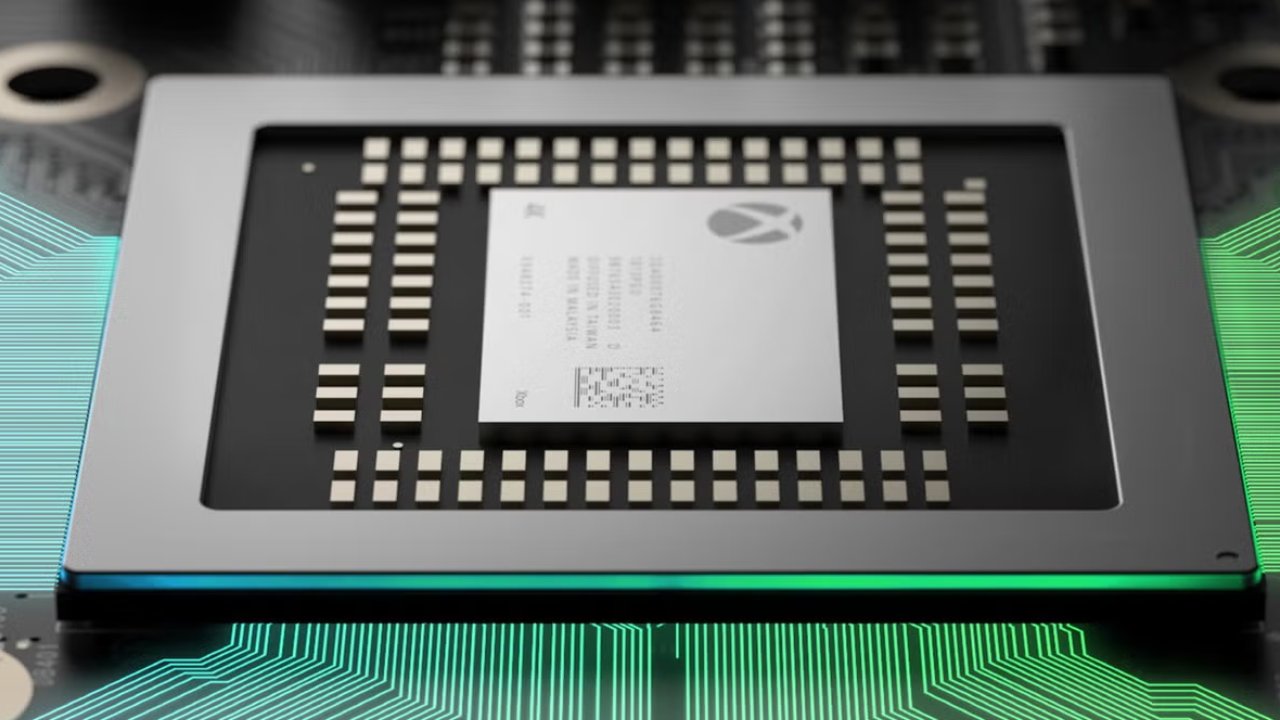
That leaves AMD's upcoming RDNA 5 architecture as a potential candidate, specifically the shared 82 design that powers both AMD's next-generation PC graphics card and XBOX Project Helix. In semiconductor manufacturing, moving from raw wafers to packaged silicon typically takes around four months per production cycle. This means roughly two production cycles, or about eight months, could be needed to build enough retail console inventory.
If AMD has already started RDNA 5 fabrication, Project Helix could be on track for a second-half or late 2027 launch window. The silicon development timeline and neural rendering technology could therefore work together to help Microsoft prepare its next-generation console while keeping hardware costs under control.
Microsoft's Original Vision for Project Helix Is Changing
One of the biggest questions surrounding Project Helix is whether Microsoft will include Steam support. The original vision for the console reportedly involved an open Windows PC inside a traditional console chassis. Under that concept, users could exit directly to the Windows desktop, install third-party storefronts such as Steam, and play online multiplayer without paying for an XBOX subscription.
However, Microsoft's approach may be shifting toward a more traditional console-first model under new XBOX CEO Asha Sharma. Two major business pressures drive this potential shift. The first involves hardware subsidies and recurring revenue. With RAM prices rising, Microsoft could struggle to subsidize an expensive next-generation console while also giving up hundreds of millions in annual multiplayer subscription revenue.
The second concern is Steam potentially taking revenue away from the XBOX Store. Microsoft's internal data on the ROG XBOX Ally handheld reportedly showed that a significant share of players boot up the device and go directly to Steam. Additionally, day-one console exclusives such as Forza Horizon 6 have driven a noticeable increase in XBOX ecosystem logins.
Under Asha Sharma's leadership, protecting store revenue could become a priority, rather than turning Project Helix into a fully open, Steam-based system. XBOX executives now describe Helix carefully as a console that can play your PC games, rather than a PC that can play your console games. PC game compatibility could focus primarily on Xbox Play Anywhere titles or a curated storefront.
Microsoft could also split Project Helix into a subsidized traditional console alongside a more expensive, unsubsidized Pro model that retains open Steam access. This would allow Microsoft to avoid shipping every console with unrestricted Steam access and free multiplayer. Another possible direction Microsoft could take with Project Helix is this.
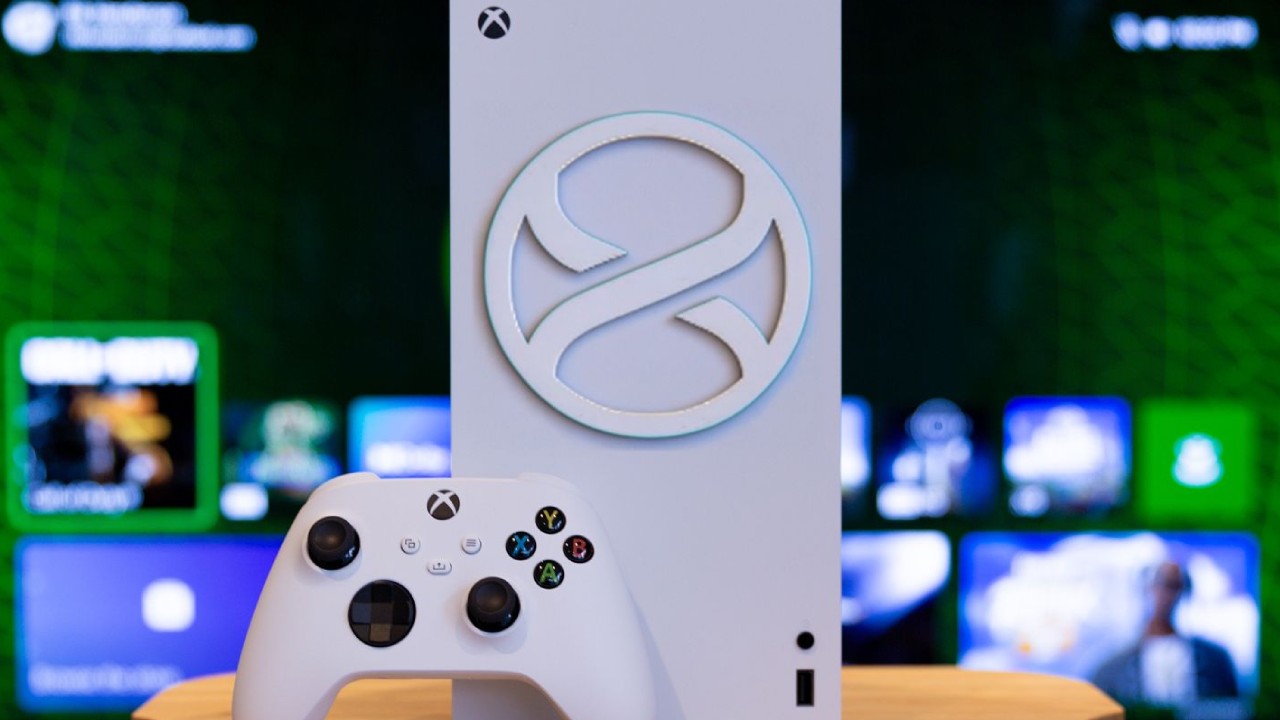
The storefronts themselves might not be available on the console.
Microsoft could make purchasing games through those platforms difficult or even impossible directly from the system. Instead, Project Helix could boot straight into the XBOX OS, with a clear focus on the XBOX Store. The storefront could essentially become a hybrid of the PC and current console stores, potentially offering faster navigation and a redesigned interface.
Games already owned through Steam, Epic Games Store, or GOG could appear in the XBOX dashboard. We could then install and launch those games directly from the console without opening the individual storefront applications. However, purchasing those games might require using a mobile phone or PC. We could buy a game through the Steam Store on another device and then install or launch it on Project Helix through the XBOX launcher.
Personally, staying within the XBOX ecosystem makes sense, whether gaming on an XBOX console or using XBOX mode on a PC. When purchasing games on Steam, buying them on a phone and using the option to install them remotely on a PC is already convenient. Project Helix could offer a similar experience. We could buy games on a phone or directly from the Steam Store, then launch them on the console through the XBOX launcher.
Based on the available hardware development timeline, a new XBOX next year appears possible. It could be a dockable handheld, although a traditional home console seems more likely. The expected price is another important part of the discussion. Neural rendering and AMD's upcoming RDNA 5 architecture could help Microsoft control hardware costs, potentially keeping Project Helix around the $1,000 price point.
FAQ
Q. When is Xbox Project Helix expected to launch?
A. Based on AMD's silicon development timeline and estimated manufacturing cycles, Xbox Project Helix could launch in the second half of 2027 or later.
Q. How much could Xbox Project Helix cost?
A. Project Helix could cost around $1,000 or slightly less if Microsoft subsidizes the hardware. Neural rendering could help reduce component costs by lowering the need for additional computing power and memory.
Q. Will Xbox Project Helix support Steam games?
A. Project Helix could let users install and launch games they already own on Steam, the Epic Games Store, and GOG through the Xbox dashboard. However, direct access to these storefronts and the ability to purchase games through the console may be restricted.
Q. Will Xbox Project Helix run Windows?
A. Project Helix is expected to use a customized Windows-based foundation. Microsoft could develop a streamlined Windows core that supports native PC and Xbox binaries while maintaining a console-like interface and boot experience.
Editor, NoobFeed
Latest Articles
No Data.