
XBOX Project Helix Specs Leak: 350W Power, 56 TFLOPS GPU and 40% Advantage Over PS6
Microsoft confirms Project Helix as a console-first system with PC gaming support and four generations of XBOX backwards compatibility.
XBOX by Shinji Okazaki on Nov 17, 2026
Microsoft has officially clarified its vision for Project Helix, revealing a console designed to unite PC and XBOX gaming. Alongside the official 25th-anniversary magazine, new hardware leaks have revealed details on its AMD Magnus processor, power consumption, memory architecture, and graphics capabilities.
The upcoming console is expected to feature a 350W power budget, separate memory pools, and new DirectX ray tracing technology that could reduce VRAM usage by nearly 90%. For months, people have argued online that the next XBOX will basically be a regular Windows PC inside a console shell. However, at the XBOX Fan Fest in Seattle, Jason Ronald, vice president of next-generation, finally cleared the air in an official 25th-anniversary magazine.
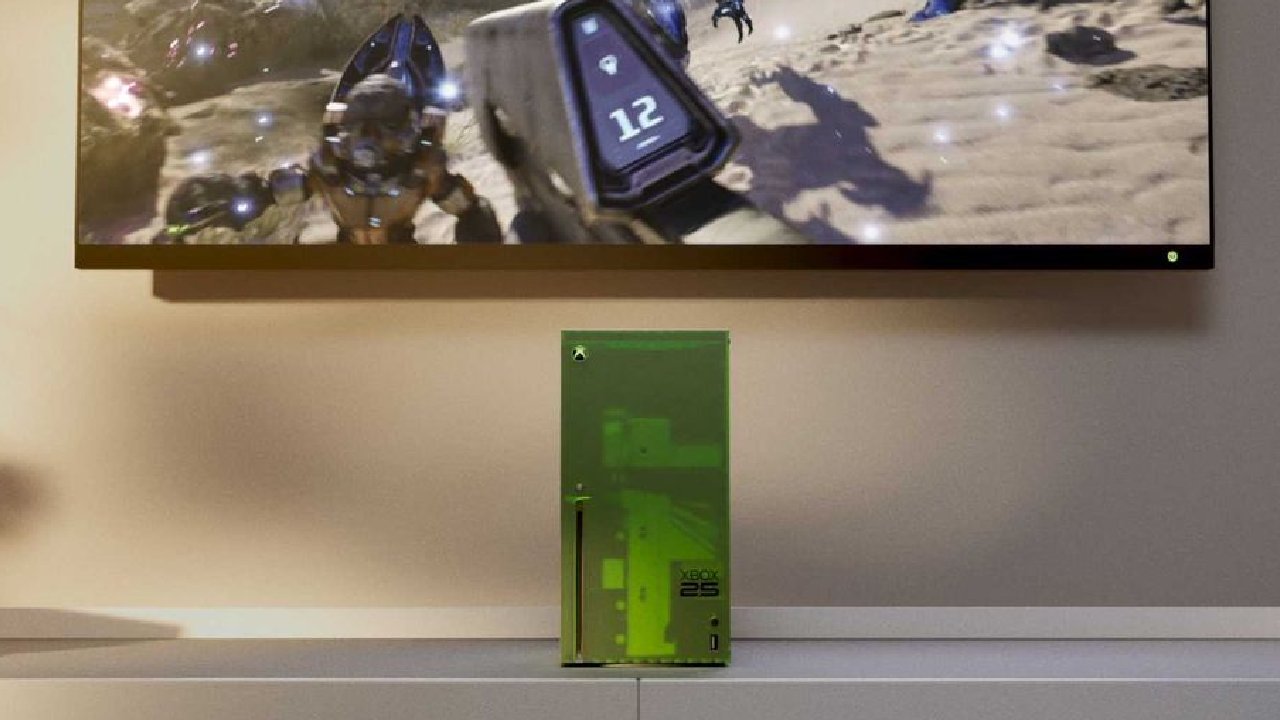
Microsoft Confirms Project Helix as a Console-First Gaming System
In the feature titled The Soul of Project Helix, he explained that Helix is a next-generation family of devices and made one thing clear: it is built as a true console first. You are getting a console experience that brings four generations of your existing XBOX library and your progression with you right out of the box.
One of the greatest details from the 25th anniversary magazine is that Jason Ronald confirmed Helix offers a plug-and-play console experience out of the box. At the same time, power users get full access to deeper graphics settings and performance options. Think about what that means for console performance.
Even when developers lock default settings to match the PlayStation 6, you shouldn't have to settle for that baseline. You should be able to access the settings yourself, push them to the maximum, and use the additional hardware power. At the same time, this removes the arbitrary constraints between console and PC gaming, meaning you can run your PC games alongside your XBOX library.
Microsoft is also expanding its backward compatibility program, so a large portion of classic XBOX games will run on partner OEM PCs as well. Jason Ronald also hinted at Microsoft's graphics direction. He said the next generation will not be defined by chasing 8K or 240fps. Instead, the company is focusing on neural rendering and custom silicon to deliver a new level of visual fidelity more efficiently.
AMD Magnus Chiplet Design Introduces Separate LPDDR6
A major hardware leak has provided more information about the processor inside Project Helix. The custom AMD processor powering XBOX Helix, codenamed Magnus, is moving away from the traditional console layout. Normally, consoles use one unified memory pool. The CPU and graphics chip share the same RAM. However, Magnus uses a modular chiplet design with two separate memory pools.
In practice, this means the system could use 8GB or 16GB of more affordable, low-latency LPDDR6 memory to handle the operating system and background tasks. This lets the graphics chip access high-speed GDDR7 bandwidth without competing with the CPU and operating system for memory space.
Separate system memory could also make PC games run smoother because they are designed around separate system RAM and video RAM. Instead of using one crowded memory pool, Magnus separates these resources to handle their respective workloads. Another major detail from the leak concerns Project Helix's power requirements.
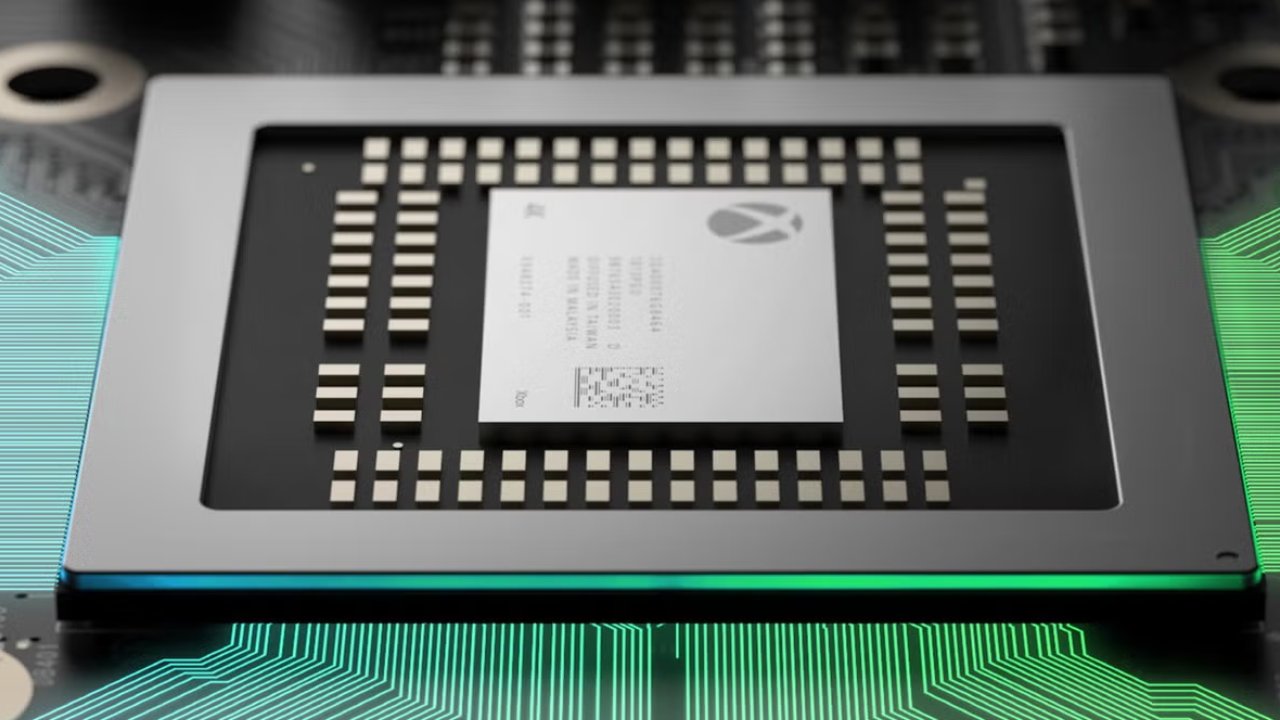
Project Helix reportedly brings 68 RDNA 5 compute units clocked up to 3.2GHz.
The console is also rumored to feature a 192-bit GDDR7 memory bus delivering up to 960GB/s of bandwidth, which is 20% faster than Sony's reported memory bandwidth. Separate LPDDR6 memory will handle the operating system, while a dedicated 110-TOPS neural processor will support its AI workloads.
Of course, all that hardware comes at a cost. Industry estimates already suggest that the PS6 could retail for around $1,000 or potentially more, while Project Helix could reach $1,200. Top-end OEM PC versions could cost even more. Microsoft's strategy now becomes clearer. The company is not abandoning consoles or simply building a weaker PC hybrid.
Instead, it is reportedly developing a 350W console that supports four generations of XBOX games, runs PC games natively through separate memory pools, and uses DirectX technology to handle demanding ray-tracing workloads. With a 350W power budget and a reported 40% GPU compute advantage over the PS6, Project Helix could represent a different approach to next-generation console gaming.
FAQ
Q. Is Project Helix a gaming console or a Windows PC?
A. Project Helix is being developed as a console-first system, but it will also support PC gaming and provide deeper graphics settings and performance options for power users.
Q. How much power could the Xbox Project Helix consume?
A. According to hardware leaks from Kepler_L2, the AMD Magnus chip powering Project Helix is designed around a power budget of up to 350W.
Q. How much faster could Project Helix be than the PlayStation 6?
A. Project Helix is rumored to deliver 56 teraflops through 68 RDNA 5 compute units, compared with approximately 40 teraflops from the PS6. This represents a 40% advantage in raw GPU compute performance.
Q. How much VRAM can Microsoft's new DirectX ray tracing technology save?
A. Microsoft's clustered geometry and partitioned acceleration structure technologies reduced VRAM usage from 7519MB to 774MB in testing with an AMD RX 9070, representing an 89.7% reduction.
Editor, NoobFeed
Latest Articles
No Data.