
Xbox Series X Upscaling Performance Surpasses Base PS5
Xbox Series X delivers 38% faster FSR 4.1.2 upscaling performance compared to the base PlayStation 5 console.
XBOX by Nahe Yan on Nov 10, 2026
AMD's latest FSR 4.1.2 testing results reveal a difference in upscaling performance between Xbox Series X and the base PlayStation 5. The Xbox Series X processes its optimized upscaler mode 38% faster than the base PS5 when targeting a 4K presentation. The results also show how the Xbox Series S handles FSR 4.1.2, along with the potential rollout timeline for upcoming games and the possibility of GTA 6 supporting the technology at launch.
When targeting a 4K presentation on your TV screen, the Xbox Series X processes its optimized upscaler mode in just 2.75ms. By comparison, the standard base PlayStation 5 takes 4.4ms to handle the same workload. In modern game rendering, every fraction of a millisecond counts toward reaching a stable 60fps. This creates a 38% processing speed gap between the two consoles.
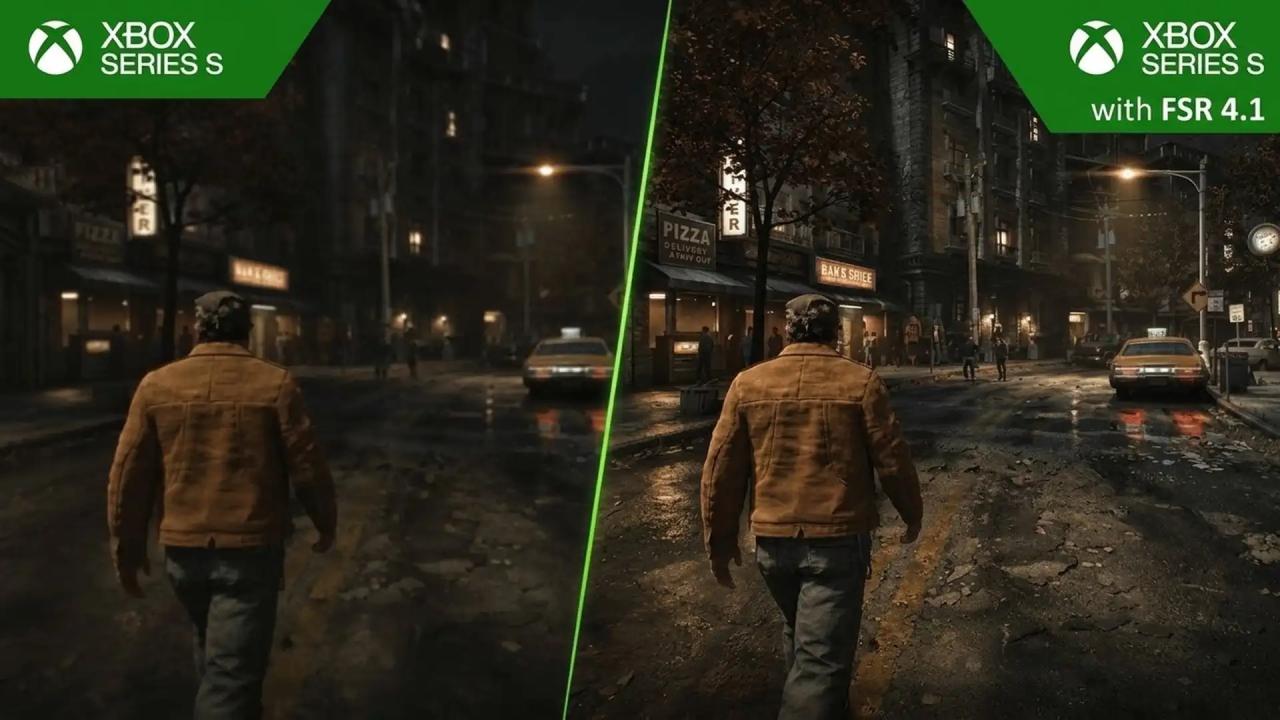
Xbox Series X Processes FSR 4.1.2 38% Faster Than Base PS5
To understand why the Series X has an advantage over the PS5, we have to look at how modern upscaling works. Upscaling tools are no longer simple filters that sharpen the edges on your screen. They use machine learning models that evaluate previous frames and motion vectors to reconstruct a high-resolution image in real time.
Both the Xbox Series X and Series S have INT8 hardware acceleration lanes printed directly onto the silicon die. Xbox consoles were engineered with dedicated physical hardware paths to execute specific machine-learning instructions. By contrast, the base PS5 lacks the same dedicated hardware layer for these upscaling profiles. Sony's built-in upscaler, PSSR, runs entirely in software.
Because the Sony chip lacks these physical hardware pipelines, the PS5 runs its upscaling calculations through software-level emulation inside its standard graphics shader loop. This creates a traffic jam because the graphics chip has to pause its regular work to calculate the upscale. Xbox consoles, however, handle these calculations automatically through dedicated hardware lanes.
Xbox Series X and Series S were built as full RDNA2 machines with native INT4 and INT8 support. The base PS5 isn't a full RDNA2 implementation and also lacks native INT8 support. That is why it relies on software-based upscaling, while Xbox consoles can process these calculations in hardware.
Xbox Series X Has Lower FSR 4.1.2 Processing Costs
To run a game at 60fps, the hardware has a strict 16.6ms time limit to process each frame. This is where the Xbox Series X shows its processing advantage over the base PlayStation 5. The engineering data reveals that when outputting to a 4K display, the Xbox Series X spends only 2.75ms handling calculations using the light model. By comparison, the base PlayStation 5 takes 4.4ms to run its upscaler.
This means the PS5 uses a larger share of its 16ms frame budget just to process the image, while the Series X handles the workload through its dedicated hardware lanes. However, even when developers choose the highest level of detail by running the full model on the Series X, processing still costs 3.8ms. This means that even at its heaviest, Xbox remains over 12% faster than the PS5's software-based processing.
Since the light model is optimized, the results also matter for Series S owners. The Series X reconstructs images toward 4K output from a 1440p baseline. The Series S, however, targets a 1080p display buffer, upscaling from lower internal resolutions such as 720p or 900p. According to the official documentation, the custom light model takes just 1.9ms to output a 1080p frame on the Xbox Series S.
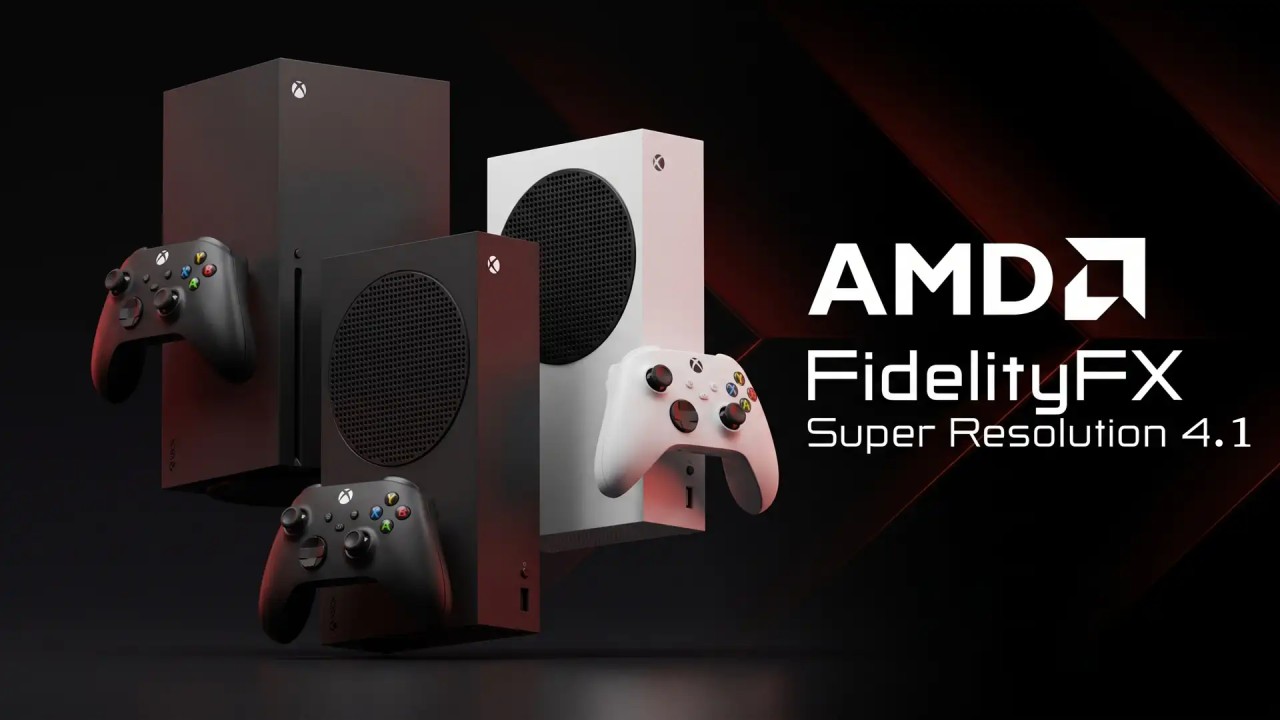
This data suggests the Series S could outperform the base PS5 in some situations. Because the base PlayStation 5 lacks dedicated hardware blocks, its software upscaler can struggle to maintain its output target. During demanding moments, the PS5's native internal rendering resolution can drop to as low as 468p.
When the pixel grid is scaled down to 1080p, the processing overhead drops significantly.
FSR 4.1.2 delivers Series S-level image reconstruction while using only a small portion of its rendering budget. This leaves the GPU with more resources to maintain 60fps in games that previously struggled to reach that target. For a budget console that once cost $200, this brings its upscaling speed and efficiency closer to the performance profile of Sony's base hardware.
So, how will this additional hardware efficiency translate into actual games, and which titles could receive the upgrades first? Jez Cordon reported that some games are already scheduled to receive this update during the holiday season. Xbox first-party games are expected to receive these updates first, with the earliest individual patches potentially arriving as soon as this month.
Recent games such as Gears of War: E-Day and Forza Horizon 6 could lead the rollout. Looking at the timeline for older, already-released games, we can compare it with the PSSR patches released for PS5 Pro. PSSR patches for older games took approximately 3.6 months to roll out. Both FSR 4.1 and Sony's PSSR originate from the same research project, Project Amethyst.
FAQ
Q. How much faster is Xbox Series X compared to base PS5 in FSR 4.1.2 upscaling?
A. Xbox Series X processes its optimized FSR 4.1.2 light model in 2.75ms, compared to 4.4ms on the base PS5, making it approximately 38% faster.
Q. How long does FSR 4.1.2 take to process a 1080p frame on Xbox Series S?
A. According to the official documentation mentioned in the report, the Xbox Series S takes just 1.9ms to output a 1080p frame using the custom light model.
Q. Why does Xbox Series X process FSR 4.1.2 faster than PS5?
A. Xbox Series X has dedicated INT8 hardware acceleration and a 320-bit memory bus delivering 560GB/s of bandwidth, while the base PS5 relies on software-based upscaling.
Q. Could GTA 6 support FSR 4.1.2 on Xbox Series X and Series S at launch?
A. Yes, GTA 6 could support FSR 4.1.2 from day one on Xbox Series X and Series S, while the base PS5 uses PSSR. However, official confirmation is still pending.
Editor, NoobFeed
Latest Articles
No Data.