
AMD Zen 6 EPYC Venice Delivers 27% IPC Gains With Up to 256 Cores
AMD's Zen 6 architecture combines a 27% IPC improvement with unprecedented core density, faster memory, and next-generation server connectivity.
Hardware by Tanvir Kabbo on Nov 11, 2026
AMD is making another major statement in the server processor market with the official unveiling of its Zen 6 architecture and the sixth-generation EPYC 9006 'Venice' processor family. Venice marks a major evolution in AMD's x86 roadmap, with up to 256 cores, drastically redesigned chiplets, and a projected 27% average IPC boost over Zen 5.
More crucially, these architectural changes signal how aggressively AMD is tailoring its chips to more demanding AI, cloud computing, and high-performance computing workloads. The timing matters, as AMD faces growing competition from Intel's Xeon processors and Arm-based server platforms, including NVIDIA's Vera CPU.
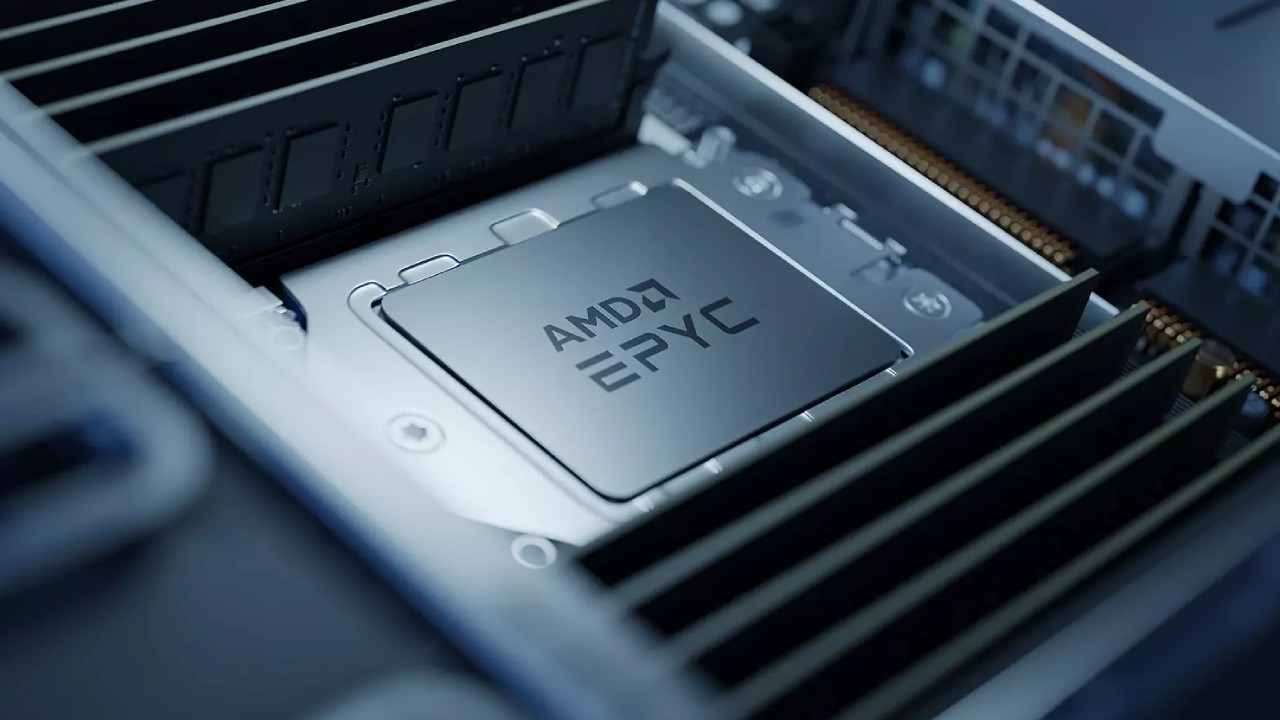
Rather than simply adding more cores, AMD is rebuilding important parts of its execution architecture and memory subsystem to keep those cores productive. Zen 6 is therefore more than a conventional generational refresh; it represents AMD's attempt to increase compute density without allowing memory bandwidth and data movement to become the primary limitations.
A Major Architectural Upgrade Beyond Zen 5
AMD's headline claim is a 27% average IPC gain over Zen 5 across enterprise, cloud, and AI workloads. This is particularly significant because IPC improvements are becoming increasingly difficult to achieve as modern processor architectures mature. The improvement comes not from a single design breakthrough, but from multiple changes to the execution process.
Zen 6 has a larger reorder buffer, more integer and floating-point scheduling resources, and much larger load/store queues. These enhancements let the CPU keep more instructions in flight while reducing the chances of execution units sitting idle waiting for data. AMD has also enhanced branch prediction and instruction delivery, allowing the architecture to use itself more effectively during demanding workloads.
Another major addition is native AVX-512 FP16 capability. Half-precision computations are particularly significant for modern AI applications, where lower-precision arithmetic can increase throughput and reduce computational waste. Further vector execution enhancements will also be part of Zen 6, and it will also be able to run a larger spectrum of enterprise and AI applications more effectively.
12-Core Zen 6 and 32-Core Zen 6c CCDs
The most substantial physical change comes from AMD's redesigned Compute Chiplet Dies. Standard Zen 6 CCDs now accommodate 12 cores, up from eight in Zen 5. This represents a 50% increase in core density per standard CCD, while the architecture's flagship configurations can scale to 96 cores and 192 threads. AMD's disclosed performance-oriented configurations also target boost frequencies reaching approximately 5.3 GHz.
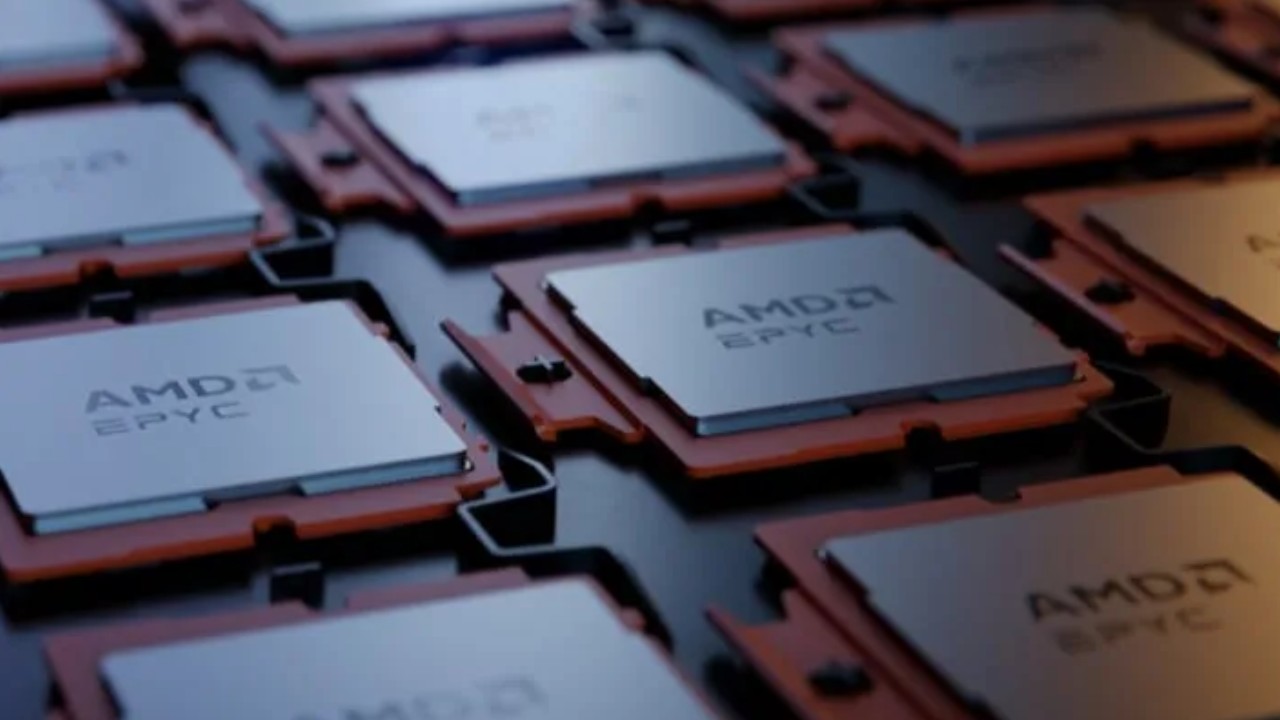
However, AMD's density-focused Zen 6c design takes things considerably further. Each 32-core Zen 6c CCD combines a much higher core count with a larger shared cache structure, allowing Venice processors to scale to an extraordinary 256 cores and 512 threads. These density-centric chiplets are built using TSMC's 2nm-class manufacturing technology.
Zen 6 and Zen 6c differ in important ways. AMD is essentially building two versions of the same architecture: a standard Zen 6 aimed at stronger individual cores and higher operating frequencies, and a Zen 6c aimed at maximum compute density and throughput. This gives server makers more options when selecting CPUs for latency-sensitive workloads or highly parallel cloud and AI workloads.
Feeding the Beast: SP7 Platform, Memory Bandwidth, and PCIe 6.0
Increasing core counts is only useful when the processor can continuously supply those cores with data. AMD appears to understand this challenge, which is why the new SP7 platform receives such substantial memory and I/O upgrades.
The platform supports 16 channels of DDR5 MRDIMM memory, operating at speeds of up to 12,800 MT/s. This translates into an enormous 1.6 TB/s of memory bandwidth per socket. For comparison, conventional DDR5 RDIMM configurations can deliver up to 1.0 TB/s across the same 16-channel arrangement.
That bandwidth is particularly important for the 256-core Zen 6c configuration. AI inference, large-scale virtualization, and scientific computing sometimes involve transporting huge amounts of data between memory and processors. Without enough bandwidth, extra CPU cores can waste precious execution time waiting for data to arrive instead of doing important work. AMD's beefed-up memory subsystem is meant to alleviate that bottleneck.
Venice is the first x86 CPU generation to implement PCIe Gen 6.0, bringing an equally significant improvement to the I/O architecture. PCIe 6.0 delivers much higher bandwidth connectivity for high-speed accelerators, networking hardware, and next-generation storage devices, at up to 64 GT/s per lane. AMD has added support for CXL 3.1, which adds flexibility for memory expansion and heterogeneous computing settings.
Simply put, AMD is updating the entire platform around its increasingly dense chips. If memory controllers, interconnects, and extension bandwidth were limited by previous-generation designs, the new architecture would be difficult to demonstrate at its full potential.
FAQ
Q. How much IPC improvement does AMD Zen 6 offer over Zen 5?
A. AMD claims that Zen 6 delivers an average 27% IPC improvement over Zen 5 across enterprise, cloud, and AI workloads, supported by a larger reorder buffer and expanded execution resources.
Q. How many cores can AMD EPYC Venice processors feature?
A. AMD's flagship EPYC Venice processors can feature up to 256 cores and 512 threads using density-optimized 32-core Zen 6c CCDs.
Q. What are the differences between Zen 6 and Zen 6c CCDs?
A. Standard Zen 6 CCDs feature 12 cores and prioritize higher performance, while Zen 6c CCDs pack 32 cores into a single chiplet to maximize compute density and multi-threaded throughput.
Q. What memory and connectivity features does AMD's SP7 platform support?
A. AMD's SP7 platform supports 16-channel DDR5 MRDIMM memory running at up to 12,800 MT/s, delivering up to 1.6 TB/s of bandwidth per socket, alongside PCIe Gen 6.0 connectivity.
Senior Editor, NoobFeed
Gaming Hardware Updates
No Data.