
Is ARM the Future of Steam Deck and Steam Hardware?
ARM efficiency and translation layers shape the long term direction of Steam handheld hardware evolution.
Hardware by Shinji Okazaki on Mar 02, 2026
People are talking a lot about whether ARM is the future of Steam hardware when discussing gaming handhelds. ARM chips have been around for a long time and are mostly used in products like the Android phones and tablets, and the Nintendo Switch. They weren't widely used in computers until Apple stopped using Intel chips and began making its own M-series chips.
The M-series showed that ARM-based processors could keep up their performance and efficiency over time in computers. Years after its release, systems powered by the M1 Max still work well, giving people more confidence in ARM's long-term sustainability.
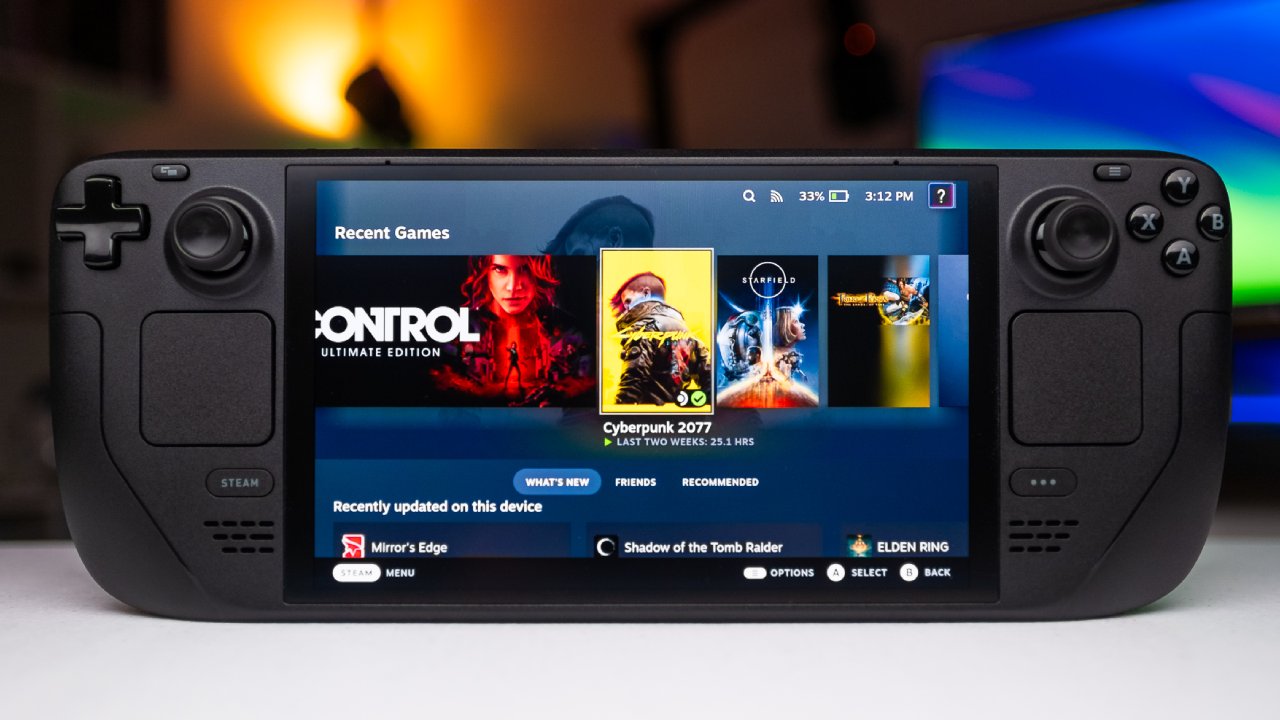
ARM processors were first made for phones, which needed them to be efficient at low TDPs and generate little heat. Smartphones and other devices don't need big cooling systems, so the processor has to work well even when it's hot. Because of the efficiency, people want to put ARM in handheld gaming devices. A portable device with a lower TDP runs cooler, makes less fan noise, and lasts longer on a single charge. These features align with ARM's design strengths.
Some handhelds already use ARM CPUs. The AYN Odin and other devices show that ARM-based systems can run full Steam games through compatibility layers. Performance depends on the game, ARM technology can handle lighter games like Hollow Knight or Dead Cells well. People may want to know if Valve will add ARM to the Steam Deck as a result.
Translation Layers and Limits on Performance
Valve built Proton, a translation layer that converts Windows APIs and DirectX calls into Vulkan, enabling Linux to run x86 Windows games. Proton is mostly for translating games that use GPUs. In addition to Proton, development has also paid for FEX, a translation layer that lets x86 games run on ARM processors.
Switching to ARM would not make Proton unnecessary. FEX would still translate CPU instructions from x86 to ARM, while Proton would still conduct GPU-side translation. Running both layers adds more work to the system. According to current estimates, the CPU translation overhead will reduce performance by 10% to 20%. That effect is easier to see in hard games.
Most of the time, older 3D games from the PS2 era work fine. But games from the PS3 or PS4 era are harder on the machine. In some situations, you might see heat restrictions, fps changes, and graphics instability. Proton has gotten a lot better over time, while FEX is not yet at the same level of maturity. The two projects are at various stages of development, and there are still gaps in compatibility.
Long-Term TDP and Real-World Factors
One complaint about ARM processors is that they perform well at low TDPs, but when TDPs are kept high for extended periods, they can reveal their limits. But with mobile gaming, the significant power draw over time already shortens battery life. It makes the device hotter, regardless of the architecture. If you run at 30 W with an 8000 mAh battery, you can figure out how long it will last with some easy math.
From that point of view, ARM's lower TDP efficiency may still be a good thing overall. If performance is better at 10w-15w than x86 alternatives, battery life and heat output will also be better. The hard part is not going back. Adopting ARM causes compatibility issues or significant performance losses; the tradeoff is not worth it for a new product.
The Plan for Steam Deck 2 and Later
The idea of a smaller device would come next. ARM chips don't need as much cooling. Some work without active fans, using vapor chambers or passive dissipation instead. Removing a fan assembly frees up space inside and lets you make structural changes. This might reduce the total size while keeping the screen, controls, and trackpads the same.
Why You Should Get a Steam Deck Mini
A lot of people want a smaller Steam Deck. But the fact that there are only four to five million units sold implies that it is a niche market. People who already own a tablet may be the ones who want a smaller one, not new consumers. Making a separate tiny version requires money and time to set up a supply chain.
The same thing happened with the iPhone 12 mini. There was strong demand for the product before it launched, but sales didn't meet expectations. After that, the inventory was updated, and the product strategies changed accordingly. That example shows how dangerous it is to only respond to outward signs of demand.
Another way to do this would be to add ARM to a next-generation device while reducing the internal footprint without shrinking the display. Text legibility remains an issue in mobile gaming, especially in console ports with minimal UI elements. Keeping the screen size the same while making the device less bulky would keep it usable.
Nintendo Switch 2 demonstrates that you can make the screen bigger without increasing the device's overall size. Nintendo Switch Lite, on the other hand, cut down on features and size, showing the tradeoffs that come with making things smaller. A Steam Deck variant that keeps the controls, layout, and screen size the same but reduces internal components could make the device smaller without losing any functionality.
Battery Life and Standby Time
The current Steam Deck can stay on standby for up to one week to one and a half weeks, depending on the conditions. An ARM-based design could significantly extend standby time. Lower idle power use means less battery depletion while the device is sleeping, allowing the battery to last several weeks under ideal conditions.
A lower wattage draw would also make the game last longer. Battery life is still a major problem for all handheld PCs. The size and weight of a device increase as its battery capacity increases. A more balanced option is to reduce power use by making buildings more efficient.
.jpg)
The Likelihood and Direction of the Industry
In the long run, Steam OS devices with ARM processors will be available. Valve has already looked into using ARM through development projects and partnerships. Valve has apparently been contacted by third-party manufacturers who use ARM chips about making Steam OS work with their products. ARM integration is becoming more viable as translation layers improve and hardware ecosystems expand.
The main question is when, not if. It took years of work for Proton to get to its current level of stability. To achieve broad compatibility and low overhead, FEX will need to go through development cycles similar to those of other systems. As performance penalties decline and compatibility gaps close, ARM becomes a good architecture for mainstream Steam gear.
Final Thoughts
ARM is aligned with where Steam hardware is headed, but using it right away could lead to problems. Keeping x86 for a second-generation gadget while translation technology becomes better is a good idea. Over time, improved CPU translation, better drivers, and a more stable environment will make ARM the primary architecture for mobile gaming devices. At that time, it will be possible to make a smaller, cooler, and more efficient Steam OS handheld without losing any of its main features.
Also, check our other hardware articles:
- AMD Ryzen 9 9950X3D Review: Setting The Standard For 2025 Gaming CPU
- Amazon Luna 2025 Review: Is Prime Gaming's Cloud Service Your Go-To For Casual Fun?
- AMD RX 9070 XT Review: AMD's RDNA 4 Champion for 1440p Gaming
- GeForce Now Ultimate: Ditching Your Gaming PC For Cloud RTX 4080 Power?
- NVIDIA GeForce RTX 5080 Review (2025): Still A 4K Gaming Powerhouse?
- Intel Core Ultra 9 285K Review And Performance Breakdown (2025)
- AMD Ryzen 7 9800X3D Review: 3D V-Cache Goes God Mode with Stunning Gaming Performance
- Intel Core Ultra 9 285K vs AMD Ryzen 7 9800X3D: In-Depth Gaming Performance and Benchmark Comparison
- NVIDIA GeForce RTX 5080 Super Performance In Cyberpunk 2077: Path Tracing & DLSS 4.0 Tested
- AMD Radeon RX 9070 XT In Cyberpunk 2077: Ray Tracing & FSR 4.0 Tested
- Intel Arc B580 Review: The $250 GPU Revolutionizing 1440p Gaming
- Intel Arc B570 Vs. B580: Value, Specs, And Real-World Gaming Performance
- RTX 5090 Laptop Vs. M4 Max MacBook Pro: Ultimate Raw Performance Vs. Battery Endurance
- Intel Arc b580 Vs. RTX 4060: Game Performance And Value Analysis
- RTX5090 Hell Is Us Demo 4K Ultra Benchmark: DLSS Vs. Native Performance Guide
- NVIDIA RTX 5070 Review: Mid-Range Muscle or Marketing Hype?
- Nintendo Switch 2 Review: Handheld Performance, Features & Value Breakdown
- RTX 5070 Ti Review: Performance, Thermals & Power Efficiency Tested
- Samsung Odyssey OLED G81SF Review 2025: Ultimate 32-Inch QD-OLED Gaming Monitor
- AMD RX 9070 Performance Review: Thermals, Clocks, and Real-World FPS
- AMD Ryzen 5 7600 Review: Best Budget Gaming CPU of 2025?
- AMD Radeon RX 7800 XT Review: RDNA 3 Power For Midrange Gaming
- Asus ROG RTX 5090 Astral OC Vs. Founders Edition: The 4K Gaming Benchmark
Editor, NoobFeed
Gaming Hardware Updates
No Data.