
Ray Tracing on Handheld Gaming PCs is Finally Becoming Viable
Ray tracing performance on handheld gaming PCs now depends more on optimization than raw hardware power alone.
Hardware by Shinji Okazaki on May 25, 2026
Ray tracing has traditionally been a feature of high-end desktop graphics cards, big tower computers, and high-power requirements. For years, the concept of using advanced lighting, reflections, and global illumination on a small device with a power budget of 30-35W seemed impossible. But times have changed with the emergence of modern handheld equipment, optimization, and smarter rendering techniques, altering that perception.
The discussion now moves beyond 4K at 120 fps on handheld devices. Whether it gets the job done performance-wise in a closed power envelope, and whether it provides a visual boost, are what's important about ray tracing.
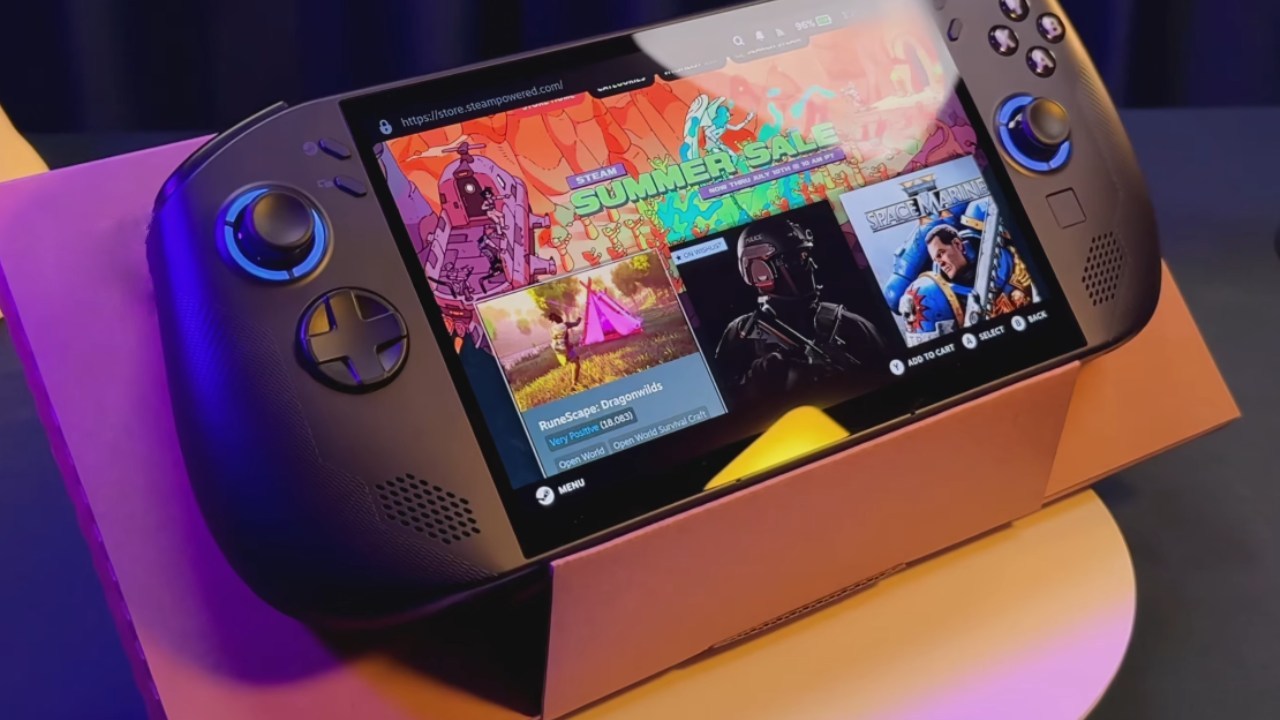
While Ray Tracing Looks Impossible on Handhelds?
The term ray tracing immediately reminds people of the self-consuming desktop graphics cards that take 300W-450W. A handheld, on the other hand, must not only run the OS but also perform lighting calculations, play the game, and keep power consumption at 30W-35W. It sounds as if it is not possible on paper.
But the bigger problem is not only the power usage. It's testing the visual benefits of ray tracing for gamers. It's testing the visual benefits of ray tracing for gamers. Many, even though the difference in the visual style is quite apparent, contend that ray tracing does not make a significant contribution to a game. However, it's an issue that is different depending on the game.
If that person doesn't deem ray tracing useful in one game, they probably don't deem it useful in another game they play less often. The level of integration ultimately determines whether ray tracing is worth it. It is used subtly in some games and is the focus of some games. That's a game-changer.
Games Built Around Ray Tracing
One of the best is Doom: The Dark Ages. The game serves as a showcase of what can be achieved by optimizing it for ray tracing from the beginning. All parts appear optimized for maximum efficiency. At 1600×1000 resolution and a 30W TDP setting, the performance is around 45fpsaround 45 fps when running handheld. The resolution is lowered to 800p, which brings the experience closer to 60 fps.
When developers build with such constraints in mind, they can go a long way toward optimization, as with this handheld drawing that produced a 60fpsa 60 fps ray-traced experience with approximately 35W35 W.
It's not all about ultra-high resolution or super-high frames here. It's a matter of survival. When developers design around best practices and efficient lighting, handheld hardware can still produce shadows, ground reflections, and indirect lighting. This is proof that it's not just about more power usage in the future of graphics. It is increasingly a matter of intelligent power distribution.
When Ray Tracing is not Necessary
Across the way is Borderlands 4. The game eventually reached the performance level to get to a stable 30fps to 40fps on handheld devices with the ray tracing feature on, but the backlash against this clearly showed an important point. While the visual style has been enhanced with ray tracing, it already looks robust without it.
For this reason, many gamers thought the feature was technically a waste of resources and not essential. The more the technology has to be modified to ensure performance, the less popular it will be. This is why there's an ongoing debate about ray tracing. Despite its more advanced rendering solution, its value depends entirely on whether the enhancements are noticeable to standard gamers.
The distinction between traditional rendering and ray tracing may be lost in the future as developers continue to improve rendering quality and incorporate ray tracing. For many players, ray tracing will become part of how games are designed, to the point that they may not even realize they are playing a game via ray tracing.
.jpg)
Testing on Handheld Hardware
Also, we wanted to see just how far the handheld hardware could go with games that weren't designed for handhelds. One of the best tests for that was Ratchet & Clank: Rift Apart. Ray tracing adds significant power consumption without improving the game experience, so keeping the game playable while adding it was the real challenge. Targeting 30 fps was a great choice; as a result, the game worked very well on newer handheld hardware.
Xbox Ally X averaged about 36fps-37fps, and the Legion Go 2 averaged around 30fps-31fps. In some of the more graphic-driven sequences, performance did not always hit that mark, particularly on the Legion Go 2. These differences in resolution (1280×720 versus 1280×800) may have played a small part, but not enough to account for the difference.
Most importantly, the game continued to work when ray tracing was enabled. There were also high-quality ray-traced shadows and medium global illumination, both of which worked well without a significant impact on performance.
Resolution Becomes the Main Compromise
Resolution is the biggest compromise for portable ray tracing. The overhead required to perform sophisticated lighting computations increases as rendering resolution decreases. This will be similar to what consoles do with similar workloads. Even if the GPU can perform ray tracing, the CPU can still be a performance bottleneck in systems with APUs. With additional CPU power, the RayTracing performance will improve significantly.
This is especially true of the newer handheld APUs, which share the same design philosophy as the PS5, making it easier to grasp how they are now better equipped to handle advanced lighting effects than previously believed. Nevertheless, most of the visual enhancements are relatively minor. Reflections look more grounded, shadows are deeper, and global illumination results in more natural-looking environments.
For the majority of players, however, it's simply minor enhancements and not dramatic changes to their footage. This subtlety is what makes the difference and is why ray tracing is best integrated at the very beginning of development, rather than added later. Games programmed with ray tracing produced more accurate results. Ray-traced games resulted in more accurate results.
It's more noticeable in newer games such as Pragmata and Resident Evil Requiem. The games are examples of titles for which the developers planned ray tracing from the outset and did not consider it an add-on. The quality of the optimization matters. Scalability has been incorporated into the design process, performance remains unchanged, and the visual presentation is clearly enhanced.
Ray tracing has always been a cumbersome process, but when done efficiently, it can significantly reduce workload. These improvements are due not just to hardware. These experiences are made possible by a large number of developers who target the lower end of the specs. This action benefits the entire industry. The challenge of scalability and optimization from the ground up has been thrust upon developers of hardware such as the Nintendo Switch 2, the Xbox Series S, and even older systems.
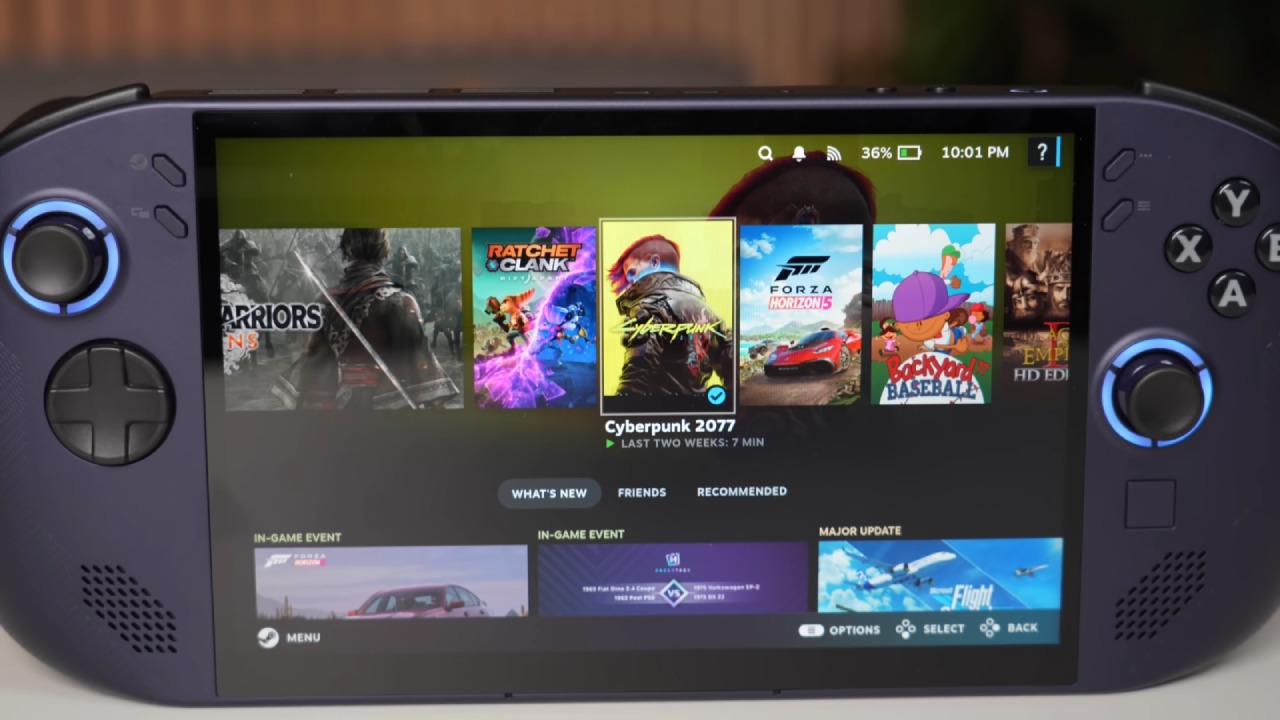
There is a difference between how SteamOS and Windows handle ray tracing.
Amongst the surprises was discovering the Legion Go S. It was difficult to find a ray-traced game that could run well. The feature was consistently blocked out completely in games. The test began to show a difference between SteamOS and Windows. On paper, the Z1 Extreme and Z2 Extreme don't look that different in ray tracing performance, but SteamOS has always been limited when it tries to perform the same tasks as Windows hardware.
Some ray tracers may still be able to take advantage of the Z1 Extreme, but that depends on compatibility and software. How successful handheld ray tracing will be in the foreseeable future will depend on the development of upscaling technologies. Methods such as AMD FidelityFX Super Resolution 4 may enable video games to be rendered internally at 720p or 800p, with the ability to upscale to 1080p while maintaining advanced lighting effects.
Advanced upscaling algorithms are challenging; however, future APUs equipped with APU dedicated graphics accelerators will be able to handle such workloads more easily. That hardware changes, and ray tracing will go from experimental to expected on handhelds. The ray tracing on handhelds is built around developer priorities rather than user needs.
Handheld console developers can use the feature if they design the games around the technology rather than adding it later. Optimization, scalability, and planning have proven to produce stable performance on low-power systems, as evidenced by Doom: The Dark Ages and Pragmata. With better rendering pipelines, better APUs, and better upscaling tech, handheld gaming is heading towards an era in which you'll see more fancy lighting effects and more of them.
Editor, NoobFeed
Gaming Hardware Updates
No Data.