
NVIDIA RTX 5080 vs. 4090 vs. 4080 Super: How Overclocking Changes the Game
Overclocking the RTX 5080 delivers stable gains with minimal power increase and improved performance across multiple modern titles.
Hardware by Tanvir Kabbo on Oct 18, 2025
The launch of the RTX 5080 has gotten a lot of people talking, especially regarding how much it can be overclocked. The PC tech community seems to be impressed by how easy it is to push the card beyond its factory settings, with steady gains in several benchmarks.
This renewed enthusiasm for overclocking comes as a surprise to many, considering how far NVIDIA's automatic boost clock technology has come in recent years. Typically, we wouldn't expect much headroom left for users to exploit, yet the RTX 5080 appears to defy that expectation.
Overclocking Gains and Stability
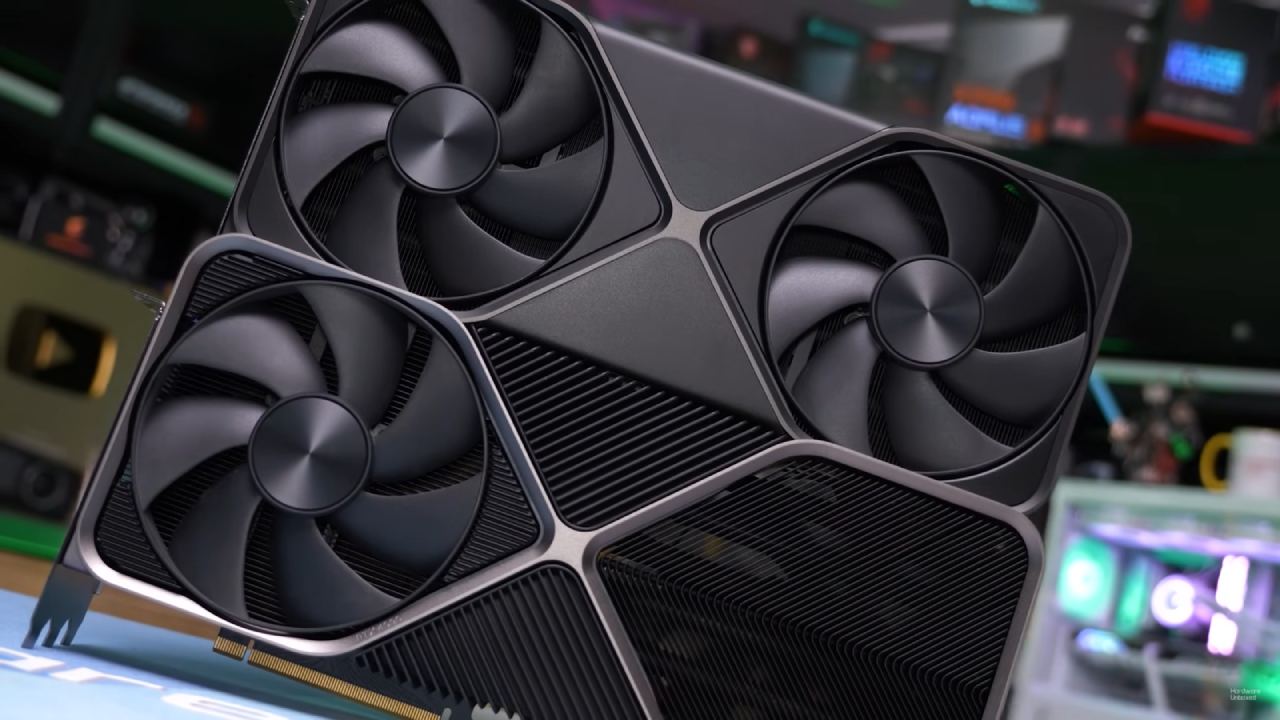
Upon testing, we found that pushing the RTX 5080 to a core clock of +350MHz and a memory clock of +375MHz delivered stable results across all tested games. Although these improvements aren't groundbreaking, they are measurable and reliable.
While other reviewers have reported gains of 10-12%, our observed improvements averaged 5-8%. These boosts were achieved with only a modest 5-7% increase in power draw, which is a fair trade-off given the performance uplift.
The higher the frame rate, the less noticeable the increase; at lower frame rates, the improvement is more noticeable. Interestingly, the overclock allows the GPU to reach around 3GHz, noticeably above stock performance.
Game Benchmark Analysis
In Metro Exodus, stock performance puts the RTX 5080 just 7% ahead of the RTX 4080 Super, a gap that widens to 14% once overclocked. The RTX 4090 remains roughly 22% faster, but the overclocked 5080 narrows that margin.
We achieved 82% of RTX 4090 performance with just a 6.5% overclock—modest but meaningful.
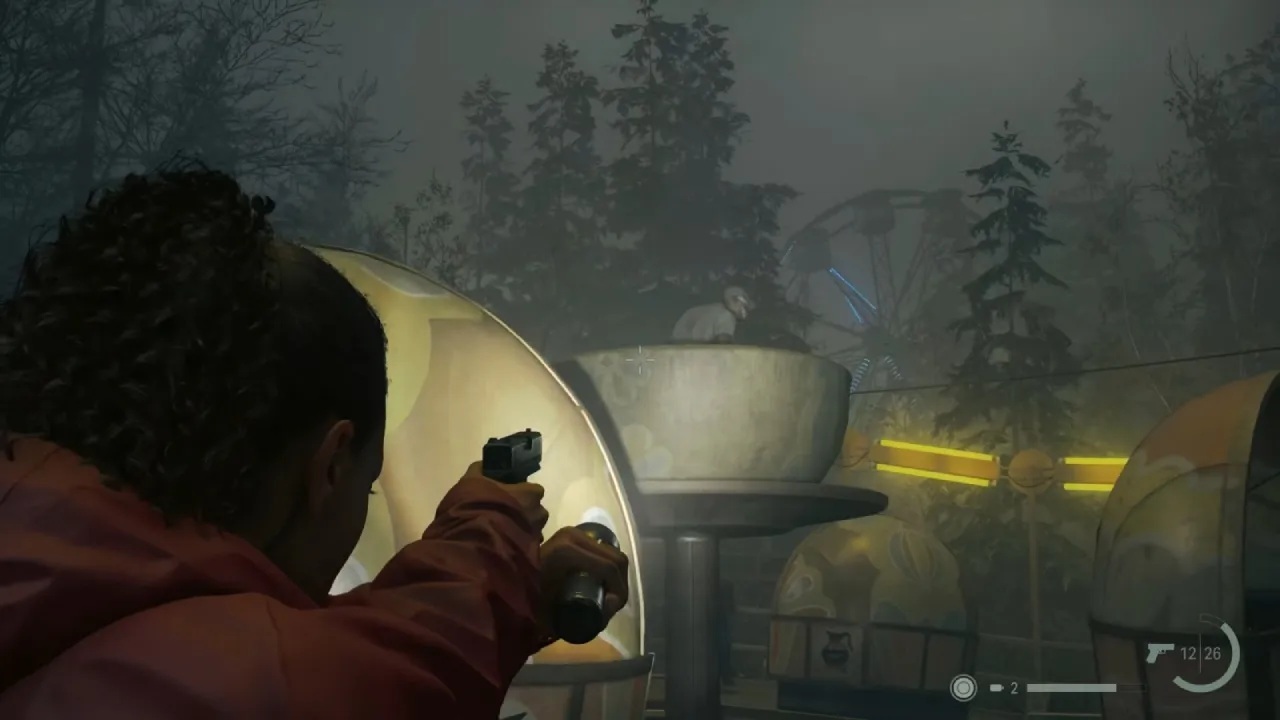
Alan Wake 2 showed more striking results. At high settings with low ray tracing, the RTX 5080 starts off 15% faster than the 4080 Super, rising to 23% with overclocking. That places it at roughly 88% of the RTX 4090's performance, cutting the gap to just 14%.
Even though the overall gain is only 7%, the perception of the 5080's capability changes considerably when seen through comparative performance lenses.
In Hades II, we recorded a 27% advantage over the 4080 Super with the overclock, compared to 17% at stock settings. This equates to roughly 89% of RTX 4090 performance, achieved by increasing base performance by 7%.
These shifts in percentage differentials alter the perception of the product in ways that surpass the numerical improvement alone.
Title-Specific Variations
Some games show unexpected scaling. In Indiana Jones, stock results place the 5080 only 9% ahead of the 4080 Super, but overclocking boosts it to 17%. The RTX 4090 remains close, and the 5080 reaches 90% of its performance when overclocked, coming from a 7.8% uplift.
Similarly, Black Myth: Wukong exhibits narrow gaps, with the RTX 4090 just 14% faster at stock and 5% faster once the 5080 is overclocked, achieving 95% of the RTX 4090's performance.
Forza Horizon 5 produced particularly odd results. The 5080 stock performance was already 21% higher than the 4080 Super, increasing to 28% after overclocking—actually surpassing the RTX 4090 by 2%. This came from just a 6% overall performance increase, showcasing how small numerical changes can significantly shift relative rankings.
The Perception of Marginal Gains
One of the most interesting takeaways is how small performance gains can drastically alter perception. Even a 7% improvement can reposition the 5080 from being seen as "too close" to the 4080 Super to appearing much nearer the 4090 in capability.
If NVIDIA had shipped the RTX 5080 running at around 3GHz out of the box, user sentiment could have been far more positive. It might not have matched the 4090, but it would have established a clearer separation from the 4080 Super.
Design, Cooling, and Efficiency
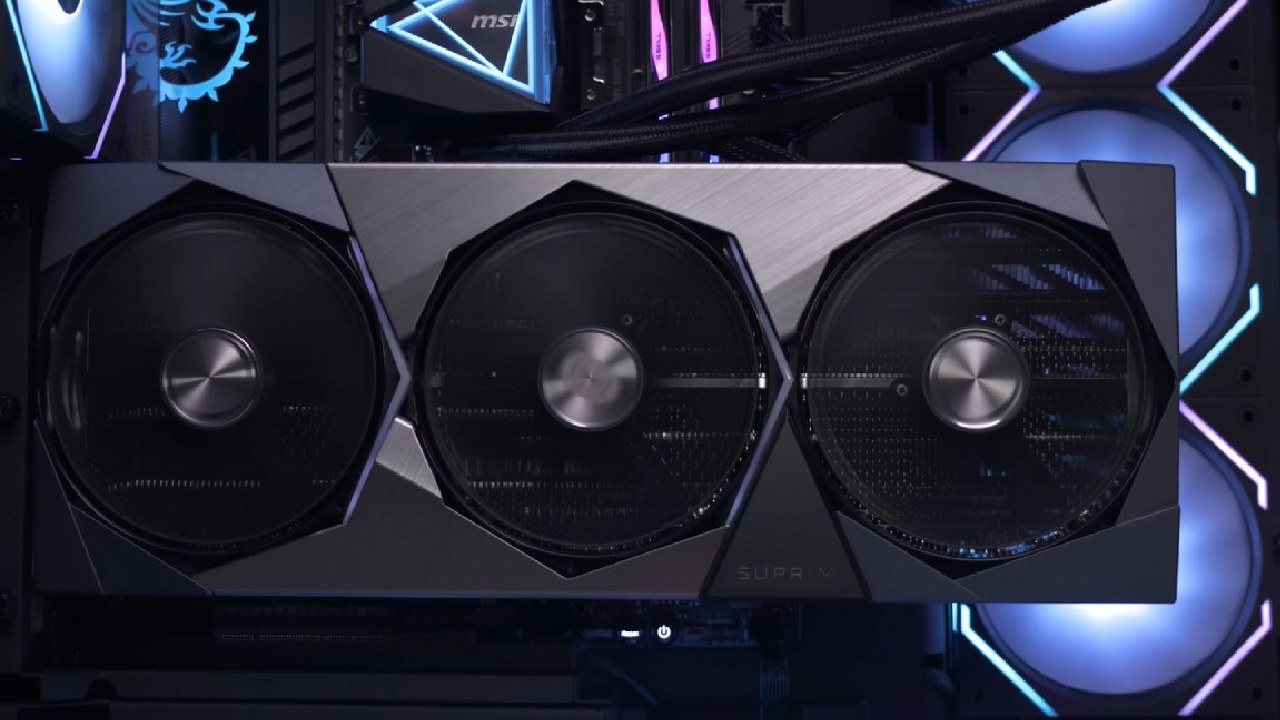
We thought the 5080's cooling system was really good. Many partner cards had big 3.5-slot designs that were similar to those of 4090-class coolers. The vapor chamber works really well even if it doesn't have any liquid metal in it.
These designs can comfortably handle 400-450W loads, making the RTX 5080 a safe candidate for sustained overclocking without thermal instability.
While the RTX 5090's power consumption pushes the limits of its cooling system, the 5080 offers a balanced experience—less heat, more headroom, and consistent stability. In terms of overall thermal and acoustic performance, the RTX 5080 founders and partner models show clear refinement.

Market Availability and Pricing
Unfortunately, all of this technical promise is overshadowed by market conditions. RTX 50 Series GPUs, including the 5080 and 5090, are in short supply, and prices are well above MSRP. Retailers have significantly inflated prices, with some partner cards seeing markups of $300-$400.
Availability in the US remains inconsistent, and with tariffs recently introduced, new stock could be even more expensive.
Reports suggest that around 40,000-50,000 TSMC wafers were destroyed in earthquakes around the time of RTX 50 Series production. Additionally, NVIDIA may have prioritized its AI and enterprise Blackwell chips, also manufactured on 4nm, over consumer GPUs.
Production delays meant that 50 Series cards began assembly only after CES, giving factories just a couple of weeks to produce limited batches before the Chinese New Year shutdowns.
Transparency and Manufacturing Challenges
The combination of wafer shortages, manufacturing delays, and the prioritization of AI chips has created a "perfect storm” of supply shortages. However, there's been little transparency from NVIDIA or its partners about these production issues.
Consumers are left to speculate about the reasons behind shortages and price spikes. Manufacturers should be more upfront about pricing decisions and managing expectations, given the scope of the disruptions.
If the stories of lost wafers are true and NVIDIA really did put AI chips first, then the problems with availability in the short term make sense. Things should settle down over the next few months when production gets back to normal and exports start to arrive in Western markets. The GPU market is still up in the air, and prices are all over the place.
Final Thoughts
In the end, the RTX 5080 shows great overclocking stability and real performance benefits, but its effect is lessened by problems with availability and high prices. The overclocking headroom shows how a few percentage points can reshape perceptions of a GPU's market position.
If NVIDIA had opted for slightly higher stock clocks, the narrative surrounding the 5080 might have been markedly different—placing it more comfortably between the 4080 Super and 4090, both in performance and perception. For now, the RTX 5080 remains a fascinating yet elusive product in a market defined as much by supply chains as by silicon.
Also, check our other articles:
- GeForce RTX 5090 Unleashed: Is NVIDIA's New Flagship the Ultimate 4K Gaming GPU?
- NVIDIA GeForce RTX 5080 Review (2025): Still A 4K Gaming Powerhouse?
- RTX 5090 Performance Testing In GTA 5 – 1080p, 1440p, and 4K Max Settings Benchmark
- NVIDIA RTX 5070 Review: Mid-Range Muscle or Marketing Hype?
- RTX 5070 Ti Review: Performance, Thermals & Power Efficiency Tested
- ASUS ROG Astral RTX 5090 OC Edition Review: 32GB GDDR7 & 4K Gaming Benchmark
- ASUS GeForce RTX 5090 LC Liquid Cooled GPU Review: Unmatched Silence & Speed
- MSI GeForce RTX 5090 32GB SUPRIM SOC Review: Power Efficiency, Cooling, and Gaming Performance
- INNO3D RTX 5060 Ti 16 GB X2 Review: Gaming Benchmarks, Temps, and Power Efficiency
- HP Omen 45L Review: RTX 5090 Performance, Thermals, and Value Analysis
- ASUS TUF Gaming GeForce RTX 5060 Ti Review: DLSS 4, Power Efficiency, and Gaming
- ASUS Prime RTX 5060 Ti OC 16GB Review: DLSS 4, Ray Tracing, & Thermals Tested
- NVIDIA GeForce RTX 5060 Review: Specs, Gaming, and Cost per Frame
- MSI GeForce RTX 5090 GAMING TRIO OC Review: A Monster Power GPU
Senior Editor, NoobFeed
Gaming Hardware Updates
No Data.