
PlayStation 5 is Losing its Identity as Sony's Live-Service Push Backfires
The PS5 may become one of Sony's most successful consoles financially, but a lack of generation-defining exclusives is making this era feel strangely forgettable.
News by Tahmid Mahi on Aug 23, 2026
Something feels different about PlayStation right now, and the issue is not necessarily the success of the PS5. The console has performed extremely well, but the generation is increasingly being described as one that lacks a clear identity.
Something feels different about PlayStation right now, and the issue is not necessarily the success of the PS5. The console has performed extremely well, but the generation is increasingly being described as one that lacks a clear identity.
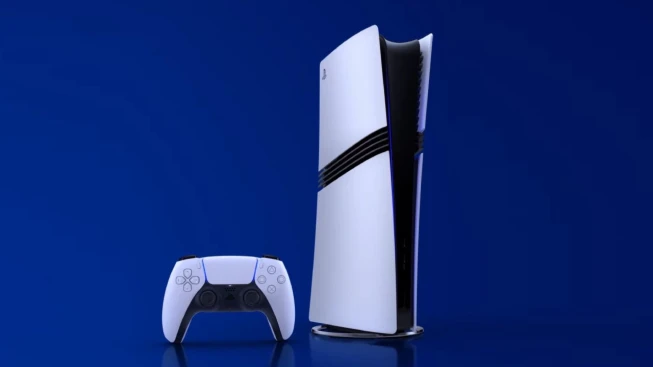
That is what makes the current situation so unusual.
A console can be incredibly successful in terms of sales and still fail to become memorable in the way previous PlayStation generations did. The PS5 appears to be heading toward that strange position, where Sony can point to strong hardware sales and financial results while players point toward a shortage of games that truly define the system.
The timing makes for an even more compelling argument as the PS5 launched in November 2020. By November 2026, the console will have been available for roughly six years, which is already deep into a typical hardware generation.
At this point in previous generations, discussions about the next console were usually accompanied by excitement over what developers had already accomplished with the current hardware. With the PS5, the conversation instead seems to be about whether the generation has properly started yet.
You can also understand why some players are not rushing toward another console. The next generation is expected to be expensive, and the idea of potentially spending around $1,000 or more on new hardware makes the PS5 look perfectly comfortable for many people.
If your current console already plays the major third-party releases you want, there is not necessarily an urgent reason to upgrade. That could make the transition to the PS6 more of a wait-and-see situation for existing PS5 owners.
One of the biggest reasons for this feeling is Sony's push toward live-service games.
The company has had successes in that area, with Helldivers 2 being the clearest example mentioned in the discussion. That success showed Sony that a multiplayer game could become a major part of its business, but the broader live-service strategy has also created significant opportunity costs for the company's first-party studios.
Horizon Hunters Gathering is a particularly clear example because Guerrilla has reportedly spent years working on the project. The game appears to have been in development for roughly six years or more, with development increasing in scale during the last few years as the team worked toward testing and established many of its mechanics.
The reported changes could include removing some of the game's live-service elements and reducing its overall scope. Rather than continuing with the project exactly as originally planned, the game could reportedly be repositioned as a smaller, more manageable project.
The bigger problem is what happened to Guerrilla while that project was being developed. Horizon 3 is now described in the transcript as being far enough away that it could potentially become a PS6 title or a PS5 and PS6 cross-generation release.
That matters because Horizon Zero Dawn helped define the PS4 generation by showing what Guerrilla could do with a new open-world IP, while the PS5 has not received an equivalent generation-defining Horizon entry from the studio.
Guerrilla is not the only major Sony studio affected by the situation.
Naughty Dog spent substantial time working on The Last of Us Online before that project was shelved, and the decision reportedly left the studio significantly behind where it could have been if it had focused entirely on its next major single-player game.
Santa Monica Studio has faced a similar issue in terms of defining the PS5 generation. God of War Ragnarok was an important release, but it was also available on PS4, meaning it did not function as a game built exclusively around the PS5 hardware.
That leaves several of Sony's most important studios in an unusual position. Naughty Dog has spent years dealing with a canceled multiplayer project, Guerrilla has reportedly been tied up with Horizon Hunters Gathering, and Santa Monica Studio's next PS5-focused release is still years into the console's life.
Insomniac is the major exception in this discussion. The studio has continued releasing games and has produced titles that helped showcase the PS5, giving Sony a first-party developer that has consistently delivered during the generation. However, the fact that those games have also made their way to PC has reduced some of the impact they might otherwise have had as reasons to own a PS5.
Another thing that makes the PS5 generation different from the PS4 era is that there really aren’t any defining exclusives. Sony has still released some great games and titles, like Astro Bot, which has demonstrated that the company can deliver brilliant first-party experiences. But many games that helped bolster the PS5 early on ended up coming to other platforms.
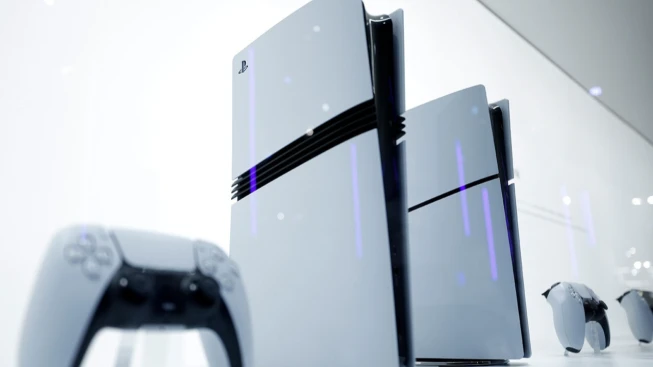
Also, the technical leap itself contributes to the feeling that this generation hasn't been as dramatic. The SSD of the PS5 makes the system much faster and more comfortable to use, but the leap from PS4 to PS5 has not had the same instant reaction that players had with some previous console transitions.
Meanwhile, the PS5 has become the platform of choice for third-party games.
That's a big plus for Sony, becauseit doesn't have to rely on its own games to sell the consolee. Sony’s first-party lineup is fairly thin, but there are plenty of reasons for gamers to own the hardware with Call of Duty, EA Sports FC, Madden, Fortnite, and other big third-party games.
That success creates an intriguing contradiction. From Sony's perspective, the PS5 does not need constant blockbuster exclusives to remain successful because the PlayStation brand itself is strong enough to attract players. From the perspective of a hardcore PlayStation fan, however, that can feel less satisfying because third-party games are available on multiple platforms.
It’s even trickier in the case of Sony’s live-service approach, since multiplayer games that are successful can make a serious amount of money over time. The transcript points to add-on revenue such as downloadable content, battle passes, and microtransactions as an important part of Sony's business.
That financial incentive helps explain why the company was willing to invest heavily in live-service projects, even though only a relatively small portion of those games ultimately become major successes.
The problem is that live-service development can take many years. If a project takes five, six, or seven years to develop and the market changes during that period, a game can arrive when players are no longer interested in the formula it was designed around.
That creates a very different risk compared with a traditional single-player project, where a studio can finish the game and move on to something else. A failed live-service project can consume a giant portion of an entire console generation.
Sony may now be reconsidering that balance.
The transcript suggests that the company plans to put more focus on PlayStation hardware and the console experience while potentially reducing its emphasis on PC releases and ports. Whether that strategy actually changes the PS5's remaining years is unclear, but the shift could give Sony's hardware more importance going forward.
There is still time for the PS5 to make a difference. God of War: Laufey is expected next year, while Intergalactic could also arrive around the same period, and the PS6 may not reportedly launch until 2028.
That would give Sony potentially another two years to deliver late-generation games that could give the PS5 a stronger ending, similar to how The Last of Us Part II and Ghost of Tsushima helped close out the PS4 era.
So, calling the PS5 a "lost generation" is not quite as simple as looking at sales numbers or revenue. The console may become one of Sony's most successful systems financially, and the hardware itself has generally been reliable and capable.
The concern is that when you look back years from now, you may remember the PS5 more for its massive install base and third-party games than for a long list of first-party experiences that could only have existed on that generation.
That is ultimately what makes the current PlayStation situation so strange. Sony appears to be doing many things correctly from a business perspective, with a strong console, major third-party support, and enormous revenue opportunities from its ecosystem.
Editor, NoobFeed
Related News
No Data.