
PS6 and Project Helix Specs Reportedly Push Console Power to New Heights
Reported 40-teraflop and 56-teraflop targets are raising questions about whether more console power will actually lead to better games or simply higher prices.
News by Tahmid Mahi on Sep 27, 2026
The next generation of consoles is starting to sound much more powerful than the systems we have today, with new reports claiming that the PlayStation 6 and Microsoft's Project Helix are being built around some serious hardware numbers. If the reported figures are accurate, both systems would represent a major jump in raw graphics performance over the current generation.
AMD hardware leaker Kepler L2 says that the PlayStation 6 could deliver 40 teraflops of graphics performance, while Project Helix could deliver 56 teraflops. These numbers are still unconfirmed, but the claim suggests that the chip designs for both systems have already reached an important stage.
Kepler L2 reportedly shared the information on the NeoGAF forums, saying that these are the specifications the chips are expected to head into manufacturing with.
That does not necessarily mean every number is completely locked down, because hardware specifications can still be adjusted before a system launches. Still, the reported figures are being described as a baseline for what Sony and Microsoft are targeting with their next-generation hardware.
For some perspective, the current PlayStation 5 has around 10 teraflops of graphics performance, while the PlayStation 5 Pro increases that figure to roughly 16 teraflops. Microsoft's XBOX Series X sits at around 12 teraflops, giving it a higher theoretical figure than the standard PS5.
That difference became a major talking point when the current generation was being introduced, with the extra power of the XBOX Series X often being highlighted as an advantage over Sony's base console. The higher specifications gave XBOX fans another reason to point to the Series X as the more powerful option on paper.
The bigger question is what all of that additional power actually means for games. Developers aren’t suddenly going to start making better or more ambitious experiences just because they have a far more powerful machine available, especially when other aspects of game development can be major constraints.
The current generation has shown that raw hardware performance is only one part of the equation.
More powerful systems can provide developers more options, but those options don’t mean studios will use them to create something truly different. Developers aren’t suddenly going to start making better or more ambitious experiences just because they have a far more powerful machine available, especially when other aspects of game development can be major constraints.
The current generation has shown that raw hardware performance is only one part of the equation. More powerful systems can provide developers more options, but those options don’t mean studios will use them to create something truly different.
There are already plenty of examples of modern games that do not appear to be held back simply because developers lack enough hardware power. The argument is that the industry has moved far beyond the days when a developer might have a specific game idea that simply could not run on an existing console.
The comparison to Nintendo's transition from the Super Nintendo to the Nintendo 64 is useful here, because the extra hardware power once allowed developers to make experiences that genuinely required a new generation of technology. According to the transcript, that type of limitation is much less common now.
Instead, some of the largest problems facing modern games are tied to development itself, with very long production cycles and increasingly complex projects. Studios may spend years on a single game, bringing in outside consultants, additional teams, and other types of help to shape the final product.
This can be useful in some situations, especially for smaller studios or projects that require expertise outside of a team’s usual experience. But the argument here is that too much outside interference can ultimately make it harder for an established studio to keep a clear creative vision.
That also begs the question of how long players will have to wait before the added power of the next generation really counts.
Giving developers more powerful machines does not necessarily resolve the problem if they’re already struggling with long development cycles on current hardware. In some cases, another increase in hardware capability could even mean games become harder to make and development times stretch even longer.
There is also the issue of how much these new systems could cost. Hardware prices across the technology industry have been rising, and that trend is already visible in the handheld PC market, where increasingly powerful devices can cost well over $1,000.
Some handheld gaming PCs have even reached around $2,000, largely because the components required to deliver higher performance have become pricier. If the PlayStation 6 and Project Helix are targeting 40 and 56 teraflops, respectively, their graphics performance is only one part of the total hardware package.
Memory, storage, cooling, processing components, and everything else required to build a complete console would add to the cost. That makes it difficult to imagine these machines being inexpensive if the reported specifications are accurate.
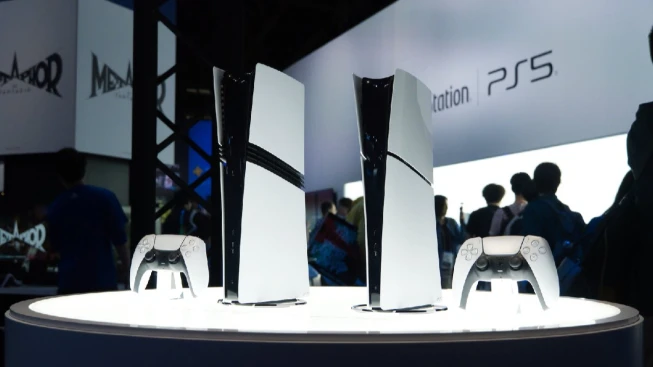
The transcript also discusses the possibility of a PlayStation handheld built around similar next-generation technology, with one estimate suggesting a price around $800, although the speaker argues that even that figure may be unrealistic. However, the real difference would ultimately depend on how developers used that additional hardware power in their games.
The concern is that Sony and Microsoft may eventually release costly hardware and expect their most dedicated customers to pay for it.
That approach becomes more complicated when consumer trust is already in question. The transcript points toward decisions such as canceling physical releases and the cancellation of XBOX projects, including Perfect Dark, as examples of actions that can affect how players view the companies behind these platforms.
More importantly, powerful hardware has never been enough by itself to sell a gaming system. Looking back at older generations makes that clear, with systems such as the 3DO and Neo Geo offering significantly advanced technology for their time but struggling because of their high prices and limited market appeal.
Their games could demonstrate capabilities that were difficult to achieve on cheaper hardware, but the cost of entry pushed those systems toward niche audiences. The same basic problem could appear again if next-generation consoles become expensive enough that only a smaller group of players can justify buying them.
That possibility becomes even more interesting when you consider the relationship between the next generation and the current consoles. The transcript argues that cross-generational support could last much longer than it has in previous console transitions.
If the PlayStation 6 and Project Helix reportedly target a holiday 2027 launch, players may continue seeing major games released for the PlayStation 5 and XBOX Series X well into the life cycle of the newer machines. If the next-generation hardware is expensive and difficult to sell to a mass market, developers may prefer to keep the existing audience.
Younger players could be particularly important in that situation.
Many of the biggest games among younger audiences, including Fortnite, Minecraft, and Roblox, are already available across a wide range of hardware. Players who mainly spend their time with those games do not necessarily need a new console simply because a more powerful one has arrived.
The reported hardware numbers also arrive at a time when GTA 6 is expected to be one of the biggest releases of the current console generation. The transcript describes GTA 6 as potentially marking the beginning of a major transition point for the industry, especially since the game is expected to push existing hardware and influence hardware sales.
That brings the discussion back to the 40-teraflop and 56-teraflop figures. If the PlayStation 6 and Project Helix eventually launch with those levels of performance, the hardware itself will clearly represent a substantial jump over the current generation.
The real value of that jump will depend on what developers actually do with the additional power and whether the games justify the cost of moving to new hardware. A system can produce higher resolutions, more detailed characters, better effects, and greater visual fidelity, but those improvements may not be enough to convince players to spend potentially thousands of dollars on another console.
The transcript also suggests that exclusive games may not immediately become the main reason to upgrade.
If the next generation launches with high prices and a relatively small audience, developers could have strong reasons to continue supporting the PlayStation 5 and XBOX Series X for years. That would make the transition slower and could mean that the biggest technical improvements of the new machines take considerable time to become standard.
A 40-teraflop PlayStation 6 and a 56-teraflop Project Helix would represent a major increase over today's consoles, yet the benefits will depend on software, development practices, pricing, and how quickly developers move away from current hardware. Major improvements could arrive with the next generation, but it also could enter a market where players are becoming more skeptical of expensive hardware and long development cycles.
Editor, NoobFeed
Related News
No Data.