
PlayStation Blackout Failed to Make a Dent as Sony’s Direction Faces More Backlash
The boycott lasted a week and seemingly had no measurable impact on player activity, but the backlash highlights deeper concerns about physical games, live services, and the evolving identity of PlayStation.
News by Tahmid Mahi on Sep 15, 2026
The PlayStation Blackout that took place at the end of August has officially come and gone, and according to the latest engagement tracking, it barely made a noticeable impact on PlayStation activity in the United States.
The week-long boycott asked players to unplug their PlayStation 5 consoles, avoid buying games and other products, and stop playing online from August 23 through August 30. While the campaign attracted plenty of attention across gaming communities and social media, it ultimately had little impact on PlayStation activity in the United States.
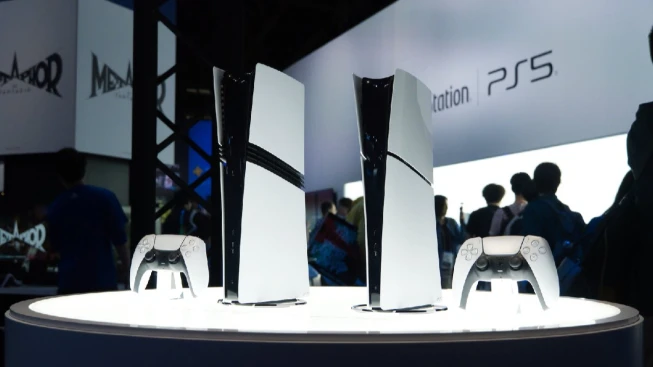
That result is not necessarily surprising when you consider the enormous size of the PlayStation audience.
The transcript points to roughly 132 million monthly active players, meaning even several million people participating in a week-long boycott would represent only a small percentage of the overall user base. From that perspective, the blackout was always unlikely to create an immediate financial or engagement shock.
Frustration about the direction of the platform, particularly the perceived decline of physical game ownership, mostly fueled the PlayStation Blackout. The issue goes beyond simply preferring discs over digital downloads.
Physical games give you something tangible that you can keep on a shelf, lend to a friend, resell, or collect, and the possibility of that model disappearing has become increasingly uncomfortable for some players.
The transcript also connects those concerns to reports about Sony scaling back parts of its physical-media infrastructure, which supporters saw as another sign that the industry is moving toward an increasingly digital future.
For many of the people involved, though, physical media was only one part of the problem.
There is also frustration over what PlayStation has become as a game publisher. The criticism centers on the company's increasing interest in live-service projects, while some fans feel that the single-player experiences that helped define the PlayStation brand have received less attention.
The transcript specifically points back to the era when PlayStation regularly released additional standalone content for its major games, using examples such as Infamous First Light as part of a period when players could expect smaller expansions alongside major releases.
The actual blackout itself was never large enough to seriously disrupt PlayStation's numbers. Circana executive director Matt Piscatella was cited as saying the initiative produced no significant change in player counts or engagement in the US.
That is particularly notable because the United States was seen as one of the places where a major boycott would have been most visible due to the size of the market and the amount of consumer spending there.
However, that does not mean everyone involved should simply view the effort as pointless. There is a difference between a boycott failing to change corporate numbers and players deciding that they no longer want to quietly accept every decision made by a platform holder.
The transcript argues that trying to push back can still have value even when the immediate result is unsuccessful. From that perspective, the blackout was less about shutting down PlayStation for a week and more about giving frustrated players a way to publicly demonstrate that they were unhappy with the direction of the platform.
A major part of that frustration is also connected to rising costs throughout the gaming industry.
Games priced around $80, controllers approaching $100, and consoles costing around $1,000 in some configurations are making the hobby increasingly expensive for players who want to keep up with new releases.
The transcript says it used to be cheaper to get into gaming, with older games often going for $15 or even $5 during big sales. Those cheaper experiences could get players familiar with a platform and have them grow a larger library over time.

As prices go up, players naturally get more selective about what they spend their money on. That can create a difficult situation for publishers because an expensive new release has to compete for attention against a large library of existing games, free-to-play titles, and other forms of entertainment.
The transcript suggests that some players are increasingly relying on free-to-play games because buying premium releases regularly is becoming harder to justify. That environment also helps explain why live-service games remain so attractive to major publishers, even when individual projects struggle.
The transcript presents PlayStation's pursuit of another major live-service success as one of the biggest sources of frustration. Helldivers 2 is used as the obvious example of a successful live-service project connected to PlayStation, with the transcript noting that Sony funded the game rather than developing it internally.
The concern from longtime PlayStation fans is that this focus could come at the expense of the games that gave the platform its identity.
The transcript points to Sony already having access to massive third-party hits like Fortnite, Grand Theft Auto, and Call of Duty, so there was an opportunity to use those games as major commercial pillars while putting its own resources into different kinds of first-party experiences.
And that shift is even more apparent when you look back at the PlayStation 4 generation. Games like Ghost of Tsushima, Uncharted: The Lost Legacy, and Astro Bot are cited as examples of projects that offered different experiences while benefiting from the broader PlayStation ecosystem.
The transcript argues that revenue generated through massive third-party games could effectively support investments into first-party projects, allowing Sony to build a broader lineup instead of simply trying to compete directly with every major multiplayer phenomenon.

The argument is not that PlayStation's recent single-player games have suddenly become mediocre.
In fact, the transcript acknowledges that many of them have still been excellent. Games such as Ghost of Yotei, Spider-Man 2, God of War Ragnarök, and Horizon Forbidden West are mentioned as major releases, while the broader point is that the identity and variety of PlayStation's output feel different compared with previous generations.
That is why the failure of the blackout may actually complicate the larger conversation. The campaign seems to have had no meaningful short-term impact on Sony, but that does not automatically settle the debate over where PlayStation should go next.
A company can remain commercially successful while still frustrating a portion of its most dedicated audience. The transcript's argument is essentially that players should not confuse a failed protest with proof that their concerns are irrelevant.
Grand Theft Auto 6 adds another layer of complexity, with its considerable popularity likely to generate plenty of attention and money for PlayStation. The transcript argues that many PlayStation 4 owners who have delayed upgrading could finally move to PlayStation 5 for Rockstar's next major release.
At the same time, it points out that Grand Theft Auto 6 is not actually a PlayStation exclusive because it is also coming to XBOX, showing how powerful platform marketing can be when a game becomes closely associated with one console ecosystem.
The bigger concern is what happens after that success.
If major third-party releases generate enormous revenue for PlayStation, there is no guarantee that the money will be directed toward the kinds of single-player projects frustrated fans are asking for.
The transcript fears that another wave of successful third-party spending could instead encourage Sony to invest even more heavily in live-service projects, creating a cycle where the company's commercial success pushes it further away from the identity that longtime players want to preserve.
Ultimately, the PlayStation Blackout appears to have failed as a traditional consumer boycott because it was not large enough to produce a meaningful change in engagement numbers. But measuring the entire campaign only through player counts misses the reason many people participated in the first place.
For those players, the point was to make their dissatisfaction visible, whether that involved physical ownership, rising prices, live-service games, or concerns about the future of PlayStation's first-party lineup.
The lack of an immediate result does not mean the conversation has to end. If anything, the reaction shows how differently players view PlayStation's current direction compared with the company they remember from previous generations.
The transcript ultimately frames the blackout as an attempt to push back, not as an expectation that Sony would change course after a week. Even if the numbers barely moved, the desire for more distinctive games and greater respect for physical ownership is unlikely to disappear simply because the boycott failed to make a measurable dent.
Editor, NoobFeed
Related News
No Data.