
FSR 4.1 Delivers Up to 58% Performance Gains on AMD RX 6700
AMD's latest upscaling technology brings substantial frame rate improvements and sharper visuals to the Radeon RX 6700.
Hardware by Tanvir Kabbo on Oct 30, 2026
AMD's FSR 4.1 upscaling engine seems to be doing a decent job on older graphics hardware, potentially giving a big performance boost to GPUs based on the RDNA 2 architecture. Initial testing on the Radeon RX 6700 10GB shows the new upscaler can deliver better image quality than FSR 3 while improving frame rates.
The results are especially fascinating from a console gaming perspective, given the similarities between the RX 6700 architecture and the PlayStation 5 GPU.
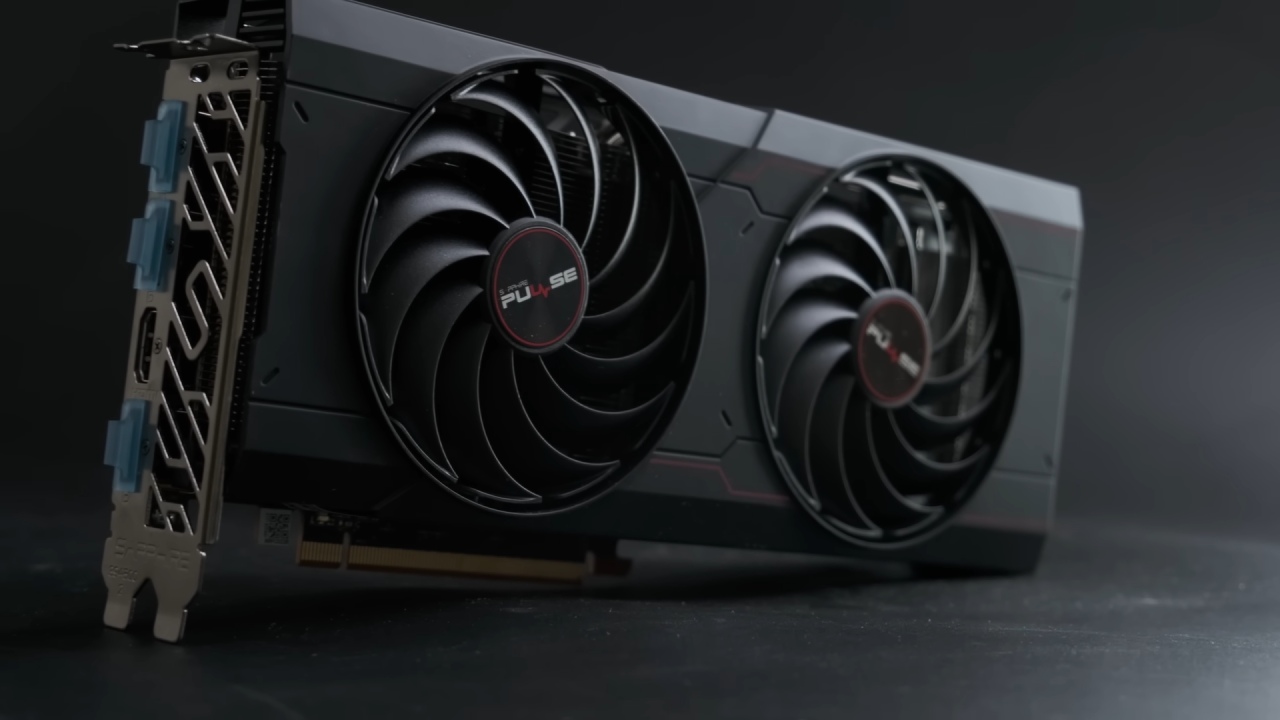
AMD RX 6700 Testing Shows Big Performance Gains with FSR 4.1
We chose the Radeon RX 6700 10GB because it's the closest thing to a console GPU on the PC graphics card market. It has a similar architecture to the PlayStation 5, except Sony's console lacks machine-learning acceleration for INT8 processing. Depending on implementation, Microsoft's XBOX hardware might run a bit faster.
The first test was Resident Evil Requiem, 1440p with mainstream optimized settings. FSR 4.1's potential was clear right away, with performance improvements of up to 31% to 58%, depending on the mode you choose. These are big gains for an older RDNA 2 graphics card.
With FSR 4.1 and native 1440p anti-aliasing, performance drops by about 11% to 12%, adding about 3ms to processing time. It's far more useful to compare it against FSR 3 Quality. FSR 4.1 needs about 1.5ms to 1.6ms more rendering time, but it can employ more aggressive scaling and get better image quality.
FSR 4.1 Balanced is actually very similar in performance to FSR 3 Quality, introducing only around a 4% difference, which is about 0.4ms to 0.5ms of extra frame time. The latest upscaler can deliver considerable gains even in a game currently running around 60 fps at native 1440p.
Crimson Desert Also Benefits From FSR 4.1 on RDNA 2
Next up was Crimson Desert at 1440p with PlayStation 5 Balanced mode-equivalent settings. Despite the challenging scene, FSR 4.1 brought performance gains ranging from 23% to 43%.
Native anti-aliasing added roughly 2.75ms to render time. FSR 3 Quality vs FSR 4.1 Quality also had an additional 2ms of rendering time with the older upscaler. With a performance difference of only about 0.9, FSR 4.1 Balanced was a good option for maintaining image quality without losing much performance.

FSR 4.1 Produces More Detailed Images Than FSR 3
In our image-quality assessments between Crimson Desert and FSR 3 Quality vs FSR 4.1 Balanced, we saw obvious changes on the RX 6700. Performance was similar, but FSR 4.1 preserved much more information, especially on foliage and distant objects.
The new upscaler also produced a sharper image, but the advantages weren't limited to sharpness. Rooftops, in particular, had more mid-distance definition. However, both of the methods still showed ghosting on particle effects.
Testing also compared the lighter INT8 implementation of FSR 4.1 with the full INT8 implementation on an RX 7800 XT. Their appearance was quite comparable, so the enhancements over FSR 3 seem consistent across implementations.
FSR 4.1 Could Have Important Implications for Console Gaming
Resident Evil Requiem gave us another helpful comparison between FSR 3 Quality and FSR 4.1 Balanced at 1440p. FSR 3 has problems with sub-pixel elements, resulting in considerable noise and visual breakdown. FSR 4.1 handled these elements much better, providing better temporal consistency and retaining more detail.
The full INT8 implementation on the RX 7800 XT provided essentially the same results as the RDNA 2 version, with performance and image quality attributes mostly similar to the FP8 implementation on RDNA 4.
Console apps could be a bit tricky, though. Games that use dynamic resolution scaling may see performance drops unless developers raise their minimum resolution targets to compensate for the extra processing power FSR 4.1 demands. A game that now drops to 720p and then upscales to 1440p using FSR 3 may need to reduce its resolution floor to around 640p.
The early results, however, are optimistic. If Microsoft's XBOX hardware delivers similar improvements, FSR 4.1 could be a huge leap for console gaming, offering better image quality with considerable performance gains on RDNA 2 technology.
Senior Editor, NoobFeed
Gaming Hardware Updates
No Data.