
Sony’s New QSSR Tech Brings AI Upscaling to Base PS5 for Better Image Stability
Sony is bringing a new AI-powered upscaling technology to the standard PS5, with Marvel's Wolverine and Ghost of Yōtei among the first games set to use it.
News by Tahmid Mahi on Oct 02, 2026
Sony is bringing AI-powered upscaling technology to the standard PlayStation 5, giving owners of the base console access to an image-quality feature that was previously associated with the more powerful PS5 Pro. The technology is designed to improve image clarity and stability while helping games maintain their visual quality.
The new technology is called Quick Spectral Super Resolution, or QSSR, and it is being introduced as a performance-focused implementation designed specifically for the original PS5 hardware. Marvel's Wolverine and Ghost of Yōtei will be among the first games to use the technology.
The announcement is notable because the PS5 Pro already has PlayStation Spectral Super Resolution, commonly known as PSSR.
PSSR uses machine learning to improve image quality in supported games. Sony says QSSR is different from the PS5 Pro implementation and has been developed to work within the performance limitations of the standard PS5. The technology comes from Project Amethyst, Sony's AI graphics collaboration with AMD, and is expected to become available to more PlayStation developers in the future.
According to Sony, PSSR analyzes images on a pixel-by-pixel basis and uses AI to reconstruct them with greater detail and stability than traditional upscaling techniques. The computational requirements of that technology previously made bringing a similar experience to the standard PS5 difficult.
That means PS5 owners do not need to upgrade to a PS5 Pro to see games take advantage of Sony's latest AI-assisted image reconstruction technology. The feature is particularly interesting because the standard PS5 remains the primary console for a large portion of the PlayStation player base.
Marvel's Wolverine is one of the first games to highlight the technology. Sony says QSSR can provide additional detail and image stability across the game's environments, including busy areas of Madripoor and the dense interiors players will explore throughout Logan's adventure.
The visual comparisons released alongside the announcement show that the changes mainly focus on fine details. Background textures look sharper, and things like buildings, rocks, vegetation, and other environmental objects can get extra clarity. So it’s not a dramatic difference in the overall image, but it’s more obvious when you compare the images side by side or look at them at a larger scale.
That's common with modern upscaling technology, and the idea isn't necessarily to make an entire scene look entirely different but to improve the stability and clarity of details that can otherwise become soft or unstable. Small environmental elements can benefit from the process, particularly when a game is rendering at a lower internal resolution and reconstructing the final image for display.

Ghost of Yōtei is another major title being used to demonstrate QSSR.
The large outdoor environments with vegetation, rocks, distant scenery, and other small details in the game can benefit from better image reconstruction. Sony’s demos do show sharper background elements and more defined environmental details, although the overall difference is still relatively subtle in some scenes.
That differentiation is important because AI upscaling is not designed to fully replace a higher native rendering resolution. Instead, it attempts to produce a cleaner final image using the information available at a lower internal resolution. The effectiveness of the result can therefore depend on the game, the scene being displayed, the player's television or monitor, and how the developer has implemented the technology.
For fast-paced games such as Marvel's Wolverine, the benefits may also be less obvious during normal gameplay. Players are frequently moving through environments, fighting enemies, and transitioning between different areas, meaning there may not be much time to examine individual pieces of scenery.
Sony and the developers involved are nevertheless positioning QSSR as a way to improve image quality while maintaining the performance targets of PS5 games. Instead of forcing developers to choose between a high-quality visual mode and a lower-resolution performance mode in every situation, improved reconstruction could give them another option when deciding how to allocate the console's hardware resources.
The technology is also part of a broader effort by Sony and AMD to develop machine-learning solutions for graphics. Project Amethyst was introduced as a collaboration focused on improving the way AI can be used for gaming graphics, and QSSR represents one of the technologies emerging from that work.
For players, the main question will be how noticeable the technology becomes once it is used across a wider range of games.
The comparison footage currently shows improvements in specific areas, particularly fine textures and distant environmental details. However, those changes are not necessarily dramatic enough to completely alter the appearance of a game, especially when viewed during normal gameplay rather than through side-by-side comparisons.
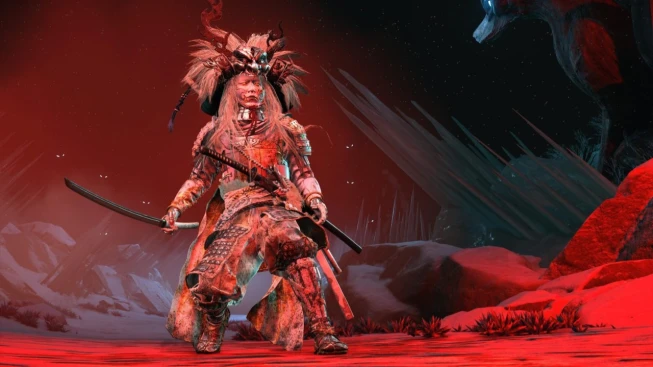
The demonstrations also show the extent to which modern image-quality improvements depend on small details. QSSR can slightly enhance rocks, grass, buildings, trees, and other background objects, but you won’t always notice the changes right away unless you really look at the image.
This is especially relevant when comparing different display setups. The appearance of a game can change depending on the size and resolution of a television or monitor, viewing distance, motion, and other display characteristics. A player sitting farther away from a television may notice less of the fine detail that becomes obvious when looking closely at a side-by-side comparison.
QSSR also does not mean that every PS5 game will automatically receive the feature.
Developers need to implement the technology into their games, meaning support will depend on individual studios and projects. Sony's decision to make the technology available broadly to PlayStation developers should make future support possible, but it does not guarantee that every upcoming PS5 release will use it.
The announcement comes at a time when AI-based image reconstruction has become an increasingly common part of gaming graphics. NVIDIA has its DLSS technology, AMD offers FSR, and Sony has been developing PSSR for the PS5 Pro. These technologies approach image reconstruction in different ways, but they all attempt to improve the final image while reducing the rendering workload required to produce it.
For the PS5 Pro, PSSR has already become one of the console's major graphical features. The introduction of QSSR to the standard PS5 gives Sony a way to bring some of the same general benefits to a much larger installed base without requiring players to purchase the upgraded console.
Marvel's Wolverine and Ghost of Yōtei therefore provide an early look at how Sony intends to use the technology. Wolverine can benefit from cleaner environmental details across dense urban areas and interiors, while Ghost of Yōtei provides large natural environments filled with vegetation and distant scenery.
The most significant impact of QSSR may ultimately come from what happens after these initial implementations.
If game developers are able to use the tech to keep images sharp while maintaining performance, it may become another tool for making demanding PS5 games. In that sense, QSSR is less of a feature that will immediately transform the console graphics and more of a feature that will change the way developers approach the balance between resolution, frame rate, ray tracing, and other visual effects.
Sony has not suggested that QSSR will make the standard PS5 equivalent to the PS5 Pro. The two consoles still have different hardware capabilities, and the Pro has additional performance available for more demanding graphical features. Instead, QSSR gives the base PS5 another method of producing a cleaner image from its existing hardware.
With Marvel's Wolverine and Ghost of Yōtei leading the initial rollout, players will soon have more opportunities to see how the technology performs in actual games rather than controlled comparison footage. Most of the improvements we’ve seen thus far revolve around sharper textures, more stable details, and cleaner environmental elements.
For now, Sony’s move means that standard PS5 owners can now enjoy a new AI-based graphics technology without needing to upgrade their console. QSSR is still in its early stages, but with Sony making it more accessible to PlayStation developers, its effects may become clearer as more games begin to adopt it in their visuals and performance settings.
Editor, NoobFeed
Related News
No Data.