
Ace Combat 8: Wings of Theve Review
PlayStation 5 Pro
Ace Combat 8: Wings of Theve keeps the series' classic flight mechanics intact while expanding its campaign, aircraft roster, multiplayer, customization, and presentation into one of its biggest entries yet.
Reviewed by Mahi Araf on Oct 02, 2026
Ace Combat has been around long enough to have its own place in gaming history. From its early PlayStation releases to its high point during the PlayStation 2 era, the franchise has always occupied a specific space. It is a flight combat series, but it has never tried to be a full military simulator.
Instead, you get the sensation of piloting advanced fighter jets while keeping the controls accessible so you can focus on the action. That balance is one of the main reasons the series has stayed relevant for so long. Ace Combat 7: Skies Unknown showed that the formula could still work extremely well in the modern era.
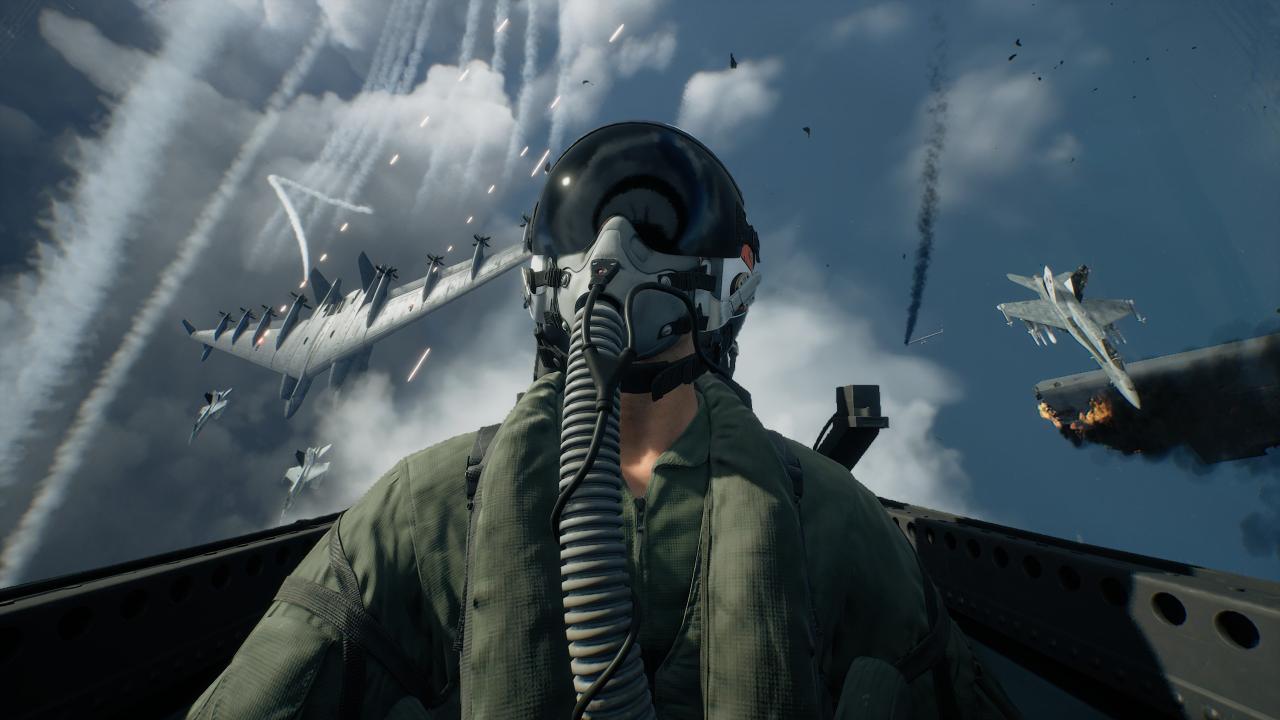
Even years after its release, new players still discover it, and its mix of arcade-style controls, aircraft customization, dramatic missions, and cinematic storytelling still holds up. Ace Combat 8: Wings of Theve has the chance to take that established foundation further, and instead of rebuilding the formula, it expands almost every part of it.
The result feels surprisingly familiar in the best way. If you've played previous entries, you can get into the cockpit almost immediately because the basic controls still make sense. At the same time, enough new content around those mechanics makes the experience feel like a substantial new chapter rather than a simple graphical upgrade.
The story drops you into another large-scale conflict involving multiple nations and factions, with shifting alliances, propaganda, technology, and personal identities playing key roles.
The campaign stretches across 30 missions. You aren't simply moving from one dogfight to another, either. The campaign grows more complex as the conflict develops, with new objectives and situations appearing.
A major part of the narrative revolves around Wings of Theve, a persona created by the Federation of Central Yucia. The protagonist is unwillingly pushed into taking on this identity, turning the character into something larger than the individual actually sitting in the cockpit. As the story progresses, that distinction becomes increasingly important.
The character has to deal with the expectations attached to the legend while still maintaining a connection with the person underneath it. Conversations with the rest of the crew bring a more human side to that conflict. Instead of every story moment being separate from gameplay, you hear characters interacting during missions so relationships can develop while you're still dealing with aircraft, missiles, targets, and objectives.
These interactions counterbalance the protagonist's more introspective moments, keeping the character grounded in the rest of the squadron and preventing the whole story from becoming about one person's internal strife.
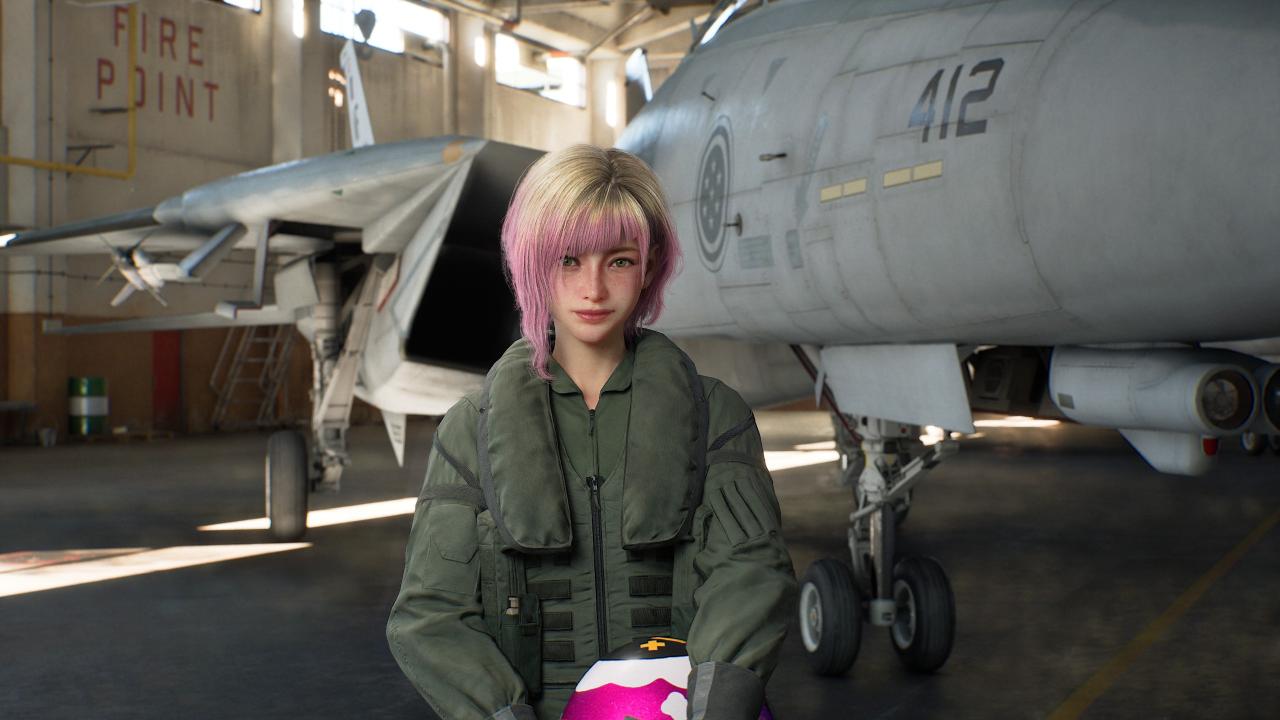
The larger conflict also lets the story explore wartime propaganda and how media and technology can shape public opinion.
Information becomes another piece of the battlefield, with different sides trying to control the war's narrative. The ideas are part of the campaign, not mentioned in passing, and they add another layer to the otherwise familiar military conflict.
The campaign's presentation is also helped by its pacing. Story sequences generally don't interrupt the action for too long, and the game understands that you're here to fly. The narrative supports the missions instead of constantly stopping them. Some of the most effective moments come from hearing characters communicate while you're still concentrating on a target, because you can absorb the story without having to put the gameplay aside.
Once you actually take control of an aircraft, Ace Combat 8: Wings of Theve feels immediately recognizable. One of the series' best features is its simple flight controls. You can zip around, lock onto an enemy, swap weapons, react to incoming attacks, and make tight turns without spending hours learning a complex control system.
That's not to say it's a shallow game.
Accessibility comes from simple controls, while the game still offers plenty of depth for players who want to explore the mechanics. The standard control scheme works well for simply getting into the air and fighting. In contrast, the expert control option gives experienced players more control over their aircraft and makes the simulation side of the game more noticeable.
The satisfaction comes from the rhythm that develops once you're comfortable. You can line up an enemy, watch it move away, adjust your position, and fire a missile at exactly the right moment. When everything comes together, the result feels satisfying because the game gives you enough control to feel responsible for the successful hit.
That same rhythm has been part of Ace Combat for years, and Ace Combat 8: Wings of Theve doesn't need to reinvent it. Instead, it builds around it, adding systems, aircraft, weapons, enemies, and mission objectives. Some newer combat situations involve electronic warfare and other battlefield complications, meaning you're sometimes dealing with more than just finding a target and firing a missile.
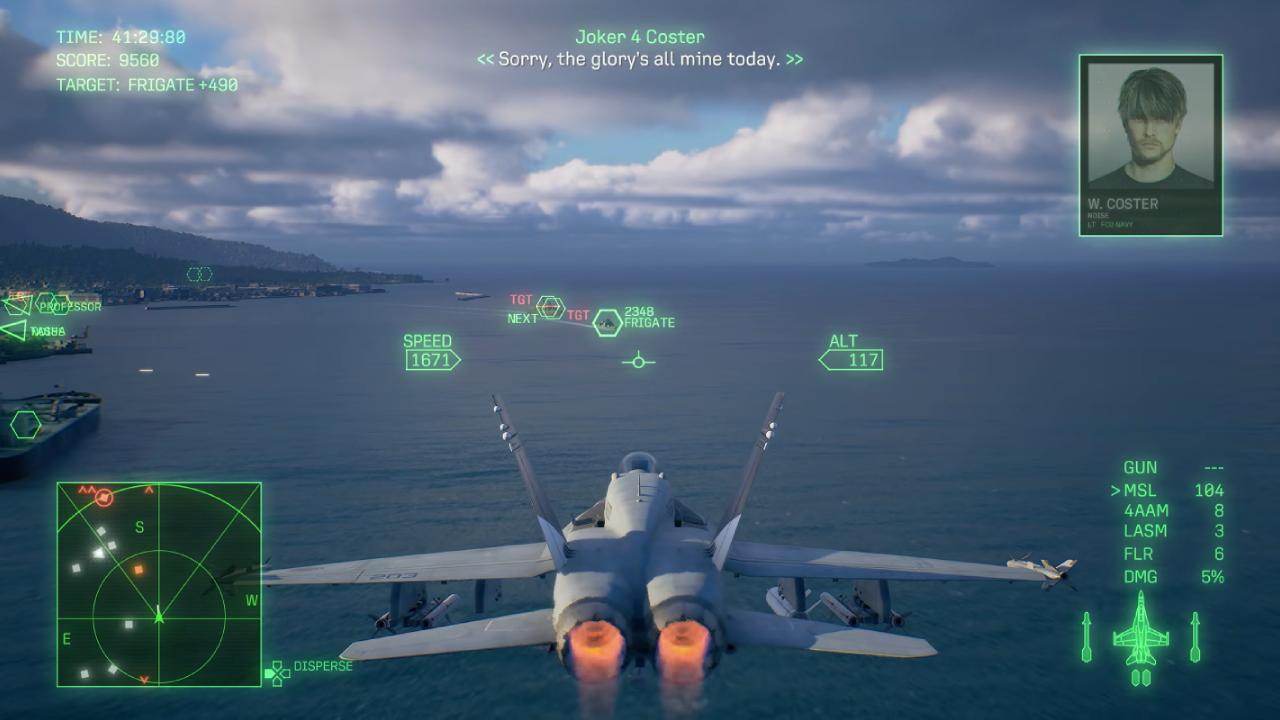
The campaign also offers a large aircraft roster, with more than 30 aircraft to use.
Each aircraft brings its own characteristics and weapon options, and the differences become more important as you increase the difficulty. On standard settings, you can get through much of the early campaign using reliable aircraft and familiar equipment. As missions get harder, however, the advantages of choosing the right aircraft and weapon configuration become much clearer.
That is also where the upgrade system becomes more meaningful. You earn in-game currency from missions and use it to purchase new aircraft, weapons, and upgrades. Progression is pretty straightforward, so you're rarely bogged down by complex skill trees or other systems you don't need. You can keep building in your garage and gradually improve the machines you already have.
The downside is that the upgrade system doesn't always demand your attention immediately. If you're playing on standard difficulty, the basic equipment is often enough to get you through the early portion of the campaign. Because of that, some of the excitement of unlocking a new aircraft doesn't necessarily translate into an immediate need to use it.
The system becomes more interesting when you raise the difficulty. Weapon selection matters more, aircraft differences become easier to notice, and choosing the right loadout can give you a real advantage. Instead of simply buying whatever looks interesting, you have a reason to consider what you're taking into the next mission.
Difficulty is another area where the game lets you control the experience.
Between the standard and expert control options, multiple difficulty settings, training exercises, and free-flight modes, you can decide how much of the game's depth you want to engage with. You can approach it as a relatively accessible arcade-style flight game or push further into its simulation elements.
The training and free-flight options are nice because they let you learn the aircraft and controls without the pressure of a campaign objective. If you're new to the series, you can learn the basics before committing yourself to more demanding missions. If you've already spent years with Ace Combat, you can use those modes to test your limits and experiment with different aircraft.
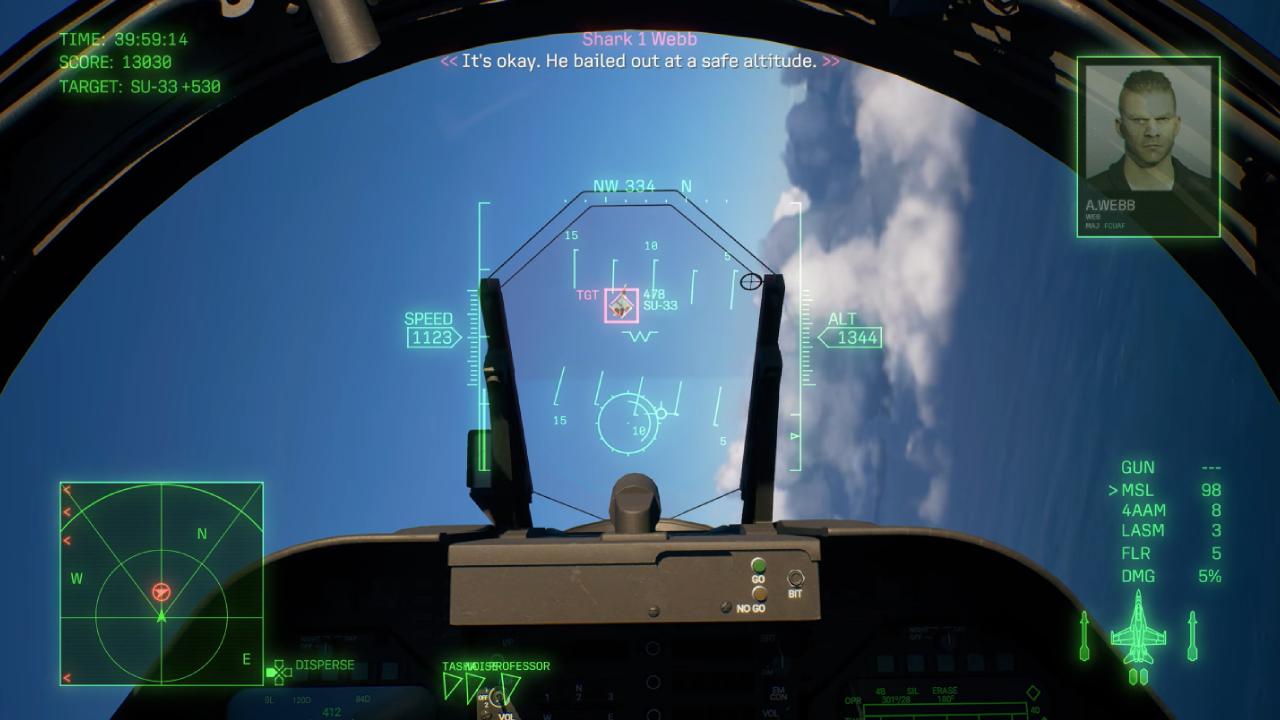
The campaign also introduces new enemies and combat scenarios as it progresses, helping to prevent the missions from feeling repetitive. Resupply and other mission mechanics add another layer to longer engagements. At the same time, the increasing difficulty ensures that later missions ask more from you than simply shooting down whatever appears on the radar.
Outside the campaign, multiplayer gives you another reason to keep flying.
The multiplayer package includes six modes, each with its own progression path and additional ways to use the aircraft you've unlocked. That adds longevity beyond the initial story run, especially once you've started building a larger aircraft collection.
Even without multiplayer, however, there is plenty to do. The game includes medals, achievements, unlockable aircraft, mission rankings, high scores, and other incentives to replay missions. You can complete the campaign relatively quickly if you're only focused on reaching the end, but the broader package stretches considerably further.
The presence of 83 aces also gives completion-focused players another reason to revisit missions. Hunting down these targets, improving your mission ranks, collecting aircraft, and experimenting with different loadouts give the campaign a different rhythm once you've already seen the main story.
Visually, Ace Combat 8: Wings of Theve makes a strong case for modern hardware.
The aircraft models contain plenty of detail, while the environments are large enough that flying through them feels different from simply moving between mission markers. Lighting, weather, landscapes, and aircraft interiors all contribute to the presentation.
The game is particularly effective when you watch a mission replay. During combat, you're naturally focused on your target, radar, missiles, and incoming threats. A replay lets you notice everything you missed while focusing on survival. The scenery, lighting, aircraft animations, and environmental details become easier to appreciate when you're no longer trying to line up a missile shot.

Performance mode is also worth considering if you prefer smoother controls and responsiveness.
In dogfights, consistent movement helps in combat, especially when you're making quick adjustments. The game can still look impressive without maxing out every graphical setting, and the overall presentation makes it feel like a title designed to showcase what modern hardware can do.
Technical issues can pop up depending on the platform and circumstances, including reported performance problems on PS5, but the overall visual presentation remains one of the game's most noticeable upgrades. It captures the scale of aerial combat without losing the readability you need when you're actually playing.
The audio is just as important to that experience. The sound design does a good job of making the aircraft feel like physical machines instead of simple game objects. The engines, the weapons, the movement, and the sensation of breaking the sound barrier all contribute to the feeling that you are sitting in a fighter jet.
That is where the game gets close to the fantasy of a Top Gun-style video game without abandoning the identity that makes Ace Combat different. If you have a good sound system and display setup, the presentation gives you plenty of reasons to use them.
The soundtrack adds another major part of the atmosphere.
Throughout the game, you're treated to sweeping orchestral compositions alongside other original tracks, with a hard rock song that becomes particularly memorable as part of the game's overall tone and identity. The complete soundtrack is also substantial, with 75 tracks spanning more than five hours.
The music works because it doesn't simply sit in the background. During major missions, it makes the action feel bigger without taking away from the combat itself. The soundtrack helps maintain momentum when the aircraft are moving fast, and the situation around you is heating up.
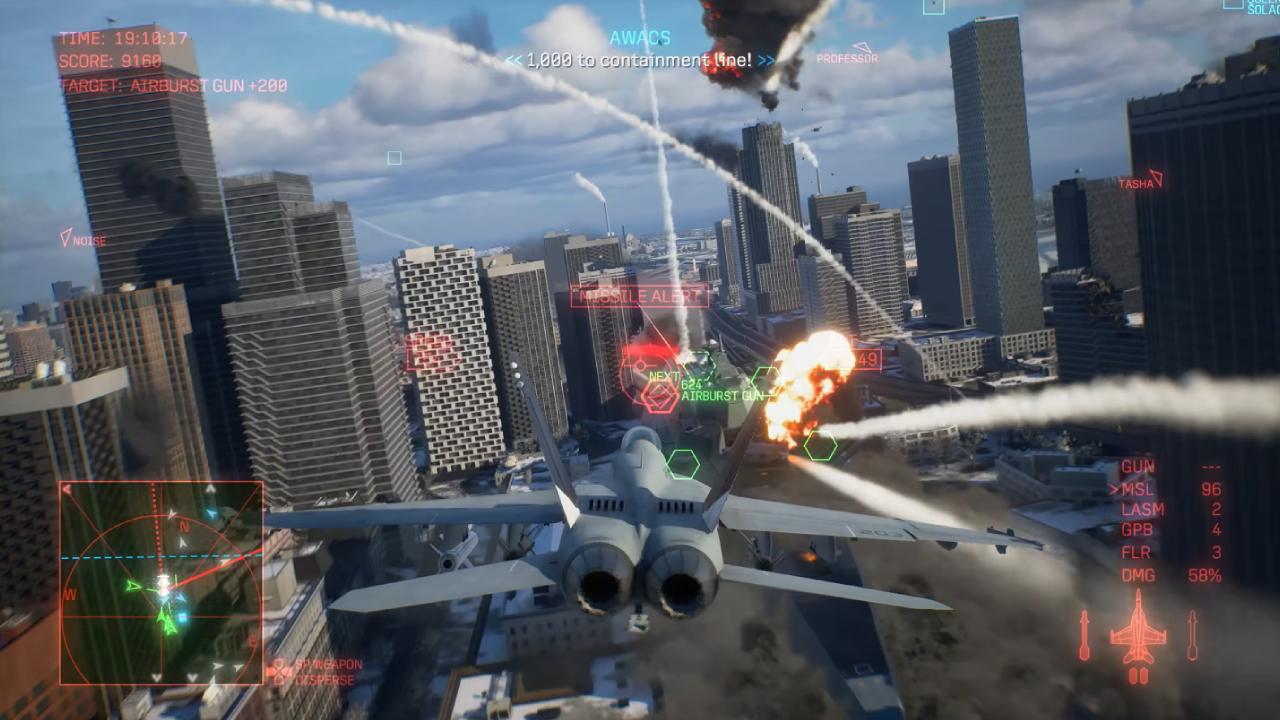
All of these things add up to make Ace Combat 8: Wings of Theve a game that understands what makes this series tick. It doesn't need to make the franchise a complicated simulator, nor does it need to throw away its older mechanics just because technology has advanced. The controls will still feel familiar, but the campaign, aircraft list, progression systems, multiplayer, and presentation layer on enough new content to make the experience feel far larger.
The biggest weakness is that some progression systems aren't required until later, especially on standard difficulty.
You can rely on familiar equipment for much of the campaign, so the deeper aircraft and weapon systems can feel more optional than necessary. The ending has also been described as underwhelming compared with the campaign's build-up, which may leave some players wanting more from the conclusion.
Still, the overall package has a lot going for it. You get a large campaign, a broad aircraft roster, multiple multiplayer modes, plenty of unlockables, different difficulty options, customization, training modes, free flight, and substantial replay value. The core flight mechanics remain the heart of everything, and that is exactly where the game feels strongest.
After spending time with it, the simplest compliment is also the one that fits Ace Combat 8: Wings of Theve best: flying feels good. You can take off, push through the sky, react to another aircraft, adjust your position, and finally land the shot you've been chasing. That basic loop remains satisfying because the game gives you enough control without making every encounter feel like work.
Ace Combat 8: Wings of Theve also understands that accessibility and depth don't have to fight each other.
You can play it casually, use the standard controls, follow the campaign, unlock new aircraft, and enjoy the spectacle. Or you can raise the difficulty, switch to expert controls, pay closer attention to aircraft characteristics, experiment with weapons, chase aces, improve mission ranks, and spend much more time mastering the systems.
That flexibility is what makes the package work. The series' traditional arcade-style identity remains intact, but it has enough depth underneath to keep experienced players engaged. The result is a modern flight combat game that still feels connected to its predecessors.
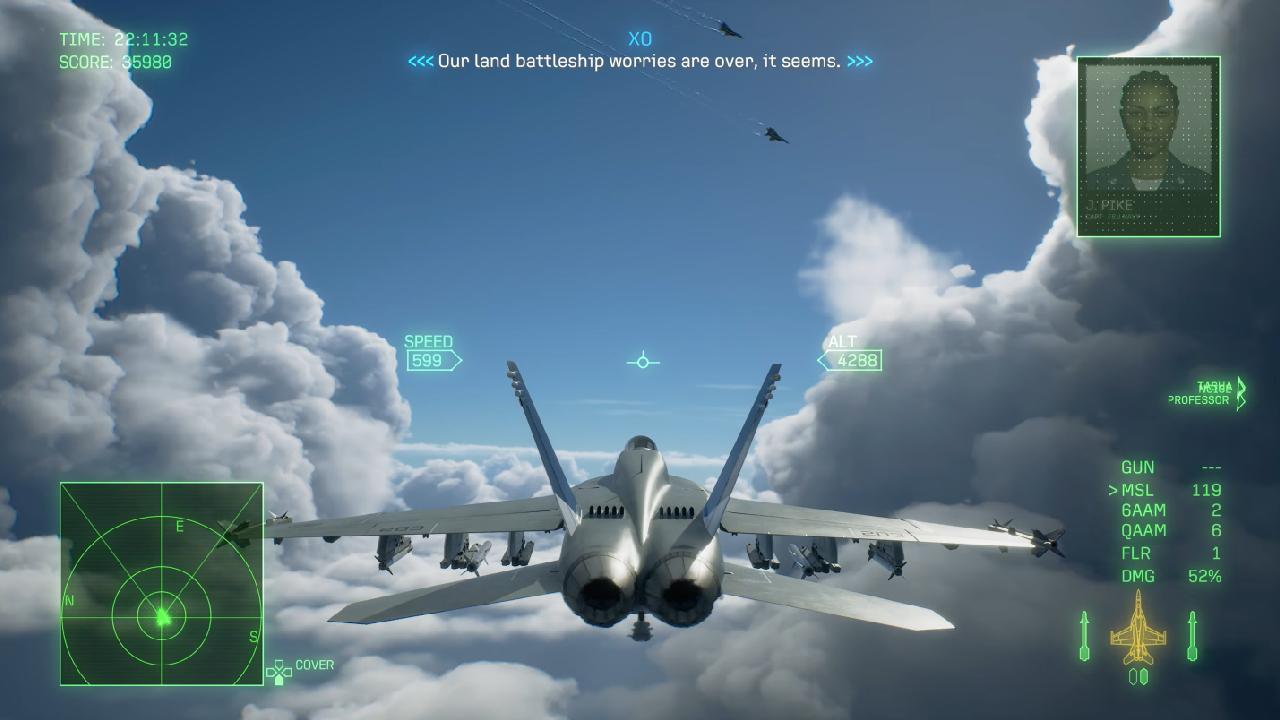
Combine that with the 30-mission campaign, its narrative focus on propaganda and identity, the aircraft roster, electronic warfare, resupply mechanics, multiplayer, progression, detailed visuals, and extensive soundtrack, and you get a lot more than simply flying from one target to another.
Ace Combat 8: Wings of Theve feels like a modern continuation of a formula that already knew what it wanted to be. It takes the fundamentals that have worked since the series' earlier days and surrounds them with a larger campaign and production values that let the concept breathe.
Whether you're returning after Ace Combat 7: Skies Unknown or coming to the series for the first time, the core experience remains straightforward: get into the cockpit, learn your aircraft, adapt to the mission, and enjoy the feeling of taking control of the sky.
Senior Editor, NoobFeed
Verdict
Ace Combat 8: Wings of Theve delivers a substantial flight combat experience with a lengthy campaign, deep aircraft options, strong presentation, and plenty of replay value, while keeping its classic controls intact.
88
Related News
No Data.