
Farthest Frontier Review
PC
Build, struggle, and survive, Farthest Frontier turns city-building into a test of endurance and ingenuity.
Reviewed by Mezbah Turzo on Oct 27, 2025
City-building games have always been a tight line between making something great and ruining it. For every player who wants to establish a tranquil community in the country, there's another who has to watch it fall apart because of sickness, starvation, or worse: terrible logistics.
Over the years, the genre has shifted from peaceful cityscapes in games like Banished and Anno 1800 to survival-focused titles like Frostpunk and Against the Storm. Crate Entertainment's Farthest Frontier takes a well-known idea and makes it into something both hard and very rewarding. With its full release, the game steps out of early access and cements itself as one of the most ambitious medieval survival city-builders to date.
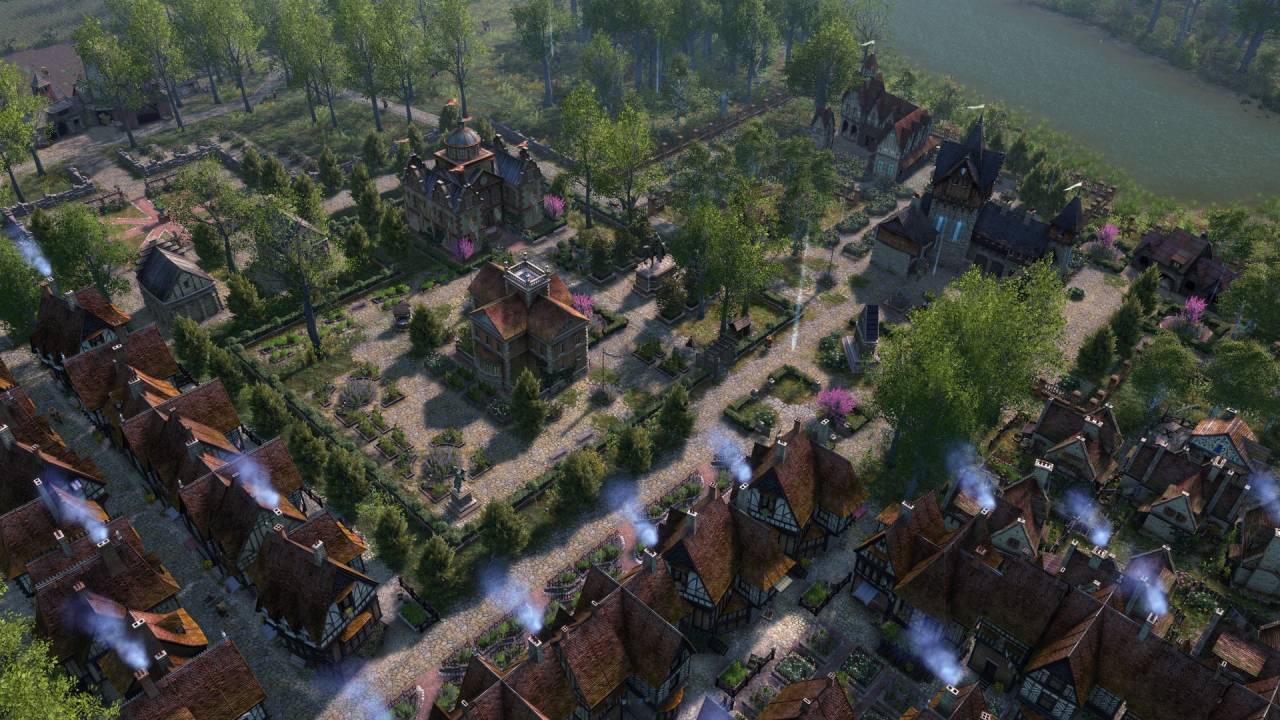
At its core, Farthest Frontier is about starting from nothing. You guide a small band of settlers fleeing the old world, determined to carve out a new life in the untamed wilderness. The early hours are a slow burn; clearing land, gathering food, and desperately trying to survive the first winter… but that's part of its magic.
Every plank of wood and slab of stone feels earned, every building placed with purpose. Unlike many modern builders who handwave scarcity, Farthest Frontier makes you feel the struggle of a frontier settlement. It's not just about efficiency, it's about endurance.
If you've played your fair share of settler-style or Anno-like builders over the years, you've probably felt the creeping disappointment that comes with yet another shallow "build huts, collect taxes, profit" formula. I've been there more times than I care to admit. So when Farthest Frontier said it was the next great thing in the genre, I was doubtful. But this one? This one is very excellent. Like, very nice.
What makes Farthest Frontier stand out is how real everything seems. The economic simulation isn't simply a bunch of numbers that go up and down; it's a real thing. When your hunter takes down a deer, they don't just add "+5 meat" to a ledger. They haul the carcass back to camp, process it, and track every piece as it's carried to storage or the smokehouse.
Grocers then pick it up, distribute it across your settlement, and villagers physically carry their food to work, eating it when hunger strikes. It's a small detail that becomes a big deal once your town has hundreds of people juggling dozens of resources, and somehow, it all runs seamlessly. No teleporting carts, no invisible warehouses, no cheating systems. Everything exists in the world.
The early game has that classic frontier flavor. You start with a handful of settlers, a modest cart of supplies, and a patch of forest to call home. You'll clear land, mark harvest areas, build a few houses, and slowly expand into sawmills, smokehouses, and wells. Of course, everything is in a grid, and it's probably one of the most grid-like games ever to exist.
Firewood splitters and forager shacks keep your people alive through the first winter, but this is no idle sandbox. Logistics matter. Placement matters. A building's harvest radius can make or break your efficiency, and since resources don't respawn infinitely, every patch of trees or deer herd feels precious.
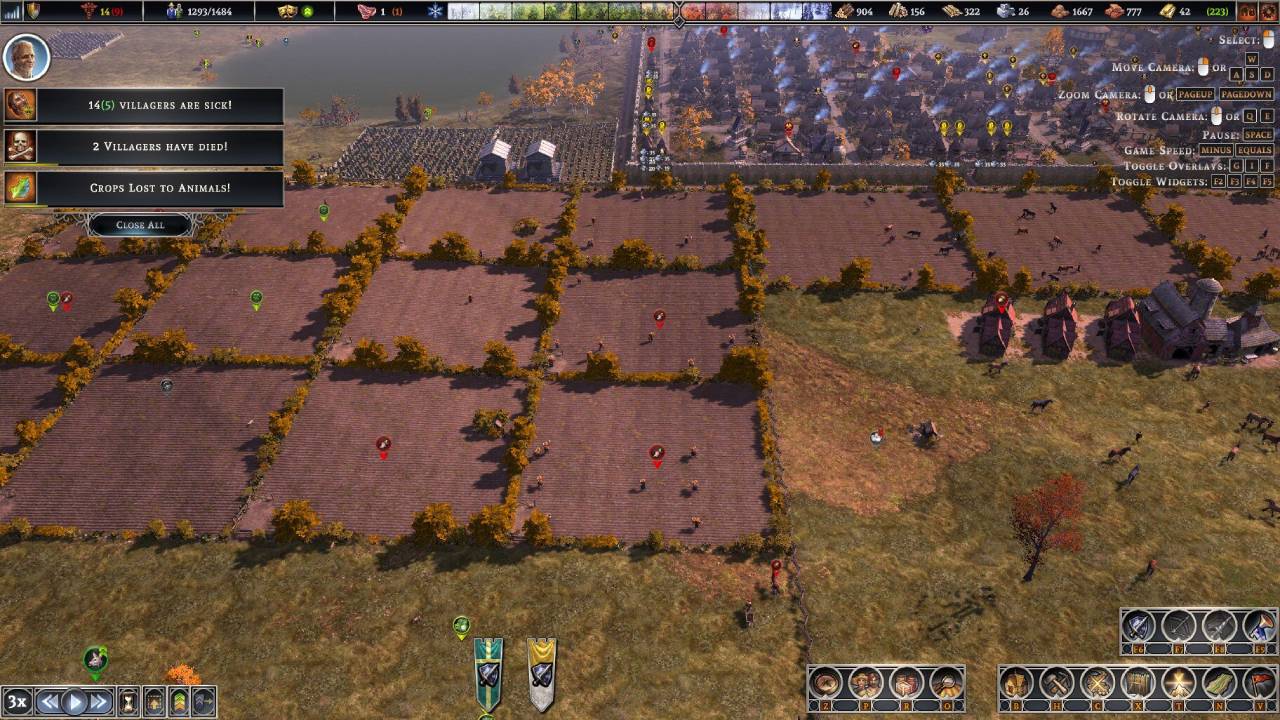
Once your village stabilizes, farming becomes the centerpiece of your economy, and a surprisingly deep one at that. Soil quality, fertility, and crop rotation all factor in.
You can't simply plant a lot of cabbage and leave it there. To keep blight and pests from building up, you'll need to switch between grains, legumes, and fallow cycles. Cellars, granaries, and preservation structures like smokehouses or cheesemakers are especially important, since food spoils if it isn't stored properly.
Barrels extend food's shelf life, but they require iron and production infrastructure, so every convenience has a cost. It's the kind of system where everything ties together, and neglecting one link can cause the whole chain to collapse.
As your settlement grows, the problems multiply in satisfying ways. Happiness and desirability start to matter; housing upgrades require not just amenities but an attractive neighborhood. Place a tannery too close to the homes, and your quaint hamlet suddenly smells like a wet boot factory.
Balancing beauty with function becomes its own challenge, one that echoes Banished and Foundation but feels far more deliberate. And when your villagers start falling ill, you'll scramble to build healer's houses and secure medicinal roots before small maladies spiral into town-wide outbreaks.
Defenses soon enter the picture. Wildlife like bears and wolves are the early threats, but before long, raiders begin testing your walls. The combat isn't as elaborate as Manor Lords, but it's functional and often tense. Villagers can garrison in towers or the town center, archers pepper incoming waves, and melee fighters hold the line with whatever crude weapons you've managed to forge.
The greatest thing is that the raids become bigger as you get better. Small groups of troublemakers turn into entire siege parties armed with weaponry capable of breaking down barricades. To keep them out, you'll need palisades, guard towers, and finally stone walls. And certainly, if you're not careful, they will damage your marketplaces and steal your supplies. It's hard, but it keeps you on your toes.
The mid-to-late game brings even more complexity. You'll unlock a sprawling tech tree—less streamlined than Manor Lords' but offering plenty of flexibility. Knowledge points let you chart your own course, prioritizing mining, agriculture, or defense upgrades depending on your playstyle.
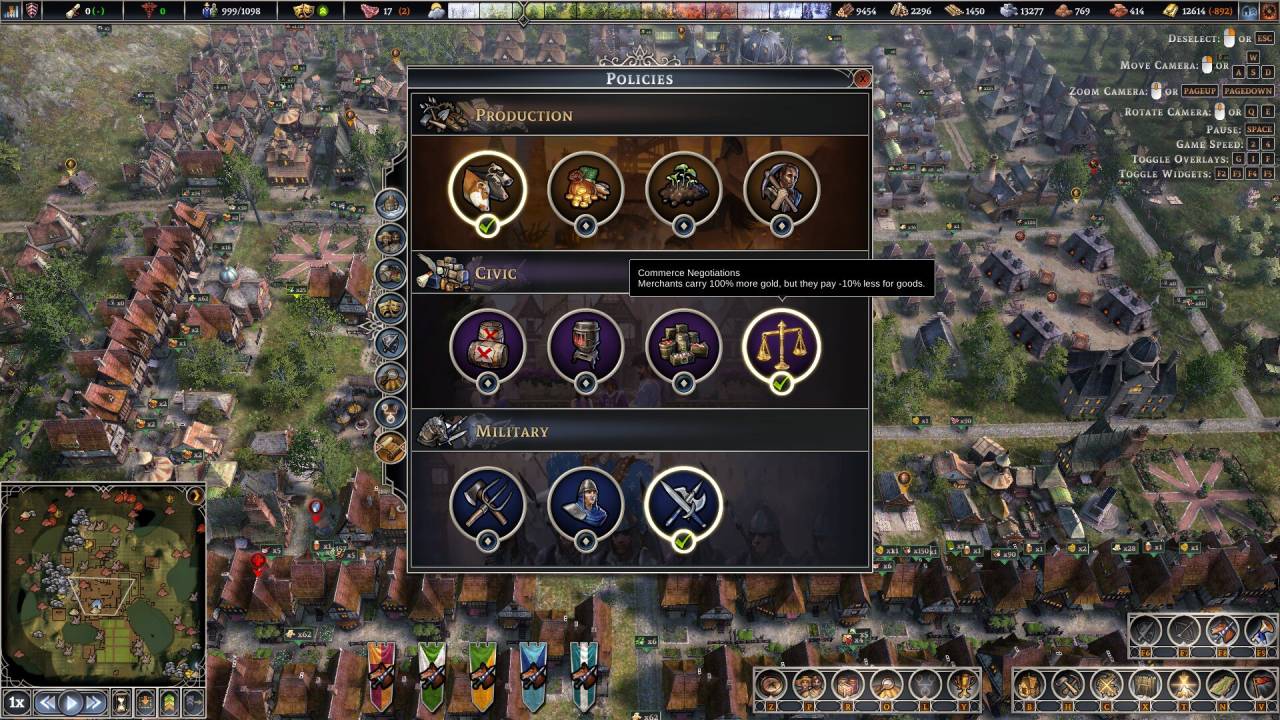
It's a clever system, but it's also not perfect.
The tree is massive, sometimes awkwardly organized, and doesn't scale well visually at higher resolutions. Still, it's a step up from the static tier unlocks of early access, giving you far more agency over your settlement's direction.
Resource management, meanwhile, remains wonderfully tactile. Stone, iron, and clay are scattered across the map, encouraging exploration and expansion. But scarcity is real, especially clay, which is crucial for many key buildings and often frustratingly absent on certain maps.
You'll eventually need trading posts and caravans to import missing materials, tying your survival to a broader economic network. It's a design choice that feels intentional: Farthest Frontier doesn't want you to be self-sufficient forever. Growth requires connection and risk.
There's also a surprising amount of micromanagement depth beneath the surface. Villagers are your most valuable resource; every able-bodied person can be assigned a profession, from farmers to miners to cobblers.
You can fine-tune job distribution globally or by building, ensuring production chains stay balanced. As your population grows, so do your logistical headaches: long travel distances, limited storage space, and the constant need to optimize routes.
Large maps can stretch these systems thin, and while the performance holds up impressively well, hauling goods across vast distances can feel sluggish at times.
For all its complexity, though, Farthest Frontier never feels needlessly convoluted. It is hard to read, but it is fair. The new tech system, how resources move around, and how the survival mechanisms fit together so well make it feel real again, which hasn't happened in city builders for a long time.
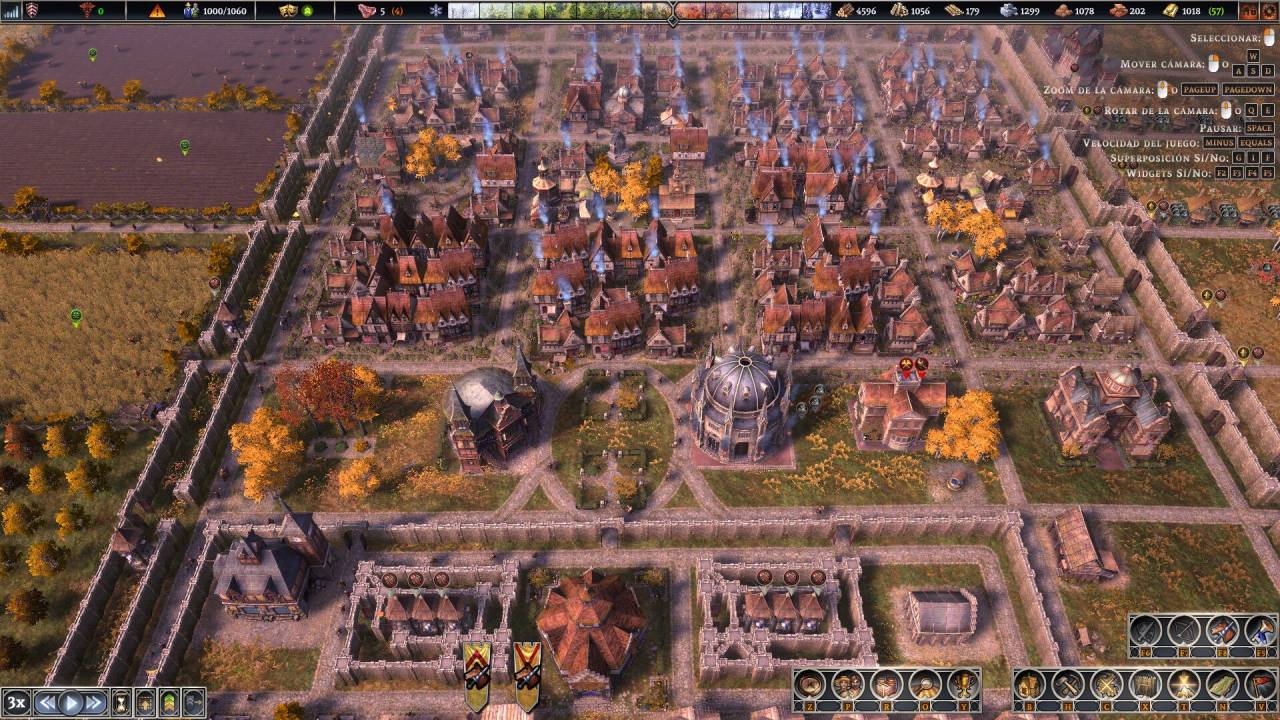
Manor Lords is all about big fights and big shows. Farthest Frontier is all about the quiet poetry of work, the everyday struggle of building something real, one brick at a time. It's the type of game where seeing a villager carry smoked salmon across a snowy field makes you feel very good.
And when the raids hit, the harvest fails, and the last winter storm batters your walls, every surviving soul feels like a victory. That's what Farthest Frontier gets right: it doesn't just simulate life on the edge of civilization; it makes you feel it.
If Farthest Frontier's simulation is its brain, its presentation is its skin —functional, occasionally beautiful, but not always flattering. The visuals are solid, not spectacular: the art direction leans toward grounded realism rather than stylized flair, with a strong sense of place that sells the idea of living on the edge of civilization.
It's not a flashy game, but it doesn't need to be. The charm comes from the animation density and visual feedback of the systems, not from cutting-edge rendering.
That said, Farthest Frontier can look dated in certain areas. The interface design feels utilitarian, almost like something from the mid-2010s, serviceable but never sleek. Menus are clear enough, but some screens (especially the tech tree and policy menus) feel cramped or oddly scaled.
At 4K, UI scaling becomes essential, and while the developers deserve credit for including a robust scaling system, certain windows, like the tech tree, still ignore those settings entirely. It's the kind of oversight that doesn't break the game but constantly reminds you that this isn't a big-budget production.
Performance-wise, the ambition comes at a cost. Its physicalized simulation is so large that even high-end hardware may struggle to handle it. The game works OK at 1080p with medium-sized cities on an RTX 4080 Super. But as your population approaches 500–1000, you start to notice the strain, particularly on large landscapes where people have to travel long distances.
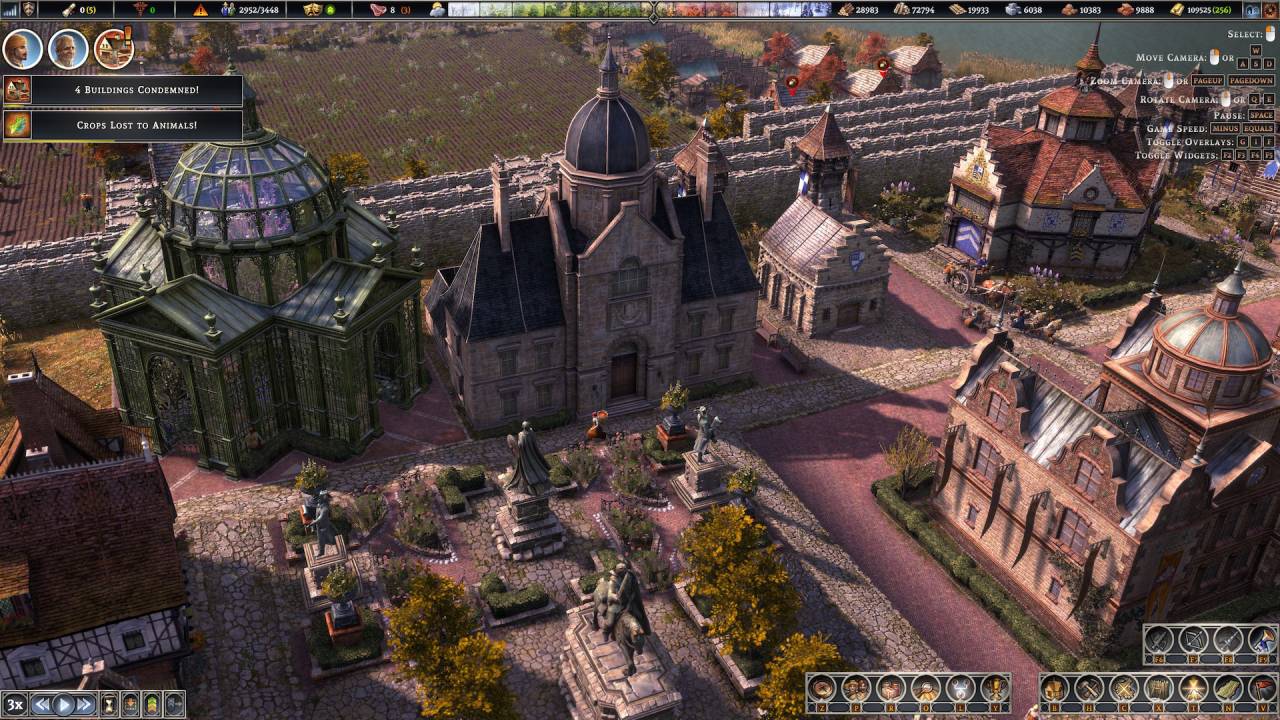
Each piece of wood, each barrel of ale, each loaf of bread exists and moves individually, and your CPU feels every bit of it. It's impressive, but also heavy. On weaker systems, or without some optimization tweaking, expect frame dips and long autosaves.
It's not all bad news; Crate Entertainment clearly understands the technical demands of its game. There's a surprisingly deep range of optimization sliders—from draw distance to vegetation density—and being able to manually tune the UI, resolution, and performance settings makes a big difference.
The game also supports very high time speeds (though I wish there were a 12x option like Manor Lords), and for the most part, it's stable. When it slows down, it's rarely because of bugs, just raw simulation complexity.
Sound design and music are where Farthest Frontier quietly shines. The ambient soundscape carries the game: the rhythmic crack of axes, the faint chatter of townsfolk, the gust of wind through trees, and the occasional howl of a wolf from beyond your walls.
It fits the mood of a game about being strong and weak. When winter approaches, you feel the cold, and the score changes in a way that makes it seem like that calm emptiness. The music isn't a big movie soundtrack, but it matches the game's mood perfectly: modest, real, and a touch sad.
Overall, Farthest Frontier isn't a technical showpiece, but it's a remarkably cohesive sensory experience. The visuals help the simulation, and the sounds help the mood. The UI might need some work, and the game may be slow at times, but when everything comes together—when the fields ripple in the breeze, the smoke floats from chimneys, and your small town hums with life—it's very lovely.
Farthest Frontier is one of the few city builders that remembers what the genre was intended to be about: not just spreadsheets and getting things done, but also survival, grit, and the beauty of progress over time. It asks for patience and gives back tenfold. Not many modern Sims can make you feel as happy as seeing a colony grow out of the ground and turn into a strong, self-sufficient village. Every success feels earned, every disaster personal.
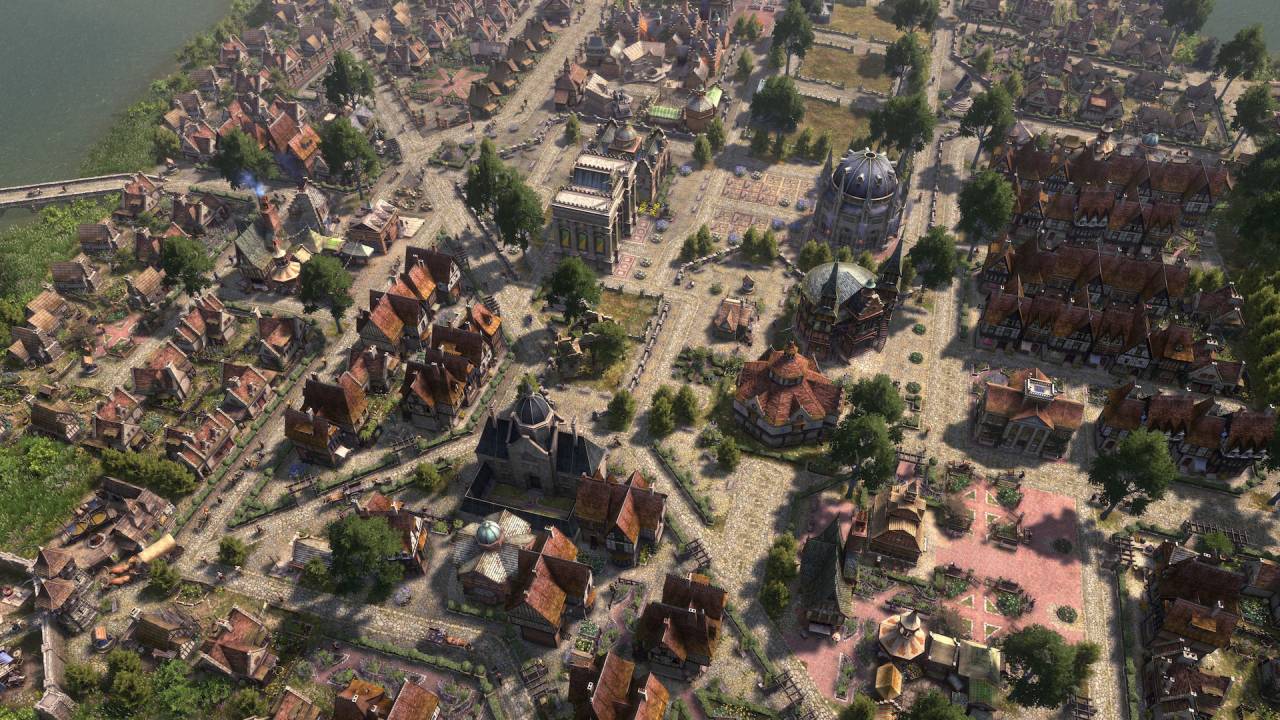
It's not perfect, the UI can feel dated, the tech tree unwieldy, and performance will buckle under the sheer weight of its simulation once your city hits a certain size. But these problems don't take away from how amazing what Crate Entertainment has done here is. The physicalized economics, the grounded design, and the ongoing fight between growth and survival make it one of the most fun and realistic management games in years.
Farthest Frontier is great for everyone, whether you've played Banished and Anno before or are just looking for the fantasy Manor Lords alluded to. It's hard, demanding, and often irritating, but it's also generous, engaging, and worth every hour you spend getting your small community through another harsh winter. This city-builder has compassion, unlike so many others.
If you care about city builders, this is the one to beat.
Contributor, NoobFeed
Verdict
Farthest Frontier stands as one of the most authentic and rewarding city builders in years. Despite some dated UI and performance hiccups, its depth and realism make it a must-play for fans of the genre.
88
Related News
No Data.