
Gallipoli Review
PC
Beach landings, desert warfare, deadly firefighting, and smarter teamwork make Gallipoli a strong new chapter for the WW1 Game Series.
Reviewed by Tahmid Mahi on Aug 21, 2026
BlackMill Games has spent more than a decade building a very specific kind of World War I shooter. The studio began with Verdun, which entered Early Access in 2013 and was fully released in 2015, putting players into the muddy trench warfare of the Western Front.
From there, Tannenberg moved the series to the Eastern Front, while Isonzo took the formula to the mountains of the Italian Front. Each game remained standalone, but each explored how geography changed the way soldiers fought during the Great War.
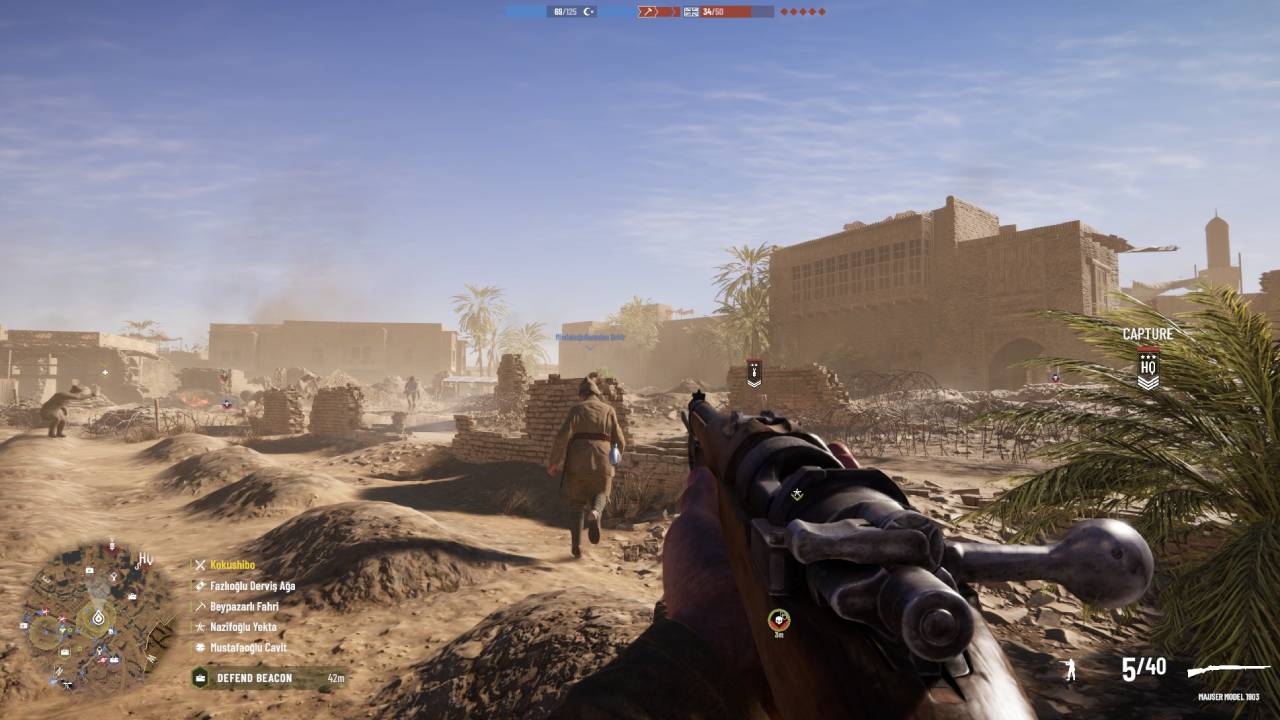
Gallipoli is the next step in that progression, moving the series away from the European battlefields that have defined it.
Announced in August 2025, Gallipoli takes you to the Ottoman Front, covering the Gallipoli and wider Middle Eastern campaigns. Jos Hoebe founded BlackMill Games in 2013, and the studio originally worked with M2H to establish the WW1 Game Series. Following Focus Entertainment's 2022 acquisition of the majority stake in the series' developer, BlackMill Games continued as the sole studio behind the franchise.
That history matters because Gallipoli does not feel like BlackMill Games is simply making another version of Verdun. The foundations are familiar, but the setting forces you to deal with beaches, heat, desert terrain, fortified positions, villages, and urban areas. The official series description specifically highlights beach landings and desert warfare as the new experiences this entry brings to the franchise.
There is no traditional single-player story campaign here. Gallipoli is built around multiplayer battles inspired by real World War I operations, with the focus placed on the experience of fighting through historically inspired battlefields rather than following a fictional protagonist.
That approach fits the series. Instead of giving you long cutscenes or scripted characters, Gallipoli lets the battle develop through your actions. A match can begin with an exposed landing, move through defensive trenches, cross open ground, and eventually push into villages or tighter urban positions.
The main experience centers on Expedition, an objective-focused mode in which attackers push through sectors toward the defending side. The battlefield divides into sectors, and you must capture objectives before the next stage becomes available. The attackers have to keep their push moving while the defenders attempt to stop them.
Once you enter a match, you quickly realize that Gallipoli expects you to think before you move. This is not the kind of shooter where sprinting directly toward an objective and firing continuously is a reliable strategy. Most weapons have a slower rhythm, ammunition is limited, and getting caught in the open can end your life almost instantly.
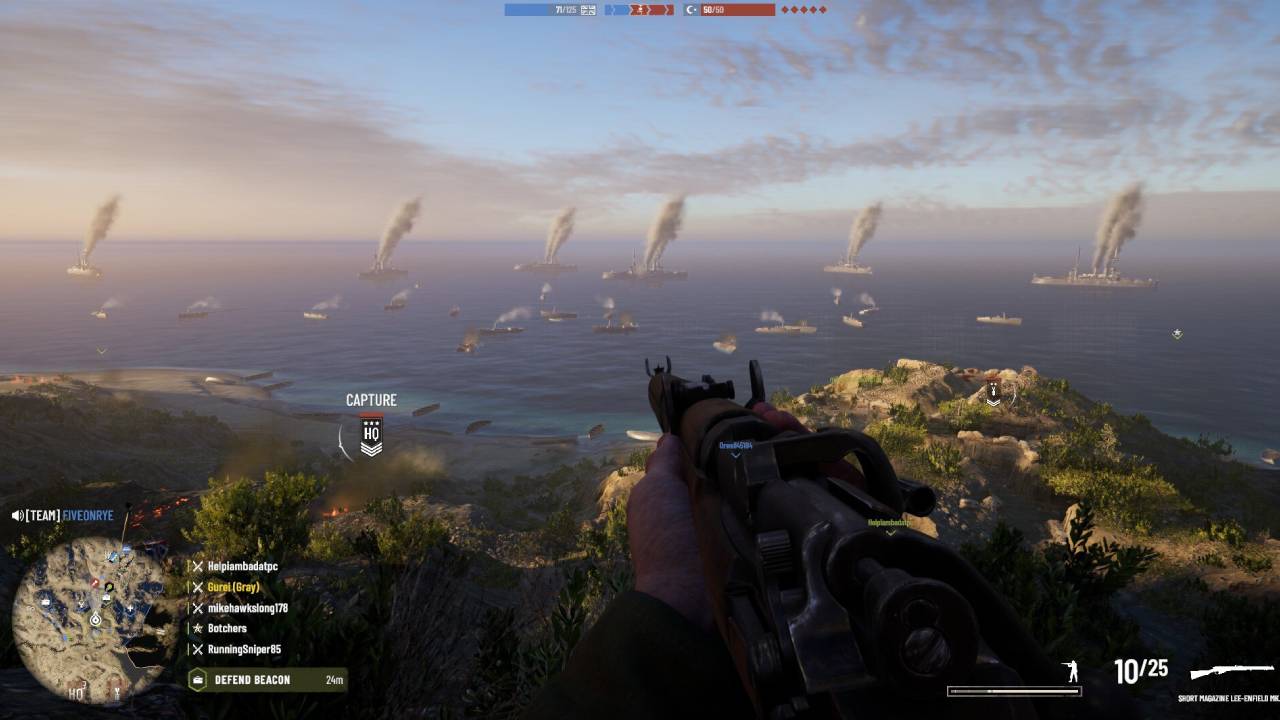
Expedition gives those decisions a larger purpose.
Objectives can include capturing key locations, destroying fortifications, planting explosives, neutralizing enemy weapons, building defensive structures, or holding an area long enough to prevent the opposing side from stopping the advance. Support objectives can also provide useful advantages such as additional spawn points and construction opportunities.
The mode also introduces a resource called Momentum for attackers. The attack begins with a pool of momentum, and deaths reduce it, essentially turning the resource into a representation of the lives available to the offense.
That means an unsuccessful attack can become increasingly costly. You cannot throw soldiers at a fortified position forever and expect Gallipoli to keep giving you unlimited opportunities. The system pushes you toward more organized attacks and makes every unnecessary death matter.
Your role on the battlefield matters as well. The infantry is the basic fighting force, but there are specialized roles for sniping, machine guns, engineering, support, spotting, and leadership. Officers can also call in artillery and other types of support. Engineers can build useful battlefield equipment and fortifications.
Engineering is especially useful because the battlefield is not completely static. You can build barricades, machine-gun positions, mortar positions, water stations, and other structures depending on your role and situation. A defensive position that looks relatively easy to break at the beginning of a match can become much harder to attack after the defenders have had time to prepare it.
Stamina is the second level of motion.
Sprinting, jumping, vaulting, and other physical actions deplete your stamina, so it’s not always the smartest thing to be moving at full speed all the time. Water stations help you recover in hot environments, fit the setting, and give you another reason to pay attention to the battlefield.
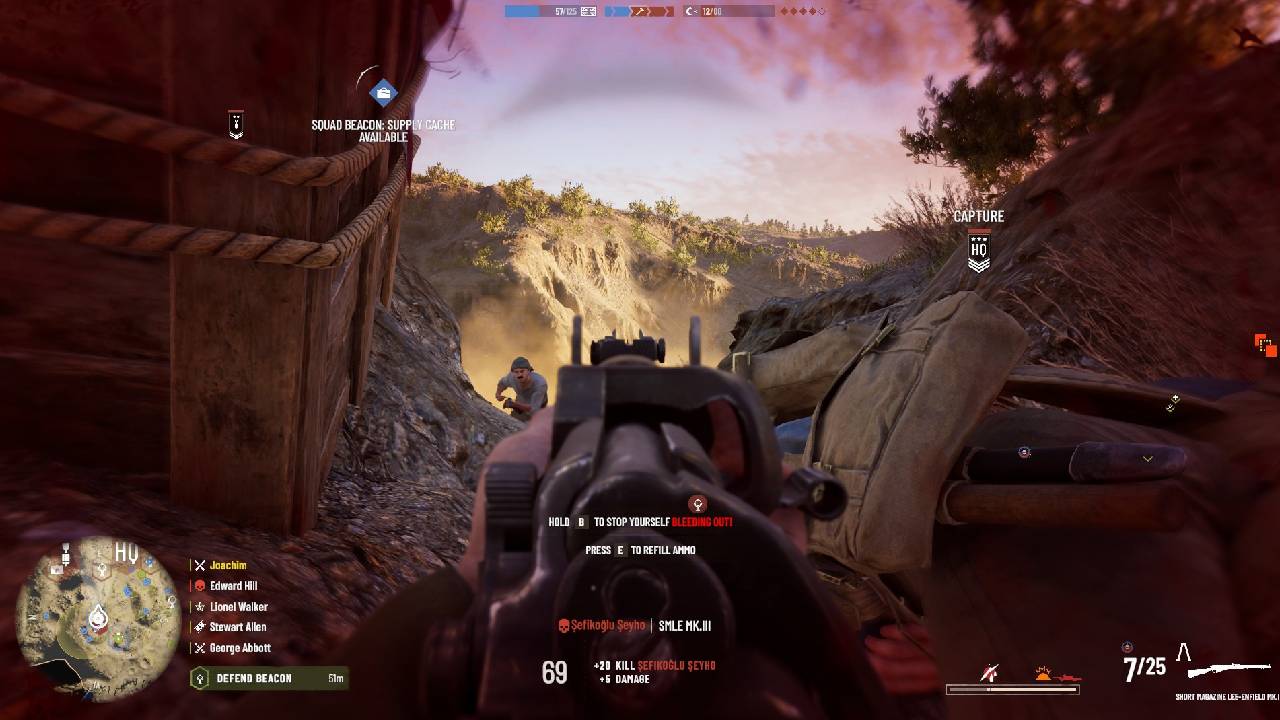
The downed-state system also changes how you behave after being shot. Instead of immediately disappearing into a respawn screen, you can sometimes crawl toward cover and wait for a teammate to revive you.
This mechanic creates some of the game's more tense moments. A player who goes down in the middle of an open field may be beyond help, while someone who manages to reach a trench, wall, or other protected position can give a medic or teammate a chance to bring them back.
There is also no traditional XP-grinding system at the heart of the experience in the way you would find in a progression-heavy arcade shooter. The emphasis is on your battlefield role, your effectiveness in the match, and the tactical choices you make, rather than on grinding levels to become more powerful.
That works in Gallipoli's favor because progression does not overshadow the actual combat. You are not encouraged to chase experience at the expense of the objective. Your advancement is tied more closely to learning how the battlefield works and becoming better at surviving it.
There are no conventional puzzles in Gallipoli, so the closest equivalent is the tactical problem-solving built into its combat. Every fortified position presents a problem that you must approach differently. Machine-gun nests, trenches, open ground, buildings, and defensive structures all require different responses.
The gunplay is intentionally slower than what you would find in something like Battlefield 1.
Bolt-action rifles dominate the battlefield, so missing a shot can leave you vulnerable while you cycle the bolt and prepare another round. Reloading also takes time, and ammunition is limited. That gives every engagement a heavier sense of consequence and makes accurate shooting much more important than simply firing as quickly as possible.
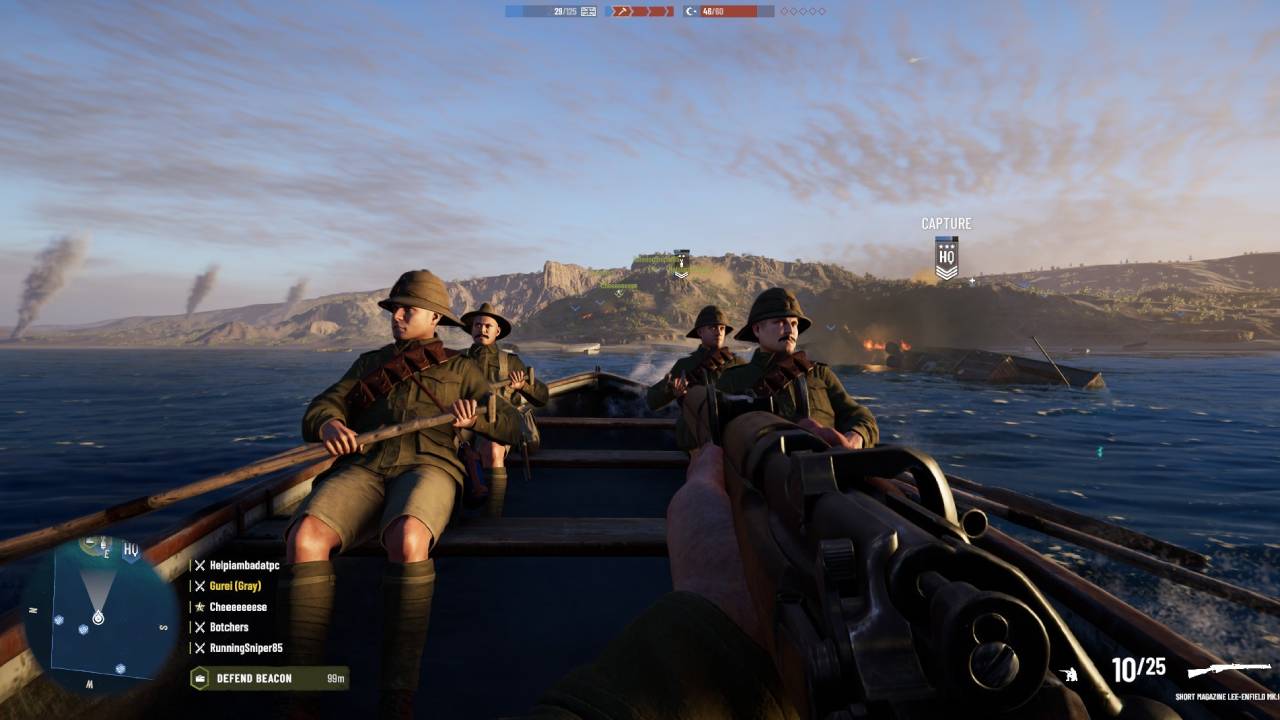
The weapon selection still gives you variety. In addition to bolt-action rifles, there are also revolvers, machine guns, sniper rifles, rifle grenades, mortars, and other specialized equipment available for use. Machine guns are particularly effective at suppression rather than just killing things. Incoming fire, especially heavy fire, can impair the enemy’s ability to aim, leading to panic, weapon sway, and less controlled actions.
The biggest advantage of this system is that it rewards patience and teamwork. You can provide cover while another player advances, use artillery to disrupt a defensive position, build a firing position, or wait for an enemy to expose themselves rather than rushing into danger.
The downside is that the slower pace can feel frustrating if you prefer fast, highly responsive shooters. Some movement limitations and the absence of a leaning system can also make fighting around cover feel less flexible than it could be.
The combat is also not completely free from technical problems. Issues such as inconsistent hitboxes, occasional stability problems, and some awkward movement behavior can interrupt an otherwise strong firefight. Certain map areas can also feel unbalanced depending on how the battle develops.
Visually, Gallipoli benefits from moving into environments that BlackMill Games has not explored in the same way before.
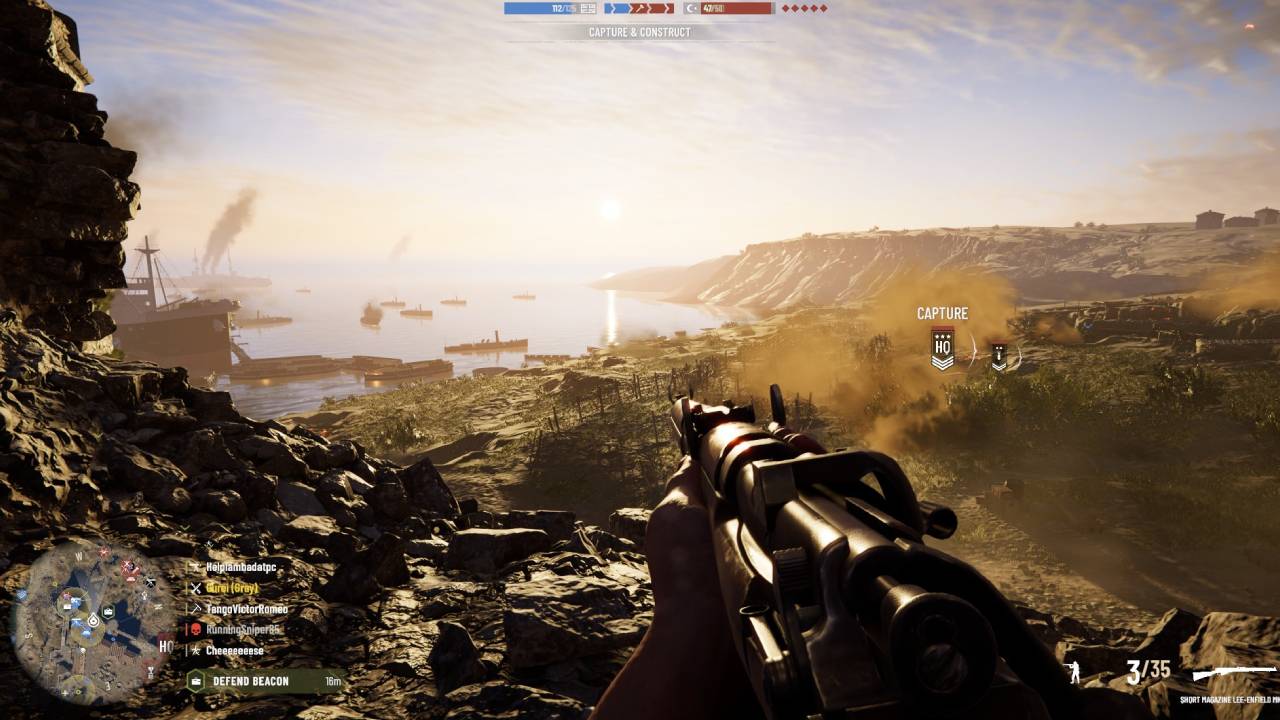
Instead of relying primarily on muddy trenches and European landscapes, you get beaches, dry terrain, deserts, fortified hills, villages, and urban areas. The change in scenery makes the battles feel less repetitive and gives different weapons and classes different opportunities to dominate.
Dust and smoke are especially important to the presentation. A battlefield can become difficult to read when explosions and dust clouds fill the air, particularly across open desert areas. That is not only a visual effect; it changes how you fight. Long-range visibility can disappear at exactly the wrong moment, while close-range combat becomes more dangerous as enemies emerge from buildings, trenches, or other cover.
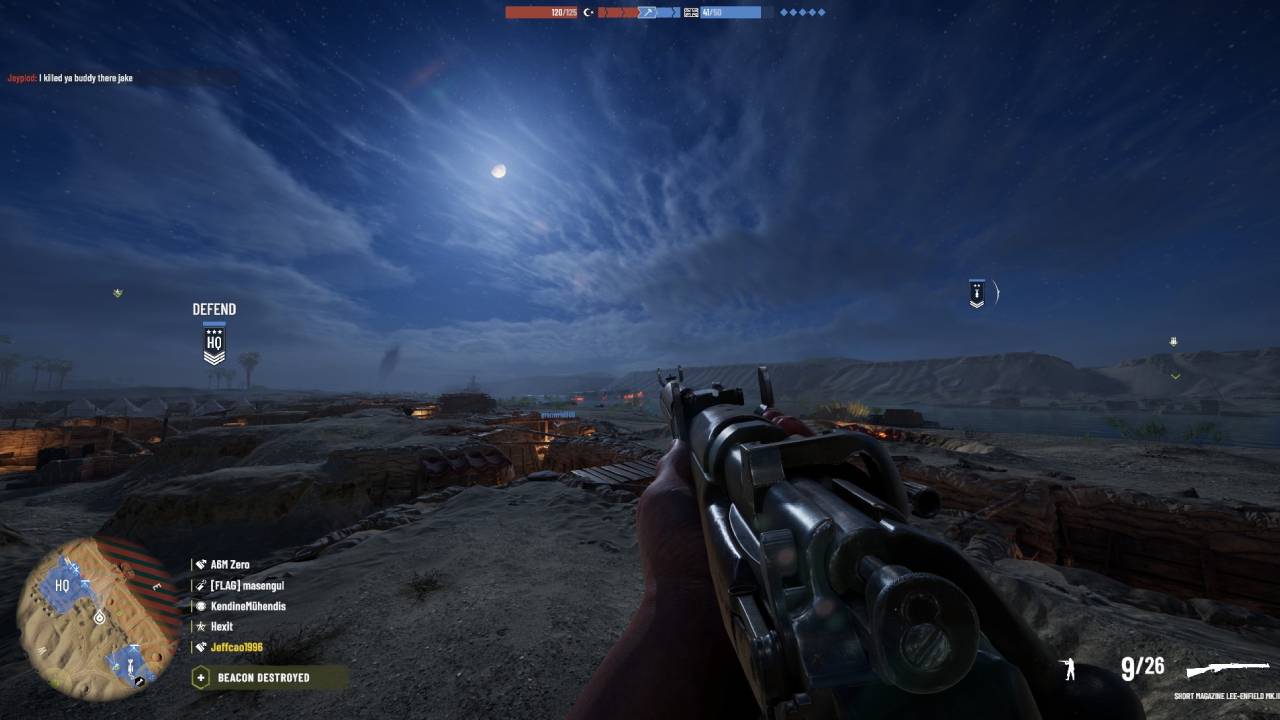
The sound design supports that sense of uncertainty. Gunfire, artillery, explosions, and battlefield activity create an environment where you rarely feel completely safe. Weapons have the weight you would expect from the period, and the constant sound of combat helps sell the scale of the battles.
Combined with the historical uniforms, equipment, fortifications, and terrain, the presentation gives Gallipoli a grounded identity rather than turning World War I into another generic multiplayer setting.
Gallipoli works because it understands what has made BlackMill Games' World War I series different in the first place. It does not try to compete with faster shooters by making movement faster or weapons easier to use. Instead, it asks you to slow down, pay attention, communicate, conserve ammunition, and understand the terrain.
The move to the Ottoman Front is also the right choice for a fourth entry.
The setting gives the series room to explore new combat situations without throwing away the mechanics that already work. Beach assaults can create immediate chaos, desert battles can turn visibility into a problem, fortified positions can force careful attacks, and urban sections can transform a long-range firefight into close combat.
The result is a game that feels familiar without being completely predictable. If you have played Verdun, Tannenberg, or Isonzo, you will recognize the DNA immediately, but Gallipoli has enough new ideas to establish its identity.
It is not flawless. Technical difficulties, some movement limitations, and occasional map balance problems can be a hindrance. Players accustomed to faster multiplayer shooters may also find the slow reloads, limited ammunition, and lethal combat demanding. But those same qualities are part of what gives Gallipoli its character.
Most importantly, the game makes the battlefield feel like a place where your decisions matter.
A successful push is not simply the result of having the player with the best aim. You require soldiers to provide cover, engineers to construct positions, officers to coordinate support, and teammates willing to revive an individual rather than simply move on.
It’s that sweet spot between accessibility and tactical depth that’s where Gallipoli really shines. It remains approachable enough to understand, but its systems give experienced players plenty of room to improve. You learn the maps, understand the weapons, recognize dangerous approaches, and gradually become better at reading the flow of a battle.
BlackMill Games has spent years refining this formula, and Gallipoli feels like the point where those lessons are being applied to one of the series' most compelling settings. Gallipoli does not reinvent the World War I shooter, but it does give the established formula a fresh battlefield, new tactical problems, and a stronger sense of scale.
For anyone interested in slower, team-focused multiplayer combat, Gallipoli has a lot going for it. Its brutal firefights, varied environments, objective-driven battles, and focus on teamwork make it one of the more unique entries in the WW1 Game Series. With more technical refinements and some of its rougher mechanics ironed out, it has the foundation to be one of BlackMill Games’ strongest games to date.
Editor, NoobFeed
Verdict
Gallipoli is brutal, tactical WWI combat, featuring multiple environments, solid teamwork mechanics, and a new Ottoman Front setting. The core experience of the battlefield is compelling, though it still has some technical roughness.
76
Related News
No Data.