
Marvel Cosmic Invasion: The Siege of Castle Doom Review
PC
A roguelike climb through Doom's castle, with two new fighters who change how you fight.
Reviewed by Azfar Rayan on Nov 10, 2026
Tribute Games has spent the last few years building a name in the beat-'em-up scene. Before Marvel Cosmic Invasion, the studio released Scott Pilgrim vs. The World: The Game – Complete Edition and Teenage Mutant Ninja Turtles: Shredder's Revenge, and its Marvel brawler carries the same arcade feel as those two.
Dotemu publishes it, with Gamirror Games credited alongside, and Marvel Cosmic Invasion has kept receiving new content since launch. The first DLC arrived as a surprise and added two fighters. The second one was announced properly, and it's called The Siege of Castle Doom.
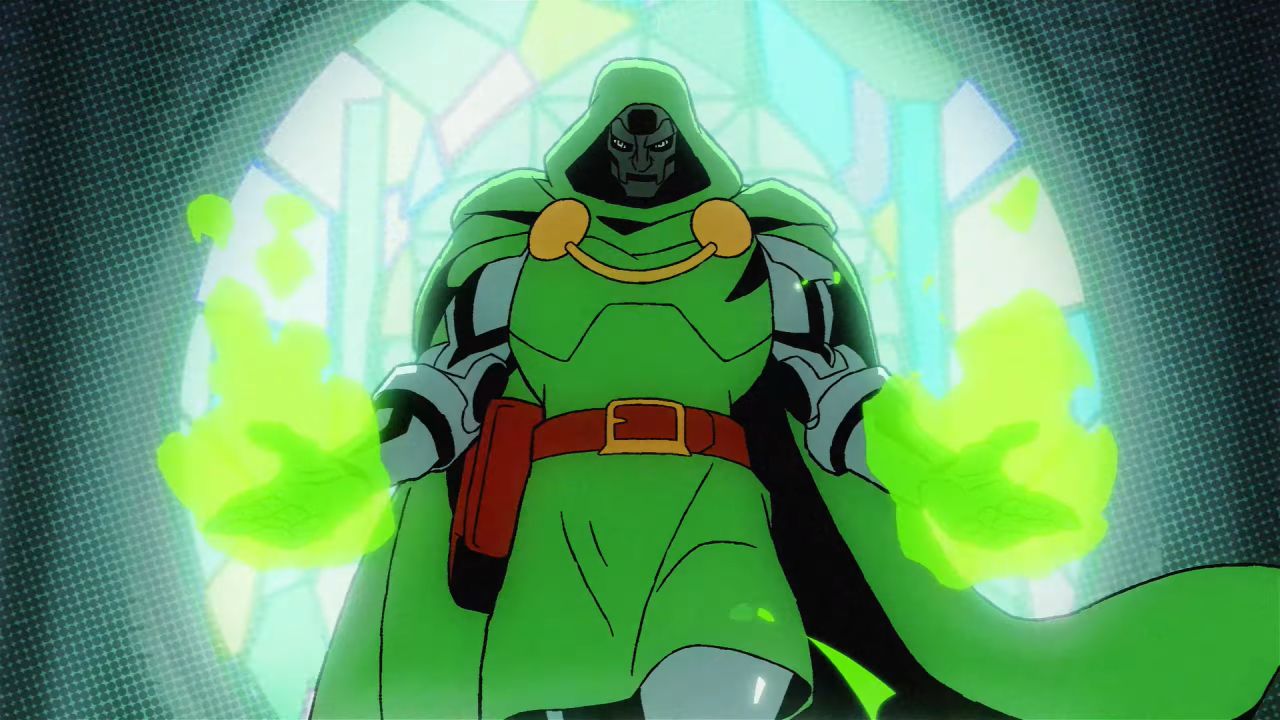
The package gives you Dr. Doom and the Invisible Woman as playable fighters, plus a run-based mode set inside the castle. The timing also lines up with Avengers: Doomsday reaching theaters next month. If you've already finished Marvel Cosmic Invasion more than once and need a reason to load it back up, this add-on is made for you.
The story runs alongside the Marvel Cosmic Invasion campaign.
There, Annihilus wants the universe, and the heroes stop him. Doom has his own plan. He's built a device called the Cosmic Inductor, and he intends to use it to take Annihilus down personally and absorb that power for himself. Reed Richards sees through the scheme and sends the team to the castle, including his wife, Susan Richards.
Reed stays behind, equips you with a charging stabilizer that powers the whole mode, and runs the lab you return to after every attempt. Doom's voice lines do more to sell his side of things than the setup does, and your goal stays simple: climb the castle and reach him before his device finishes powering up.
Doom can also be picked as your own fighter in The Siege of Castle Doom, which makes the final encounter an odd one to think about. Everything in the DLC is organized around runs. You pick two heroes and swap between them with one button, the same tagging system Marvel Cosmic Invasion uses.
The difference is that tagging is no longer optional. Each hero gets one life, so once someone goes down, they stay down, and rotating fighters to spread out the damage becomes part of staying alive. A full run of The Siege of Castle Doom, boss included, takes about ninety minutes, so you're settling in for a session instead of a quick round.
Each room throws a group of enemies at you, and clearing them opens a set of doors.
Every door carries a symbol that hints at what's behind it, though the exact challenge is randomized. Blue leads to batteries, green to health, purple to equipment, and yellow to events. The events are the wild card. One might drop a boss on you, another a large wave, and another might hand you a few crates and nothing else, so choosing one costs time you may not be able to spare.
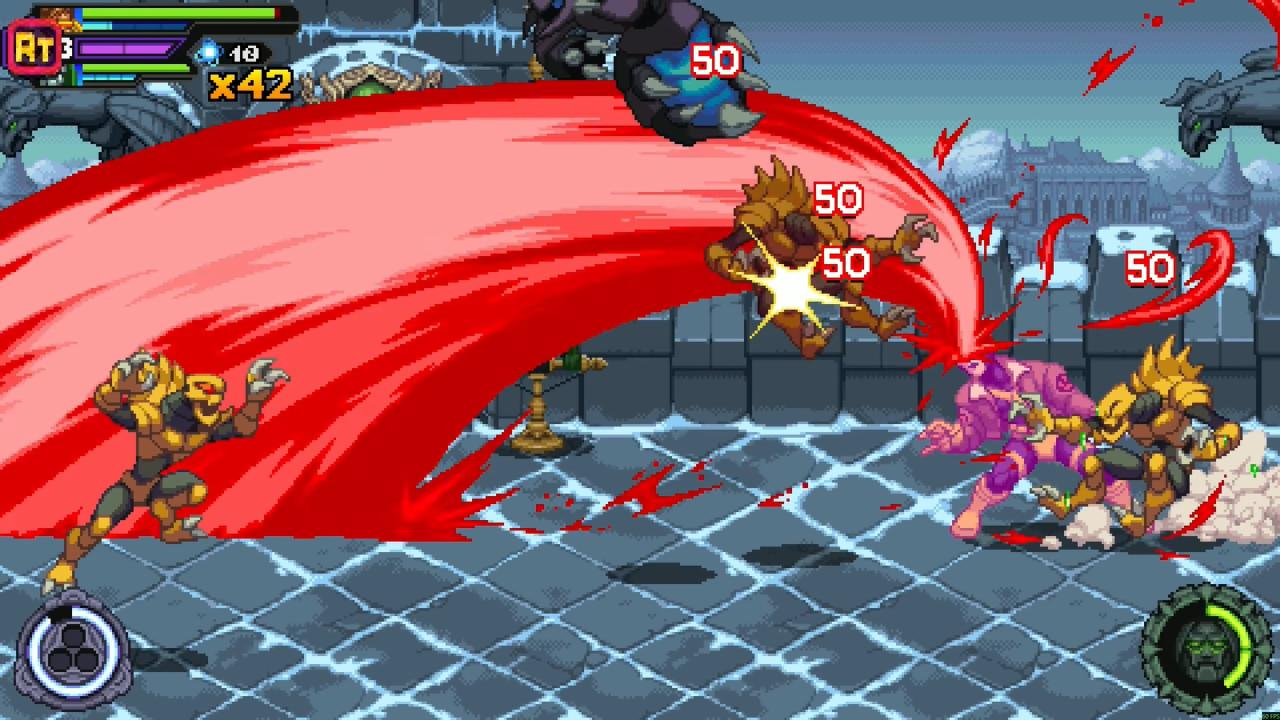
You also aren't locked into whichever door sits closest. If you finish a room at full health and the nearest door is green, you can walk back and take another. The game never says this. Batteries are your main resource. They drop from enemies, show up in rooms marked blue, and fill the stabilizer.
Each time it fills, you pick a perk, and after three fills, a staircase symbol appears in the lower-left corner of the screen so you can head to the next floor. Nine fills in total bring you to Doom. The floors follow a repeating loop of corridor, outdoor stretch, and elevator.
Working against all of that in The Siege of Castle Doom is the Siege Gauge in the bottom right corner. It rises as time passes, as you enter rooms, and every time you take a hit. The higher it climbs, the more enemies fill the castle and the tougher they get, with extra speed, health regeneration, and damage.
If it fills before you reach Doom, the run is over.
You push it back down by clearing certain rooms, beating bosses, and collecting batteries, and some events shave off a big chunk, like forty percent. Another effect locks the gauge in place for the next three arenas. The Siege of Castle Doom also fights back with more than just enemies.
You run into wrecking balls, swinging axes, and blades that jab up from the floor, and some stages have pits you can fall into if you stand carelessly. Enemies come from Marvel Cosmic Invasion's roster plus new Doombots, and space bugs show up far more than anything else.
Some rooms bring back an echo of a boss you've already beaten, and those get rough once the Siege Gauge is high, since the boss receives the same boosts as everyone else. Moment to moment, the fighting is the same brawling Marvel Cosmic Invasion already had: light attacks, combos, specials, air juggles, and partner swaps. What changes is the pressure.
Enemies land hits more often, traps keep you moving, and sloppy play gets punished. Doom plays like a battle mage who hits like a heavy. His basic strikes land hard, with downward elbows and a rocket-boot knee that throws enemies into the wall.
Holding the attack button sends something down that rises from the floor and launches enemies, and that's where your combos start.
He can deflect with his cape and answer with a revolver shot; he has a diving punch from the air, and he can throw a projectile that sticks to an enemy and ignites, which you can place on several enemies at once. His combo finisher is a small blast in front of him, and you can change which way you face partway through it.
The charge attack plants a sigil on the ground that fires upward when an enemy steps on it. It's useful, but the animation makes the sigil's exact placement hard to read. His special is a projectile that crosses the whole screen, and his ultimate throws energy bolts in every direction. The only thing missing is his foot dive from the Marvel vs. Capcom games.
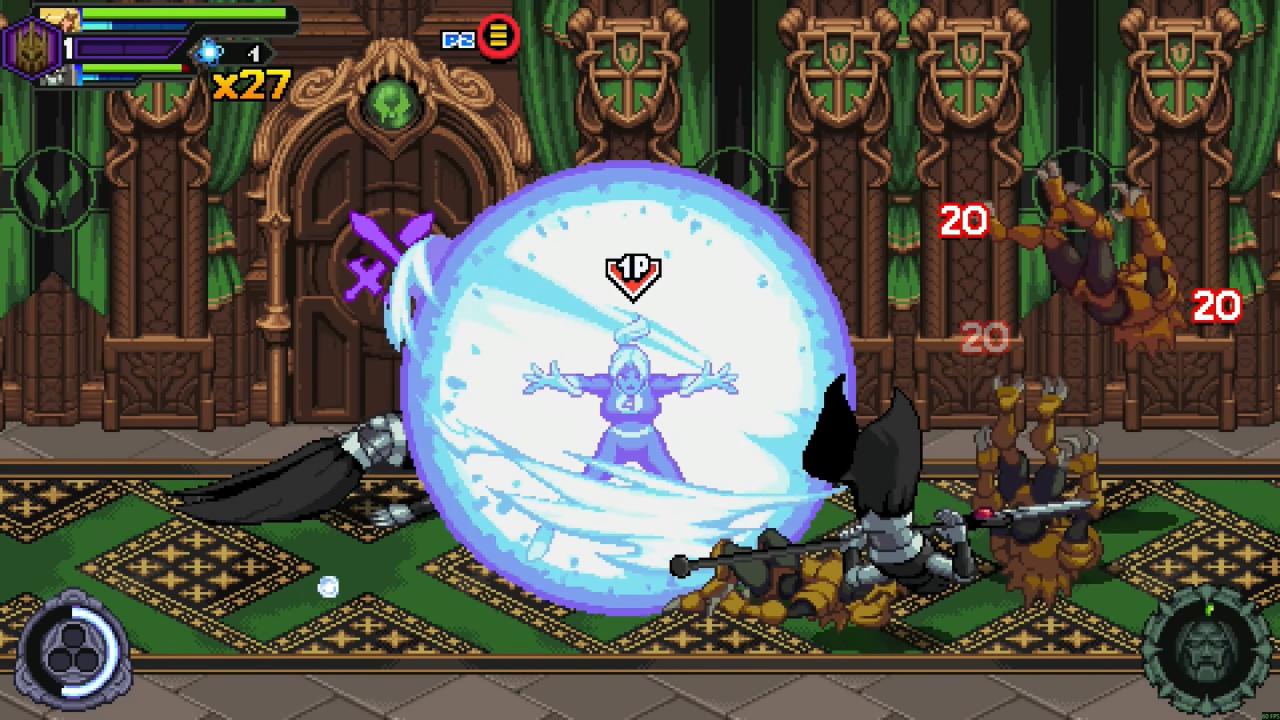
The Invisible Woman is the opposite kind of fighter: faster, lighter on health, and built around ranged attacks. Her basic attack is a short-range projectile with low damage, the weak spot of her kit. Her combo finishes with a sphere that shoves away anything around her and knocks enemies up.
Her holding attack drops a spiked barrier that blocks hits and damages anything that touches it. Place it beside a wall, and enemies get knocked into the wall, bounce off the spikes, and keep going back and forth for a few seconds; it works on bosses too.
Her special is a ranged grab that reaches across the screen, handy for pinning an enemy while you set up the barrier.
A dash makes her invisible until she follows it with a shielded kick, and her ultimate is a big sphere that briefly makes her immune to projectiles, though it works better as a push-back tool than damage. Jump twice, and she builds an invisible platform under her feet and walks on it, which keeps her away from fast enemies.
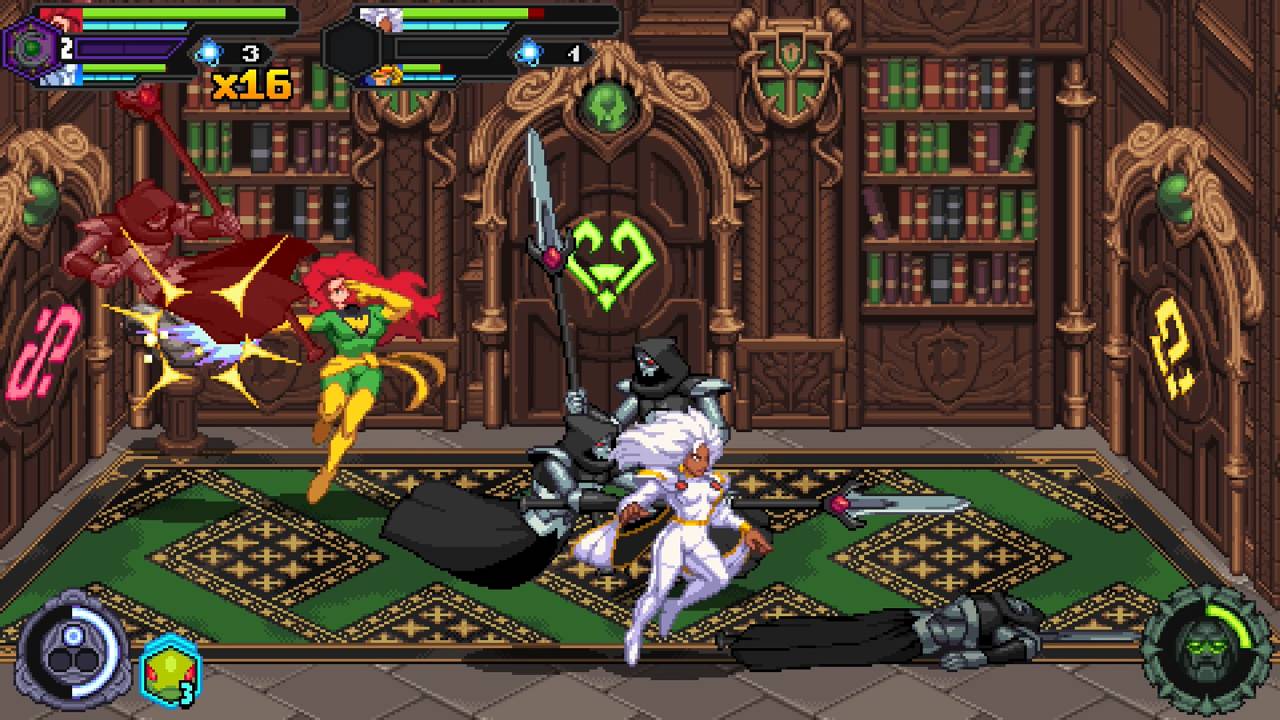
She takes more thought than Doom, but improves the more you play her. Both new characters are good, and you may well end up preferring Sue. Her barrier-and-wall setup is the best thing in either kit, and juggling enemies against it never gets old. Doom is easier to pick up and suits straightforward damage.
Both kits fall short on specials. Doom's area attack is an electrical burst close to what he does in Marvel vs. Capcom, and Sue's is a large sphere that works as a get-off-me move. Nova has something very similar, and Tribute leaned a little hard on area-of-effect attacks in Marvel Cosmic Invasion overall.
More distinct specials would have helped. Early runs are tough, with a lot of enemies on screen at once. Two heavier characters make the first clear smoother, since they hit harder and absorb more. It comes down to taste. A fast, fragile fighter can still win, but expect to go down in two or three hits.
A boss hitstun mod is also on the way, and Claymore plans to release it officially.
It will work in every mode, and with it on, bosses stagger when you hit them, which plays noticeably better than the default. The weakest part of The Siege of Castle Doom is what you do with the perks. Twelve options are sorted into three trees covering damage, defense, and tactical or special abilities.
They have some detail: damage boosts split between melee, ranged, and thrown attacks, and defensive ones cover only certain damage types, so you can't just grab a broad bonus. Even so, nearly everything is a plain stat increase. Extra ammo for projectile characters and more focus are among them, and the upgrades are billed as powerful, yet you barely notice them.
Builds never get interesting, and the mode repeats the mistake in Shredder's Revenge's survival mode, where a perk lasted a few rooms before you were back to playing the game as normal. Attack speed, lightning on regular hits, or extra stun would have changed runs without needing many new sprites. As it stands, defense is the safest pick.
The active abilities are better. They sit on the purple meter under your health bar, and once it fills, you can trigger them. You might call up spikes from the ground, freeze everything around you, wrap yourself in a shield that damages enemies as you run through them, or drop a laser that clears the screen. They level up as well.
The Siege of Castle Doom has no experience bar.
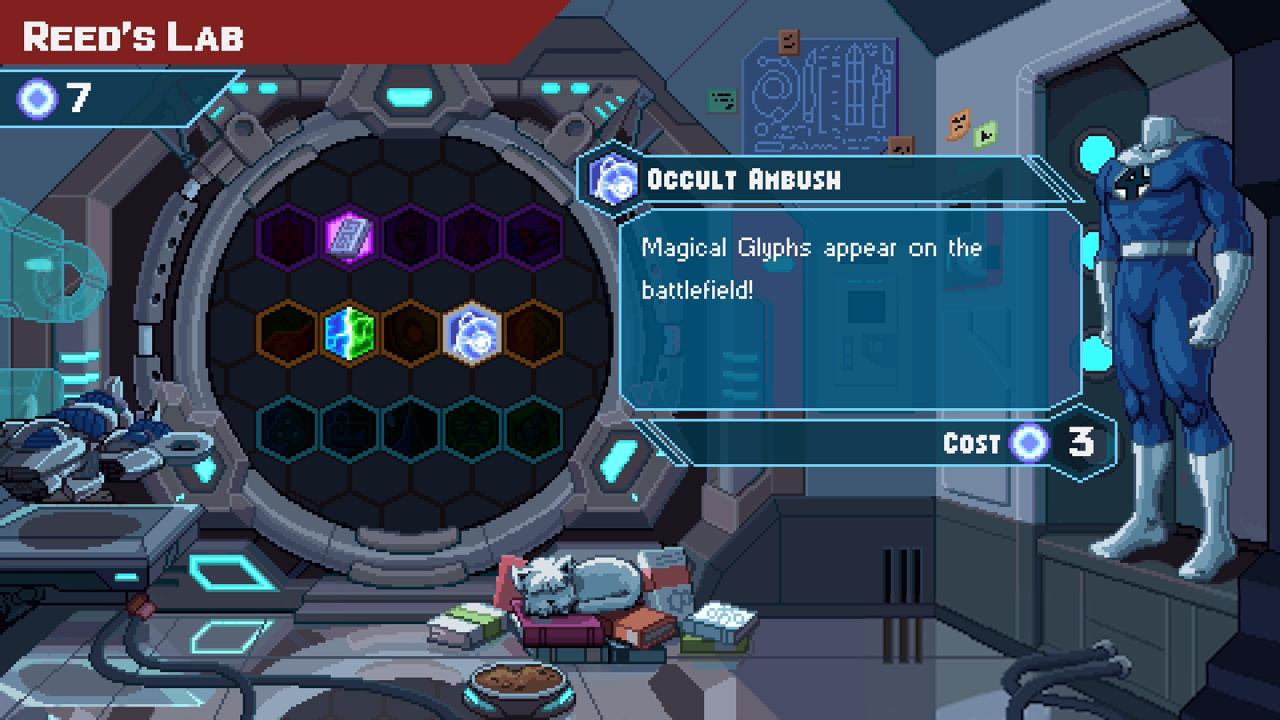
Progress comes from batteries and what Reed's lab does with them. During a run, filled stabilizers give you the perks above. When a run ends, win or lose, you earn upgrade points equal to the number of charges you completed, and you spend them in the lab.
The lab unlocks weapons you can fire from a recharging meter, new events, and modifiers that raise both the difficulty and the rewards. Some of those add floating mines that ricochet around the screen and hurt anyone they touch.
You can switch off the perk rewards in exchange for healing, or take on the castle with a single character who has two lives. Before each run, players vote on which unlocks to add, and an unlock enters the pool only if enough of them agree.
Some entries look like penalties but are really challenge rooms that pay out, and the lab never says so. Failing a challenge also costs you, for instance, slower movement for several rooms. Beating a run once unlocks Doom as a playable hero, and beating the boss gives each fighter new color palettes.
To see everything, you need nine more clears after your first, for about fifteen hours total.
After two or three runs, even ones that end on the second or third floor, you understand how the mode works. Playing The Siege of Castle Doom alone works, but it feels built for company. In couch co-op, the chaos ramps up, enemy spawns multiply, and picking different routes together is a good time.
The Siege of Castle Doom has issues beyond the perks. The door symbols aren't always intuitive, so you spend early runs guessing what each one offers until you connect the colors to the lab. From the second floor onward, hazard spam is heavy. A battery door sometimes cuts the progress you expect toward the next floor, a bug you run into more than once.
And since this is Doom's own castle, you'd expect a wider range of his contraptions and Doombots. Instead, you see a lot of reskinned enemies from Marvel Cosmic Invasion, and after a while the same handful keeps coming back, just shuffled into different combinations. The roster is also missing the rest of the Fantastic Four. Sue and the Thing are already in Marvel Cosmic Invasion, so Reed and Johnny Storm are noticeable absences.
Visually, Marvel Cosmic Invasion's pixel art is still the highlight. The character sprites are detailed, and attacks carry personality. Doom struts around as if every opponent is beneath him, and his moves read as condescending. Sue's constructs, shields, and spheres look good, and when she moves through the air, she appears to step across a barrier you can't see, which matches the comics.
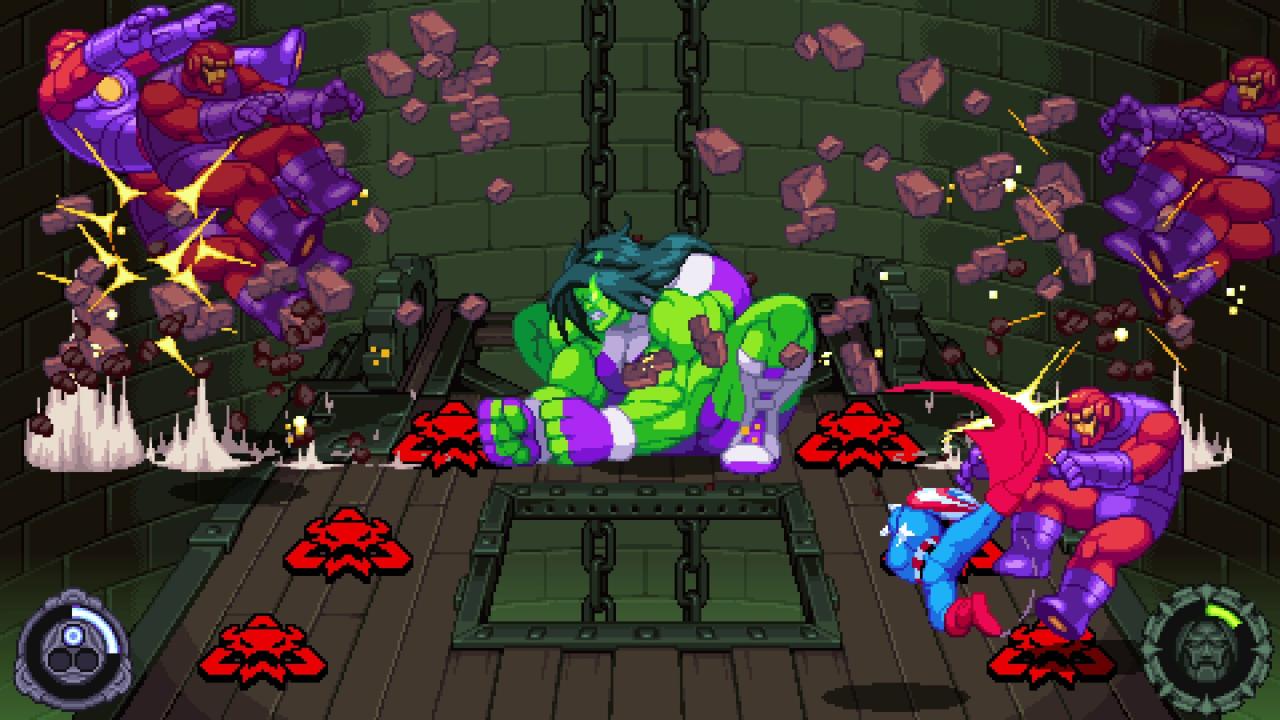
One of her palettes is red and black, a nod to another super family.
The backgrounds are weaker. The first, second, and third floors always look the same, so after a few runs you know what you're walking into before you open the door. Hazards and spawns vary, but the scenery doesn't. The voice work carries the sound in The Siege of Castle Doom.
Heroes call out their attacks and swaps, Nova and Cyclops throw in lines as you fight, and Reed's team announces that they're ready for whatever Victor sends their way. Doom is the best of the bunch. He keeps up the arrogance you'd expect, announcing that the Earth belongs to him alone, talking about his cosmic inductor and rightful champion rising, and calling the heroes insects and pests.
Overall, The Siege of Castle Doom does more than a typical add-on. You might expect a plain survival mode, but it turns out to be survival, roguelike, and time attack combined. Route choices, the Siege Gauge, and the battery hunt give you things to weigh in every room, and a bad run makes you want another. It adds no new idea to the genre, but it gives a beat-'em-up you finish once a reason to keep going.
It also has real flaws. The perks are dull, the scenery doesn't change, and the roguelike side stays fairly shallow. If Marvel Cosmic Invasion keeps adding modes like this, the next one needs builds that change how you play. Still, the two characters would justify the price on their own, with Sue the standout, and The Siege of Castle Doom gives Marvel Cosmic Invasion a second life for the next several hours.
Senior Editor, NoobFeed
Verdict
Doom and the Invisible Woman are strong additions on their own, and Castle Doom gives real reasons to replay. Dull perks and repeated scenery hold it back.
82
Related News
No Data.