
Stupid Never Dies Review
PlayStation 5
A zombie in love, a girl in a freezer, and a dungeon that rewards every failure.
Reviewed by Asura Kagawa on Oct 22, 2026
GPTRACK50 is a Japanese studio, and the name is new, even if the people behind it aren't. The team's credits include the Devil May Cry series, Resident Evil, Dino Crisis, and Dragon's Dogma, and the group is understood to have come out of Capcom before striking out on its own.
That history explains why Stupid Never Dies looks like a character action game at first glance. The title is hard to file under one genre. It mixes a brawler, a roguelike, and an action RPG, and it rests on a simple hook: take the long grind of a typical action RPG and compress it so reaching the maximum level takes under half an hour.

Each dive you take makes the next one level up faster, so no attempt feels wasted.
Nothing on the store page tells you it is a roguelike, but it is one, right down to picking your next floor from a branching path. If you tried the demo earlier, the full release of Stupid Never Dies adds a fair amount. The final build adds a style meter, an easier Go Nuts mode, and a mall hub that actually matters, and dungeons now stretch to as many as 100 layers.
The setting is a world that has already been through a war. Monsters showed up one day and attacked humanity, and people hit back hard enough to wipe many of them out, imprison others, and even put a few on display for laughs. Zombies were the joke of it all.
They were so weak that the monsters refused to call them kin, since they began as humans. That shaky peace ends when the King of Monsters, known as KOM, leads an uprising and uses paranormal over-technology to give his army biomechanical upgrades.
Within weeks, humanity is nearly gone, and then the monsters vanish without explanation, leaving survivors and wandering zombies behind. You play as Davy, a zombie who ran away from that war and sits below almost every other zombie because of it.
While hiding from those chasing him, he slips into a mall freezer and finds Julia, a human frozen solid.
He falls for her at once, even though he knows next to nothing about her. After you swallow a strange egg, you meet Dr. Frank Steiner, an eccentric scientist, and his Chihuahua assistant, Acelino. The doctor tells you the only way to save Julia and fix the world is to dive through the dungeon layers and devour KOM along with his power.
The tone of Stupid Never Dies is ridiculous from start to finish, and that is clearly deliberate. Davy's love is closer to obsession, and his daydreams about Julia make that plain. Unlocking her social media posts shows you who she was before everything fell apart, and the gap between that real person and the idealized version in his head is one of the more interesting touches.
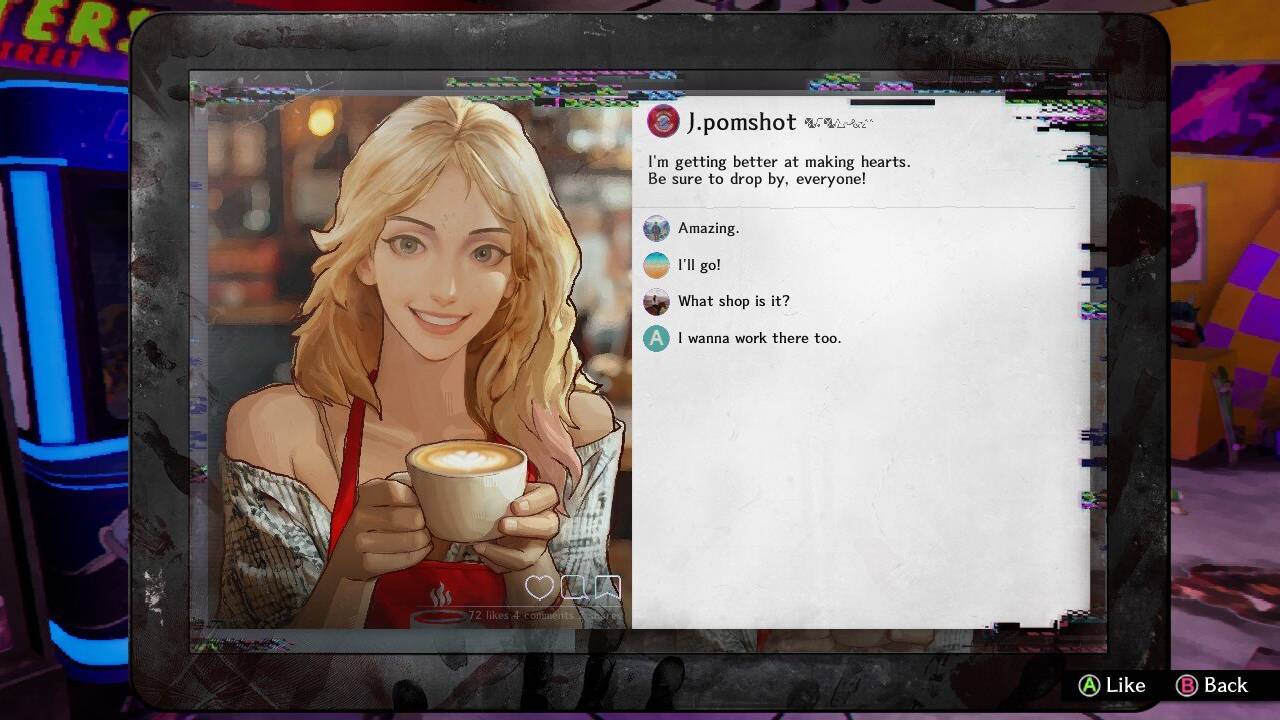
The supporting cast each has a clear personality, and the plot slowly ties its threads together with a few twists along the way. Boss fights add weight, and you end up caring about Davy more than the premise suggests. Parts of the writing borrow from Lollipop Chainsaw, Shadows of the Damned, and the Suda51 playbook, and Davy's romance hints at Warm Bodies.
At times, that reads as forced, but Stupid Never Dies builds an identity of its own. The opening hours are the weakest stretch. You get tutorial after tutorial, mixed with long cutscenes and lore dumps about the Great War, before the dungeon loop gives you any reason to care.
Zombies move and talk slowly up top, so conversations drag, and Davy's goal repeats to a near-comic degree.
Everything in Stupid Never Dies revolves around a shopping mall that serves as your hub, with dungeon layers beneath it. Those layers are alternate dimensions where the monsters come from, and you reach them by diving down a toilet. Davy is slow on foot, so around the mall you ride an automatic hoverboard that gets you moving at a decent pace.
Most runs begin with Davy in his zombie form and no weapons, and you build up from there. Each dive has a goal, like killing a boss or sub-boss, reaching a certain depth, or finding a key item. Floors are fairly compact, mostly linear arenas where you fight waves of enemies, reach a boss, and then repeat the process.
Now and then, a fork lets you skip layers, saving time but costing you the levels you would have earned along the way, so you have to judge whether you will be strong enough for the next boss. Between layers, you land in rest areas where you can buy health, temporary buffs, and extra perks.
A timer keeps you moving. A miasma deadly even to zombies keeps you moving, and a dancing TikTok Teddy in the corner shows how much time you have left. Stay too long and enemies go berserk while Davy's energy drains. You can add time by clearing certain numbers of floors, reaching landing points at set depths, collecting timer cells, and biting cores after a successful Stupid Impact.
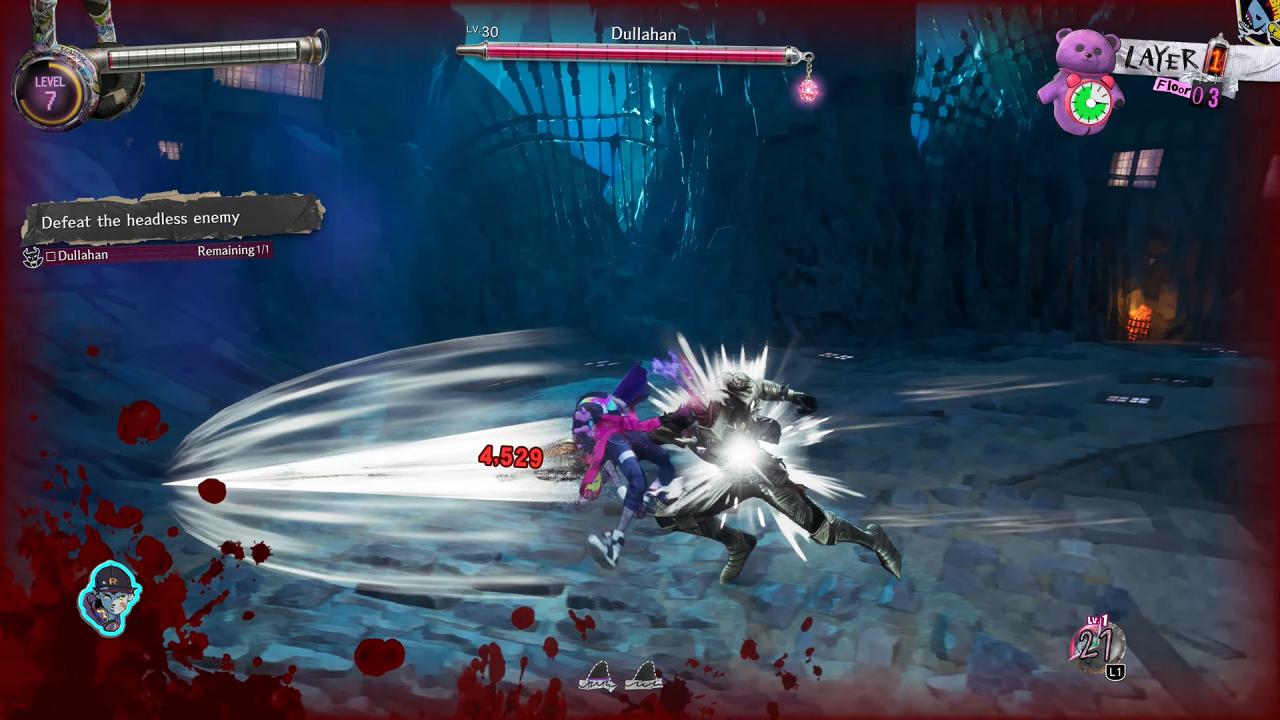
Mall upgrades and a lean combat toolkit help you beat the clock.
The clock stays active during boss fights too, which feels unnecessary when those fights already ask you to learn attack patterns, and with floors this small, it can feel like an obstacle added for its own sake. Back in the mall, more opens up as you advance. Acelino handles Body Hacks, which attach over-technology you find in the dungeon to Davy's arms, legs, and head, granting skills and passive bonuses.
They come in different rarities, stay permanent across dives, and can be saved as presets that you swap during rest layers before a tough fight. You can spend scrap from unwanted hacks to reroll the passives on the ones you keep. Bessie Burgers unlocks new level-up receipts and lets you raise their rarity; the ice cream parlor turns monster giblets into permanent stat gains like defense and skill cooldowns.
The Shutterclown hands out missions that pay in TikTok Teddies, teddy designs, and presents. Giving those presents to the frozen Julia upgrades Davy Burst, a temporary power surge. The game also has an in-game music player. Some of these errands feel like filler meant to stretch Stupid Never Dies toward twenty or thirty hours.
Your combat toolkit in Stupid Never Dies is lean: light and heavy attack strings, a jump and a parry. There is no dodge. The in-world excuse is that zombies are already dead and have nothing to fear, and the design clearly wants you to attack instead of back away.
The Stupid Parry costs some of your health to trigger, but it deflects almost any attack for reduced damage that will not drop you to zero.
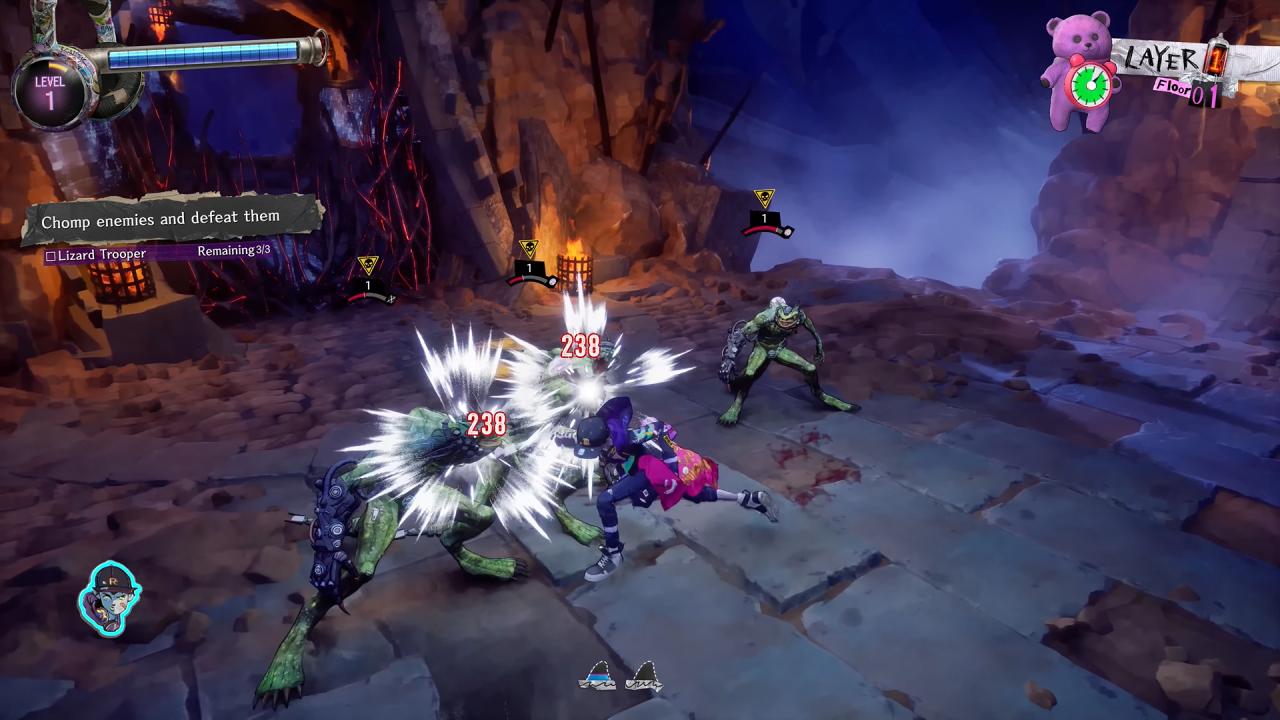
Certain parries trigger a Stupid Impact, which opens a counterattack that changes based on your equipped style. Red attacks cannot be parried, so you still need good positioning and a read on what enemies are doing. Hitting enemies fills a bite gauge at the bottom of the screen, and once it is full, Davy can bite.
Some of the damage you take shows up in yellow as recoverable, and if you leave it alone, it becomes real health loss. A bite restores that yellow portion, plus some. Health items are scarce, so biting is your main way of staying alive. If you bite a weakened regular enemy with an exposed core, you gain a one-time instant skill unique to that monster.
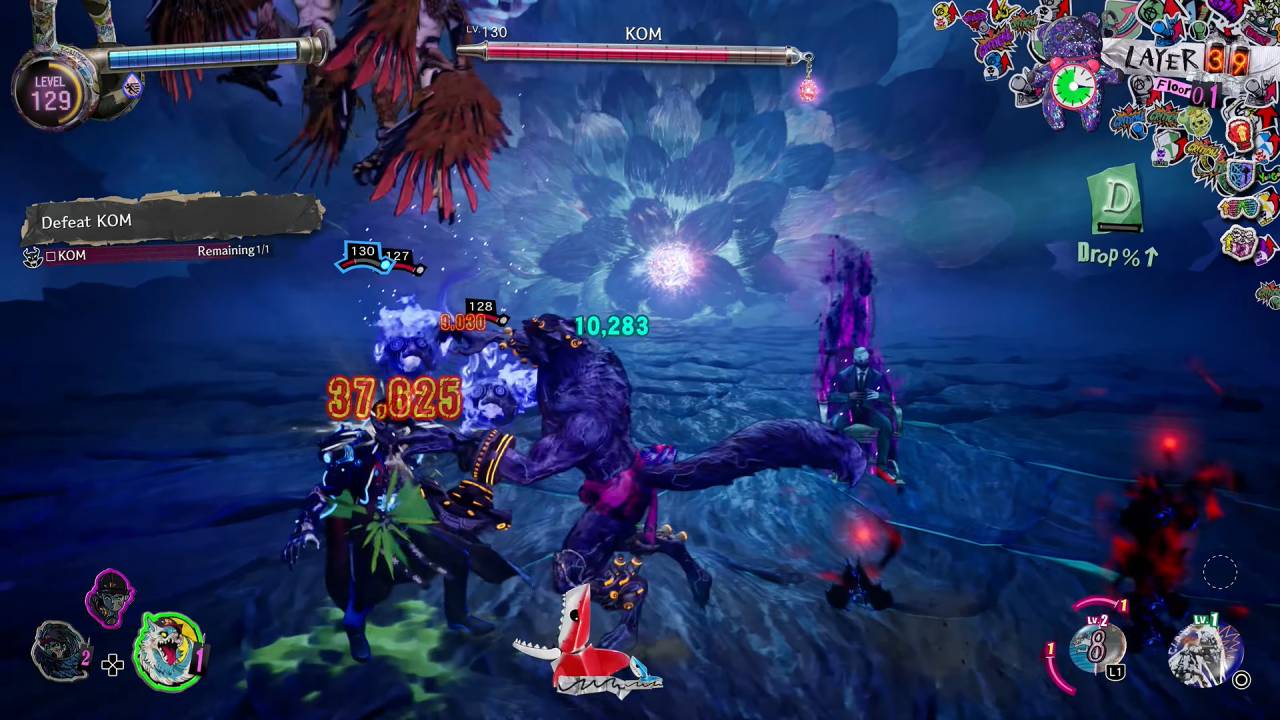
Bite an elite or mini-boss, especially after softening it with a parry or counter, and you take its style for a limited number of floors. Chain enough bites and Davy Burst kicks in. There are eleven styles, counting the default zombie form, and they include werewolf, vampire, golem, snow fairy, demon, lich, and harpy.
You carry three at a time and swap between them with the D-pad. Each one changes your speed, size, and combo strings, and each has cooldown skills that level up with use and carry over between dives. Style limits shrink as you descend, which forces you to decide what to keep and when to eat something new.
Using the same style again raises its sync level, and you get its equipped bonuses even when you aren't using it.
Some styles also help outside fights. The werewolf can wall jump to reach hidden items, and certain floors hide teleports or walls that only open for a specific style. The lich is a treat, with a scythe for reaping enemies and an army of skeletons that pull aggro or deal their own damage.
When the pieces line up, the combat in Stupid Never Dies is satisfying. Attack strings are short, since this is not a combo game, but hits land with real heft, especially the bite. The parry-counter-bite loop shines in boss fights, where patterns are easy to read and fun to pick apart. The fast melee styles are the most enjoyable, and you will probably settle on something like the snow fairy, werewolf, or demon and stick with it.
Stupid Never Dies has weaknesses worth knowing about. It has no traditional lock-on, and while that fits the character action design, you will often swing at empty air instead of the enemy you meant to hit. It gets worse against flyers like harpies, which show up early and hover just above eye level.
Without a juggling system or a strong soft lock, jumping at them takes patience, and the harpy style's ranged gun is hard to aim without any targeting. Games like Batman: Arkham manage this better, since pushing the stick toward an enemy nearly always hits the one you wanted. The developers tweaked some attacks after the demo so flyers are easier to hit, and it is better now, but not fixed. Styles are uneven too.
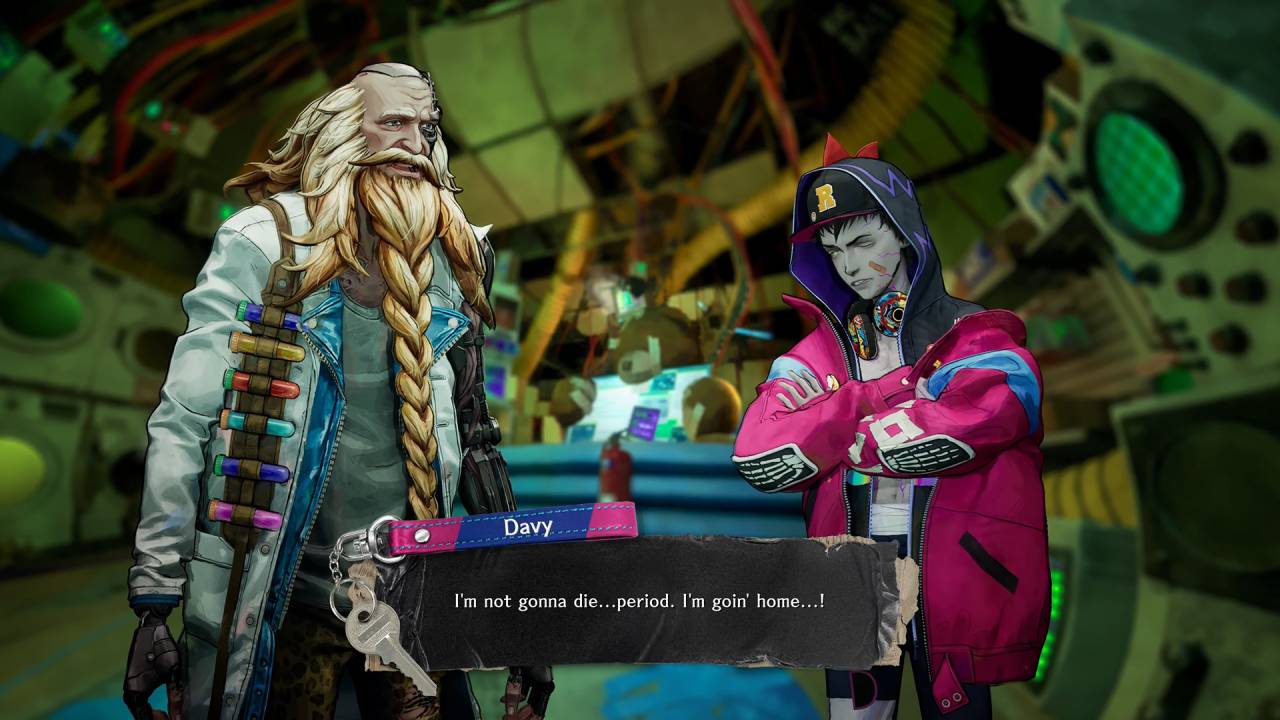
Some styles fall behind, but the roguelike leveling keeps every dive rewarding.
Slow, heavy picks like the golem and cyclops become pointless once attack buffs stack up, because any style can hit as hard without moving like a runaway tank. Davy's default form already covers almost every situation, so switching often feels optional. In Stupid Never Dies, the roguelike structure shows up in the leveling system. Every time you enter a dungeon, Davy starts at level one.
What changes is how fast he climbs. Each time you leave a dungeon or die, your level-gain rate increases, and the results screen shows it as a large percentage. Late in the game, you reach high levels within minutes, so the grind never becomes a wall. Skipping floors helps, since higher-level enemies hand out experience quickly.
Defeating enemies raises Davy's health, attack, and defense, and every so often you receive a level-up receipt that lets you pick one of three zombie skills. These are random passives that last only for the current run, and you can reroll later. Dying or running out of time costs you some collected resources, but the experience still counts toward Davy's overall growth, so a bad dive is never a total loss.
How much that matters depends on your taste. Damage and crit buffs make shredding enemy health feel great, and you can lean into status effects instead if you prefer. The catch is that the growth mostly makes Davy stronger without changing how you play him. Bigger numbers and better style bonuses are welcome, but they do not always make familiar floors feel different. The randomness can sting as well.
Randomness and late-game pacing can frustrate, though Go Nuts mode softens it.
You may have a great run and then get stuck with receipts or styles you don't want, and it can feel like you cannot reach the same strength as before purely because of luck. Runs are short, so it is tolerable, but it adds up if you hit the game over screen several times.
The pacing in Stupid Never Dies suffers late on. The story keeps sending you back to the mall for small interactions, and near the end you have to refight certain bosses one at a time, climbing through the dungeons again between each. After building Davy up, you would rather run through them in a row, and it feels like last-minute padding.
Go Nuts mode is the escape hatch. It greatly raises Davy's attack and defense; you can toggle it from the menu at any time, and it works well if you just want to see the story or return to where you died. The look is where Stupid Never Dies is most confident.
A pop-punk style runs through everything, from the interface to the character designs and even the rainbow vomit effects, and it stays consistent until the credits. The character designs are exaggerated, the cutscenes blend different art styles in a standout way, and the animations are expressive. The weaker side is the environments. They are drab and repetitive, and since you keep returning to the same places even as you progress, they wear thin.
You may notice a few moments where Davy doesn't interact with platforms properly. They are minor but noticeable. The soundtrack in Stupid Never Dies is one of the best parts. The music gives ordinary fights extra energy and makes the big moments feel bigger, and much of it sounds like rock-out alternative riffs from the nineties. Some tracks sound uncomfortably close to classics.
You can listen to everything through the mall's music playlist.
The voice acting is expressive and fits the cast, though the deliberately slow zombie delivery can make long conversations feel even longer. Taken together, Stupid Never Dies commits to its own weirdness harder than most. The combat is fast and satisfying when everything lines up, the progression gives every dive a purpose, and the body hacking and receipt systems give you real depth to tinker with when building Davy.
The style and music carry you through, and the story stays silly right up to the ending. You also have to put up with a slow start, a tacked-on timer, a missing lock-on, bland environments, and a roguelike structure that can start to feel repetitive.
Depending on how much you enjoy the loop, the novelty can fade anywhere between the six-hour mark and the twenty-hour mark. At $49.99, the price feels fair if the style wins you over and steep if it does not. If you want a build-focused brawler with roguelike bones, Stupid Never Dies has plenty to offer, and Go Nuts mode is there when you only want the vibes. For a clean character action game, look elsewhere.
Staff Writer, NoobFeed
Verdict
Stupid Never Dies has fast combat, a great soundtrack, and a style all its own, but clunky targeting and repetition hold it back. Enjoyable if you like the weirdness.
65
Related News
No Data.