
The Blood of Dawnwalker Review
PC
Rebel Wolves' debut turns a 30-day deadline, meaningful choices, and a human-to-vampire transformation into a surprisingly personal open-world adventure.
Reviewed by Mahi Araf on Sep 03, 2026
The Blood of Dawnwalker is the debut game from Rebel Wolves, a Warsaw-based studio formed by developers with experience at CD Projekt Red, including creatives who previously worked on The Witcher 3: Wild Hunt. That connection makes comparisons almost unavoidable, especially when you are dropped into a dark medieval setting filled with monsters, political conflict, wandering characters, and a huge web of quests.
Still, the more time you spend with The Blood of Dawnwalker, the more obvious it becomes that Rebel Wolves is trying to move away from simply recreating what its developers have already done. The game is built around a dangerous idea: time is a resource, and you cannot do everything. That sounds simple at first, but it changes how you approach almost every part of the adventure.
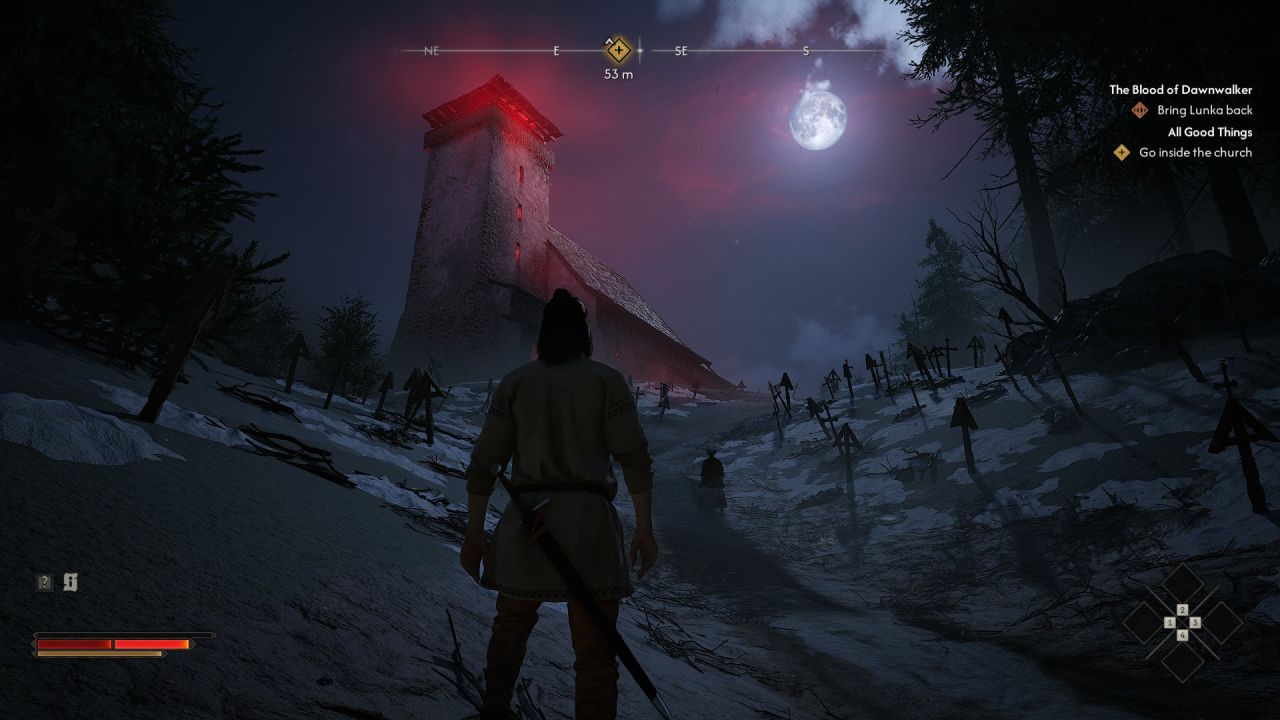
You are not constantly racing against a real-time countdown where every second disappears while you walk around. Instead, meaningful actions consume chunks of time. Quests, conversations, skill upgrades, certain activities, and even some seemingly minor tasks can push the clock forward. You have 30 days to save your family, and every decision about how you spend those days becomes part of your role-playing experience.
That structure becomes important almost immediately because The Blood of Dawnwalker does not wait until the main countdown begins to show you the consequences of wasting time. During the opening section, you play as Coen, a young man living with his family in a medieval valley that has been overrun by plague, vampires, and military occupation.
Your mother is sick and needs medicine, which should obviously be your priority, but the village is full of people who need help. Your sisters want you to go fishing with them. A field worker needs help finding his missing brother. Another villager wants you to recover a stolen banner.
None of these distractions feel particularly important at first. That is exactly why they work.
You can choose to help these people, even when doing so means putting off your mother's medicine. In one case, failing to return a stolen item has consequences by the end of the day. You begin to realize that Coen's personality isn't simply selected from a dialogue wheel. You shape him through what you choose to prioritize and what you allow yourself to ignore.
That idea becomes even more interesting when Coen later becomes a vampire. The transformation does not just feel like a supernatural event that happens to the protagonist. It can also feel like the culmination of the person you have already chosen to make him.
If you have spent your limited time helping strangers while neglecting your own family, that decision sits uncomfortably beside Coen's desperate desire to protect the people he loves.
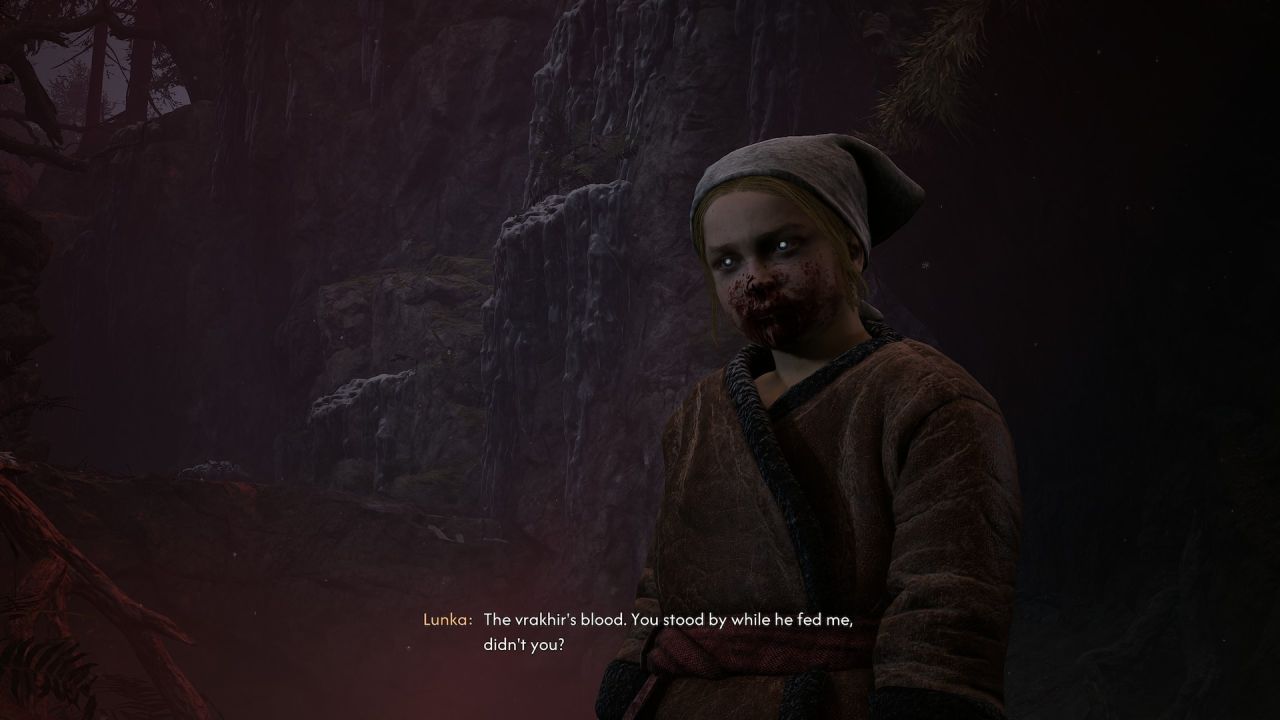
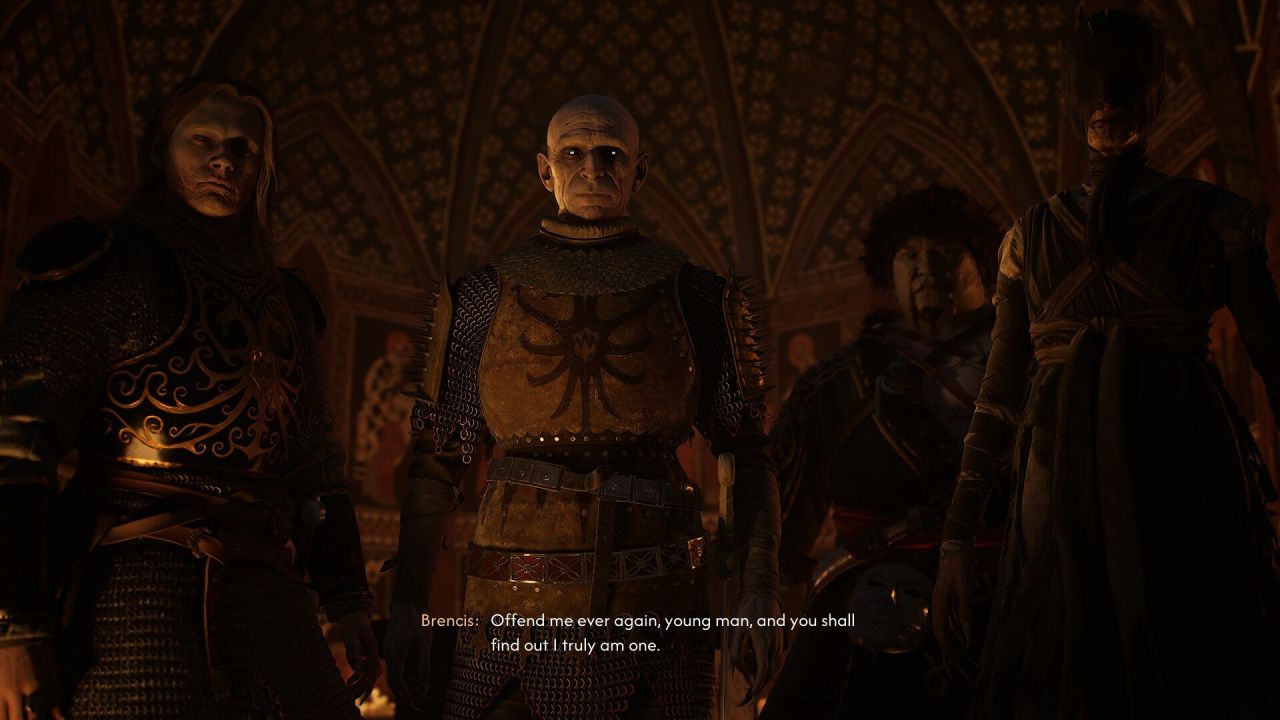
The broader story takes place in a fictional 14th-century Gothic setting in the Carpathian Mountains. The plague devastates the kingdom, and the human authorities respond brutally. Anyone infected can be executed, while the arrival of the ancient vampire lord Brencis offers the population what seems like a better alternative. His blood can cure the plague, and in exchange, the people must surrender blood during regular ceremonies.
The arrangement looks like salvation, but the blood tax and the treatment of the weak make it clear that this new order is anything but merciful.
Coen's family becomes caught in this system. During the opening events, his sister falls victim to the plague, and Coen tries to escape with her. Brencis and his court eventually rescue them, but the encounter only drags the family deeper into the vampire's control. Coen himself is transformed, though the process does not turn him into the obedient vampire Brencis expects. Instead, he becomes a Dawnwalker, existing somewhere between human and vampire.
His family is eventually taken to the castle and marked for sacrifice, giving Coen a very clear objective. He has 30 days to become strong enough, find allies, understand what is happening around him, and rescue them before Brencis carries out his plan.
The clever part is that the game does not constantly remind you to hurry. Once the world opens up, you are largely free to decide how to spend your time. You can pursue the family rescue, investigate the surrounding region, help villagers, hunt monsters, find equipment, gain experience, or become involved with the human rebellion. One objective remains important throughout the game: save your family. Everything surrounding that objective is up to you.
The 30-day mechanic is therefore less about speed and more about opportunity cost.
You might have enough time to complete a particular quest, but completing it means giving up time that could have been spent somewhere else. Each day and night is divided into time segments, and the game shows you the cost of an action before you commit. Exploration itself is generally free, so you can roam around without watching the clock disappear simply because you are walking. The meaningful choices are what consume your limited resource.
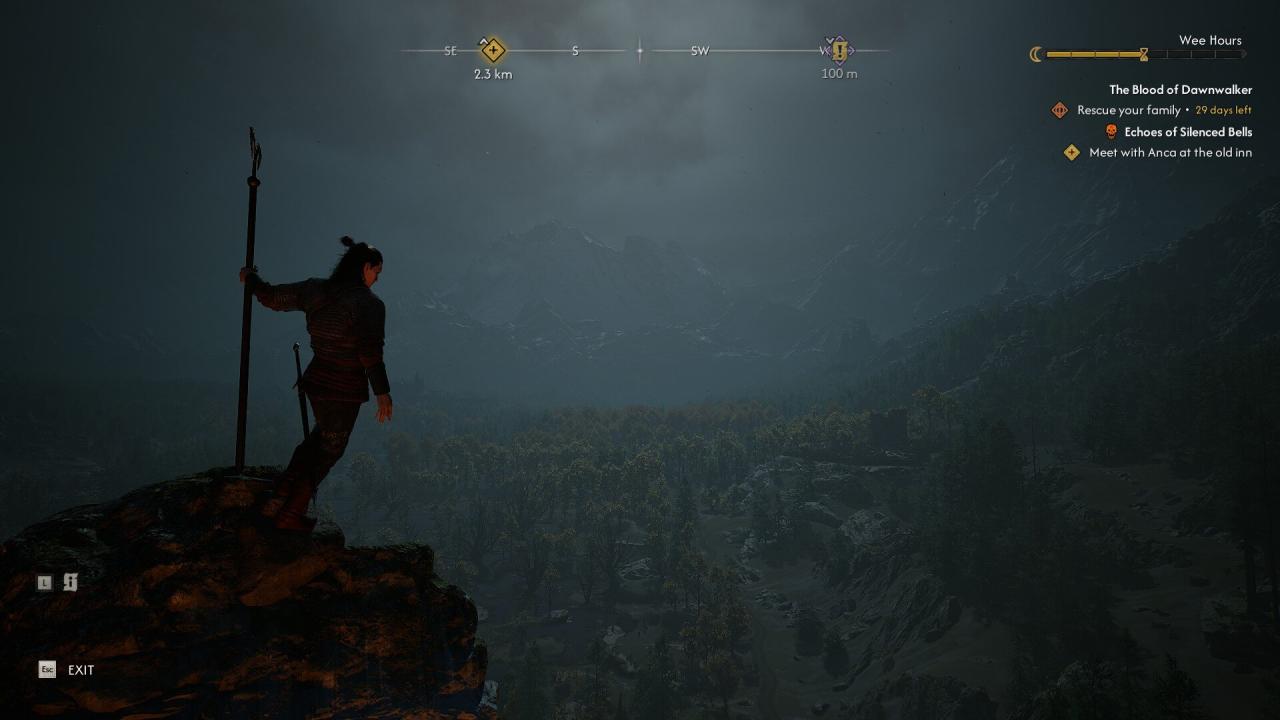
This gives the open world a different rhythm. You are not simply clearing every icon because it happens to be sitting on your map. You have to decide whether something deserves your time. The game reinforces this through its court system. Brencis' three close court members each have their own anger meter, and completing activities that interfere with their operations increases your notoriety.
Eventually, that pressure opens up quests that allow you to confront them. You can sabotage distilleries, rescue prisoners, attack soldier camps, disrupt the occupying forces, and generally make life harder for the vampire-controlled regime. These activities can also help you contact the human rebels and potentially create another route to saving your family.
The catch is that none of this is free.
Every rebellion activity competes with your other responsibilities. You might spend a large portion of your day undermining the occupation when another character has a more direct lead connected to your family. The game rarely tells you which option is morally correct, either. Instead, you have to live with the decision.
That is where the game's strongest quests come in. The world is filled with small stories that can continue beyond their initial objective. A seemingly minor task can develop into another conversation, a second stage, or a later event that completely changes how you view what happened earlier. One quest involving a recovered item eventually made the entire situation feel different after its follow-up events, forcing you to reconsider the motivations of several characters.
Another example involves two prisoners who accuse each other of betrayal. Instead of immediately believing one of them, you can investigate and look for evidence. When there is not enough information to justify condemning either person, you can free them both, accepting that the decision could create consequences later. It is a small example, but it captures what makes the role-playing work.
You are not simply selecting the nicest option. You are deciding what Coen would reasonably do with the information available to him. The world itself helps sell this feeling. Geographically, it does not always offer the same variety you might expect from a huge open-world RPG, but individual locations often have stories attached to them.
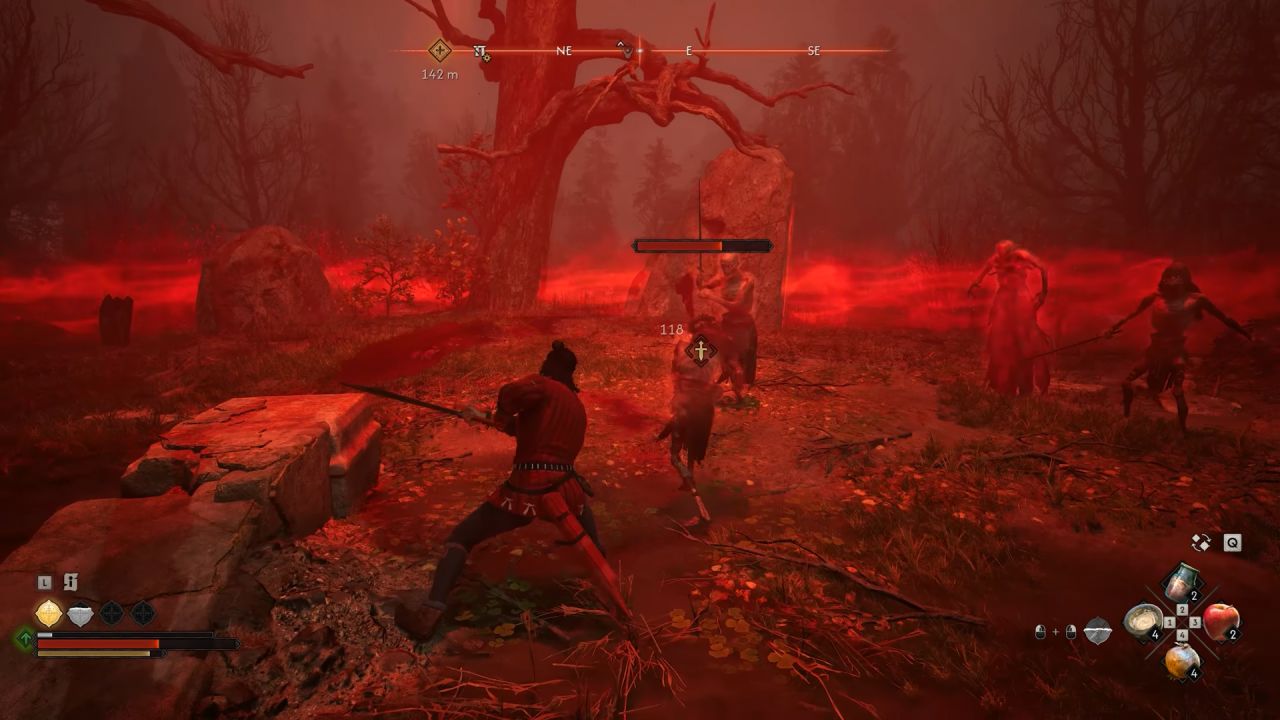
You can find abandoned villages overtaken by strange creatures, hidden evidence of forbidden magical practices, isolated survivors, and places where the consequences of the plague and occupation are still visible. The locations feel connected because their stories repeatedly return to the same themes of fear, desperation, sacrifice, and consequence.
Combat is where The Blood of Dawnwalker takes another major step toward becoming its own thing.
During the day, Coen fights primarily as a human using swords and witchcraft. The swordplay revolves around directional attacks and parries. You choose the direction of your swing, while incoming attacks indicate where you need to defend. Timing a block correctly can stun an enemy and open an opportunity to retaliate, while later abilities allow you to perform more advanced counterattacks following a perfect parry.
Once the system clicks, it feels satisfying. You begin recognizing attacks by their animations rather than relying entirely on the directional indicators. Blocking in the correct direction, following it with a counter, and transitioning into an execution gives the combat a nice physical rhythm.
Large encounters can also work surprisingly well. Fighting a dozen or more soldiers at once can create the kind of chaotic, reactive combat that makes you feel surrounded without completely taking control away from you. You can move between enemies, block attacks coming from different directions, and punish openings when they appear.
The problem is enemy variety. Across a roughly 50-hour adventure, you can find yourself fighting similar enemy types repeatedly, sometimes with different appearances rather than genuinely different behaviors. Learning enemy animations helps, but eventually the limited variety becomes noticeable.
By around the middle of the experience, bosses can feel like the only encounters that offer something genuinely different. The combat also has some rough edges. Enemies can get stuck in the environment, Coen can become trapped around geometry during crowded encounters, and enemies that fall into lower areas may fail to take enough damage to die, leaving you hunting them down simply to finish the fight.
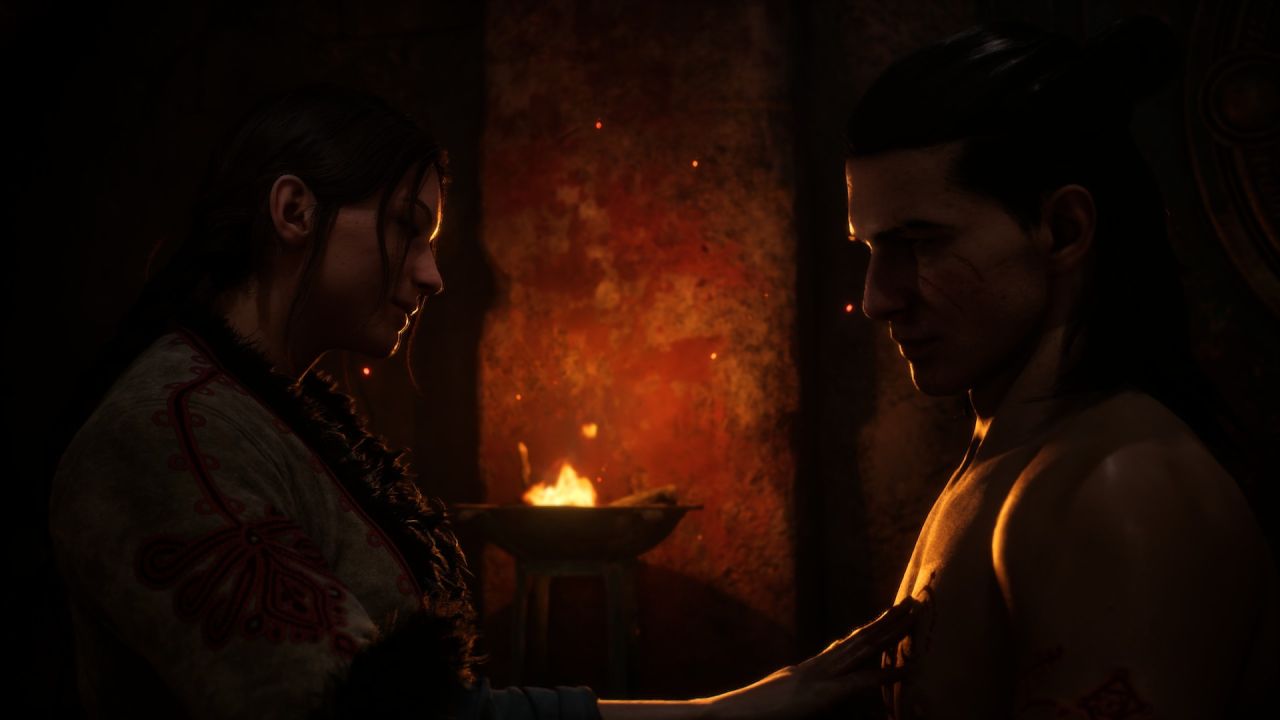
These issues came from a pre-launch build, so some could be addressed through patches, but they were noticeable during the review. Then night arrives, and the entire experience changes. Coen's vampiric form gives you access to abilities that make him faster, more mobile, and considerably more dangerous.
He can drink blood to restore health, move through shadows, climb walls, cross rooftops, and transform into a wolf to travel through the wilderness more quickly. Shadow Step, in particular, gives you a short-range teleport that can completely change how you approach an encounter.
Combat becomes more aggressive as well. Instead of relying primarily on healing items, you can feed on enemies to recover health. Claws give your attacks a different rhythm, while Shadow Step lets you reposition quickly. When these abilities start coming together, the vampire side of Coen's combat is considerably more expressive than his human fighting style.
It also creates one of the game's best contradictions. The story clearly wants vampirism to feel morally wrong. Coen is disturbed by what he has become, even when feeding on animals. The game repeatedly reminds you that his new abilities come with a cost. Yet, mechanically, being a vampire is incredibly useful. You are faster, more mobile, harder to pin down, and capable of recovering health through violence.
The game tells you that becoming a monster is something Coen should fear while simultaneously rewarding you for using those powers as much as possible.
That conflict works because you feel the temptation yourself. Once your vampiric abilities become stronger, returning to the slower human version of Coen can feel inconvenient. The game wants you to feel guilty about that power while still making it fun to use.
Stealth and traversal are another part of the vampire experience. You can sneak through vegetation, approach enemies under cover of darkness, use Shadow Step to reposition, and move vertically across the environment. There is a real sense of freedom in climbing walls and crossing rooftops instead of following roads.
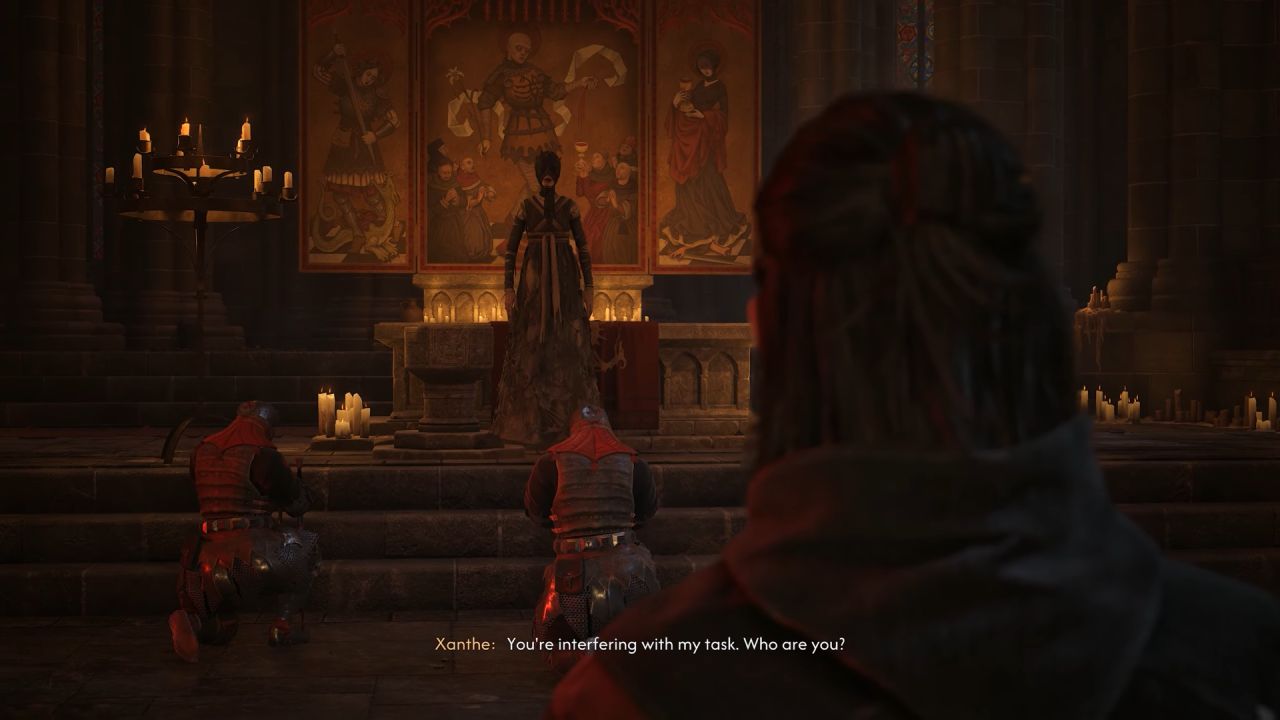
Unfortunately, this is also where some of the game's technical roughness becomes most obvious. Coen can lose his footing while climbing, transitions between vertical movement and normal walking can look awkward, and transformations do not always have the smoothness you would expect.
One particularly strange situation involved transforming back into human form while inside a bell tower that had only been reached through vampiric traversal. Finding a key had already prevented the situation from becoming a serious problem.
Still, it showed that the day-and-night mechanics do not always account perfectly for where your supernatural abilities can take you.
Character progression follows the same human-and-vampire divide. You have basic RPG statistics such as health, stamina, weapons, critical damage, regular damage, and armor, while certain weapons provide special moves. Progression branches into areas connected to swordsmanship, witchcraft, and vampiric abilities, with active skills and passive bonuses available through their respective trees.
Dealing damage can also build activation charges that you can spend on special moves, including magical, vampiric, and execution abilities. The game does not lean heavily into grinding. You can fight wildlife and other monsters while exploring to earn experience, and stronger areas naturally become more dangerous if you enter them before your equipment and abilities are ready.
You can technically travel into places that are above your current level, but the game is fairly clear about what happens when you do that: you get destroyed. That progression curve works because you are rarely forced to stop and grind for hours. You gain experience naturally through exploration and quests, while better weapons and abilities gradually make previously difficult areas more manageable.
The time system also prevents traditional grinding from becoming the obvious solution to every problem. Spending too long pursuing optional progression still has an opportunity cost because those upgrades require time.
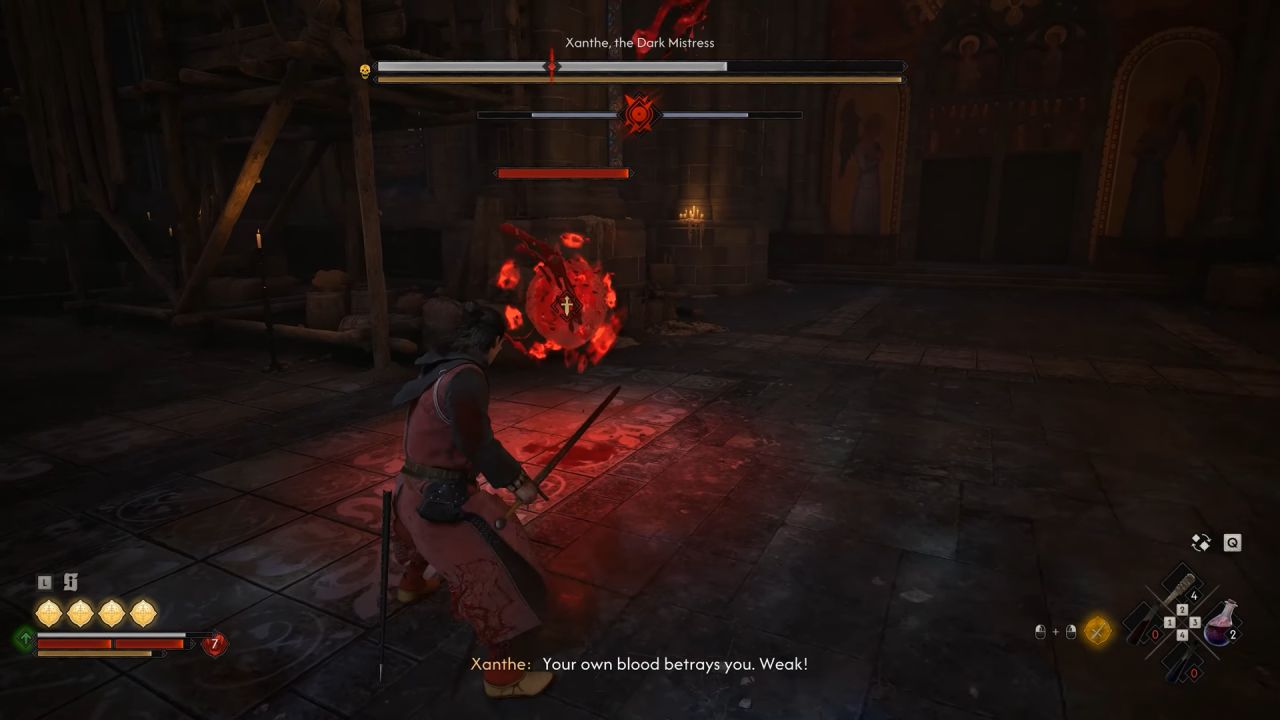
Visually, The Blood of Dawnwalker is a mixed bag.
When everything comes together, the medieval environments can look excellent. Castles, forests, swamps, wilderness areas, dungeons, and moonlit locations create a strong Gothic atmosphere. The vampire lords themselves can look particularly impressive, and some of the environmental scenes capture the tone the game is aiming for.
However, the game also carries several technical problems. Character faces can look rough, some textures lack detail, and Unreal Engine 5's familiar texture-streaming and lighting issues appear throughout. Cutscenes can sometimes reveal environments loading in as the camera moves, while lighting bugs and occasional micro-stutters can interrupt otherwise impressive scenes.
Performance was generally strong on high-end PC hardware, but noticeable dips still occurred, including during some important cutscenes. The audio is more consistent. The voice acting improves as the story grows more intense, especially in moments of despair and emotional strain.
Coen's performance is less animated than some of the game's supporting cast, but it fits his character and becomes more powerful when his family is threatened. Some of the bosses and major characters also deliver performances that can really catch you off guard.
The music itself isn't always spectacular, but it knows when to step up. Gothic and macabre themes take center stage in tense scenes, while quieter tracks help set the game's tone of unease. The sound design also excels in forests, dungeons, and other isolated locations, where whispers, creatures, water, and environmental sounds add to the sense of place.
Ultimately, The Blood of Dawnwalker is at its best when its systems work together. The 30-day clock gives your decisions weight. The branching quests give those decisions context. Coen's transformation gives the gameplay a physical representation of his internal conflict, while the open world provides enough distractions to make your limited time genuinely difficult to manage.
There are plenty of rough edges.
Enemy variety could be better, combat progression can take too long to open up, traversal occasionally looks clumsy, and the technical presentation needs some polish. The game also has moments where its supposedly terrifying vampires feel strangely accepted by the world around them.
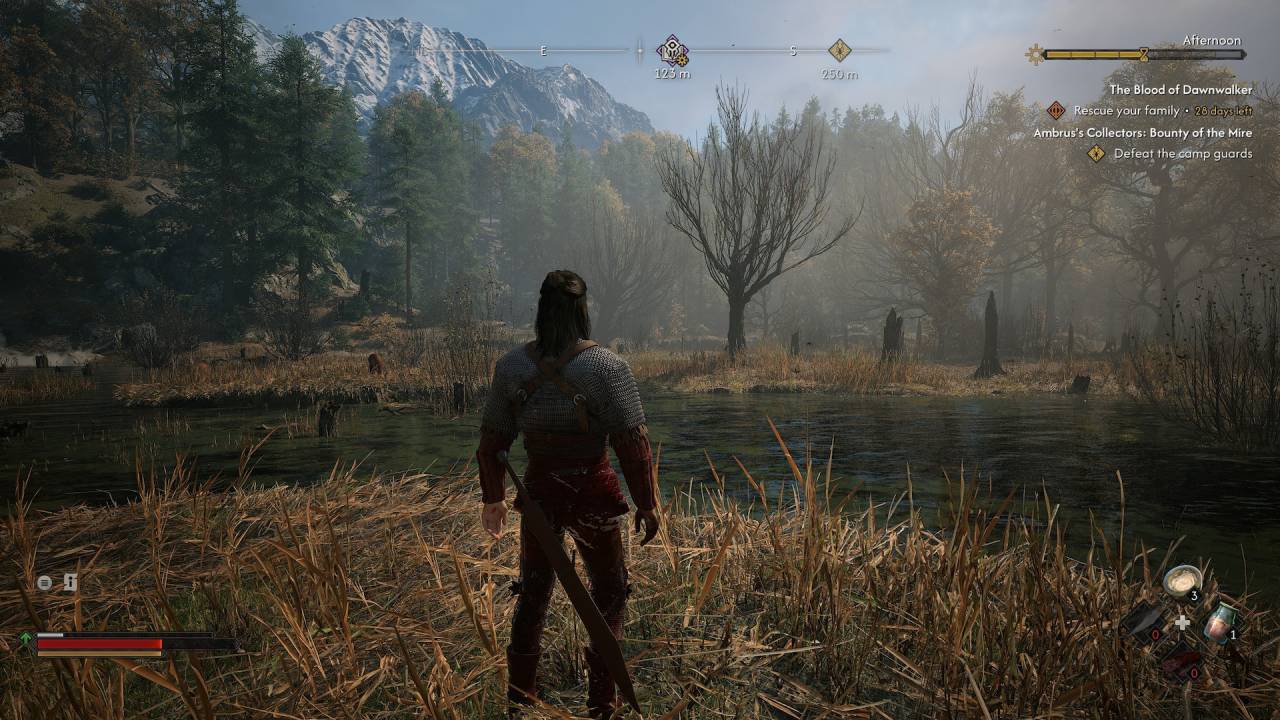
Despite the opening establishing vampires as merciless monsters, you can sometimes walk through settlements at night, talk to villagers, and pass soldiers without receiving the reaction you would expect from someone who has literally become one of the creatures everyone fears.
The ending is another complicated part of the experience. The game offers multiple approaches and endings, and many of the decisions you make throughout the story can influence how you reach the final confrontation with Brencis. The choices feel meaningful across much of the journey, but the overall conclusion is more fixed than you might expect.
Playing through different endings reveals that the story eventually moves toward a similar destination regardless of some of your decisions. It sets up a potentially compelling continuation, but it also makes some of your earlier agency feel less powerful in retrospect.
Even with that limitation, Rebel Wolves succeeds at something many open-world RPGs struggle to achieve. The Blood of Dawnwalker gives you a reason to care about what happens when you do nothing. That might be The Blood of Dawnwalker's biggest achievement.
People with problems constantly surround you, and because your time is limited, you cannot solve all of them.
Helping one person means potentially neglecting another. Spending time developing your abilities means spending less time pursuing your family. Supporting the rebellion can mean abandoning a more personal lead. Even stopping to help someone who has nothing to do with the main plot can eventually change how you understand the world.
That makes The Blood of Dawnwalker feel less like an enormous checklist and more like an adventure shaped by the priorities you bring to it. You are not simply choosing dialogue options to create an ending. You build Coen through how you spend his final 30 days.
The game doesn't always execute that ambitious idea perfectly, and its technical problems occasionally remind you this is still Rebel Wolves' first game. But beneath the bugs, awkward animations, repeated enemies, and uneven presentation is an RPG with a clear identity.
It understands that the most interesting consequence is sometimes not what happens because you made a decision, but what happens because you never had the time to make one. That is what makes The Blood of Dawnwalker worth sticking with.
Its rough edges are difficult to ignore, but neither are the moments when everything clicks. The combat becomes satisfying, the vampire abilities become tempting, the quests start connecting in unexpected ways, and the clock slowly turns every ordinary activity into something worth considering.
For a debut, it is an ambitious foundation. More importantly, it leaves you invested in Coen, his family, and the people trapped inside Veil Sangora. Even when the game stumbles, it rarely loses sight of the idea that your limited time should matter. And by the end, that makes The Blood of Dawnwalker feel like more than another open-world RPG with vampires. It feels like the beginning of a world Rebel Wolves could build something genuinely special from.
Senior Editor, NoobFeed
Verdict
The Blood of Dawnwalker's rough edges and technical issues hold it back, but its 30-day time system, meaningful quests, satisfying combat, and vampire-human duality make it a compelling debut.
82
Related News
No Data.