
Moomin: Midsummer Madness Review
Nintendo Switch 2
A flooded valley, a floating theatre, and a point-and-click format that suits the Moomins better than you might expect.
Reviewed by Asura Kagawa on Nov 12, 2026
It has been a good year to be a Moomin fan. Moomintroll: Winter's Warmth arrived earlier in 2026, and a second game now follows. Moomin: Midsummer Madness comes from Crossbridge Game Studios and is published by Shochiku Games, and the seasonal timing is still a little off-kilter.
The previous game was set in winter and launched in spring, while this one is set in midsummer and turns up in November. You get used to the seasonal mix-up quickly, because the bigger difference is the kind of game you're actually sitting down to play.
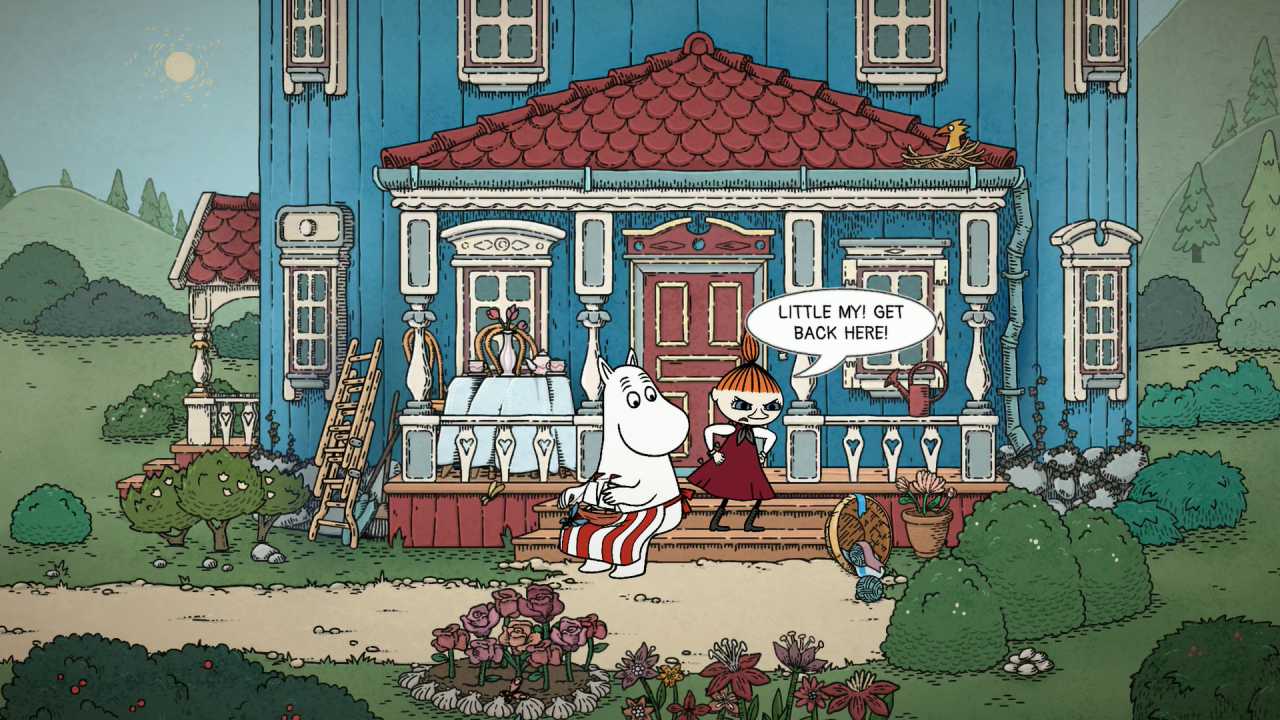
The recent Moomin games, made by Hyper Games, rebuilt Moominvalley as loose, open-ended spaces with a soft pastel look.
Moomin: Midsummer Madness takes that approach and turns it into a classic point-and-click adventure, swapping pastels for sharp pencil outlines borrowed from the Moomin comic strips. It is based on Moomin's Summer Madness, the fifth novel in Tove Jansson's series, first published in 1954.
You can play it on Nintendo Switch, Switch 2, and Steam for $19.99, with a 10% launch discount running through November 25. If you came for the gentle, slightly wistful mood of the earlier games, it's all still here, just delivered through a different lens.
The story opens on a hot, dry summer day. Little My is busy tormenting her older sister, and she runs off to find Moomintroll before anyone can tell her off. By the time Chapter 2 starts, that dry summer has turned into a very wet one. The sea rises, Moominvalley floods, and the Moominhouse sinks, forcing everyone in the valley to leave their homes and take to boats.
Once the flood hits, the family's shelter, the story's themes, and its cast take shape.
Chapter 1 ends on a striking image of a volcano erupting in the distance while the family watches, and it tells you early that Moomin: Midsummer Madness isn't going to play the disaster down. Chapters 2 and 3 stay with the flood and show what it does to the family and to the valley around them.
Jansson never shied away from natural disasters or big swings in the weather, and the game keeps that spirit. In Moomin: Midsummer Madness, the family ends up sheltering in a house they think is haunted, but it turns out to be a floating theatre.
The place belongs to Emma, a rat who looks after it and is rather strict. Moominpappa and the others settle in and put on a play, while Moomintroll, Snorkmaiden, and Little My get separated, and Snufkin gets tangled up in Little My's side of things.
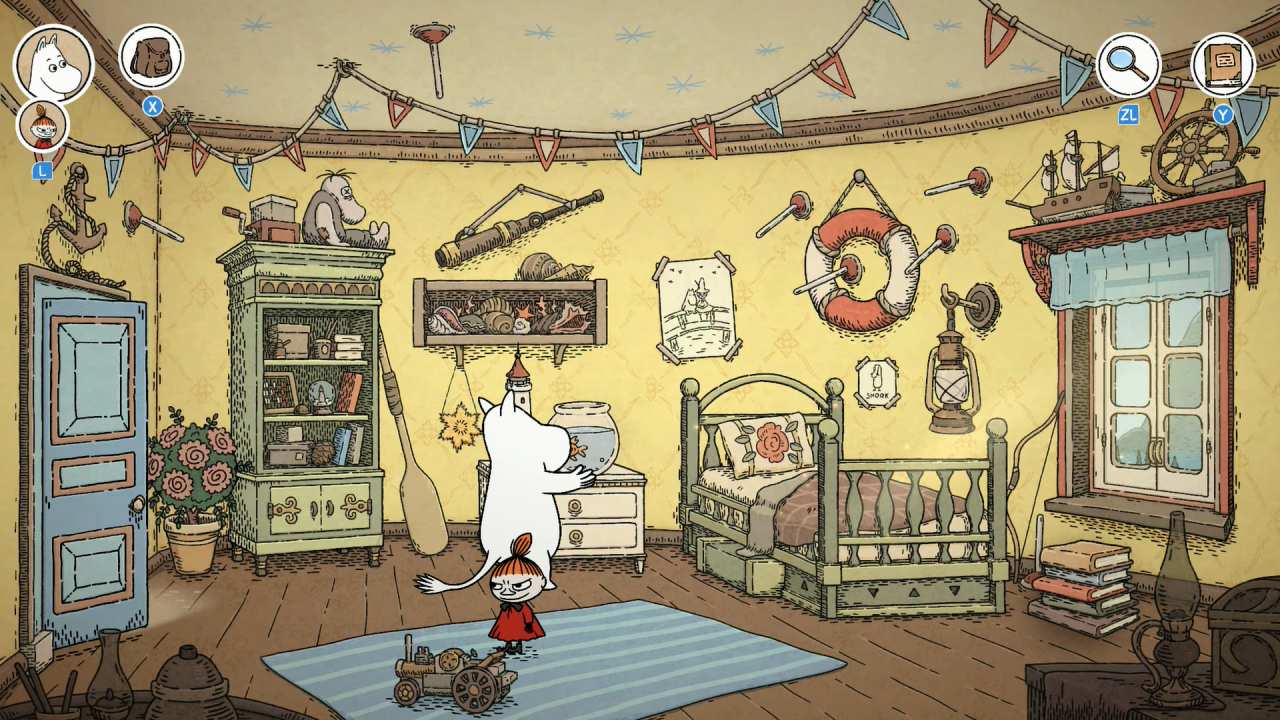
Of all the Moomin books, this one takes place in some of the smallest spaces, and that suits a point-and-click well. The earlier games already covered Moominpappa writing his play and Snufkin's run-ins with the overeager park keeper, so this one steers around them.
You live in a theatre while a play is being staged, yet most of your time goes to Little My and Moomintroll away from it.
That keeps things from feeling like a rerun and makes the game a companion to its predecessors instead of a repeat. The trade-off is that you never really get to see the play itself, which is a shame. Underneath the story sit themes of community, loneliness, responsibility, and found family.
Adapting to what life throws at you comes up again and again, as does how a crisis can leave people isolated. One neighbor is left behind by their family after the flood, sick and in need of medicine, which is exactly the sort of thing that happens after a real disaster.
Other tasks touch on safety, like making sure you have a source of oxygen before swimming or chasing off a threat that could electrocute you. It's cozy, but it isn't toothless. Aside from the occasional vocal reaction, Moomin: Midsummer Madness has no full voice acting, so the personalities have to come through in the written dialogue and the art—and they do.
The lines are short and easy to read. Snufkin is still an anti-authority wanderer who takes responsibility seriously. Moomintroll is selfless and would do anything for the people he loves. Little My pushes every boundary she can find, has a good heart beneath the mischief, and her jokes lean dark.
Across the cast, the dialogue has an edge instead of feeling flat or overly sweet.
If you didn't grow up with the Moomins, you still pick up plenty about each character just by talking to them. Even before anyone speaks, Little My's devious expression and Moomintroll's calm, steady look tell you how well the two will get along when paired up.
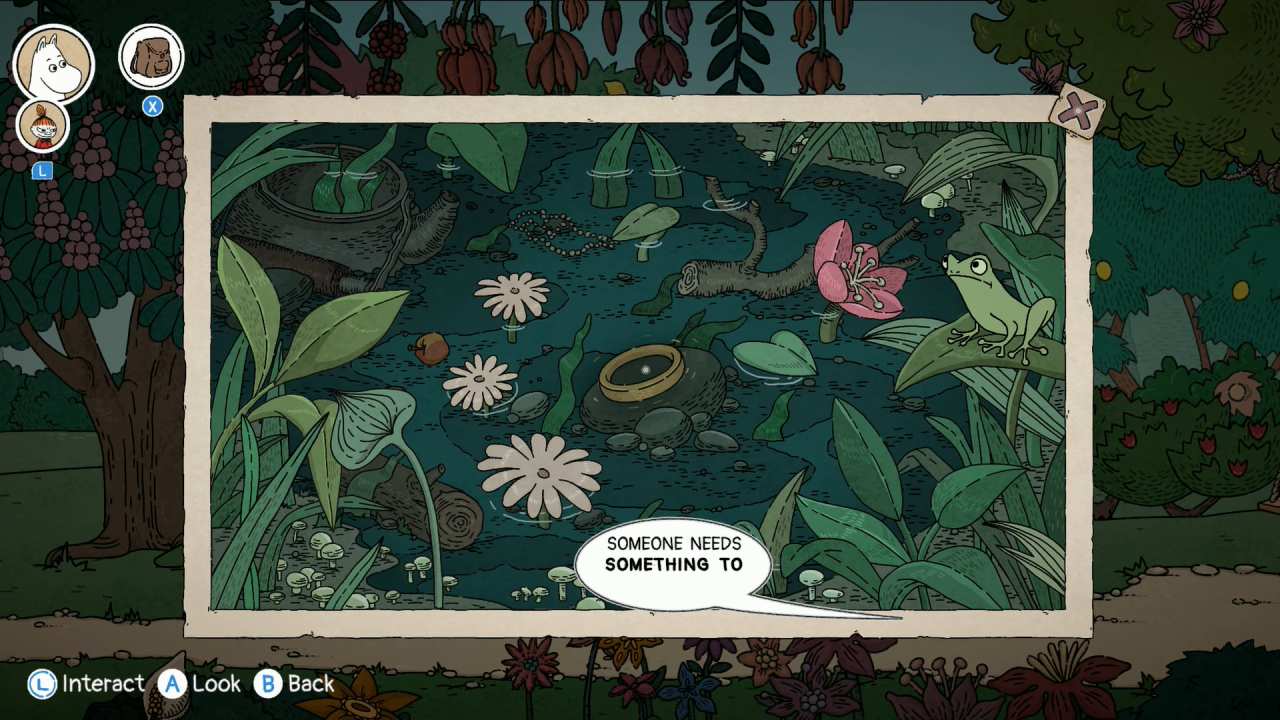
Moomin: Midsummer Madness is split into six chapters, each about 45 minutes long. Total playtime lands somewhere between three and six hours, depending on how often you get stuck, and a second run where you already know every answer could take around two.
You move by pointing and clicking, examine objects, and hover over hotspots until the icon changes to show you can interact with them. Anything you pick up goes into a bag that works as your inventory. It plays on a controller, mouse and keyboard, and Switch, where you can also use the touchscreen.
Chapter 1 doubles as the tutorial. You control Little My as she tries to dodge her sister, find a chunky stone, store it in your bag, and then throw it at the house to pull her sister's attention away so you can slip off. For most of the adventure, you control Moomintroll and Little My as a pair, and Moomin: Midsummer Madness uses their differences.
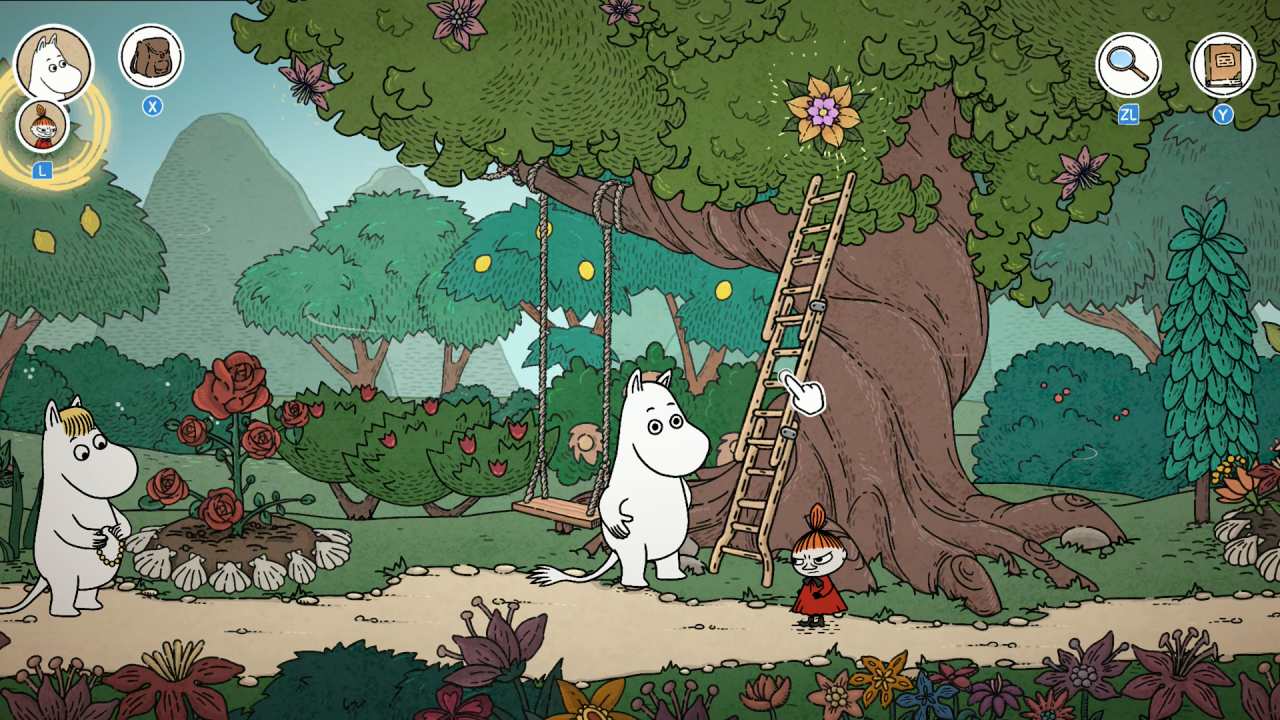
Little My is small enough to crawl into tight spaces, while Moomintroll can hold a ladder steady for her.
Some actions can only be done by one of them, so you switch back and forth constantly. The balance also shifts as you go. You start mostly as Moomintroll with Little My trailing behind, but in one chapter they are apart for the whole stretch, and you alternate between them until they meet again; in another, Little My leads while Moomintroll tags along.
Those chapters feel different from the rest, and you'll probably wish there were more. Each chapter centers on a multi-step objective a character like Moominmamma, Snorkmaiden, or Snufkin hands out, and you log the goals as a checklist in your journal.
They range from arranging a coffee break to luring out a ghost to helping kids have fun at a park. In the first chapter, you help Snorkmaiden dress up as a beautiful maiden by finding a sheet, a flower, and her ankle ring. Another has you getting breakfast ready for Moominmamma by tracking down her missing buns, coffee tin, teapot, and teacups.
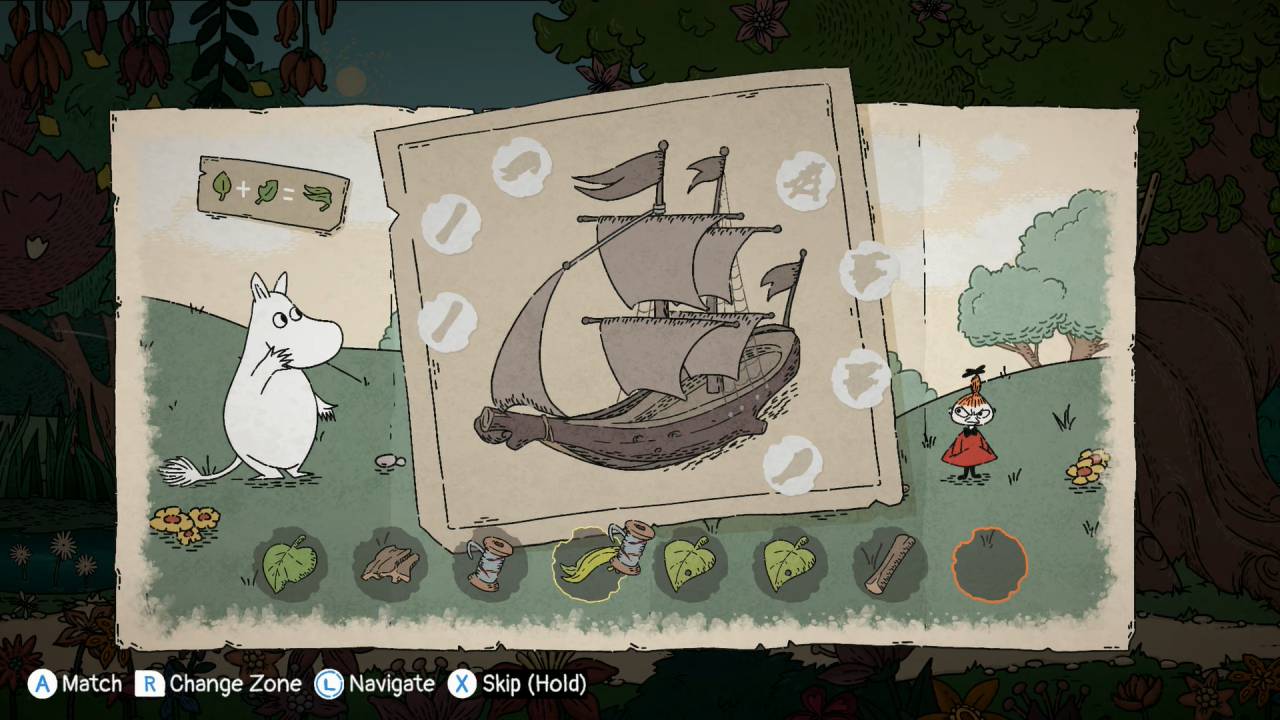
Many chapters boil down to collecting three or four things and bringing them back to someone, and after a while that starts to feel formulaic. Backtracking through places you've already searched doesn't help. You do meet plenty of the valley's residents along the way, and helping them often gets you the item you need, so it never gets dull outright, but the constant gathering does wear on you a little.
The puzzles in Moomin: Midsummer Madness stick closely to classic point-and-click rules.
You inspect every corner of a screen, combine spare parts in your bag to craft usable tools, and figure out which quirky resident needs what you're carrying. Talking to everyone you meet usually points you in the right direction, though the logic swings wildly. Many solutions are straightforward and intuitive, while a few rely on tiny visual details that are easy to miss on a first sweep.
When it works, Moomin: Midsummer Madness is satisfying. Things are connected, so you often have to gather several pieces and stitch them together before the main puzzle makes sense, and the experimentation is rewarding. The minigames are the best part of the package.
You get a pushing-blocks maze, a slingshot that fires Little My far enough to snag Moominmamma's buns, a toy ship to build, a rhythm game, a crossing of the Moominhouse attic, and a frog to corner. Each chapter has one or two of them, and they break up the item hunting nicely.
They're optional too, so if one starts to get on your nerves, you can skip it. The frustrating side is the age-old problem of not knowing what to try next. You can't tell whether you've missed something, searched every screen, or need to combine two items, and Moomin: Midsummer Madness doesn't always help you work it out.
The magnifying glass on screen makes every clickable object shine, which helps you spot missed areas, but it isn't a hint button.
You can get the same result by holding the R button as long as you're close enough. Written hints appear at intervals when you're stuck, and the journal gives a nudge, but they don't always point to the answer. The detailed backgrounds work against you as well, because details that catch your eye can turn out to be red herrings when you're hunting for the last item.
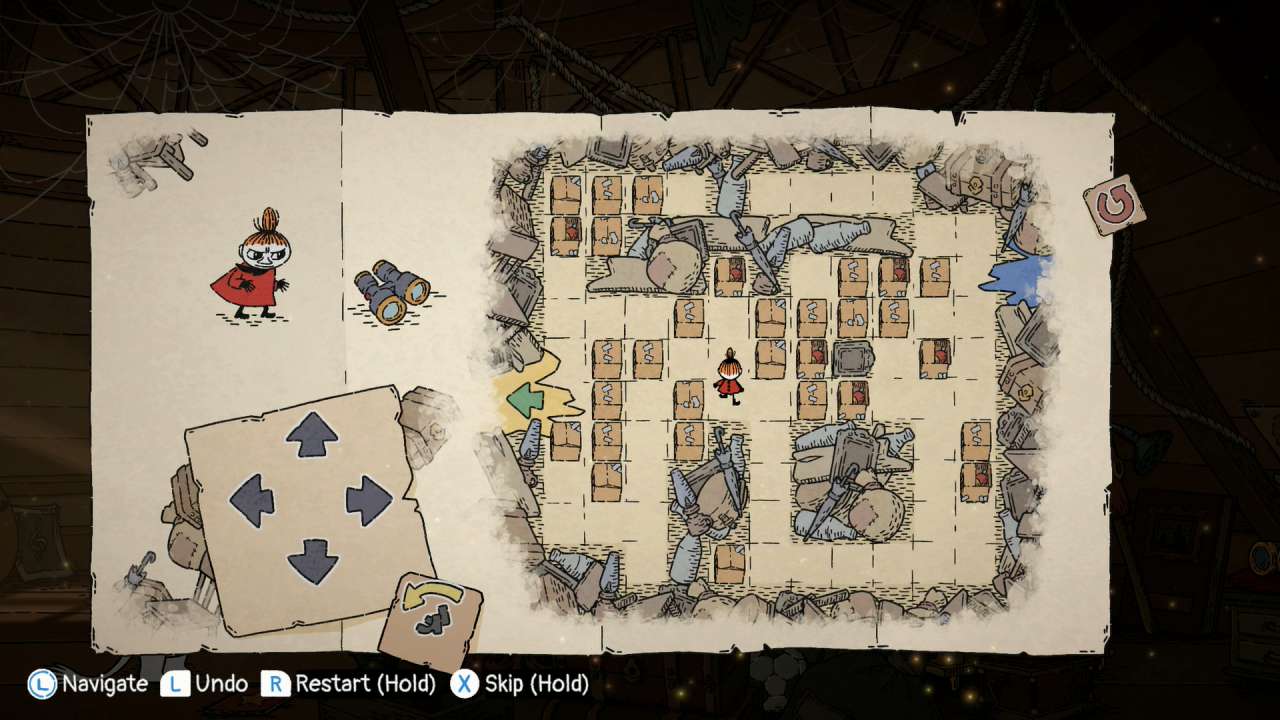
Then there are the moments where pacing grinds to a halt. Especially in the middle chapters, a single obscure interaction can stall your progress long enough to make you wonder if the game has bugged out. Some of the spatial puzzles—like navigating cluttered attic mazes or clearing blocked paths—spike sharply in difficulty before eventually clicking into place.
Too often, the challenge comes down to hunting for a single overlooked object rather than working through a clever riddle. There are no RPG systems, XP bars, or upgrades to fall back on here; forward momentum depends entirely on finding the right item and clearing each chapter's checklist.
The controls are mostly easy, but the touchscreen takes some getting used to.
In Chapter 1, you learn that an eyeball icon or cogs over an item means you can investigate it with the buttons. Later chapters don't always follow that pattern, and you may only discover you can tap unmarked things on the touchscreen by accident.
A clearer tutorial would help players of every age. There are some thoughtful extras, too. You can increase the cursor size or switch on a dyslexia-friendly font, and the journal includes a novel-style summary of the story and a recap of past conversations, making it easy to pick things up again after a break.
Age is worth thinking about before you hand Moomin: Midsummer Madness to a child. A five-year-old can enjoy the characters and the puzzles, but only stays engaged while the solutions are working, and gets bored and frustrated once you're both stuck.
It's best kept away from children under seven unless an adult plays alongside them, since many puzzles require lateral thinking that very young players haven't developed yet. Older children can try it and might even sharpen that skill.
Performance is mostly steady, though a few rough edges show up during longer sessions.
Occasional frame dips, brief hitches right after major scene transitions, and minor visual tearing can interrupt the otherwise cozy flow. The game never outright crashes, but keeping a manual backup save isn't a bad idea in case a script or item trigger fails to fire properly.
The visuals are the first thing that grabs you in Moomin: Midsummer Madness. Every location is hand-painted, and the characters are drawn to feel like a playable version of Jansson's illustrations. It reminds you of classic Nordic children's picture books, and the line quality is clearly hand-drawn, which the earlier games didn't have.
The sharper outlines sit closer to the original art, especially on lesser-known characters like Mymble's Daughter and Emma the Rat. The characters aren't fully animated, but subtle idle animations and brief vocalizations add texture and mood. Even after the valley floods, the underwater areas are as colorful as before the storm, so exploring them stays enjoyable.
The audio in Moomin: Midsummer Madness is just as well judged. The soundtrack here has no Sigur Rós on it, but it still builds a quaint, charming atmosphere through doo-wop and vocal jazz touches, the sort of music Moominpappa might put on while writing his memoirs on the veranda.
The tracks are joyful and relaxing, and the main menu music alone is likely to win you over.
The sound effects are subtle and cozy, never loud enough to take over, and they lift the game more than you'd expect. Moomin: Midsummer Madness succeeds as an interactive storybook. It sticks closely to one of the best-loved Moomin novels and carries over its themes of community, responsibility and found family into every chapter.
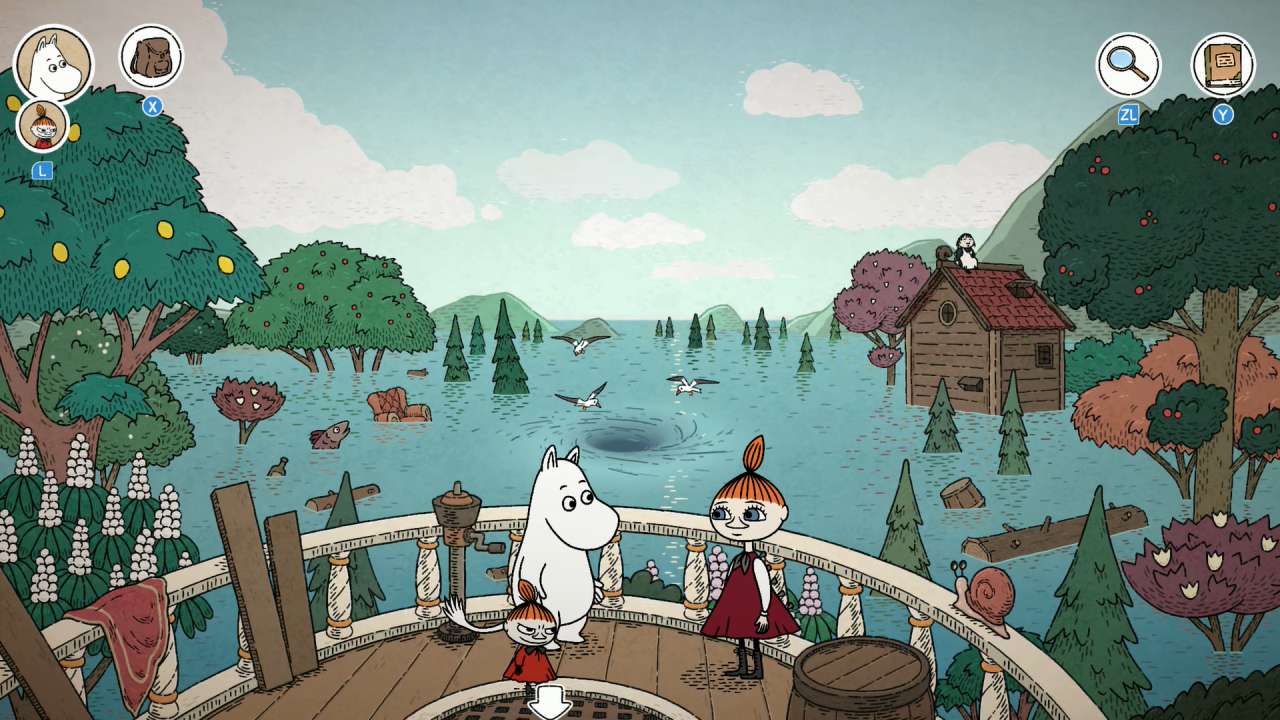
Not every game in a franchise has to follow the same mould, and a point-and-click fits the Moomins in a fairly obvious way, perhaps even more naturally than the open-world quests before it. It does have limits. As a point-and-click, it isn't doing anything you haven't seen in countless adventures over the years.
The minigames are fairly generic, the item collecting grows repetitive, and the interface doesn't always help you when you're stuck. The five-hour length makes sense for the price, but it also means the game struggles to hold your attention past a single playthrough.
You'll also wish for more of the stretches where Moomintroll and Little My split up or trade the lead. Still, the art is lovely, the cast is a joy to spend time with, and the mood stays warm from start to finish. If you enjoy the Moomins and don't mind a bit of head-scratching, it’s a good way to spend an evening or two.
Staff Writer, NoobFeed
Verdict
Moomin: Midsummer Madness is a charming, good-looking point-and-click storybook. Some puzzles frustrate, and the format isn't new, but the characters, art, and music make it worth playing.
75
Related News
No Data.