
Spirit Crossing Review
PC
A relaxing adventure that brings players together through exploration, community building, and small acts of kindness.
Reviewed by Maisie Scott on Nov 18, 2026
Spirit Crossing is Spry Fox's latest cozy MMO, the makers of Cozy Grove. Originally developed in collaboration with Netflix as a mobile exclusive, it later expanded to PC and other platforms when the studio became independent. Cozy Grove had some familiar elements, but Spirit Crossing differs in how it incorporates multiplayer and community building with other players. There's no grand adventure, complicated quests, or constant progression.
Instead, it invites you into a world where you can take things at your own pace, make friends, and slowly build a place you can call home. When you first walk into Spirit Crossing, you might notice some similarities to games like Sky: Children of the Light and Animal Crossing. You play as a character who is lost in the forest. You meet a spirit named Maya, and the two embark on a leisurely adventure across the Crosslands.
Along the way, you meet other spirits, do simple tasks, and slowly build your own little corner of the world with other players. There are no dramatic introductions, no major villains ready for lengthy monologues. Instead, you're greeted with beautiful surroundings, strange rectangular bears, and a world that begs to be explored.
The story is about the relationship between humans and spirits, and the Crosslands is their shared home. But magical storms have battered the region, leaving behind restless spirits and communities to rebuild. As you move forward, you'll help these spirits heal, answering their requests and bringing them happiness through music and other small kindnesses.
You'll also slowly learn their language, discover their individual stories, and earn unique items as rewards for helping them.
One of the most interesting things about the story is how the spirits are presented. They're not always evil creatures or inscrutable forces you have to vanquish. Some are involved in some rather unusual activities, including a strange candle cult and even financial affairs. There is also a spectacled spirit that is associated with something called The Cat Distribution System.
The writing has a weird but really good-natured sense of humor that gives the world its own personality. The spirits speak in a bubbly, gurgling language not unlike Animal Crossing, though this particular presentation might not be for everybody.
But you should know the story is deliberately paced very slowly; instead of letting you finish it all whenever you want, Spirit Crossing dishes it out day by day. For instance, you end your first day with a message telling the reader to come back tomorrow to continue the story. This encourages a daily routine but can be frustrating if you prefer to experience an entire storyline in one sitting. You can't speed up this process, so you'll have to wait until the next day to continue certain quests.
Spirit Crossing keeps gameplay relatively straightforward.
You will spend most of your time jumping, climbing, gliding, collecting resources, completing quests, talking to other characters, and traversing the world. You get a glider pretty quickly, and stamina limits climbing. The movement and exploration systems draw inspiration from games like The Legend of Zelda: Breath of the Wild and Genshin Impact, especially in how characters move between different heights and explore multi-layered environments.
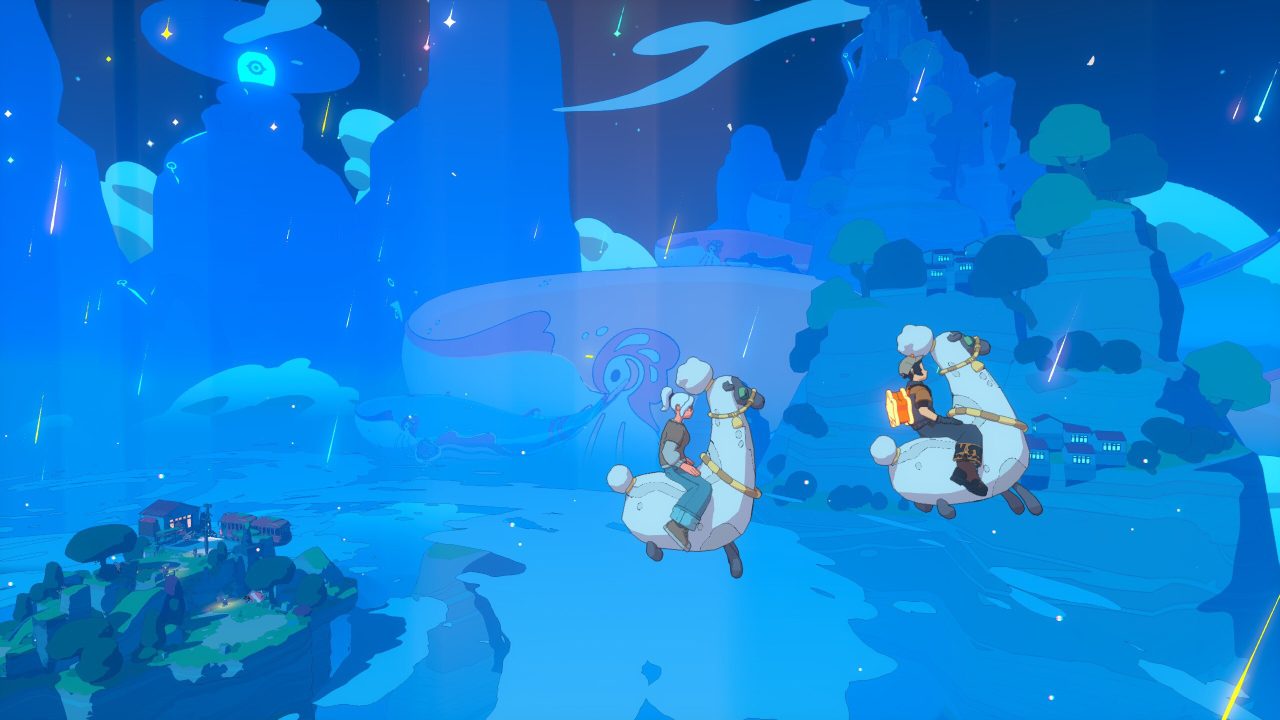
That said, don't expect combat or traditional action mechanics. You will not fight enemies on your journey, and there is no health bar. You are a guest in the Crosslands, along with other humans, spirits, and rectangular bears. It is all about exploring, gathering resources, helping people, and enjoying the surroundings.
The world is made up of different zones, like the main village, the wilderness, and your home. You can use the trolley to travel between these places, and teleportation helps you return to certain areas. The wilderness is especially interesting, as it changes every three real-world days.
While its geography is fairly consistent from cycle to cycle, the activities and events that occur within it can vary. You might encounter a bear called Rudy who erects cardboard targets that gamers can destroy for rewards. Some other day, that would be substituted with a running contest.
Another important part of your daily routine is gathering resources.
You gather materials such as wood and stone using various tools; you can upgrade to get more resources. Gathering isn't entirely automatic, either. When the moving circles line up, press the right button to get the most materials. It's a simple mechanic, but the different circle sizes make even repetitive activities a little more engaging. You also have a daily limit on wilderness gathering, so you'll have to wait until tomorrow to gather more. Fortunately, you won't destroy living trees to get wood, since you can only gather it from existing trunk stumps.
Much of your progression also involves helping lost spirits. Depending on what they want, you may have to play music, provide snacks, complete small quests, or deliver messages to other spirits. You help them, learn more about who they are and their stories, and earn gifts. Each NPC has unique likes, dislikes, and specialties that determine what gifts they want. Some are for completing collections; others are for music, clothes, hairstyles, and various shops.
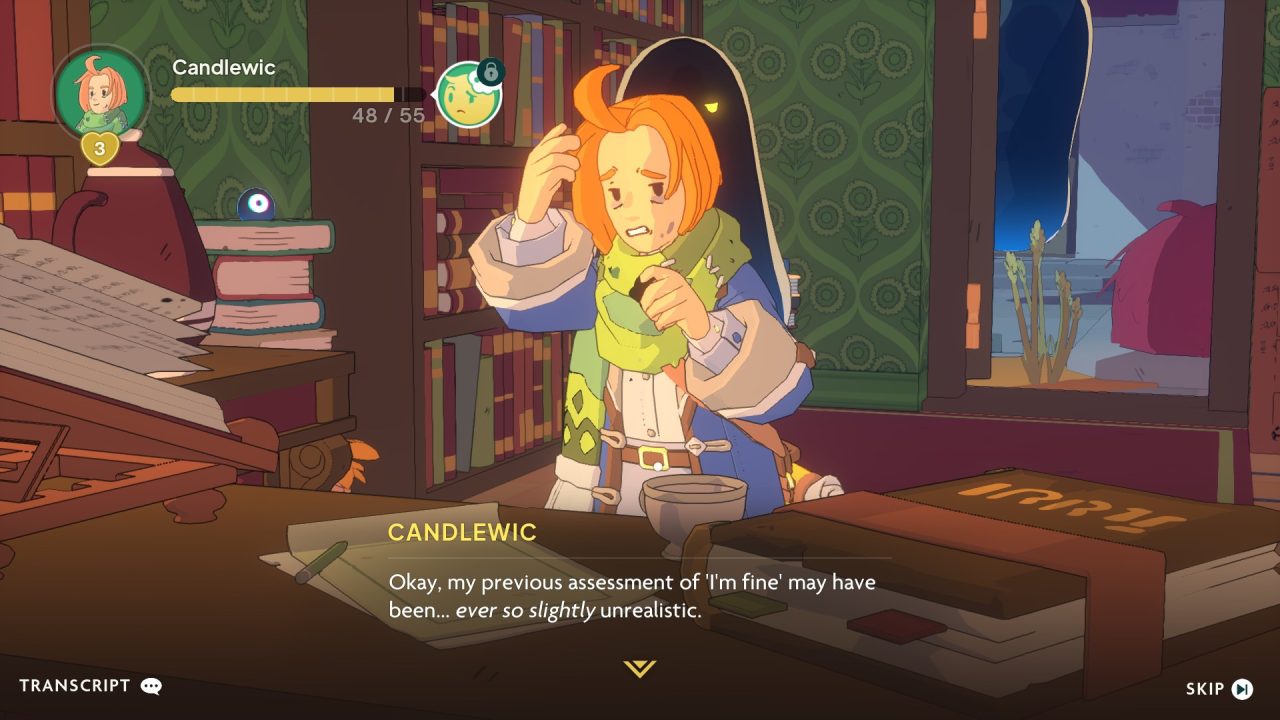
In addition to collections, you can always find new flowers, fish, and other forageable items throughout the world. Bring these finds to Candlewic, the librarian, to add to your collection and earn coins and Beacon Sparks. You can use these currencies to buy different things in the game. There's also a home prestige system that rewards you for decorating your house. You can submit your house for evaluation, and the more effort you put into decorating, the more prestige you'll earn.
You'll also have your fluffy bear roommate, Roomie, in your house.
Furniture, plants, rugs, lamps, and other decorative pieces can make your space feel more personal. Another fun part of the experience is customizing your character, with hundreds of options for hairstyles, dyes, outfits, and expressive emotes. You start with basic clothes and hairstyles, but as you progress, more outfits rotate through the shops.
But the multiplayer experience is undoubtedly the biggest draw. Spirit Crossing wants you to engage with other players, not just use them as window dressing. Other players look like shadows at first, and a high five lets you see their real appearance and colors. You can choose whether to interact with strangers, so if you enjoy exploring alone, you don't have to engage in any social activities.
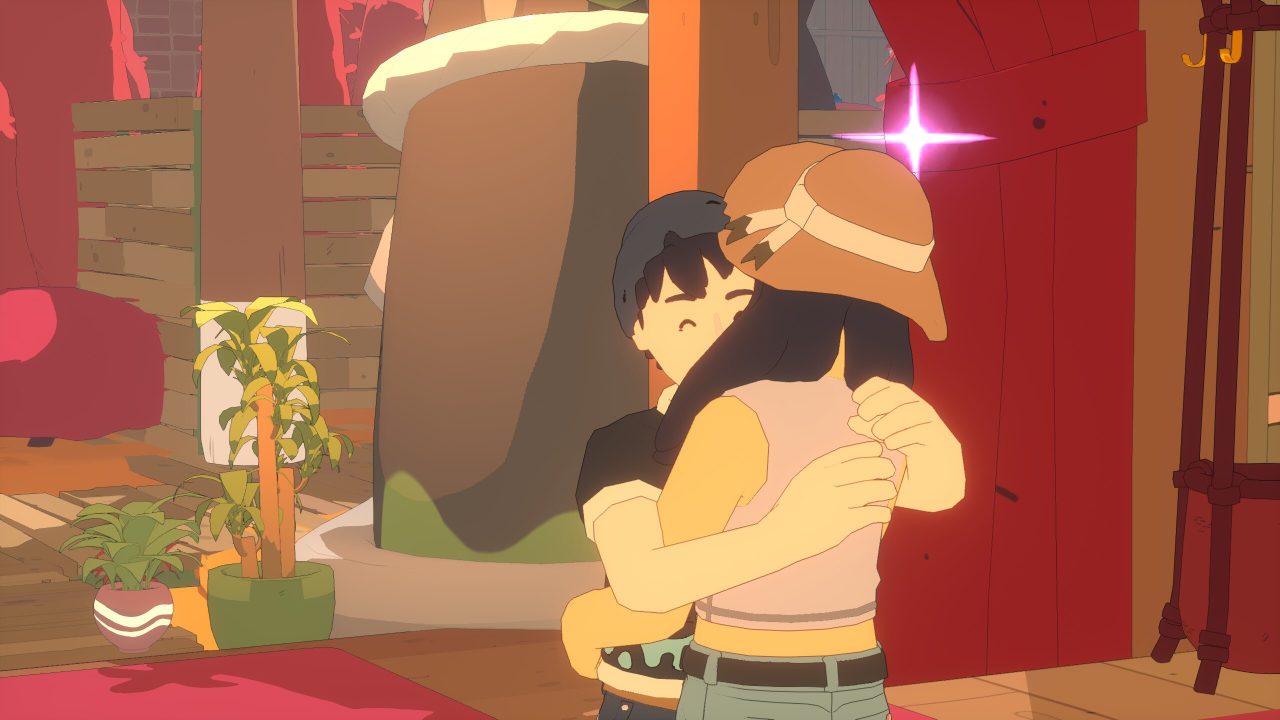
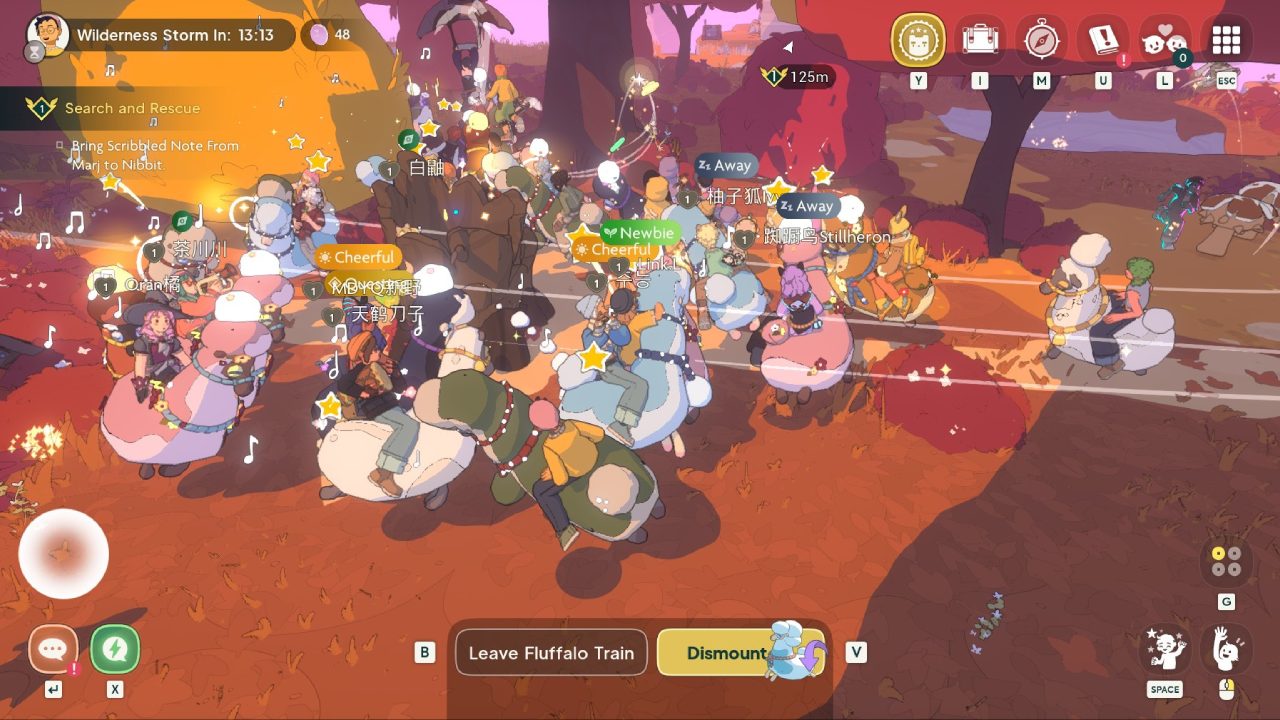
It also has its own progression system for building friendships. You can increase friendship levels with other players, trade gifts, and unlock more interactions, such as hugging and holding hands. You can visit each other's houses, leave notes in visitor books, go fishing together, take part in tournaments, play music, and even ride Flufffluffs on a train. These activities shrink the world a little, especially when you start seeing the same players in your everyday adventures.
The way stations take this community to the next level. Each player is assigned to a realm, basically the server they play on, and can eventually join a way station. These are community spaces where players can share, build together, decorate, and maintain their surroundings. As your community grows, you can contribute resources, vote on additions, and gradually unlock new responsibilities.
Players start as initiates and move up through neighbors, decorators, architects, and finally elders.
You also get a personal starter plot to express yourself with personal creations. The space also provides you with the liberty to experiment if you want to build a small shop, an art gallery, or just make something decorative. You can place objects that other players can use, such as ladders, fans, and trampolines. These additions can really help others get through tough times and make what could be a tough road much more enjoyable.
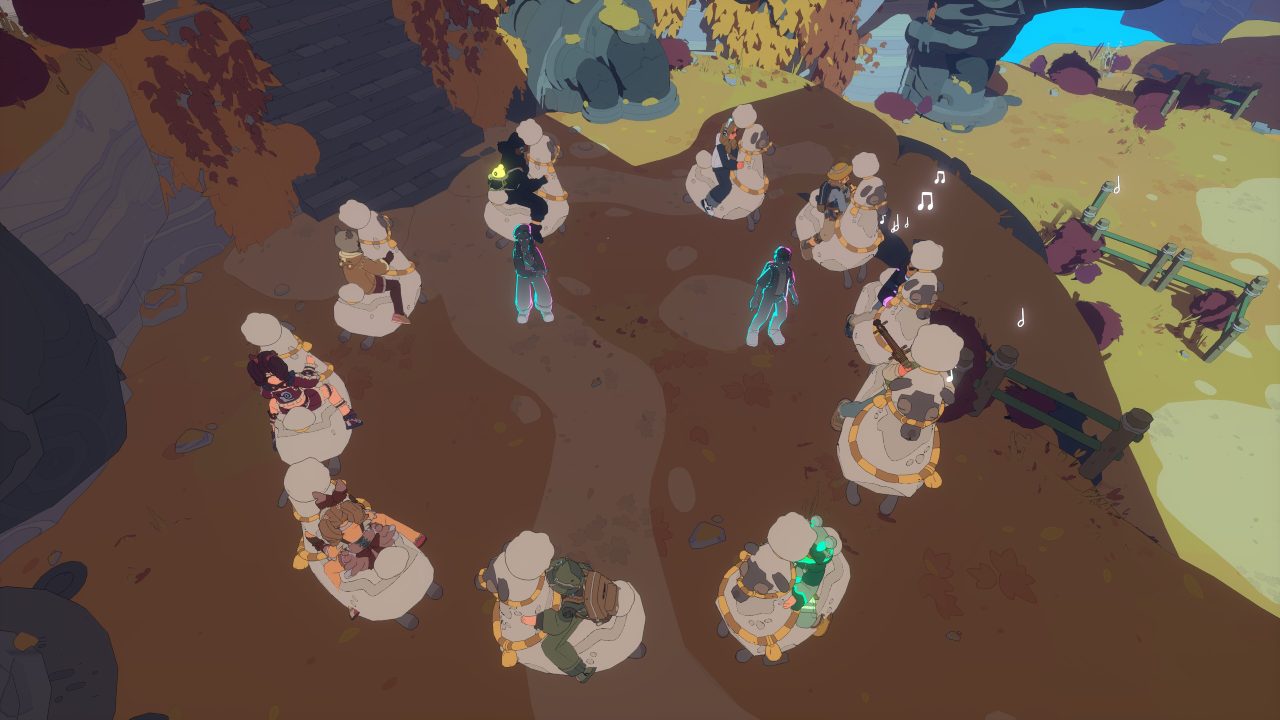
Another cool multiplayer feature is storms. Small storms appear throughout the wilderness, temporarily reducing stamina and preventing some regular activities. You can keep looking, but it becomes harder. Alternatively, you can find a nearby campfire where other players gather, play some music, and wait out the storm. These moments are a chance to chat with people you don't know and maybe make some new friends. Once the storm is over, you will see rainbow beacons in the sky, and you can run around and collect them all.
Spirit Crossing will also have seasonal events, which the developers plan to bring back each year. The Feast of Bears, for example, celebrates humans and spirits surviving another year as the bears prepare for hibernation. At your way station, you can set up offering tables, light candles, dance, eat together, and contribute to a festival fund to earn rewards. The event also features special decorations and clothing, giving you more reasons to attend.
Spirit Crossing has a unique hand-drawn art style that sets it apart from many other cozy games.
It doesn't use pixel art, but it also isn't going for a traditional 3D look. Instead, its environments and characters have a distinct illustrated look, giving the Crosslands plenty of personality. The rectangular bears and odd spirit designs may seem strange at first, but the overall presentation becomes more appealing as you spend time exploring the world. Character customization and home decoration also contribute to the visual style, letting you give your character and surroundings a more personal identity.
Sound is a major part of the overall experience, especially given the game's focus on music. Players also interact with others by playing instruments together. The story also involves restoring happiness through music. Even the communal campfire moments during storms encourage players to come together and enjoy music while they wait for the weather to clear. It isn't a game that relies on non-stop action or dramatic sound sequences; instead, these musical interactions are meant to enhance the peaceful atmosphere.
Of course, Spirit Crossing isn't without its flaws. The biggest problem is the pace. The daily structure encourages you to come back regularly, but waiting a full day to continue some quests can break the experience. There are also a limited number of activities, which can get repetitive when you spend multiple days exploring the same areas, gathering resources, and completing similar requests.
There's no offline single-player mode either, so you'll need to stay connected to the internet at all times to play. At launch, there is no cross-progression, so you will have separate characters and save files if you buy the game on multiple platforms.
An optional monthly membership called the Cozy Club is also available for $9.99 USD a month (recurring) or $10.99 for a single month.
It adds more customization options, enhanced weekly gift claims, more slots for clothing rotation, more slots for saving outfits, and more shop deals and errands. Notably, the developers have assured that exclusive clothing and decorations will not be locked behind the membership. When you buy the game, you also get 30 days' worth of Cozy Club access, giving you time to decide whether the extra benefits are worth paying for.
Spirit Crossing knows what it wants to be in the end. It doesn't try to compete with traditional MMOs full of hundreds of hours of required content, challenging combat, or endless progression systems. Instead, it focuses on creating a safe space where you can do little things, make friends, and be part of a community. The daily restrictions may frustrate players who want to progress faster, but they also mean you can walk away and come back whenever you want.
If you liked Cozy Grove, you'll likely enjoy the familiar concepts on a much larger scale. Those who enjoyed Sky: Children of the Light and want something a little more homely and community-oriented may find what they're looking for here, too. The best moments are usually those that arise from unexpected encounters with strangers, someone who helps you through an obstacle or just returns a friendly gesture.
Spirit Crossing doesn't feel like an MMO; it feels more like an online diary you share with your neighbors. The slower pace, community activities, and charming world make it a fun escape from more demanding games. Its sparse content and limited story progression leave much to be desired, but there's something genuinely refreshing about an experience built around cooperation rather than competition.
Editor, NoobFeed
Verdict
Spirit Crossing is a great community-oriented MMO where creativity and friendship come first. Repetitive actions and a sluggish pace drag it down, but its inviting world makes it worth exploring.
71
Related News
No Data.