
The Last Caretaker Review
PC
If you want to rebuild humanity one spark, one seed, and one wild night at a time, this is the game for you.
Reviewed by Maisie Scott on Nov 17, 2025
A small, dedicated group of people worked on The Last Caretaker. They are interested in telling stories based on environments, creating atmospheres, and staying alive. This project isn't going in the way that most survival games that focus on crafting do. Instead, it focuses on something much more unusual: not just staying alive, but also rebuilding the future of humanity.
It enters the genre with a daring idea: an AI caretaker rises alone in a world that has been flooded. It then builds a meaningful story around purpose, responsibility, and the fragile chance of rebirth. The game is still in early access, but the foundations shown so far reveal a vision that has been shaped through iteration, community feedback, and a world that continues to evolve.
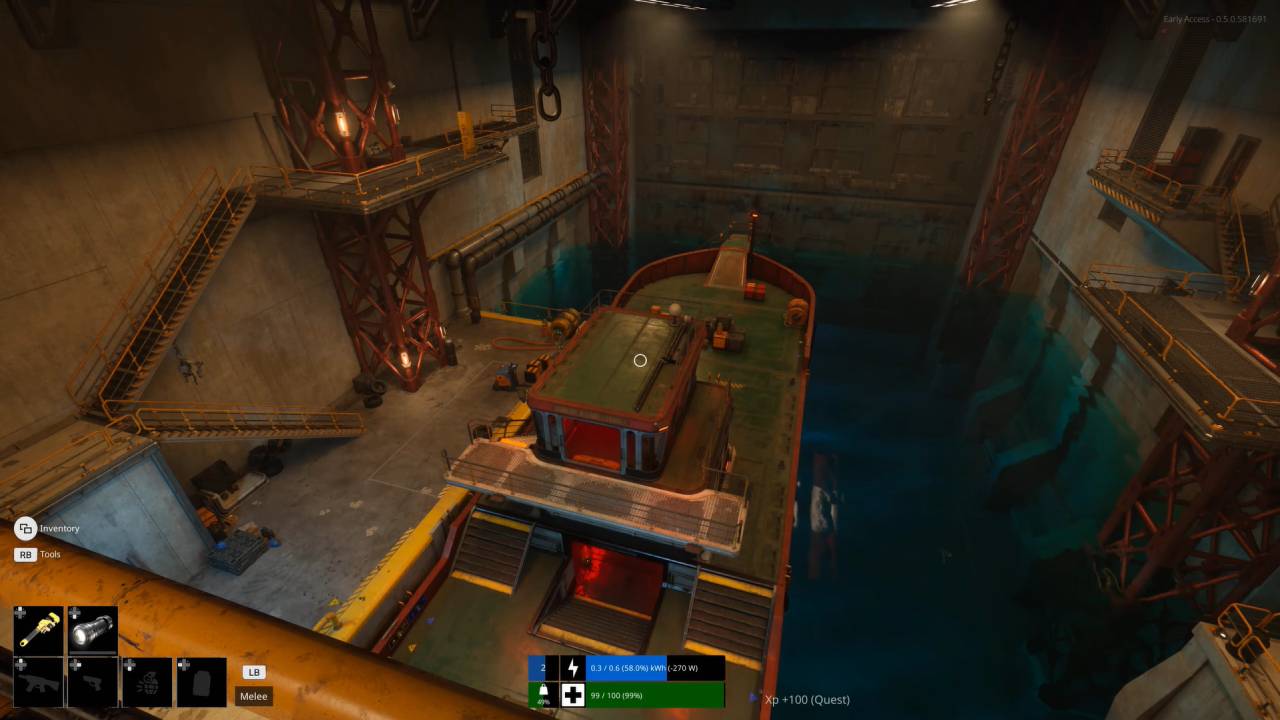
In The Last Caretaker, you play as an AI that wakes up alone in the ruins of an abandoned dock facility long after people have left Earth. The oceans cover the planet, and the remains of civilization are buried, spread out, and rotting. But your life isn't just about wandering through ruins to stay alive. Your only goal is to keep things alive and bring them back to life.
There are "human seeds" all over the world. These are genetic capsules that hold the last hope of life. Your job is to restore power to old buildings, collect memories and nutrients, bring these seeds back to life in the Lazarus complex, and get them ready to be launched from old rocket infrastructure that is still floating above the waves.
The story unfolds through details about the environment, like faded posters, forgotten photos, strange logs, and pieces of human struggle that were left behind. Every building you fix and every outpost you visit that was forgotten adds to the feeling of a world that fought hard against a flood that couldn't be stopped.
The story doesn't have cutscenes or big dumps of information; instead, it lets you find out things at your own pace.
Everything is connected, and things are often hidden on purpose to make you look closely and put together meaning from bits and pieces. It rewards curiosity and patience, making the world feel like it has been lived in, even though there are no people left.
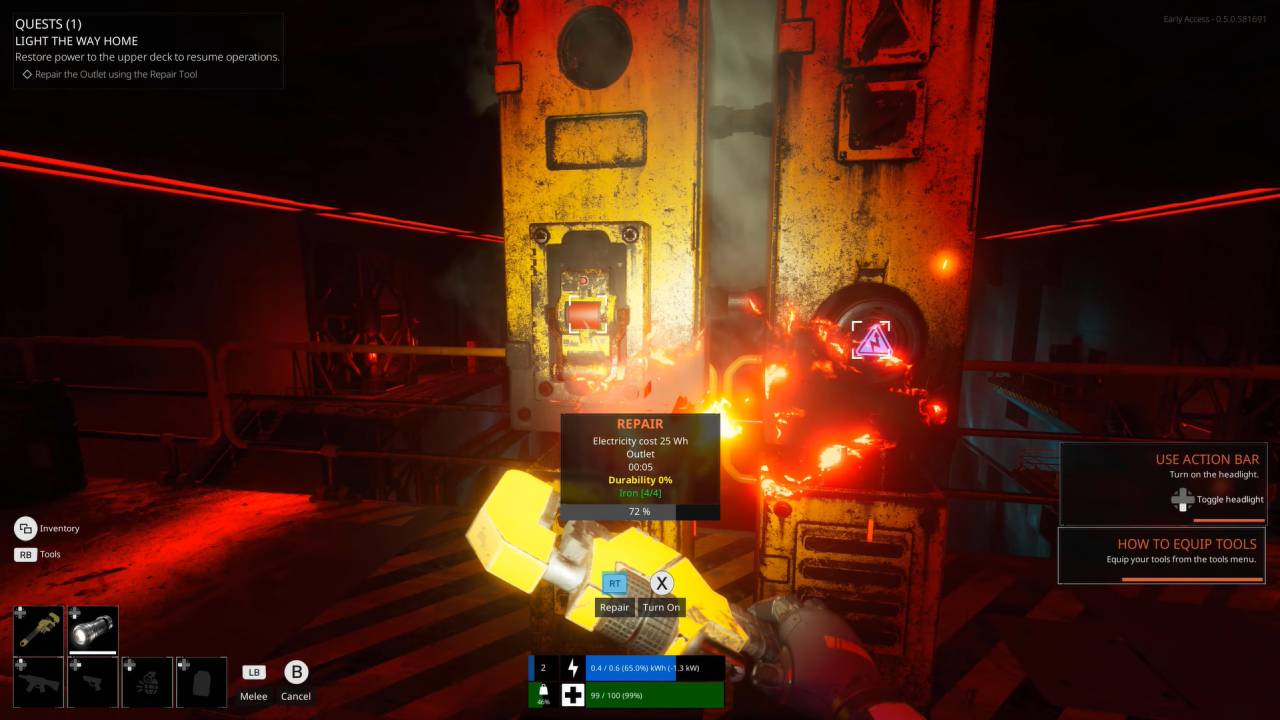
In The Last Caretaker, everything is based on systems, which are sets of mechanics that provide a way to solve problems. At first light, it's dark and quiet, and you have to restore power by plugging in cables and turning on machines that have been turned off. The cable system is the most important part of the game.
You are always plugging and unplugging things, rearranging them, and sending electricity to different parts of the building to bring them back to life or get your tools working again. It feels good, can be messy, and is meant to be hands-on, which stresses your role as a fixer in a world where nothing works unless you make it work.
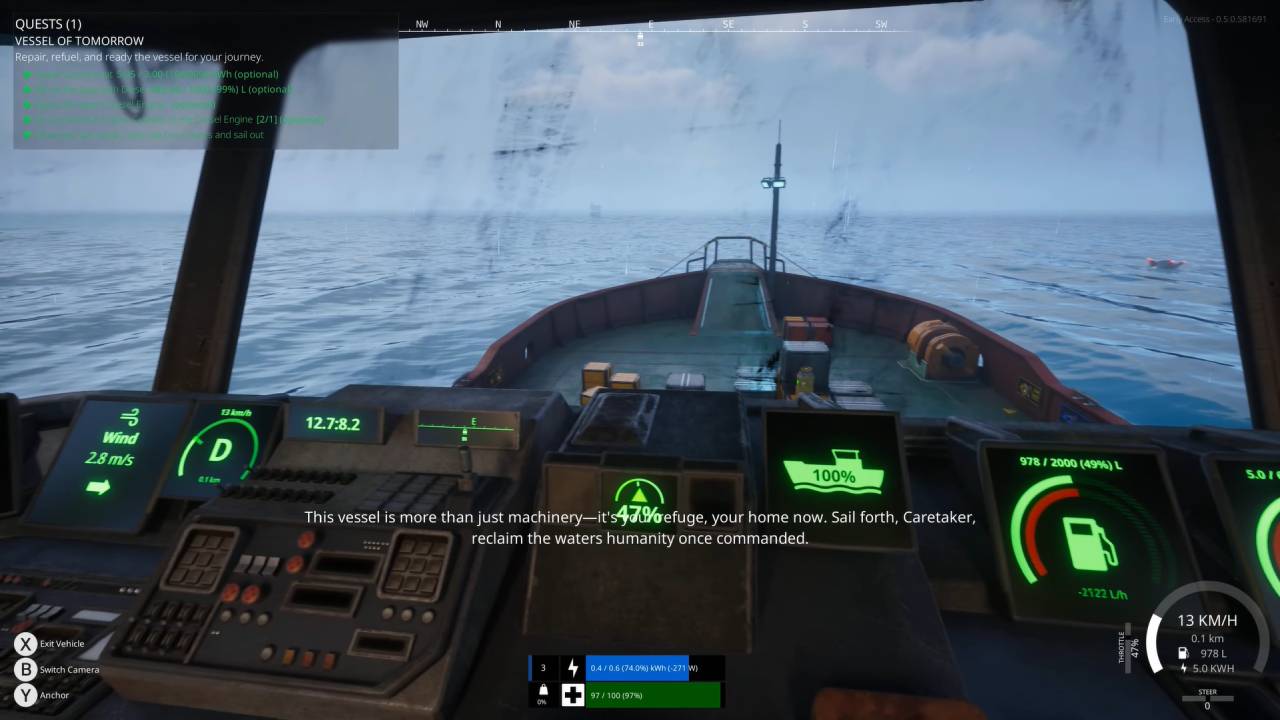
You travel mostly by tugboat, which you have to maintain, fuel, and keep in good working order.
When it works, it becomes the most important thing in your life. This vessel is where everything you make, store, and build ends up. It's always hard to take care of its diesel engine, electrical grid, and space. Because the world is made up of islands that are far apart and buildings that are underwater, you need to plan, prepare, and balance your resources carefully before you travel.
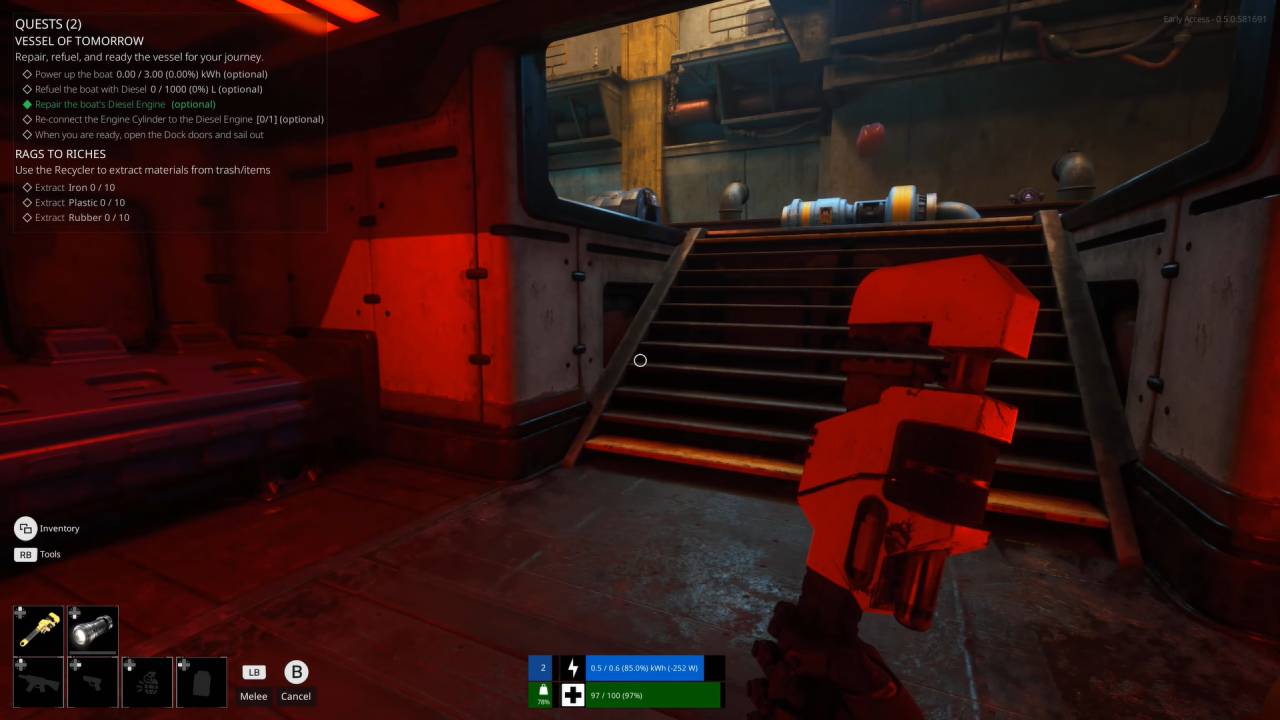
Scavenging is now very important. You can collect almost anything in the game, like metal scraps, rubber, batteries, cables, furniture, and tools. A recycling machine turns all of this junk into raw crafting materials instead of taking up space in your inventory.
As you explore and gather resources, you earn skill points that let you gradually unlock fabrications, upgrades, structures, and tools. This system helps you keep making progress without giving you too many recipes at once.
Your skills get better as you level up. Your boat's carrying capacity goes up, heavy items become easier to handle, and new crafting options completely change what your boat can become. Your base gets stronger and more independent the more of the world you restore. In the end, wind turbines, solar panels, purifiers, and generators turn your lonely life into a floating workshop that lasts.
Exploration takes time, thought, and is worth it. There are a lot of secrets in outposts. Some hold resources, others hide upgrades, and many tell you more about how Earth fell and why you were made. You should open every drawer, climb on top of every broken building, and look in every corner. Not speed, but thoroughness is what makes you happy.
In The Last Caretaker, most of the puzzles have to do with routing resources, managing power, crafting logic, and finding your way around the world. The cable mechanics are like physical puzzles because you have to figure out how to share limited electricity between systems that can't all run at the same time.
Machines fight for power, and the way your boat is set up inside affects how well you can use it.
Combat exists, but it never takes over the focus on survival. At night or in certain abandoned buildings, hostile robots and creatures that come out at night can be found. Choices matter: fight or run away, waste resources or save them. You have guns, grenades, melee weapons, and defenses that you can set up.
Guns work well, but they can feel stiff at times. When you aim with a scope, you get stuck in animations until you manually undo them. The animations can be simple, and the controls can be a bit clunky, which makes each fight feel more like a calculated risk than a fast-paced action sequence.
The way enemies act changes with each patch in the early access stage. Sometimes the threats seem too strong, and other times they seem too weak after balance changes.
The developers are always trying to make the game harder based on feedback, which is why the state keeps changing.
The depth of the gameplay is directly related to XP progression. You get better at building, crafting, and making your life easier. This system makes scavenging worth it because every resource helps you grow. Your boat becomes more self-sufficient as your skills improve, which lets you go on longer, safer trips to faraway, dangerous places.
Built in Unreal Engine 5, the game delivers an impressive visual presentation. Water reflections, weather effects, day-night transitions, and environmental lighting create an atmosphere both haunting and beautiful. Despite the small size of the team, optimization is strong. The world seems very real, with rusted metal, dripping interiors, overgrown machinery, and broken docks all shown in great detail.
There are many options for making things easier to see, such as a lot of graphics settings and even a benchmark tool to help you tune performance. The art direction puts immersion first, making the flooded world feel both oppressive and peaceful.
Sound design makes the experience feel even more lonely and quiet. The creaking of metal, the howling of animals in the distance at night, the soft hum of working machines, and the steady beating of rain against your boat all make the world feel alive, even though it's empty. The atmosphere thrives on subtle sounds, such as buzzing wires, splashes echoing in flooded hallways, or the slow churn of your engines, signaling that you are still alive.
The sound effects in combat are useful but not over the top. The environmental soundscapes, on the other hand, are what really make you feel something. Noise shapes your journey: when the world is quiet, you feel uneasy; when storms roar, you need to stay alive.
The Last Caretaker differs from other survival games in that it provides players with a clear goal. You aren't just living from day to day; you're carrying the weight of the rebirth of humanity on mechanical shoulders. The cable-driven power system, salvage-heavy progression, and meaningful construction loop all come together to create a very atmospheric experience that values patience and creativity.
There are some rough edges in early access, like clunky building rotation, stiff weapon handling, bugs that happen from time to time, and changes in balance. But these problems are all part of a larger plan that is clearly meant to last for a long time.
The developers constantly make changes, listen to what players say, and add to the world's lore and features. The heart of the game is already beating strongly. The setting is creepy, the survival loop is interesting, and the mission is really interesting because it turns scavenging into something that makes you feel something.
The Last Caretaker is a memorable journey through a forgotten Earth that is waiting for its second chance. It is a survival game that focuses on exploration, building worlds, and interacting with your surroundings in a real way.
Editor, NoobFeed
Verdict
A survival game with a lot of atmosphere, purpose, strong systems, and beautiful world-building. There are some rough edges, but the base is strong and heartfelt. A promising early-access gem for people who like to think.
75
Related News
No Data.