
AMD FSR 4 Delivers Major Image Quality Improvements on ROG Ally X
AMD's revised FSR 4 upscaling model delivers impressive image quality improvements and performance gains across demanding handheld gaming titles.
Handheld by Tanvir Kabbo on Nov 06, 2026
AMD's latest FSR 4 version for handheld gaming devices aims to deliver significant gains in picture reconstruction without a major performance hit. The updated upscaling model is optimized for portable hardware and designed to run on devices with AMD's Ryzen Z2 Extreme architecture, such as the ASUS ROG Ally X. Early benchmarks suggest FSR 4 delivers much cleaner visuals than FSR 3 while still offering competitive performance. This could make playing demanding titles on handhelds a better experience.
AMD Introduces a Revised FSR 4 Model for Handhelds
Last week, AMD released a new driver package for the ASUS ROG Ally X, ROG Ally X20, and potentially the standard non-X model. One of its most interesting additions is a revised implementation of FSR 4. AMD initially described it as FSR 4 Lite during RDNA 2 testing, but has clarified that the RDNA 2 version is separate from this handheld-focused implementation.
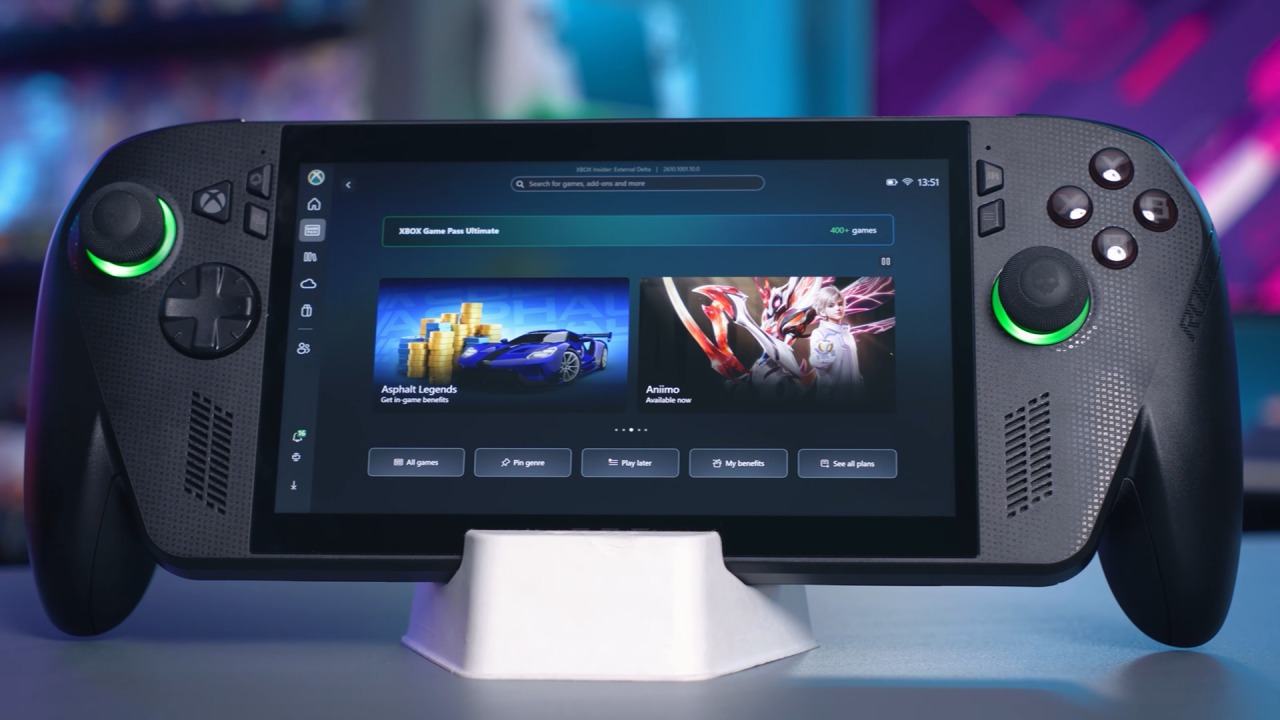
With AMD expanding its presence in the handheld gaming market, a capable upscaler has become increasingly important. FSR 3 struggles with image quality when upscaling to 1080p, making it less appealing on handheld displays. The new FSR 4 model aims to address these limitations while keeping computational requirements manageable.
Resident Evil Requiem Shows Up to 35% Performance Gains
Testing on the ROG Ally X20 at 25W used custom settings based on the PlayStation 5 equivalent configuration. We reduced high settings to normal and disabled computationally demanding hair strands. The results show about 35% higher performance than native 1080p rendering, bringing the game closer to 50fps. Even FSR 4 Quality Mode delivers approximately 19% additional performance.
Compared with FSR 3.1.5 Quality Mode, which provides around 22% improvement, FSR 4 delivers approximately 19%. However, its biggest advantage is image quality.
Resident Evil Requiem exposes FSR 3's weaknesses with fine details and subpixel information. Distant fencing and smaller environmental structures frequently lose definition. FSR 4 Performance Mode handles these elements considerably better, producing a more coherent image despite using a lower internal resolution.
FSR 4 Performance Mode Outperforms FSR 3 Quality Mode
The image quality comparison uses a 1080p output resolution. FSR 3 Quality Mode starts at 720p, while FSR 4 Performance Mode uses just 540p. Despite having fewer source pixels, FSR 4 produces noticeably better results.
A further helpful parallel can be made with the fast-motion and disocclusion sections of Horizon Forbidden West. Moving Aloy's spear reveals hidden environmental data. This is a test of the upscaler's capacity to invent new information.
FSR 3 has shimmering effects, unstable details, and imprecise picture restoration. FSR 4 handles these circumstances much better, enhancing line completeness and minimizing ringing. The overall picture is clearer and more stable from scene to scene.
The difference is particularly impressive because FSR 4 Performance Mode uses 43.75% fewer pixels than FSR 3 Quality Mode. Reconstructing 1080p from 540p instead of 720p makes the image-quality improvements even more significant.
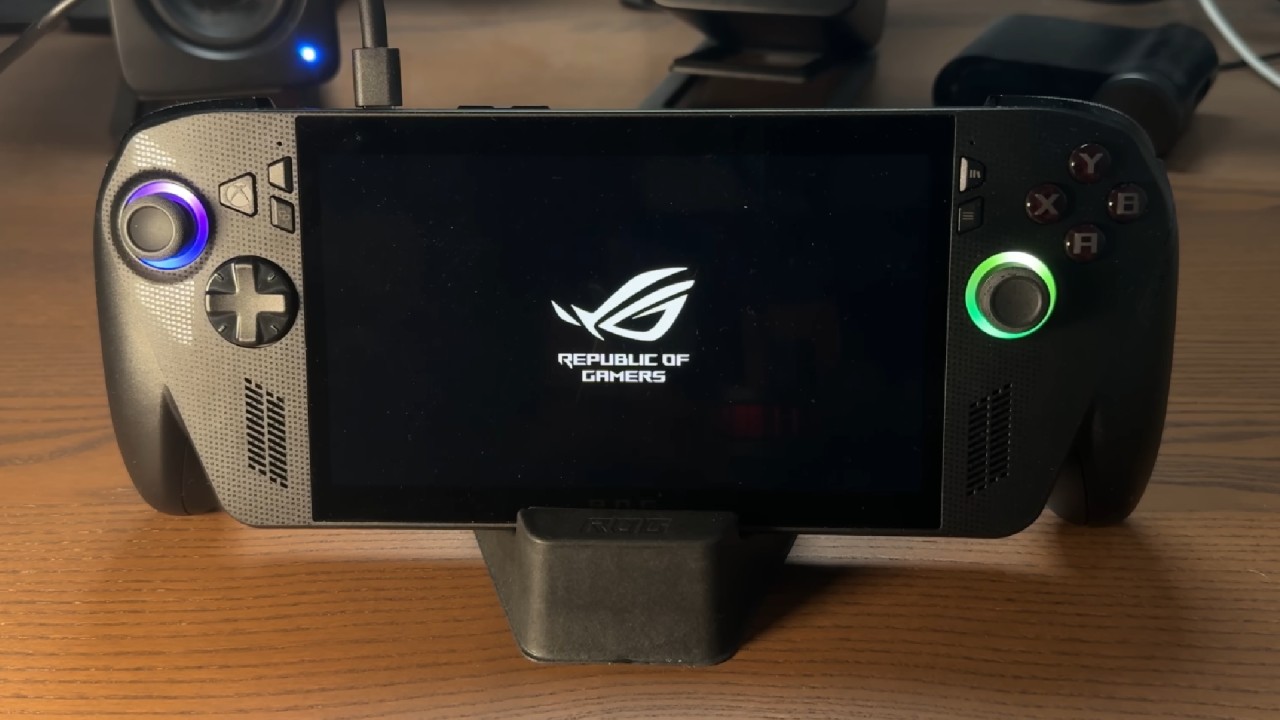
Crimson Desert Delivers Up to 41% Performance Improvement
Testing also included Crimson Desert at 35W, using settings equivalent to the PlayStation 5 Performance Mode configuration. Running natively in 1080p really taxes the handheld, and the frame rates take a hit.
With the FSR 4 Quality Mode, you get about 25% more performance, and with the Balanced Mode, about 31–32%. Performance Mode delivers the most boost at about 41%. The game nevertheless still runs under 30 fps. Interestingly, FSR 4 Quality Mode offers similar performance uplifts to FSR 3 Quality Mode, albeit with greater image quality.
Z1 Extreme Compatibility Remains a Concern
A big downside is that there is no driver support for Ryzen Z1 Extreme devices. It's a shame they aren't compatible, as these handhelds are still rather capable. More current ROG Ally owners could enjoy the technology with broader support.
AMD is said to have cut the model size by almost half compared to the original FSR 4 model, making it better suited for systems with lower computational power.
Overall, AMD's implementation seems good for handheld gaming. This is a huge bonus for Ryzen Z2 Extreme devices, delivering performance comparable to FSR 3 with much better reconstruction quality. It will be interesting to see how much this technology benefits AMD's handheld ecosystem as more Z1 Extreme support and future upgrades roll out.
FAQ
Q. What is AMD FSR 4 Handheld?
A. AMD FSR 4 Handheld is an optimized version of AMD's upscaling technology designed specifically for handheld gaming devices. It improves image reconstruction while maintaining competitive gaming performance.
Q. How much performance improvement does FSR 4 deliver on the ROG Ally X20?
A. FSR 4 delivers approximately 35% higher performance in Resident Evil Requiem and up to 41% improvement in Crimson Desert, depending on the upscaling mode.
Q. Does AMD FSR 4 Handheld offer better image quality than FSR 3?
A. Yes. FSR 4 provides significantly better image reconstruction, reducing shimmering, unstable details, and visual artifacts. It can also produce cleaner 1080p images while using a lower internal rendering resolution than FSR 3.
Q. Does the new FSR 4 implementation support Ryzen Z1 Extreme handhelds?
A. Currently, the new handheld-focused implementation does not appear to have official driver support for Ryzen Z1 Extreme devices. Broader compatibility has not been confirmed by AMD.
Senior Editor, NoobFeed
Latest Articles
No Data.