
Gigabyte RTX 5050 Gaming OC Review: Ray Tracing and DLSS 4 at 1080p
Overview of Nvidia Frame Generation latency trade-offs when balancing smooth frame rates with competitive input responsiveness
Hardware by Tanvir Kabbo on Aug 05, 2025
Nvidia GeForce RTX 5050 arrives as the most affordable member of the 50-series family, aiming to bring modern GPU features within reach of 1080p gamers. Positioned below its 50-series siblings, it offers the core technologies—ray tracing, tensor-accelerated AI upscaling, and Frame Generation—but targets a market segment that may value cost and power efficiency over raw performance.
While many will debate whether a desktop variant makes sense at this tier, its presence underscores Nvidia's strategy to broaden access to its latest architecture across both laptops and entry-level PCs.
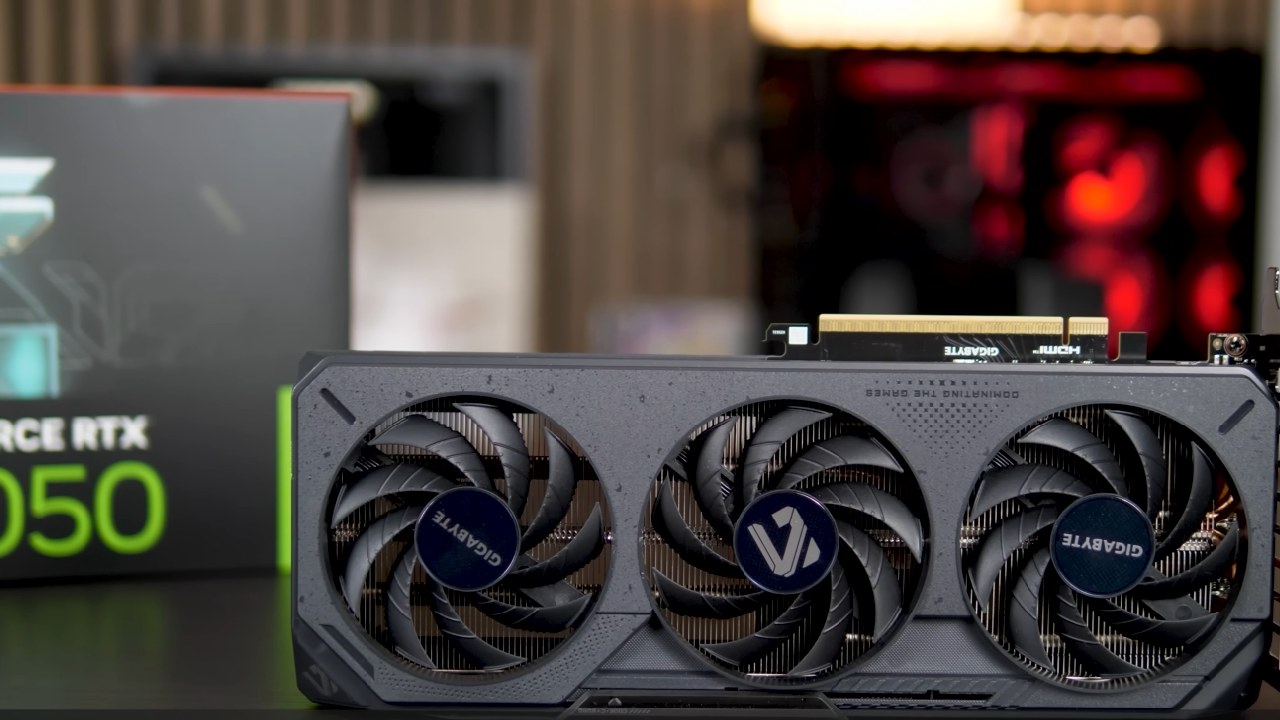
In practical terms, RTX 5050 demands only moderate power and cooling, yet it must still justify its place among both secondhand 40-series options and notebook GPUs where 1080p compromises are more accepted.
With 8 GB of GDDR6 memory and a PCIe 5.0 x8 interface, it balances feature parity with tighter hardware constraints.
The questions that remain are simple: does it deliver meaningful improvements over previous entry-level cards, and will you find its compromises acceptable in everyday gaming?
RTX 5050 Gaming OC Specifications and Design
Gigabyte's Gaming OC variant of RTX 5050 packs 2560 CUDA cores, 80 tensor cores, 80 texture units, and 32 ROPs, all built on Nvidia's new GB 207 silicon.
The memory subsystem runs 8 GB of GDDR6 across a 128-bit bus at 20 GBps, while the GPU core clocks up to 25,632 MHz out of the box—just above Nvidia's 25,572 MHz reference.
Physically, the card measures 280 mm×170 mm×40 mm and weighs 701 g. Power delivery is via a single 8-pin PCIe connector, feeding a 130 W total graphics power envelope. Display connectivity includes two HDMI 2.1b and two DisplayPort 2.1b outputs.
Gigabyte's signature triple-fan shroud keeps temperatures in check, though a dual-fan, smaller-form-factor design might better suit the card's modest heat generation.
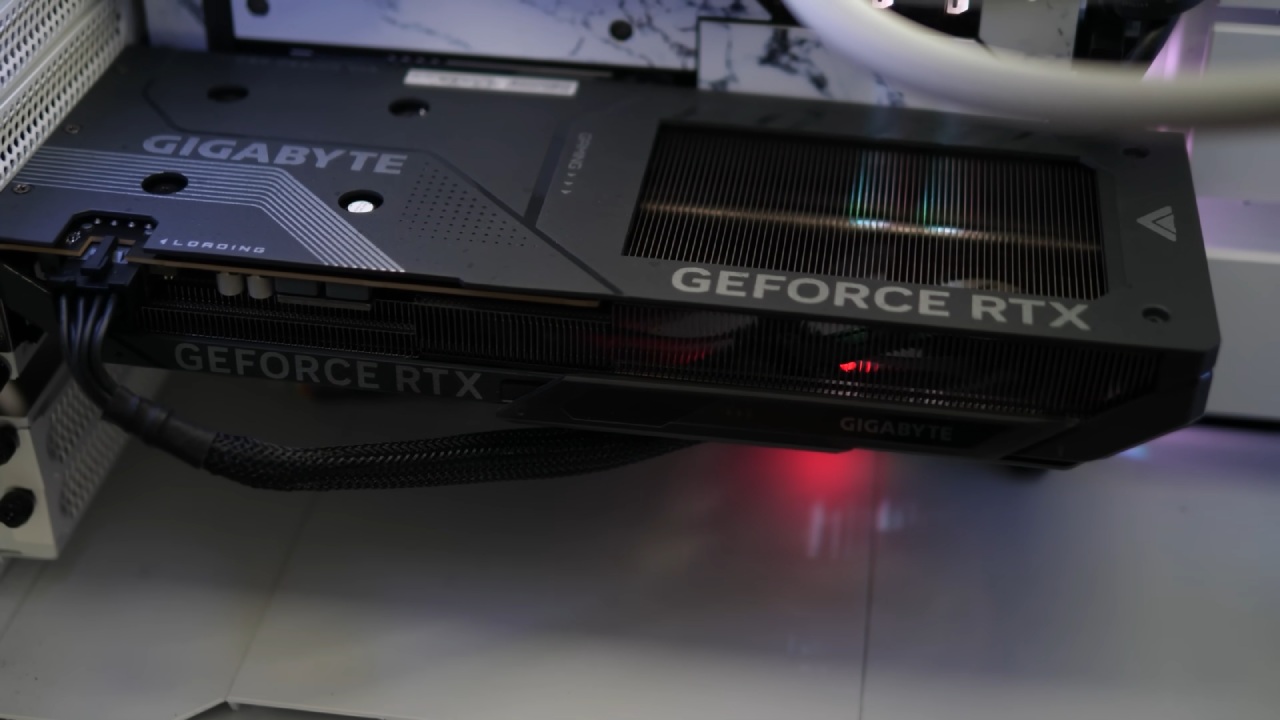
Architecture and Features
Despite its entry-level positioning, RTX 5050 retains full support for ray-tracing, DLSS 4, and Nvidia Frame Generation. It's 80 tensor cores handle AI upscaling tasks, and Frame Gen can synthesize extra frames to boost perceived smoothness, albeit at the cost of added input latency.
The move to PCIe 5.0 x8 rather than x16 does not bottleneck performance at this tier, but it highlights the card's focus on efficiency over bandwidth.
A notable absence is any onboard RGB lighting; the sliding "G" logo mechanism exposes a hidden "game on" slogan, yet there are no RGB LEDs to illuminate.
Performance Evaluation
In our 1080p benchmarks across modern AAA titles, RTX 5050 maintained mid-range frame rates on medium to high settings. Temperatures peaked around 59 °C under sustained load, and fan noise remained subdued thanks to triple-fan cooling.
Doom: The Dark Ages ran smoothly on ultra-nightmare with Frame Gen disabled, showcasing the card's potential in less demanding engines.
Cyberpunk 2077 required aggressive DLSS and ray-tracing adjustments to sustain playable frame rates, and occasional input lag crept in when Frame Gen was enabled.
At 1440p, only older or less GPU-intensive titles remained viable, with games like Assassin's Creed: Shadows dipping below 60 fps unless settings were turned to medium and DLSS engaged.

Key Takeaways
With just 8 GB of GDDR6, future-proofing is limited, and secondhand RTX 4060 or 4070 cards often offer more memory and higher raw performance for similar budgets.
If you insist on a new GPU and accept medium-quality visuals at 1080p, RTX 5050 will suffice, especially if you value Nvidia's latest AI features.
However, anyone seeking longevity or higher-resolution ambition should weigh the higher-tier options before committing to this entry-level 50-series part.
Check Our Other Articles:
- GeForce RTX 5090 Unleashed: Is NVIDIA's New Flagship the Ultimate 4K Gaming GPU?
- NVIDIA GeForce RTX 5080 Review (2025): Still A 4K Gaming Powerhouse?
- RTX 5090 Performance Testing In GTA 5 – 1080p, 1440p, and 4K Max Settings Benchmark
- NVIDIA RTX 5070 Review: Mid-Range Muscle or Marketing Hype?
- RTX 5070 Ti Review: Performance, Thermals & Power Efficiency Tested
- ASUS ROG Astral RTX 5090 OC Edition Review: 32GB GDDR7 & 4K Gaming Benchmark
- ASUS GeForce RTX 5090 LC Liquid Cooled GPU Review: Unmatched Silence & Speed
- MSI GeForce RTX 5090 32GB SUPRIM SOC Review: Power Efficiency, Cooling, and Gaming Performance
- INNO3D RTX 5060 Ti 16 GB X2 Review: Gaming Benchmarks, Temps, and Power Efficiency
- HP Omen 45L Review: RTX 5090 Performance, Thermals, and Value Analysis
- ASUS TUF Gaming GeForce RTX 5060 Ti Review: DLSS 4, Power Efficiency, and Gaming
- ASUS Prime RTX 5060 Ti OC 16GB Review: DLSS 4, Ray Tracing, & Thermals Tested
- NVIDIA GeForce RTX 5060 Review: Specs, Gaming, and Cost per Frame
- MSI GeForce RTX 5090 GAMING TRIO OC Review: A Monster Power GPU
Senior Editor, NoobFeed
Latest Articles
No Data.