

Intel Core Ultra 7 270K Plus vs. 285K: Gaming, IPC and Overclocking Compared
Strong IPC improvements, higher efficiency cores, and better memory support deliver noticeable gains in gaming and productivity workloads.
Hardware by Katmin on Apr 01, 2026
The Intel Core Ultra 7 270K Plus is the straight replacement for the Intel Core Ultra 7 265K in the mainstream lineup. The next generation of Intel CPUs keeps pushing performance and efficiency further.
It promises to offer great value while competing closely with higher-tier processors by improving core configuration, memory performance, and overclocking capabilities.
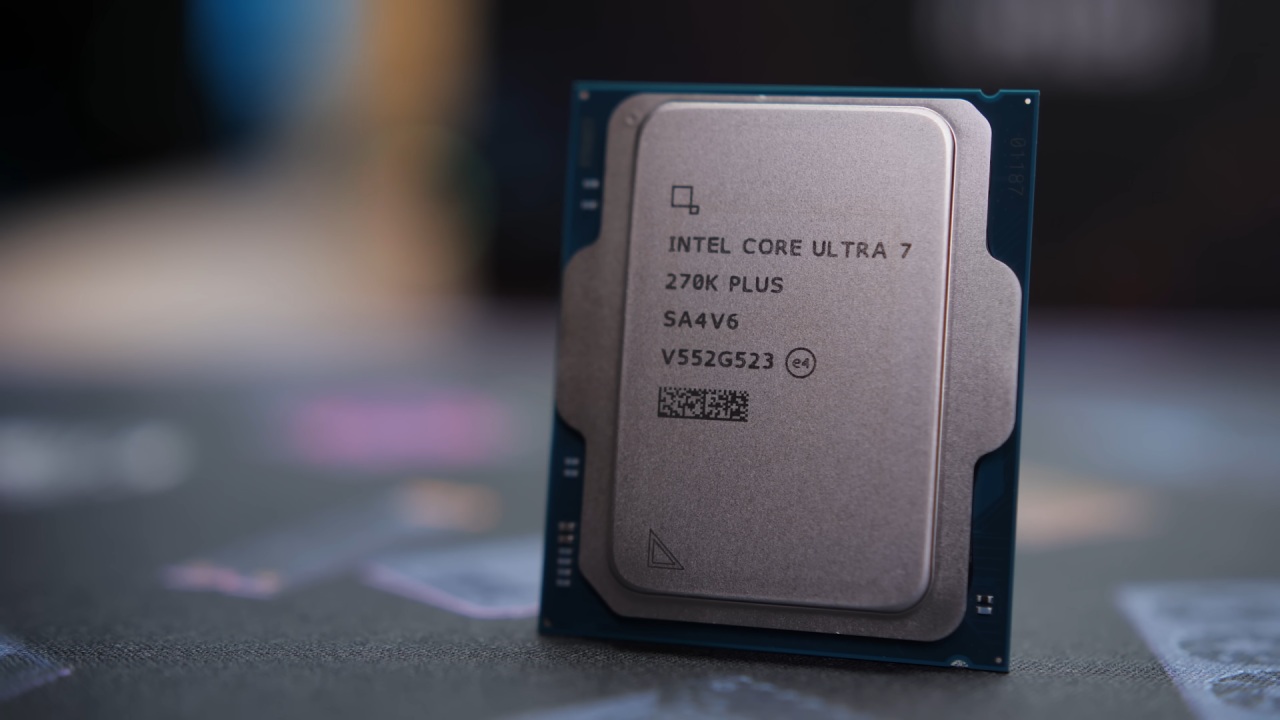
Overview and Specifications
We are looking at the Intel Core Ultra 7 270K Plus, which is fresh new. It replaces the Ultra 7 265K and has four more efficiency cores than the last one. The CPU also features a 900MHz faster link between the CPU and memory controller, reducing system latency and improving PC gaming performance, at least according to Intel’s claims, which we will validate through testing.
We also found during testing that the CPU has a stronger IMC. This is supported by the specifications, which say that it has native support for DDR5 7200MHz memory and early support for four-rank CUDIMM modules, dependent on the motherboard's compatibility.
The CPU has a 125W TDP, which is the same as the one before it. It also comes with the Intel Binary Optimization Tool (IBOT), which makes IPC work better than the previous generation.
The CPU is designed for the LG1851 Z890 platform, the same as its predecessor. Compatibility is achieved through a BIOS update, and in our case, the latest BIOS on the Hero motherboard worked perfectly. The Z890 platform provided stable power delivery and consistent overclocking behavior across multiple boards we tested.
Test System Configuration
We used the Asus Hero Z890 motherboard with the latest CPU. We used a 5090 GPU for graphics and GSkill RAM running at 6000MHz XMP for stock testing to start with. We pushed the memory to 8400MHz during overclocking. The Atmos 2 version of the 360mm AIO from Cooler Master took care of the cooling.
For stock testing, we kept everything completely default, including power limits, with only XMP enabled. We rebooted and ran the benchmarks without any manual tuning to ensure fairness and consistency.
Stock Performance Comparison
To create a more meaningful comparison, we tested the new Ultra 7 270K Plus against the Ultra 9 285K rather than the 265K. Both CPUs share the same core configuration due to the additional efficiency cores in the 270K Plus, making it a strong matchup.
We observed around a 1% improvement in temperatures with the new CPU under similar cooling conditions. Performance results showed consistent gains across most benchmarks.
In Blender, performance improved by 4.46%. R23 single-core saw a 1.17% increase, while R23 multi-core improved by 3.74%. R24 showed a 0.6% gain. Fire Strike Physics improved by 4.7%, and 3DMark CPU increased by 2.9%.
Gaming-related benchmarks showed mixed but generally positive results. Final Fantasy decreased slightly by 2.5%, while Superposition increased by 7.24% and Unigine Valley by 6%. Corona 10 improved by 4.36%. Overall, we observed an average performance increase of 3.2% across all benchmarks.
We ran gaming benchmarks at 1080p with medium settings to ensure the CPU remained the bottleneck instead of the GPU. This setup highlighted the CPU’s improvements more clearly.
Memory Performance and Overclocking Potential
We previously tested how memory speed impacts performance on the Ultra 9 285K and found that 8400MHz provided around a 2.5% performance increase. With the stronger IMC on the 270K Plus, we wanted to see if it could handle similar or better memory speeds.
We successfully ran 8400MHz memory with stable performance and similar latencies. Overclocking results showed that the 270K Plus reached 5.66GHz on P-cores and 5GHz on E-cores, which is 100MHz higher than what we achieved with the 285K on the same AIO cooling. The 285K required custom water cooling to reach similar frequencies.
Overclocking Performance Gains
Overclocking increased power consumption from 243W to 341W. Despite this, the 360mm AIO managed thermals effectively, with maximum load temperatures reaching 90°C in a 22°C environment, representing a 15% increase over stock heat output.
Performance gains from overclocking were significant. Blender improved by 5.9%. R23 single-core increased by 2%, and R23 multi-core saw nearly a 6% gain. R24 also improved by around 6%. Fire Strike Physics increased by 1.2%, while 3DMark CPU improved by nearly 9%.
Gaming benchmarks showed the most impressive gains. Final Fantasy increased by almost 9%, Superposition jumped by 15.1%, and Unigine Valley improved by 7%. Corona 1.3 improved by 5.5%, Corona 10 by 4.7%, and Geekbench AI showed gains of 5.4% in single precision and 5.2% in half precision, with a 2.7% increase in quantized scores.
Overall, overclocking delivered an average performance gain of around 6%, with gaming workloads benefiting the most.

Overclocked Comparison with Ultra 9 285K
We compared both CPUs at identical frequencies of 5.6GHz on P-cores and 5GHz on E-cores. The 270K Plus consumed 10% more power and ran 5.8% hotter, though this difference is largely attributed to cooling variations, as the 285K was tested on custom water cooling.
Clock-for-clock performance showed clear IPC improvements. Blender improved by 3.6%, R23 single-core by 3.8%, and R23 multi-core by 2.5%. R24 improved by 2.5%, Fire Strike Physics by nearly 6%, and 3DMark CPU by 1.5%. Superposition increased by 3.5%, Unigine Valley by 5.6%, and Corona 10 by about 1%.
Across all benchmarks, we observed an average improvement of around 3% at identical clock speeds, confirming IPC gains in the newer CPU.
Final Thoughts
We really like this CPU. It effectively performs like a 285KS but at a much lower price point. With an RRP of 299, it is significantly cheaper than the Ultra 9 285K while delivering around 3% better IPC, improved efficiency, stronger overclocking capability, and better gaming performance.
If you are considering an upgrade, you are getting a CPU that matches or exceeds the performance of a previous flagship while being easier on your budget. The combination of strong stock performance, excellent overclocking headroom, and solid gaming improvements makes the Intel Core Ultra 7 270K Plus a very compelling option.
Also, check our other hardware articles:
- AMD Ryzen 9 9950X3D Review: Setting The Standard For 2025 Gaming CPU
- Amazon Luna 2025 Review: Is Prime Gaming's Cloud Service Your Go-To For Casual Fun?
- AMD RX 9070 XT Review: AMD's RDNA 4 Champion for 1440p Gaming
- GeForce Now Ultimate: Ditching Your Gaming PC For Cloud RTX 4080 Power?
- NVIDIA GeForce RTX 5080 Review (2025): Still A 4K Gaming Powerhouse?
- Intel Core Ultra 9 285K Review And Performance Breakdown (2025)
- AMD Ryzen 7 9800X3D Review: 3D V-Cache Goes God Mode with Stunning Gaming Performance
- Intel Core Ultra 9 285K vs AMD Ryzen 7 9800X3D: In-Depth Gaming Performance and Benchmark Comparison
- NVIDIA GeForce RTX 5080 Super Performance In Cyberpunk 2077: Path Tracing & DLSS 4.0 Tested
- AMD Radeon RX 9070 XT In Cyberpunk 2077: Ray Tracing & FSR 4.0 Tested
- Intel Arc B580 Review: The $250 GPU Revolutionizing 1440p Gaming
- Intel Arc B570 Vs. B580: Value, Specs, And Real-World Gaming Performance
- RTX 5090 Laptop Vs. M4 Max MacBook Pro: Ultimate Raw Performance Vs. Battery Endurance
- Intel Arc b580 Vs. RTX 4060: Game Performance And Value Analysis
- RTX5090 Hell Is Us Demo 4K Ultra Benchmark: DLSS Vs. Native Performance Guide
- NVIDIA RTX 5070 Review: Mid-Range Muscle or Marketing Hype?
- Nintendo Switch 2 Review: Handheld Performance, Features & Value Breakdown
- RTX 5070 Ti Review: Performance, Thermals & Power Efficiency Tested
- Samsung Odyssey OLED G81SF Review 2025: Ultimate 32-Inch QD-OLED Gaming Monitor
- AMD RX 9070 Performance Review: Thermals, Clocks, and Real-World FPS
- AMD Ryzen 5 7600 Review: Best Budget Gaming CPU of 2025?
- AMD Radeon RX 7800 XT Review: RDNA 3 Power For Midrange Gaming
- Asus ROG RTX 5090 Astral OC Vs. Founders Edition: The 4K Gaming Benchmark
Senior Editor, NoobFeed
Latest Articles
No Data.