
XBOX Project Helix Could Feature 48GB Memory and 10x Ray Tracing
Project Helix could outperform the PS6 in GPU performance, but teraflops alone will not determine next-generation gaming.
XBOX by Nahe Yan on Nov 09, 2026
The next generation of consoles could bring changes to GPU performance, memory capacity, CPU architecture, and ray tracing. Recent leaks suggest that Microsoft's Project Helix could have an advantage over Sony's PlayStation 6, with reports pointing to 56 teraflops of GPU performance compared to 40 teraflops for the PS6.
The latest information comes from Kepler L2, an AMD insider who has previously shared details about console chips. On September 23, he posted that AMD's chips for both Project Helix and the PS6 had taped out. This means their designs are finished and locked. According to WCCF Tech, chip production is scheduled to begin in the second quarter of 2027.
Project Helix and PS6 Chip Specifications
Combined with earlier leaks from Kepler and Moore's Law Is Dead, this gives an overview of what both consoles could offer. Project Helix, codenamed Magnus, reportedly features a GPU with 68 compute units running at 2.5GHz or higher. Meanwhile, the PS6, codenamed Orion, is expected to feature 54 compute units, with 52 active units running at up to 3GHz.
The memory configurations also differ between the two consoles. Helix could feature 36GB to 48GB of GDDR7 memory on a 192-bit bus, while the PS6 is reportedly equipped with 30GB to 40GB of memory on a 160-bit bus. Helix is also expected to feature a standalone NPU rated at up to 110TOPS, whereas Sony could integrate its AI hardware directly into the GPU.
The leaked performance figures put Project Helix at 56 teraflops and the PS6 at 40 teraflops. According to Kepler, Helix could have around 42% more silicon and 20% more memory. However, Microsoft, Sony, and AMD have not confirmed these specifications. WCCF Tech considers the rumors probable, but we still need official information to establish the final hardware configurations.
Teraflops are likely to become one of the most discussed specifications when the next generation of consoles arrives. A teraflop represents one trillion mathematical operations per second. The calculation involves multiplying the number of compute units by 64 shaders per unit, multiplying that result by two operations per shader, and then multiplying it by the GPU clock speed.
More Teraflops Do Not Guarantee Better Gaming Performance
The difference between teraflops and actual gaming performance has already been demonstrated during the current console generation. The Xbox Series X features 12.15 teraflops, while the PS5 has 10.28 teraflops. This gives Xbox around 18% more theoretical GPU performance. However, most multiplatform games have delivered similar performance on both consoles throughout this generation.
The Series X uses more compute units at lower clock speeds, while the PS5 has fewer compute units at higher clock speeds. Higher GPU clocks also affect other parts of the graphics processor, including the hardware that draws triangles and the caches that feed data to shaders. These components do not necessarily scale with teraflops.
The reported Helix and PS6 configurations appear to follow a similar approach. Helix uses a wider GPU with 68 compute units running at 2.5GHz or higher, while the PS6 reportedly uses 52 active compute units running at up to 3GHz. This means Helix could lead in theoretical GPU performance, but we should not expect it to outperform the PS6 by 40% in every game.
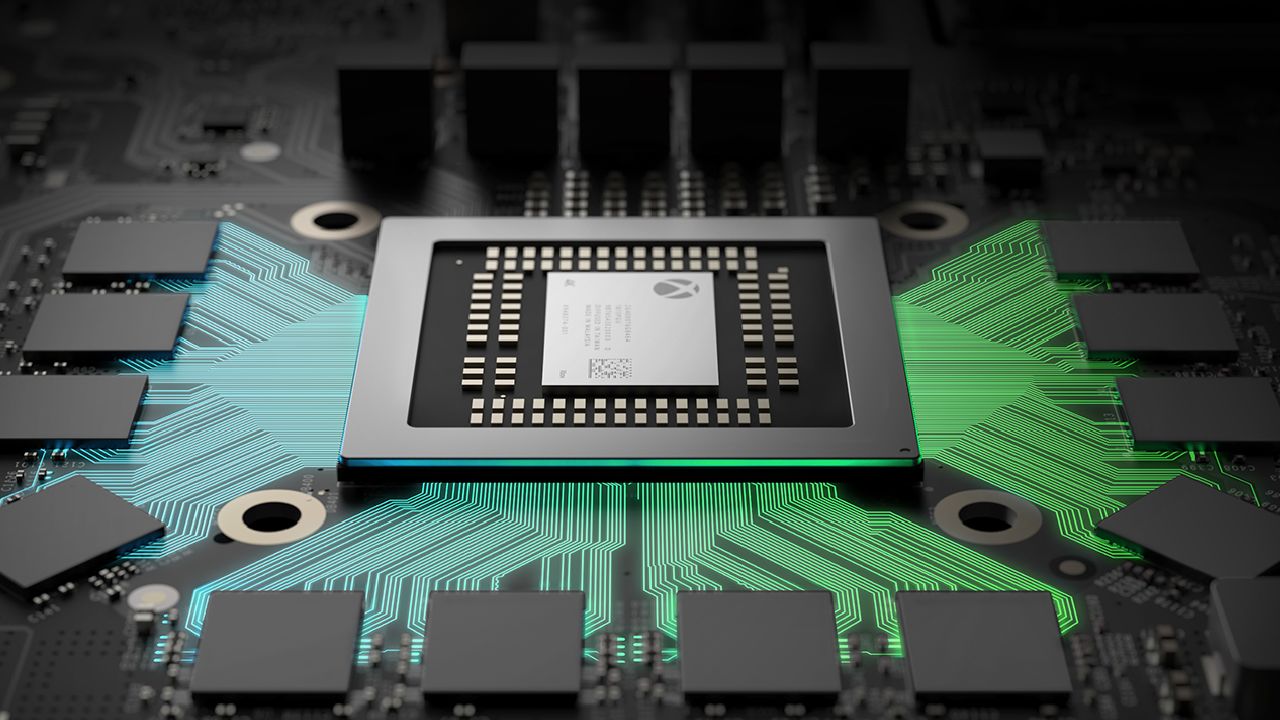
Memory is another area where Project Helix could beat the PS6.
Think of the memory bus as a highway that determines how much data can move between the memory and GPU. A 192-bit memory bus provides 12 lanes, while a 160-bit bus provides 10 lanes. If both consoles use memory running at the same speed, Helix could transfer 20% more data every second.
For comparison, the Xbox Series X delivers 560GB/s of bandwidth through its fastest 10GB memory pool. With GDDR7 running at common speeds, Project Helix could reach somewhere between 670GB/s and 770GB/s. Memory capacity could also matter. Helix is reportedly equipped with up to 48GB of memory, compared to the 16GB available in the Series X.
More memory and bandwidth could help developers work with larger game assets, higher-resolution textures, and more complex environments. It could also leave room for the rendering features expected with the next generation. The CPU upgrade could be one of the biggest changes in Project Helix. Xbox Series X currently uses eight Zen 2 CPU cores based on AMD's 2019 architecture.
FAQ
Q. How many teraflops could Project Helix deliver?
A. Project Helix is reportedly capable of delivering 56 teraflops using AMD's dual-issue calculation, although its performance could be closer to 28 teraflops using the traditional calculation method.
Q. How does Project Helix compare to the PS6 in GPU performance?
A. Project Helix reportedly features 68 compute units, while the PS6 has 52 active compute units. Their estimated traditional GPU performance is around 28 teraflops for Helix and 20 teraflops for the PS6.
Q. How much memory could Project Helix feature?
A. Project Helix is reportedly expected to feature between 36GB and 48GB of GDDR7 memory on a 192-bit bus, potentially delivering between 670GB/s and 770GB/s of memory bandwidth.
Q. What next-generation technologies has Xbox confirmed for Project Helix?
A. Xbox has confirmed GPU-directed work graphs, machine learning upscaling, machine learning multi-frame generation, ray regeneration, and neural texture compression. The company also promised an order-of-magnitude improvement in ray tracing performance over the Xbox Series X and Series S.
Editor, NoobFeed
Latest Articles
No Data.