
XBOX Project Helix AMD Magnus Chip Targets 56TFLOPS and 10x Ray Tracing
XBOX Project Helix Could Deliver RTX 5080-Level Performance With 56TFLOPS and 10x Ray Tracing Through AMD Magnus Silicon.
XBOX by Nahe Yan on Oct 07, 2026
Consoles have traditionally focused on delivering fixed hardware performance within a controlled power and thermal envelope, while high-end desktop PCs have continued to push the limits of graphics performance. Project Helix could narrow that gap with a new AMD-based design targeting higher compute performance, improved ray tracing, neural rendering, and GPU-directed workloads.
Historically, console and PC technology have innovated at different paces. Ray tracing is one example. Ray tracing has long been the holy grail of computer graphics, but it wasn't practical for many years. Microsoft has publicly acknowledged that it is working on its next-generation console, codenamed Project Helix.
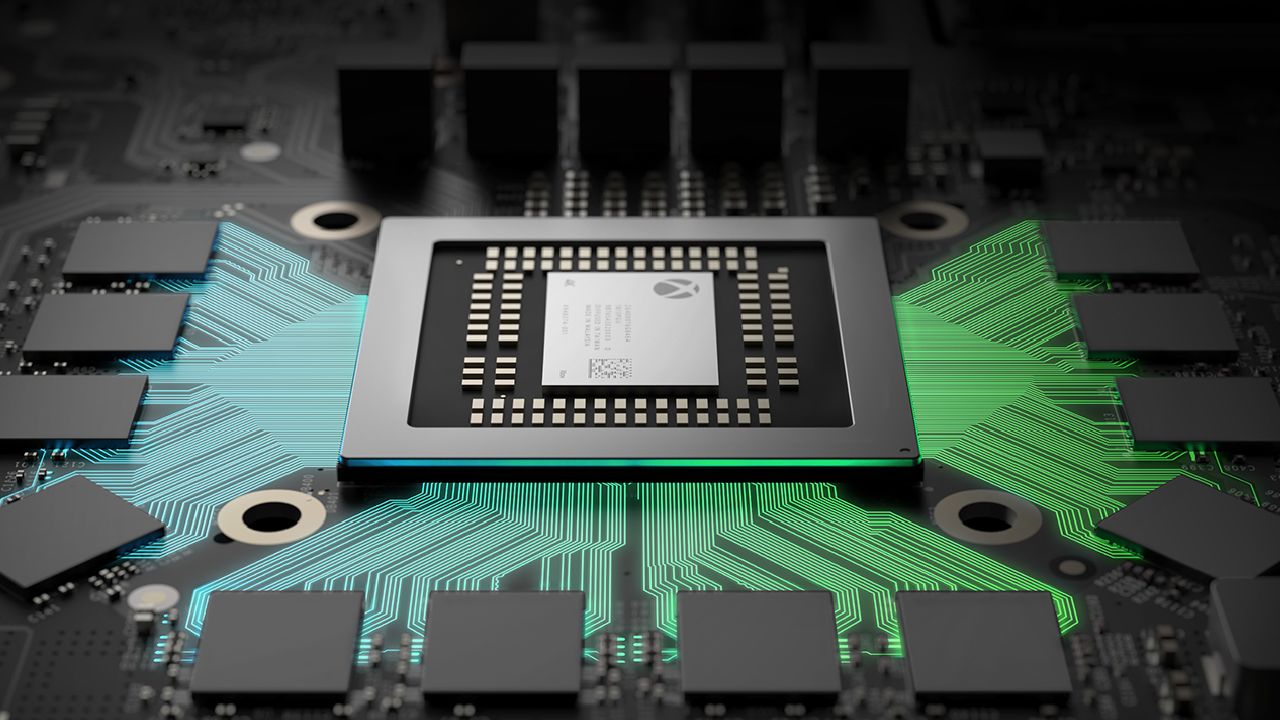
XBOX Project Helix Targets RTX 5080-Level Performance
The console's design aims to usher in the next generation of console gaming and break down many of the barriers that have existed between console and PC hardware. The latest technical data points to a major shift in hardware performance. The next-generation Xbox Helix is targeting high-end desktop PC performance.
According to tape-out leaks revealed by Kepler L2, Microsoft's custom AMD Magnus SoC has finalized its physical design blueprints. The specifications show the console processor packing 56 TFLOPS of raw computing power on a next-generation AMD architecture using FSR Diamond.
For context, an RTX 5080 also has about 56 TFLOPS on a slightly older architecture. To put this into perspective, the rendering differences between an Xbox Series X and an Xbox Helix or an RTX 5080 show where the performance gap could change. When a heavy title is pushed on an Xbox Series X, the system is forced to drop internal resolutions.
Beyond the SoC, Project Helix includes an order-of-magnitude increase in ray tracing performance and capability over what is currently possible with the Xbox Series X and Series S. The design is intended to deliver high-performance ray tracing for both real-time and path tracing. Developer data points to a 400% jump in raw graphical efficiency.
Helix Brings a 10x Ray Tracing Increase
In practical terms, the design condenses the raw computational horsepower of four Series X consoles running simultaneously into one piece of custom next-generation silicon: AMD Magnus. Traditional PC builders may look at the 56 TFLOPS figure and argue that a living-room console cannot match a desktop NVIDIA RTX 5080 because of power limits. Historically, that argument would make sense.
However, silicon design changes how you should think about performance. To deliver 56 TFLOPS within a console thermal footprint, the custom Magnus chip runs at a clock speed of over 3.2 GHz across 68 active compute units. The chip also uses AMD's hardware-level dual-issue architecture.
Dual-issue means the chip splits its internal execution lanes to process two separate mathematical instructions simultaneously. Because the engine is built as a unified APU, with the processor cores and graphics compute sitting side by side on the same silicon die, it eliminates the physical latency and motherboard bus delays associated with a modular desktop PC.
Project Helix is designed for the next generation of neural-assisted rendering.
A key part of that design is the integration of AMD FSR into Project Helix and the Xbox game development kit. The system is being designed around next-generation neural rendering techniques. Traditional rendering methods have reached a point where hardware engineers can no longer brute-force raw pixels onto a screen.
The silicon becomes too large, too hot, and too expensive. Project Helix instead uses neural-assisted rendering directly within the core graphics pipeline. Nvidia's DLSS 5 provides an example of this approach on desktop hardware.
The game engine renders a lower-resolution base frame, and the graphics card uses artificial intelligence at the end of the pipeline to upscale, reconstruct lighting, and rebuild pixels. The final result can provide higher image quality, but it requires a desktop graphics card using hundreds of watts to process the post-process reconstruction.
Editor, NoobFeed
Latest Articles
No Data.