
GPU Market Competition Heats Up as NVIDIA Revives RTX 3060 and G100 GPUs Arrive
Hardware innovation and supply issues dominate the week with Intel roadmap updates, Apple launches, gaming platform changes, and RAM shortages.
Hardware by Shinji Okazaki on Mar 11, 2026
Technology news often covers new CPUs, gaming hardware, memory supply, and software platforms in a single story. Intel, Apple, gaming platforms, and the memory market all had news this week. Supply problems are still affecting prices and delivery dates across the board.
For a long time, people have been asking for technology news. So, in this conversation, we talk about the technology headlines from the past week. Let's take a look at what's new in technology these days and how it affects users.
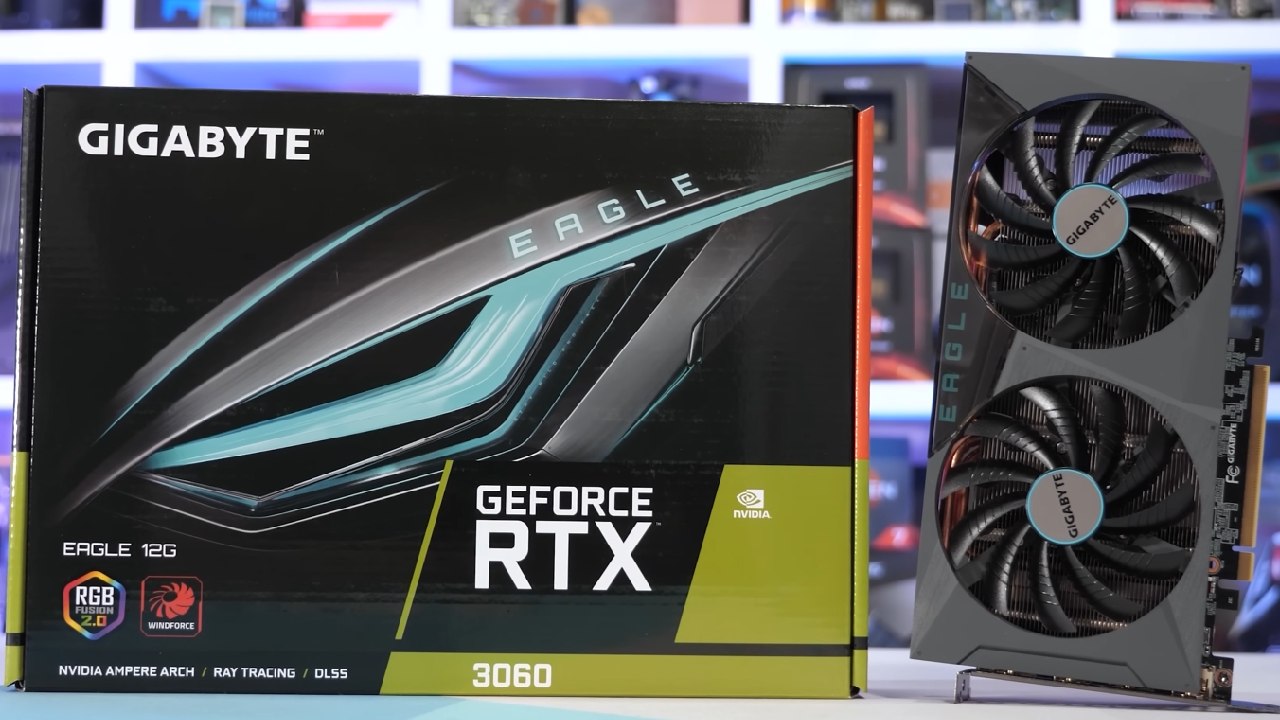
Let's start with one of the most talked-about topics: Intel's new chips. It's hard to discuss Intel in a short amount of time. Investments in new semiconductor factories always bring up political issues. So, we'll focus on the part that is most important to users.
Intel's New Processor News
To begin, let's talk about the industrial problem. Intel is building its own plant to make semiconductors using the 18-angstrom, or around 1.8nm, manufacturing method. It wants to make chips for both its own processors and those of other brands in this building. But making chips is a lot harder than designing them. That's why they had some trouble at first. When you face TSMC, which has been the leader in innovative manufacturing methods for years, it's hard to stand out.
The factory is now ready, and manufacturing has begun. The optimization process is still going on, though, because wafer efficiency is not yet where it should be. The fundamental reason headlines say Intel is doing poorly is this problem with production efficiency.
So what do these processors promise us? Core Ultra 200 Aerolake series is currently on the LGA1851 socket for desktops. Core Ultra 200 Plus Aerolake refresh series is likely to come out in March or April. Core Ultra 300 Panther Lake is a new line of processors that outperforms current LGA1851 CPUs. It is also more focused on mobile devices.
But the Core Ultra 400 Nova Lake with the LGA1954 socket is the series that really gets people excited. It will come with Intel's innovative manufacturing method. There isn't any clear information regarding Nova Lake right now. Most of the talk is based on leaks.
Let's go over what we've heard thus far. There will be a move to the LGA1954 socket, as has been said many times. The process of making things will use 1.8nm. The novel RibbonFET transistor design will be used. The new XC3 Celestial graphics architecture will work with PowerVia backside power-delivery architecture, enabling mobile devices to achieve long battery life.
We might see better performance from the APU and better capabilities from the NPU. Intel is also likely to switch to an architecture comparable to AMD's chiplet design, which it has used for a long time. Without going into too much detail, the processor won't be one big block. It will have several blocks, making it more modular. This could mean lower production costs by sharing parts, leading to more competitive prices.
What we are hearing in the technical standards department is equally interesting. People say Intel is working on a cache solution called Big Last-Level Cache (BLLC) in response to AMD's 3D VCache technology. This arrangement enabled an L3 cache of about 288 MB. This large cache size will likely be available only on high-end models at first. Still, it may appear on lower-priced models over time.
Next, some bad news. Some reports indicate that high-end Nova Lake processors could consume up to 700W of electricity if power constraints are removed. Even for people who overclock their computers a lot, this is important. In that case, you would have to cool both the motherboard and the processor. The most important thing to remember is that these numbers only apply when there are no power constraints at all. When they are issued with factory settings, they will probably work in a more regulated range.
In short, Intel wants Nova Lake to be a big success. If the business can ensure that sockets last longer and set prices correctly, the competition with AMD could heat up again.
Intel XeSS Expands Frame Generation
Intel has released another update about graphics technology. Intel wants to expand the use of its XeSS frame generation technology across more devices.
This help is coming for Intel graphics cards in the A-series and B-series, and most crucially, for Core Ultra APUs. This change is very important for the APU side. As a result, you'll be able to play games on thinner laptops.
XeSS, Intel's resolution scaling technology, also features an open and flexible design. This means that it works with graphics cards from other brands as well as Intel GPUs. For instance, Nvidia and AMD graphics cards can run games that use XeSS.
Depending on the game, FSR and XeSS can do better than each other. In short, Intel has begun to make moves on the software side as well. It illustrates that support for current technologies remains strong as new ones are developed.
The Spring Event and New Products from Apple
From March 2 to March 4, Apple conducted its spring event. Many new devices were shown off at the occasion.
IPhone 17e was unveiled as a lower-cost device. New iPad Air variants with M4 CPUs have been released. A new MacBook model was announced that costs less than $1000. It has the A18 Pro chipset used in the iPhone 16 Pro.
They also introduced MacBook Air variants with M5 processors. There were new MacBook Pro models on display that have M5 Pro and M5 Max CPUs. The redesigned Mac Studio and Studio Display were finally introduced at the event.
In the larger picture, the event provided many updates for people who use Apple products or are considering switching.
The RAM Crisis and Its Effects on Business
The ongoing RAM crisis is another major issue affecting the computer industry. Things have changed swiftly in the last several weeks, showing how quickly they are still changing.
People are paying more attention to Chinese firms. The memory crisis has led the sector to seek stability. Two Chinese companies, CXMT and YMTC, have become well-known. One sign that these firms are becoming better known is the rumor that Apple might work with them to make products.
During the crisis, both companies received significant attention for selling RAM and NAND products at reasonable prices. Now, there are talks about new manufacturing investments. They probably won't be able to fix the RAM situation on their own. Still, if they keep getting cheap parts, they could become more competitive in the market.
The storage market is also affected. Western Digital has sold out all of its hard drive output for 2026. The NAND crisis has driven up SSD costs, prompting several data centers and server sectors to return to HDDs. Western Digital also said that it had already signed long-term contracts for 2027 and 2028. This could indicate that WD hard drives will cost more in the future for anyone who uses them.
Delays in Consoles and Hardware
The RAM problem is also affecting gaming devices. There are rumors that the PlayStation 6's release could be moved to 2028 or 2029.
Another discussion is about how well the PlayStation 5 generation works and how it changes the gaming world. Some people say that the generation doesn't have any distinctive titles. For many who already own a PS5, a delay might not be a bad thing, since many still anticipate big games that will fully leverage the system.
The price of the Nintendo Switch 2 could go up. The device was supposed to cost roughly $450 when it first came out, but the price could rise as memory prices rise.
In the US and certain Asian countries, the Steam Deck has also been hard to find. One factor is the state of the memory supply. Valve may have moved production capacity to the Steam Machine project.
But the Steam Deck's stock is expected to return at the end of the month.
Delay of the Steam Machine
Valve's Steam Machine project has also been put on hold due to rising RAM and NAND prices. Normally, the release date and price information would have been made public in early 2026. Recent comments suggest the product can't be launched at the desired price due to rising memory costs.
When the Steam Machine was first revealed, people already said that a price of $700 would be hard to reach. Launching for less than $1000 might be hard, given the current state of things.
.jpg)
Steam User Reviews Will Show PC Specs
Steam is going to add a new feature to its user review system. Along with the comment, the reviewer's hardware specs will be shown.
This modification makes it easier for consumers to understand performance feedback. You can tell what kind of processor and graphics card someone is running by what they say about a game playing poorly.
For instance, the user might have an older GPU, or the game might not run well on a specific architecture. You can also find out whether complaints about performance tend to be about specific hardware brands. This upgrade could help people make better choices about what to buy.
Final Thoughts
Epic Games announced its launcher while Steam was adding new features. The firm indirectly admitted that its launcher isn't very user-friendly.
Free game campaigns helped the Epic Games Store attract many more users. Since its release, though, the launcher has not been very popular due to optimization issues and a lack of an interface and social features.
A lot of people buy the same game on Steam even though it costs more. Epic Games said that big changes to the launcher are planned for around May or June 2026. These updates will focus on improving performance and the user experience. The upcoming improvements could make digital game stores compete more.
Also, check our other hardware articles:
- AMD Ryzen 9 9950X3D Review: Setting The Standard For 2025 Gaming CPU
- Amazon Luna 2025 Review: Is Prime Gaming's Cloud Service Your Go-To For Casual Fun?
- AMD RX 9070 XT Review: AMD's RDNA 4 Champion for 1440p Gaming
- GeForce Now Ultimate: Ditching Your Gaming PC For Cloud RTX 4080 Power?
- NVIDIA GeForce RTX 5080 Review (2025): Still A 4K Gaming Powerhouse?
- Intel Core Ultra 9 285K Review And Performance Breakdown (2025)
- AMD Ryzen 7 9800X3D Review: 3D V-Cache Goes God Mode with Stunning Gaming Performance
- Intel Core Ultra 9 285K vs AMD Ryzen 7 9800X3D: In-Depth Gaming Performance and Benchmark Comparison
- NVIDIA GeForce RTX 5080 Super Performance In Cyberpunk 2077: Path Tracing & DLSS 4.0 Tested
- AMD Radeon RX 9070 XT In Cyberpunk 2077: Ray Tracing & FSR 4.0 Tested
- Intel Arc B580 Review: The $250 GPU Revolutionizing 1440p Gaming
- Intel Arc B570 Vs. B580: Value, Specs, And Real-World Gaming Performance
- RTX 5090 Laptop Vs. M4 Max MacBook Pro: Ultimate Raw Performance Vs. Battery Endurance
- Intel Arc b580 Vs. RTX 4060: Game Performance And Value Analysis
- RTX5090 Hell Is Us Demo 4K Ultra Benchmark: DLSS Vs. Native Performance Guide
- NVIDIA RTX 5070 Review: Mid-Range Muscle or Marketing Hype?
- Nintendo Switch 2 Review: Handheld Performance, Features & Value Breakdown
- RTX 5070 Ti Review: Performance, Thermals & Power Efficiency Tested
- Samsung Odyssey OLED G81SF Review 2025: Ultimate 32-Inch QD-OLED Gaming Monitor
- AMD RX 9070 Performance Review: Thermals, Clocks, and Real-World FPS
- AMD Ryzen 5 7600 Review: Best Budget Gaming CPU of 2025?
- AMD Radeon RX 7800 XT Review: RDNA 3 Power For Midrange Gaming
- Asus ROG RTX 5090 Astral OC Vs. Founders Edition: The 4K Gaming Benchmark
Editor, NoobFeed
Gaming Hardware Updates
No Data.