
PC Gaming vs. Gaming Consoles: Graphics, Performance, and Value Compared
High-End Gaming PC hardware delivers superior graphics and smoother frame rates, but the added cost may not justify the upgrade.
Hardware by Tanvir Kabbo on Oct 26, 2026
As console hardware evolves, many longtime gamers ask whether a high-end gaming PC really offers enough performance and graphical advantage to justify the much higher cost. Modern consoles offer stunning, increasingly sophisticated graphics, gameplay, and rendering technologies, so you don't see the differences as much.
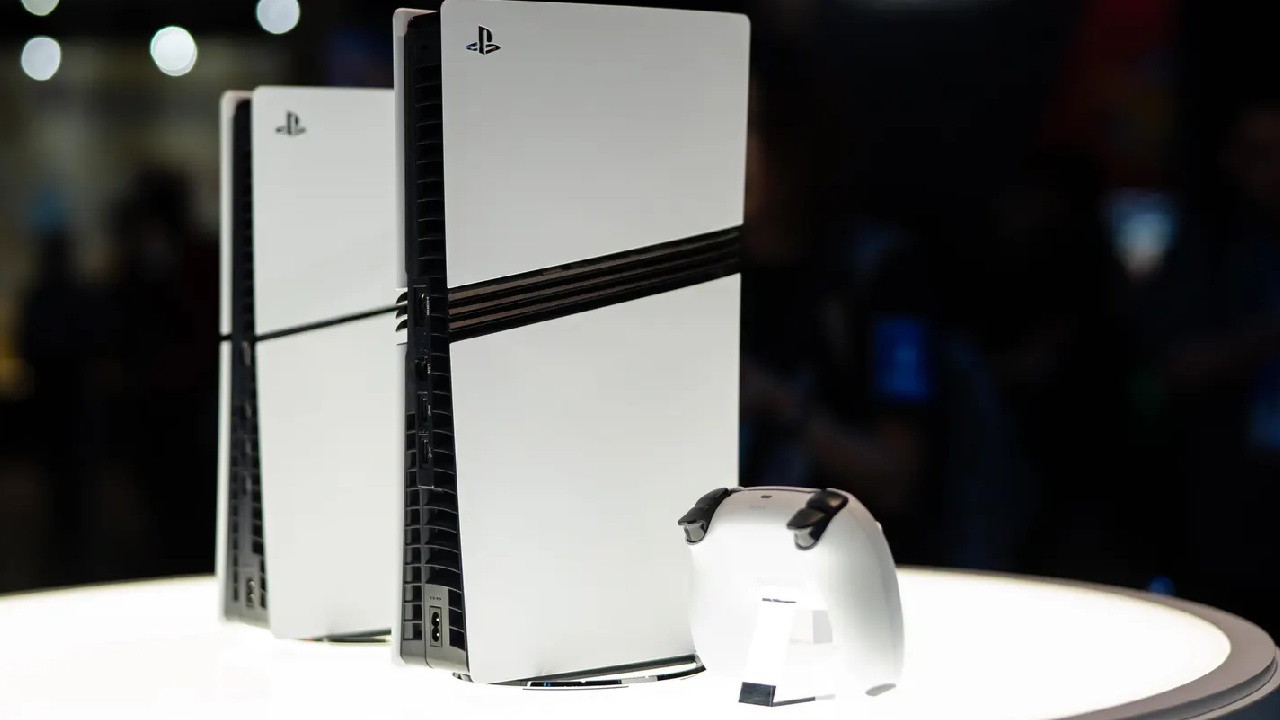
For players considering an upgrade, the real question is whether better graphics, higher frame rates, and more personalization are worth the extra money. Modern consoles such as the Xbox Series X and PS5 Pro have raised the standard for console gaming, and the rich surroundings, steady performance, and clean visuals make the advantages of a high-end gaming PC less immediately obvious.

However, the answer isn't as simple as just comparing specs—it depends on the player, the games, and how much you value customization, fidelity, and performance.
Personal Sensitivity to Visual Fidelity
For some of us, how good the graphics look and how smoothly the game runs strongly shape the whole experience. If you can quickly see differences in how things look, PC gaming can be quite gratifying. Tweaking settings, boosting frame rates, and enjoying ultra-high-quality textures can make the experience feel more real. Yet, for others, the visual upgrade might not be worth the extra effort or cost.
Once you experience a truly top-tier display—such as a high-quality OLED monitor—it can completely change how you view PC gaming. The clarity, contrast, and color depth elevate the entire experience. It's not just about the PC's power but also about pairing it with the right screen. When that combination clicks, PC gaming becomes something special.
Role of Setup and Customization
Part of what makes PC gaming fun is that it lets you do what you want. You can change visual settings, set performance goals, or use a mouse and keyboard for more accuracy. But that freedom can make things less convenient. With consoles, you install and play; you don't have to mess with them.
If you like to tweak your system and try different settings, a gaming PC is a breath of fresh air. But if you want something easy to set up and use, a console is still the best choice. The PC ecosystem takes time, patience, and a lot of troubleshooting.
Cost, Value, and Market Realities
You can't ignore the cost factor. Building or buying a powerful gaming PC costs significantly more today than it did a decade ago. GPU prices remain high, and while entry-level setups exist, achieving a true "max settings" experience at high frame rates demands serious investment.
At one point, particularly during the PS3 and Xbox 360 era, PC gaming consistently delivered massive leaps in performance and visuals for the same price. Today, the gap has narrowed. You can still achieve better performance on PC. Still, diminishing returns mean it comes down to how much more you're willing to pay for those last few frames or sharper shadows.
Game-Specific Visual Differences
The improved graphics on a PC are only worth it if you play certain games. Some games, like Alan Wake 2, Horizon Forbidden West, or Indiana Jones, look and play much better on high-end hardware because the lighting, ray tracing, and detail are superior. On the other hand, games like Dragon Age: The Veilguard might look nearly identical across both platforms, making the upgrade harder to justify.
If you play visually demanding single-player titles or games with advanced ray tracing, PC gaming delivers a clear edge. But if your favorites are already optimized well for consoles, the difference becomes more subtle—sometimes iterative rather than transformative.

Ease of Use and the Console Advantage
Consoles still dominate in simplicity. They eliminate the hassle of driver updates, setting tweaks, and performance inconsistencies. You can sit down, turn on your system, and play without worrying about configuration issues or shader compilation stutters.
This ease of use is even more useful in living-room setups. High-end PCs can run games more smoothly and at higher frame rates, but it's harder to manage Windows, overlays, and performance monitors in a relaxed, controller-based setting.
When PC Gaming Truly Shines
Set up right, a high-end PC can deliver experiences consoles can't. You can get a steady 120 fps or more, use frame-generation technologies, and experience visual fidelity like path-traced lighting that consoles can't handle right now.
The level of responsiveness and smoothness you feel on a high-refresh-rate display—say, 240Hz or 400Hz—is transformative. Yet, video makes this experience hard to convey. YouTube compression and 60fps playback can't communicate the real feel of ultra-high frame rates. You have to see and feel the difference in person to appreciate it.
Challenge of Showcasing PC Advantages
One of the biggest challenges in communicating PC advantages is that most people see comparisons through compressed online videos. These videos flatten the visual differences between maxed-out PC settings and console visuals, making both look similar. But in person, the improvements—particularly in motion clarity, input responsiveness, and smoothness—are immediately noticeable.
It's like how CRT displays used to look amazing in motion, but modern footage can't show them accurately. The same goes for PC gaming today. It's hard to go back once you've seen how well ultra-high refresh rates and low latency work.

Final Thoughts
Ultimately, it's up to you to decide whether a high-end PC is "worth it." If you want the greatest possible graphics, customization, and frame rates, PC gaming is the way to go. However, if you prioritize convenience, stability, and a hassle-free setup, consoles like the Xbox Series X and PS5 Pro still offer incredible value.
The key is understanding your preferences- what matters most to you as a gamer. For some, the reward is tuning every graphical option and pushing hardware limits. For others, gaming is about the simplicity of sitting down and enjoying a great game.
Senior Editor, NoobFeed
Gaming Hardware Updates
No Data.