
AMD Radeon RX 9050 Specs Confirmed With 8GB VRAM for Budget Gaming
AMD’s Radeon RX 9050 enters the ultra-budget market with 8GB VRAM and heavily restricted hardware targeting affordable 1080p gaming.
Hardware by Tanvir Kabbo on Aug 22, 2026
AMD has officially expanded the Radeon RX 9000 lineup with the Radeon RX 9050, a graphics card positioned at the bottom of the company's current desktop lineup. On paper, it is clearly positioned as an ultra-budget solution. Still, its memory configuration has become the most contentious part of the discussion.
There is, however, an important correction to the 4GB premise: AMD's current official specification page lists the Radeon RX 9050 with 8 GB of GDDR6 memory on a 128-bit interface, not 4 GB. AMD also lists 16 Compute Units, 1,024 Stream Processors, 32 MB of Infinity Cache, and memory speeds of up to 18 Gbps.
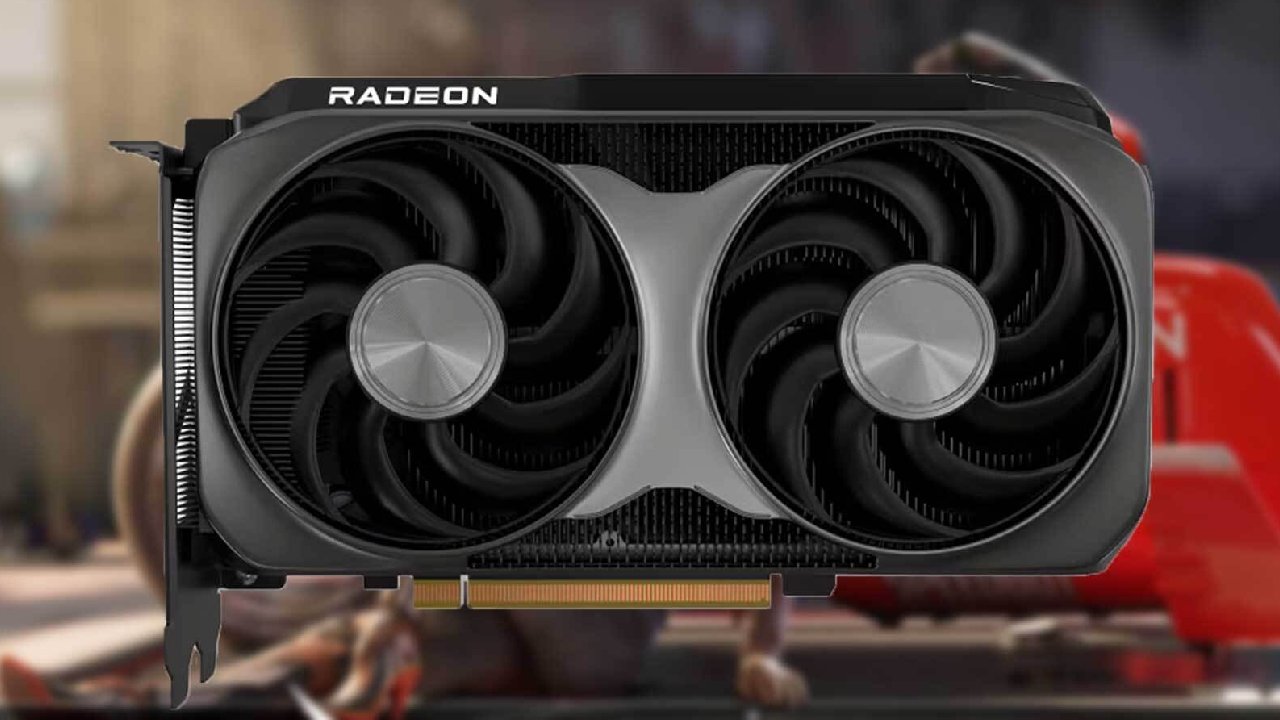
That makes the RX 9050 considerably less compromised than a hypothetical 4GB version would have been. Yet the underlying question remains relevant: how much sense would a 4GB graphics card make in the modern budget market?
Under the Hood: A Seriously Cut-Down Radeon
The Radeon RX 9050 is undeniably a heavily restricted implementation of AMD's current graphics architecture. AMD lists only 16 Compute Units and 1,024 Stream Processors, placing it well below the RX 9060 in the same generation.
The card also carries a 92W typical board power rating, making it considerably easier to integrate into inexpensive systems than more powerful members of the RX 9000 family. Its 32 MB Infinity Cache provides additional relief for the relatively modest memory subsystem, while the 128-bit interface and up to 18-Gbps GDDR6 memory deliver bandwidth up to 288 GB/s.
Those specifications reveal what AMD is actually trying to accomplish. This is not a miniature version of an enthusiast GPU. It is a deliberately constrained product designed around low power consumption, low manufacturing cost, and accessible system pricing.
The 8 GB VRAM configuration is therefore particularly significant. Rather than creating an aggressively compromised 4GB product, AMD has retained enough memory capacity to make the card substantially more practical for modern entry-level 1080p workloads.
The 4GB Problem AMD Avoided
A hypothetical 4 GB VRAM configuration would have been much harder to defend in 2026. 4GB was once perfectly normal for inexpensive gaming hardware. That era has largely disappeared. Modern games increasingly allocate substantial amounts of VRAM for textures, geometry, shaders, and other graphical assets, and insufficient capacity can force the GPU to constantly move data between system memory and graphics memory.
That does not simply translate into lower average frame rates. In sufficiently demanding scenarios, limited VRAM can lead to inconsistent frame pacing, texture degradation, and noticeable stutter during traversal. That is why the difference between 4 GB and 8 GB VRAM matters more than the raw capacity suggests. An 8GB card has considerably more breathing room before memory capacity itself becomes the limiting factor.
AMD's official 8GB specification therefore significantly changes the RX 9050's position. It remains an entry-level GPU, but it isn't automatically saddled with the most obvious limitation a 4GB model would have carried. The eSports Defense Still Makes Sense. Even an extremely modest GPU can make sense when the workload is carefully defined.
Competitive games such as Counter-Strike 2, Valorant, and League of Legends generally place far less demand on graphics hardware than modern cinematic AAA titles. Lower settings and competitive resolutions allow an entry-level GPU to deliver very high frame rates without requiring large amounts of VRAM. That is where the RX 9050 makes the most sense.
For a player building an inexpensive gaming PC primarily around competitive titles, the card's limited compute resources may not be nearly as problematic as they would be in a visually demanding single-player game. The same applies to HTPC systems and OEM desktops where the primary requirement is simply having a modern discrete GPU with contemporary display and media capabilities.
AMD's specification sheet confirms support for modern video decoding and encoding features, including AV1, H.264, and H.265. That makes the RX 9050 more interesting as a general-purpose budget display and media solution than its gaming performance alone might suggest.
Memory Costs Explain the Ultra-Budget Strategy
The economics behind this product category is also important. Memory pricing has become one of the biggest problems facing the PC hardware industry, especially as AI infrastructure continues to consume enormous quantities of advanced memory and related components.
Every additional gigabyte on a graphics card increases manufacturing costs, and those costs are eventually passed on to consumers. That creates a difficult equation for AMD. An ultra-budget GPU needs to remain inexpensive enough to justify its existence. But reducing memory capacity too aggressively makes the product increasingly unattractive to gamers.
AMD's decision to list the RX 9050 with 8 GB of GDDR6 suggests the company has attempted to maintain a reasonable usability floor without turning the product into a substantially more expensive mainstream GPU. A 4GB model could theoretically have further reduced costs. Still, the savings would have come with an enormous perception problem in today's market.
Senior Editor, NoobFeed
Gaming Hardware Updates
No Data.