
RTX 5080 Overclocking Pushes Performance Closer to RTX 4090
RTX 5080 overclocking reveals additional performance headroom, although real-world gaming gains remain modest compared with expectations.
Hardware by Tanvir Kabbo on Oct 29, 2026
NVIDIA's GeForce RTX 5080 has attracted considerable attention for its overclocking potential, with enthusiasts discovering that the GPU can operate noticeably beyond its default factory settings. Recent testing suggests the card has more performance headroom than initially expected, delivering measurable improvements across several demanding games without requiring a major increase in power consumption.
This is particularly interesting given how aggressively NVIDIA's modern GPU boost algorithms already manage operating frequencies. Automatic boost technology generally pushes graphics cards close to their practical operating limits, leaving relatively little room for traditional overclocking. However, the RTX 5080 appears to offer more manual tuning potential than expected, making it an interesting option for enthusiasts who want additional performance without upgrading to a more expensive GPU.
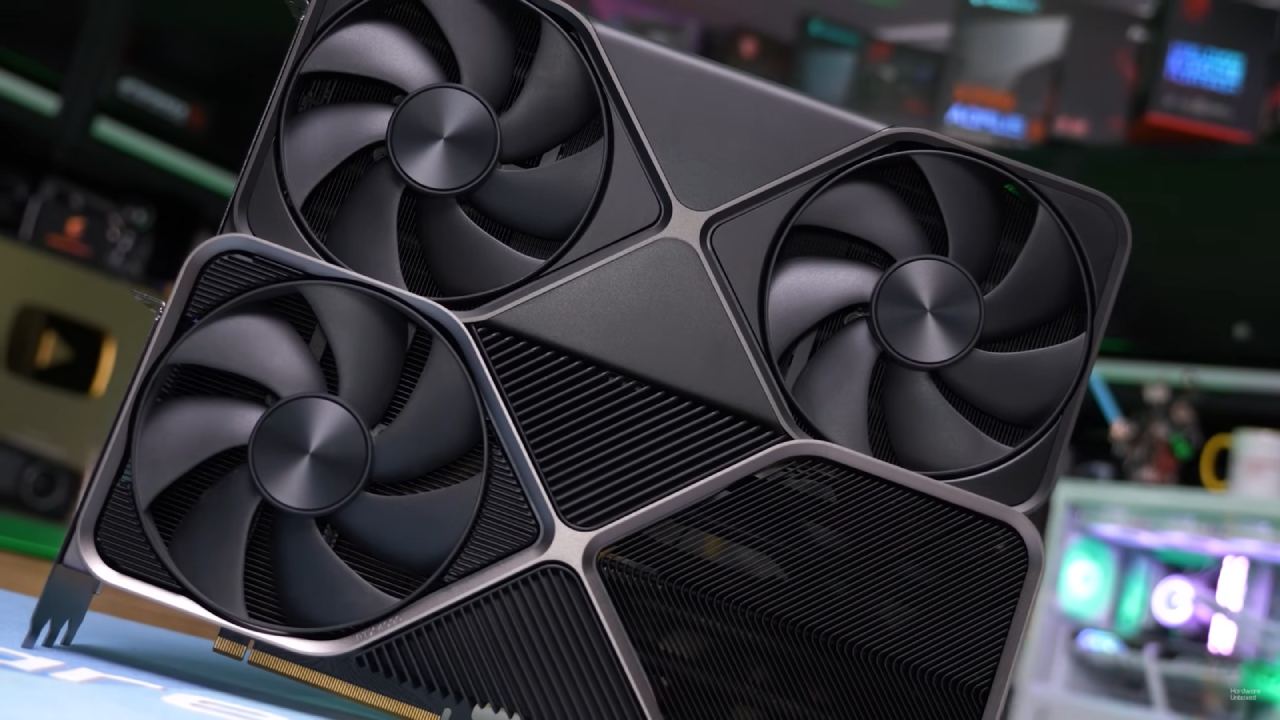
Overclocking Gains and Stability
Testing showed the RTX 5080 could run stably with a +350MHz core clock adjustment and a +375MHz memory overclock across all tested games. These settings produced consistent improvements without noticeable stability issues during testing.
The performance increase averaged about 5-8%, lower than the 10-12% improvements reported by some other reviewers. Nevertheless, the additional performance came with only a 5-7% increase in power consumption. Given the modest increase in energy requirements, the performance gain represents a reasonable trade-off for enthusiasts.
Interestingly, the practical benefit depends heavily on the starting frame rate. When a game already runs at a very high frame rate, the additional performance becomes less noticeable. Games operating at lower frame rates can benefit more visibly from the same percentage improvement. With the tested overclock, the GPU also approached the 3GHz operating range, well above its typical stock behavior.
Game Benchmark Analysis
Metro Exodus offers a clear example of how overclocking shifts the RTX 5080's position against competing GPUs. At factory settings, the card performs approximately 7% faster than the RTX 4080 Super. Applying the tested overclock increases that advantage to around 14%. The RTX 4090 still maintains a substantial lead of about 22%, although the extra performance helps the RTX 5080 close some of the gap.
With an overall performance improvement of approximately 6.5%, the overclocked RTX 5080 reaches around 82% of the RTX 4090's performance. While that doesn't make the newer card a replacement for NVIDIA's previous flagship, it shows how extra clock headroom can improve its competitive position.
Alan Wake 2 produces an even more interesting comparison. At high settings with low ray tracing, the RTX 5080 starts approximately 15% ahead of the RTX 4080 Super. Overclocking increases this lead to around 23%. Its performance also reaches approximately 88% of the RTX 4090, reducing the gap between the two cards to roughly 14%.
The overall improvement in this particular game is approximately 7%, but its effect on relative performance is significant. Once it uses its extra clock headroom, the RTX 5080 becomes considerably more competitive against both the RTX 4080 Super and RTX 4090.
Hades II demonstrates a similar pattern. The RTX 5080 initially holds a 17% advantage over the RTX 4080 Super, which increases to approximately 27% after overclocking. This places it at around 89% of RTX 4090 performance, with an overall performance increase of approximately 7%.
These results show that the benefits of overclocking extend beyond raw frame-rate gains. Even relatively small improvements can change how closely two graphics cards compete in individual games.

Title-Specific Variations
Indiana Jones delivers another example of how different games respond to GPU overclocking. At stock, the RTX 5080 performs about 9% faster than the RTX 4080 Super. Once overclocked, that advantage increases to 17%. Its performance reaches about 90% of the RTX 4090, an overall improvement of about 7.8%.
Black Myth: Wukong produces an even tighter comparison. The RTX 4090 initially leads the RTX 5080 by approximately 14%, but the difference shrinks to just 5% after overclocking. The resulting performance reaches around 95% of the previous-generation flagship, making this one of the strongest results for the tuned RTX 5080.
Forza Horizon 5 produces perhaps the most surprising outcome. The RTX 5080 already holds a 21% advantage over the RTX 4080 Super at stock settings. Overclocking expands that lead to approximately 28%, allowing it to outperform the RTX 4090 by around 2% in this particular benchmark.
What makes this result particularly interesting is that the RTX 5080 gains only about 6% in overall performance. That relatively small improvement is enough to change its position in the benchmark rankings, highlighting how important game-specific scaling can be when comparing graphics cards.
The Perception of Marginal Gains
One of the biggest lessons from these results is that percentage improvements do not always tell the complete story. A 5-8% performance increase might appear relatively minor when viewed independently, but its effect becomes much more significant when comparing two closely matched graphics cards.
The RTX 5080 illustrates this particularly well. At factory settings, its performance in several games sits relatively close to the RTX 4080 Super. Once overclocked, however, it moves considerably closer to the RTX 4090 in multiple benchmarks. This changes the overall perception of where the card belongs within NVIDIA's product hierarchy.
There is also an interesting argument regarding NVIDIA's factory tuning. Had the RTX 5080 shipped with operating frequencies closer to 3GHz, its initial reception might have been considerably different. It still would not have matched the RTX 4090 across every workload, but the additional performance could have established a more convincing gap over the RTX 4080 Super.
Design, Cooling, and Efficiency
Cooling capability plays an important role in determining how much additional performance an overclocked graphics card can sustain. The RTX 5080 benefits from relatively substantial cooling solutions across several partner models, with some designs occupying approximately 3.5 expansion slots and using cooling hardware comparable to previous RTX 4090-class implementations.
The vapor chamber design also contributes to effective heat distribution, even without relying on liquid metal thermal interfaces. This provides a solid foundation for maintaining higher operating frequencies under demanding workloads.
Several partner cards are capable of handling approximately 400-450W loads, making the RTX 5080 a suitable candidate for sustained overclocking when paired with an appropriate cooling solution. Thermal stability is especially important because additional clock speeds are only useful when the GPU can maintain them consistently.
Compared with the RTX 5090, the RTX 5080 also benefits from a less demanding power and thermal profile. The flagship GPU pushes cooling systems considerably harder, whereas the RTX 5080 provides a more manageable combination of heat output, operating stability, and performance headroom.
Both Founders Edition and partner implementations demonstrate improvements in thermal and acoustic behavior. This makes the RTX 5080 an interesting platform for enthusiasts who want additional performance without dealing with the more demanding power requirements associated with NVIDIA's flagship hardware.

Market Availability and Pricing
Unfortunately, the RTX 5080's technical strengths are difficult to separate from the market conditions surrounding NVIDIA's latest graphics generation. RTX 50 Series graphics cards, including the RTX 5080 and RTX 5090, have experienced considerable availability problems, with retail prices frequently exceeding their official suggested pricing.
Some partner models have reportedly carried premiums of approximately $300-$400, making an already expensive graphics card considerably harder to justify. Availability across the US market has also remained inconsistent, while recently introduced tariffs create additional uncertainty surrounding future retail pricing.
Supply-chain reports have also pointed toward manufacturing disruptions affecting NVIDIA's latest GPU generation. One report suggested that approximately 40,000-50,000 TSMC wafers were destroyed in earthquakes around the period of RTX 50 Series production. There have also been suggestions that NVIDIA prioritized enterprise and AI-focused Blackwell products over consumer graphics cards, adding further pressure to gaming GPU availability.
Manufacturing schedules reportedly faced additional complications because RTX 50 Series production began assembling relatively late around CES. Factories consequently had only a limited period to prepare initial batches before Chinese New Year shutdowns disrupted manufacturing schedules.
Transparency and Manufacturing Challenges
The combination of manufacturing disruptions, potential wafer losses, and competing demand for AI hardware has created a difficult environment for consumer graphics cards. These factors offer possible explanations for the limited availability of RTX 50 Series products, although the precise contribution of each issue remains difficult to establish.
The lack of detailed communication from NVIDIA and its manufacturing partners has made the situation even more frustrating for buyers. Without clearer information about production volumes, distribution priorities, and pricing decisions, consumers are left relying heavily on industry reports and supply-chain speculation.
If the reports surrounding damaged wafers and manufacturing priorities are accurate, the current supply situation becomes easier to understand. Additional production and improved distribution could gradually ease availability problems, although the timing and extent of any recovery remain uncertain.
For now, the GPU market continues to face considerable pricing instability. Even a graphics card with impressive performance and overclocking capabilities becomes a less attractive purchase when its retail price moves significantly beyond its intended market position.
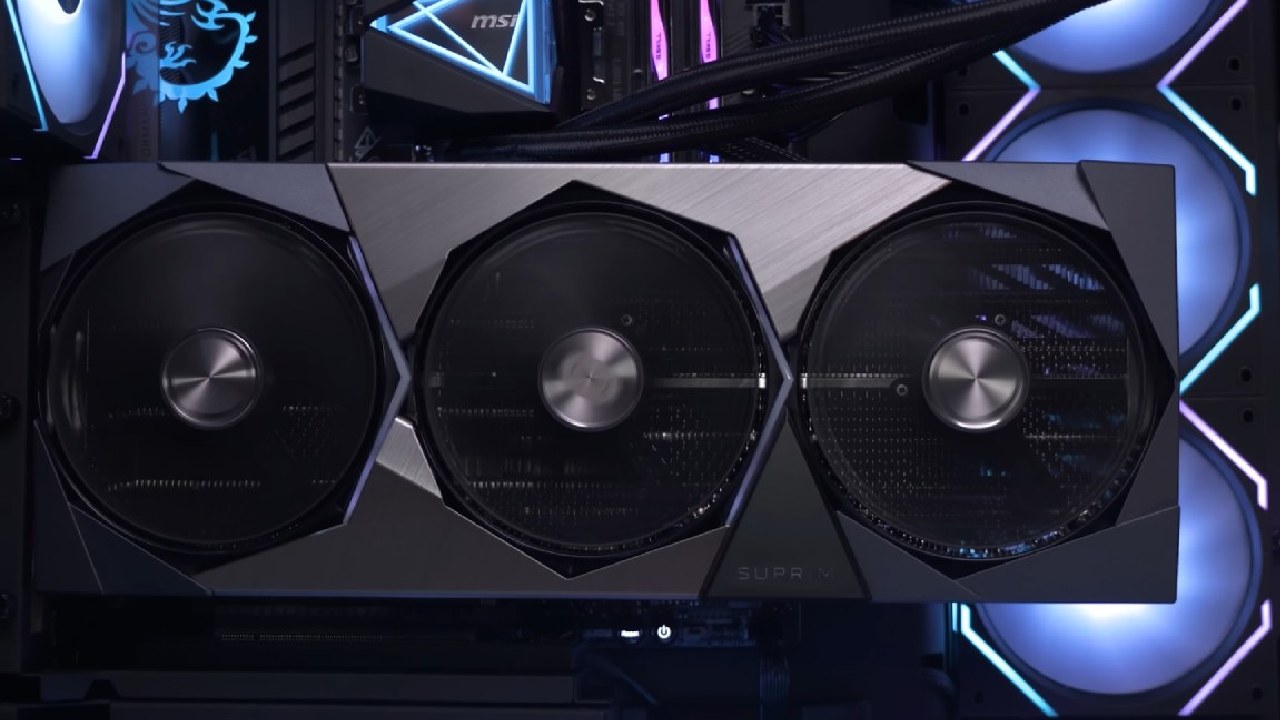
Final Thoughts
The GeForce RTX 5080 demonstrates that NVIDIA's latest architecture still has meaningful performance headroom available through manual overclocking. Across the tested games, relatively modest clock adjustments produced improvements of approximately 5-8%, with several benchmarks showing considerably better positioning against the RTX 4080 Super and RTX 4090.
The most interesting aspect is not simply the additional frame rate but how these improvements change the card's position in individual gaming workloads. In some cases, the overclocked RTX 5080 approaches the RTX 4090 much more closely than its factory performance initially suggests.
There is also a strong argument that NVIDIA could have benefited from shipping the card with slightly more aggressive factory frequencies. Higher default clocks might have made its performance advantage over the RTX 4080 Super more apparent from the beginning.
However, overclocking potential cannot solve the RTX 5080's biggest market problem. Limited availability and inflated retail prices continue to complicate its value proposition. The hardware itself is impressive, but purchasing decisions ultimately depend on what the card actually costs rather than how much additional performance enthusiasts can extract from it.
For now, the RTX 5080 remains an interesting combination of strong gaming performance, promising overclocking headroom, and considerable market uncertainty.
Senior Editor, NoobFeed
Gaming Hardware Updates
No Data.