
Zen7 Grimlock Deep Dive: 14A 32-Core AM5 Upgrade, Silverton vs Silverking & Halo Scaling
Zen 7 Grimlock represents AMD’s most ambitious AM5 evolution, pushing core counts, density and modular scalability forward.
Hardware by Tanisha Aria on Mar 02, 2026
Zen 7, also known as "Grimlock," is one of the most complex AMD AM5 platform architectures. Performance goals, release dates, and setups were laid out months ago for a 32-core desktop flagship, a 264-core server configuration, a 20-core consumer APU, and a 36-core Halo Mega APU.
Here is an organised breakdown of what these chips are likely to look like, how they are made, and what AMD's long-term plans are shown by their designs.
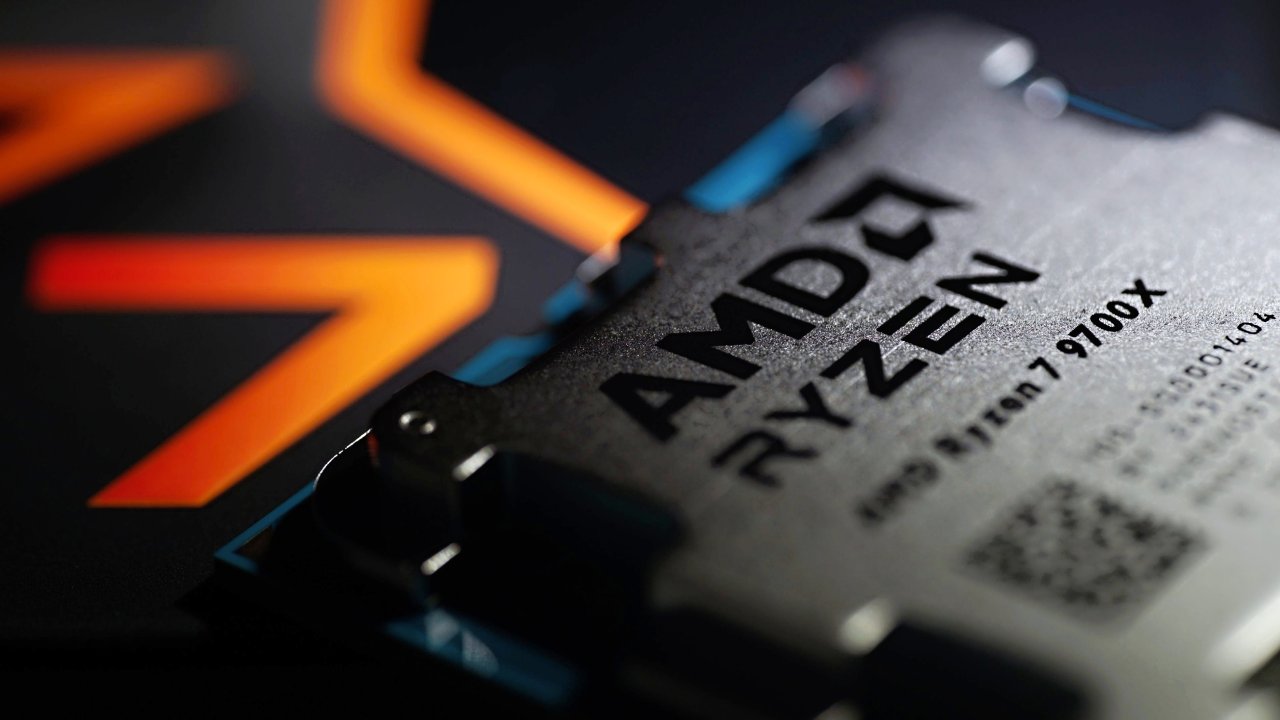
Instead of raw silicon photos, the images being discussed are renders made from schematics, blueprints, and multiple descriptions that can be verified. Since there aren't any final public images yet, these composites try to show the correct sizes and layout based on the details we have access to right now.
32-Core Grimlock Ridge (Silverton)
So far, the 32-core Grimlock Ridge model is the most dimensionally certain design discussed. Because it comes from the same IOD design lineage as Zen 6, it is possible to make very accurate predictions about die size and layout down to the mm².
On either side of the centre IOD are two 16-core chiplets called Silverton. These will be made on TSMC 14A, which will give them a significant increase in density over previous models. When installed on the AM5 socket, the physical footprint will look dense and tightly packed. This is because AMD plans to put a lot of silicon into a single standard desktop platform.
For people who bought a 16-core Zen4 flagship years ago, the possible upgrade road is old news. You could switch from a 5 nm 16-core design to a 14 nm 32-core processor while staying on the same base.
We expect a speed boost of at least 2x for single-threaded and well over 2x for multithreaded. When working on many tasks at once, 3x multithreaded speedups are not impossible. With almost 0.5GB of L3 cache for games, this platform-level generational jump is one of the biggest in the history of modern desktops.
Also, we can expect these 16-core Silverton CCDs to be heavily binned for high clock speeds, maybe even faster than 7GHz if voltage scaling works. AMD seems to be presenting this configuration as the highest-performing option for AM5.
8-Core Grimlock Ridge (Silverking)
The cost of making high-density 32-core systems will always be higher. Even though these top-of-the-line models push the edges of technology, most gamers and regular users may still choose 8-core CPUs in 2028 and 2029.
AMD is releasing a smaller CCD, Silverking, to improve cost and yield. These 8-core chiplets are nearly half the die size of Silverton and omit certain premium features such as V-Cache support. In addition, their interconnect speed is lower than that of the 16-core version.
With a die size of about 56 mm² on TSMC A14, yields should be very good, maybe even close to 100%. It's now possible to strategically trash. Desktop SKUs around $300 can get leaky dies that need higher voltage, but laptops are the only place to get the most efficient models.
Silverton CCDs may aim for very high clock speeds, but Silverking chiplets are more likely to focus on efficiency.
Desktop versions might not have as fast a clock speed as 12-core or higher models made with Silverton, but they will be a great deal and have good thermals. When laptops are used, performance-per-watt improvement becomes even more important.
20+ Core Grimlock Point Laptop APU
From Medusa Point, Grimlock Point shows how AMD's modular APU approach has grown. The IOD dimensions given here are rough estimates based on written and visual sources. Still, the structure's overall idea is clearer.
The IOD has 12 cores, a mix of Zen 7 and Zen 7C types. The exact number of low-power cores has not been revealed yet, but it seems likely that there will be two to four more ultra-low-power cores. This gives you 12 main cores right on the die, and you can add an extra 8-core Silverking CCD if you want to.
This flexibility works well from a strategic perspective. AMD doesn't need to make different premium APU designs because it can scale up a single base die by adding chiplets when higher performance is needed. When paired with discrete GPUs, adding external cores is a cheap way to increase the speed of multiple threads without having to rethink the base APU.
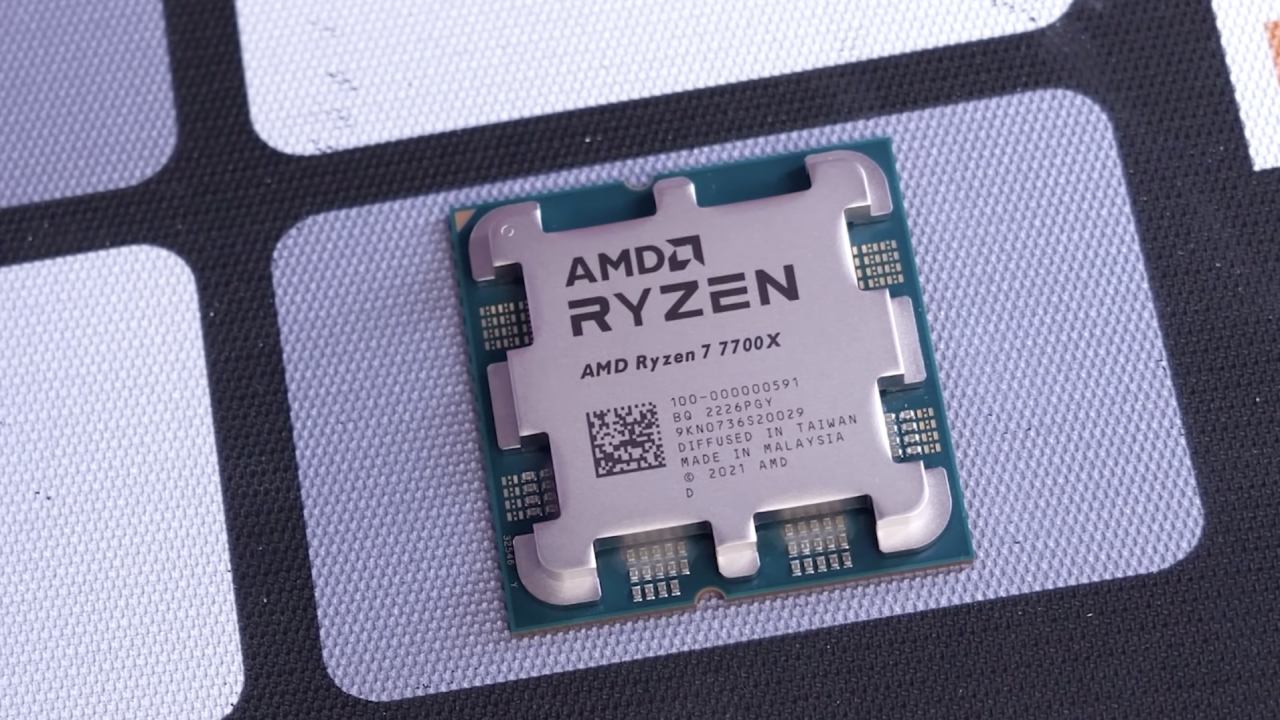
36+ Core Grimlock Halo Laptop APU
Grimlock Halo moves mobile chips into the realm of workstations. The roughly estimated IOD will include 20 cores, with 8 original Zen 7 cores and 12 Zen 7C cores. There may also be extra low-power cores added.
Zen 7 Halo changes the layout from earlier Halo designs, such as Strix Halo, which used two chiplets connected to the IOD. Up to two more 8-core laptop-optimised CCDs can be connected to the board through two bridge dies. This brings the total to 36 cores, not including the low-power cores.
The result is a lot of freedom. At its most basic level, a single 20-core APU already has a lot of computing and graphics power. When chiplets are added, it turns into a multitasking powerhouse that can compete with high-end PC replacements. The interconnect and scaling theory behind this Halo product differ from those of earlier ones, even though it looks a lot like older Halo products.
Will AMD release a Dual 8-Core Silverking 16-Core Desktop?
It makes sense to ask: could AMD make a PC with 16 cores that uses two 8-core Silverking CCDs? Technically, it could work. But from the perspective of the silicon economy, it doesn't look like it will happen.
Silverking's goal is not to add extra cores, but to lower costs and increase yield. It would take more silicon to use two smaller CCDs and extra bridge dies than to use a single 16-core Silverton chiplet.
A more probable desktop stack would look like this:
- Dual 16-core Silverton with V-Cache at the top
- Disabled-core variants, such as 28-core or 24-core configurations
- Single 16-core mid-tier models
- 12-core cut-down variants
- Silverking entry-level models with 8 cores
In the embedded or specialised laptop markets, we might see some test combinations. Still, on the general desktop AM5, efficiency is likely to lead to cleaner segmentation.
Final Thoughts
The Zen 7 Grimlock shows how far AMD wants to push the AM5 platform. We're talking about core densities never seen before, modular APUs that can be scaled up or down, aggressive binning strategies, and platforms that could last well over a decade for early users.
If performance predictions come true even close to what was expected, going from an early Zen4 flagship to a 32-core Zen 7 could be one of the biggest generational jumps ever on a single spot. No matter if you value games, multitasking, or mobile workstation power, Grimlock's design choices point to a planned and highly scalable future.
Also, check our other hardware articles:
- AMD Ryzen 9 9950X3D Review: Setting The Standard For 2025 Gaming CPU
- Amazon Luna 2025 Review: Is Prime Gaming's Cloud Service Your Go-To For Casual Fun?
- AMD RX 9070 XT Review: AMD's RDNA 4 Champion for 1440p Gaming
- GeForce Now Ultimate: Ditching Your Gaming PC For Cloud RTX 4080 Power?
- NVIDIA GeForce RTX 5080 Review (2025): Still A 4K Gaming Powerhouse?
- Intel Core Ultra 9 285K Review And Performance Breakdown (2025)
- AMD Ryzen 7 9800X3D Review: 3D V-Cache Goes God Mode with Stunning Gaming Performance
- Intel Core Ultra 9 285K vs AMD Ryzen 7 9800X3D: In-Depth Gaming Performance and Benchmark Comparison
- NVIDIA GeForce RTX 5080 Super Performance In Cyberpunk 2077: Path Tracing & DLSS 4.0 Tested
- AMD Radeon RX 9070 XT In Cyberpunk 2077: Ray Tracing & FSR 4.0 Tested
- Intel Arc B580 Review: The $250 GPU Revolutionizing 1440p Gaming
- Intel Arc B570 Vs. B580: Value, Specs, And Real-World Gaming Performance
- RTX 5090 Laptop Vs. M4 Max MacBook Pro: Ultimate Raw Performance Vs. Battery Endurance
- Intel Arc b580 Vs. RTX 4060: Game Performance And Value Analysis
- RTX5090 Hell Is Us Demo 4K Ultra Benchmark: DLSS Vs. Native Performance Guide
- NVIDIA RTX 5070 Review: Mid-Range Muscle or Marketing Hype?
- Nintendo Switch 2 Review: Handheld Performance, Features & Value Breakdown
- RTX 5070 Ti Review: Performance, Thermals & Power Efficiency Tested
- Samsung Odyssey OLED G81SF Review 2025: Ultimate 32-Inch QD-OLED Gaming Monitor
- AMD RX 9070 Performance Review: Thermals, Clocks, and Real-World FPS
- AMD Ryzen 5 7600 Review: Best Budget Gaming CPU of 2025?
- AMD Radeon RX 7800 XT Review: RDNA 3 Power For Midrange Gaming
- Asus ROG RTX 5090 Astral OC Vs. Founders Edition: The 4K Gaming Benchmark
Contributor, NoobFeed
Gaming Hardware Updates
No Data.