
Graveyard Keeper 2 Review
PC
Graveyards, zombies, city rebuilding, and a mountain of crafting systems make this sequel a much bigger management game.
Reviewed by Tahmid Mahi on Sep 24, 2026
Graveyard Keeper 2 takes the original's strange idea and pushes it much further. What starts as another grim job of digging graves and dealing with corpses slowly turns into something much larger, involving farming, alchemy, production lines, city restoration, combat, and an army of undead workers.
Graveyard Keeper 2 still has that same dark sense of humor, but the scale has changed considerably. You are no longer just trying to make a neglected cemetery respectable. You are gradually building an entire operation where almost everything you collect, craft, bury, or resurrect has a purpose.
The sequel comes from Lazy Bear Games, the Lithuanian studio founded in 2010 behind Punch Club, the original Graveyard Keeper, and Punch Club 2: Fast Forward.
Graveyard Keeper first arrived in 2018 and established itself by taking the familiar farming and life-simulation formula and replacing its cozy routines with autopsies, grave digging, questionable business practices, and a very unusual cast of characters. Four pieces of DLC followed the original game between 2018 and 2021, giving the developers plenty of room to expand that world before moving into the sequel.
Graveyard Keeper 2 was revealed in April 2026 and arrived later that year, continuing the story eight years after the events of the first game. Rather than simply adding a new map and more recipes, the sequel expands the original formula with a ruined medieval city, automated production, zombie workers, military units, and a larger story.
The result feels like a direct continuation, but far more systems compete for your attention. Graveyard Keeper 2 takes its time introducing them, and that slow expansion is a major part of the experience. Instead of throwing everything at you at once, it gradually turns a simple graveyard into a much larger operation that keeps giving you new things to manage.
The story picks up with the same graveyard keeper from the first game, although things have gone very wrong since you last saw him. Your character has spent years imprisoned after being blamed for the events that eventually led to a zombie apocalypse.
The story follows the protagonist as they split into two beings: one becomes the graveyard keeper from the original game, while the other is left to take the blame for the disaster. A fairy eventually frees you from imprisonment and sends you back into the damaged world to deal with the consequences.
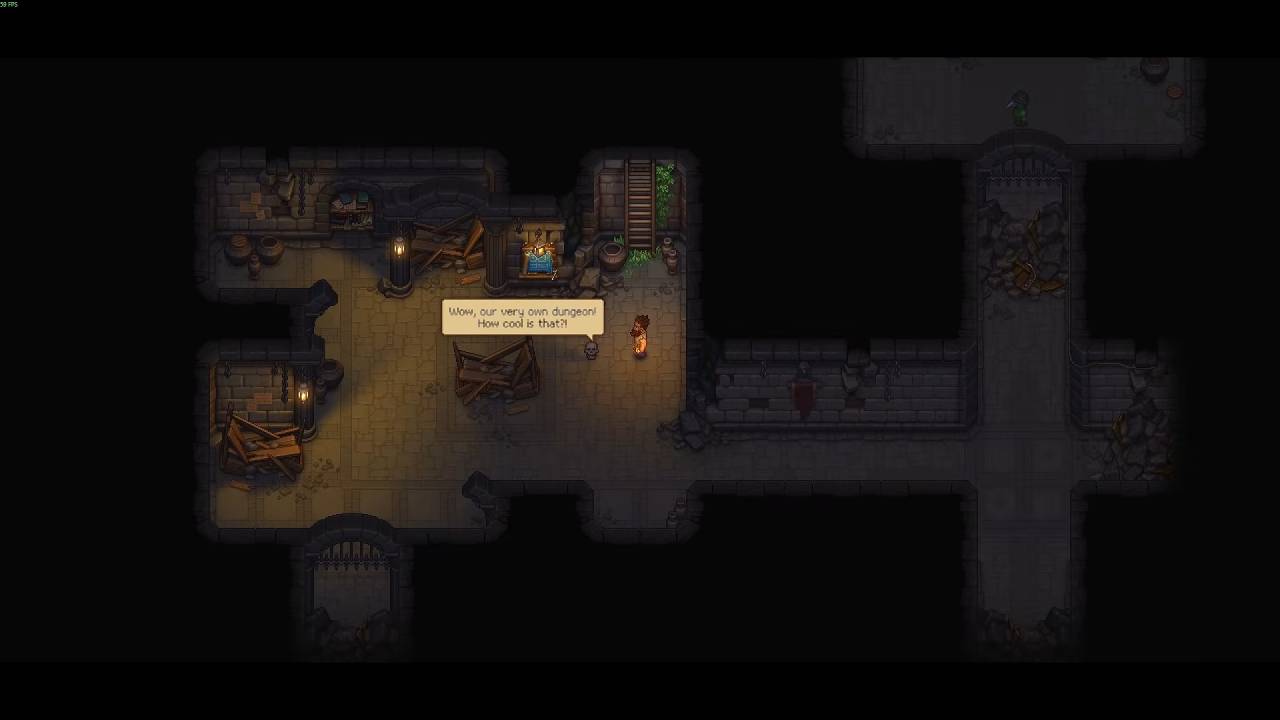
You begin chained inside a prison before escaping into a heavily damaged area.
From there, you eventually make your way toward Crown Hill and an abandoned Inquisitor base west of the village gates. Your role becomes more complicated than simply being a keeper. You are connected to the cemetery, the Inquisitors, the ruined city, and the growing zombie problem.
The story also gives the strange events from the first game more consequences, especially when you realize that the undead workforce now being used for automation is connected to the larger disaster. It turns one of the sequel’s biggest gameplay features into a meaningful part of the story rather than treating it as a separate mechanic.
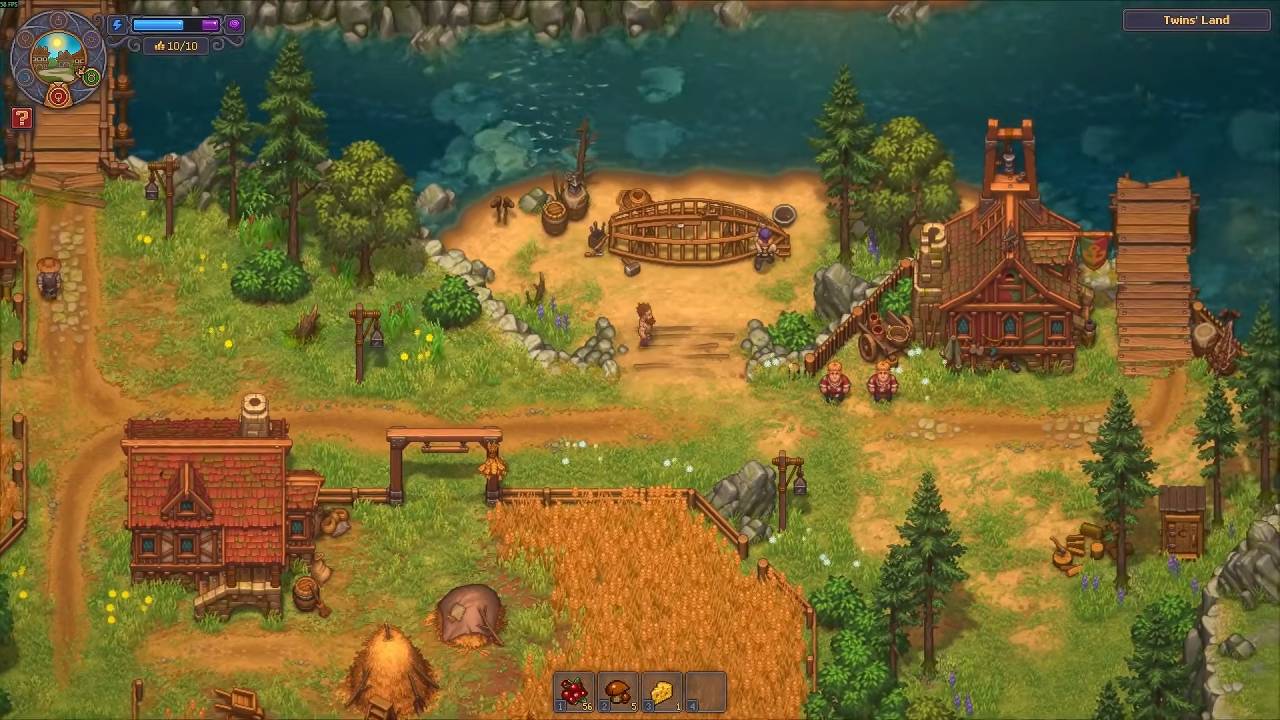
The writing keeps the series’ usual dark humor intact. You deal with grotesque characters, strange quests, and conversations that rarely take themselves seriously. Instead of giving you a peaceful farming community filled with predictable routines and romance, Graveyard Keeper 2 gives you a talkative communist donkey, a sarcastic skull companion named Larry, a goddess hidden in a swamp sanctuary, and a traveling salesman who carries dynamite.
Your character also has plenty of dry responses, which helps keep the long stretches of resource management from becoming completely mechanical. Several narrative threads run at the same time, and quests often connect to one another rather than feeling like isolated errands.
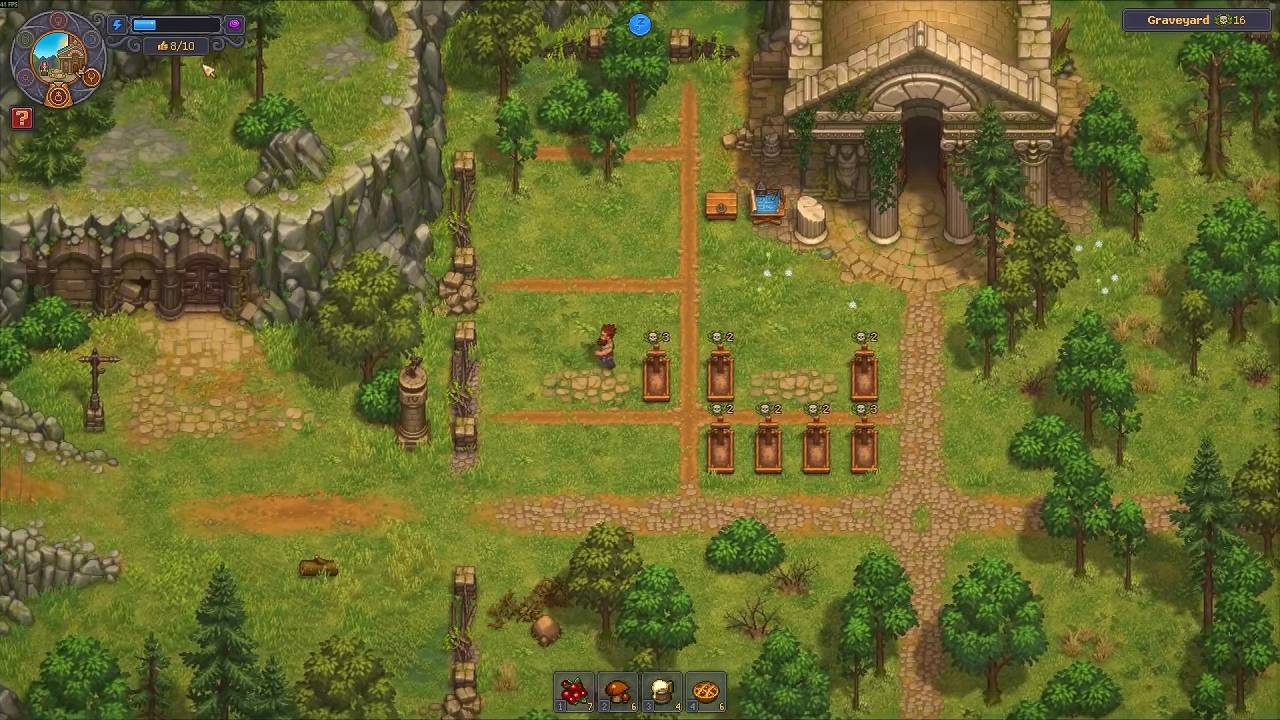
The graveyard remains at the center of everything. Bodies arrive at your morgue, and you decide what to do with them before they eventually become part of your cemetery. You perform autopsies, remove organs, improve the quality of corpses, and work out which bodies are worth burying.
The problem is that graveyard management is only one piece of the larger system.
You also gather wood and stone, build workstations, grow crops, cook meals, fish, study materials, experiment with alchemy, and work through an enormous technology tree. Individual talents and mastery levels add progression, while inspiration points let you unlock perks and upgrades.
Some technology also ties to relationships with characters, so progressing through the story can directly affect what you can build. You quickly stop thinking about the cemetery as your entire job and start treating it as the foundation for a much bigger production system.
Almost every activity uses stamina, which naturally limits your days. You constantly have to decide whether it is worth spending your remaining energy on another task or heading home to sleep. The sequel also introduces an insanity system that makes pushing yourself too far less useful.
As your character becomes tired, continuing to work increases insanity and reduces your maximum energy. Sleeping fixes most of the problem, while certain foods and drinks let you manage your stamina more efficiently. This adds another layer to planning your day, especially when several objectives compete for your limited time.
The sheer number of systems is both one of the game’s biggest strengths and one of its most noticeable problems. You are given access to dozens of tools and hundreds of crafting possibilities, and a seemingly simple item can sometimes require a specific workstation, material, technology, or separate progression path.
The improved quest system helps by showing task chains and explaining why certain objectives matter, but the crafting menus can still feel overwhelming. You often know what you want to make but don't immediately know which branch of the technology tree unlocks it.
That confusion fades once the automation systems open up.
Zombies are one of the biggest additions to Graveyard Keeper 2, and they eventually change how you approach the game. Instead of manually handling every resource and crafting step, you can resurrect zombies and put them to work. Different zombies have different strengths, and you can specialize them for jobs such as farming, quarrying, alchemy, or working at production stations.
The deeper you go, the more these workers become part of a medieval factory. Automated workstations can handle production, storage can feed crafting systems, and conveyor belts eventually move materials between different stages of production. Zombies can carry heavy resources and perform repetitive jobs while you concentrate on exploration, quests, construction, or improving your wider operation.
That progression is intentionally slow. Even after several hours, you can still find yourself unlocking major systems rather than feeling like you have seen everything Graveyard Keeper 2 has to offer. The technology tree gradually changes what you consider important. Early on, you focus on basic tools and getting the graveyard functioning.
Later, you start considering production efficiency, zombie specialization, automated resource chains, and the order in which to upgrade different systems. Graveyard Keeper 2 essentially rewards you for accepting that manual work is temporary.
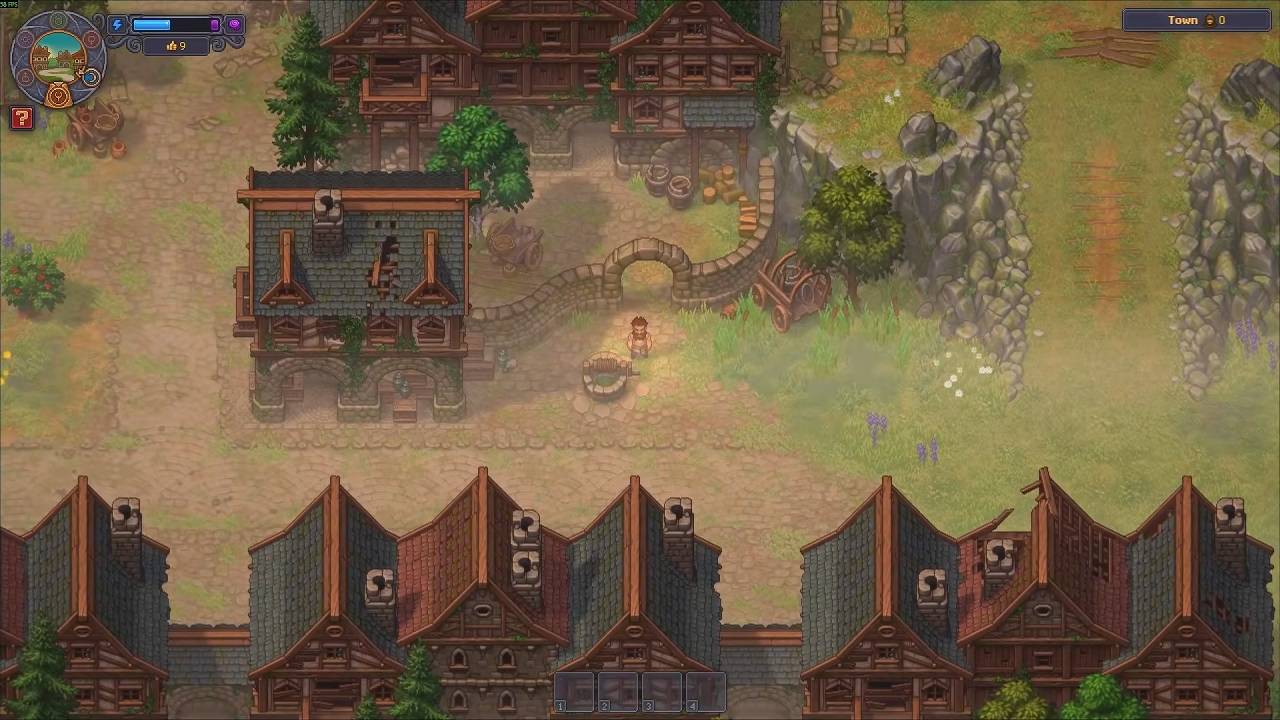
The city adds another major reason to keep expanding. Large sections of the medieval settlement have been overrun by zombies, and reclaiming them becomes another long-term objective. You clear districts, rebuild damaged buildings, and gradually bring residents and businesses back.
Each restored part of the city feeds into the larger economy, giving you new markets, recurring income, and additional reasons to keep improving your production network. The city is not simply a new location to walk through. It becomes another part of the management loop.
This creates a satisfying chain between the different systems.
Your graveyard produces income; that income supports production; production helps you rebuild the city; the city gives you more economic opportunities; and automation allows you to maintain everything without personally handling every repetitive task.
Your corpses eventually become workers, your workers produce resources, and those resources help you expand the settlement. It is an intentionally strange system, but that is exactly why it fits the world so well. Every part of the process feeds into another, making even the most unpleasant jobs feel useful as your operation grows.
Combat comes into play when you begin reclaiming parts of the city. Instead of turning Graveyard Keeper 2 into a full action RPG, the developers use a relatively simple tower-defense-style system. You can place barricades and defensive structures, build archer towers, equip troops, and lead squads into battles against waves of undead.
Combat works because it supports the management mechanics rather than replacing them. You won't suddenly spend most of your time learning complex combos or mastering an elaborate combat system. Instead, the battles give your production chains another purpose.
The equipment you craft matters because your troops need it, the city needs defenses, and capturing control points helps you reclaim districts. It is a useful change of pace, although anyone looking for a deep combat system will probably find these sections relatively simple.
The same philosophy applies to the game’s progression.
You gain access to new technologies, talents, crafting abilities, and production methods as you continue working through the world. Instead of a traditional experience system where defeating enemies is the main way to level up, progression is spread across what you actually do. Farming has its own development, crafting unlocks new options, and your character’s talents open different benefits.
The downside is that Graveyard Keeper 2 can sometimes give you more opportunities than you have time to handle. You can have a farming objective waiting while an NPC needs something crafted, a technology requires research, a building needs materials, and your graveyard still needs attention.
Eventually, however, that pressure starts working in your favor. You learn which jobs are worth doing manually and which to automate. You start improving routes, shortening unnecessary trips, organizing storage, and deciding which production chains deserve attention first. Graveyard Keeper 2 gradually shifts from a collection of chores into a system you actively optimize.
Visually, Graveyard Keeper 2 makes one of its biggest departures from the original by moving from stylized pixel art into full 3D. The sequel is built in Unreal Engine 5 while keeping the familiar fixed top-down camera. The shift is not just about making everything look more detailed.
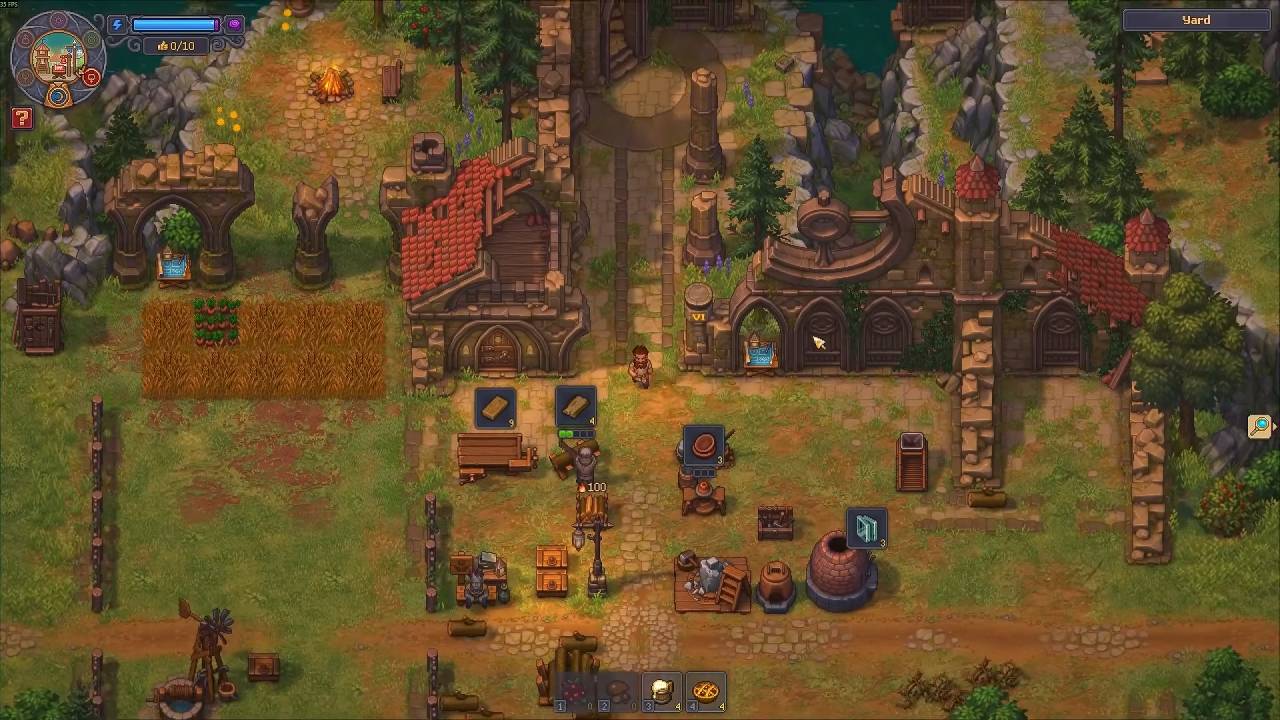
The world also feels more active because of the additional environmental effects. Sunlight and shadows change throughout the day, giving you another visual way to understand the passage of time. Vegetation reacts to wind and weather, while water and other environmental details move more than in the original's flatter presentation.
Nighttime also uses dynamic shading rather than simply placing a dark filter over the screen. These details help the cemetery, village, and surrounding areas feel like places that continue operating while you are busy with something else.
The audio presentation is another noticeable improvement.
The story is fully voiced in English, with British regional accents used across the cast, while the familiar mumbling style from the first game is still available for players who prefer that approach. The voice acting gives the characters more personality, particularly during the sarcastic conversations between the keeper and Larry.
Performance is generally solid, particularly during simpler activities around the graveyard and church. Loading between areas and interiors is also much faster than in the original, which helps when you are constantly moving between different parts of your operation. The bigger concern comes from how much Graveyard Keeper 2 has to simulate later on.
When several zombies work simultaneously, you may notice frame-pacing fluctuations, suggesting that the number of active workers and automated tasks puts more pressure on the CPU. That becomes something worth watching as your factory and city continue to grow.
Graveyard Keeper 2 ultimately works because it understands what made the original unusual and refuses to abandon it. You still spend plenty of time digging graves, processing bodies, collecting resources, and worrying about stamina, but now those activities feed into a much larger system.
The ruined city gives you another long-term project, zombies give you a reason to automate, combat gives your production systems another purpose, and the story connects the sequel’s new mechanics to the first game's consequences.
The biggest thing you need to accept is the pace.
This is not a game that constantly rewards you with new abilities or dramatic progress every few minutes. You work through small improvements, unlock another technology, automate another task, improve another worker, and eventually look back at how much your operation has changed. If you enjoy that gradual process, the amount of interconnected content gives you plenty to manage.
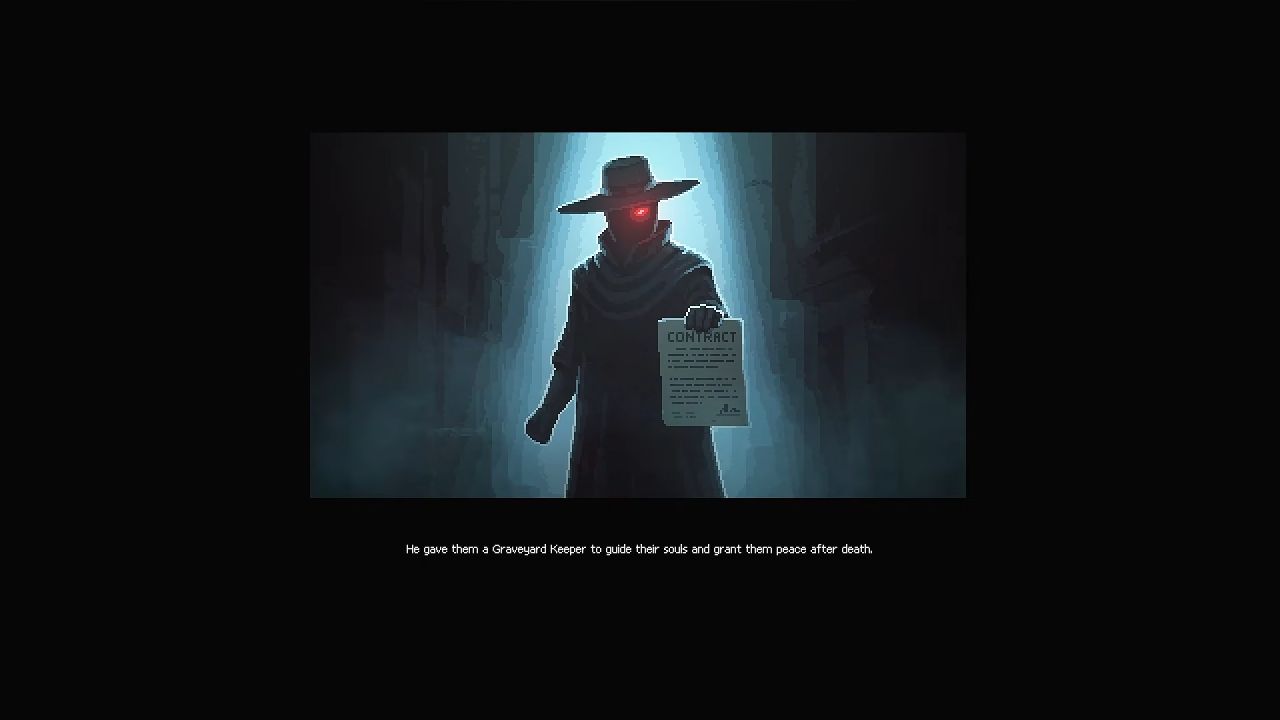
For fans of the original, the sequel expands the formula without making it unrecognizable. For players who enjoy management games but want something less wholesome than traditional farming sims, its combination of cemetery work, zombies, alchemy, dark humor, city restoration, and production chains gives the genre a different personality.
You are essentially building a medieval industrial operation out of dead bodies, questionable materials, and increasingly complicated machinery, and Graveyard Keeper 2 is perfectly happy to let that ridiculous idea become increasingly practical. What starts as a handful of manual tasks slowly turns into a system where you spend more time planning and managing than doing the work yourself.
Graveyard Keeper 2 is at its best when all those systems finally start connecting. What begins with one graveyard eventually becomes an economy, a factory, a military operation, and a rebuilding project. The journey is slow, sometimes confusing, and occasionally repetitive, but the progression has a clear purpose.
Editor, NoobFeed
Verdict
Graveyard Keeper 2 expands the original with deeper automation, city rebuilding, voiced characters, and a larger progression system.
78
Related News
No Data.