
Welcome to Elderfield Review
PC
A farming sim that swaps easy comfort for eldritch dread, dice rolls, and a genuinely deep RPG underneath the pixels.
Reviewed by Maisie Scott on Sep 18, 2026
Welcome to Elderfield, developed by Chris Cote and Ill-Advised Games, published by Kwalee, and launched on PC via Steam on September 10. It enters a genre that's honestly a little overcrowded these days. Cozy farming sims pop up constantly, all chasing the same crowd who want to plant crops, befriend townsfolk, and maybe fall in love with one of them along the way.
The title takes that well-worn formula and folds in something stranger: Lovecraftian horror, turn-based combat, and a soundtrack from a developer who apparently used to make lo-fi music professionally, which explains a lot once you hear it. You go in expecting Stardew Valley with a spooky coat of paint.
You come out realizing Welcome to Elderfield is closer to a fully-fledged RPG wearing a farming sim's skin.
You begin Welcome to Elderfield as a Dreamer, a term pulled straight from Lovecraft's mythos, meaning you can slip into the Dreamlands while you sleep. It's the kind of detail the game drops on you early and mostly trusts you to figure out on your own.
You've moved to the town of Elderfield to take over a farm that used to belong to a man who, for reasons nobody in town finds especially alarming, peeled off his own skin and kept growing bones until he got too big to fit through his own front door. He's stuck there now, difficult to feed, mentioned only in passing as an inconvenience rather than a tragedy.
That's basically the tone of the whole town: unsettling things happen constantly, and everyone just adjusts. Your neighbor is a cat named Dave, and nobody comments. Skeletons wander the streets and eventually shed their flesh entirely because, as one of them tells you, nowhere in Elderfield hires skeletons with skin on, and plenty of them end up migrating down into a winding set of catacombs once they've fully lost it.
No cars appear anywhere in town, the school shut down at some point without explanation, and yet the library stays busy, with residents turning up for shared events almost constantly. Underneath the daily chores sits a bigger plot. A cult is working to free something ancient sealed inside a tower standing right there on your new farm.
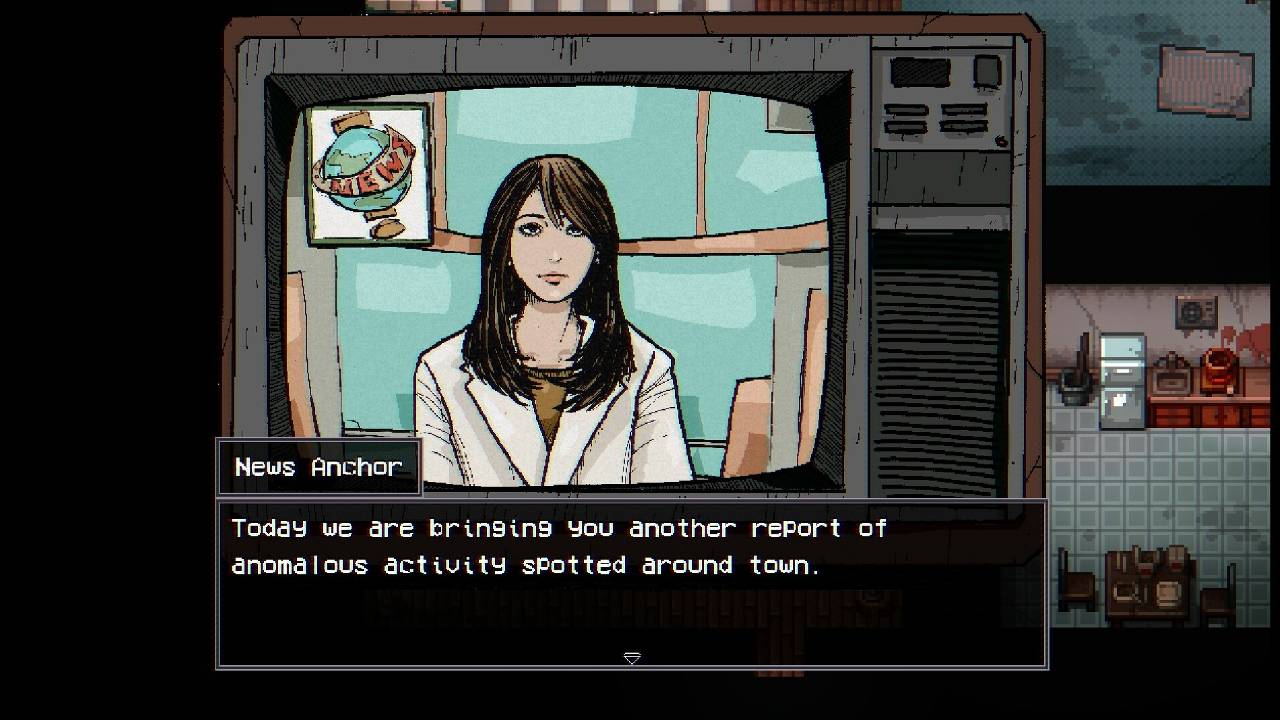
You piece the mystery together through nightly news reports covering whatever fresh anomaly cropped up overnight.
It might be a ghost at the lake, or a phone number you're told never to call. The core narrative is intentionally light-touch, letting weirdness accumulate instead of hitting you with one big reveal, though the character writing doesn't always keep pace.
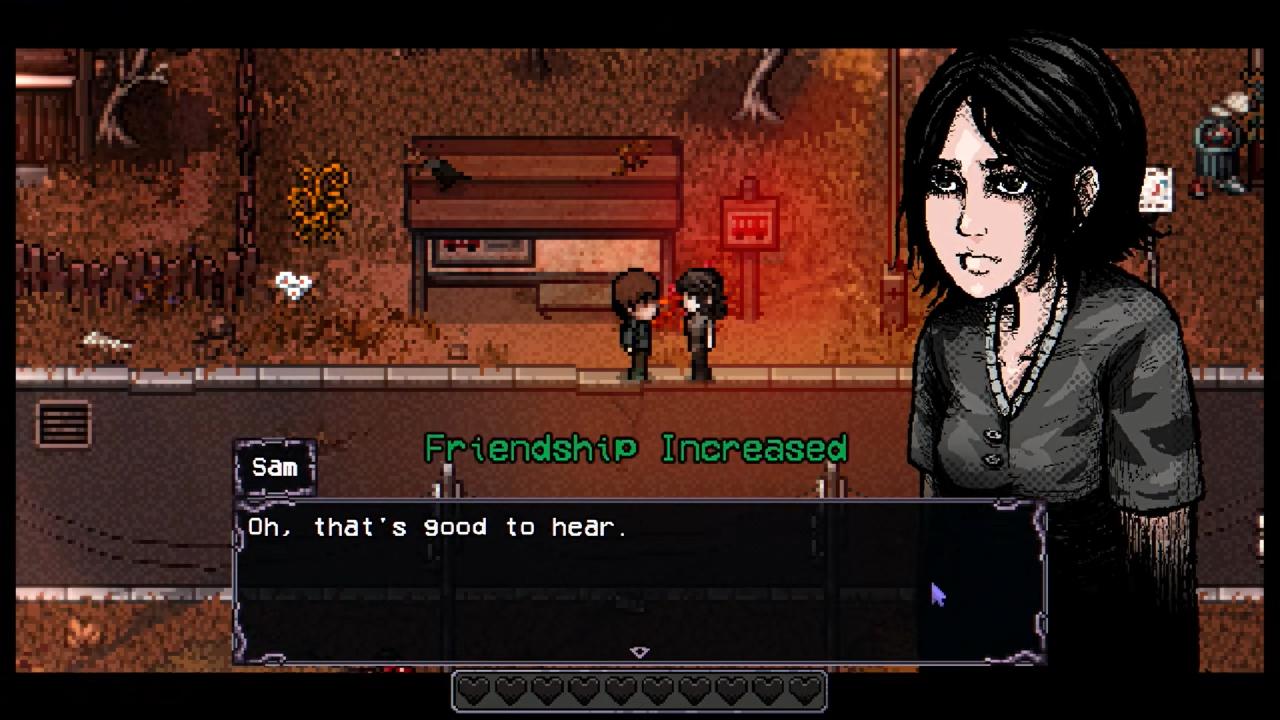
Relationships with the townsfolk barely evolve no matter how many quests you do for them, and gift-giving does most of the heavy lifting for building affection, with the cast leaning fairly generic and short on real diversity. On the gameplay side, Welcome to Elderfield throws a lot at you, but it rarely feels like busywork.
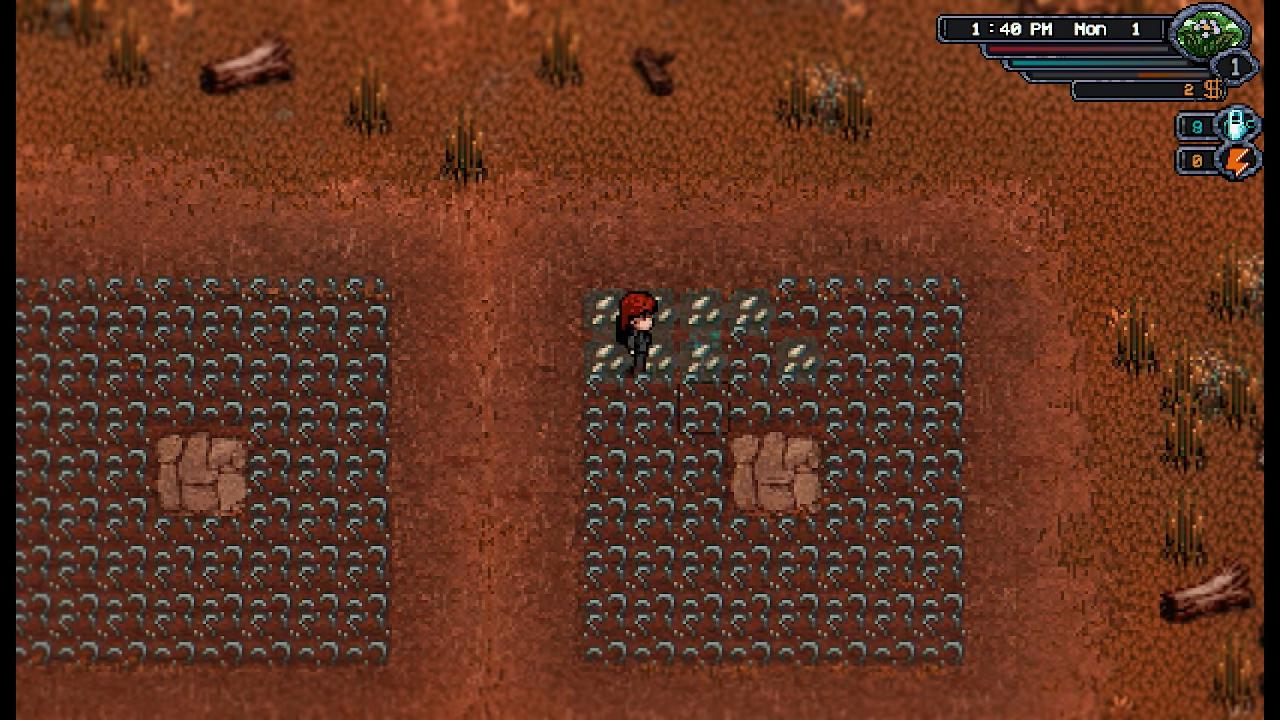
Farming forms the backbone: you clear and cleanse your land with a balm before anything will grow, since untreated soil breeds monster infestations, then plant crops that change with each of the four seasons, each carrying its own holiday event and matching soundtrack shift.
No stamina bar ticks down, or tools degrade, and your character automatically pulls the tool you need from your inventory, so you're not fumbling through menus mid-task. Animals need daily attention if you keep any, and fishing, mining, and cooking round out your resource loop, with a museum where you can donate finds for extra rewards.
You'll eventually pick up a bike to get around faster, and later learn a Warp spell from a random shopper in the mall's Ultra Video store that teleports you home for free whenever you're low on health or just done walking. Elderfield itself sprawls out further than it first appears, with a church, sewers, a police station, a mall, an apartment building, and a school all worth digging through.
A hand-drawn map ties it all together, but it could use clearer markers for where your quests actually are.
Every Sunday you can head to church and pledge yourself to one of roughly a dozen old gods, each granting a different stat trade-off, so your choice of deity doubles as a build decision. Sleep works differently than you'd expect too: midnight alone pushes the calendar forward, so climbing into bed is actually a separate, optional action that can trigger its own good or bad event depending on your luck.
Skip sleeping for more than a couple of days, though, and you'll pick up a debuff that slows your experience gain until you finally rest. Bathing, meanwhile, fully restores your health and magic and clears most curses. Still, it respawns every monster you've already cleared and resets active mysteries, so you quickly learn not to bathe on autopilot before heading back out.
Storage helps soften some of that grind too, since your boxes stay linked across locations and overflow loot gets sent there automatically once your bag fills up. Each night also brings a different moon phase, telling you exactly what changed.

At the same time, you slept: a blood-colored moon respawns monsters and resets mysteries, a harvest moon brings mining spots and foraging patches back, a paler variant means the tax collector is due, and a rarer one wipes the world clean while topping off your health and magic.
Once you start reading the moon instead of ignoring it, planning your next day gets a lot easier.
You also stumble onto little secrets, like a bell somewhere in town that rings if you fiddle with it enough, which sums up how much Elderfield rewards you for poking around. Combat in Welcome to Elderfield is turn-based, built around action points that start at just one and expand once you clear an early mini-boss encounter.
You're customizing full builds here, splitting roughly between a steadier but less flashy melee path and a harder-hitting but fragile mage path, and gear you craft or find slots into that build with real consequences. Some monsters you'll drop in two hits; the next one over might wreck you because your loadout wasn't suited for it, so swapping saved loadouts before heading into a new area actually matters.
Layered on top of all that is a constant dice-roll system lifted straight from tabletop games, rolling a six-sided die for nearly every interaction you attempt, whether that's digging through a bin, looting a corpse, poking at a haunted object, or just going to sleep. Your luck stat directly shapes these odds, and certain rolls hide extra outcomes on results of zero or seven that can swing things dramatically, for better or worse.
Bad rolls land you curses, surprise fights, or even permanent stat penalties in some encounters; good ones hand you rare rewards you wouldn't get any other way, including gear tucked behind doors only followers of a particular god can open.
Luck isn't the whole story; skills add real depth.
Combat skills add another wrinkle by quietly building toward secondary effects rather than only dealing damage on the turn you use them; some build toward healing you back up, some toward letting you dodge the next hit, and some toward doubling your next attack once they trigger. At that point, the built-up value resets and starts over.
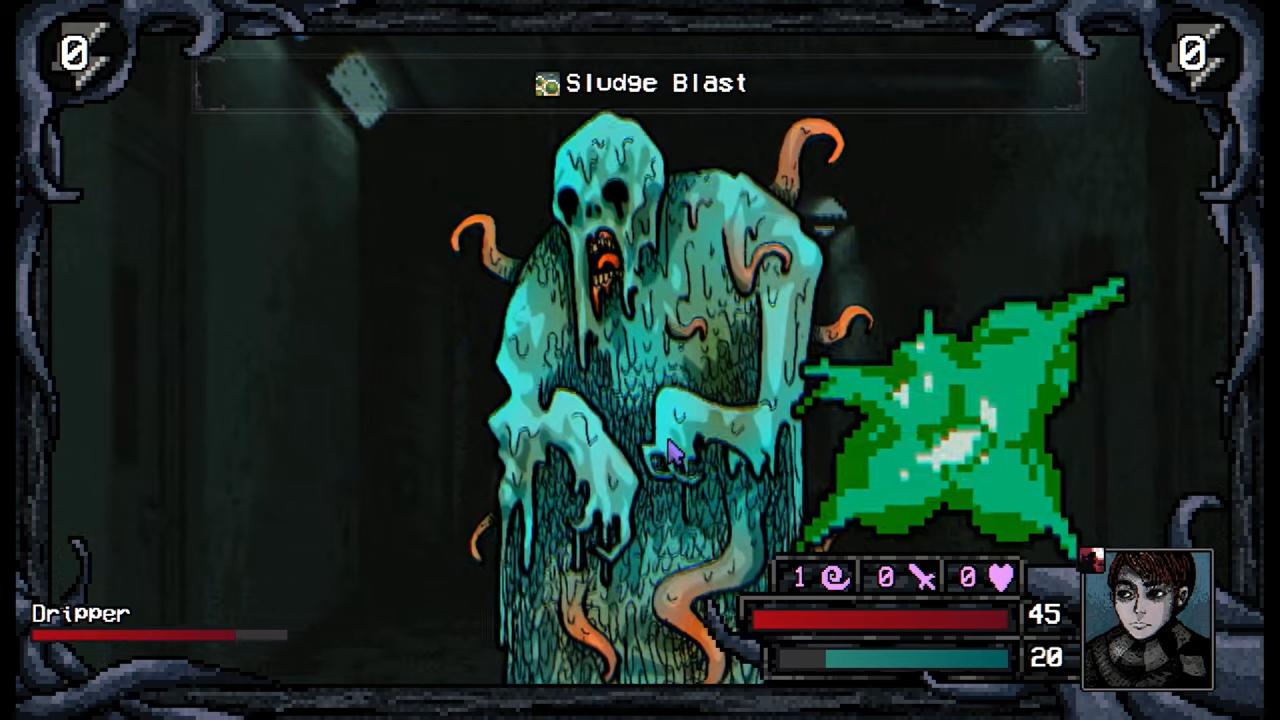
What works well here is how much genuine strategy that adds to fights in Welcome to Elderfield that could've easily been simple slash-until-it-dies affairs, and the dice system gives even routine tasks a bit of tension you don't normally get in this genre.
Where it falls short is mostly in clarity: crafting menus don't show how many of an item you can make or how much you currently have. Early tool upgrades aren't well signposted, so you can end up stuck wondering why you can't chop down a tree or mine a certain rock for as long as you should.
On top of that, missed dialogue from quest-givers isn't saved anywhere, so you sometimes have to backtrack and restart a conversation just to recover information you'd already heard once. If any of this sounds too punishing, the game also lets you flip the difficulty at any point, from a gentler, cozy setting where enemies hit softer, and luck matters less to a much harsher mode for anyone who wants every roll to actually sting.
Experience and progression in Welcome to Elderfield tie closely into that combat loop rather than sitting on the sidelines.
Fighting monsters, working through combat skill trees, and gearing up all feed directly into how deep you can push into dungeons, how tough the enemies guarding them get, and how your farming income bankrolls that progression by paying for crafting materials and gear upgrades.
Every bit of produce you sell and every monster you clear edges you closer to lifting the seal on the tower sitting at the center of your farm, which the whole game is quietly building toward. Skipping sleep to grind longer sounds appealing at first, but the experience-gain debuff kicks in fast enough that it stops being worth it, so pacing yourself between farming, fighting, and resting matters more than brute-forcing encounters.
Even the tax collector fits into this rhythm, showing up every couple of weeks to ask for specific crops and telling you in advance what he wants next, so keeping up with him becomes another quiet layer of planning rather than a surprise expense.
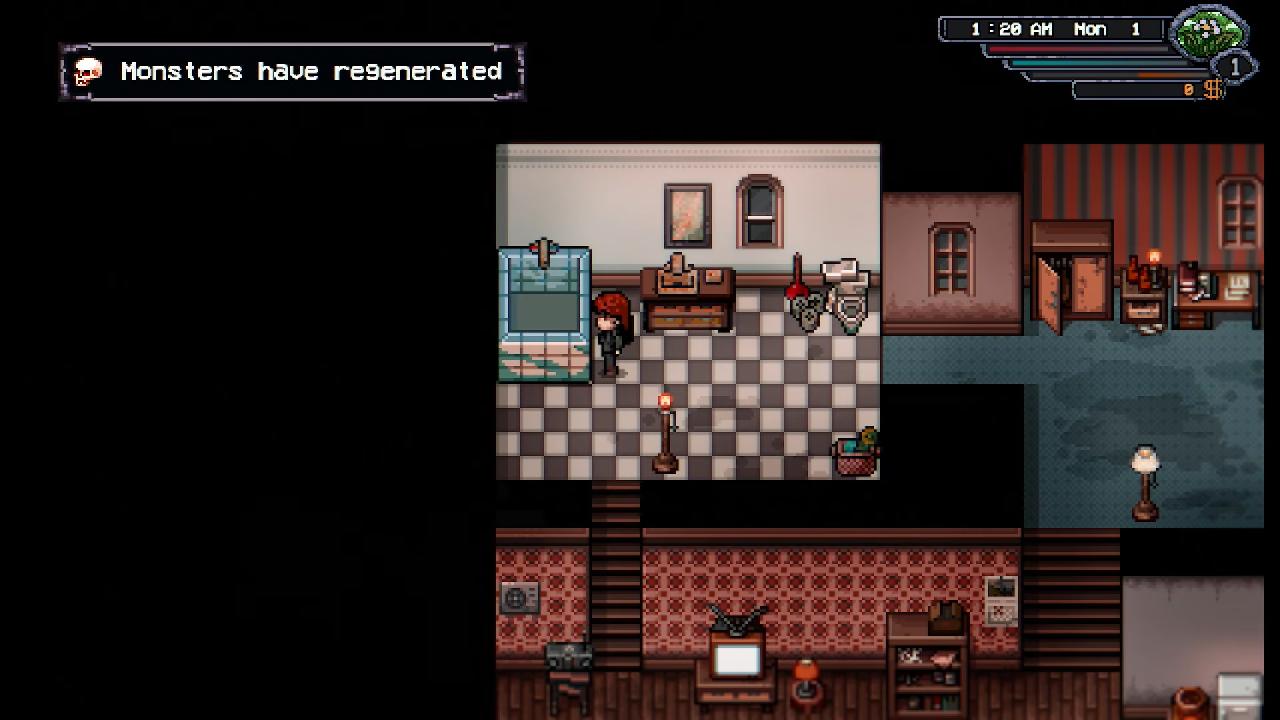
Visually, Welcome to Elderfield uses pixel art washed in a warm orange-and-brown filter that gives the whole town an autumnal, slightly faded look, like flipping through an old picture book of darker fairy tales crossed with Junji Ito's horror art. It's a striking combination early on, letting cozy little details like crop rows and shopfronts sit right next to ghostly hands reaching out of the ground or that sealed tower looming over your farm.
Palette fatigue sets in, but monster designs still impress.
After several hours, though, that same orange-brown palette starts to feel a bit one-note, and a touch more color variety across different areas of town would've kept things feeling fresh for longer. The monster designs deserve credit too, since plenty of harmless-looking little creatures turn genuinely horrifying the moment a fight actually starts, and the combat screen does a good job of showing that transformation off properly.
The soundtrack in Welcome to Elderfield matches that mood without ever getting in the way, leaning lo-fi with a darker edge that sits somewhere between an old Twilight Zone episode and Twin Peaks. It's calm enough to almost forget it's playing, yet it never lets you fully relax, and the radio stations scattered around town add their own layer of unease while you're out exploring.
Little touches like creaking doors and echoing tunnels reinforce that same feeling without ever becoming overbearing. The only real complaint is that the master volume defaults far too loud the first time you boot the game, which is more of a minor annoyance than an actual flaw.
By the time you've put real hours into Welcome to Elderfield, it's clear that the cozy farming sim label barely covers what's actually going on beneath the surface. Farming, crafting, combat, exploration, and its social systems all lean on each other in a way that keeps pulling you toward just one more task, one more mystery, one more dungeon room.
Not everything holds up, though most systems still shine.
The dice-driven unpredictability keeps even routine chores feeling a little charged, and the combat carries far more weight than the genre usually bothers with. It stumbles in its social writing, since romance options barely deepen no matter how much time you invest, and a couple of glitches slipped through during your playthrough, including one that skipped several in-game days and swapped your gear without warning.
Performance held up well across a handful of hours split between docked and handheld play, with short loading screens and a steady frame rate throughout, aside from one freeze that a nearby autosave thankfully kept you from losing much progress to.
Text stayed easy to read on a docked screen, though handheld sessions occasionally called for zooming in given how much there is to read. For the price, Welcome to Elderfield feels undersold rather than overpriced, especially once you realize how many hours it can quietly swallow without repeating itself.
None of the rough edges undo just how much is actually packed into the game, and it's easy to walk away feeling like you've barely scratched the surface of everything Elderfield has hidden away in its mines, dungeons, and increasingly strange nightly news reports.
Editor, NoobFeed
Verdict
Welcome to Elderfield, which blends cozy farming with dice-driven RPG combat and Lovecraftian dread into an addictive, uneven mix; thin on romance, but endlessly worth exploring.
85
Related News
No Data.