
1666: Amsterdam Review
PC
Early Access
A witch, a time-displaced cat, and a supernatural conspiracy turn 17th-century Amsterdam into an unusual action-adventure, but rough combat, awkward movement, and early-access problems keep a promising idea from fully coming together.
Reviewed by Maisie Scott on Sep 03, 2026
1666: Amsterdam has taken a remarkably long and complicated route to becoming a playable game. The project originated with Patrice Désilets, one of the key creative figures behind the original Assassin's Creed and Assassin's Creed II, as well as Prince of Persia: The Sands of Time.
1666: Amsterdam was first being developed at Ubisoft more than 15 years ago, but its journey was interrupted when Désilets left the company in 2010 and joined THQ Montreal to work on a new intellectual property. Ubisoft later acquired THQ Montreal, and Désilets was eventually fired, sparking a lengthy dispute over the project's rights.
Désilets ultimately regained control of the idea, and Panache Digital Games, the studio he co-founded, is now developing 1666: Amsterdam.
That history gives 1666: Amsterdam extra weight before you even start playing. You are not simply looking at another new historical action game; you are finally getting to play a project that has been connected to one of the creators behind one of the biggest historical action franchises for years.
The current version is available in early access for $30, and Panache expects 1666: Amsterdam to remain in this state for roughly a year. What you have now is only part of the eventual experience, with the developers planning to add more content, expand the open world, improve combat, fix bugs, and optimize throughout development.
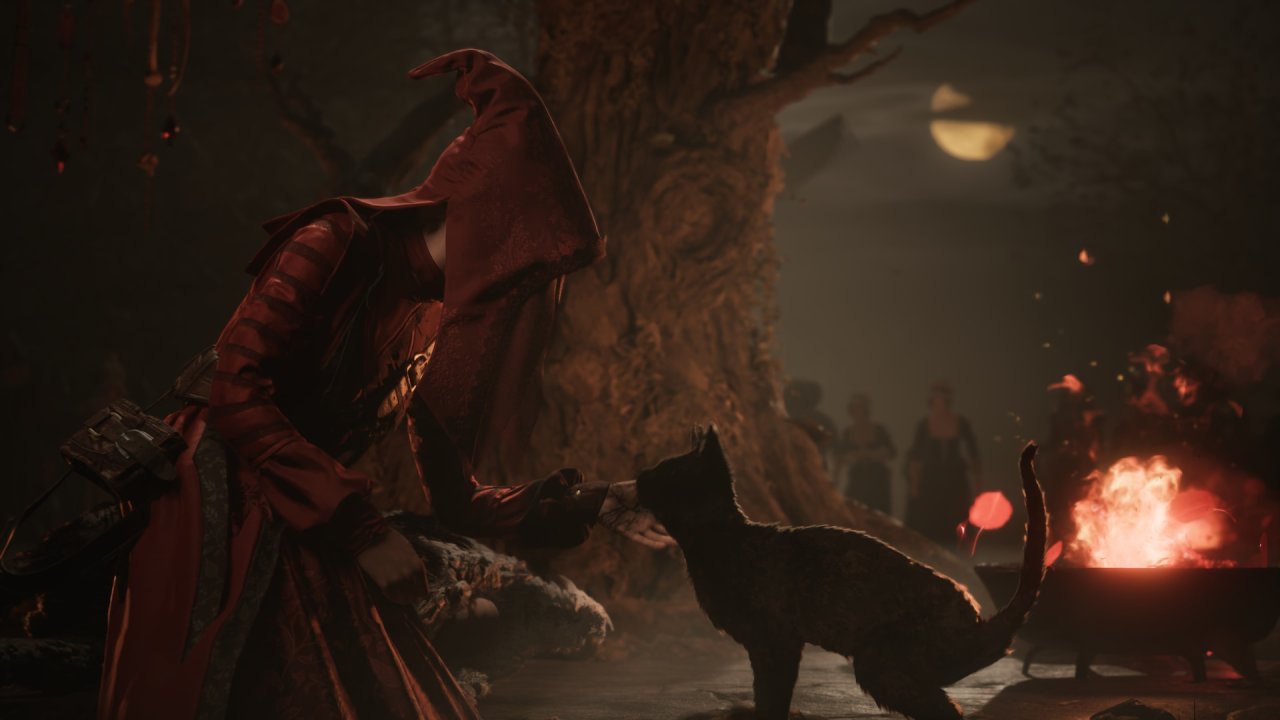
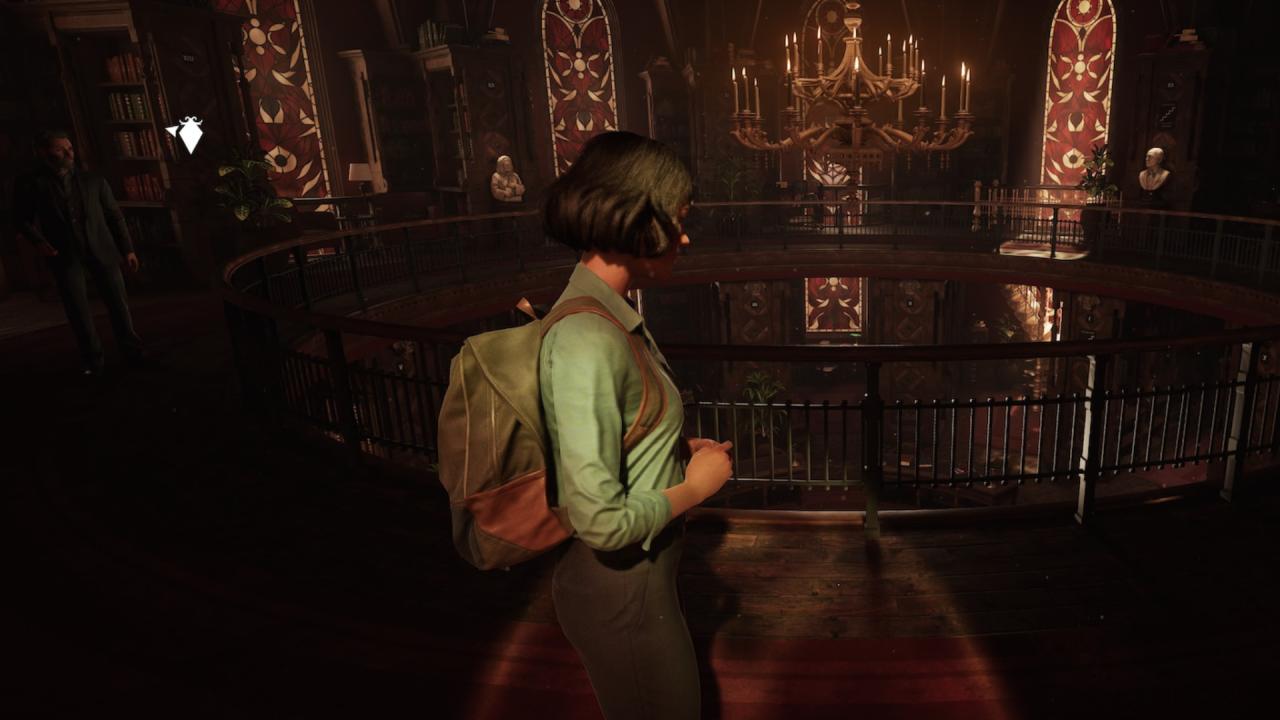
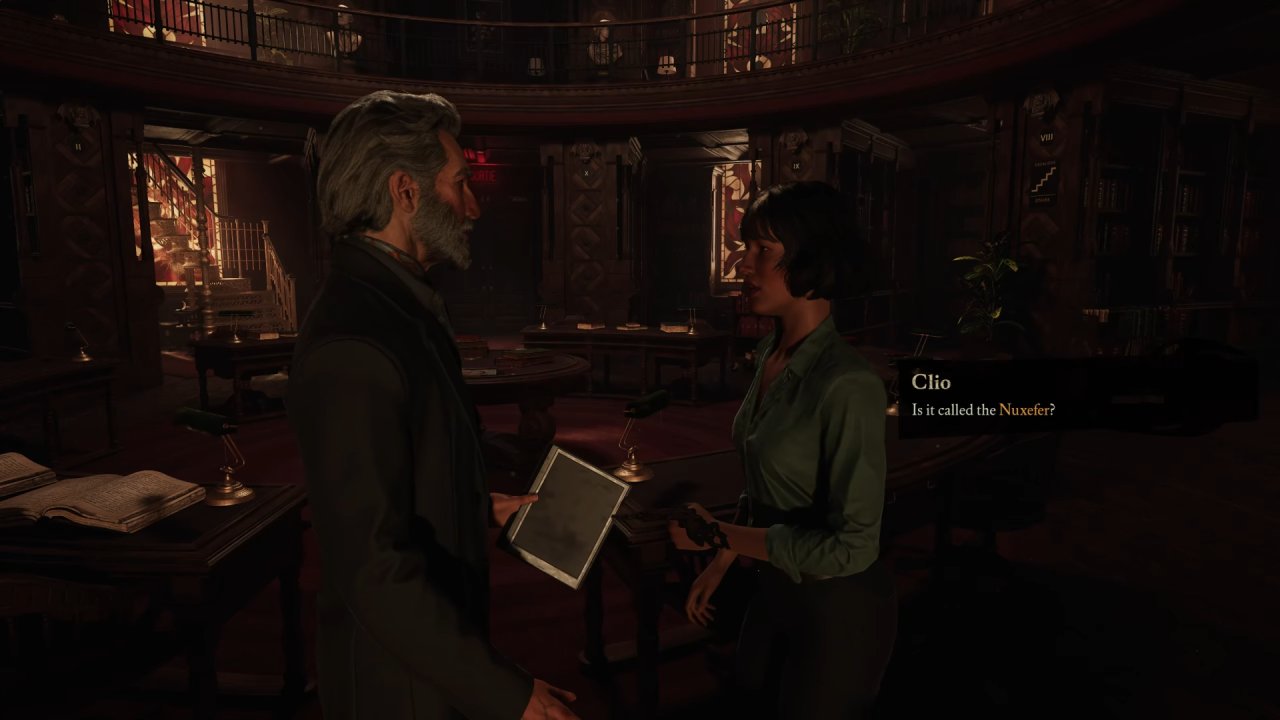
The story begins in December 1665 with Noah, a witch from the Zandarus tribe. You perform a mysterious ceremony and choose a cat that will become your companion before 1666: Amsterdam suddenly moves into the present day. You then meet Cleo, a young woman who has discovered a strange letter from her father, Aaron.
Those memories take you back to 1999, 333 years after the events of 1666. Aaron undergoes an arcane ritual that sends his consciousness back through time, eventually leaving him inside the body of the black cat Noah selected.
From there, you follow Noah and Aaron as they work together to investigate Amsterdam and hunt down the Originals, individuals who received extraordinary powers from the Givers and now refuse to give them back.
Noah's job is to find these Originals and collect what's owed. For thousands of years, the Givers have given people supernatural abilities to live longer and to make the world bend to their will. Eventually, the Originals have to give those powers back, but they aren't exactly thrilled to cooperate.
The story splits between Noah, Aaron, and Cleo, with the timelines slowly coming together.
Cleo tries to understand her family's history and decipher the information her father left behind, while Noah and Aaron live through the events that created that history. The setup is complicated, and the opening hour can be disorienting because characters often discuss supernatural events in a surprisingly casual way without immediately explaining what is happening.
That structure will probably remind you of the way the older Assassin's Creed games jumped between historical and modern-day stories. If you disliked those modern-day interruptions, you may find the constant shifts here equally frustrating.
If you enjoyed the way those different periods slowly revealed more about one another, however, there is something satisfying about watching the connections develop. 1666: Amsterdam clearly wants its multiple timelines to be more than a storytelling gimmick.
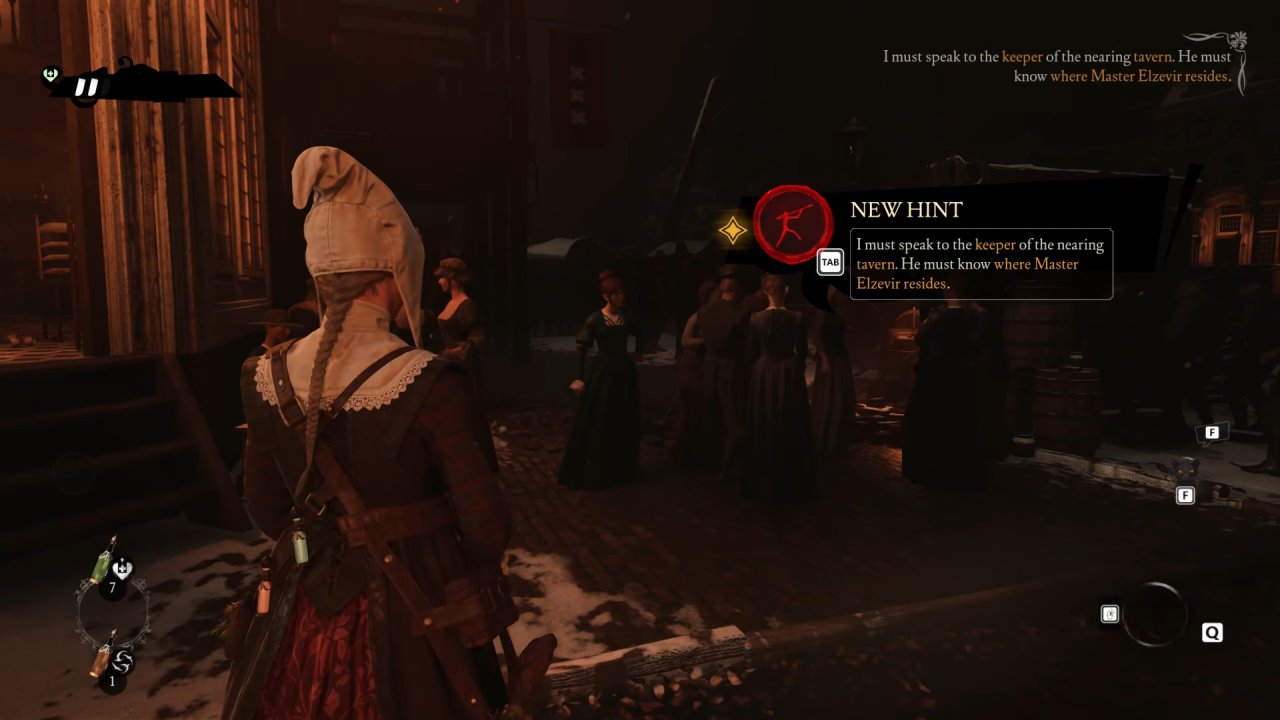
Once you begin playing, your main job is to explore Amsterdam and figure out where the Originals are hiding. Rather than constantly pointing you toward the correct location, 1666: Amsterdam expects you to investigate. You can speak to people, look for clues, search different areas, and gradually build up enough information to work out where your target is located.
You spend much of your time moving around Amsterdam, searching for information about your next target. 1666: Amsterdam can give you a name or a location and leave you to figure out what that information means.
You might need to talk to a particular person, investigate a building, or search an area before you understand where you are supposed to go next. It is a slower approach than most modern open-world games, but it can be rewarding because the solution feels like something you discovered yourself.
This investigative structure is particularly useful because the Originals are supposed to be hiding among ordinary people.
You are not simply tracking a monster across a map. You are trying to determine who is secretly much more powerful than they seem. That means paying attention to conversations and the environment can matter just as much as knowing how to fight.
1666: Amsterdam also makes use of the switching between Noah and Aaron, with each character having a different set of abilities. Noah does the fighting, talking, investigating, and spell-casting, while Aaron can turn into a cat, providing you with access to places Noah can't reach.

The two characters are designed to work together rather than operate as completely separate protagonists. You can have Noah under your control, but Aaron is running around in the vicinity. Switch to the cat to access areas that would otherwise be unreachable.
One of the more interesting mechanics is Aaron's possession ability. The cat can scratch certain people who are afraid of cats, particularly because of their association with witchcraft. If you successfully scratch someone, Aaron can possess and control them.
For example, you might need to get into a research institution where Noah would immediately notice you. Instead of just barging through the entrance, you can use Aaron to possess a scholar and then use that character to walk around the building without drawing the same level of suspicion.
Noah can also switch between her normal appearance and her witch form. Her human form lets her blend in with the population, while her witch form provides you with access to magic and combat. That difference makes you consider when to use your powers openly and when it's better to go unnoticed.
Here, the gameplay becomes more interesting with the addition of Magic.
Noah has several forms of supernatural energy, each serving a different purpose. Lux is used to manipulate and enchant the environment, while Nux is tied more closely to offensive spells. Kisia is associated with melee combat and builds as you fight.
The spells are not only there to make combat flashier. You can use them to interact with the environment, illuminate areas, enchant water, glide across surfaces, destroy objects, uncover hidden spaces, and create new routes. This gives the magic system more purpose than simply another way to damage enemies.
The environmental possibilities are also where 1666: Amsterdam feels like it has the most potential. You can enter an area and start considering how your different abilities might work together. Maybe Aaron can reach somewhere first, maybe Noah can manipulate an object with magic, or maybe possessing someone gives you access to a location that would otherwise be blocked.
Potion crafting adds another layer to your progression. You can create healing items and other potions that enhance your abilities, giving you another resource to manage as you explore and fight. 1666: Amsterdam therefore gives you more than one way to prepare for an encounter.
Exploration is also connected to the game's puzzle design. Many situations require you to work out how Noah and Aaron can combine their abilities. Noah might open a window, allowing Aaron to climb inside and unlock another route from the other side. In another situation, the cat may need to reach a specific location before Noah can continue.
These puzzles work best when 1666: Amsterdam allows you to figure things out naturally. You are not always given a direct instruction telling you which ability to use, so you have to experiment. The spells make 1666: Amsterdam more interesting because some powers can be useful outside of combat, while Aaron's movement and possession abilities give you another set of options.
Unfortunately, the cat mechanics also make the game's lack of polish very obvious.
Aaron can be awkward to control, particularly when moving across stairs or uneven surfaces. The animation doesn't always match the environment, resulting in situations where the cat uses the same walking animation while going up or down a staircase.
The jumping system can be frustrating, too. You can't just jump anywhere you want to. That's the context of Aaron's jump ability. Instead, you have to find specific points where 1666: Amsterdam lets you jump. Some areas look like obvious places where a cat should be able to go, but invisible walls prevent you from using them.
That is particularly disappointing because 1666: Amsterdam encourages exploration. When 1666: Amsterdam tells you that Aaron can climb, squeeze through spaces, and reach places Noah cannot, you naturally expect a certain amount of freedom. Invisible walls or having to find the exact contextual jump point can make the world feel more restrictive than it should.
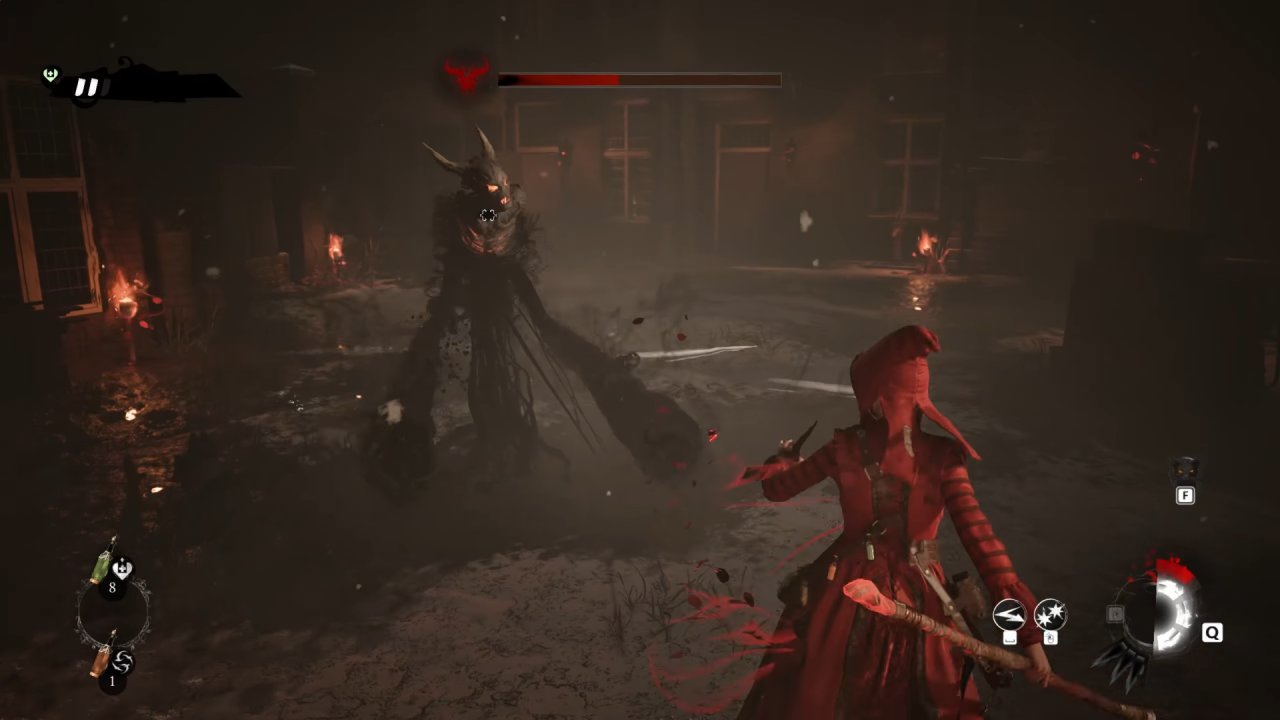
Combat is the weakest part of the experience. Noah's basic melee moveset is extremely limited, with a simple three-hit combo doing most of the work. You have a quick dodge to avoid enemy attacks, and opponents generally telegraph their moves, but the basic fighting lacks enough variety to stay interesting for long.
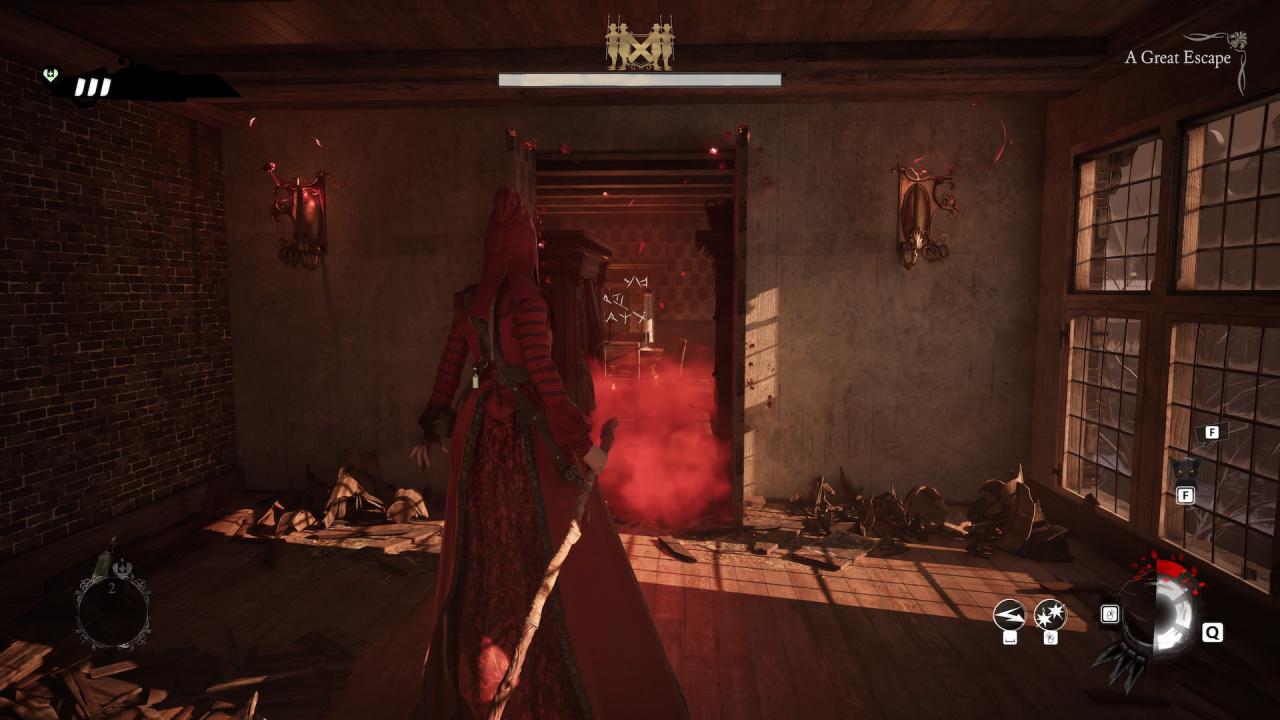
Most encounters involve groups of ordinary soldiers using weapons such as pikes and clubs. They are not particularly difficult to understand because their attacks are easy to read, but fights can become repetitive when you are constantly relying on the same small selection of attacks.
Some encounters involve multiple waves, with a threat bar at the top of the screen indicating the battle's overall state. You fight through one group before another arrives, and the encounter continues until the threat is eliminated.
Boss fights have more engaging designs and larger encounters, but many of the same issues remain.
The bosses can look impressive, particularly when there are more moving parts involved, but you are still dealing with Noah's limited melee abilities. After repeatedly using the same three-hit combination, you can start wishing 1666: Amsterdam gave you more ways to approach these fights.
That is a noticeable drop, especially when 1666: Amsterdam asks you to focus on a difficult encounter. Outside those larger fights, performance can be much more stable, but the technical problems make it clear that Panache still needs to work on optimization during early access.
The progression system adds much-needed variety to combat. As you progress, you unlock abilities and spells that give you more options in combat. Some powers become permanent after you beat the bosses for a section. Other powers are temporary and disappear when you move forward.
You have a finite number of points to select which abilities you want to retain. This means that you can’t just collect every power for all eternity. Instead, you have to think about which powers are worth keeping and which you can afford to lose. This creates some build variety and gives your progression more meaning.
A system also changes the abilities available between sections. When you discover certain powers, you may be given a selection of three options, and occasionally you do not initially know exactly what you are choosing because the ability has not yet been translated. Once you discover what the power does, you can recognize it if it appears again.
The system has a slight roguelike influence because some abilities are temporary and can change between attempts. That gives you a reason to experiment instead of sticking to the same build every time. It doesn't completely transform combat, but it adds variety to a system that otherwise feels too simple.
Healing and potion management can also influence how you approach combat.
If you carry enough health potions, some encounters become less about perfectly understanding the enemy and more about how many times you can recover. That makes combat easier to survive, but it doesn't necessarily make it more satisfying.
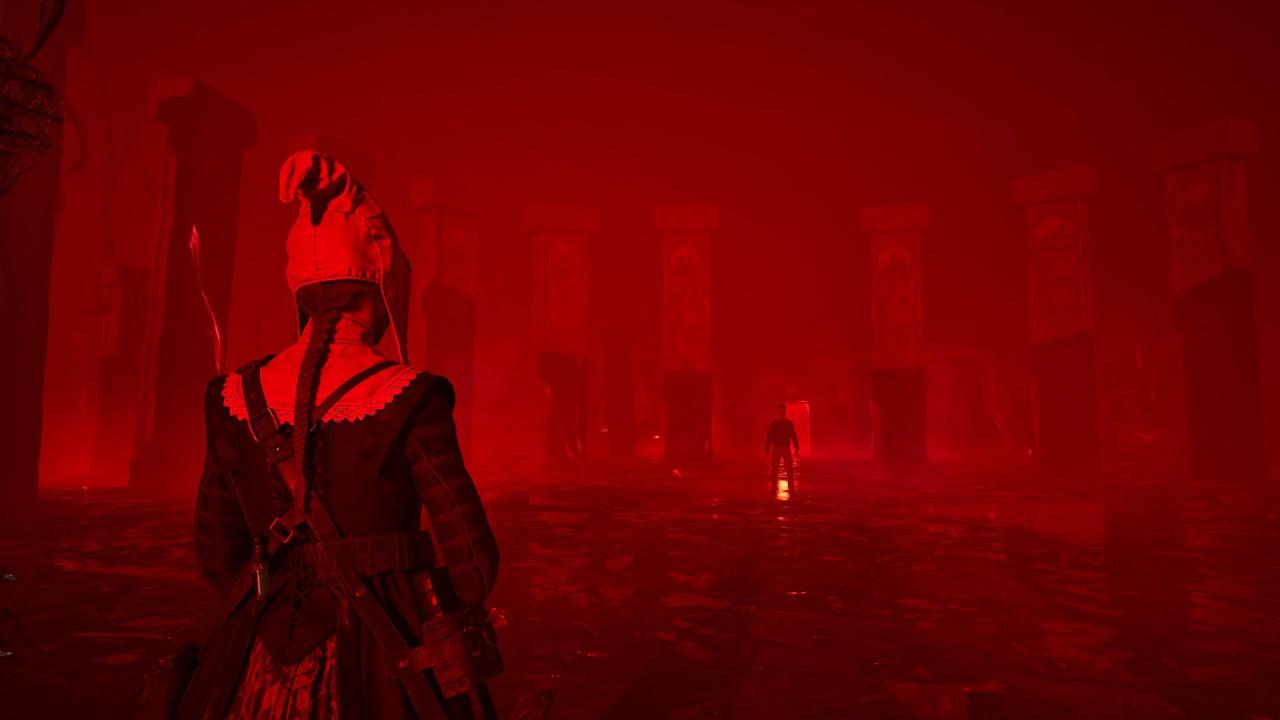
Visually, the historical setting is one of the game's strongest elements. Amsterdam in 1666 gives you a distinctive environment for a supernatural adventure, and the city feels like an important part of the experience rather than simply another open-world backdrop.
At the same time, the world does not always feel as alive as it should. Some citizens can fail to react appropriately when supernatural events happen around them, which becomes especially noticeable because the story is built around supernatural beings hiding among ordinary people. You can sometimes feel the limitations of the systems underneath the historical setting.
1666: Amsterdam also has several visual polish problems. Some character models and environmental assets aren’t as convincing as others, and some locations can feel repetitive. Movement issues are most apparent in Aaron’s animations, because they directly affect how you explore.
The sound design generally supports the game’s atmosphere. The supernatural setting, darker moments, rituals, and strange events are all helped by an audio presentation that keeps the world feeling unsettling. The music is less consistent, with some parts fitting the tone better than others, but it generally helps keep the game’s strange identity intact.
Technical issues are harder to overlook. Early-access builds have included crashes and other bugs, although updates are intended to address some of these problems. The developers are still actively working on the game, so the current performance shouldn't necessarily reflect the eventual release.
After spending time with 1666: Amsterdam, you can understand why the project is worth paying attention to.
A genuinely interesting game is buried beneath the roughness. A witch investigating supernatural beings in 17th-century Amsterdam is already an unusual premise, but adding a cat controlled by a man from 1999, multiple timelines, magical investigation, possession, environmental puzzles, and a changing ability system makes the concept even more distinctive.
The best moments come when those ideas work together. You investigate an area, discover information about your target, use Aaron to enter a restricted location, possess someone who can give you access, switch back to Noah, use magic to manipulate the environment, and eventually confront the person you have been tracking.
The problem is that 1666: Amsterdam does not consistently reach those moments. Combat feels too basic, the cat can be frustrating to control, the camera can cause problems during fights, and the technical performance still needs work. The lack of polish isn't just visual; some of these issues affect how you actually interact with the world.
That is why the early-access label matters here. 1666: Amsterdam does not feel like a finished game that happens to have a few bugs. It feels like a game with a solid foundation that still needs another significant round of development. Panache has planned roughly a year of early access, giving the studio time to respond to feedback and improve the systems that currently hold 1666: Amsterdam back.
If you enjoy early-access games and like the idea of seeing an unusual project develop, there is enough here to justify taking a look. The $30 price also makes the unfinished state easier to accept if you're interested in the concept and willing to deal with its problems.
1666: Amsterdam is at its best when it lets you investigate, experiment, and combine Noah and Aaron's abilities. It is at its weakest when it asks you to fight through another group of enemies using the same limited combo or when the technical problems get in the way of what you are trying to do.
1666: Amsterdam has enough potential to make it hard to dismiss entirely.
The story has an unusual setup, the historical setting gives it a strong identity, the multiple timelines create a mystery worth following, and the combination of magic and investigation gives the gameplay something beyond standard action-adventure mechanics.
For now, though, 1666: Amsterdam feels more like a promising foundation than a finished experience. If Panache improves the combat, makes Aaron's movement feel more natural, gives the world more convincing reactions, fixes the technical problems, and builds on the game's strongest investigative systems, the final version could be considerably better than what is available today.
The early-access version shows there is something worth developing, but it also makes it clear you are buying into the development process rather than receiving the complete game. Unless you specifically want to help shape that process through feedback, waiting for the finished version is the safer choice.
Editor, NoobFeed
Verdict
1666: Amsterdam has an unusual story, clever investigation, and a strong witch-and-cat concept, but basic combat, rough movement, and technical problems make waiting for the finished game the better choice.
67
Related News
No Data.