
Little Nightmares III - The Shores Review
PC
Low and Alone explore a flooded seaside area filled with new environments, underwater sections, puzzles, monsters, and mirrors.
Reviewed by Adeela Tas on Sep 30, 2026
Little Nightmares III arrived from Supermassive Games at an interesting point in the franchise. After Tarsier Studios moved on from the franchise, Supermassive took over and had to build its own version of this strange horror world. The previous chapter, The Backstage, already showed progress through its atmosphere, puzzles, and light-based mechanics.
Little Nightmares III - The Shores takes a different route by focusing much more on its environment. The change is noticeable almost immediately. As you guide Low and Alone through the seaside setting, you move between flooded buildings, narrow interiors, underwater spaces, and a lighthouse hinted at earlier through imagery.
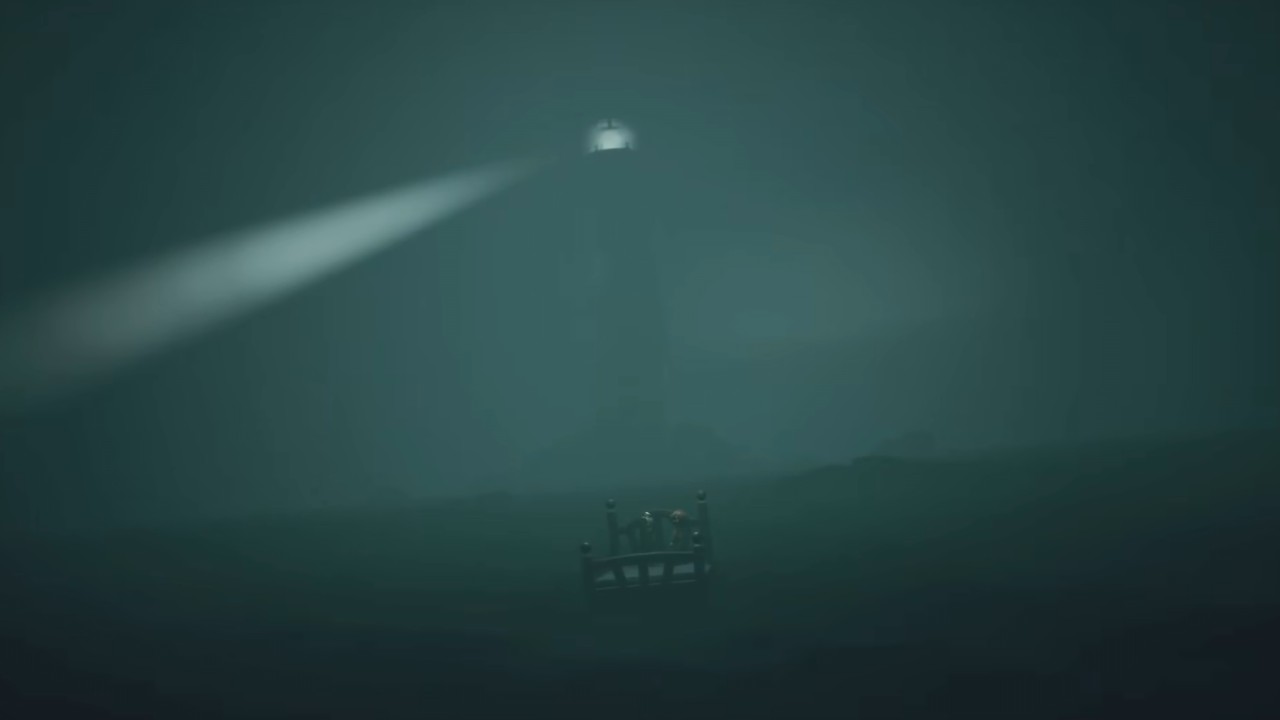
Fish, seaweed, ropes, old luggage, graves, and plenty of small environmental details fill the space.
The area often feels closer to the environmental storytelling of the first two games than some of the base campaign. You are encouraged to understand the location through what you see rather than through direct explanations, and that approach suits the series very well.
At the same time, the setting is not completely free of repetition. Some areas bring back memories of the Maw and the Pale City, while the greens and general atmosphere can also resemble the Factory. Even so, the seaside town, hotel-like interiors, and lighthouse give Little Nightmares III - The Shores a clear identity, and the attention to detail remains one of its strongest qualities.
The story continues Low and Alone's search through the mirror network, but Little Nightmares III - The Shores's exact place in the wider timeline remains unclear. Details support different interpretations, and Little Nightmares III does not settle the prequel-versus-sequel question. That uncertainty isn't necessarily a problem for this series, where the timeline has always invited interpretation.
Still, it does mean you shouldn't expect every mystery to get a clean answer here. A new child joins the journey briefly. Equipped with diving gear, the character fits naturally into the seaside setting and becomes useful during several sections. The child isn't especially friendly, which makes the interactions more interesting than they would be with a simple companion role.
You get the impression that something is wrong, particularly when the child eventually leads Low and Alone into danger.
The appearances in Little Nightmares III - The Shores are limited, and after setting up that suspicious relationship, the game moves on before you can learn much about the child's motives or history. The two makeshift graves near the beginning are a good example of how Little Nightmares III can communicate without having to explain.
They suggest that the child has already lost others, but the game leaves the meaning open. You can also find familiar imagery throughout the area, including references connected to the Lady, the Guests, the Maw, the Ferryman, and television static. These details make the world feel connected, though the many callbacks can become frustrating when they promise answers that never arrive.
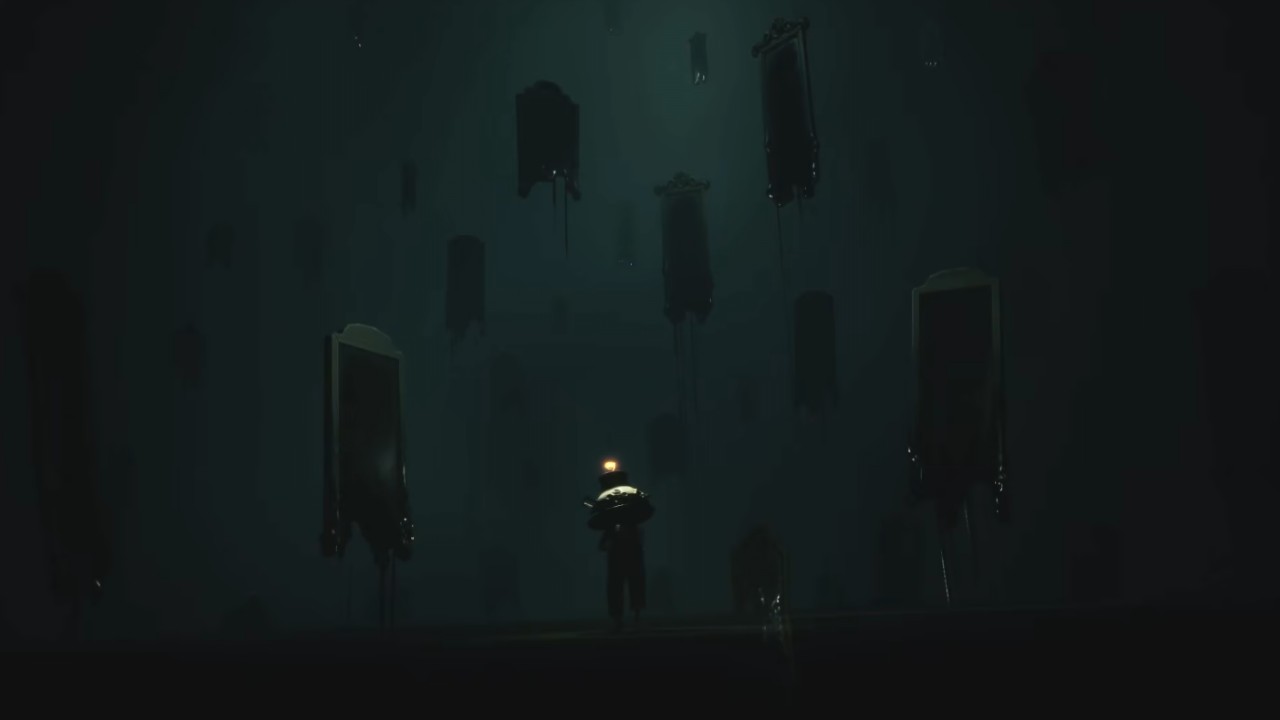
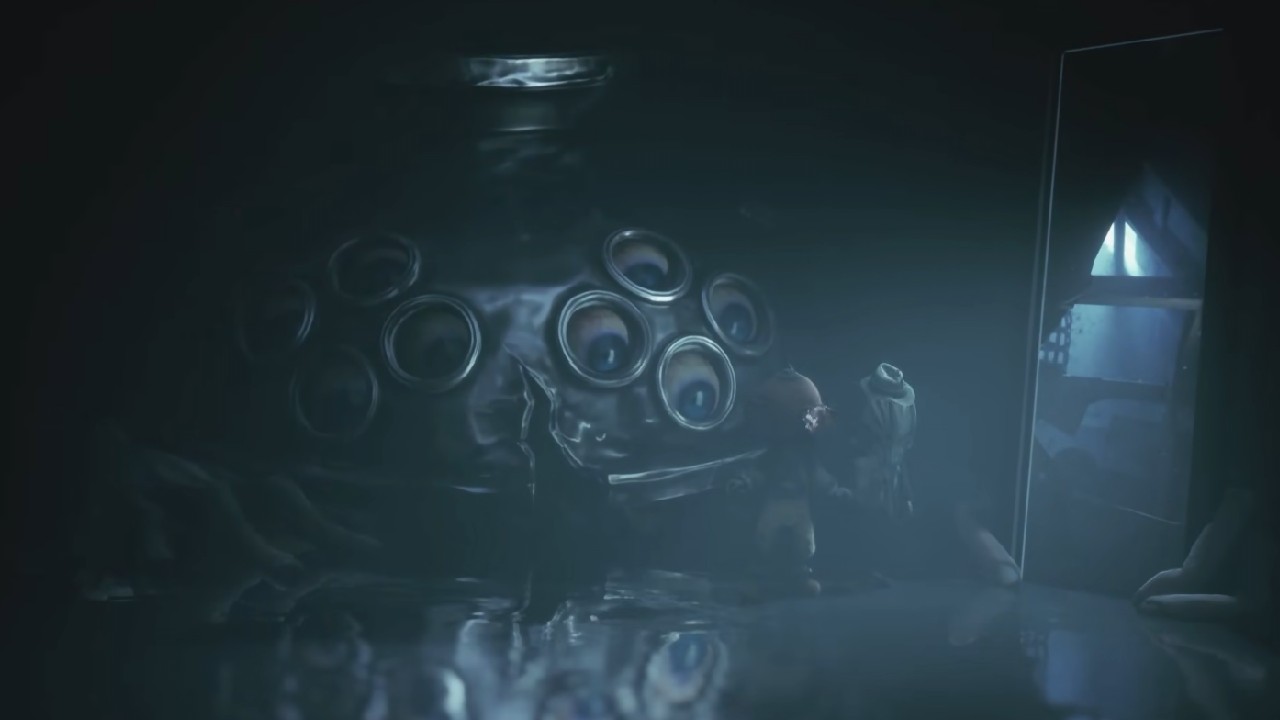
Dime is the other major story thread in Little Nightmares III - The Shores. Her connection to the mirror dimension returns near the end, where Low and Alone finally encounter what has happened to her. The transformation into Monster Dime is one of the more memorable images. The creature has multiple eyes and a form that makes the idea of a child being twisted by a particular region of Nowhere feel believable within the series' strange rules.
The concept itself is strong, and Dime's apparent accusation that the protagonists caused her transformation gives the moment some emotional weight.
The problem is that Little Nightmares III - The Shores does not do enough with it. There is no substantial encounter where you have to escape Monster Dime or survive a dedicated sequence built around her. Instead, Low and Alone briefly meet her, calm the situation, and continue through the mirror.
The scene is interesting, but you can remove it from Little Nightmares III and still understand the basic journey: Low and Alone travel from one mirror location to another. That makes the reveal feel disconnected from the main progression rather than like an important turning point.
The transformation can also feel familiar, as the series has already explored the idea of a child becoming a monster. Monster Six remains an obvious comparison, even though Dime's design is distinct. The more interesting part is the suggestion that different regions or conditions inside Nowhere can reshape children in different ways.
That idea could support a much larger story, but this chapter only touches on it. If the mirror storyline is supposed to lead somewhere else, the ending gives you very little indication of where that is going. The final stretch is therefore one of Little Nightmares III - The Shores's biggest weaknesses.
The lighthouse is a strong destination, and the mirror sequence fits the series, but the narrative payoff feels abrupt.
The chapter can seem like the middle part of a three-part story, except there is no confirmed third DLC chapter to provide the missing conclusion. That makes the Dime material feel more like setup than resolution. The result is especially disappointing because the character and monster design are strong enough to support a more meaningful sequence.
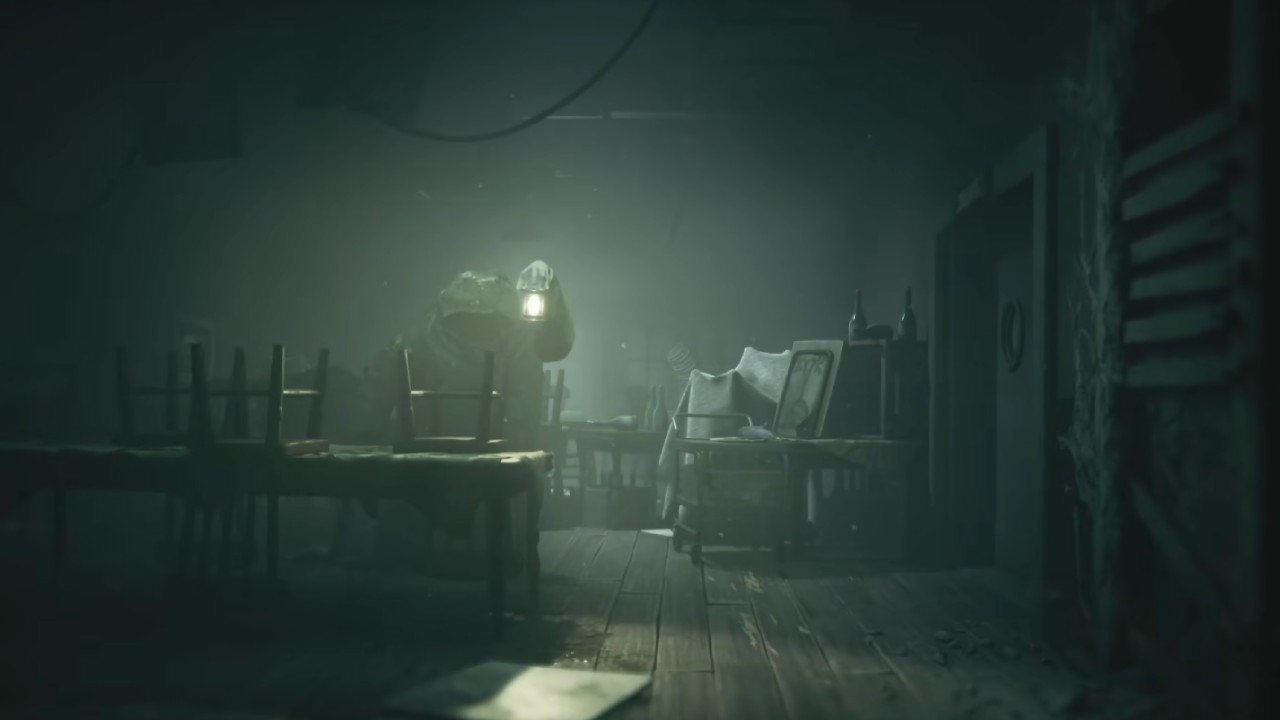
Little Nightmares III - The Shores succeeds more in its handling of movement and environmental interaction. Swimming is the major new mechanic, and bringing underwater exploration into the series works naturally with the setting. You can dive beneath the surface, move through submerged areas, search for routes, and deal with the possibility of drowning.
It gives the chapter a different rhythm from the usual running, climbing, hiding, and squeezing through gaps. Once you get used to it, swimming feels like a feature that could support much more of the experience. That last point matters because the mechanic isn't used as creatively as it could be. Water appears everywhere, yet many of the puzzles still rely on familiar ideas.
You deal with water flow, drainage, electricity, vents, crates, weights, keys, briefcases, and vertical movement. Some of these sequences are satisfying, especially when both characters need to manipulate different parts of the environment. One good example involves using bricks on a crate to stop it from being lifted, while another has one character change a fan's rotation so the other can progress.
These puzzles work, but they do not feel like the most ambitious use of the swimming system.
The strongest puzzles are still considerably better than the weaker examples from Little Nightmares III - The Shores. They ask you to observe the room, understand what can move, and work out how the environment connects without turning every problem into a long interruption.
The pacing benefits from that. You can spend enough time thinking to feel involved, then move forward before the puzzle becomes exhausting. Sections involving water levels and drainage could also have gone much further, especially if one character had to control the water while the other explored below the surface.
There is no traditional XP system or grinding loop here, and that is the right choice for this kind of experience. Progress comes from solving environmental problems, surviving encounters, moving through the world, and occasionally finding collectibles such as paper-themed items.
The structure keeps your attention on exploration rather than stats or upgrades. Because Little Nightmares III - The Shores is short, that focused progression also helps maintain its momentum. The Leech Monster is where the chapter becomes more uneven. Its basic concept is excellent: a mass of leeches coalesces into a distorted humanoid creature.
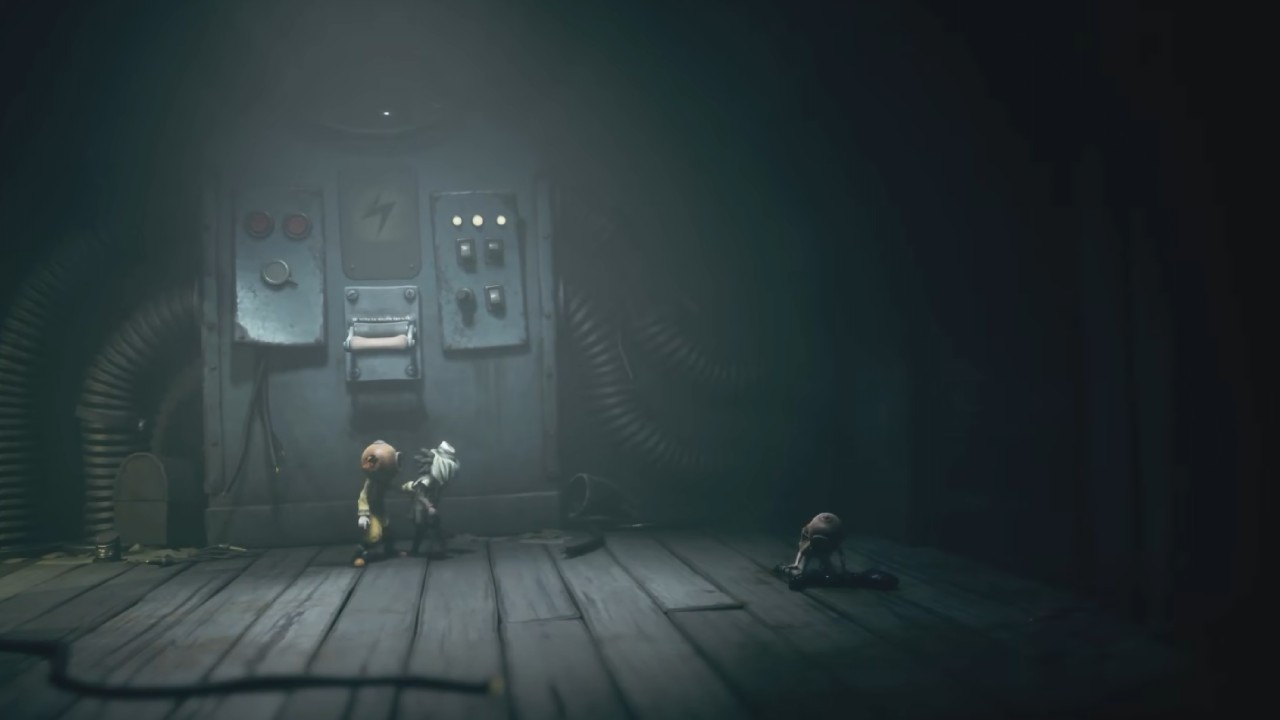
The long limbs, the hood, the glowing light, and the way it throws leeches at you give it a look you won't forget.
It also gets more screen time than your average one-and-done monster. You sneak past it, watch it poke around nearby, and then you get one nasty scene with a member of the Herd that makes it clear this thing is a genuine threat. But it doesn't always act the way it looks. The design promises more than the behavior delivers. The creature can feel goofier than frightening, and the AI isn't always as convincing as the encounters in Little Nightmares III - The Backstage.
An early sequence is a good example. You are expected to hide beneath the water while the creature searches above, but the game doesn't make it clear that the water is safe from its view. Because the water isn't very murky and there are few obvious hiding spots, the solution can feel like trial and error rather than a clever discovery.
Later encounters use more familiar stealth ideas, and those sections are generally fine. The problem is that the water mechanic and the monster rarely combine into a single challenge. A chase through flooded rooms, a sequence where the creature actually followed you underwater, or a platforming escape across floating objects could have made both systems more meaningful.
Instead, the monster often behaves like a conventional Little Nightmares threat placed inside a chapter that happens to contain water. The chase sequence adds another type of pressure, but it doesn't have the impact of the stronger sequences from the previous chapter. The companion AI can also behave awkwardly at times. These issues don't stop progress, and the game remains playable, but they keep the enemy from reaching the level suggested by its visual design.
The monster is one of those cases where the idea is stronger than the execution.
The horror itself is similarly inconsistent. The graves near the start put you on edge without a single jump scare. The leeches function as a hazard because they stem from the main threat, so they don't feel like a separate gimmick the game just tossed in. Yet you are often more interested in examining the world than genuinely afraid of what might be inside it.
This chapter has the mood of Little Nightmares, but it doesn't always deliver the same level of tension. Presentation remains a major strength. The gloomy seaside environment, moonlit areas, submerged rooms, detailed buildings, and strange lighthouse interiors give you plenty to look at while keeping the world unsettling.
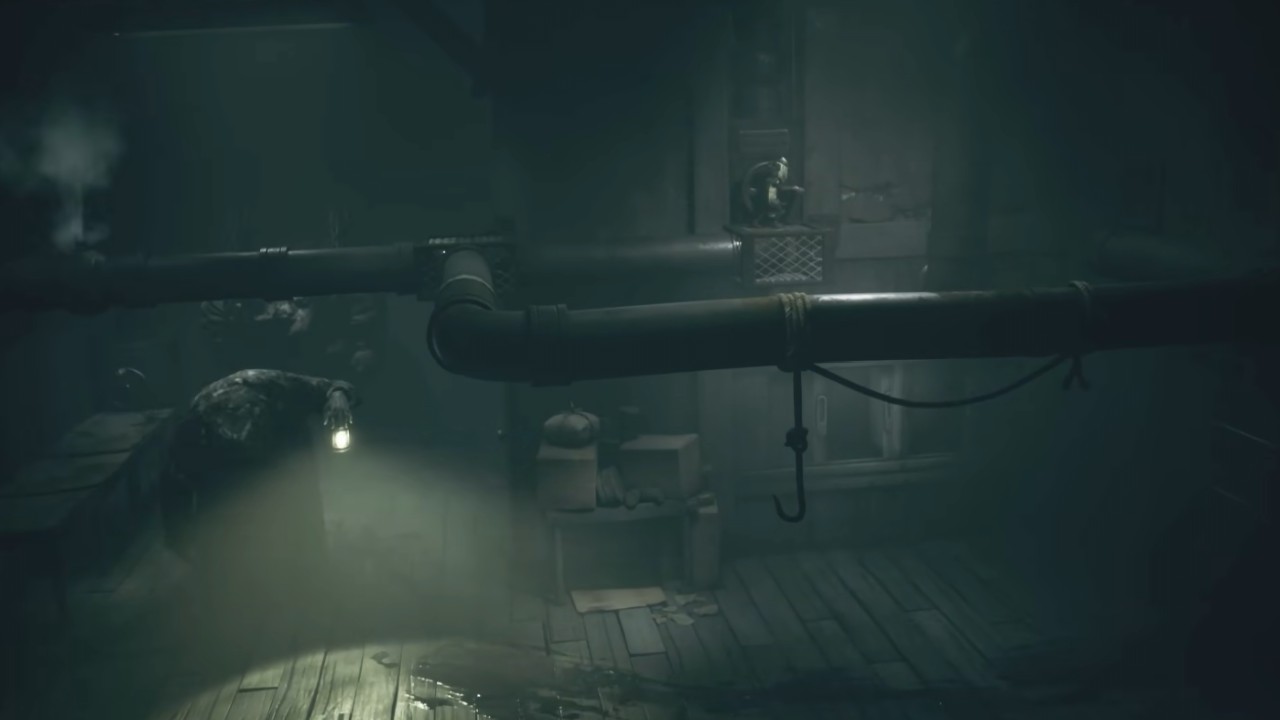
Character animation also continues to work particularly well. Low and Alone communicate through movement and small gestures, and the cutscene mannerisms give them personality without needing much dialogue. Those details help keep the two protagonists believable inside a world that is otherwise deliberately strange.
The sound design supports that mood without overwhelming it. Water, environmental noise, and the restrained musical approach help the locations feel isolated. One of the best touches is the return of a musical motif associated with the Maw around the lighthouse. Hearing something recognizable in a new location creates a strong connection to the wider series.
Little Nightmares III - The Shores also uses familiar imagery and sounds, such as television static, to remind you that the world is much larger than the immediate area.
Taken together, the presentation makes The Shores easy to appreciate even when the story does not land. The chapter looks and feels like Little Nightmares, and several sections capture the environmental storytelling that made the earlier games more memorable.
The water is visually central but underused in the puzzles. The Leech Monster is built around a good concept but rarely makes use of the water. Dime has a striking transformation but little narrative consequence. The new child is intriguing but barely explored.
That is not inherently negative. Tarsier Studios also used its original game's DLC to experiment with mechanics that later influenced the sequel. Supermassive seems to be pulling the same trick here. They kept what worked last time and tried a different angle.
The environments are noticeably better, and the puzzles move at a smoother pace, though a few ideas still feel half-baked. The biggest issue is potential. The chapter has enough strong ingredients that you can easily see how it could have been more effective. The swimming could have transformed the puzzles. The Leech Monster could have centered on underwater chases.
Dime could have received a proper encounter that made her transformation important.
The new child could have had a larger role in the story. Even the callbacks could have carried more weight if they had contributed to a clearer narrative thread. Instead, you end with several interesting pieces that don't quite form a satisfying whole. The puzzles are generally enjoyable, the setting is detailed, the swimming works, the monster has a memorable concept, and the chapter is more polished than the weakest parts of the base game.
It simply does not capitalize on its best ideas enough to match the promise of its setting. The fairest way to describe Little Nightmares III - The Shores is that it's an uneven but worthwhile expansion. You get a strong environment, some well-paced puzzles, a useful new traversal mechanic, and a creature that looks exactly like it belongs in this world.
You also get an underdeveloped narrative, inconsistent horror, familiar puzzle ideas, and an ending that leaves Dime's story hanging. The result is enjoyable in places, but it doesn't deliver the payoff the material promises. For now, Little Nightmares III - The Shores works better as a demonstration of Supermassive's progress than as a definitive addition to the series' mythology.
The Backstage showed how much stronger the studio could become when it pushed its puzzles and atmosphere. The Shores shows the same process still happening in environmental design and traversal. With tighter encounters and a story that gives its characters more consequence, the next step could be much more satisfying.
Editor, NoobFeed
Verdict
Little Nightmares III - The Shores has strong environments, enjoyable puzzles, swimming, and a memorable monster concept, but its story and encounters feel underdeveloped. Worth playing, but it never gets as good as it could.
61
Related News
No Data.