
ONE PIECE: Grand Gourmet Review
Nintendo Switch 2
Kairosoft's familiar management formula gets a One Piece makeover, delivering an enjoyable collectathon with plenty to do, even if its busy interface and repetitive systems occasionally spoil the fun.
Reviewed by Asura Kagawa on Oct 26, 2026
If you've played a Kairosoft game before, you probably know what to expect. The developer has built a reputation for pixel-art management games where you start with a modest business, gradually expand your operations, unlock new features, and end up spending far longer than expected trying to keep everything running smoothly.
ONE PIECE: Grand Gourmet takes that familiar formula and combines it with the world of One Piece, giving you a restaurant to manage, hundreds of characters to discover, and plenty of dishes to serve along the way. My relationship with One Piece is a little different from that of a longtime fan. I first encountered the franchise through One Piece Odyssey on Nintendo Switch, and while I enjoyed that game, I still have plenty to learn about this enormous series.
Kairosoft, however, is a developer whose games I know much better. That made ONE PIECE: Grand Gourmet an interesting proposition, since I could appreciate its management mechanics without needing to understand every reference to the source material.
Fortunately, you don't need to know everything about One Piece to enjoy ONE PIECE: Grand Gourmet. Familiar characters, factions, and locations give the experience its own identity, while the restaurant management offers a straightforward reason to keep playing.
Whether you're a fan looking for another way to spend time with the Straw Hat crew or someone who simply enjoys building and managing virtual businesses, there's plenty to dig into here. But not everything on the menu is equally satisfying.
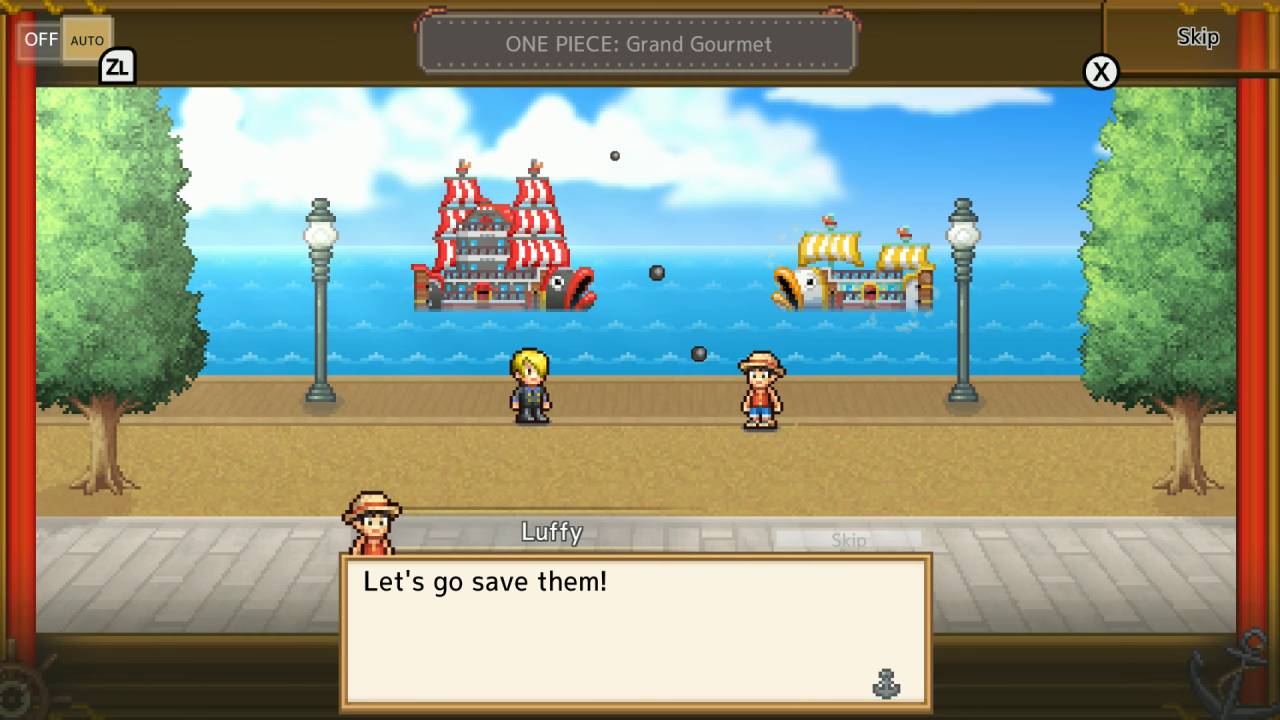
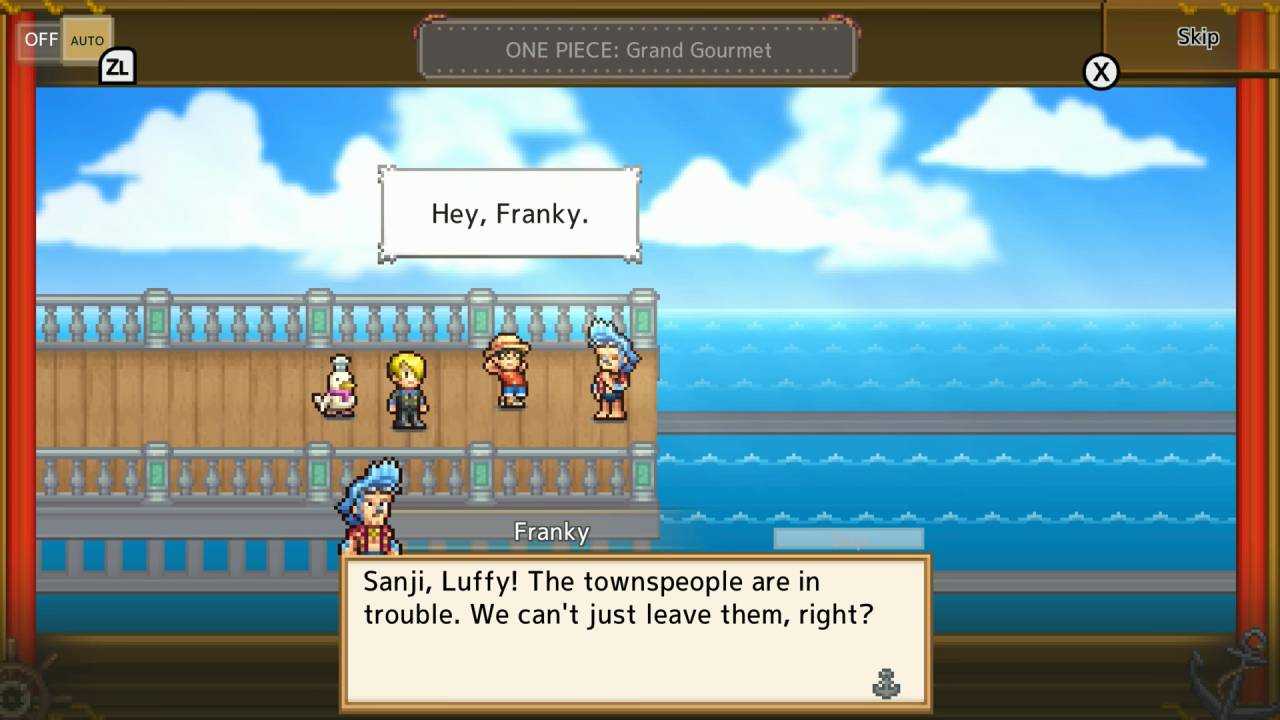
The story follows the Straw Hat crew as they open a new Baratie restaurant.
Sanji takes the lead in the kitchen, putting his cooking skills to the test, while Luffy and the rest of the crew help you turn a small operation into a successful business. You want to attract customers, serve delicious food, and build a restaurant that can stand up to its competition. Of course, it's not all smooth sailing, with a rival fake Baratie threatening your reputation and giving you another incentive to prove your establishment deserves to succeed.
The narrative isn't particularly complicated, and it doesn't need to be. It serves as a foundation for the management gameplay rather than something that constantly demands your attention. You're given a reason to build your restaurant, but the real appeal comes from everything you do between opening and closing. The One Piece setting adds personality, and familiar faces make the steady stream of unlocks more rewarding, especially when you recognize the characters and understand their connections to the wider world.
Even if you're unfamiliar with the franchise, the basic premise is easy to follow. You run a restaurant, satisfy customers, and expand your business. The more time you invest, the more opportunities open up, and before long, you'll have far more to manage than at the beginning.
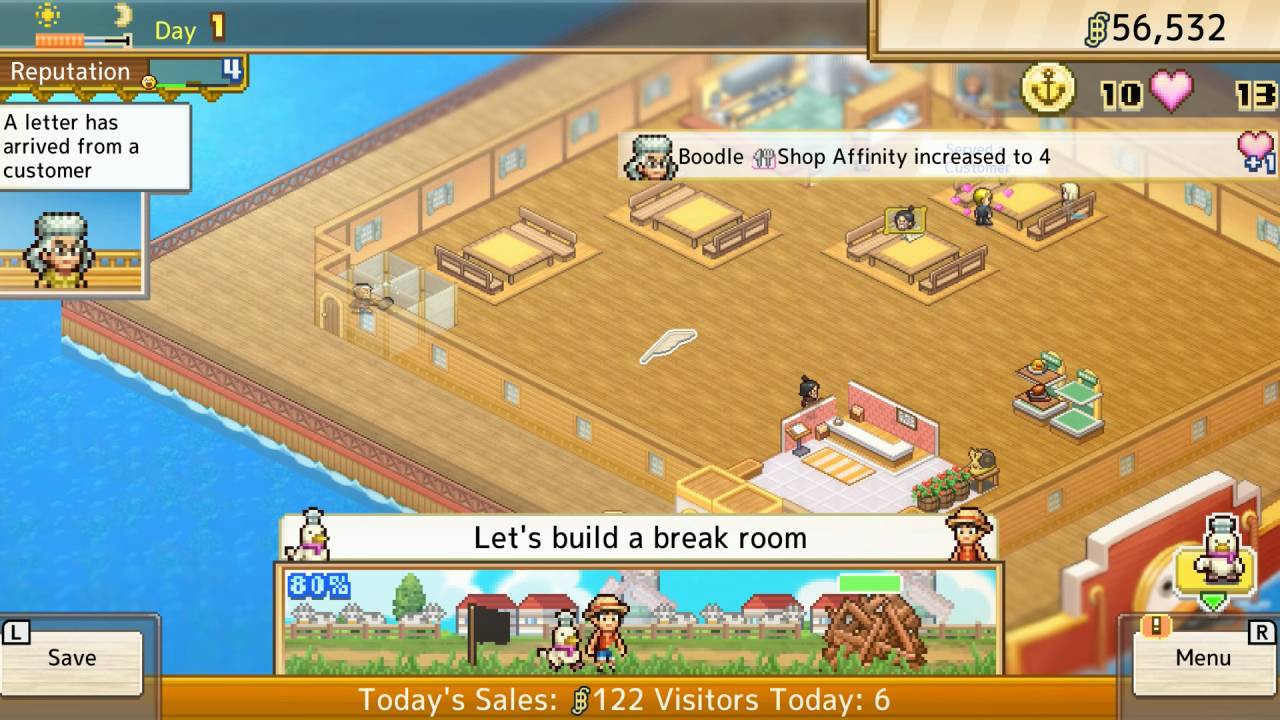
At its core, ONE PIECE: Grand Gourmet follows the management formula that Kairosoft has refined across its other games.
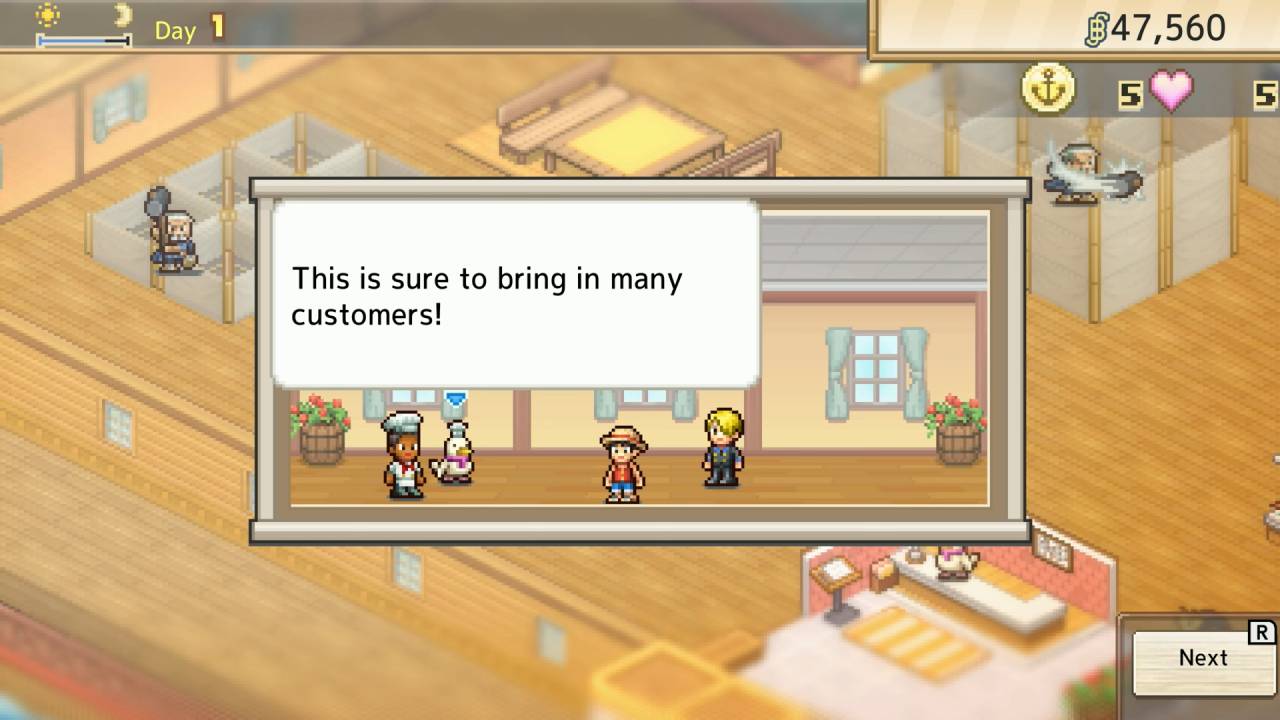
You start with a relatively simple restaurant, with Sanji as your head chef and a custom-created character as your first waiter. You put up tables, cook a few dishes, open your doors, and start taking in customers. From there, your duties start to grow as you try to attract more visitors, improve your menu, and expand your operation.
Cooking is a big part of the experience, though you don't personally cook every dish through an elaborate cooking mini-game. Instead, you manage your meals, gather ingredients, unlock recipes, and decide how to use your resources.
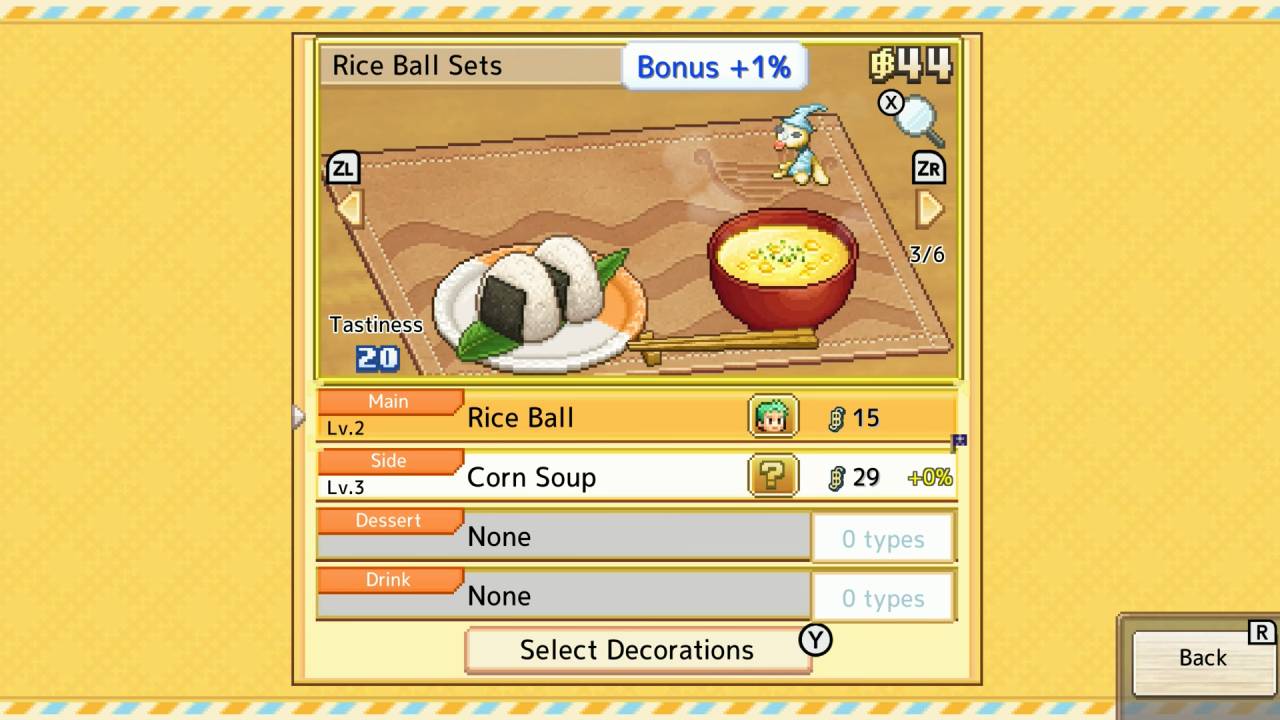
As your selection grows, you can combine individual dishes into set menus, giving customers more complete meals while boosting your earnings. As you grow, finding the right combination becomes increasingly important, especially if you want to make the most of the ingredients you have gathered.
Exploration is a big part of keeping your restaurant stocked.
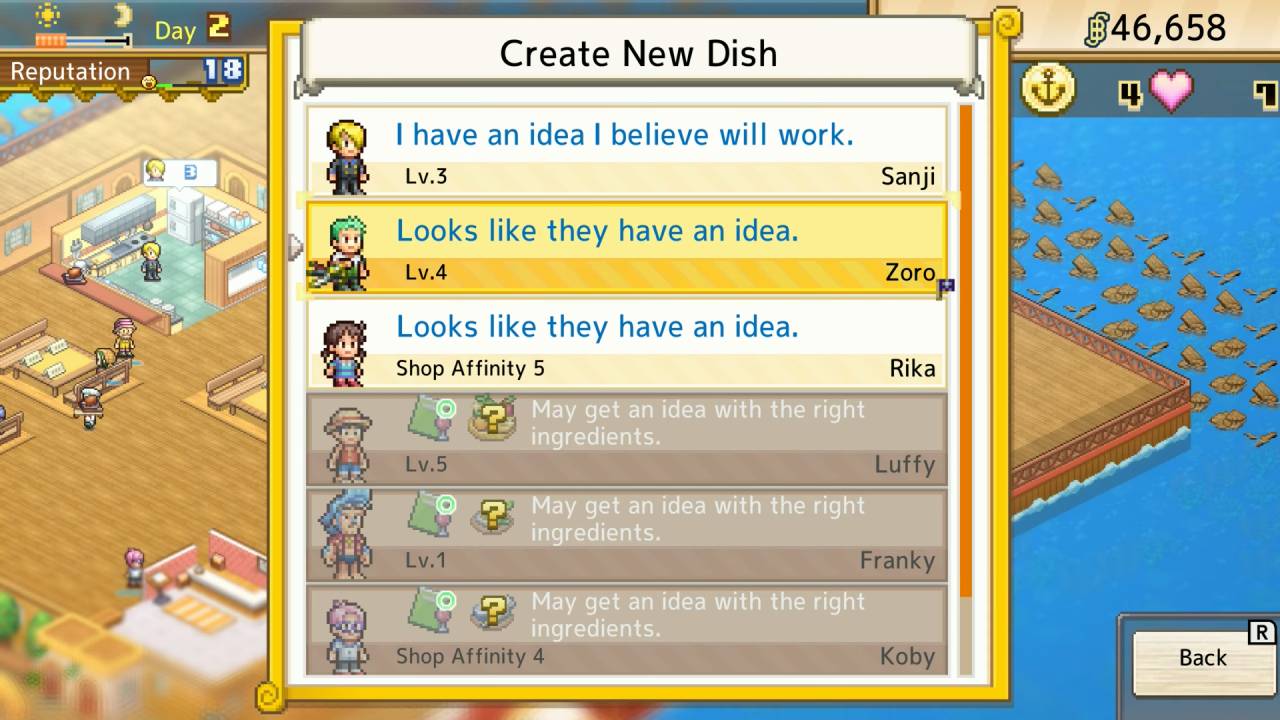
You'll send Luffy to various locations to collect ingredients and meet prospective customers. These trips also introduce you to characters who can eventually become fans of your restaurant. Each character has specific requirements you must meet to win them over, so you can't simply progress through the game without paying attention to their individual needs.
Building your fan base is one of the more interesting parts of the progression system. Certain characters appear only in specific areas, and recruiting them makes them want to visit your restaurant when you open in those places. This gives you a reason to revisit places you've been before, especially if you've unlocked new recipes, items, or opportunities. The game pushes you to return to exploration with a clearer purpose, rather than something you do and forget.
With over 400 One Piece characters to discover, you have plenty to work toward. Fans will recognize familiar faces, while newcomers can revel in the satisfaction of steadily building their collection. The sheer number of characters also makes ONE PIECE: Grand Gourmet feel like more than just a restaurant simulator.
It's not just about the dollars; it's about the relationships you build with the world and what each new addition brings to your business.
As you advance, the Straw Hat crew members gradually return to your side, each bringing something different. Zoro can train your crew and help them level up, and Nami unlocks a shop ability. Franky helps you construct decorations that improve comfort and lets you develop themed areas.
Luffy can find random items and treasure while you explore, and Robin lets you level up your meals. Usopp creates decorations and meal modifiers, Chopper acts as your medic, and Jinbe helps recruit customers from other worlds. Brook's Room also opens up a collection of minigames that give you something different to do with the crew.
These abilities add variety to the game's management side, though the cooking and restaurant systems themselves can get repetitive. You're still working within the familiar Kairosoft framework, so much of your progress comes from collecting resources, improving your business, and unlocking further upgrades.
If you've played several of the developer's management games, some of these routines will feel familiar. ONE PIECE: Grand Gourmet does enough with its One Piece setting to make the experience distinct, but the franchise doesn't completely transform the underlying formula.
There's also considerably more to build than the restaurant itself.
As your business grows, you can expand the surrounding area with tourist facilities and other buildings designed to attract additional customers and fans. Special docks allow different factions to visit and support your operation, giving you another way to bring more activity into the world you've created.
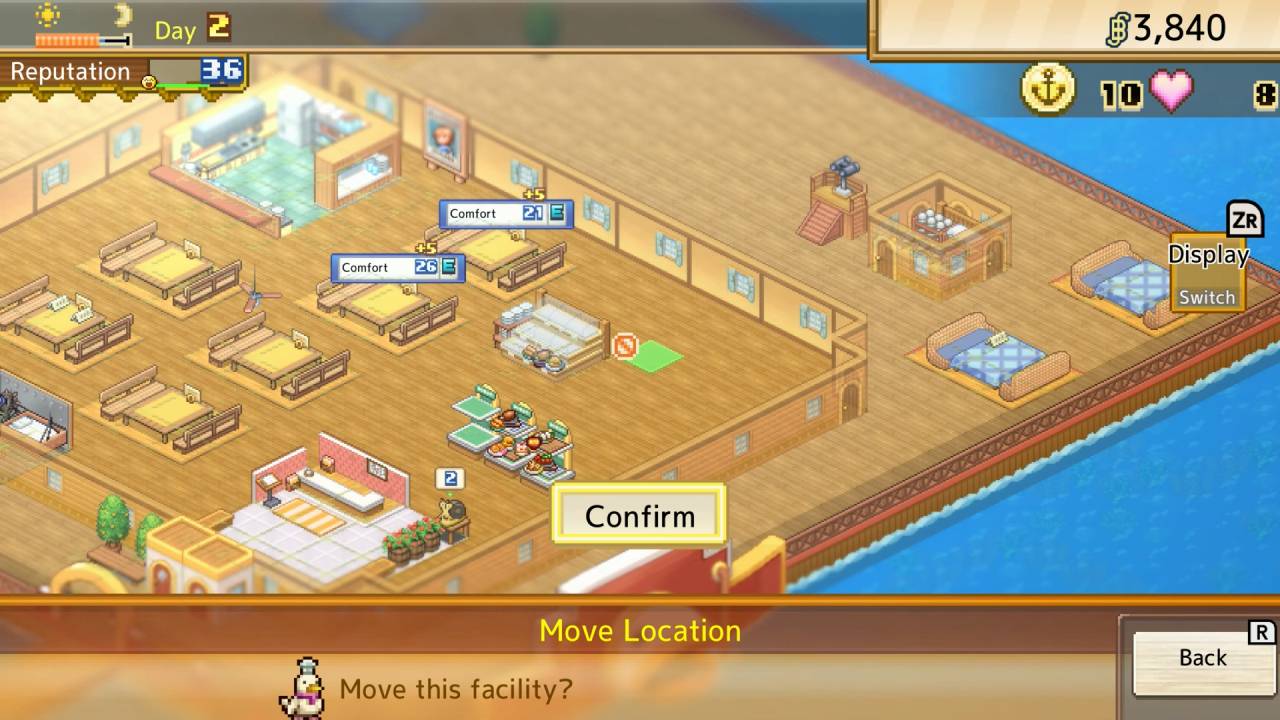
The building mechanics are particularly enjoyable because they encourage you to think about how everything fits together. Decorations can improve comfort, while placing tourist facilities can help you bring in more money. The relocation feature lets you rearrange your existing setup instead of forcing you to live with every early decision. That freedom becomes especially useful when your restaurant and surrounding area grow beyond their original layouts.
I discovered I was spending way too much time fiddling with my buildings and decorations to make the whole thing look better, instead of powering through to the next goal. The game doesn't need an elaborate construction system to make these decisions satisfying.
The combination of limited space, useful upgrades, and the promise of better results gives you a reason to keep tinkering.
This is also where ONE PIECE: Grand Gourmet becomes surprisingly addictive. I'm not much of a completionist, but I regularly returned to earlier locations after unlocking new recipes and items, determined to recruit more characters and discover everyone I could. The game never forced me to do that to continue. Instead, the chance to unlock another character, building, or gameplay element was enough to keep me coming back.
Each new fan was another chance to expand what I could do. That discovery feel works especially well with the management systems, since your exploration directly relates to your restaurant's growth. You might go out to gather ingredients and end up recruiting a new customer, unlocking an upgrade, or stumbling upon another reason to reorganize your business. Before you know it, you've spent an entire session working towards a goal that wasn't even on your mind when you started playing.
However, the abundance of systems also creates one of the game's biggest problems.
A lot is happening at once, and ONE PIECE: Grand Gourmet doesn't always help you keep track of it all. Between restaurant management, exploration, character recruitment, new features, and customer requests, the number of things demanding your attention can become overwhelming.
Later in the game, I sometimes found myself spending lengthy stretches dismissing prompts and completing customer requests, with 10 to 15 appearing in succession. The game offers an option to dismiss pop-ups automatically for a more hands-off experience, but I found that could make things even more confusing. Information sometimes disappeared before I could understand it, leaving me less sure about what I was supposed to do next.
The interface presentation doesn't always help, either. So much information vies for your attention that it can be hard to know what matters most at any given time. The text and menus can also be less readable than they should be, especially when you're juggling lots of requests and trying to keep the restaurant running. If you are already a fan of Kairosoft games, you may get used to the systems faster. Newcomers may need more time to understand how everything connects.
The game's progression structure adds another layer of complexity.
Like other Kairosoft management games, ONE PIECE: Grand Gourmet uses a set time frame for its high-score system, so you can't always take as long as you like to figure out the most efficient approach. You'll need to balance experimentation with the desire to make meaningful progress within the available time.
Menu management can also become a balancing act. At one point, I had so many mains that I stopped making new ones for a while and instead used my ingredients for sides, drinks, and desserts to fill out my set menus. Luckily, the auto-set-menu option lets you find taste- and profit-maximizing combinations. It's a nice touch that cuts down on the guesswork of pairing dishes, but it doesn't remove the need to manage your resources carefully.
ONE PIECE: Grand Gourmet looks great, thanks to Kairosoft's familiar pixel-art style. Characters, ships, and factions all fit the developer's vision, making the One Piece world feel right at home as a management game. Inside the restaurant, it is especially busy.
Customers walk from table to table, grab plates from the self-service area, and eat the food you cooked. One of the game's most satisfying visual rewards is watching your business grow from a modest establishment to a busy destination.
These small details add surprising personality.
As more customers come in and your restaurant gets busier, the screen starts to feel like a little world of its own, running independently. Seeing familiar characters gather around tables adds charm, while the expanding environment makes your progress visible without relying entirely on numbers and menus.
That said, too much activity can undermine the presentation. Things can get crowded on the screen when your crew is out exploring, and the restaurant is at max capacity. With constant notifications and information panels, it's easy to miss details. The pixel art itself isn't the problem; the sheer volume of things happening at once is. The visual presentation fits the franchise, but it doesn't always make the management experience easier to follow.
The audio is another part of the experience, but it doesn't stand out as much as the visuals. The game doesn't rely on extensive voice acting or a particularly varied musical presentation to carry its appeal. Instead, the main attraction remains the steady rhythm of managing your restaurant and watching the world develop around it.
That approach works well enough for this kind of game, though the limited audio variety means the soundscape adds less personality than the pixel art and character interactions.
Performance on Nintendo Switch 2 is generally solid, considering how much can happen on screen once your business expands. The most noticeable slowdown happens during autosaves, when movement briefly stutters before returning to normal. It's easy to see, but it doesn't take much away from the experience. Zooming out to see larger areas can also lower the frame rate, but I didn't experience any stuttering that really detracted from my fun.
The touchscreen controls are a nice addition too. They are ideal for a management game where you will be flipping through menus, making decisions, and perfecting your restaurant. Interacting with the screen directly makes these routine tasks feel more natural, especially when you spend long stretches organizing your business.
ONE PIECE: Grand Gourmet is a lot of content for the price it asks. The price is around $20 and just under $25 AUD, depending on the pricing source. There's plenty to keep you busy, from restaurant systems and exploration to character collection, building options, and menu development.
The value depends largely on how much you like this type of management game.
If you're looking for a detailed cooking simulator with complex preparation mechanics, the fairly simple cooking systems might leave you wanting more. If you enjoy gradually expanding a business and unlocking new possibilities, however, there's a lot to appreciate.
Ultimately, ONE PIECE: Grand Gourmet is a familiar Kairosoft management game with a generous serving of One Piece fan service. Its restaurant-building mechanics are enjoyable, its character collection provides a strong reason to keep exploring, and the freedom to reorganize your business makes it easy to lose track of time.
At the same time, the crowded interface, repetitive routines, and occasional performance dips prevent it from being as polished as it could be. You don't need to be a dedicated One Piece fan to enjoy the core experience, although longtime followers will naturally get more out of the character references and interactions.
Kairosoft fans, meanwhile, will find a familiar recipe with enough new ingredients to make it worth trying. It's not the most accessible management game, but once you settle into its systems, building your restaurant and welcoming new customers can be hard to put down.
Staff Writer, NoobFeed
Verdict
ONE PIECE: Grand Gourmet is a restaurant management adventure packed with characters and customization, but a cluttered interface and repetitive systems keep it from reaching its full potential.
78
Related News
No Data.