
RetroSpace Review
PC
RetroSpace brings the immersive sim formula into a retrofuturistic space station where exploration, environmental systems, strange mutations, and dimension shifts give you plenty of freedom, even when some rough edges get in the way.
Reviewed by Maisie Scott on Oct 06, 2026
If you have spent time with immersive sims like System Shock or Prey, you will recognize what RetroSpace is trying to do almost immediately. Developed by The Wild Gentleman and published by Quali, RetroSpace is a first-person single-player immersive sim built around exploration and player freedom rather than simply pushing you from one objective to another.
It is also clearly a smaller-scale project, with a roughly $20 price tag and an experience that can take around 20 hours, depending on how much time you spend searching through Aurora 5. The game takes that classic immersive sim philosophy and puts it into a retrofuturistic setting that mixes science fiction with a slightly cartoonish, tongue-in-cheek presentation.
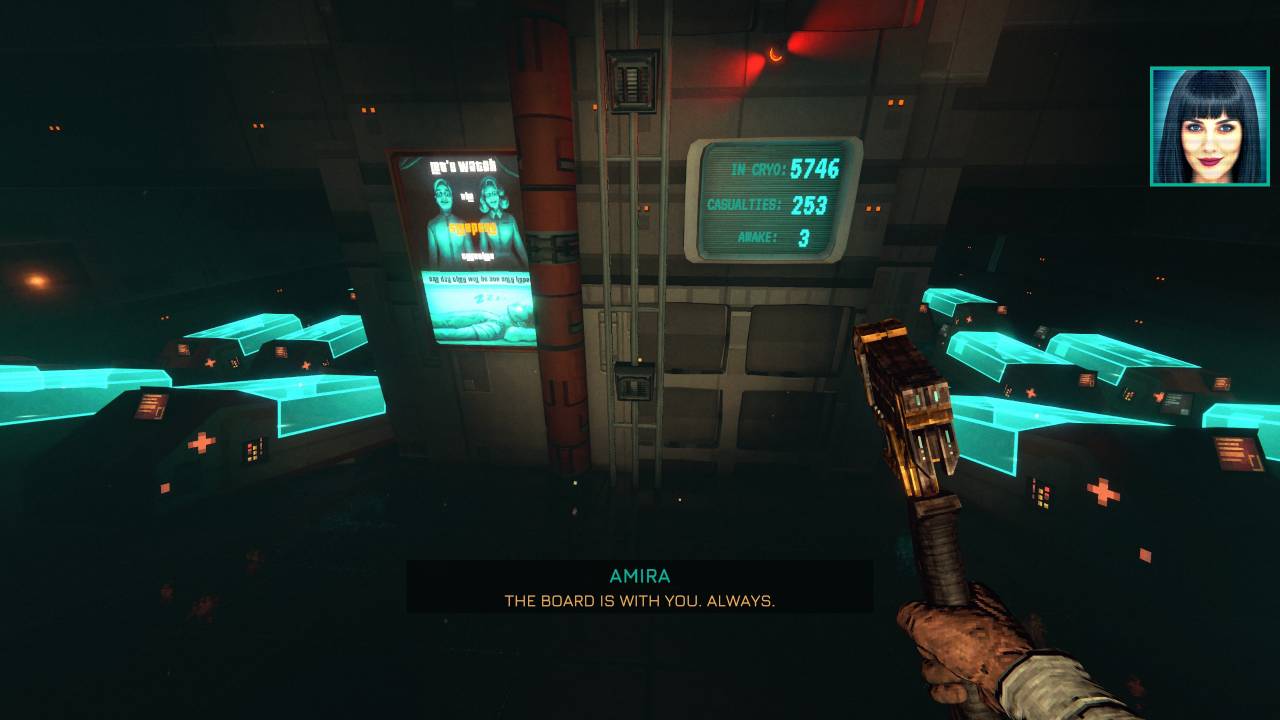
It doesn't take itself completely seriously, but beneath the campy presentation is a story that gradually grows much darker. You are encouraged to experiment with the environment, search for hidden routes, read the information left behind by the station's inhabitants, and work out how everything fits together.
RetroSpace takes place on Aurora 5, a space station caught in the aftermath of humanity's decline and now being consumed by a black hole. The station feels abandoned long enough to develop its own history, and you uncover that history through environmental details, messages, computers, emails, recordings, and the remnants of the people who once lived and worked there.
Your role as a janitor gives the story an unusual starting point.
Rather than immediately casting you as a traditional action hero, the game gradually reveals a much larger mystery surrounding Aurora 5, its inhabitants, and the strange events unfolding around you. Secret organizations, experiments, mutations, cloning technology, and plenty of signs suggest the station's situation is far more complicated than it first appears.
That story works best when you are simply exploring. You can walk into a room and discover a password, find a hidden tunnel, stumble upon an email explaining something that happened earlier, or notice an environmental detail that suddenly makes another area make more sense. The game rarely feels like it wants you to follow one perfectly controlled path, and that is one of its biggest strengths.
The station itself is built around connected areas, giving you plenty of opportunities to return to places you have already visited.
You can use vents, look for alternative routes, interact with different objects, and occasionally use information you found elsewhere to open a previously inaccessible area. Even something as simple as finding a password can become part of the exploration loop because the game expects you to remember where that information might be useful.
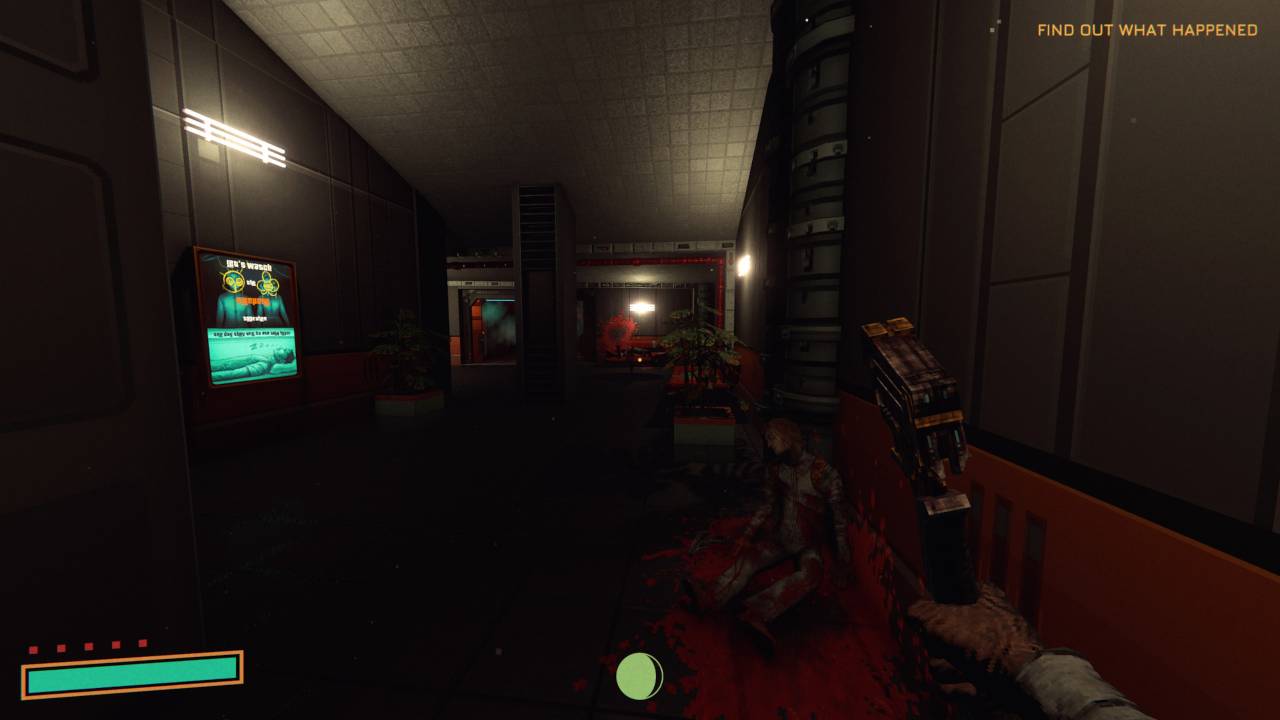
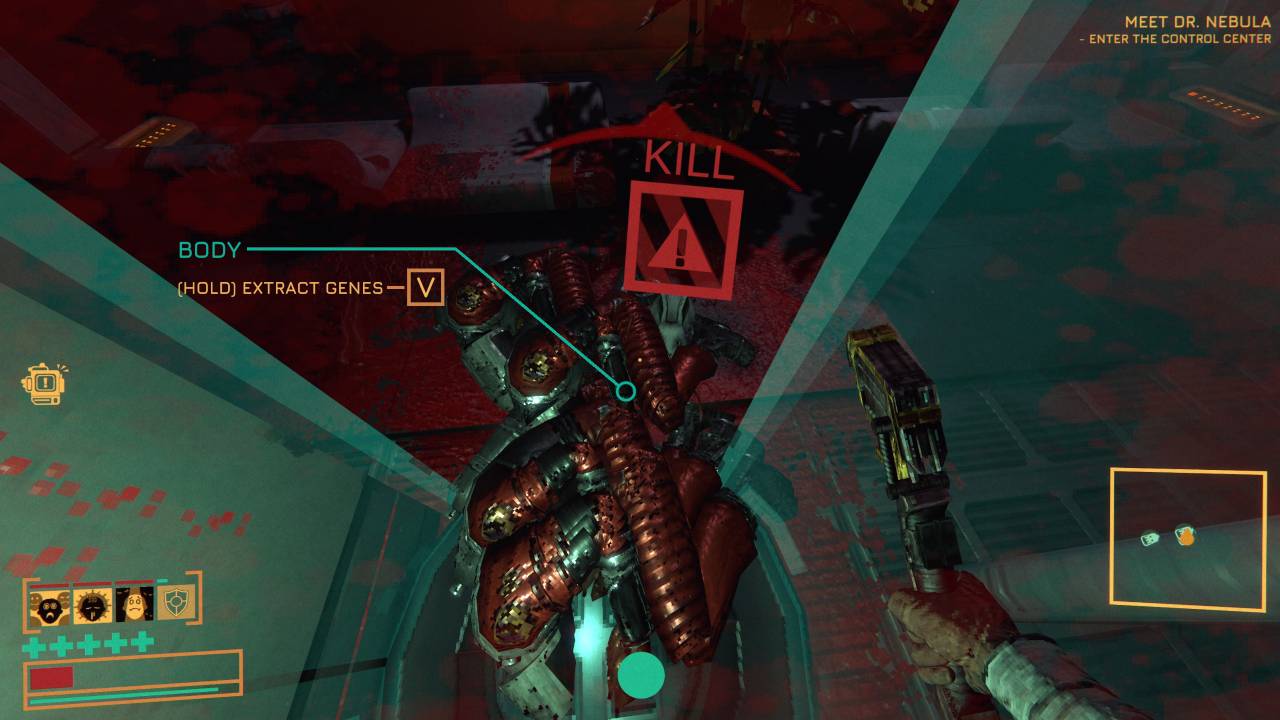
Dimension jumping also adds a more unusual element to the story and gameplay. You can shift between different versions of Aurora 5, including versions representing different points in time. This changes what you encounter and can reveal how certain areas or characters have been affected by everything that happened on the station.
The changes aren't purely cosmetic, either. Mutations and altered versions of enemies can appear, while systems that were previously hostile or functional can change depending on the version of the station you are exploring. In some cases, shifting dimensions feels like uncovering another layer of the same location rather than simply loading a completely different level.
That idea gives RetroSpace some of its most interesting moments, as you start to notice how the station changes around you. It also fits the game's general approach to exploration. Instead of constantly handing you a new corridor to walk through, it gives you systems and locations that you can understand and manipulate.
The actual gameplay follows the immersive sim formula fairly closely.
You spend a lot of time moving through Aurora 5, searching rooms, collecting useful items, reading information, opening locked areas, dealing with enemies, and figuring out how to use the environment to your advantage. You can use things like water, oil, and electricity in different situations, and environmental objects can sometimes create opportunities that aren't available through straightforward combat.
Stealth is another part of the system, although it is less successful. You can attempt to avoid enemies and move around areas without being detected, but the stealth mechanics can feel imprecise. Sometimes sneaking seems like the intended approach, yet the game doesn't always give you enough feedback to understand exactly why you were spotted.
The same goes for some of the game's objectives. RetroSpace often gives you enough information to work things out, but the instructions can be vague. That can be enjoyable when you are in the right mindset because it encourages you to explore and take notes, but it can also become frustrating when you are simply trying to understand what the game expects you to do next.
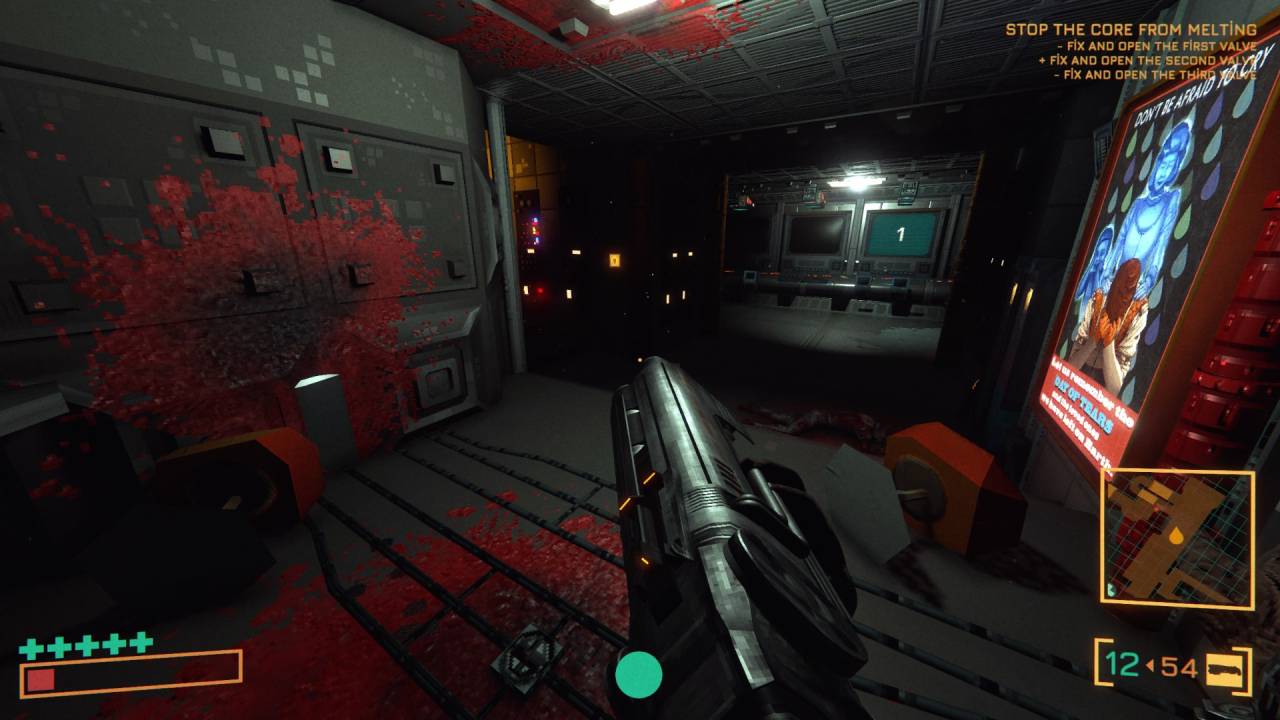
The combat is more reliable.
You have access to weapons such as the shotgun, and some enemies can take enough punishment to make encounters feel meaningful without turning the game into a traditional shooter. Different enemy types, including fly-like creatures and other mutated threats, make learning their behavior part of surviving certain areas.
You can also use the environment during encounters, rather than treating every enemy as something you have to defeat with a weapon. Water, electricity, fire extinguishers, turrets, and other environmental systems can all play a role. This is where RetroSpace feels closest to the immersive sims it is clearly inspired by. The game presents you with a situation and lets you decide how to approach it.
The problem is that not every system feels equally polished.
The combat can be satisfying, but some of the supporting mechanics lack the precision you would expect from a more refined immersive sim. Stealth is the biggest example, while inventory and objective management can also be awkward. Menus for objects, notes, and recordings can be harder to navigate than they should be.
The recordings themselves are worth paying attention to, though, because they add to the station's personality and help build its history. The game does a good job of making you feel as though you are piecing together what happened rather than simply receiving a long explanation through cutscenes.
Puzzles follow a similar philosophy.
You are rarely dealing with traditional puzzle rooms that completely stop the game. Instead, puzzles are integrated into exploration. You might need to find a password, understand a computer system, discover a route through a tunnel, or recognize that an environmental object can solve a problem.
That approach works because the game rewards curiosity. Secret areas often hide behind things you could easily walk past, and the level design gives you reasons to look up, search behind objects, and explore different paths. Verticality is particularly useful, even though one of the game's biggest problems is also tied to it.
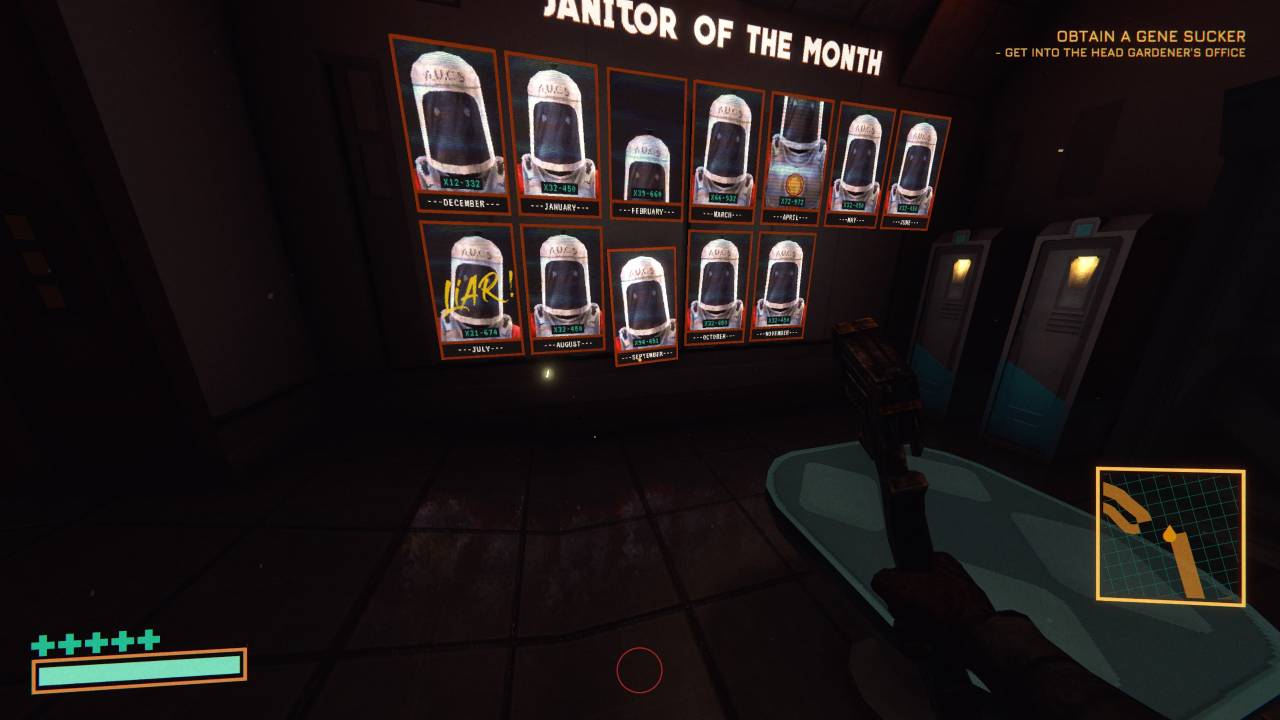
Ladders are among RetroSpace's most criticized features, and it is easy to see why.
Moving around them can feel awkward, and falling from a significant height can cause severe injury. That makes some areas more frustrating than challenging, especially when you are simply trying to move around the station.
The level design itself is much stronger than those movement problems suggest. Aurora 5 has tunnels, hidden rooms, alternate paths, locked areas, and spaces that reward you for paying attention. The station feels more interesting when you stop treating it like a series of objectives and start treating it like one interconnected place.
Difficulty is also somewhat inconsistent. Experienced immersive sim players will probably get more out of the freedom because they are already used to reading environments and experimenting with systems. If you expect the game to clearly tell you where to go and what to do at every stage, some of its design choices may feel unnecessarily vague.
No major XP-grinding system drives the experience, and that fits RetroSpace well.
Your progress comes more from discovering information, equipment, routes, and ways of dealing with the environment than from repeatedly defeating enemies to increase a character level. Mutations can also provide benefits while introducing drawbacks, giving you another way to shape how you approach certain situations.
Cloning technology adds another unusual layer to progression and failure. Deaths tied to clone vats fit the game's story and reinforce the idea that Aurora 5 operates under rules very different from a normal space station. Rather than relying on traditional RPG progression, RetroSpace mostly encourages you to become more capable through your own understanding of the systems.
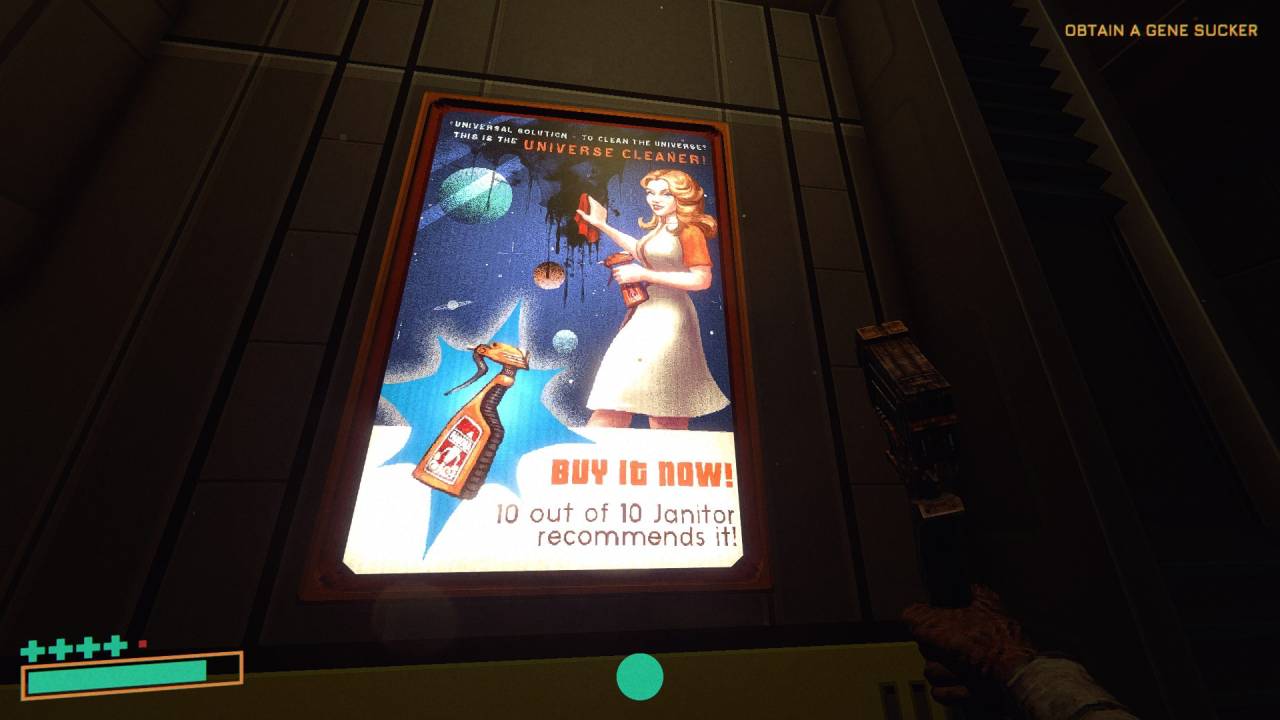
The graphics support that approach with a strong retrofuturistic visual identity. Aurora 5 looks like a future imagined through an older science-fiction lens, with posters, billboards, computer equipment, industrial areas, and other details that make the station feel like a product of its own era.
The tone can shift quickly.
One moment, an area can feel almost silly because of the game's exaggerated presentation; the next, it can become uncomfortable when you realize what happened to the people who lived there. That contrast works particularly well because the game doesn't abandon its campy personality even when the story gets more disturbing.
The black hole itself also offers some of the game's most striking views. At the same time, much of Aurora 5 is intentionally cramped and claustrophobic. You spend a lot of time inside corridors, rooms, tunnels, and industrial spaces, which makes the occasional open view feel more noticeable.
Visual storytelling is another area where the game succeeds. You can learn about Aurora 5 simply by looking at what has been left behind. Posters, damaged areas, equipment, abandoned rooms, and the station's condition all contribute to the sense that something went very wrong here.
The audio follows the same philosophy.
Enemy sounds help you identify what is nearby, although some computer and robot noises can become repetitive after you have spent enough time on the station. The voice acting is surprisingly effective for an indie project, especially when the game leans into its humor.
The janitor's creed and other bits of dialogue support the game's odd personality, keeping the story funny without completely abandoning the horror beneath it. The music also helps set the mood, especially as the game shifts from lighter moments to more disturbing territory.
A handful of technical issues keep the experience from feeling as polished as it could be. Performance can be inconsistent on PC and Steam Deck, with a few players having issues with frame rates and input responsiveness. The choppiness is particularly bad in a game where movement accuracy matters.
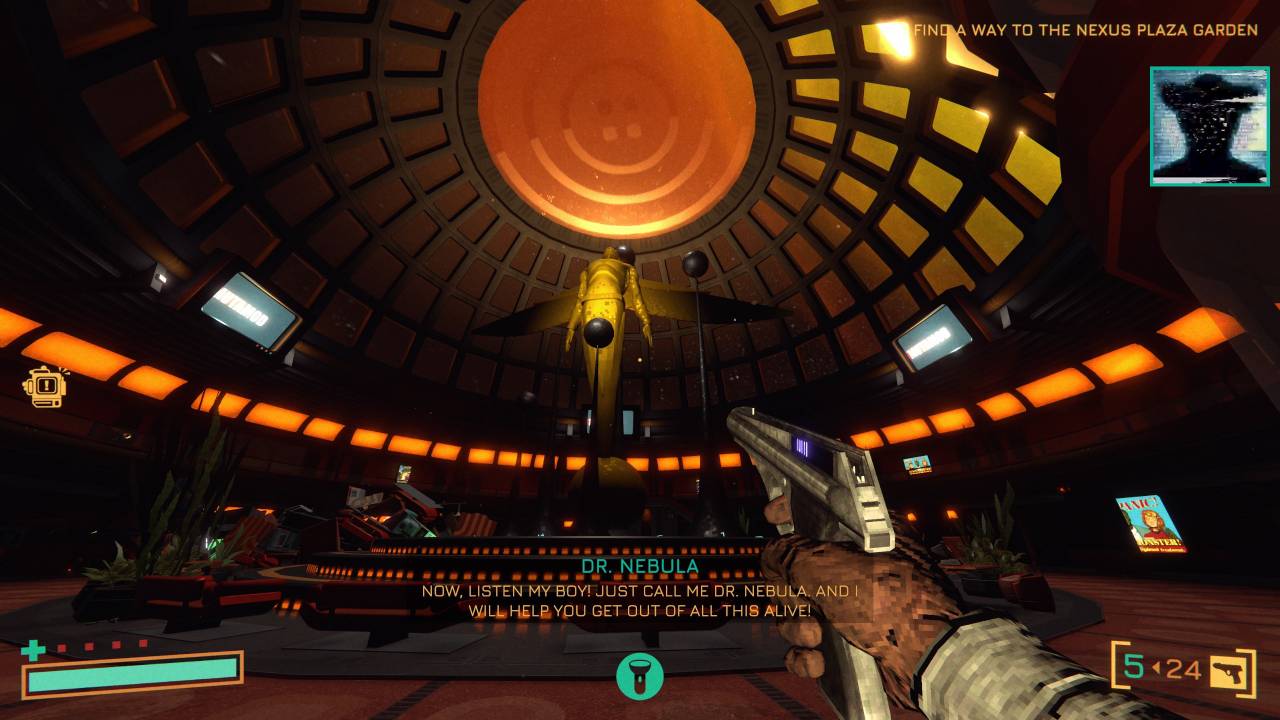
The map and interface are also weaker than the real-world design.
Navigation can become confusing, and the menus for inventory, notes, objectives, and recordings can feel clunky. These problems do not destroy the experience, but they add friction to systems that should make exploration easier.
Still, RetroSpace's core is hard to ignore. You get a $20 immersive sim that understands why this genre works. You are given a strange environment, a collection of systems, scattered information, enemies, environmental hazards, and enough freedom to decide how you want to deal with them.
It doesn't completely match the games that inspired it, and you shouldn't expect it to replace something like System Shock. Its stealth, movement, menus, performance, and some of its objectives need more refinement. The ladders in particular feel like something that could benefit from a future patch.
What RetroSpace does understand is the importance of letting you explore without constantly getting in your way with scripted solutions.
When you discover a hidden route, remember a password, solve an environmental problem, or connect two pieces of information on your own, the game gives you that satisfying feeling that your progress came from actually understanding the world.
That makes its rough edges easier to tolerate, especially if you already enjoy immersive sims. You are not buying a massive AAA production here. You are getting a smaller game that takes a familiar formula and builds its own weird little space around it.
The reception also reflects that divide.
Critical responses have landed around the low 70s, while player reactions have been considerably warmer, with some players rating it around the 9/10 range. That difference makes sense because RetroSpace is the kind of game where your tolerance for rough mechanics will determine how much you enjoy the experience.
If you can look past the awkward ladders, inconsistent performance, vague objectives, and clunky interface, there is a lot to explore. Aurora 5 is full of secrets, and the combination of environmental interaction, dimension shifting, combat, puzzles, mutations, and exploration gives you plenty of reasons to keep digging.
RetroSpace ultimately feels like a game made by people who understand what makes immersive sims appealing, even if they have not completely polished every part of the formula. Its strongest moments come when you are left alone to figure something out, while its weakest moments happen when the interface or movement gets between you and that freedom.
For around $20 and roughly 20 hours of content, it offers solid exploration and experimentation. It is not the next System Shock, and it does not need to be. RetroSpace earns its place among smaller immersive sims by offering a world worth exploring and enough freedom to make that exploration feel like your own.
Editor, NoobFeed
Verdict
RetroSpace is a rough but rewarding immersive sim with clever exploration, environmental systems, and a memorable setting. Its clunky UI, ladders, stealth, and performance hold it back, but the core experience is worth playing.
77
Related News
No Data.