
End of Abyss Review
Xbox Series X|S
A bleak sci-fi Metroidvania where careful exploration, tense combat, and a troubled map compete for control of the experience.
Reviewed by Adeela Tas on Oct 01, 2026
You step into End of Abyss as Cel, a voiceless technician sent into a vast underground facility after an unexplained incident cuts it off. Section 9 Interactive made End of Abyss with developers who include former creators from Little Nightmares, and that background helps explain the world's strange texture.
Still, this is not simply another version of that series. You get a third-person Metroidvania built around shooting monsters, solving environmental obstacles, returning to earlier areas, and gradually opening more of the facility. You begin with soldiers escorting Cel into the compound, but that support does not last.
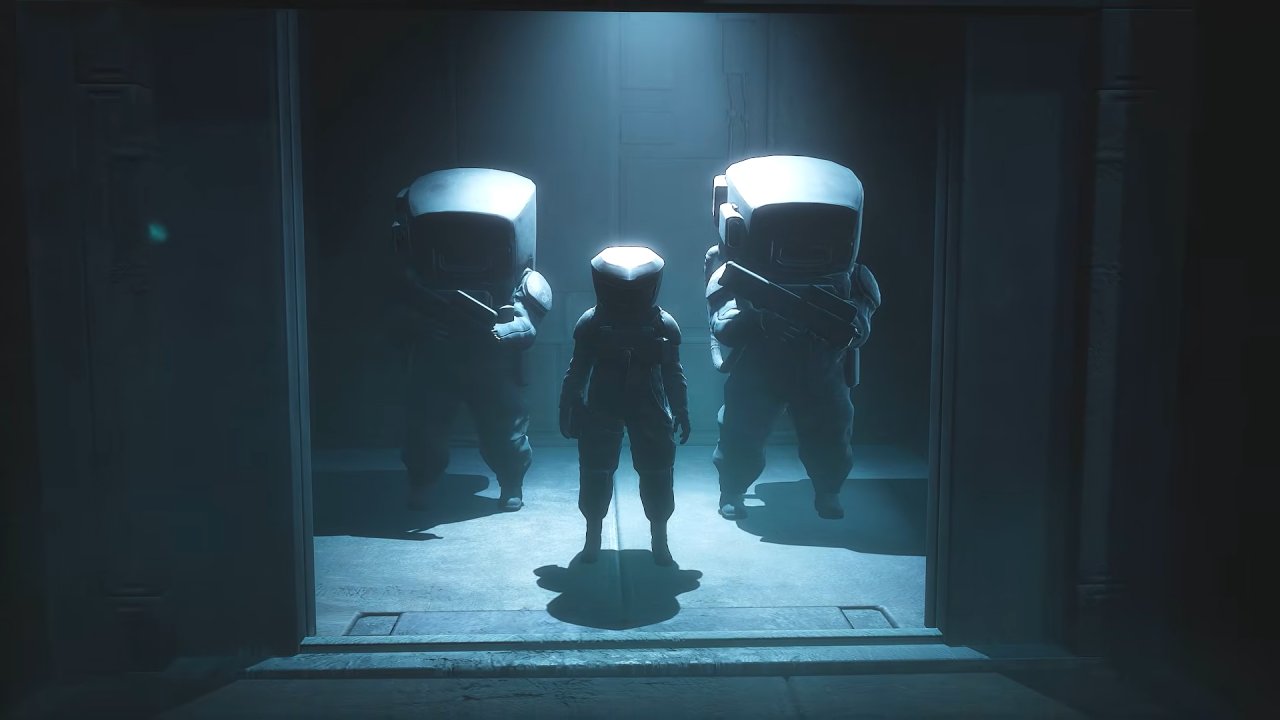
Once the introduction ends, you spend most of the adventure moving through the facility on your own.
Other characters contribute, yet much remains unexplained. Notes and environmental details give you pieces to work with, while the limited cutscenes avoid fully spelling everything out. The setup gives you enough motivation to keep going, though the narrative never delivers quite as much payoff as the atmosphere suggests.
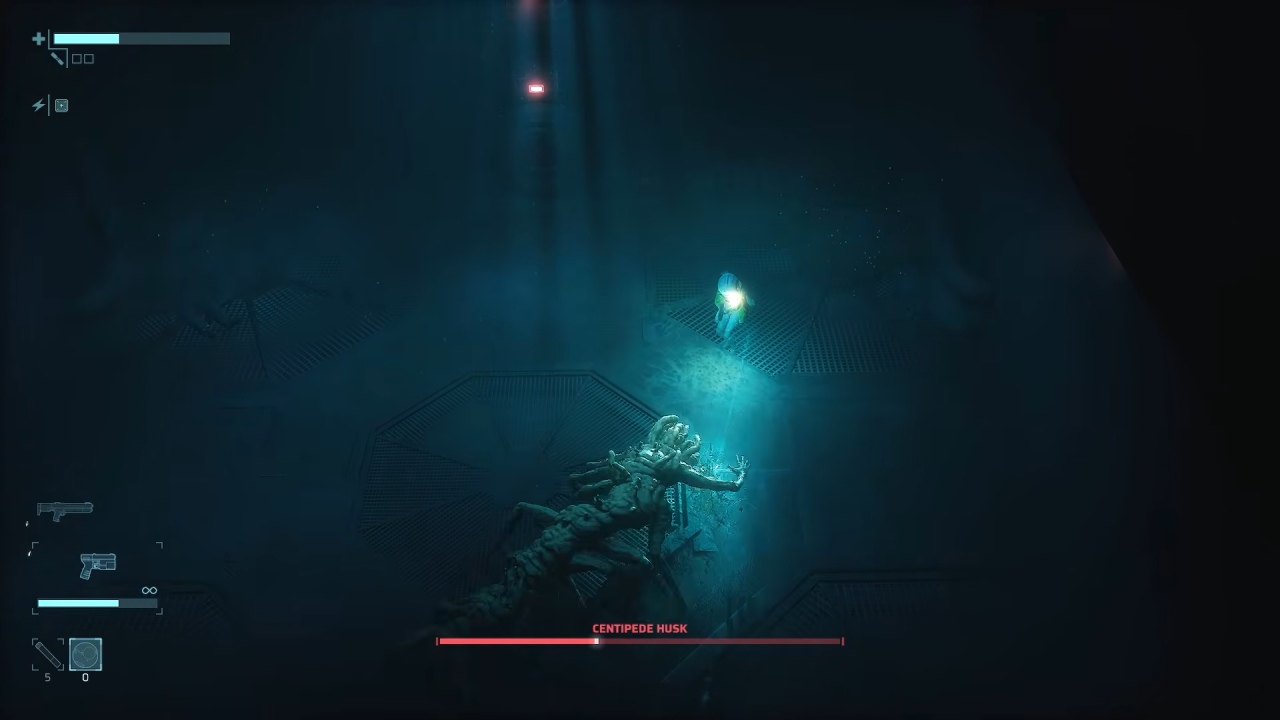
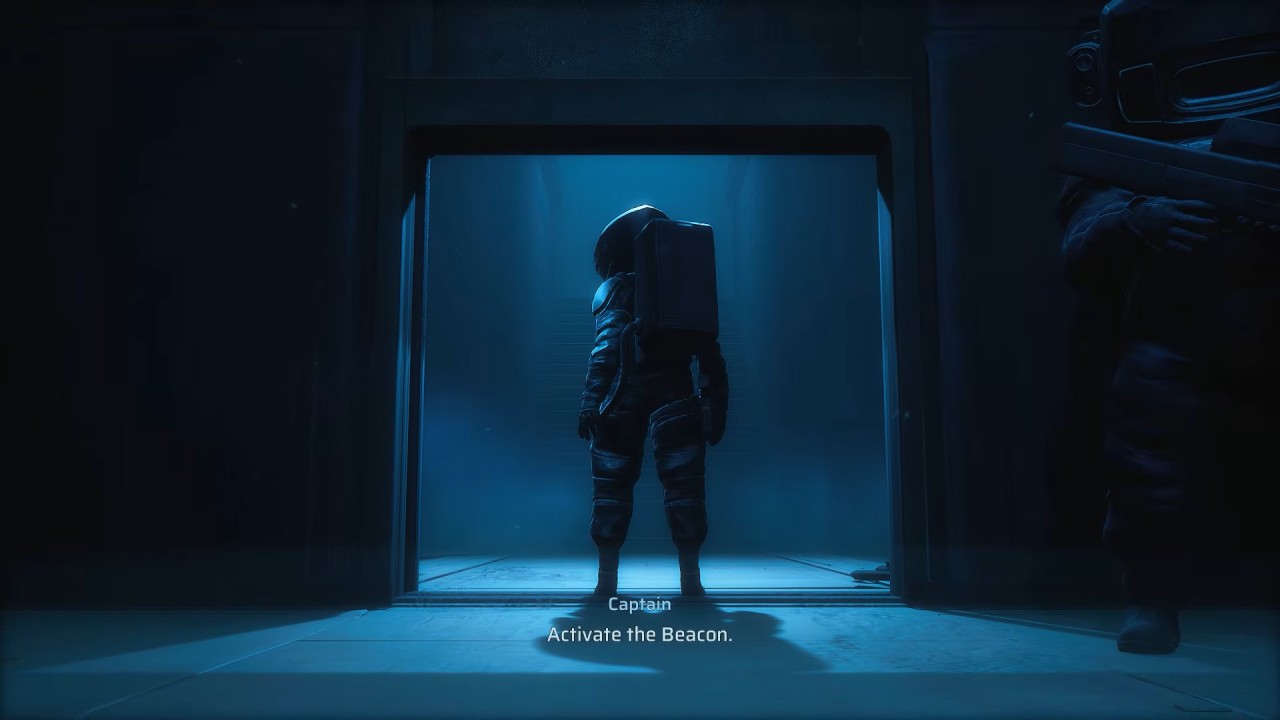
That atmosphere is one of the clearest strengths. The underground complex is washed in a deep blue palette, with darkness often limiting how far ahead you can see. Fixed camera angles shift when needed, sometimes creating small, carefully framed views of rooms.
The facility is full of broken machinery, crumbling walls, and weird organic growth creeping over everything. The setting carries a retrofuturistic science-fiction influence, with visual ideas that recall Alien and other body-horror works. At the same time, the gear and the way the characters look keep it from feeling like a straight copy.
The soldiers' bulky suits are especially memorable, with geometric helmets that hide their faces and make them look almost separate from the humanity around them. That visual approach also fits End of Abyss's wider sense of unease. Even though the enemies are generally mutated creatures rather than ghosts, the quiet halls and limited visibility can make the facility feel like a haunted house set in a science-fiction setting.
Your main job is to uncover the facility section by section, and the structure opens up significantly after the second boss.
Early areas feel compact, with shortcuts and connected rooms that encourage you to learn the layout. Later, End of Abyss gives you a larger network of paths and expects you to decide where to go next. New equipment regularly changes the usefulness of old locations, so a room that seemed finished earlier can become important again after a major upgrade.
That backtracking is the strongest part of the adventure. You can find explosive charges that destroy certain weak walls and floors, or a grappling hook that pulls down ladders and opens previously unreachable routes. These tools are not only for the critical path.
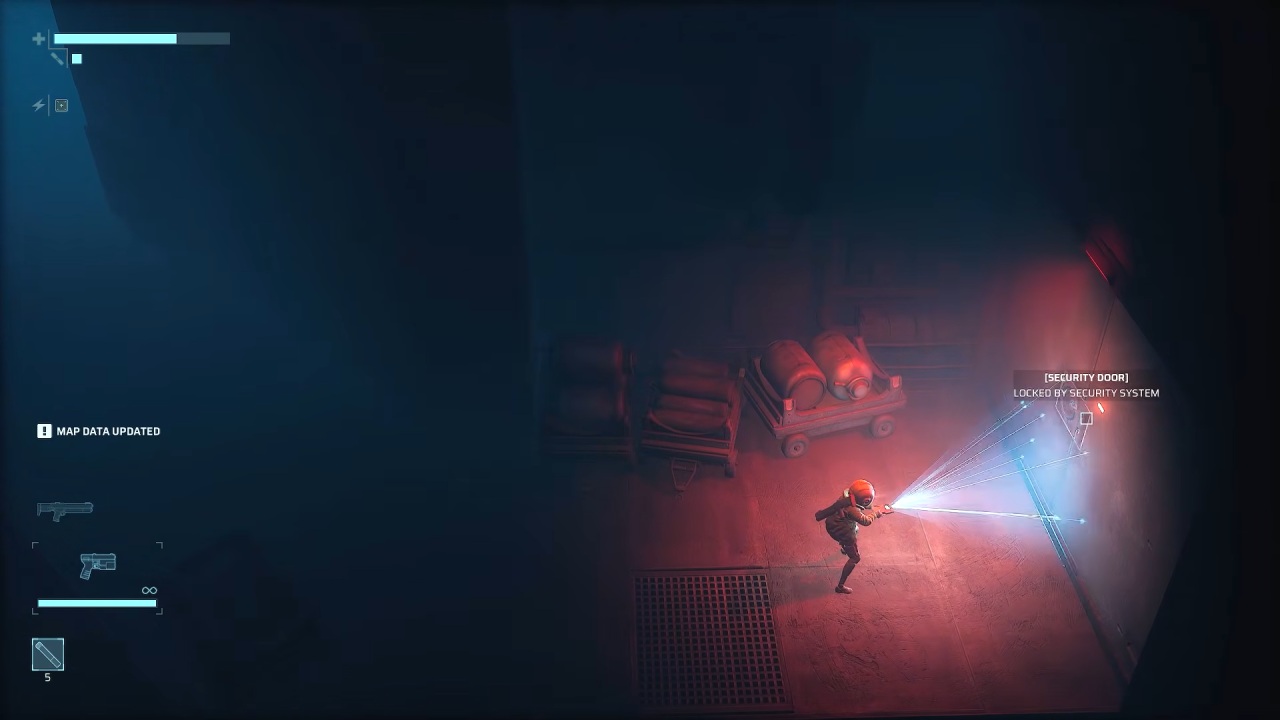
They lead into optional sectors with resources, collectibles, hidden encounters, and upgrades, since many upgrades sit off the main route; exploring those side paths feels worthwhile rather than like a checklist. The facility also rewards you for paying attention to its layout. You can find maps inside individual sectors, sometimes hidden away from the route you are most likely to follow.
Once you have one, you can study the area and determine which rooms or paths you have not yet investigated. Save points are also spaced around the complex, restoring health and healing supplies. Reaching one after a difficult stretch provides a welcome moment of relief and makes the surrounding exploration feel more manageable.
A scanner makes the process more active.
You can point it at objects and environmental barriers to discover why a route is blocked. A door might need a particular key, or it might simply be locked from the other side. The relevant information is not automatically handed to you, so scanning becomes part of learning the facility. The extra effort can be slower than a more automated system, but it also makes you feel responsible for charting your surroundings.
The open structure can also leave you stuck for reasons unrelated to combat. You can go back to the same room again and again and still miss a tiny switch or something you could interact with. One such obstacle can involve extending a bridge, with the lighting and camera angle making the switch easy to overlook.
Finding the answer later can feel satisfying because you finally understand what you missed, but repeated room-by-room searches can also get exhausting when you are sure you've already checked every route. The bigger problem is the map itself. End of Abyss can show a door as locked even after you open it, while another door may fail to show the icon indicating it is now accessible because you have the required key.
Some locations marked as locked can even be open when you arrive. These errors are visual rather than absolute blockers to progression, since the correct key can still let you through, but they undermine the map's purpose. That creates an awkward situation where you have to remember two versions of the facility: what the map claims and what the actual rooms show.
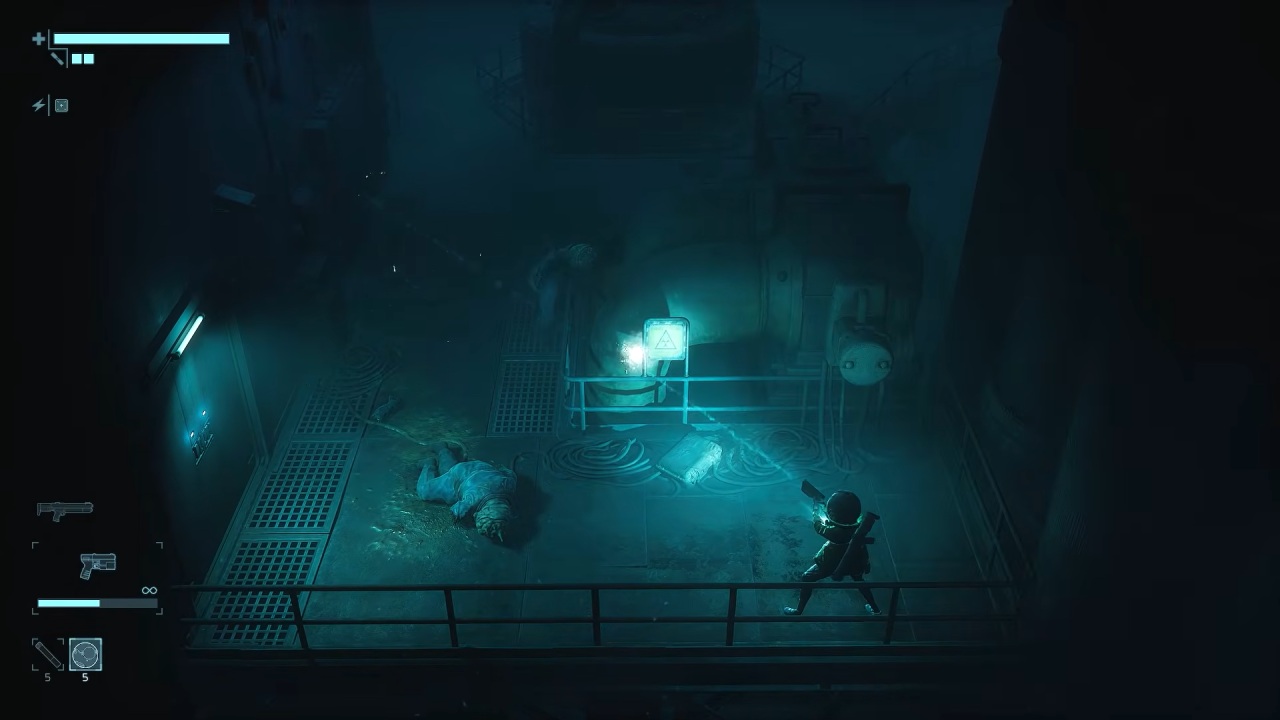
Since exploration depends heavily on using the map to identify places worth revisiting, that uncertainty can make navigation more stressful than a difficult encounter.
A later patch removed some other problems, but the mapping issue remained significant. For a Metroidvania, where visual navigation cues are part of the genre's basic language, that flaw is particularly disruptive. Combat uses twin-stick shooting. You aim with the right stick while moving Cel around the facility, and the starting pistol gives you unlimited ammunition.
Other firearms become available later, including a shotgun, rifle, and flamethrower, but their ammunition is limited. So the pistol is something you can always count on, and it makes you stop and ask whether a bigger gun is really worth the ammo. Grenades can save you in rough fights, and flares and placed explosives help with exploration and round out the rest of your kit.
Defeated enemies provide Fragments, which you can spend in save rooms to craft ammunition and consumables or improve your weapons. More specialized upgrade materials are limited, so choosing where to invest them matters. The pistol can remain your most dependable gun because of its unlimited ammunition, and upgrading it makes it increasingly effective.
The other weapons still have their uses when an encounter becomes more demanding, but their limited supplies make them less natural choices for routine enemies. The aiming system adds another layer of tension. At a useful range, a soft lock helps keep shots on enemies, making standard encounters more manageable. At longer range, you rely more on manual aiming.
That can create a strong horror-style moment when an important shot misses, especially if an enemy is closing the distance. At other times, the shift between assisted and manual targeting can feel less consistent than you want from a shooting system.
The creatures themselves fit the visual style.
Many are mutated humanoids with organic material spreading from their bodies, while robotic enemies can take surprising punishment. Attacks include rushing, clawing, grabbing, and striking from a distance. Their animations look unnatural, and the fixed camera can make first encounters with new enemies uncomfortable because your view doesn't always show the full picture right away.
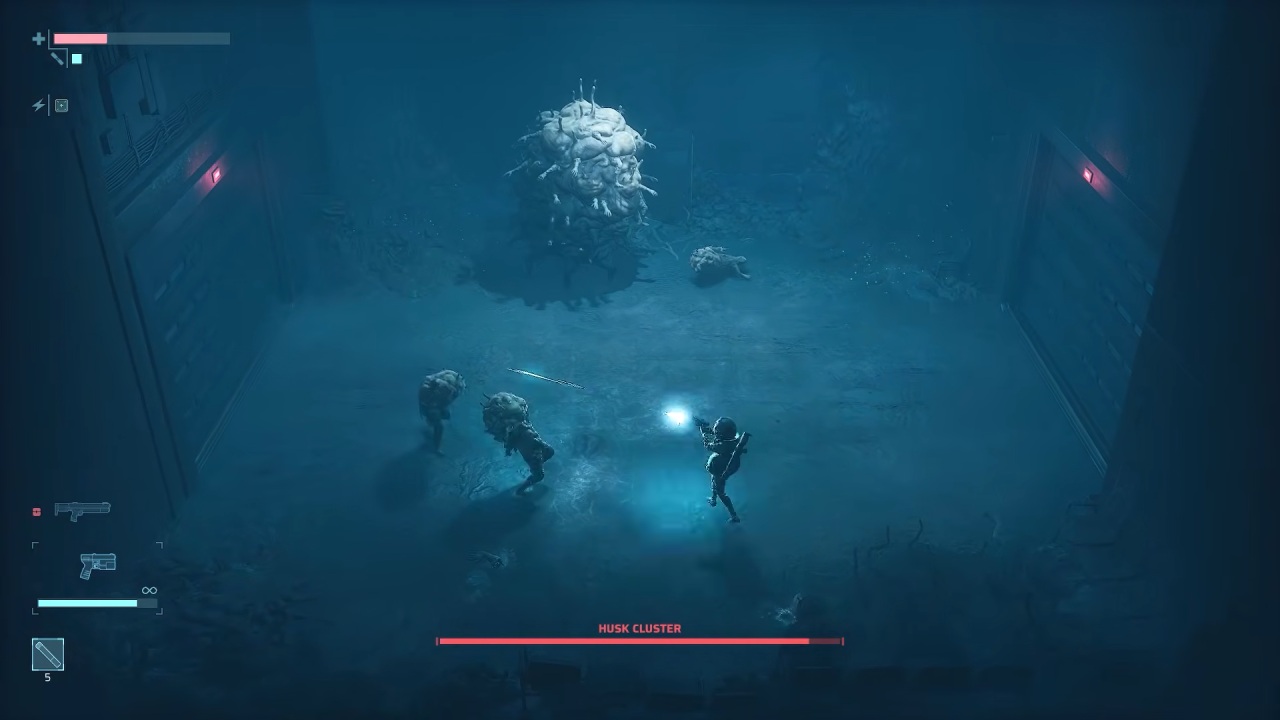
Early fights can feel genuinely tense because Cel starts with limited firepower, and enemies can close the distance quickly. Tight rooms and camera restrictions add deliberate friction, while the Soulslike influence becomes more obvious in larger encounters. A badly timed dodge can cost you heavily. Once you improve your weapons and learn dodge-roll timing, the balance shifts.
Later in End of Abyss, you can clear several boss fights with far fewer attempts than the earlier ones required. Bosses are usually the most elaborate enemies in terms of appearance, but the difficulty curve doesn't always progress smoothly. A massive centipede made from bodies can be tougher than several later bosses, while some late encounters end in a single attempt.
Several bosses also share similar behavior, relying on close-range attacks or ranged fleshy strikes that give you only a short reaction window. A few fights introduce additional mechanics, but many rely on variations of the same basic pressure.
The dodge roll becomes particularly important once you learn its invincibility timing.
The progression helps. By the middle portion, the shotgun, rifle, and flamethrower give you more options, even if the upgraded pistol remains difficult to replace as your everyday weapon. The sense of becoming stronger is satisfying, but it also exposes how uneven some earlier encounters can feel.
The Soulslike structure also shapes the horror. Restoration pods function as safe points, and enemies reset when you use them. The first time you enter an area and face an unfamiliar group of creatures, the encounter can feel threatening. After several returns, however, you know what is waiting there.
The same enemy jumping from the same place loses much of its scare factor once you've learned the routine. Repeated combat therefore makes End of Abyss feel more like a darker Metroidvania than a pure survival-horror experience. The body-horror presentation also stays consistent. Organic growth, mutated enemies, damaged machinery, and the oppressive facility all reinforce the same unsettling setting.
End of Abyss draws on familiar science-fiction horror tropes without relying on constant spectacle. Its strongest atmospheric moments come when you are simply moving through a quiet section and cannot see very far ahead, rather than when the title throws another enemy encounter at you.
Unfortunately, technical issues interrupt the mood.
The map in End of Abyss may fail to update correctly; some rooms may load incorrectly, and one room may appear completely black until you move to the right position. Doors can also refuse to open after you defeat the required waves of enemies, leaving you temporarily stuck. Hard crashes can occur, and the final boss may fail to appear after its introductory scene, requiring a restart for the encounter to load properly.
Optional content gives the later hours additional purpose. A weapon you get near the end opens areas that were inaccessible earlier, and exploring those spaces can reveal collectibles tied to an alternate ending. That extra material gives you more reason to return after the main progression and adds some narrative material beyond the standard conclusion.
It also fits End of Abyss's central philosophy: gaining something new should change what you can do with places you have already visited. Across roughly 12 to 15 hours, the game moves between rewarding discovery and recurring frustration.
The best stretches come when a new tool suddenly turns an old obstacle into a reachable route, when a hidden map reveals a sector you had only partly understood, or when you find an upgrade in an optional area after taking the time to investigate. Those moments make End of Abyss feel interconnected rather than simply divided into levels.
The weaker stretches happen when the systems stop supporting that exploration.
A misleading map can send you back toward a route that is already open, repeated enemies can turn a previously tense corridor into routine cleanup, and an uneven boss curve can make one fight feel dramatically harder than another. Technical interruptions compound those problems because they can make it difficult to tell whether you missed something or the game simply failed to communicate it correctly.
The mix of influences is therefore both End of Abyss's appeal and its limitation. The Metroidvania foundation gives you meaningful backtracking and progression. Resident Evil-style camera work helps control visibility and tension. Soulslike mechanics create demanding bosses and restoration points. Little Nightmares-like visual sensibilities help establish the unsettling presentation.
None of those ingredients is inherently out of place, but the transitions between them aren't always smooth, especially when repeated Soulslike combat works against the horror atmosphere. End of Abyss is most effective when you explore rather than simply clear enemies.
The facility has enough interconnected paths to make your growing collection of tools matter, and the scanner encourages you to investigate rather than automatically receive every answer. Finding hidden bosses, resources, upgrades, and optional sectors gives your movement a purpose beyond reaching the next story beat.
The atmosphere then gives those systems a clear identity.
The midnight-blue lighting, damaged technology, organic growth, restrained music, and restricted sightlines make the facility recognizable from one section to another. Even if the story stays unclear, the setting tells you just enough to keep you curious.
You do not need every detail explained to understand that something went seriously wrong inside this place. Still, the map problem is difficult to ignore because it affects the very system that works best. When you cannot trust whether a door is actually open, the satisfaction of planning your next route is weakened.
The technical issues make that problem more noticeable, while enemy repetition can make the backtracking less exciting than it should be. Those issues do not erase the game's strongest ideas, but they repeatedly interrupt them. End of Abyss ultimately feels like a game that comes close to combining several familiar genres without completely balancing them.
You get a convincing sci-fi horror world, a substantial exploration structure, useful upgrades, optional areas, and combat that becomes more manageable as Cel grows stronger. You also get unreliable map data, repeated enemy encounters, uneven boss difficulty, and technical issues that can disrupt progression.
Editor, NoobFeed
Verdict
End of Abyss is a moody sci-fi Metroidvania with rewarding exploration, useful upgrades, and strong atmosphere, but unreliable mapping, repeated encounters, uneven boss difficulty, and technical issues keep its influences from fully coming together.
70
Related News
No Data.