
Dead by Daylight: Chorus of Sin Review
PC
The Judgment brings divine punishment, Aurora Stardotter offers a different kind of survivor, and a community-created chapter takes Dead by Daylight in a surprisingly bold direction.
Reviewed by Maisie Scott on Aug 29, 2026
Dead by Daylight: Chorus of Sin is an engaging addition to a game that has spent years expanding its roster with both original and licensed characters. Released on August 25, 2026, it is particularly notable as the game's first community-created chapter, shaped by the long-running Grimoire community project.
That community involvement gives Dead by Daylight: Chorus of Sin a distinct identity compared to a standard chapter. You get The Judgment, an original killer built around divine punishment, and Aurora Stardotter, an original survivor connected directly to the same mythology.
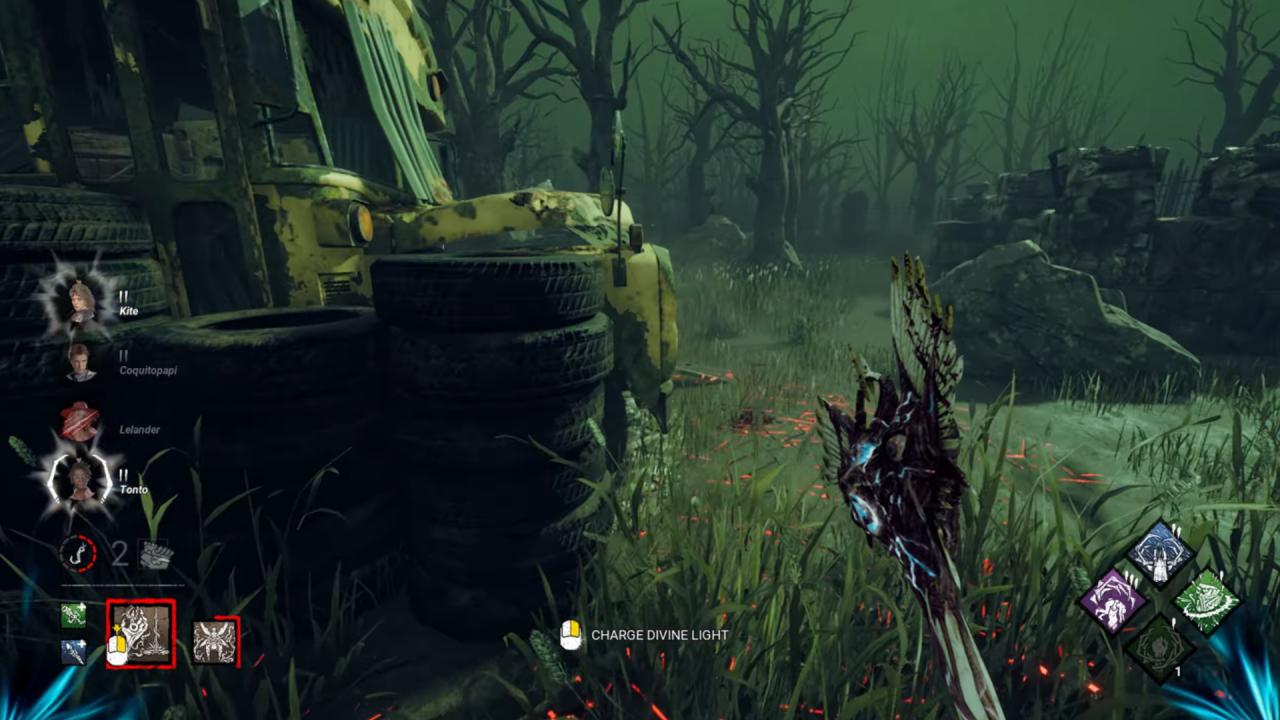
The result is a chapter that feels as if it were designed around a specific world and theme, rather than simply giving two new characters a collection of unrelated abilities. It also helps that the central concept of divine horror fits naturally into Dead by Daylight's existing atmosphere.
The Judgment is from the Celestial Echelon, an entity that travels the cosmos delivering punishment.
When the people of Terra Primus attempted to reach godhood, The Judgment answered with pillars of divine light that destroyed cities and turned the once-thriving world into a wasteland. Aurora was among those trying to survive the destruction, eventually becoming caught up directly in The Judgment's punishment.
Aurora's story gives the chapter its other side. She was supposed to be executed alongside her fellow Searchers, but the destruction of Terra Primus created an opportunity for her to escape. Using her ability to read the stars, she helped lead people to safety while the Judgment continued its return to cleanse the world.
That relationship makes the chapter's narrative more compelling than you might initially expect. The two characters aren't just connected because they were released together; their stories revolve around the same ruined world, the same catastrophe, and the conflict between punishment and survival.
Once you actually enter a trial as the Judgment, the chapter becomes much more mechanically ambitious. The killer's main ability is Divine Light, and this is where Dead by Daylight: Chorus of Sin really separates itself from many other chapters. The Judgment must derive a significant amount of value from one complicated power, rather than relying on several different abilities for movement, chasing, and anti-looping.
Divine Light allows you to call down a beam from above that can injure survivors and apply heresy. The range is one of the ability's biggest advantages. With the right information, you can threaten Survivors from extremely far away, meaning you don't always need to be physically standing next to the person you are attacking.
The catch is that Divine Light is nowhere near as straightforward to use as its range might suggest.
The beam needs to be charged before it becomes damaging, and getting a hit at close range can be much harder than landing a long-distance attack when you already know where the Survivor is. That creates an unusual learning curve.
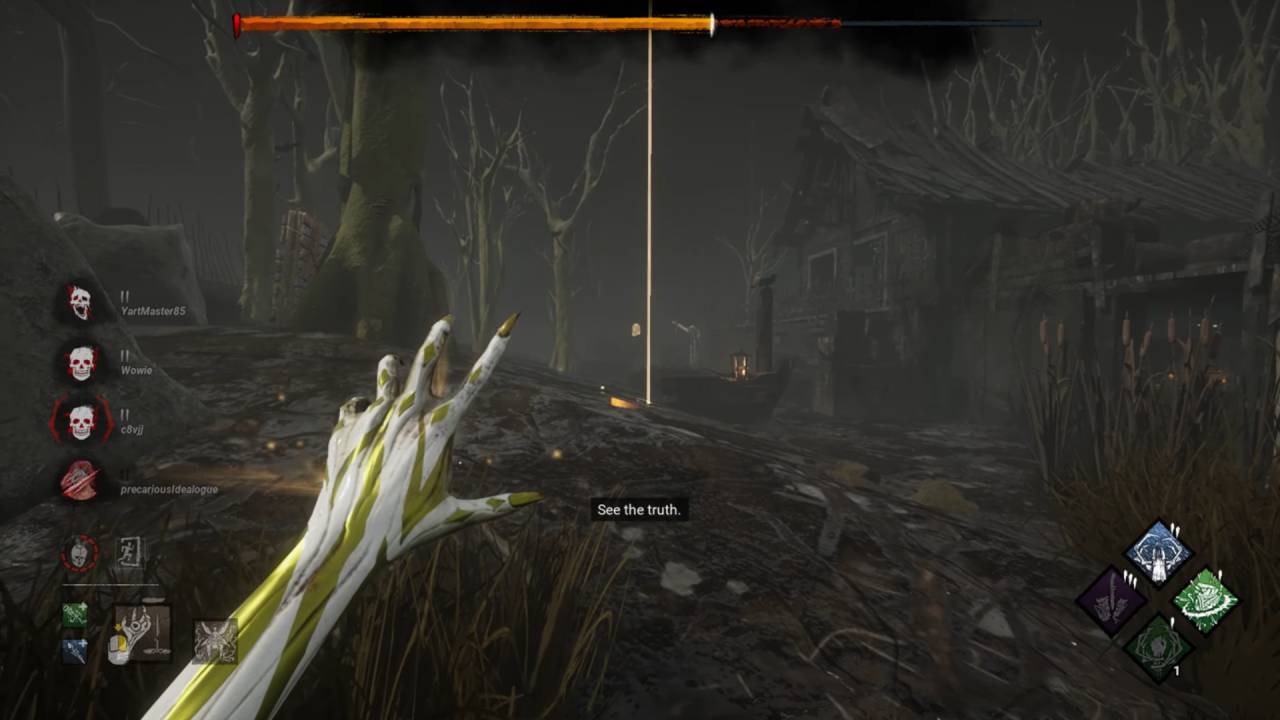
Long-range shots can feel surprisingly manageable with good information, while mid-range attacks demand more precision, and close-range situations can become awkward around pallets, walls, and other structures.
This is where techniques such as the Beyblade tech become important. You can aim behind yourself while charging the beam and then quickly flick the attack toward the Survivor. It essentially works like loading a slingshot before aiming it at the target.
It is not something you are likely to master immediately, but learning tricks like these is part of what makes The Judgment feel like a killer you improve with rather than one you simply understand after a few matches.
The character's movement speed also makes that mastery more important. Because The Judgment moves at a slower pace than many killers, you cannot always fall back on ordinary chasing when Divine Light is difficult to land. The power needs to become part of your normal decision-making.
That gives the killer a very high skill floor, but it also creates a high ceiling. If you already enjoy killers such as Artist or Unknown and like applying pressure from a distance, there is a good chance you will appreciate how much room for improvement there is.
Heresy adds another layer to this system. Survivors gain Heresy when Divine Light hits them, and they can also acquire it by taunting The Judgment.
Once affected, they must make special skill checks with their generator. Missing the Great Skill Check zone causes generator progress to regress, which means Heresy is not simply a status effect that matters during a chase. It can continue affecting the match while Survivors are trying to complete objectives.
You can remove heresy by interacting with Shrines of Judgment around the map, but doing that takes time. Cleansing heresy makes generators safer to repair, while ignoring it allows survivors to focus on objectives but exposes them to regression.
The most unusual part of the chapter is probably Exile. When the Judgment downs a Heretic Survivor, that Survivor can be banished to a separate realm instead of being handled through the normal hook process. Inside Exile, survivors have to avoid Seeds of Punishment while trying to survive long enough to be rescued.
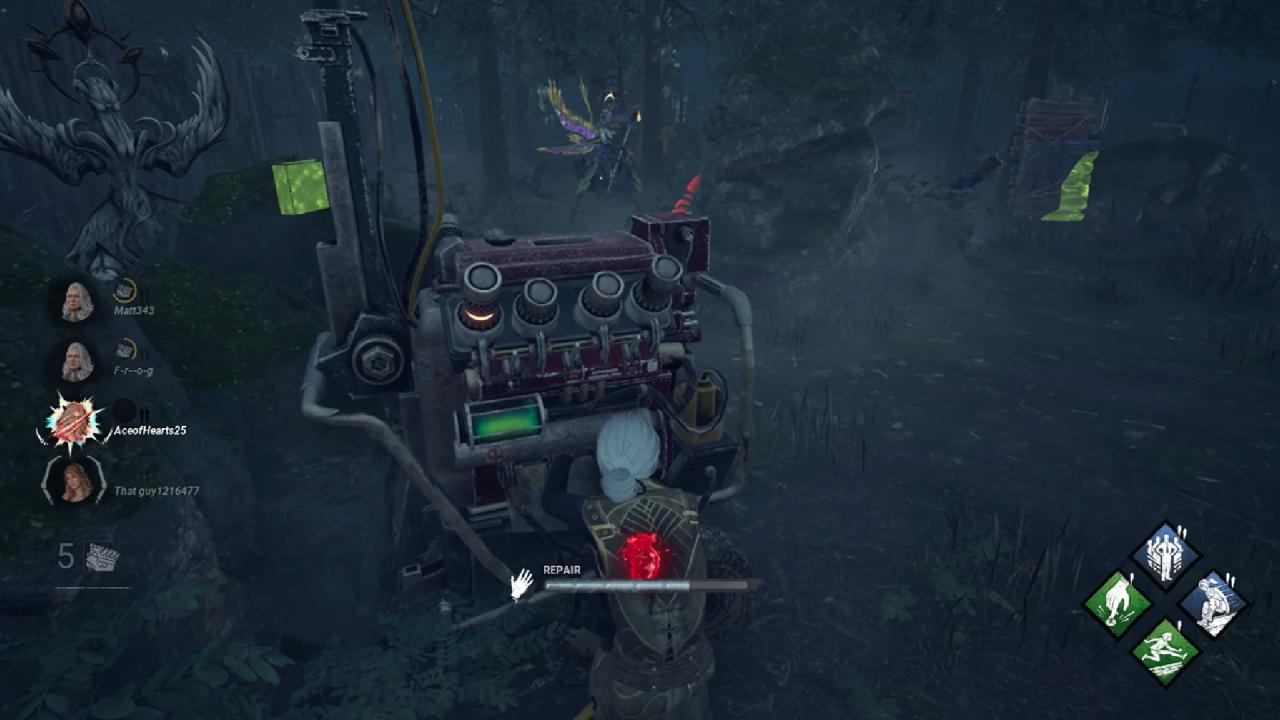
The exile system gives the downed Survivor something active to do instead of simply waiting. You have to move around the environment, avoid the falling threats, and manage your time carefully. You can also collect Exiled Souls, which provide additional defenses after a rescue, while being struck by the pillars of light advances the exile timer.
Rescuing someone from Exile also changes the normal team dynamic. Shrines are important for rescuing Survivors trapped in Exile, but this may require sacrificing some health from other Survivors.
If your team doesn't work together, the results can be disastrous. When the timer expires, the Survivor is consumed by the light and becomes an Exiled Soul who may help future Survivors. The system becomes even more hazardous when several Survivors go to Exile simultaneously.
The judgment becomes even more dangerous after a successful exile, as it triggers the Zealous state.
The beam can now be adjusted in size, duration, and control after it is fired. This is where the killer can start to make some very difficult shots. The power already gives you unusual map pressure, but Zealous pushes that concept further and rewards you for successfully using the exile system.
The killer's add-ons are another strong part of the design because they do more than simply provide minor statistical improvements. Some of them change the way Divine Light behaves, including versions that create wall-based slingshot opportunities or cause the beam to return toward the Judgment after being fired.
One of the more unusual options turns the attack into something more like pinball, allowing the beam to bounce off walls and create attack angles that would not normally be available. Other add-ons can improve The Judgment's speed while casting the beam or interact with its return during Zealous.
That variety makes progression with The Judgment feel more meaningful. You are not simply grinding toward the same basic build and then stopping once you find the strongest numbers. The add-ons encourage you to experiment with different ways of using the same core power.
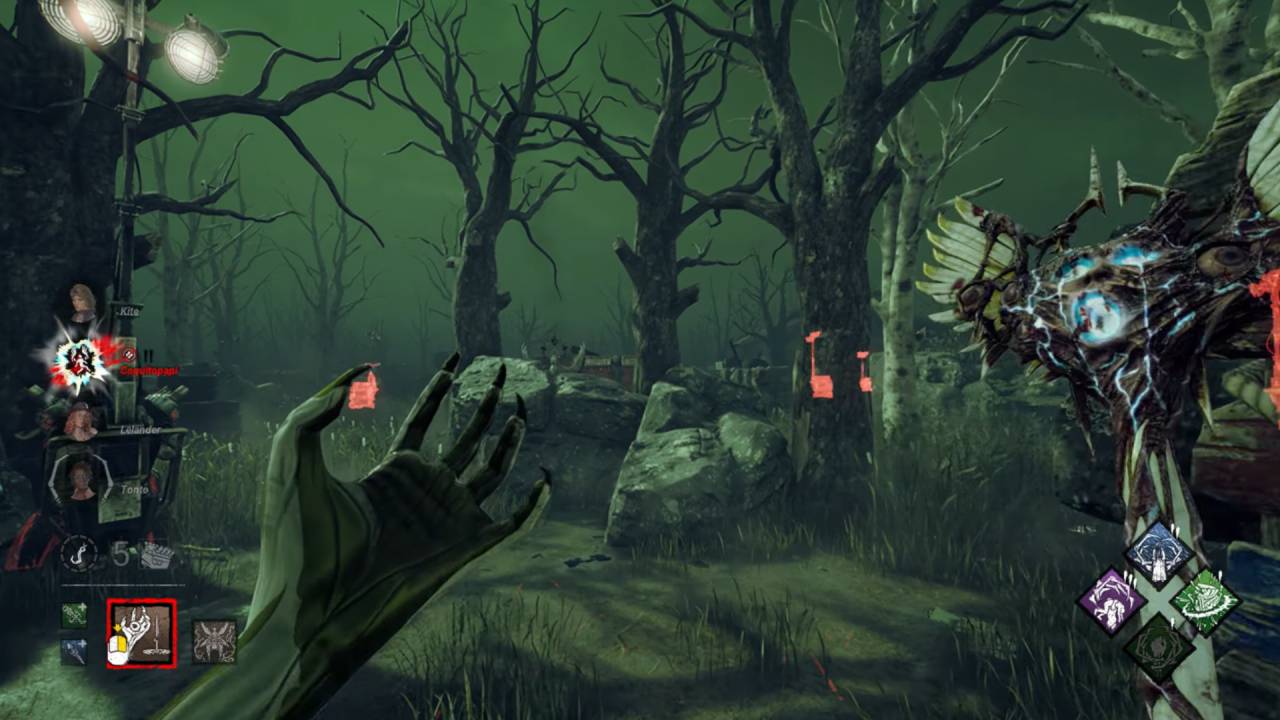
The more time you spend with the killer, the more familiar you become with the beam's timing, angles, and tricks, so the progression is tied heavily to player skill rather than just unlocking stronger equipment. This makes each match feel like another opportunity to improve your control and understanding of the power.
The Judgment's three perks continue that experimental approach.
Celestial Witness periodically reveals the aura of the Obsession when they are far away, while the perk can shift the Obsession to another Survivor when its condition is not met. Hex: Under Your Thumb activates after a hook state and interferes with Survivor Haste, while Lay Waste makes generators regress faster depending on how much progress they have already gained.
Aurora offers a much more familiar way to experience the chapter. Her role is less about mechanical execution and more about helping the team. Boon: Steadfast creates a Boon that slows generator regression and increases repair speed within its area.
The obvious drawback is that you have to spend time finding and blessing a totem, and the killer can eventually remove the Boon. That means its effectiveness depends heavily on where you establish it and how much time your team can afford to invest in maintaining it.
Fruits of Your Labor is built around generator progression. You gain a token whenever a generator is completed, and when you personally finish one, those tokens contribute to temporary haste and healing benefits.
It becomes increasingly useful as the trial progresses, but the requirement to personally complete generators means it is not equally valuable in every match. If you spend most of the trial being chased or otherwise unable to work on objectives, you lose opportunities to build up its benefits.
Salvation's Cry is probably the easiest Aurora perk to appreciate immediately.
When you enter a chase, you gain information about your teammates, while your teammates can also see relevant information about you and the killer for a short period. This helps you understand where the chase is happening and what the rest of the team should do.
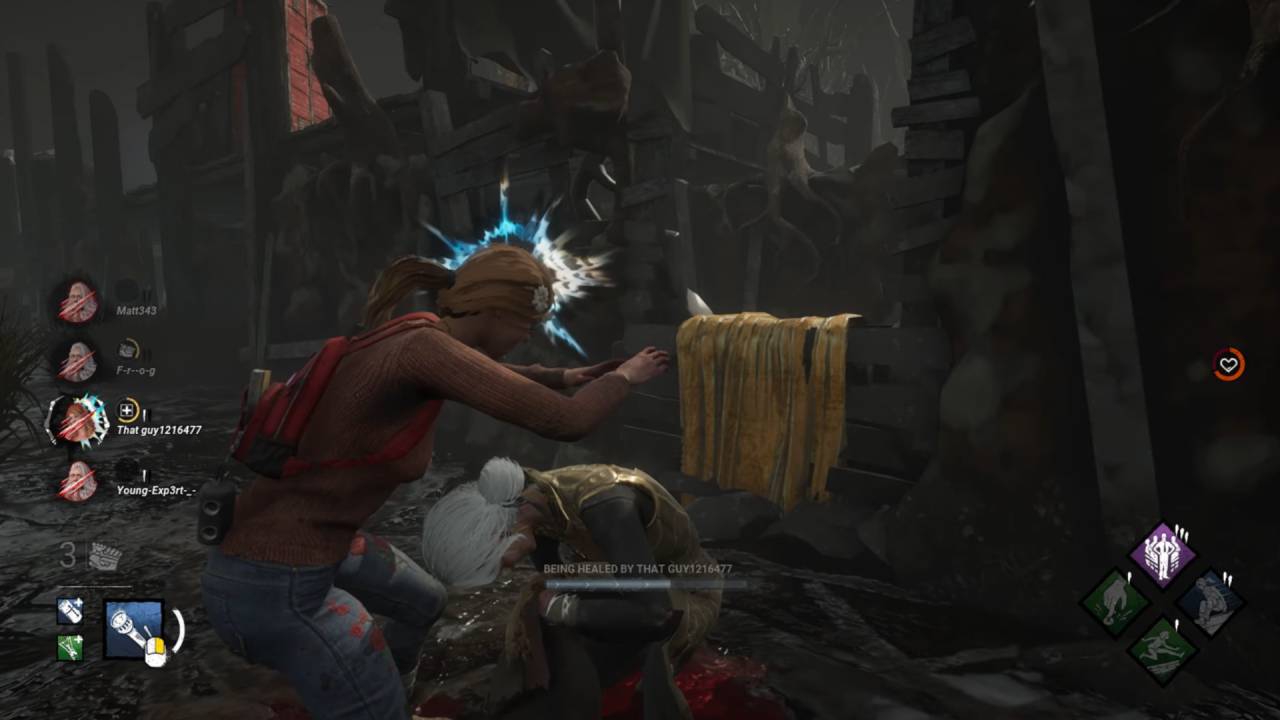
There is no traditional XP-grinding system attached specifically to this chapter in the way you might find in a conventional RPG. Your progression instead comes from learning the characters, unlocking and experimenting with perks and add-ons, and becoming more comfortable with the mechanics.
That matters most in The Judgment because mechanical familiarity is, in effect, its own form of progression. Your first few matches can feel clumsy, while later games can become much more controlled once you understand how to charge, redirect, and position Divine Light.
Aurora's progression is more straightforward because her perks support recognizable survivor roles. You can build around generator efficiency, healing, team information, or a mixture of those ideas. The Judgment, meanwhile, gives you a much stronger reason to keep practicing because the gap between knowing what the killer can do and actually executing those abilities is significant.
Visually, Dead by Daylight: Chorus of Sin does a particularly effective job of supporting its mythology. The judgment doesn’t look like a typical killer at first glance. The character has an unsettling body design, a strange voice, and a weapon that feels more intimidating than regular equipment. The bottom half of the character is especially disturbing and really drives home the point that the figure is meant to be an alien god, not just a guy in a costume.
Aurora is a different visual contrast. She is an older, hardened survivor, which alone gives her a distinct identity on the roster. Her cosmetics offer mix-and-match and recolor options, and her voice work adds more personality than a cosmetic addition. Exile further strengthens the chapter’s visual identity.
The audio and presentation also highlight the chapter's religious tone.
The characters have their own voices, and the overall feel is more like an old myth or scripture than a modern horror story. Aurora’s presentation, in particular, goes a long way toward establishing her as someone who has lived through a catastrophe, not just another survivor dumped into the Fog.
The biggest problem is that the chapter lacks a dedicated map. That absence is disappointing because the setting has enough personality to support one. Exile shows how much visual and mechanical potential exists within the world of Terra Primus, and it is easy to imagine a full map built around the same ruined civilization, divine destruction, and strange mythology.
Still, the lack of a map does not stop Dead by Daylight: Chorus of Sin from feeling different. The Judgment is the clear centerpiece, and that is both the chapter's greatest strength and its biggest limitation. You have a killer capable of incredible long-range pressure, but you also have one of the more demanding characters to learn.
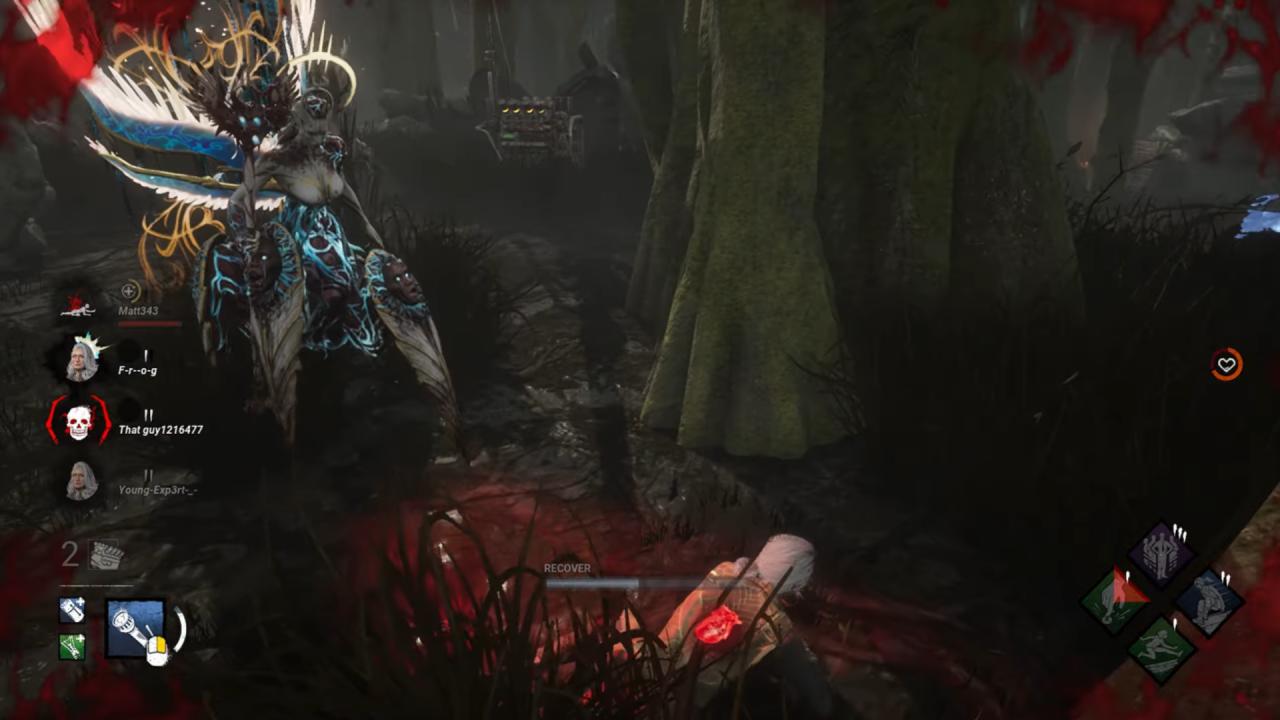
Aurora is a solid companion to that design because she provides a simpler entry point. Her lore, cosmetics, and perks let you experience the chapter without having to master Divine Light. Her perks tend to be more situational than necessary, but offer enough variety to warrant experimentation.
Overall, Dead by Daylight: Chorus of Sin seems like a worthwhile addition to Dead by Daylight. It’s not a full-on game changer, and it’s probably not going to change the meta on its own, but the chapter brings ideas that are difficult to mistake for anything else in the roster.
The Judgment's beam, Heresy, Exile, and Zealous state all work together to create a killer who plays differently from the usual cast, while Aurora brings a strong character identity and useful team-focused options.
The missing map means the chapter feels a little incomplete.
Furthermore, The Judgment's mechanical difficulty could limit how popular the killer becomes once the initial excitement fades. At the same time, that difficulty is precisely why the character can be so rewarding. If you put the time into learning the beam, understanding Exile, and practicing the strange angles that Divine Light allows, you have a character that can continue giving you something to improve.
For a community-created chapter, Dead by Daylight: Chorus of Sin is a surprisingly ambitious result. It takes its religious-horror theme seriously, gives both characters a clear connection, and introduces a killer whose identity is built on mastery rather than simplicity. It doesn’t quite live up to its potential, but you get a memorable chapter that feels like more than just another routine killer-and-survivor release.
Editor, NoobFeed
Verdict
Dead by Daylight: Chorus of Sin stands out with The Judgment’s unique mechanics, Exile system and strong atmosphere. Aurora adds a solid survivor option, but the steep learning curve and lack of a dedicated map keep this ambitious chapter from being.
71
Related News
No Data.