
Star Wars: Galactic Racer Review
PlayStation 5 Pro
Star Wars: Galactic Racer offers a deep, replayable experience, but it lacks split-screen multiplayer, which may shape expectations for social play and emphasizes solo and online competition for dedicated fans.
Reviewed by Mahi Araf on Oct 08, 2026
Star Wars: Galactic Racer arrives more than 20 years after the last dedicated Star Wars racing game, and it has a moderate learning curve that rewards practice. The obvious comparison is Star Wars Racer from 1999, a game that has remained popular because its racing still feels good decades later.
Rather than simply recreating that experience, Star Wars: Galactic Racer takes some of those ideas and pushes them further. You get faster racing, more vehicle variety, deeper customization, environmental hazards, a run-based campaign, and enough progression to make each attempt feel different. Fuse Games developed the game; former Criterion developers who worked on Burnout and Need for Speed formed the studio.
That background becomes clear almost immediately. Crashes have the spectacle you would expect from a Burnout-style racer, except everything is framed around Star Wars vehicles and planets. Landspeeders, speeder bikes, skim speeders, and pod racers can tumble, flip, collide, and explode around you while the camera shifts to capture the action. It gives the racing a cinematic quality without taking control away from you.
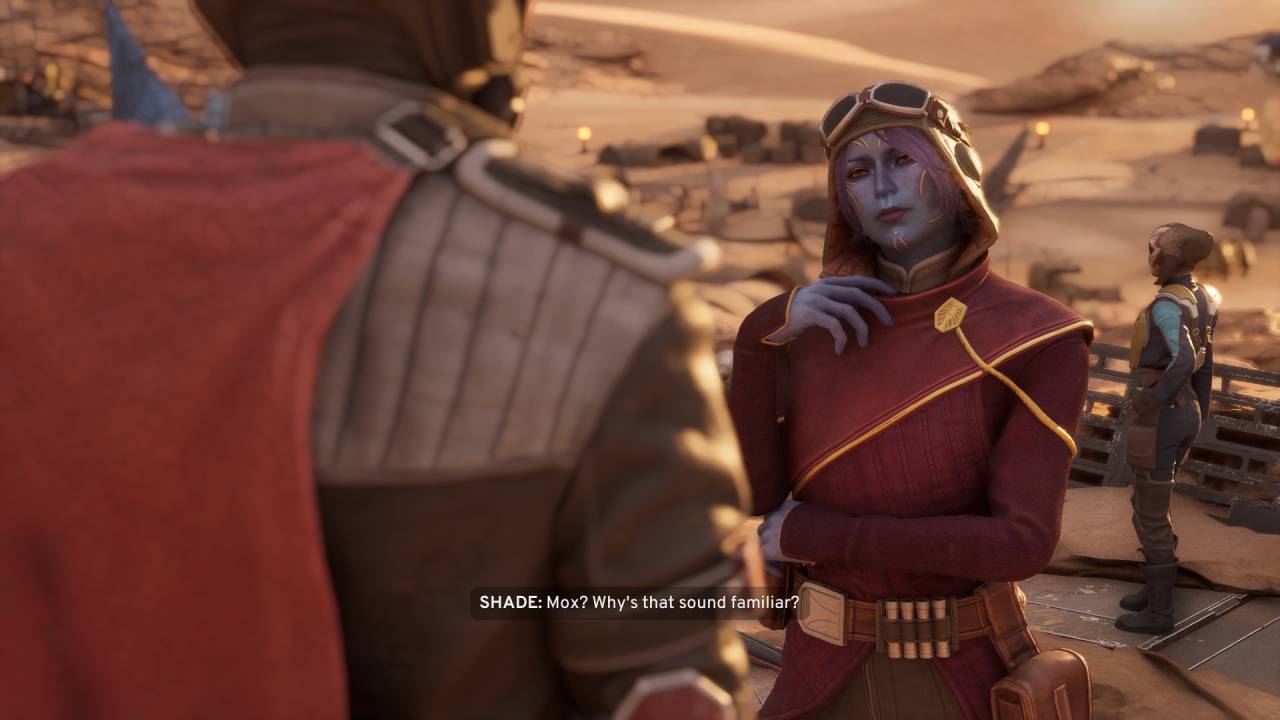
The main campaign takes place after the fall of the Galactic Empire and follows Shade as she joins the New Galactic Racing League. This underground competition moves across the galaxy, from planet to planet. Whether you enjoy story-driven campaigns, vehicle customization, or competitive racing, the game offers modes to suit your style. The story spans three acts, with Shade building her reputation while dealing with rival racers and the league's unpredictable nature.
Kestar Bool is one of the major rivals, while characters like Sebulba also feed into the racing side of the story.
The narrative isn't trying to become a huge Star Wars saga, and that works in its favor. Most of the story exists to give context to the races, characters, planets, and league you work your way through. Between events, you can learn more about the racers, their backgrounds, and the people involved in the racing circuit. Flashback sequences also let you take control of Sebulba's pod racer, connecting the modern racing league to the older pod-racing era.
That connection to the wider Star Wars timeline is one of the game's more enjoyable parts. Pod racing feels like something from an earlier generation of the galaxy, while the main campaign reflects the post-Empire period. Jakku is one of the campaign's locations, and its presence helps establish the game's setting before you travel to other planets.
The campaign itself is where Star Wars: Galactic Racer separates itself from a traditional racing game.
Instead of simply selecting a championship and progressing through a fixed list of races, you're given a branching map and a series of choices. You begin an act and choose which events you want to enter as you work toward the final race. A bad run can end with you restarting that section, giving the campaign its roguelike structure.
You'll face several types of events along the way. Normal races pit you against a group of AI racers, while eliminator events remove the last-place racer at regular intervals. Field tests give you modified vehicles with specific characteristics and ask you to complete challenges around the track. Some can focus on time, boosting, shielding, or another unusual vehicle trait.
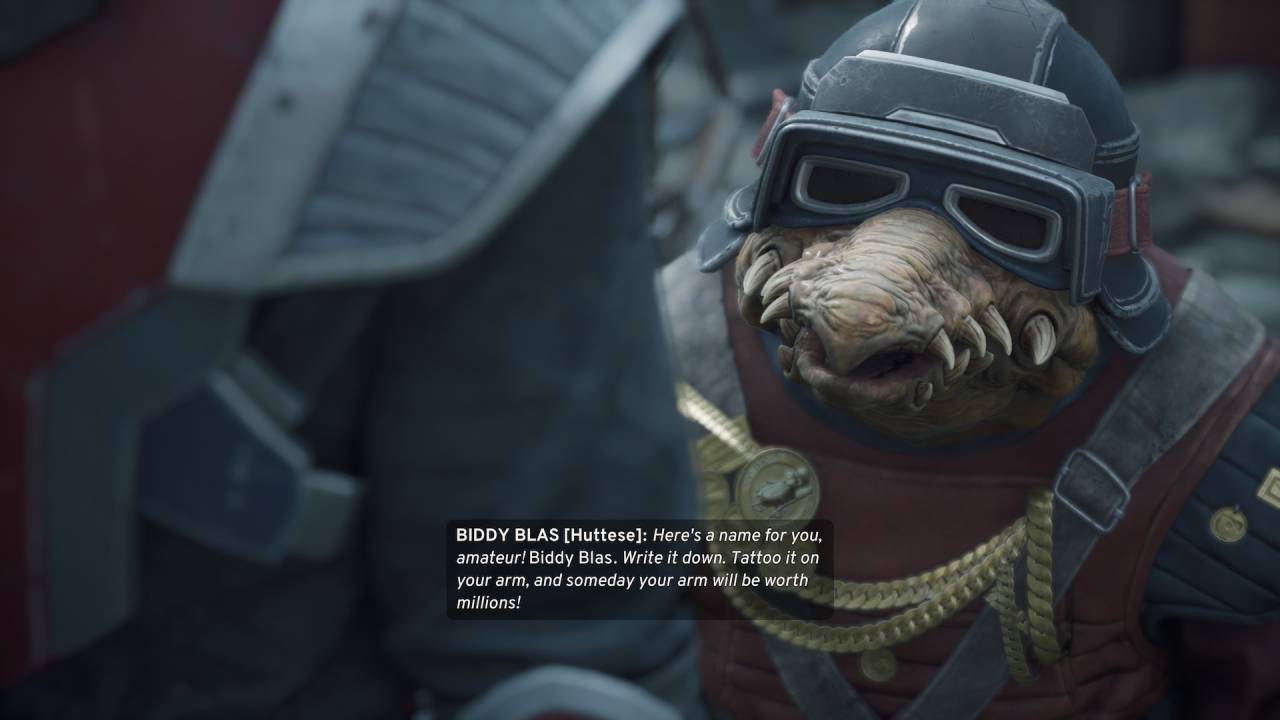
Mystery Encounters add another layer of unpredictability. You might meet a character who gives you credits or a vehicle part, or you might make a dialogue choice that damages your vehicle. That damage can carry into the next few races and change how you approach your run. You could enter a race with weakened engine components or reduced boosting and suddenly have a much harder time than expected.
The game's progression and vehicle customization systems motivate repeated play, giving players a sense of growth and accomplishment as they improve their vehicles and skills.
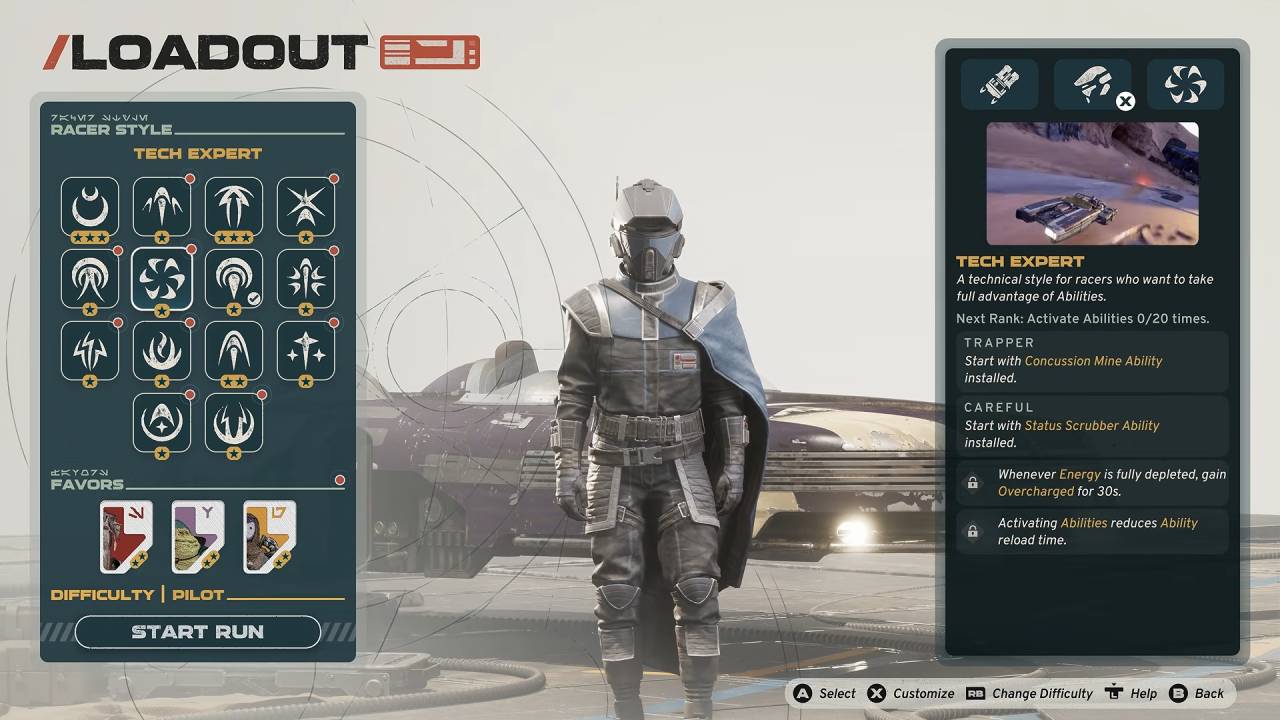
You also select different racer styles that provide starting perks. One might make your vehicle faster while leaving it more vulnerable to damage, while another can improve certain abilities. This adds another decision before you even start racing.
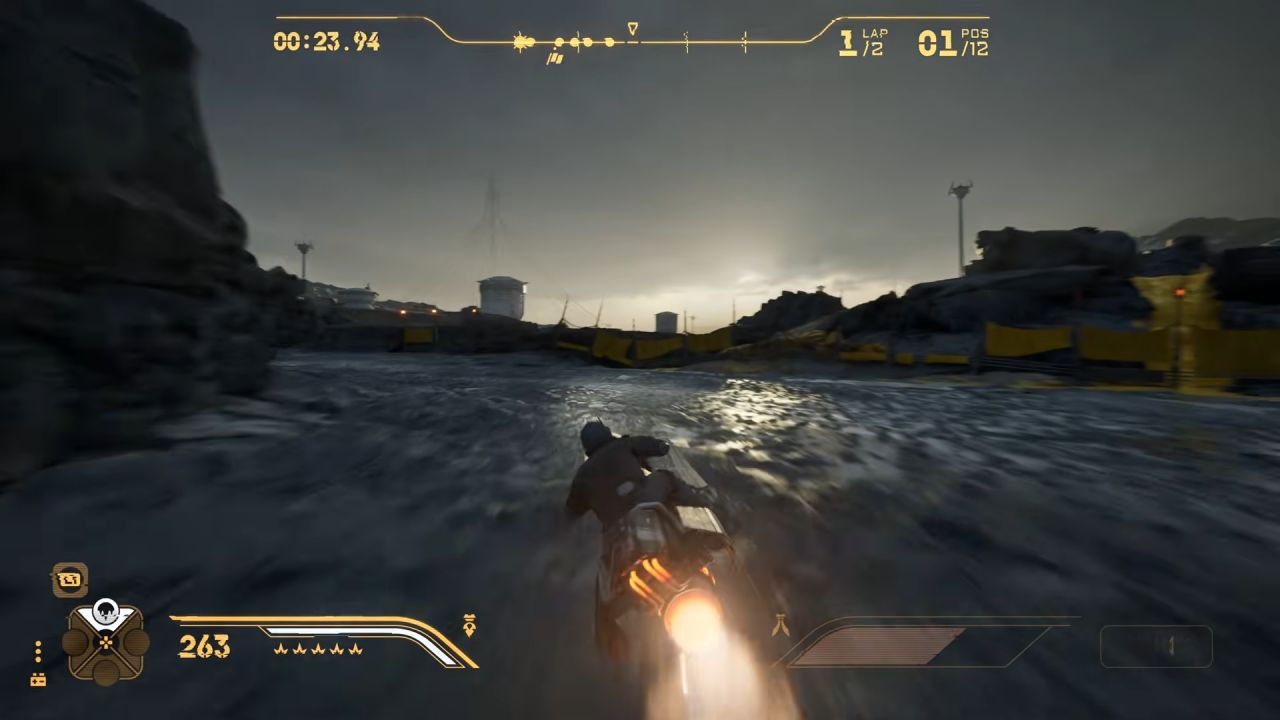
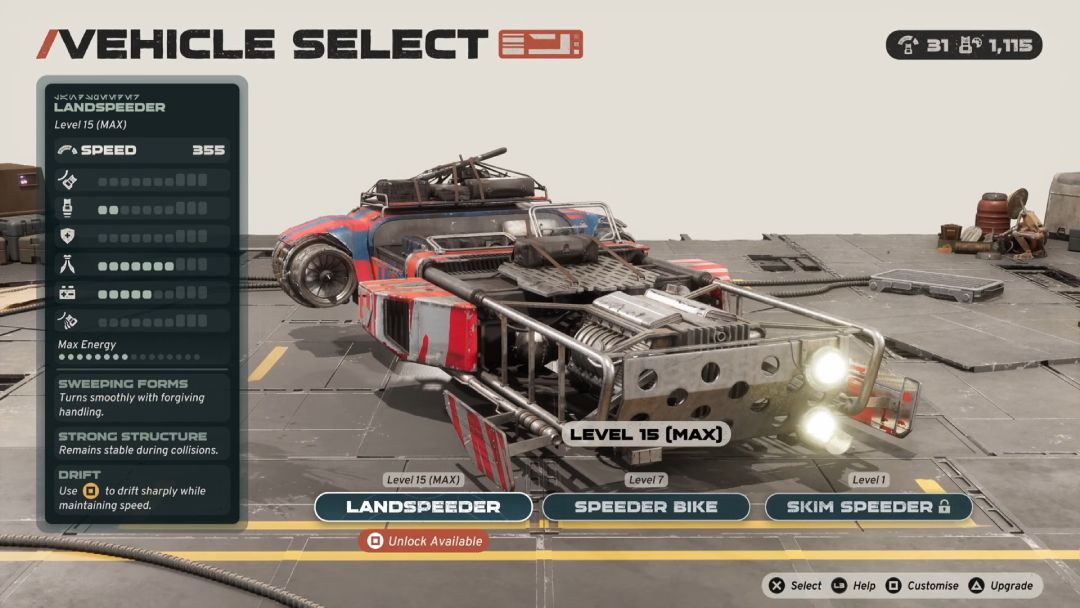
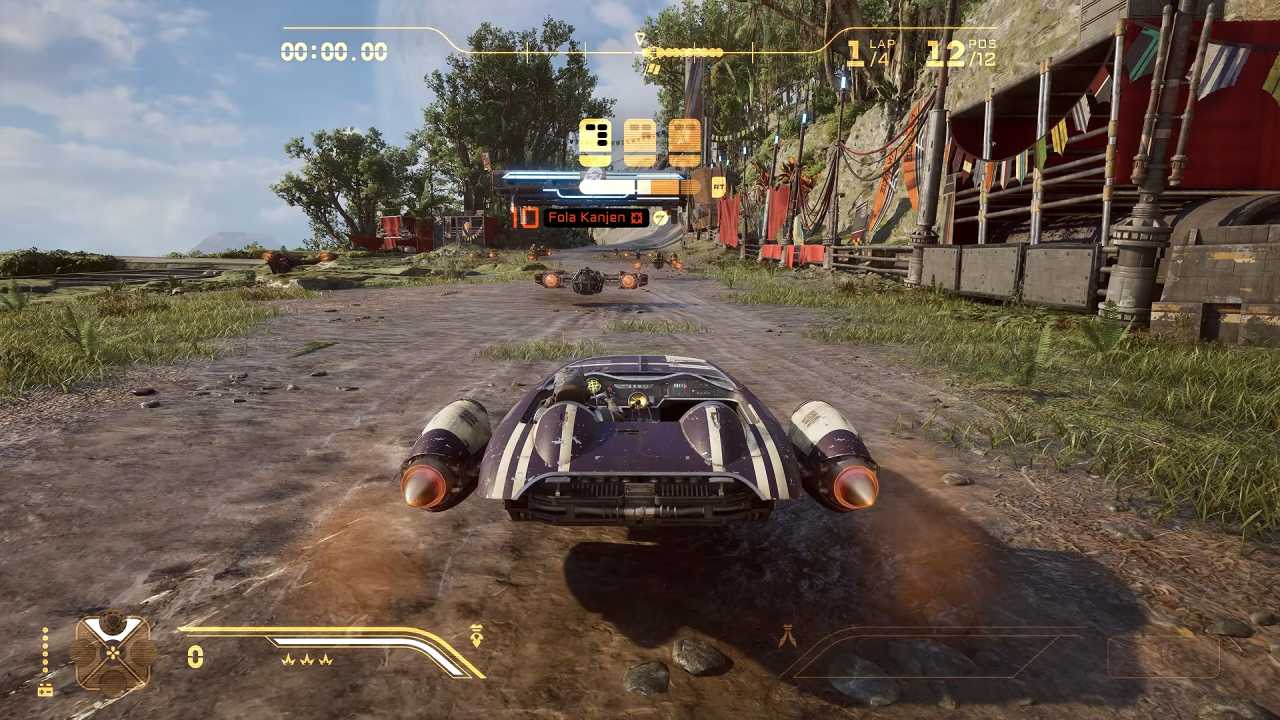
The racing itself is where Star Wars: Galactic Racer feels strongest. Several vehicle classes handle differently, rather than being the same model with slightly altered stats. The landspeeder is built around drifting, while the speeder bike can perform a kinetic burst that lets you turn sharply and then launch out of the corner with a boost. The skim speeder can lean into corners and take them at unusual angles.
The speeder bike is particularly enjoyable for its speed and sharp handling, though it also feels more vulnerable. Its abilities can turn it into a very fast machine, especially when combined with upgrades. One ability lets you activate autopilot for a short period, letting the AI take the wheel while you push it toward its maximum speed; another ability, overtake surge, gets stronger as you pass other racers.
That speed can also become your biggest problem.
Building a vehicle around acceleration and boosting can create something hard to control, and the game gives you enough freedom to make those kinds of ridiculous builds deliberately. You can prioritize speed, turning, durability, special abilities, or a combination that may not look sensible on paper but works for the way you want to race.
Boosting plays a major role in keeping races moving. You have an afterburner for a shorter burst of speed, while the ramjet provides a longer sustained boost. The ramjet is affected by your surroundings, so racing conditions can change how aggressively you use it.
On colder planets such as Ando Prime, your engines stay cooler. Elsewhere, you may have to manage heat more carefully. Upgrades and perks also affect these systems, so boosting isn't simply about holding down a button whenever you have caning; your engine, boost supply, and positioning become part of maintaining a good racing line.
The tracks themselves are another major strength.
Star Wars: Galactic Racer does not constantly rely on barriers or giant arrows telling you where to turn. Instead, the environments use built-in visual cues. Racing lines, tire marks, lights, terrain, and the environment's shape can naturally guide you through a course.
That makes many tracks feel less like artificial circuits and more like races set up across an actual Star Wars planet. You can race through open terrain, head into tunnels, climb steep sections, launch off jumps, or pass through boost areas without feeling like you're just following a road surrounded by walls.
Each planet also introduces its own hazards. Sentinel 1 features acid pits and rivers that can damage your vehicle unless you're properly protected. Crait's red salt can spray onto your screen when you're following another racer, reducing visibility. Ando Prime introduces freezing conditions that can affect your controls if you don't pass through heating tunnels.
These hazards make each planet unique, so you have to adapt your approach instead of relying on one universal racing strategy.
Pod racing is treated separately from the other vehicle classes. You can't simply put a pod racer into a normal race alongside a landspeeder or speeder bike. Instead, pod racing has its own events and modes, featuring six recognizable pod racers, including Sebulba, Dud Bolt, and Ben Quadinaros.
The speed is noticeably higher than the other classes, and that alone changes how the races feel. Pod racing can get chaotic fast, especially when you are trying to keep control at high speed. The only downside is that pod racers lack the same customization depth and special abilities as the other vehicles. You can't build them the same way, so it feels more like a separate arcade-style experience.
Still, having them in the game is a major benefit, especially with the return of the Boonta Eve Classic. The recreation doesn't reach the length or depth of the original Star Wars Racer version. Still, it captures the recognizable sections and gives you another way to experience that classic race.
The pod racers also have distinct engine sounds, making these sections stand apart from the standard races.
Outside the main campaign, scenarios offer shorter leagues with pre-built vehicles from other characters. These let you try different racers and setups without building everything yourself. Arcade mode offers individual races, time trials, and gate challenges. This is also where you can try different pod racing events and experiment with vehicles outside the campaign structure.
Progression ties most of these systems together. You can spend credits earned through races on vehicle parts, upgrades, and other improvements. You can improve turning, boosting, special abilities, and other statistics. Permanent progression means losing a run doesn't send you back to the beginning, but your choices during each run still matter.
No traditional XP grinding system drives progression. Instead, the game's economy revolves around credits, rewards, perks, and permanent upgrades. That works better for a racing game because you're constantly improving the machines you actually use rather than simply watching a character level number increase.
Customization goes beyond statistics as well.
You can swap parts and mix components as you progress. The cosmetic side isn't quite as deep as the mechanical customization, and it could offer more options for creating truly unusual-looking vehicles, but combining parts still lets you control how your racers look.
Shade also has limited character customization, including different helmets, armor pieces, voices, and color schemes. It's not particularly extensive, but the game focuses on the vehicles, and that is probably the right priority.
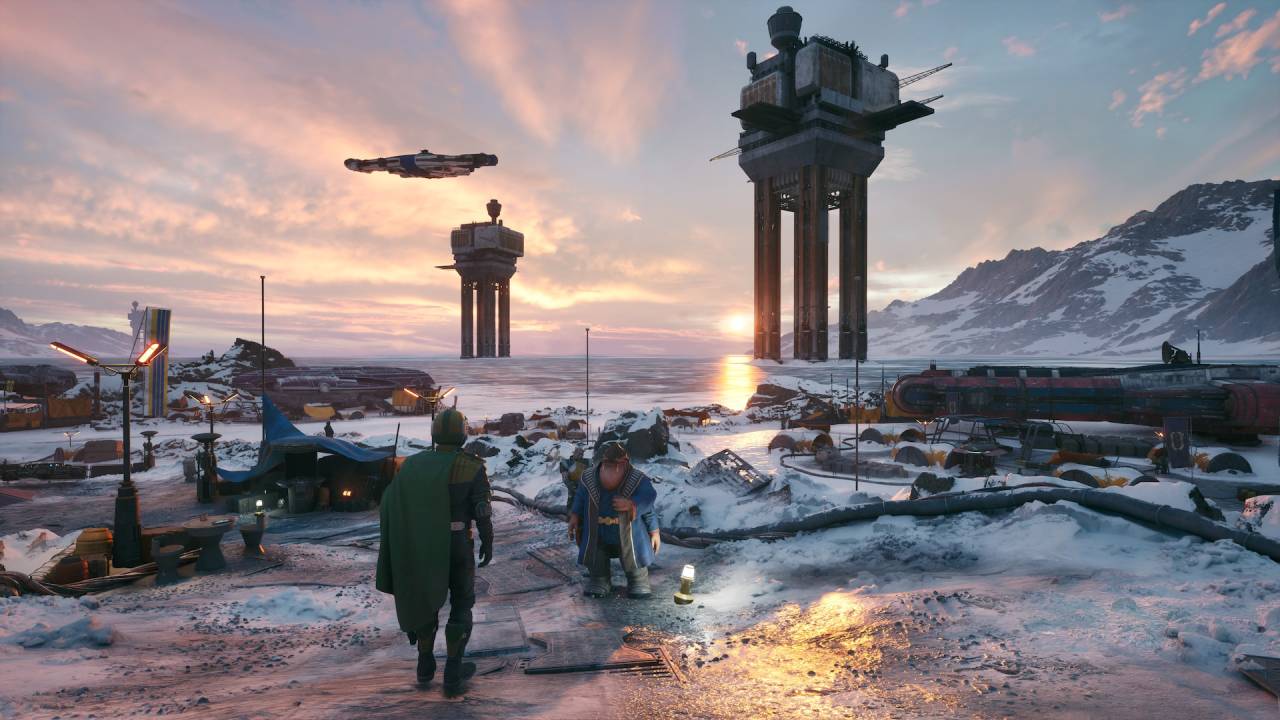
The third-person sections add another change of pace. Before races, you can walk around parts of the pits and interact with NPCs. These areas provide additional story information, introduce characters, and let you learn more about the racing circuit.
You can also visit shops, repair vehicle components, interact with sponsors, and explore the environment.
Sponsors can offer additional rewards for completing certain tasks. For example, you might receive credits for completing enough pre-race checks. The areas are relatively limited, but they let you step away from the vehicle and take in the planets from another perspective.
Visually, Star Wars: Galactic Racer benefits from its decision to make the Star Wars universe look a little rough around the edges. The environments have a gritty quality that fits the period after the Empire's fall. Crait's red salt, Endor Prime's frozen conditions, Jakku's desert environment, and the other planets each have their own visual identity.
The game also uses cinematic crashes effectively. When another racer wipes out or your vehicle takes a hit, the camera captures the action without breaking the race. That mix of spectacle and control is one of the clearest signs of Burnout's influence.
The sound design is just as important.
Engine noises differ between vehicle classes, and pod racers in particular sound distinct from one another. During regular races, you hear engines roaring, vehicles passing close by, impacts, boosts, and the general noise of a race unfolding around you. It helps sell the feeling that you're surrounded by other machines rather than simply moving through a quiet environment.
One area where the game falls short is multiplayer flexibility. Crossplay and multiplayer are supported, but there is no split-screen option. Given that older Star Wars racing games supported local multiplayer, the lack of couch co-op feels like a missed opportunity.
You also have less freedom when setting up races than you might expect from a modern arcade racer. A custom mode with your own rules, vehicle restrictions, track direction, lap count, and environmental settings would have added more longevity. The roguelike campaign and customization systems do help make up for that, but the extra freedom would have been nice, especially for players who want to craft their own challenges.
Even with those limitations, Star Wars: Galactic Racer has a lot going for it.
You get a campaign that changes run to run, a strong vehicle selection, meaningful upgrades, recognizable Star Wars locations, a separate pod-racing experience, arcade challenges, and third-person sections that add context to the racing world.
Most importantly, the driving feels good. The game understands that a Star Wars racing experience needs to be fast, dangerous, and a little chaotic. The Burnout influence helps, but Galactic Racer doesn't simply copy those games. It has its own identity through its vehicle classes, environmental hazards, branching campaign, and progression systems.
Star Wars: Galactic Racer is the first dedicated Star Wars racing game in over 20 years, and it feels like a proper return, not a quick nostalgia trip. It honors what made the older games memorable and gives you more reasons to keep playing after you finish a race or a campaign run. Whether you're experimenting with a new vehicle build, trying to survive a difficult act, learning a new track, or jumping into pod racing, there is enough variety to keep the experience moving.
The biggest compliment you can give Star Wars: Galactic Racer is that it makes you want to keep racing.
Even when a run goes badly, permanent progression and different vehicle builds give you a reason to try again. You can switch racers, take another route through the campaign, approach upgrades differently, and see whether the next run works out.
It may not offer the same level of player-created options as some older racing games, and pod racing could have benefited from deeper customization, but those shortcomings don't take away from what works. Star Wars: Galactic Racer delivers a Star Wars racing game built around replayability rather than simply getting you from one race to the next.
For anyone waiting for another proper Star Wars racer, this is a strong return to the genre. The speed, track design, customization, sound, and roguelike campaign all work together to make the game feel bigger than a straightforward arcade racer.
Even if you're coming for the racing rather than Star Wars, the driving has enough depth to stand on its own.
Star Wars: Galactic Racer successfully brings back the kind of racing experience the franchise has been missing for years. It draws on Star Wars Racer and the developers' Burnout background, then combines those ideas with modern progression, branching runs, vehicle customization, environmental hazards, and a campaign that encourages repeated playthroughs.
Its lack of split-screen, limited pod-racer customization, and restricted race-creation options keep it from being perfect, but the core racing is strong enough to carry the experience. Each vehicle feels different, the tracks make good use of their planets, and the progression system gives you plenty of reasons to keep experimenting.
Most importantly, it feels like a Star Wars game while still functioning as a good racing game. The combination of speed, crashes, recognizable locations, strong audio, and flexible vehicle builds gives Star Wars: Galactic Racer a clear identity. After such a long wait, this Star Wars racer offers plenty to do and, more importantly, plenty of reasons to keep coming back.
Senior Editor, NoobFeed
Verdict
Star Wars: Galactic Racer delivers fast, satisfying racing with deep customization, varied tracks, and a replayable campaign. A few missing features hold it back, but this is easily one of the strongest Star Wars racers in years.
87
Related News
No Data.