
STAR WARS Zero Company Review
PC
A scrappy band of misfits finds its own quiet corner of the Clone Wars, and somehow that's exactly what makes it work.
Reviewed by Maisie Scott on Aug 27, 2026
Going into STAR WARS Zero Company expecting a straightforward pitch: XCOM, but dressed up in Star Wars armor. That description isn't wrong, but it undersells what's actually here. The people behind this game are former Firaxis developers. They worked on the XCOM reboot. Now they operate under the studio name Bit Reactor. They teamed up with Respawn, the studio behind the Jedi games. Lucasfilm Games also joined the project.
Together, they built something that borrows from both pedigrees. You can feel that combination almost immediately. The tactical DNA is unmistakably XCOM, but the writing, cinematic presentation, and sense of atmosphere carry much of the polish Respawn brought to its Jedi titles.
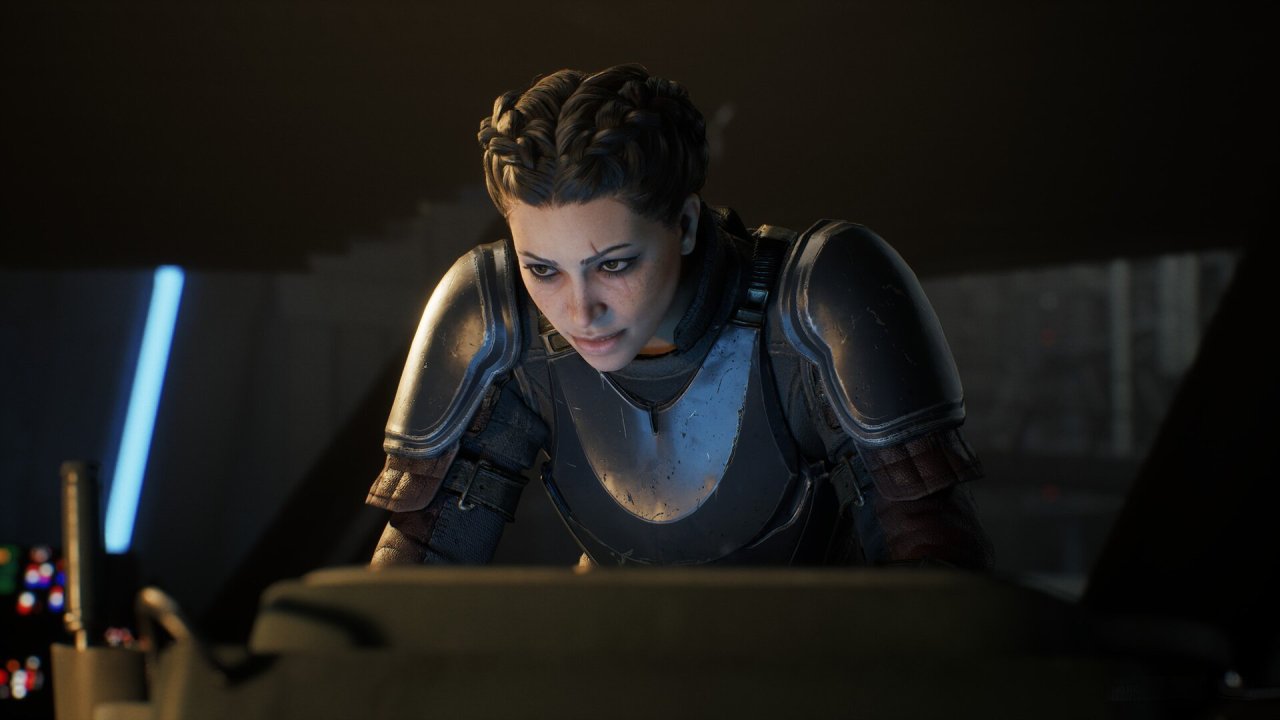
Even the same writer behind Jedi: Fallen Order and Jedi: Survivor worked on this story, and that pedigree shows. It's been roughly a decade since XCOM 2 came out, and in that gap there have been a handful of attempts to fill the void, none of which quite scratched the itch the way this one does.
A disgraced officer turned mercenary anchors a story rooted in Clone Wars intrigue.
Star Wars Zero Company isn't trying to be an XCOM clone with a lightsaber slapped on top. It's its own thing wearing familiar clothes, and after spending a long stretch with it, the combination absolutely works. By the time credits rolled, it's clear why so many people had been waiting for a game exactly like this.
You play as Hawks, a fully customizable former Republic officer who once commanded a clone battalion before getting set up to fail on an impossible mission. That failure cost Hawks their command and their reputation, so naturally the next move is to go into business as a mercenary.
You choose Hawks's gender, species, outfit, specialization, and weapons right from the start, and that same level of customization extends to almost every operative you recruit later on. The story kicks off during the closing stretch of the Clone Wars, somewhere around the time Order 66 is looming on the horizon, and it centers on your company getting pulled into investigating the Infinite Coil.
This is a separatist-aligned cult led by a mysterious woman named Fathom, who is spreading something called the shadow plague across the galaxy using unsettling insect-like carriers. The plague seems to twist people into mindless husks, and while there are hints that it might be tied to the Force in some way, the game never leans on it as just another generic Sith-adjacent threat, which is a nice touch.
The story stays intentionally small, focused on a mercenary crew and its colorful cast.
Fathom herself stays mostly shrouded in mystery for most of the runtime, and her relationship with her own son, one of her lieutenants, gives her a bit more depth than a typical faceless villain. What stands out most is how small in scale it deliberately stays.
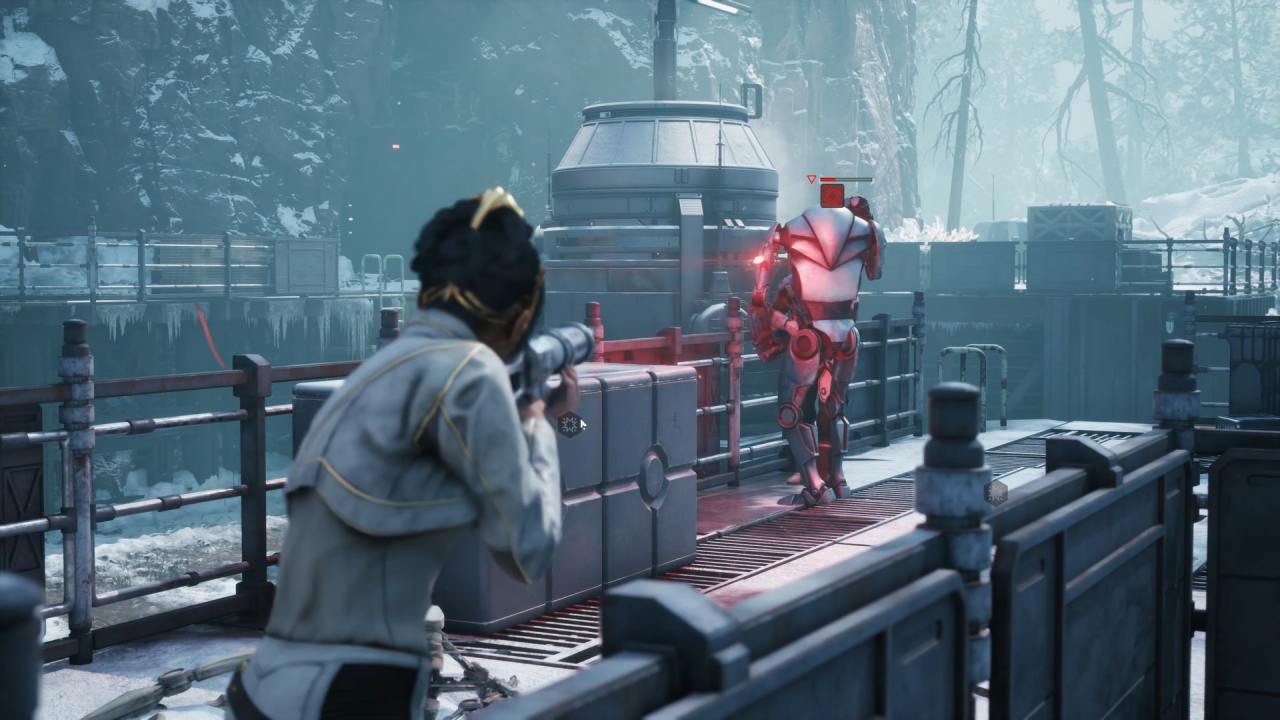
You're not saving the galaxy here. You're a mercenary crew patching up the cracks that the wider war has left behind, putting out localized fires while bigger armies fight their battles elsewhere. Even the more powerful members of your crew aren't overwhelming.
Your Jedi companion is only a Padawan, and the first time you see them in action, they're struggling against basic droids. That restraint works in the story's favor, and it's part of why the world of Star Wars Zero Company feels lived-in rather than staged for spectacle.
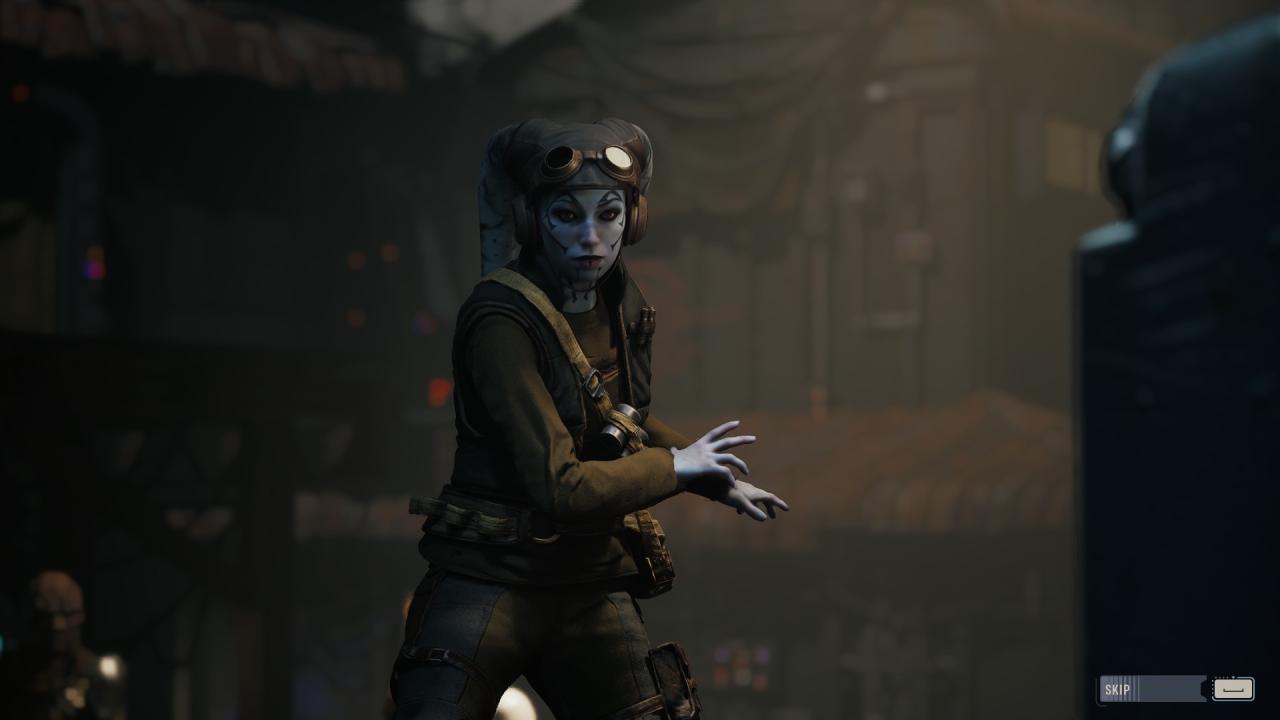
The cast around Hawks is where a lot of the heart comes from. You'll recruit former separatists, ex-Republic soldiers, clones on medical discharge, a Mandalorian chasing revenge, a mining heiress driven from her home, a runaway Padawan, and a sharpshooter who despises the Republic almost as much as the Coil.
Their arcs may not break new ground, but the writing keeps things grounded and likable, and the small character moments land well. A clone trying to reconnect with brothers he never chose to be separated from, a bounty hunter working through a personal vendetta, little threads like that.
Character chemistry back at base carries much of the game's personality and humor.
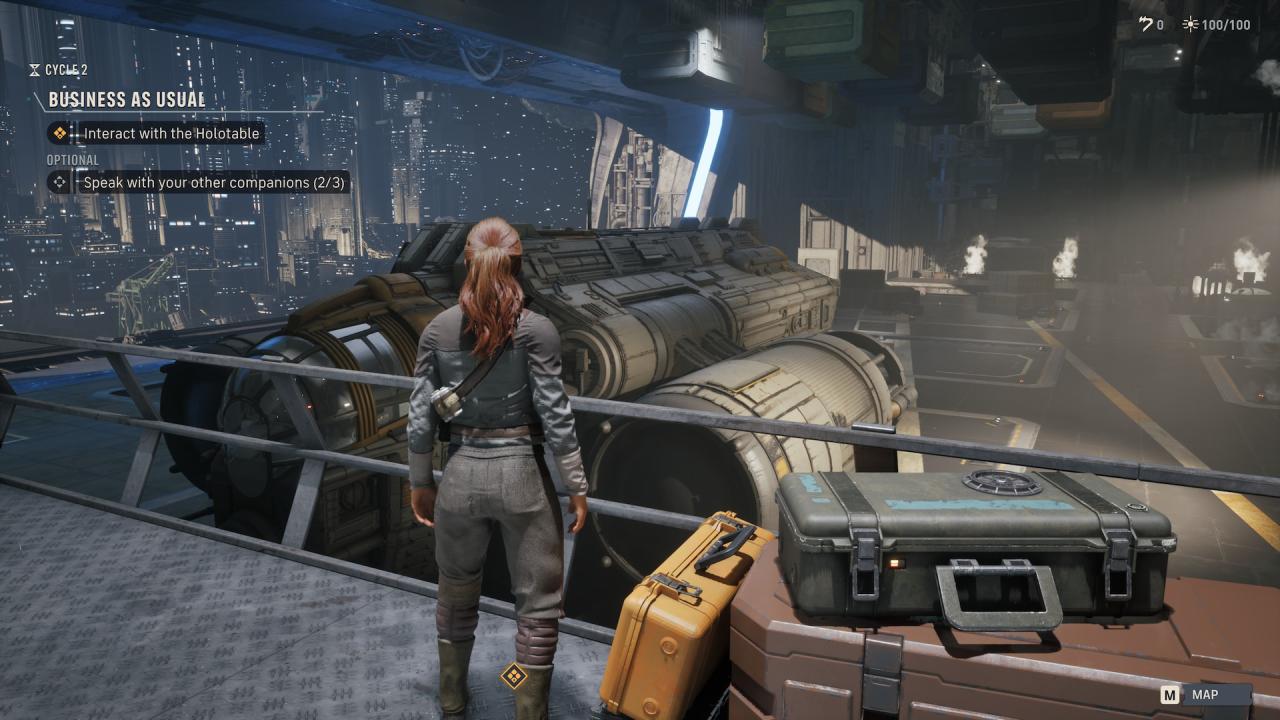
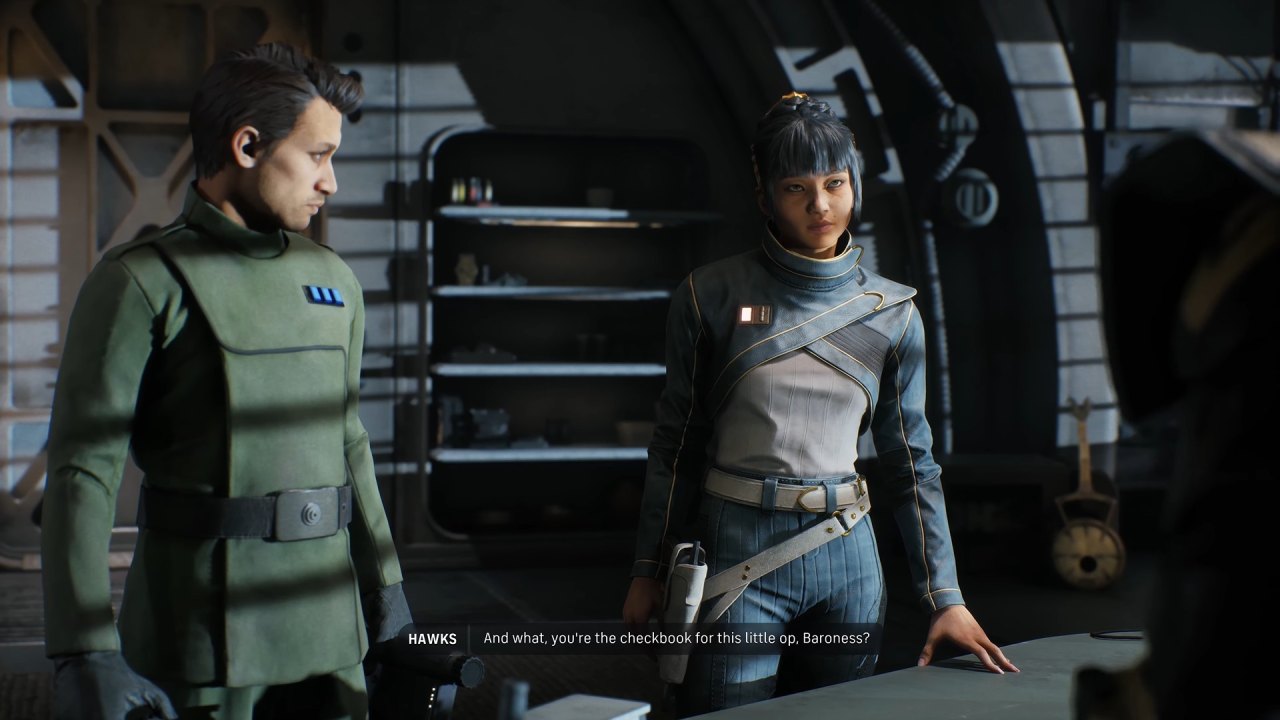
Back at your headquarters, which the game calls the den, characters wander around and talk to each other and to you, and it genuinely feels like a functioning crew rather than a lineup of portraits. The two standout personalities were non-combat characters: your bookkeeper, whose separatist background makes her stand apart from most Star Wars protagonists you'd expect to like, and the by-the-book Republic intelligence officer she constantly needles.
Their banter at the mission table never got old. Even a medical droid and a black market arms dealer get memorable dialogue. Every recruit, even randomly generated ones, can talk to each other, and Hawks is a genuinely fun lead too, playing the tired, sarcastic, seen-too-much-of-this-war type without tipping the whole game into parody.
Star Wars Zero Company doesn't take itself too seriously, but it never turns into a joke either, and that balance carries the whole story. It's worth noting that choices matter to your crew and to how missions unfold, even as the title keeps a steady central path toward its ending.
As for how you actually spend your time, the loop is built around cycles. After a mission, you return to the den, where you upgrade facilities, shop at the black market, manage your crew's loadouts, and check in on relationships. From there, you head to a holo-table where you pick your next move: full tactical missions, or shorter operations that play out as brief narrative choices rather than combat.
Between missions, a strategic loop of choices and upgrades shapes each campaign cycle.
These operations cost a resource called intel, and they're basically compact decision-driven vignettes where you send one of your operatives off to handle something, whether that's a prisoner exchange, an information trade, or something as small as an arm-wrestling contest.
The catch is you're rarely given a clear signal about who's best suited for a given job, so a lot of it comes down to reading your characters and taking an educated guess. Get it right, and you might walk away with extra credits or a rare item.
Get it wrong, and your operative can come home injured, which matters a lot more than it sounds. Missions and operations both advance time, and operations expire if you ignore them too long, so there's a constant low hum of pressure pushing you to prioritize.
Progress across twelve different regions builds influence that unlocks better gear, more weapon slots, and other bonuses, which gives the strategic layer between fights real weight instead of feeling like busywork. This is one of the areas where Star Wars Zero Company separates itself from being a pure XCOM copy, since so much of the experience happens away from the battlefield entirely.
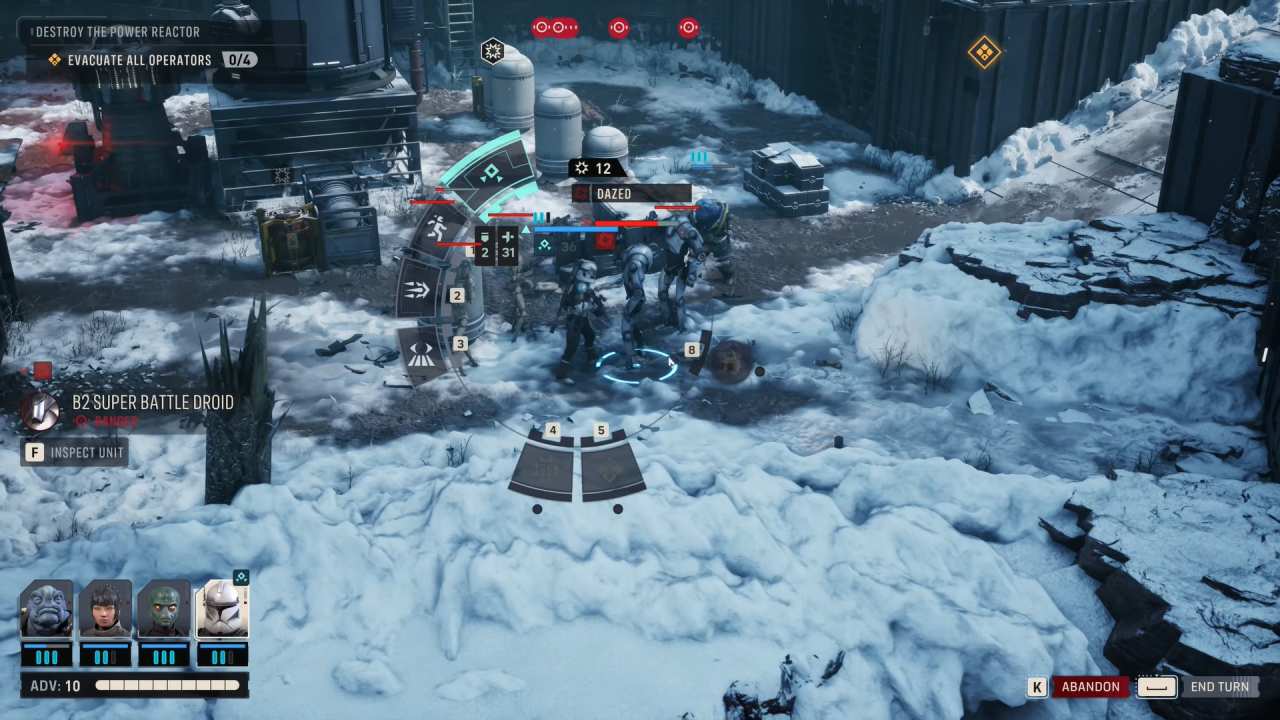
The combat itself is where the game earns its comparisons to XCOM, and it's genuinely one of the strongest parts of the whole package. This is the part of Star Wars Zero Company that keeps players coming back, mission after mission, without ever feeling repetitive.
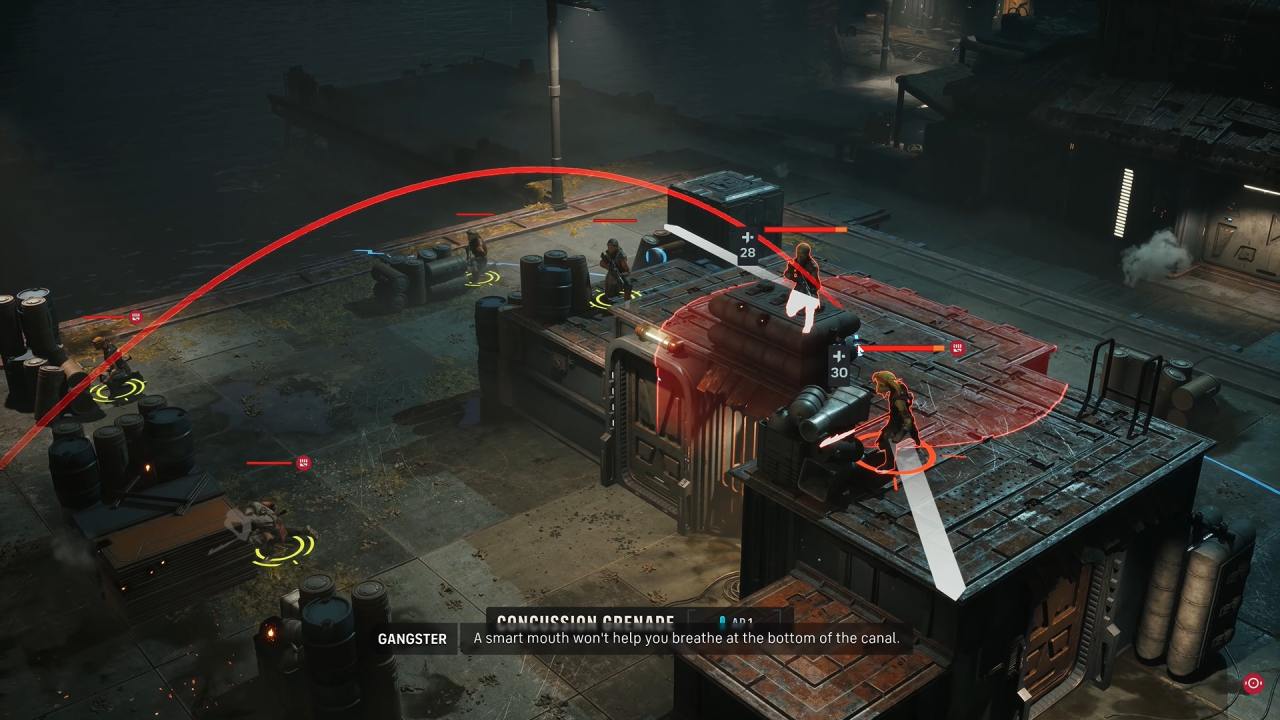
The combat mechanics layer abilities, resources, and positioning into genuinely aggressive tactical encounters.
In Star Wars Zero Company, you bring four operatives into every mission, each with three action points to split between moving, shooting, and using abilities tied to their class. There are eight standard specializations plus a couple of unique roles like bounty hunter and Jedi, and partway through the campaign you unlock a second specialization for your regular squad members, which opens up a huge range of builds.
Damaging enemies and pulling off certain abilities builds a shared resource, sometimes called advantage, that lets you unleash bigger moves without spending your normal action points, things like a rocket strike, an area shockwave, or an extra turn for an ally. There's also a rotating support mechanic where whichever operative currently holds it can designate a teammate to follow up their attack with a shot that always connects, even if the first one misses.
It's a strong tool, but it takes some getting used to, since it's easy to waste if your backup character doesn't actually have a clean line of sight or if the first shot already finishes the job. Cover can be destroyed mid-fight. There's a real emphasis on pushing enemies around the map. You can knock them off ledges, into hazards, or straight into an ally's overwatch zone.
This makes engagements feel far more aggressive than many turn-based tactics games. That aggressive push-and-shove style is arguably Star Wars Zero Company's biggest departure from the genre's usual defensive, cover-camping rhythm.
Strong core combat comes with a few recurring weaknesses in variety and depth.
What stands out most about the combat is that it holds up even when you strip away all the extra systems. The core act of moving and shooting is balanced well enough on its own, and the game builds a genuine sense of being outnumbered.
Reinforcements flood in regularly, sometimes leaving you facing down eight or nine enemies at once, and pulling off a win in that kind of situation feels earned every time. The flip side is that enemy variety doesn't quite keep pace with everything else.
You'll mostly be fighting Separatist battle droids and Coil soldiers, with the occasional shielded Droideka thrown in for a genuine change of pace, and while there's enough range within those categories to keep encounters interesting for a while, things do start blending together over a long playthrough.
However, while it makes it easy for players to play with their core group of favorites, whose friendship develops naturally on the battlefield, a larger roster could have encouraged more experimentation. Permadeath is on by default, and it's recommended to leave it that way, but characters aren't fragile.
Character loss carries real weight, while missions and progression avoid familiar genre formulas.
It takes three separate injuries without a proper recovery in between before someone is gone for good, and their name ends up on a memorial back at the den. Certain missions also shift the usual formula, forcing you to blow up your own escape route to advance or hold multiple points at once while enemies keep spawning in, which keeps the mission variety from going stale even late into the campaign.
Story missions occasionally chain a few of these scenarios together with short third-person exploration segments in between, where you walk Hawks through an environment and talk to people before dropping back into combat. Those sections are limited and mostly involve walking up to something and pressing a button, but they do a good job of making the world feel real instead of just a series of disconnected battle maps.
Progression in Star Wars Zero Company doesn't run on a traditional experience point system, and that's honestly one of the more interesting decisions the game makes. There's no simple bar filling up after every fight; instead, everything ties back into how your squad relates to each other.
You can respec Hawks and most of your recruits at will, switching classes and weapons between missions with focus points refunded whenever you do, so nobody's build ever feels locked in. The real engine behind character growth is the bond system.
Relationships between operatives, not experience points, drive most of the game's growth.
Operatives who fight together, heal each other, or call in support for one another start building a relationship, and once that bond levels up, you get to pick one of three random bonuses that permanently apply to both characters, whether or not they're on the same mission together going forward.
These bonuses stack over a full campaign, so a well-bonded operative ends up meaningfully stronger than someone fresh off the recruitment table. At the highest bond tier, you get to choose from a set of powerful passive abilities tied to a character's specialization, and combining the right passive with the right build can snowball a single turn into something absurd in the best way.
Weapons and gear add another layer on top of that, since you can find and buy mods through missions, operations, and the black market, along with utility items that grant passive bonuses or single-use consumables like grenades and healing items.
Because nearly every operative can use every weapon type, there's a real incentive to mix and match rather than settling into one obvious loadout. It's a progression approach that rewards patience and relationship-building as much as raw combat skill.
Visually, Star Wars Zero Company looks and sounds like a genuine Star Wars production, and it's easily one of the best-looking entries the genre has produced in years. The presentation leans heavily into cinematic flair, and small touches, like a blaster bolt deflected by a lightsaber going on to destroy whatever cover it hits, go a long way toward selling the world without needing constant exposition.
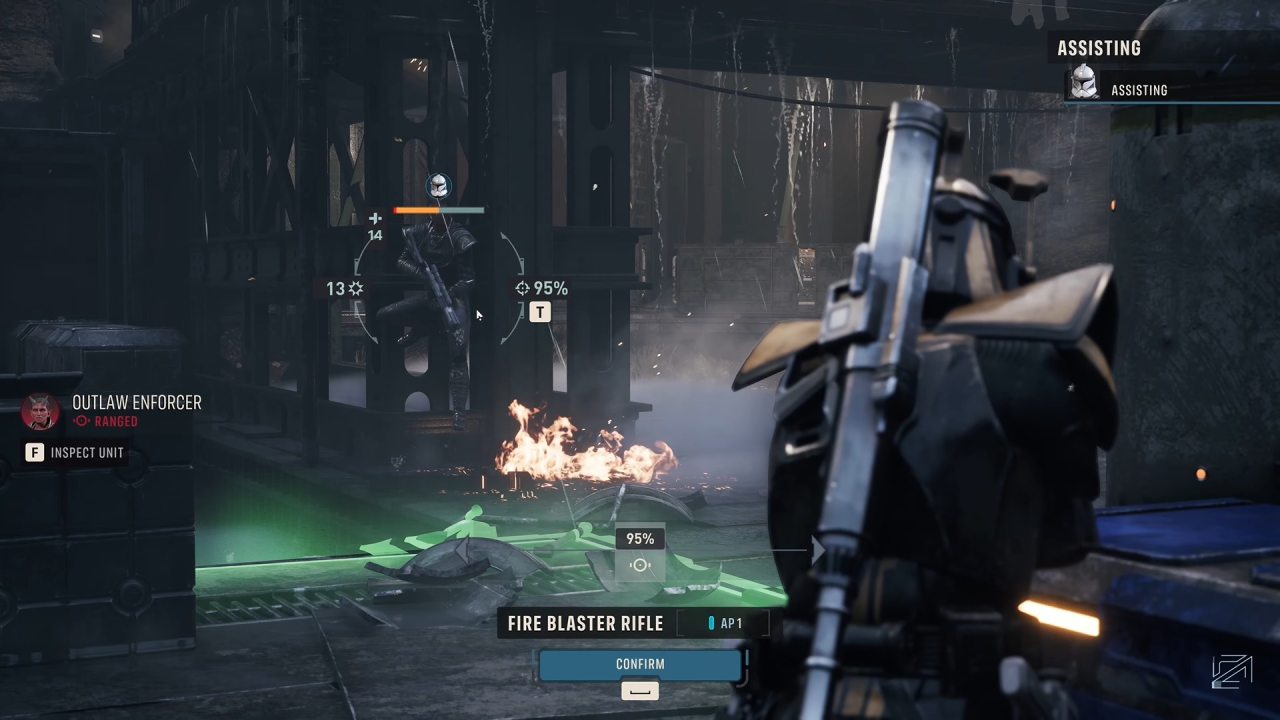
Impressive visuals come paired with noticeable technical rough edges across different hardware.
Some of the more open planetary missions let the environments and background scenery really breathe, while a few of the tighter interior and sewer-style levels felt less inspired by comparison. Things get shakier on the technical side.
Camera angles can behave oddly during scripted moments, occasionally zooming in on a wall instead of the intended shot, and there's a fair amount of stuttering and frame drops that don't fully go away regardless of settings, particularly when the camera shifts during combat.
Little oddities, like tile stacking, can make the game hard to target, and performance varies from excellent on high-end machines to a bit slow on laptops and handhelds; these flaws are forgivable given everything else the game does right.
Though small problems such as camera malfunctions and frame drops stand out against the game's otherwise flawless nature, none are game-breaking and can easily be smoothed out since the developers have a day-one patch planned.
Sound design, length, and pricing round out an otherwise polished package.
The sound design, meanwhile, has no weak points. The score, the blaster effects, the lightsaber hums, the droid chatter- all of it sounds like it was pulled straight from a Star Wars film, and the timing of the music during bigger story beats consistently lands well.
Weapons even have distinct sound profiles tied to their cosmetic variants, which is a small detail that stands out more than expected. Combat keeps moving in the background even when it's not your turn, with characters continuing to take potshots and duck behind cover, and that ambient noise makes the battlefield feel alive rather than static, which is a trick more tactics games should borrow.
Taking everything together, Star Wars Zero Company is a substantial game, and honestly one of the more complete tactics packages in years, and depending on how much time you spend talking to your crew and chasing side operations, you're looking at somewhere between twenty and sixty hours to see the credits roll.
While it doesn't lean on procedurally generated maps in the style of XCOM 2, the sheer amount of build variety, character customization, and relationship-based choices makes diving back in for a second campaign genuinely appealing. Pricing is another pleasant surprise.
PC version comes in noticeably below the going rate for a big-budget release, and even the console version, while slightly pricier, still undercuts typical AAA pricing. For everything STAR WARS Zero Company offers in scope, tone, and polish, that price point feels like a genuine bargain rather than a corner being cut. The game set out to fill a gap that's been open for ten years, and it does so with more personality and confidence than expected.
Editor, NoobFeed
Verdict
STAR WARS Zero Company blends XCOM's tactical bite with genuine Star Wars heart and soul. It delivers a deep, richly characterful campaign that's absolutely well worth its price.
93
Related News
No Data.