
The Merlies Review
PC
A relaxed exploration adventure where a growing flock turns simple teamwork, puzzles, and forgotten human junk into a new home.
Reviewed by Adeela Tas on Sep 29, 2026
The Merlies arrives as a small-scale adventure built around a simple idea: take a group of tiny birds, scatter them across a world shaped by the remains of human civilization, and let you rebuild a home by finding them. Darjeeling Productions and Blue Ramen Studios developed The Merlies with ARTE, and the result is described as a "wholesomevania," mixing Metroidvania exploration with a deliberately gentle approach.
After spending time with it, that description makes sense because almost everything you do revolves around curiosity rather than pressure. The developers have built the experience around expressive characters, handcrafted environments, and a world where ordinary human objects become enormous landmarks.
You are not stepping into a sequel or a series with a long history behind it here.
Instead, you are seeing a new concept from Darjeeling, a studio behind projects such as Type: Rider and Vandals, as well as Blue Ramen and ARTE France. From the start, the presentation makes its priorities clear: explore, meet birds, solve problems, and slowly turn a hollow stump into a functioning home.
The story begins underground, where the Merlies have been living away from whatever happened to the surface. An unusual rumble, an airquake, disturbs their shelter, and the birds become curious enough to investigate. Once they emerge, a powerful gust scatters them across the landscape.
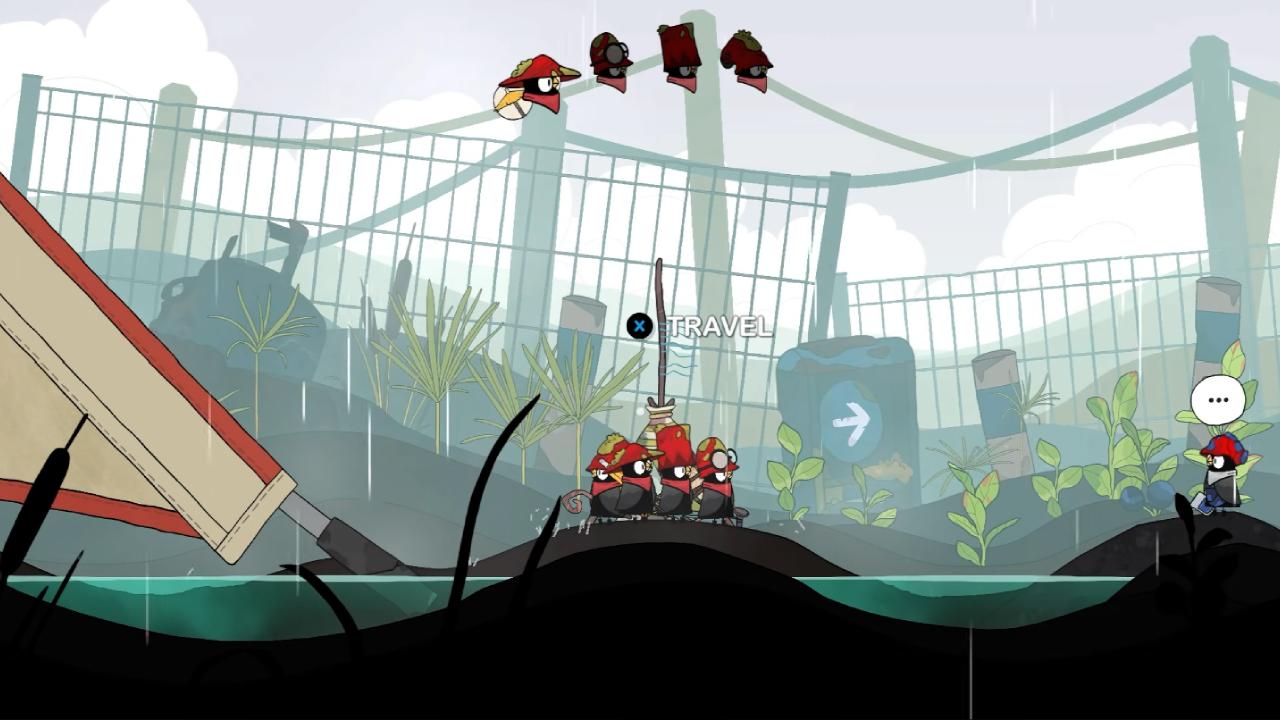
You begin with only a few basic Merlies and quickly discover that finding the rest of the flock is the main reason to keep moving. You don't need a long explanation, because the ground says it all. Cracked crates, sagging fences, tangled cables, old kitchenware, and everything left behind by people who've since gone.
Nature has taken over, leaving birds to make sense of a place clearly built for creatures much larger than them. A telephone wire becomes a route, a fallen sign becomes part of the terrain, and something as ordinary as a lamp or shoe can become shelter or a useful discovery.
Your missing friends are not simply collectibles that disappear into a menu.
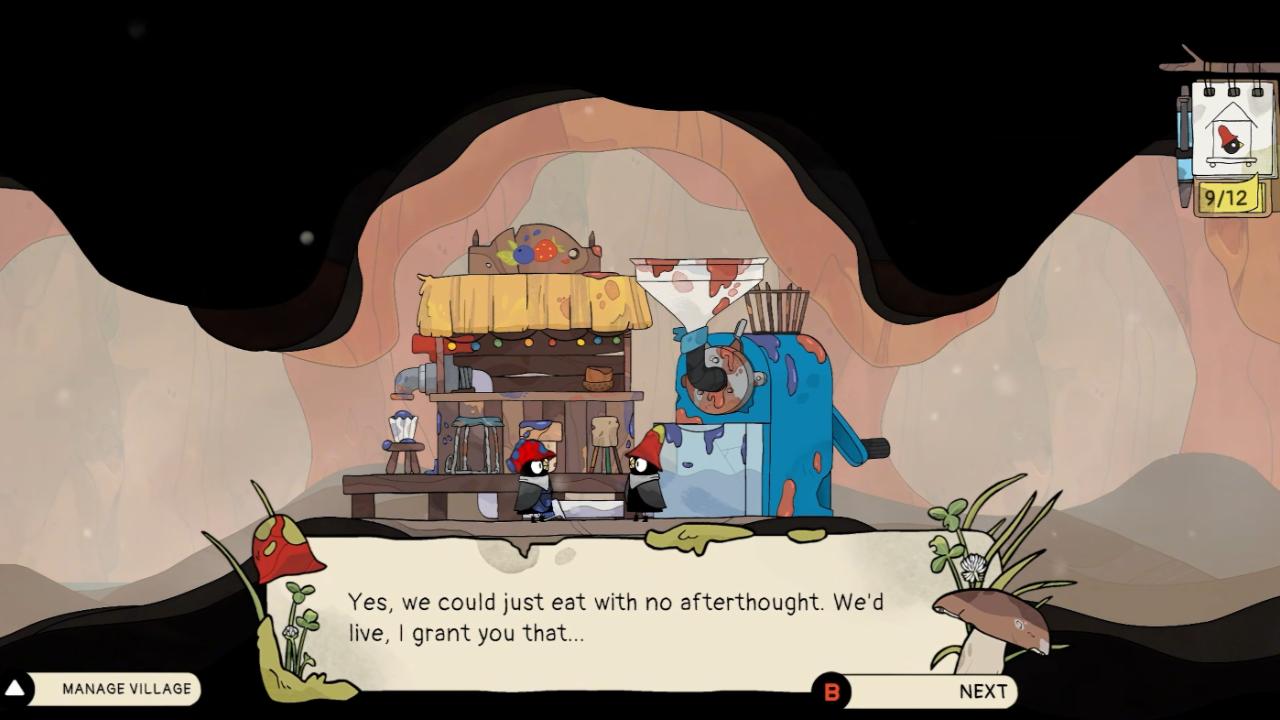
Some of them need help before they agree to return to the nest. You might find a frightened bird, locate someone who has fallen into trouble, or gather food and supplies that match what a particular Merly needs. One bird you meet around strawberries has been tracking forest resources and ends up needing provisions before settling into the stump.
Another gets trapped around an old toaster, requiring your flock to work together to free them. These small situations give the birds personalities and stop the main objective from becoming a straightforward checklist. The central progression is tied directly to how many Merlies you have gathered.
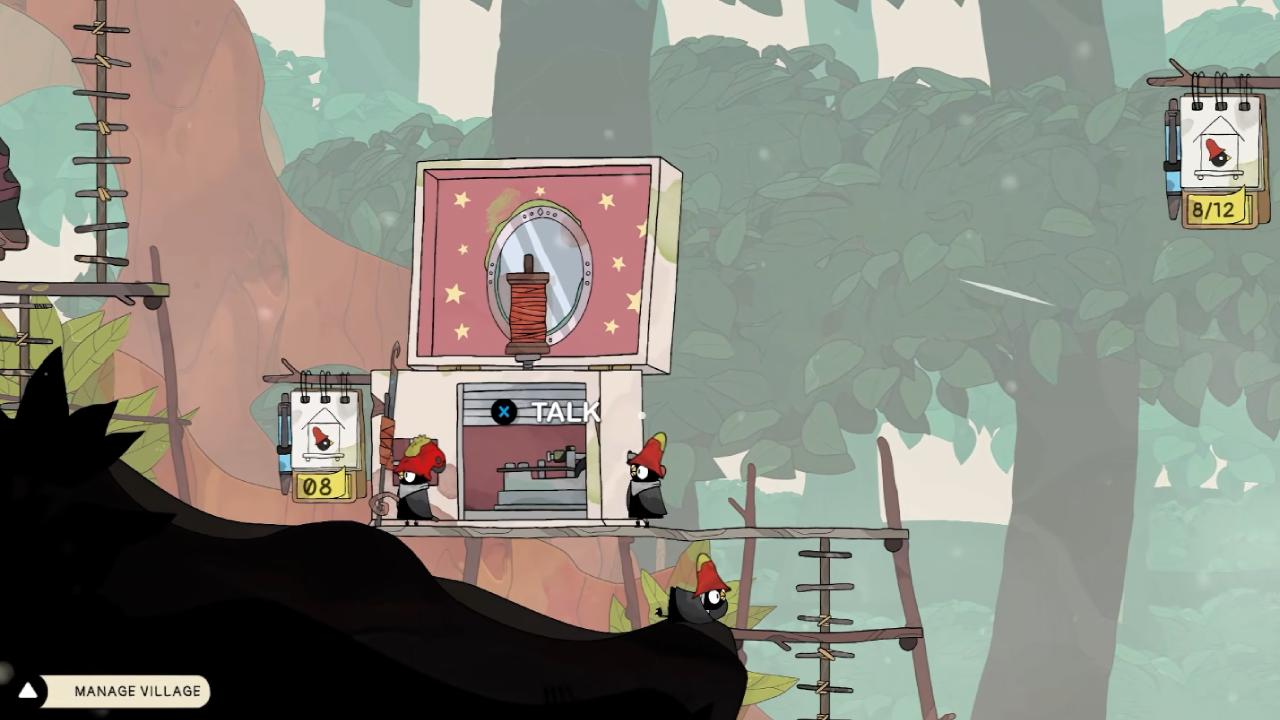
Certain places remain inaccessible until your flock reaches the required size, including one that opens at 14 birds and another that requires 21 birds and a bike. The village also grows as you bring more friends home. You collect vestiges, pieces of forgotten human junk, and use them to build useful structures and comforts around the nest.
The lantern launcher can send a signal into the distance and help draw lost Merlies toward you, while the cartography building improves your understanding of the surrounding world. Other structures provide services such as workshops, food, and fast travel, as well as places that enhance the atmosphere of the growing settlement.
Those birds shape the controls, from abilities to stacking and splitting the flock.
You spend most of your time moving through a large 2D world, looking for routes, hidden areas, birds, vestiges, food, hats, and other small discoveries. The controls are intentionally straightforward. You can move, jump, look around, and use the flock commands to control how your group behaves.
As you progress, individual Merlies introduce abilities that expand where you can go. Double jumps, gliding, swimming-related movements, running, mushroom bouncing, and other skills gradually give the flock more ways to interact with the environment.
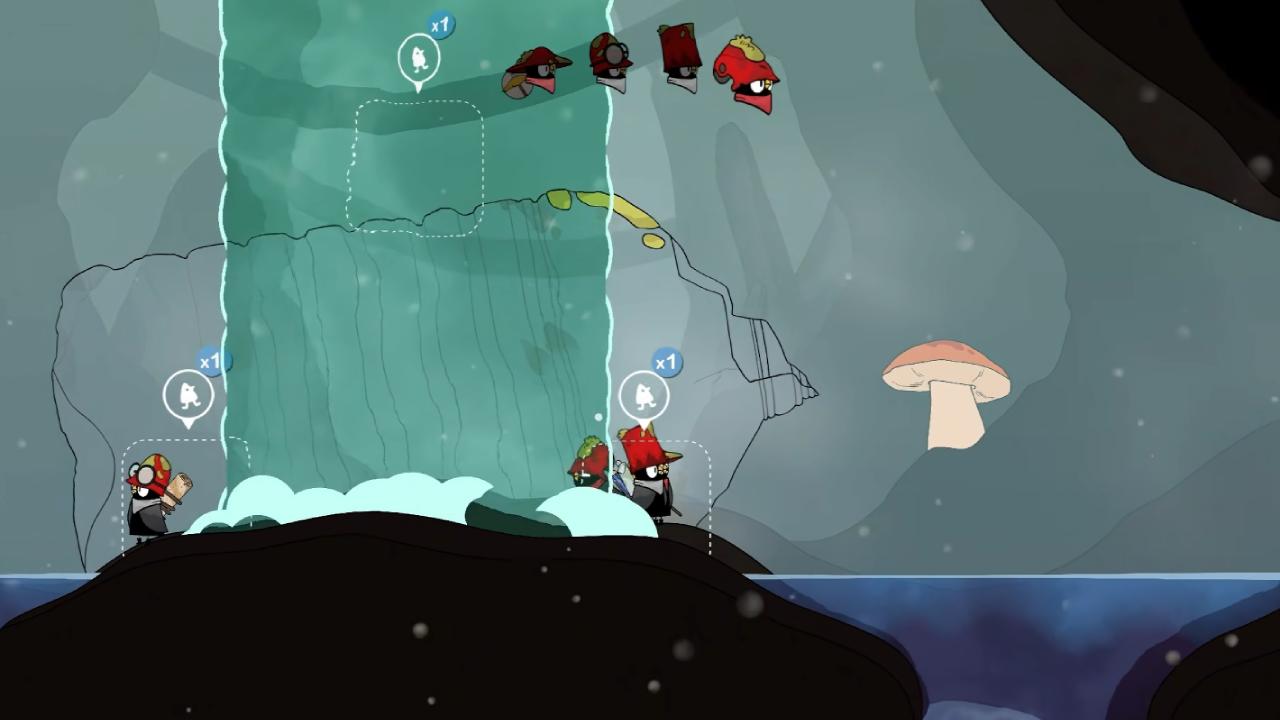
The flock itself is one of the most important parts of The Merlies Play. You can stack birds on top of one another and use the lower ones to launch a Merly toward a higher ledge. You can also split the group, leave some birds in place, move others elsewhere, and regroup as needed.
Commands let the flock stick together or spread out, and that difference matters when a puzzle requires several birds to occupy different positions. If you move too far away, separated Merlies can disappear and need to be recalled at a campsite, so managing the group becomes part of exploration rather than just a visual gimmick.
Managing the flock leads to campsites, the map, and puzzles built around them.
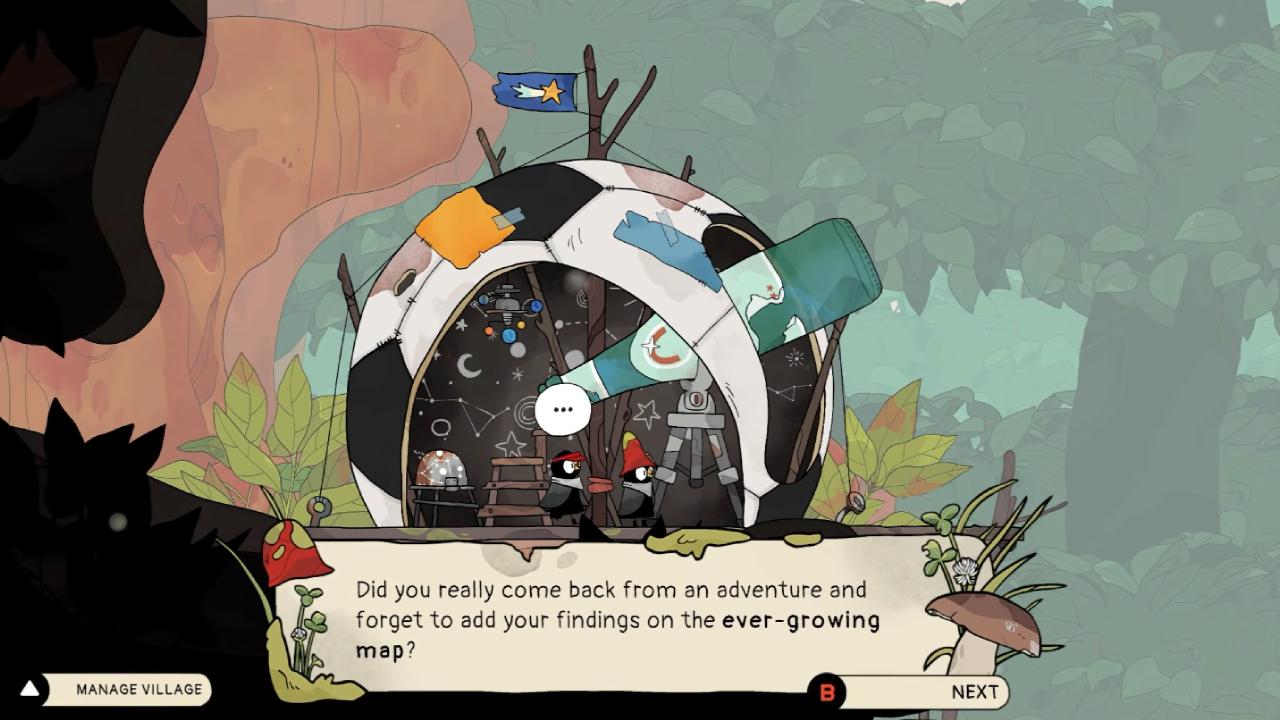
Campsites and cairns are also found throughout the world, providing convenient places to return to. The map updates as you discover new areas and shows your flock's position in real time. The cartography system reveals more of the environment, but you cannot place your own custom markers.
That can make it harder to remember exactly where you saw something you could not reach yet. Fast travel helps with the map's size, but teleporting doesn't put you directly at every exit, so you still have to walk afterward. The puzzle design follows the same relaxed philosophy as the rest of The Merlies.
You are not fighting enemies or sneaking past guards. Instead, rocks, trees, water, vines, poison, gaps, and awkwardly positioned objects become the problems you need to solve. Some areas ask you to manipulate your flock, while others depend on having the right Merly ability.
You may need to block water, position several birds, stack them for extra height, or use a gliding bird to reach somewhere that was previously far above you. The strongest part of these puzzles is how naturally they connect to the flock.
Those puzzles stay gentle, with no enemies, timers, or experience grind.
Once you realize a group of birds can be separated, rearranged, stacked, or used as a living launcher, the solution feels tied to The Merlies' central idea rather than bolted on. A rescue involving a trapped Merly can become a small teamwork challenge, and collecting objects from higher areas often requires you to consider which birds need to stay where.
At the same time, The Merlies is not trying to provide brutally difficult platforming. Hidden areas are usually discoverable without extreme effort, and mistakes rarely create serious consequences. Each Merly can take a hit, and losing the whole group sends you back to a nearby campsite.
No timers push you forward, and no hostile enemies appear during the playthrough. Even hazards that can cost you a bird are handled gently enough that experimentation remains the natural way to play. The abilities also give the adventure a steady sense of progression without relying on a traditional experience system.
There is no XP grind of repeatedly defeating enemies to increase statistics, because there is no combat and no conventional level progression. Your real progression comes from your flock's size, the abilities attached to particular Merlies, the buildings you add to the nest, and the vestiges you recover.
Progression through friends and abilities shows clearly in the glider, nest, and collectibles.
Finding another bird can therefore be just as meaningful as unlocking a new movement option because it can directly change how you interact with the world. One of the clearest examples is the glider. You eventually meet an inventor, Merly, who has information about strange birds wearing unusual hats, but his glider is broken.
Back at the nest, you build the Wind Awakener and gain access to an umbrella-like gliding ability. You then practice the new movement in a short tutorial before using it to reach higher. This is a good example of how The Merlies introduces a new tool through the world itself rather than dropping a conventional upgrade screen in front of you.
The nest gives this exploration a reason to keep going. Every time you return with another friend or a useful piece of human junk, the settlement grows. You see buildings appear, learn more about the flock, and gain new ways to interact with the world. Smaller activities, such as fishing and blowing bubbles, also contribute to the village's happiness.
The Merlies also give you plenty of optional things to notice. Strange hats appear throughout the world, and you can find seeds, strawberries, glasses, strings, abandoned shoes, and other objects. Some discoveries are tucked into spaces that are easy to miss unless you pay attention to the environment. The abandoned shoe is a good example because reaching it requires careful use of the flock's grouping commands.
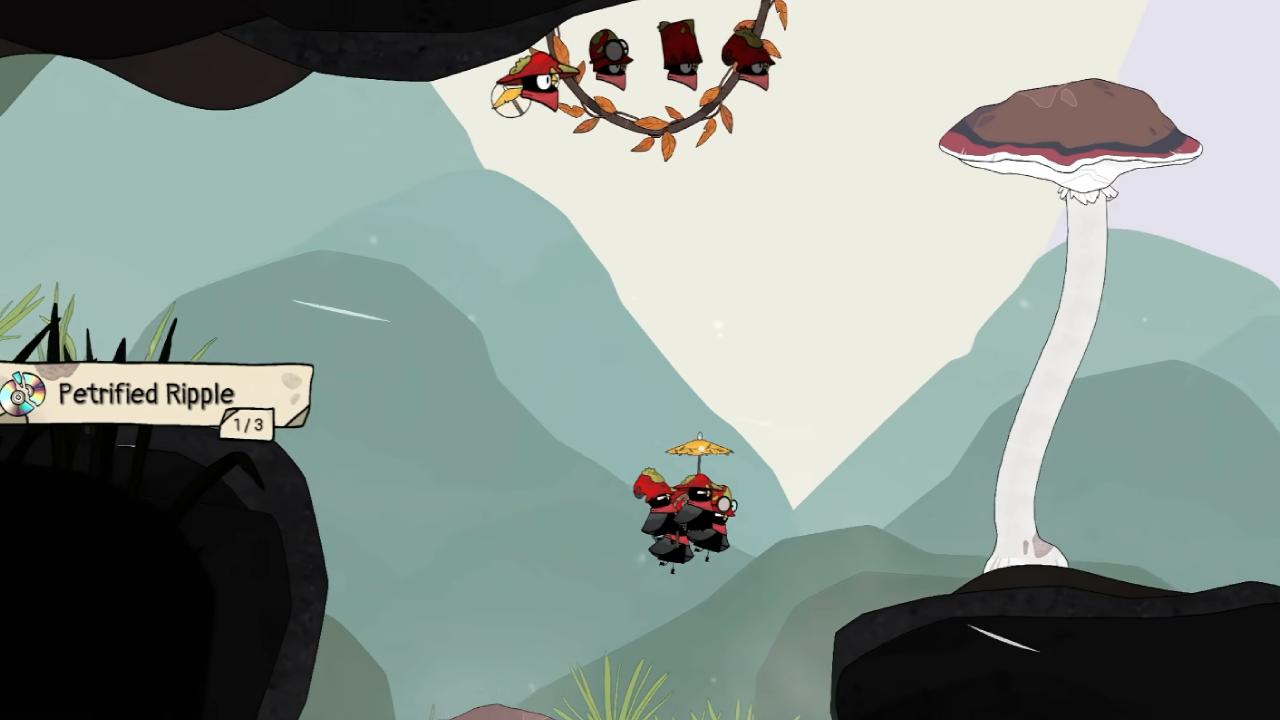
Visually, The Merlies draws heavily from graphic novels and classic children's books.
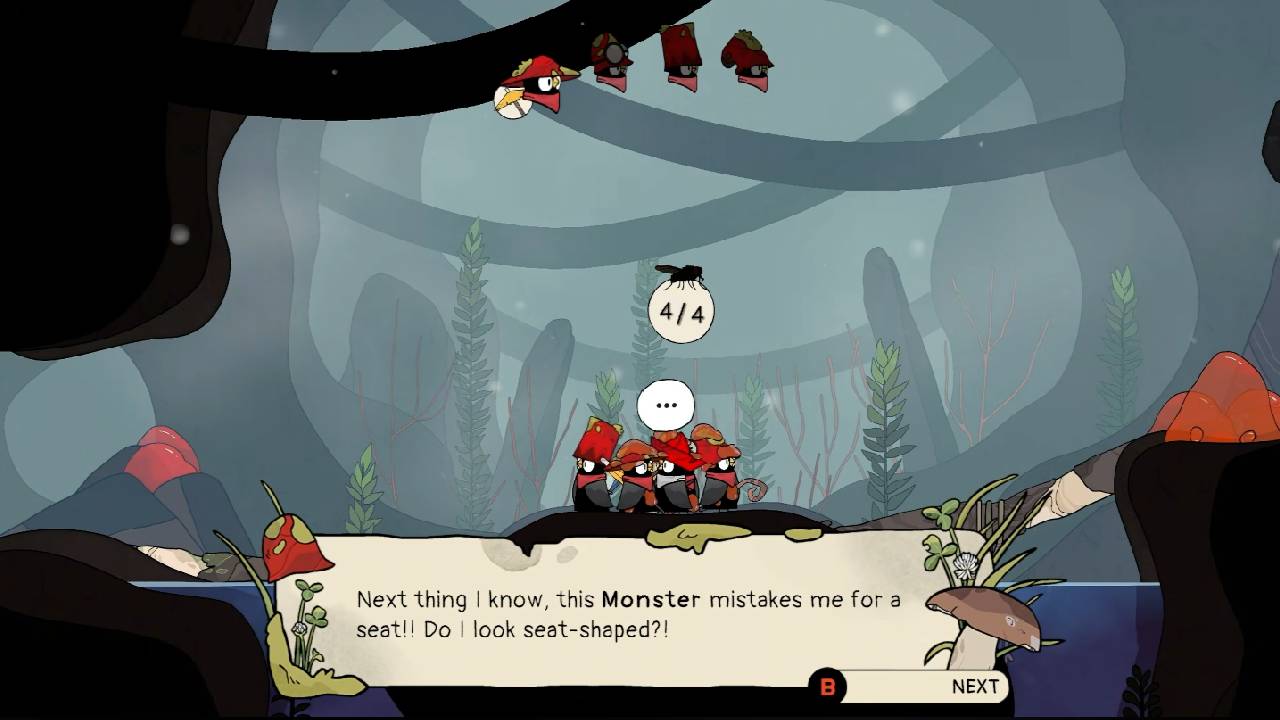
The birds are tiny, round, expressive creatures wearing different hats, and their scale changes how you read the environment. A human object that would normally be meaningless becomes a massive structure for them. That contrast is one of The Merlies' most consistent visual ideas.
You watch the flock climb cables, bounce across oversized mushrooms, move through overgrown spaces, and turn discarded objects into useful parts of their home. The setting also has a clear solarpunk influence. Rather than painting the remnants of civilization as a bleak wasteland, The Merlies lets nature reclaim the space, with birds building a community from whatever remains.
The world looks bright and mostly calm, but the leftover junk and empty buildings still quietly tell you that people aren't around anymore. That balance gives the setting enough history without turning the story into a heavy post-apocalyptic drama.
The presentation extends into the sound design. When you call the flock together, they answer with soft little chirps, and each Merlie speaks for itself through expressive squeaks, with subtitles to carry the meaning. A fully voiced narrator helps connect the smaller events and stories around the nest. The soundtrack stays peaceful and supports the slower pace rather than trying to make every discovery feel like a major event.
The basic options are fairly limited.
You can adjust volume, music, and sound effects; choose from supported languages; change display settings; and play in borderless fullscreen, with resolutions up to 1080p. Controller support is included, but controller rebinding is not.
The Merlies works because it understands exactly what kind of adventure it wants to be. It does not need combat, complicated statistics, or punishing platforming to keep you moving. Your motivation comes from seeing another part of the world, finding a missing bird, discovering what an abandoned human object can become, and watching the nest gradually turn into a home.
There are some rough edges. The lack of custom map markers makes backtracking less convenient, and a few icons or exclamation points around the village don't always behave perfectly. Fast travel also still leaves you with some walking, and certain areas clearly ask you to return later once you have another ability.
What stays with you is the way The Merlies keeps its mechanics connected to its theme. You are not building a village because a management system demands it. You bring back friends and recover forgotten objects, and the settlement grows as a consequence. You don't stack birds because it's a puzzle gimmick.
You are figuring out how a group of tiny creatures can help one another reach a place none of them could reach alone.
That makes the whole experience feel consistent. You can complete the game relatively quickly by moving directly through its objectives, with an estimated eight to ten hours depending on your pace. Still, there is room to spend longer exploring, talking to the Merlies, looking for secrets, and developing the nest.
The appeal comes less from any single spectacular mechanic and more from how well the pieces fit together. Exploration leads to birds; birds lead to new abilities; abilities open up more areas; and what you recover feeds back into the nest.
By the end, The Merlies feels like a carefully focused adventure rather than a stripped-down version of a larger genre. You get platforming, environmental puzzles, collectibles, base development, flock management, fast travel, optional activities, and a world filled with small details, but none of those systems overwhelm the central idea.
You are helping a scattered group find one another and build a place where they can belong. The Merlies is therefore easiest to appreciate when you approach it on its own terms. If you want combat, deep character statistics, or demanding platforming, you will not find those systems here.
Judged on its own terms, the game delivers a calm, focused adventure.
What you do get instead is a forgiving exploration game, one where the main reward is slowly coming to understand the world around you and watching the flock grow bigger with every bird you find. The puzzles are built around cooperation among the birds; progress comes from making new friends and picking up their abilities rather than from grinding, and the setting quietly turns forgotten human junk into a playground.
The result is a calm, gentle adventure that stays focused from the first minute to the last. Even when The Merlies occasionally makes getting around a little less convenient, or leaves a small feature feeling half-finished and underdeveloped, the overall structure still holds together and stays easy to follow from start to finish.
You explore, solve, rescue, collect, build, and then head back to the nest to start again. You go through the same steps again and again, and it works because it never gets fussy. The little birds keep you moving the whole way, and nothing piles up on top of them to slow you down.
Editor, NoobFeed
Verdict
A gentle exploration adventure built around flock teamwork, environmental puzzles, and a growing nest. The platforming rarely punishes you, and the world is peaceful, so it works well for anyone who wants a Metroidvania they can play without stress.
84
Related News
No Data.