
Aggelos 2 Review
Nintendo Switch 2
A 16-bit sequel that keeps the old-school spirit intact while adding dual-world exploration, flexible combat, and a steady stream of upgrades.
Reviewed by Asura Kagawa on Aug 31, 2026
Aggelos 2 feels like a sequel that understands exactly what made its predecessor appealing without throwing away that identity. The first game, Aggelos, arrived on Nintendo Switch in 2019 with an 8-bit presentation influenced by early Wonder Boy games and Zelda II: The Adventure of Link. Aggelos 2 moves into a colorful 16-bit style closer to the SNES and SEGA Genesis era, while making its world substantially larger and more layered.
It remains recognizably retro, but modern touches make the adventure comfortable to play. In Aggelos 2, the story returns you to Lumen a thousand years after the events of the first game. Long ago, Aggelos saved the land from the Deluge.
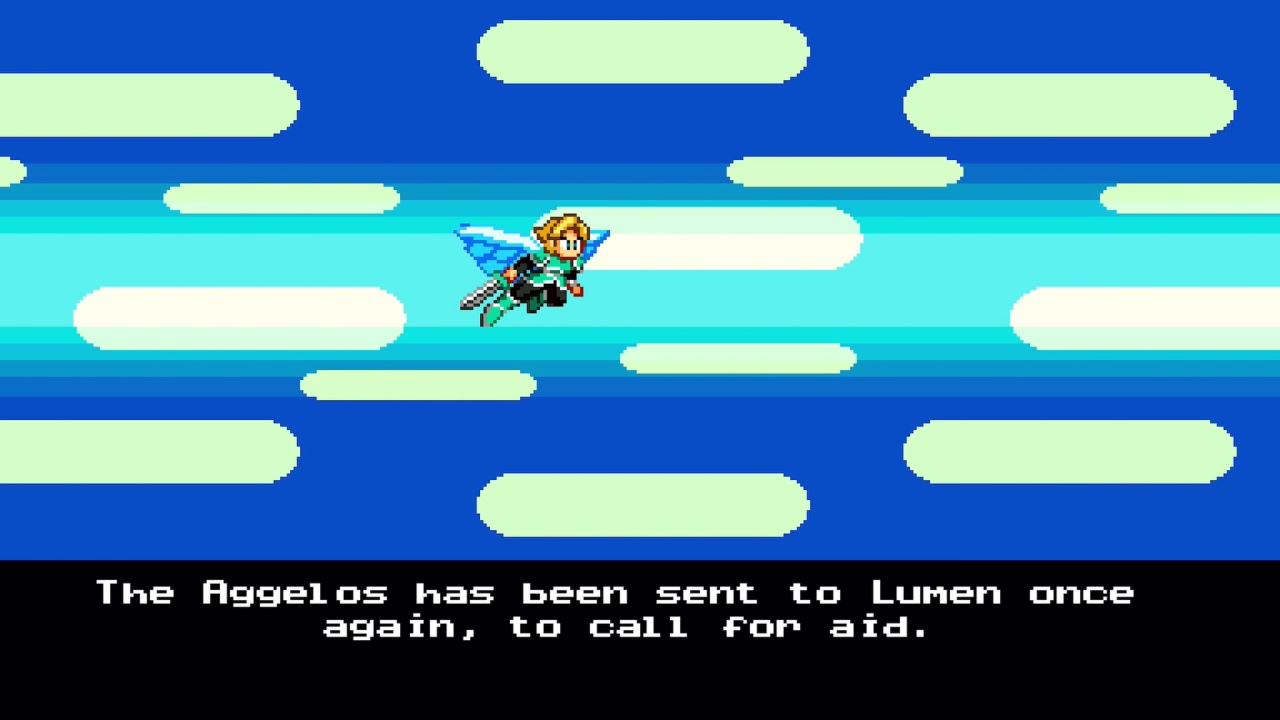
Now darkness has returned after conflict among the gods, with the supreme god Lumen exiled and the realm facing another major threat. When Aggelos comes back to answer the call for help, he is struck from the sky and loses his legendary equipment and abilities.
You begin the adventure with that familiar Metroidvania setup of having your powers taken away, but the game uses it effectively.
Abilities and equipment return gradually, so each new tool gives you another reason to revisit places that previously seemed impossible to reach. Aggelos 2 keeps its narrative deliberately lightweight. Dialogue is sparse, characters speak simply, and the story mostly provides a reason to keep moving through Lumen and its darker counterpart.
It relies on environmental details, secrets, and the contrast between its two realms to create atmosphere. That approach fits the retro style well, although the narrative never develops as strongly as the exploration. The conflict between light and darkness works nicely as a framework for the mechanics, but the gameplay remains the main attraction.
There are also brief good and bad endings, although the game gives no clear indication of whether all 100 eggs lead to anything beyond their collection rewards. Once you take control of Aggelos 2, the biggest strength is how often the world gives you something new to work toward.
You collect hearts to raise health, magic containers to expand mana, vials for additional healing charges, and upgrades for your sword, armor, wings, and projectile bracelet. You earn these improvements through exploration rather than an experience system.
Unlike the first game, there is no traditional XP or level progression to grind through.
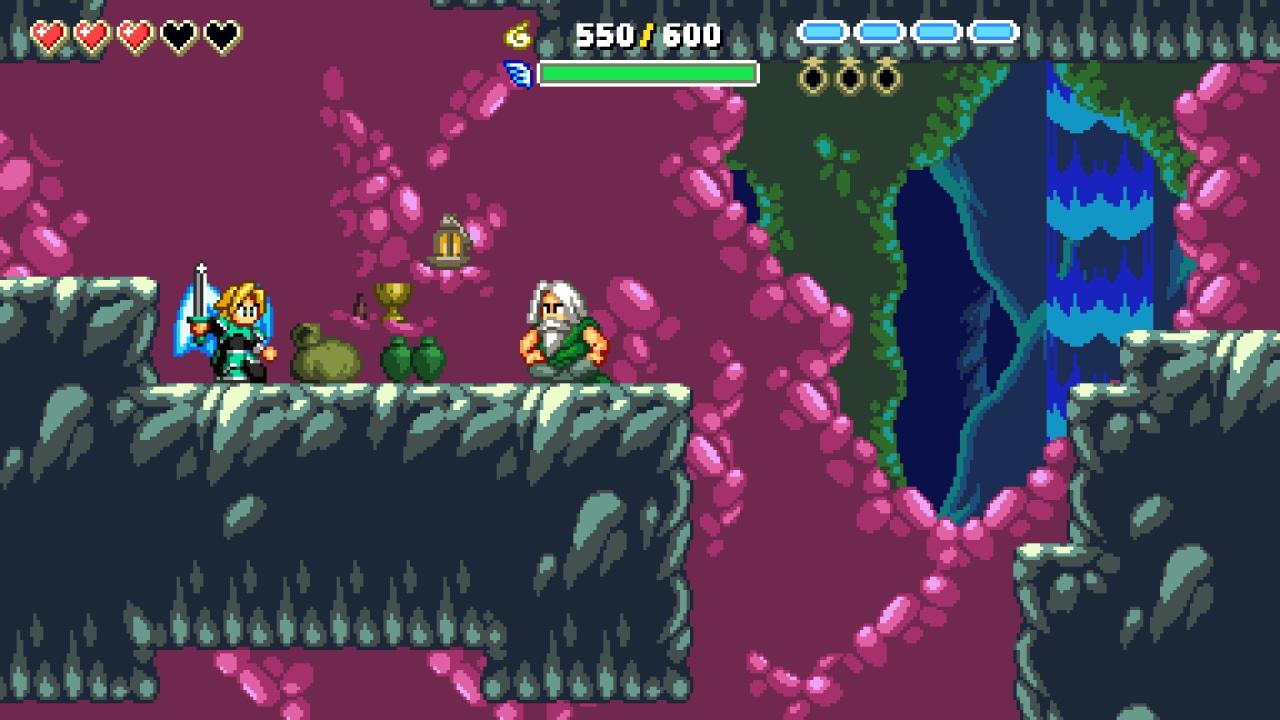
Your character becomes stronger because you searched the map, found useful items, discovered upgrade statues, and collected the currency needed to pay for them. Aggelos 2's currency system adds another layer to exploration. Your supply of glowing orbs is limited by your carrying capacity, and special containers raise that limit by 100 orbs at a time.
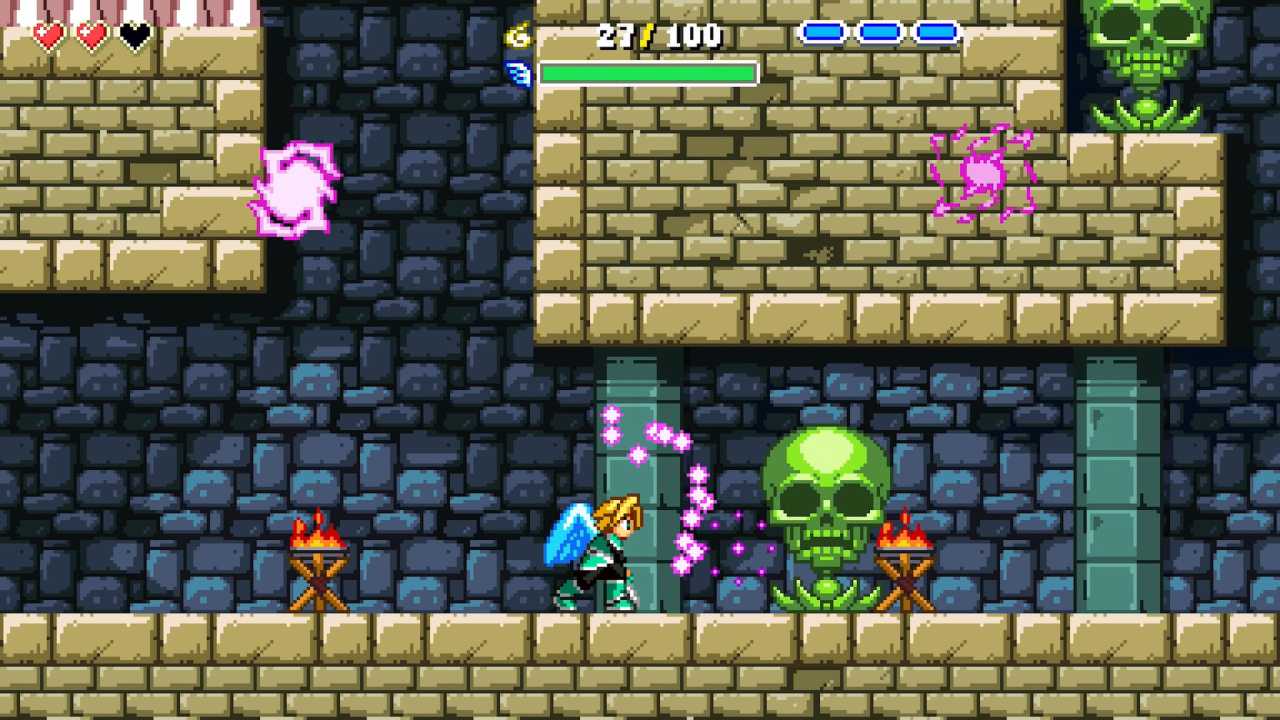
This means a powerful upgrade can remain out of reach until you have explored enough to expand your wallet. Shops also sell useful items, including additional containers, healing vials, spell-related upgrades, and other equipment. You'll like that balance because most meaningful discoveries still come from investigating the map.
Combat in Aggelos 2 is simple but satisfying. You have a sword for close-range attacks and a bracelet that fires energy shots from a distance, letting you switch between melee and ranged attacks depending on the situation. You'll often fire from safety before moving in for a sword strike. Mana-based special attacks add another option, with different spells proving useful in different situations.
Your mana comes back through attacking enemies or reaching save points, so you are encouraged to use your abilities rather than hoard them. Aggelos 2's defining combat mechanic is the ability to switch between an angel form and a corrupted demon form.
Both versions handle similarly, but their attacks behave differently.
The angel's sword sweeps, while the demon thrusts. They also shoot different shots; the angel shoots a farther-range shot, and the demon shoots a broader shot that dissipates faster and can go through walls. Their attacks also differ: the angel can create a tornado above its head, and the demon creates a strong wave of energy forward.
More importantly, the forms interact with different types of attacks and environmental elements. The light form cuts light or purple projectiles, while the dark form handles blackish-red ones. Certain mechanisms, traps, barriers, and projectiles also require the correct form, meaning switching is part of traversal as well as combat.
The demon form also opens the parallel dark world through special rifts. You'll appreciate the idea because it makes the two forms more than a visual change, although in practice you'll usually prefer the angel form. It feels more efficient in fights, and once your character is upgraded, you can often survive or avoid situations where the dark form would have been more useful.
That makes the mechanic feel somewhat underused outside specific puzzles and boss encounters. Aggelos 2's bosses use the polarity system more heavily. Several encounters fill the screen with projectiles, creating frantic sequences where you are supposed to change forms quickly to neutralize the correct attacks.
You'll find those fights entertaining, but they could become chaotic enough that you sometimes ignore the intended strategy.
Instead of constantly switching, you would stay in the stronger form, dodge what you could, absorb some damage, use healing, and keep attacking until the boss went down. Because exploration had already improved your equipment, some bosses that initially seemed dangerous become much easier when you return with better upgrades. Aggelos 2 sits on the challenging side during its first half.
Enemies, traps, and early bosses can punish mistakes heavily, while the later sections become more manageable as your health, armor, weapons, and healing options improve. There is also a hard mode for anyone looking for a harsher run. Normal difficulty never feels unfair, especially because dying carries no real penalty and checkpoints are generous.
Collectibles you have already gathered are retained even if you die before reaching another save point, which removes a lot of the frustration that could otherwise come from the tougher areas. Movement and platforming in Aggelos 2 are another strong part of the adventure.
Your controls feel responsive, and the game gives you traversal tools early enough to make them important rather than something saved for the end. The wings are especially interesting. At first, they let you hover at the height where you began your flight and move sideways while stamina lasts.
You do not slowly sink like you might expect from a conventional hover, so you can climb a wall, leap away from it, and use that extra height to reach a distant platform. Later improvements allow more complete flight, opening additional routes.
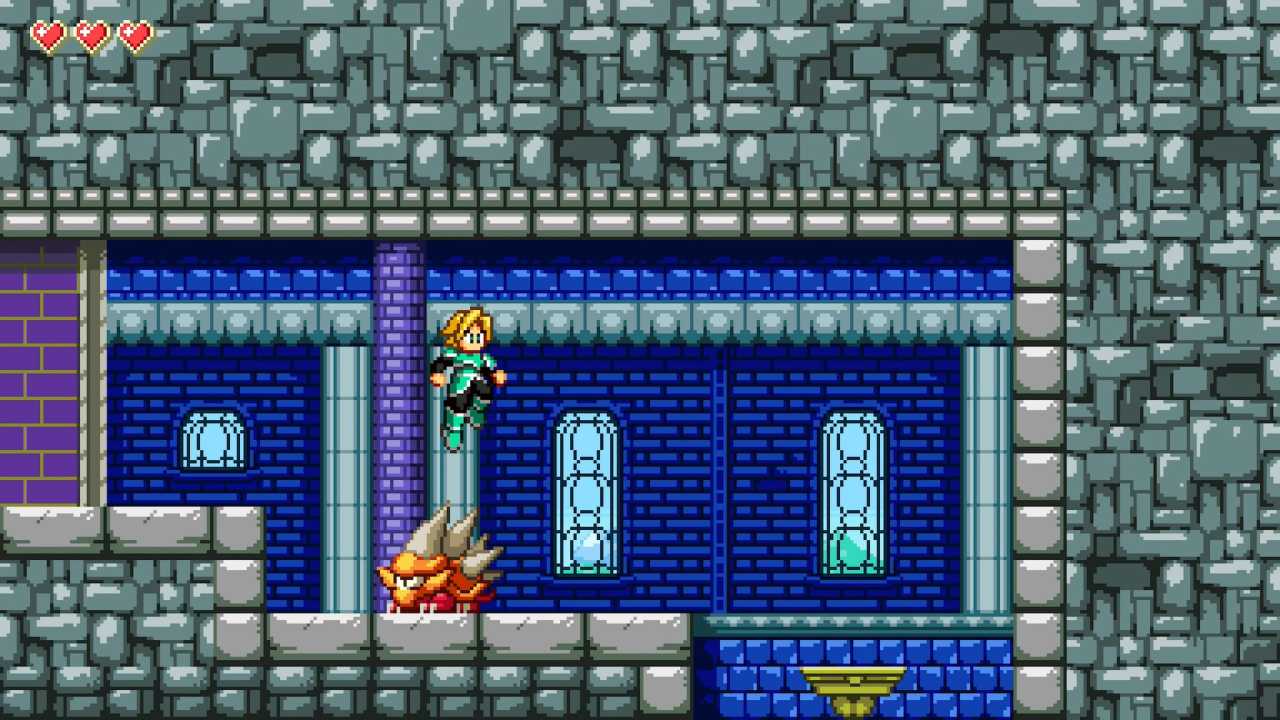
You also gain a grappling hook that can latch onto walls from a distance, followed later by an upgrade that lets you climb after attaching it.
Form switching also feeds into platforming, since some sections require light or dark attacks to activate mechanisms or remove obstacles. The puzzles themselves are generally straightforward, often involving switches, blocks, and simple environmental interactions. They are not designed to overwhelm you, but they provide a useful break from fighting and moving.
Platforming is not built around punishing precision. A few gauntlets are more demanding, but most of the time the challenge comes from understanding how to use your movement tools. The wings can even make some sections easier once your stamina and equipment have improved.
You may run into an occasional annoyance where pressing jump while landing triggers the wings when you intended to make another normal jump. It isn't constant, but it can interfere with consecutive jumps. The controls also become busier as more abilities are added. Different actions occupy different buttons, and during hectic sections you may occasionally activate the wrong ability.
The problem is more noticeable with the two forms because some shared actions behave differently. Healing vials restore health in the light form but provide a speed increase in the dark form, so muscle memory could occasionally cause you to waste a vial when you simply want to heal.
One spell is also triggered by aiming the analog stick upward while using the ranged attack, and the stick can be sensitive enough to activate it accidentally when you only mean to fire forward. Exploration is where Aggelos 2 really expands.
The map is considerably larger than the original, and you effectively get two worlds to investigate.
The bright realm of Lumen and a darker parallel world filled with red and fleshy environments. The two maps overlap in useful ways, with rifts allowing you to move between them and reach places that seem inaccessible from the other side. You'll enjoy the way a blocked route in one world could become an obvious path after entering the other.
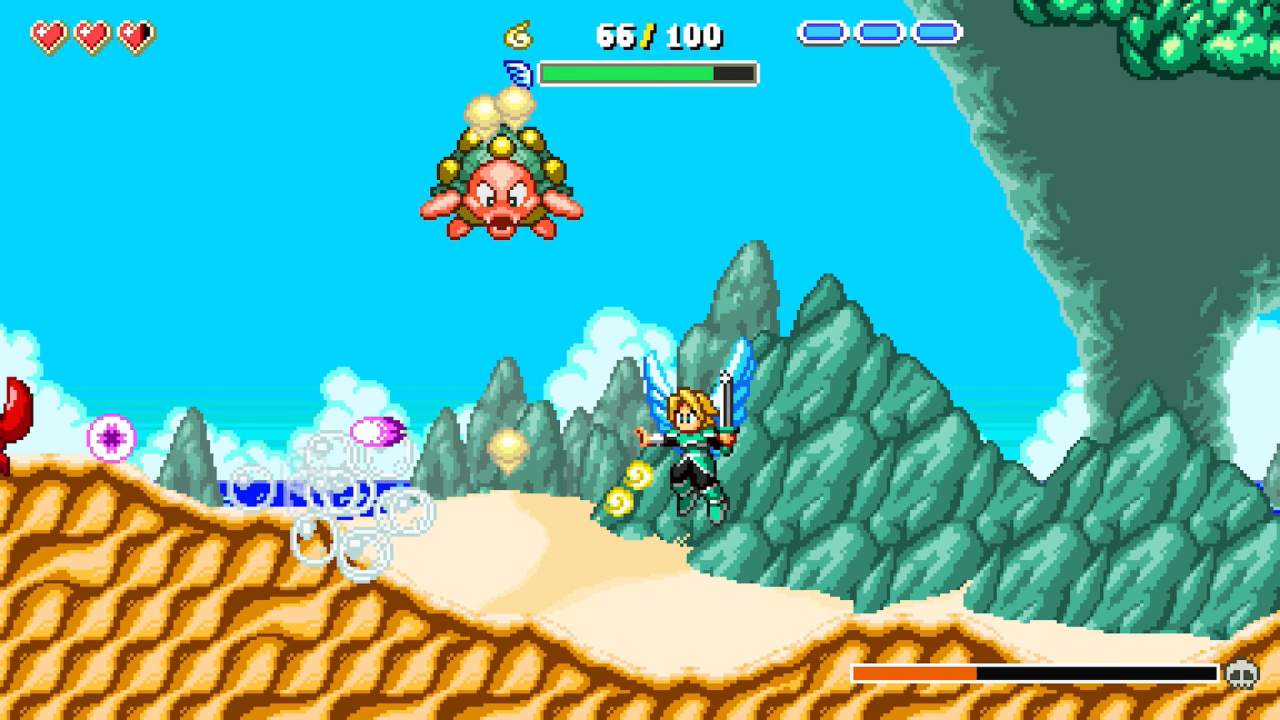
Fast travel eventually connects the save points, which is particularly valuable because both worlds are large. The world also opens in layers rather than giving you everything immediately. Early on, the path is relatively controlled, but major story milestones add new sections and expand the available routes. Gaining the demon form opens the second world, while later objectives unlock additional regions.
Within each layer, however, you can decide which route to take. That structure gives you freedom without making the enormous map feel completely directionless. There is plenty to find. Hidden rooms contain health and magic upgrades, equipment improvements, spells, tools, and other collectibles. The mysterious eggs are the biggest long-term collection, with 100 spread throughout the two worlds.
Bring them to a large chicken mural to receive rewards as the collection grows. You'll find the process satisfying, but the endgame exposes a problem for completionists: there is no reliable system for locating missing eggs.
Even with 98 collected, you'll have no practical way to identify the final two without combing through the enormous maps again.
The map lets you place 20 manual markers, which is useful, and it automatically shows save points, portals, and your position, but it lacks a zoom function, and optional collectibles aren't comprehensively tracked. A fortune teller can mark certain story-related points, but not the optional discoveries.
Aggelos 2's presentation completes the retro package. The bright world uses greens, blues, and golds, with forests, castles, lakes, and a cloudy area, while the shadow realm uses darker purples, reds, and fleshy textures. The pixel art has larger, expressive sprites and more detail than the original's 8-bit approach.
It is clean and readable, though the style can feel safer than the best modern retro-inspired games. The soundtrack is a highlight, blending fantasy sounds with a strong 16-bit synth character that fits the setting without overpowering it. Sound effects also lean into that old-school feel. A Brazilian Portuguese translation is included.
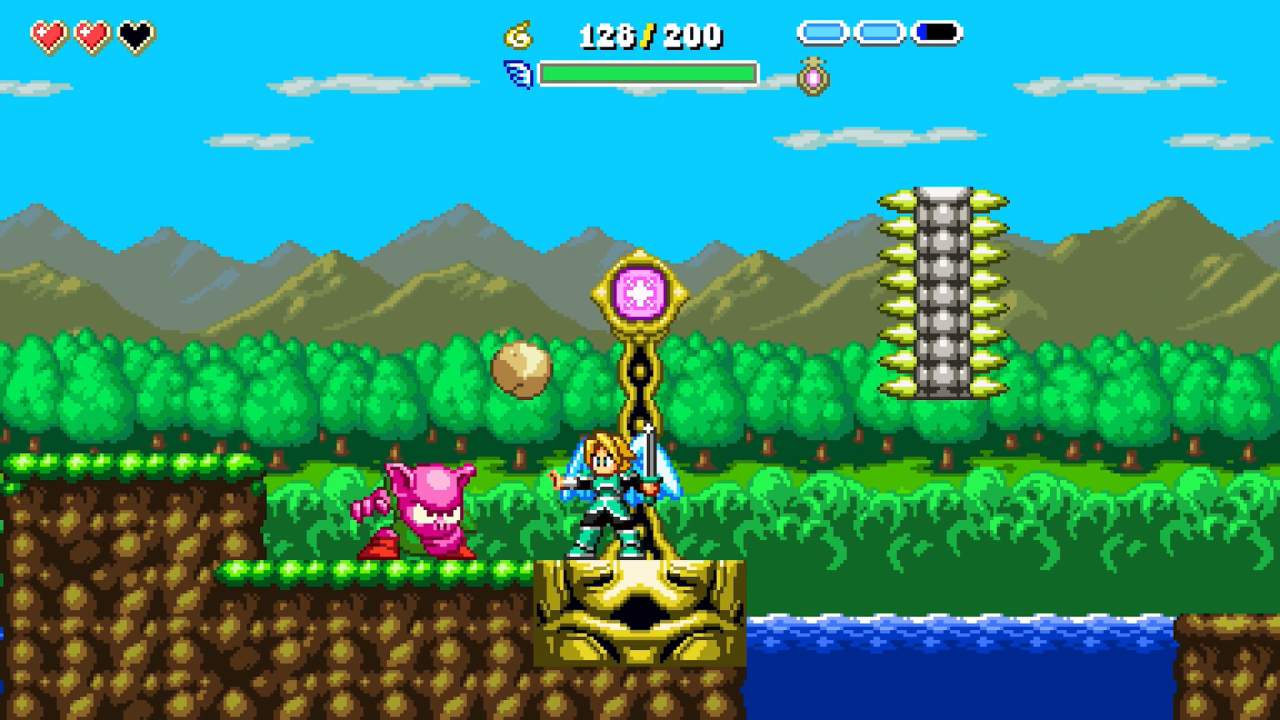
On Nintendo Switch, Aggelos 2 worked well in both handheld and docked play. It scales cleanly, loads quickly, and generally holds close to 60 frames per second, with only minor dips during heavier boss sequences. You may encounter a few bugs. In one dark-world section, some platforms that should have been solid could be walked through.
You could also fall beneath the floor in two locations, with one requiring a death and respawn to escape.
Another spot had an invisible platform. These were rare, but ironing them out would go a long way toward making the game feel more stable. Overall, Aggelos 2 delivers the retro-style adventure experience you're hoping for, without simply replicating the flaws of older games.
Among its standout features: a sprawling two-world map, generous rewards for exploration, tight and responsive combat, and upgrade abilities that feel genuinely satisfying. The angel/demon mechanic, meanwhile, is an intriguing idea, one that only really pays off in certain situations.
The story is functional rather than memorable, while the map and controls have a few quality-of-life problems. Still, the generous checkpoints, lack of death penalties, fast travel, and steady character upgrades keep the adventure moving. It is a fun, old-fashioned action RPG that shows reverence for classic games while adding enough modern features to stay accessible.
Staff Writer, NoobFeed
Verdict
Aggelos 2 is a genuinely fun, nostalgia-soaked game with great exploration, intense battles, strong progression, and amazing music. A few rough edges, an awkward dual-form system, so-so map design, and clunky controls keep it just shy of perfect.
78
Related News
No Data.