
Worlds Upon the Wind Review
PC
A beautifully crafted strategy game that combines Japanese folklore, deckbuilding, and world-building into one of the genre's most refreshing experiences.
Reviewed by Asura Kagawa on Aug 03, 2026
Over the last several years, deckbuilding roguelikes have become one of the most popular genres in gaming. As more developers enter the space, however, creating something that feels genuinely different has become increasingly difficult.
Many games borrow well-known mechanics from genre leaders and add minimal twists to them, so it’s hard for new games to differentiate themselves. Worlds Upon the Wind, thankfully, is a different beast entirely, mixing strategic card mechanics with city-building, Japanese folklore, and environmental storytelling to create a game that feels both refreshing and relaxing.
The world was made by one man, Max Shawabkeh.
Worlds Upon the Wind is not trying to copy traditional deckbuilding games with their combat, damage numbers, or endless enemy encounters. Instead, it’s about rebuilding civilizations on floating islands and discovering a mysterious world based on Japanese history, mythology, and classical art.
Worlds Upon the Wind takes a different approach to progression than many roguelikes. Instead of starting over from scratch, you keep going. Each expedition feels like a journey with a purpose, not just another run at a loss.
Instead of being punished for every little mistake, you’re rewarded for completing an expedition on your terms, bringing back valuable loot to your base camp as you progress the larger story. Even when you finish the main story, there are reasons to go back to the game. Each new playthrough feels rewarding and not like a chore.
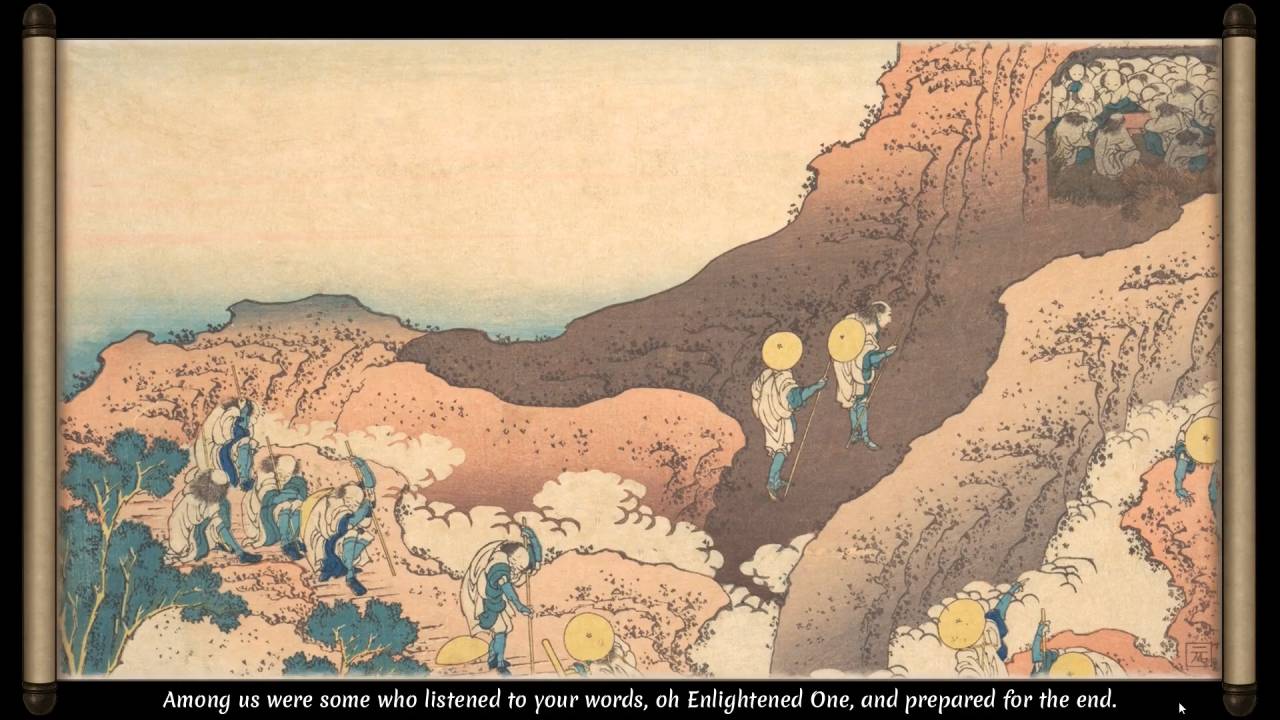
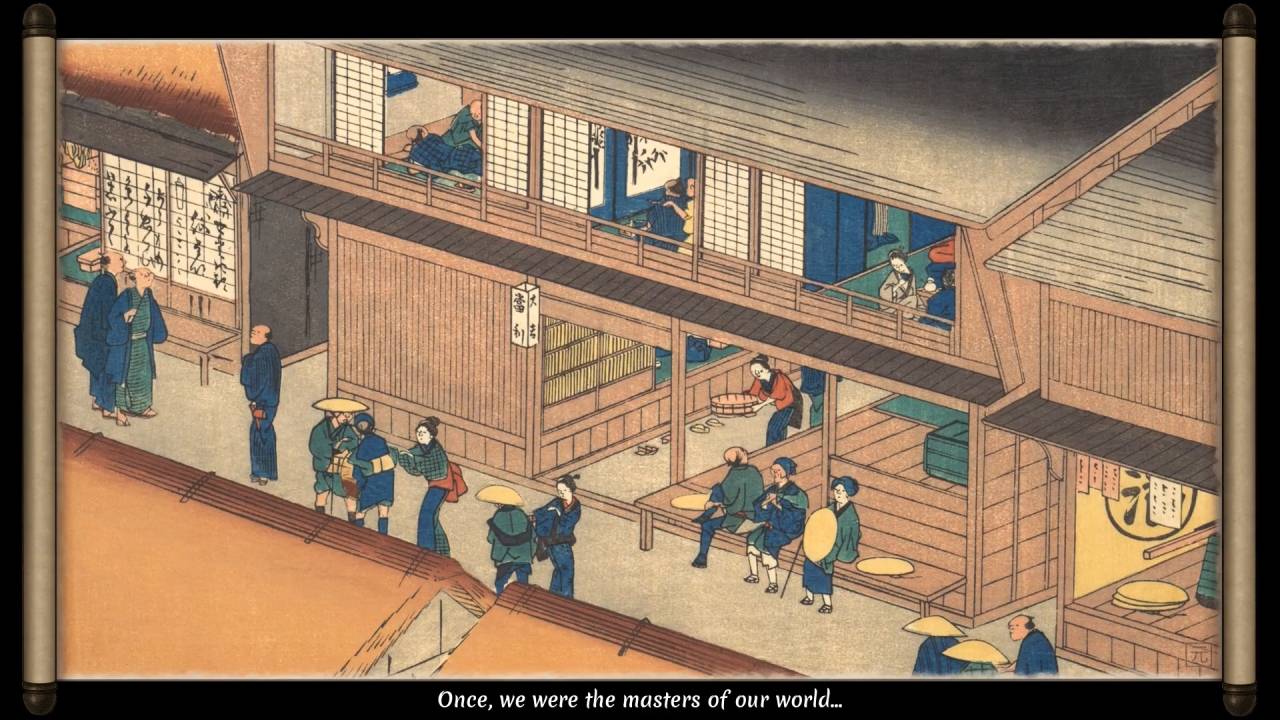
The presentation of the game is absolutely gorgeous, above all. Worlds Upon the Wind draws its inspiration not from modern fantasy art but from the timeless beauty of traditional Japanese woodblock prints and Ukiyo-e paintings.
Every environment feels like a living scroll, giving each adventure a distinct visual identity that sets it apart from almost every other deckbuilder on the market today. The artwork generates a sense of peace and urges you to slow down and enjoy each carefully illustrated place rather than always being bombarded with flashy visual effects vying for your attention.
The soundtrack is a perfect fit for this artistic direction. As you move through your journey, soft traditional-inspired music plays, making for an incredibly calming experience, with subtle environmental sound effects helping to breathe life into each floating island.
As you begin exploring the world, you quickly discover that humanity now survives across floating islands drifting high above the clouds.
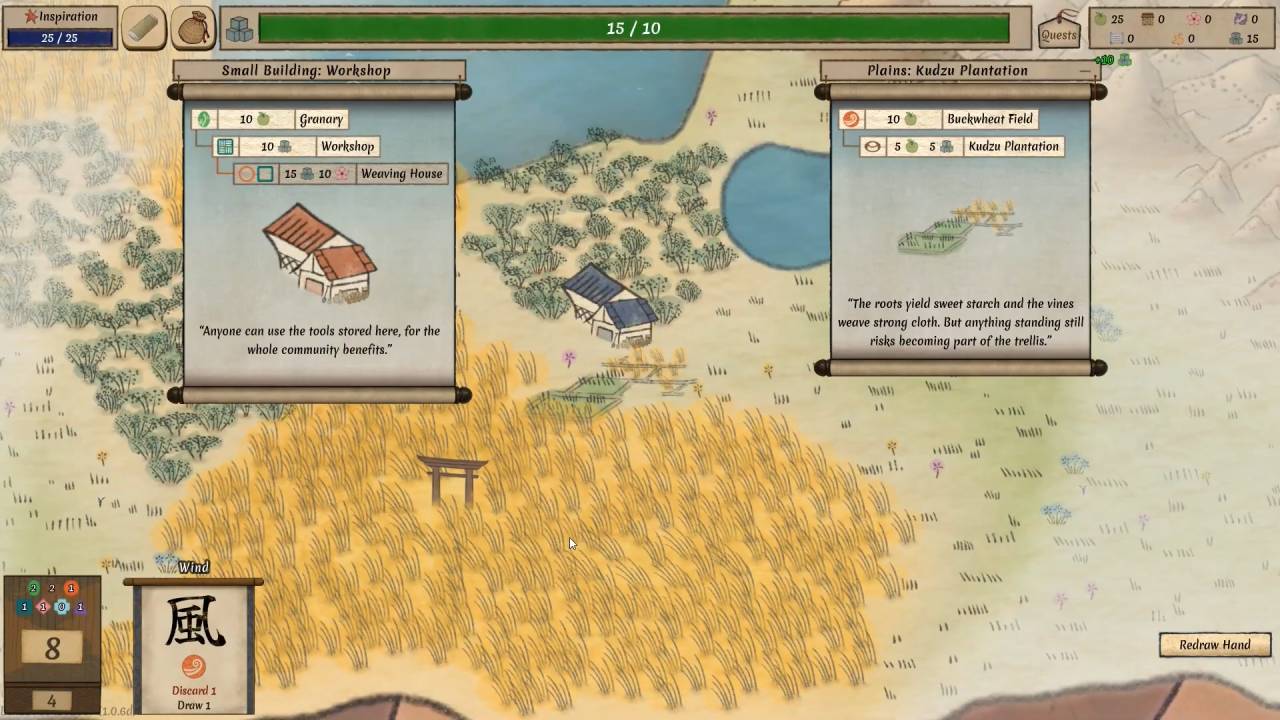
These scattered fragments of civilization are home to people who have been displaced by an ancient catastrophe, forcing them to rebuild their lives wherever they can. Your role is to help these settlements flourish by carefully managing resources, placing developments, and using powerful glyphs to create environments where both humans and spirits can thrive.
Each expedition brings a brand-new shard that you will settle. Every place has its own terrain, opportunities, and challenges, so no two journeys are ever exactly the same. The end goal is familiar, but the environments, relics, and events are randomized so no two playthroughs are predictable enough to become dull after dozens of hours.
Inspiration Points are a core mechanic of the game, and they govern your actions in every run. Every decision uses a little of this resource, and poor planning or bad card effects can shorten an expedition. When you run out of inspiration, your current journey ends, and you are sent back to your home base called The Haven.
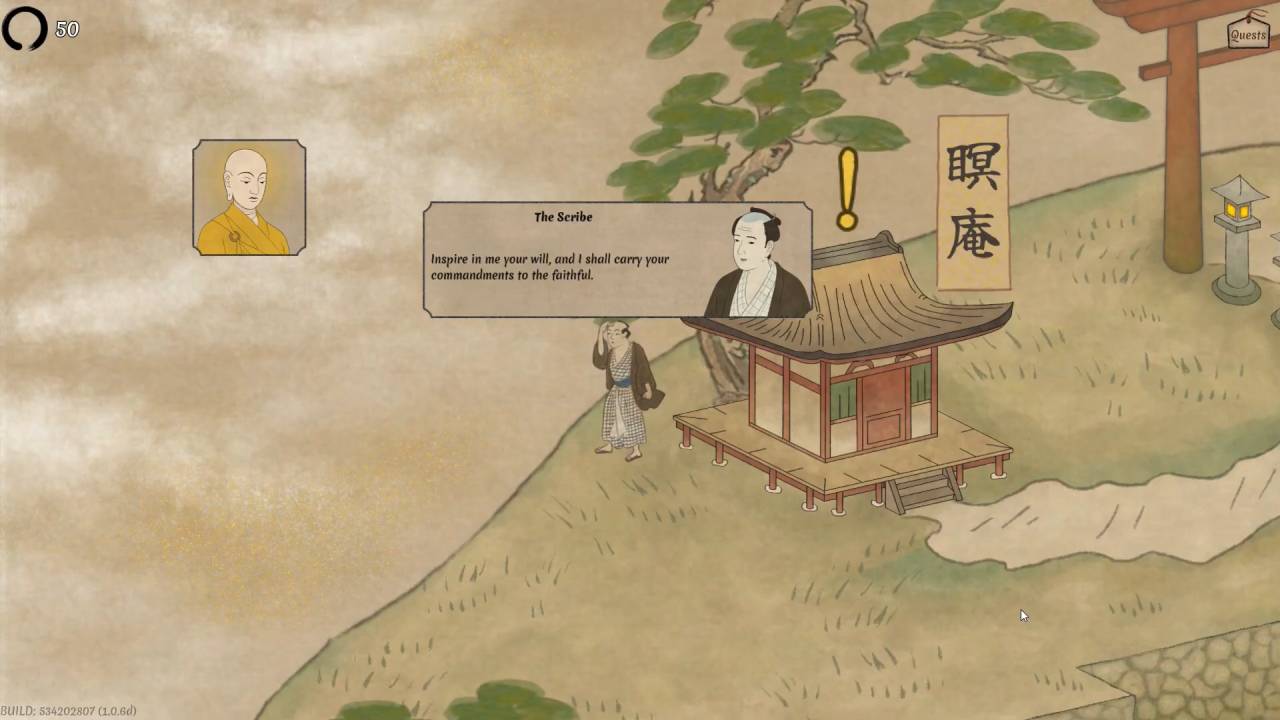
The Haven is more than just a menu between missions. It is the core of the game’s world, where important characters such as the Scribe, Historian, Explorer, monks, refugees, and many other NPCs live. You can also upgrade several abilities through the skill tree as you progress, interact with residents, decorate areas using artwork you’ve collected, and revisit everything you’ve learned throughout your adventures.
One of the most fun features is the in-game museum.
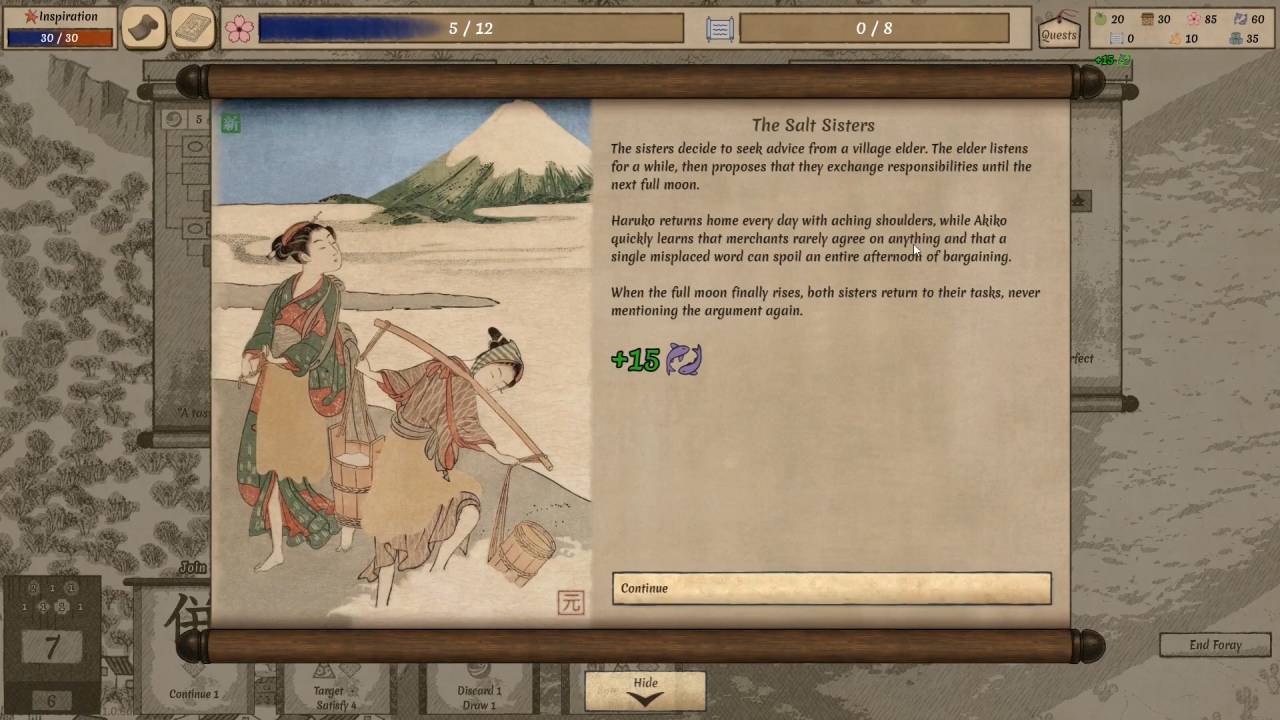
Throughout your journey, you will encounter artwork inspired by actual historic Japanese woodblock prints. Rather than just showing beautiful images, the museum gives you the stories behind each piece, showing you the original artists, the historical context, and the cultural importance.
The game even has optional Japanese language learning through a series of small minigames. These activities are a welcome bonus if you’ve ever wanted to practice recognizing kanji or learn basic meanings behind certain glyphs without breaking up the main gameplay.
That steady sense of progression creates the familiar "just one more run" feeling that defines the best roguelikes.
However, unlike more stressful entries in the genre, Worlds Upon the Wind remains surprisingly relaxing throughout the experience. The slower pace, soothing atmosphere, and thoughtful strategy make it wonderfully effortless to lose yourself rebuilding another floating civilization, even after a long day, without feeling overwhelmed.
When you’re ready for another adventure, you exit The Haven through the Torii Gate and begin exploring another undiscovered shard floating across the sky. This simple cycle of going out, rebuilding settlements, coming home, upgrading your abilities, and going out again quickly becomes very addictive.
It's not a race, and it doesn't punish you for every mistake. It encourages thoughtful planning and careful trying. It’s a new spin on the usual roguelikes, showing that strategic depth doesn’t always have to mean constant fighting and pressure.
When you are ready for another adventure, you leave the Haven through the Torii Gate and begin exploring another undiscovered shard floating across the sky. This simple cycle of going out, rebuilding settlements, coming home, upgrading your abilities, and going out again becomes very addictive very soon.
As you spend more time with Worlds Upon the Wind, its deckbuilding mechanics begin to reveal far more depth than the game's peaceful presentation initially suggests. While many deckbuilders revolve around defeating enemies using increasingly powerful cards, this game shifts the focus toward creation instead of destruction.
Rather than fretting over health bars, damage figures, or surviving endless combat.
You’ll have to build up thriving settlements by carefully managing the resources at your disposal. That single design choice immediately separates it from most games in the genre, giving every decision a different sense of purpose and enhancing the overall gaming experience.
Every expedition begins by selecting an unexplored region on the world map. Once you arrive, you'll gradually expand across the floating shard by constructing various developments on available locations. Each site has different terrain with forests, mountains, plains, marshes, canyons, villages, and other environments that will affect what you can build.
The gameplay revolves around Glyphs, magical symbols representing elemental essences and forces of nature. Before a development can be completed, you must drag the appropriate glyph into its matching essence slot, effectively activating the structure.
While the mechanic is easy to understand within minutes, the growing number of Glyphs, relics, companions, and passive effects gradually transforms each expedition into a surprisingly complex puzzle. Every successful settlement feels earned because you constantly balance short-term needs against long-term planning.
There are many rewarding things about this game, and one of them is learning what each glyph means. You don't just memorize icons but slowly become familiar with the Japanese-inspired symbols and meanings attached to them.
Relics provide another important strategic layer. During each expedition, you’ll get narrative-driven events that give you powerful artifacts that can drastically alter how you play. Some relics will increase the power of certain Glyph combinations, while others will increase resource generation or reduce the penalties of difficult situations.
They also provide more diversity by providing you with additional bonuses that can significantly alter how an expedition unfolds.
The systems, in conjunction with relics and evolving card synergies, make for a huge amount of build variety in a game that appears fairly simple at first glance. Each successful run feels different because you keep encountering new combinations that can completely change your strategy.
Random events play a major role throughout every expedition. While rebuilding settlements sounds peaceful, the world still presents numerous obstacles that force you to think several moves ahead. Haunted locations, missing Glyphs, unexpected disasters, and demanding settlement requirements frequently disrupt even the best-laid plans.
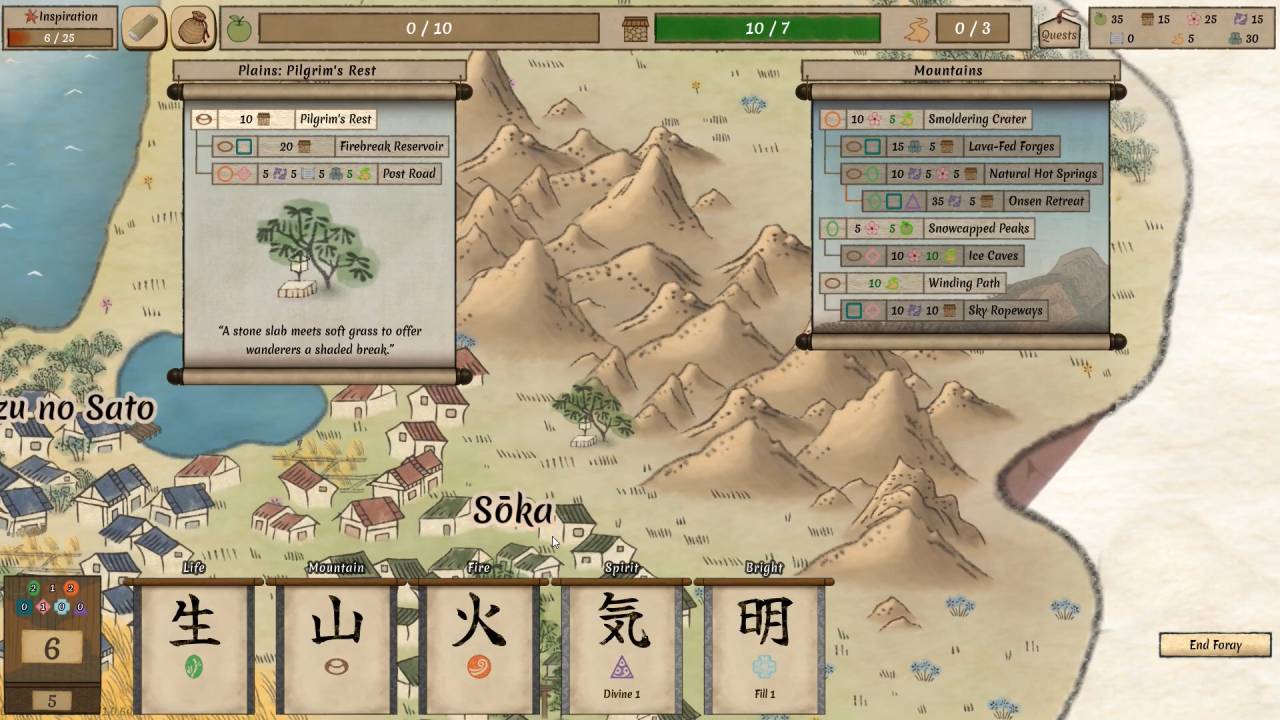
Occasionally you will find that you just can't complete every objective. The game often encourages you to go back to The Haven early with whatever rewards you’ve managed to earn, rather than pushing forward and risking it all.
That flexible structure also makes it effortless to fit Worlds Upon the Wind into different schedules. Even if you only have fifteen or twenty minutes, you can still go on a shorter expedition, grab some valuable upgrades, and feel like you've made some progress.
Perhaps the game’s greatest strength is the amount of freedom it gives your imagination. In heavily cinematic games, long cutscenes explain every detail, but in Worlds Upon the Wind, small narrative fragments are often presented through the names of settlements, descriptions of events, relics, and beautifully written text.
The use of authentic Ukiyo-e artwork makes the game's approach all the more convincing. The illustrations aren’t mere decoration either; they help set the mood for each settlement and event you come across. The game’s evocative writing combined with these visuals makes you want to imagine what life is like on these floating islands.
That kind of storytelling gives each settlement its personality.
As you expand across each shard, you start to feel a link to the communities you’re helping to rebuild, even if that link is largely through your own reading of the events going on around you. It's a rare achievement for a strategy game and one that makes each successful expedition feel surprisingly personal.
Despite its calm atmosphere, Worlds Upon the Wind never becomes too easy. Settlements are growing, and as they do, their demands are becoming more and more demanding, requiring more careful planning and better management of resources.
New mechanics are introduced gradually throughout the campaign, increasing strategic depth without alienating new players. Each era you complete will unlock additional systems, which of course will expand your possibilities and also bring new challenges that you have to overcome. Furthermore, the roguelike progression deserves praise.
Progression here feels more balanced, unlike most games where permanent upgrades eventually remove most of the challenge. Unlocking new glyphs, relics, companions, and abilities opens up your strategic options instead of simply making future runs easier. You are rewarded with more flexibility than raw power.
The deckbuilding system is particularly satisfying in the speed at which your strategy can evolve during a single expedition. Some of your early choices might set you on a particular build path, only for a powerful relic or surprise event to completely change your priorities halfway through the run.
Some upgrades require you to give up short-term benefits for long-term advantages. The choice to incur an immediate penalty for a revolutionary upgrade later creates meaningful tension in every expedition. Often it’s in these difficult choices that the game’s strategic depth is most visible, rewarding careful planning over impulsive decision-making.
In the end, Worlds Upon the Wind works because it understands that a great deckbuilder isn’t just about collecting better cards. It’s about making choices that matter, encouraging experimentation, and creating memorable moments with smart design.
Staff Writer, NoobFeed
Verdict
Worlds Upon the Wind is a refreshing take on the deckbuilding roguelike genre, replacing relentless combat with thoughtful city-building, meaningful progression, and a stunning world inspired by Japanese folklore.
83
Related News
No Data.